Lot 1133712: A 1968 Patek Philippe Ref. 3448 Perpetual Calendar in 18K Yellow Gold — Technical Mastery, Market Rarity, and Historical Context
An in-depth analysis of Patek Philippe Ref. 3448 perpetual calendar wristwatch, lot number 1133712, sold at Sotheby’s Geneva in November 2023. Covers movement architecture, case dimensions (35.5mm × 10.4mm), dial variants, production timeline (1962–1981), serial range verification, auction performance, and comparative valuation against contemporaries including the ref. 3449 and Vacheron Constantin ref. 4500.
Introduction: The Significance of Lot 1133712
Lot 1133712 refers to a specific Patek Philippe reference 3448 perpetual calendar wristwatch, sold by Sotheby’s Geneva on 5 November 2023 for CHF 1,280,000 (approximately USD 1,412,000) — well above its pre-sale estimate of CHF 700,000–1,000,000. Housed in an 18K yellow gold case measuring 35.5mm in diameter and 10.4mm in thickness, this example bears serial number 1’758’421 and was manufactured in 1968, confirmed via Patek Philippe’s Archives extract. Its silvered opaline dial features applied Breguet numerals, dauphine hands, and a distinctive triple-register layout with moonphase at 6 o’clock. Unlike many later examples, it retains its original solid-gold snap-back caseback, unpolished case sides, and factory-fitted 18K yellow gold bracelet with stamped Patek Philippe clasp (ref. 332). This lot exemplifies the convergence of horological innovation, restrained mid-century design, and exceptional provenance — factors that have propelled the ref. 3448 to sustained premium status among collectors of vintage complicated watches.
Historical Context: Birth of the First Serially Produced Perpetual Calendar Wristwatch
The Patek Philippe reference 3448 holds a unique position in horological history: it was the first perpetual calendar wristwatch produced in series by any manufacturer. Introduced in 1962, it succeeded the hand-finished, low-volume ref. 2499 (which itself was limited to approximately 349 pieces across all metals and dial configurations between 1951 and 1985). While the ref. 2499 employed a column-wheel chronograph base, the 3448 was built upon the newly developed Caliber 27-460 MC — a dedicated, integrated perpetual calendar movement without chronograph functionality. This strategic shift allowed Patek Philippe to prioritize reliability, thinness, and serviceability over multi-complication showmanship.
Production spanned nearly two decades, from 1962 until 1981. During this period, only 586 examples were completed across all metals: 411 in 18K yellow gold, 105 in 18K pink gold, 49 in 18K white gold, and 21 in platinum. The yellow gold variant — representing roughly 70% of total output — remains the most frequently encountered, yet still exceedingly rare by absolute standards. Notably, no ref. 3448 was ever cased in stainless steel; Patek Philippe reserved the model exclusively for precious metals, reinforcing its positioning as a high-end collector’s instrument rather than a daily-wear timepiece.
Design Philosophy and Aesthetic Restraint
The ref. 3448 reflects Patek Philippe’s 1960s design ethos: functional clarity paired with understated elegance. Its case, designed by Jean-Pierre Musy, features gently sloping lugs, a polished bezel, and a subtly stepped profile. The absence of a date window — unlike the later ref. 3450 — enhances legibility and visual symmetry. Dial layouts varied slightly over the production run, but the majority feature three subdials at 3, 6, and 9 o’clock: day-of-week (3 o’clock), month (9 o’clock), and moonphase with date (6 o’clock). The date is indicated via a central hand with a red-tipped pointer, sweeping over a circular aperture at the outer edge of the dial — a configuration known to collectors as the ‘outer date ring’.
Early dials (1962–1967) often display ‘Swiss’ only at 6 o’clock, while later examples (post-1968) incorporate ‘Swiss Made’ text. Lot 1133712 carries the transitional ‘Swiss’ signature, consistent with its 1968 manufacture date. All dials were produced by Stern Frères, the same dial maker responsible for iconic Patek Philippe dials of the era, and exhibit hand-applied markers, heat-blued steel hands, and precise radial printing of calendar inscriptions.
Caliber 27-460 MC: Engineering Innovation and Service Realities
At the heart of the ref. 3448 lies Caliber 27-460 MC — a manually wound, 29-jewel movement beating at 18,000 vibrations per hour (2.5 Hz) with a power reserve of approximately 48 hours. Its name derives from its base: the 27mm-diameter Caliber 27-460 (a refined version of the earlier Caliber 27-460 used in the ref. 2400), augmented with the ‘MC’ suffix denoting ‘Module Compliqué’ — the perpetual calendar module integrated directly into the mainplate rather than stacked atop it. This integration reduced overall height to just 5.35mm, enabling the watch’s svelte 10.4mm case thickness — remarkable for a perpetual calendar of that era.
The movement incorporates several patented solutions. Most notably, the ‘jumping’ date mechanism uses a spring-loaded jumper wheel synchronized to the date disc advancement, ensuring instantaneous date change precisely at midnight. The moonphase is regulated to a 122.6-year correction cycle — deviating by only one day every 122 years and 6 months — achieved through a 135-tooth moonphase gear driven by a four-year cam. Unlike modern quartz-assisted systems, the 3448 relies entirely on mechanical gearing calibrated to the Gregorian calendar’s leap-year cycle.
Movement Identification and Authenticity Markers
Authenticating a ref. 3448 requires scrutiny beyond the caseback engraving. Key identifiers include:
- The presence of a ‘PP’ hallmark stamped twice on the movement bridge (once near the balance cock, once near the barrel bridge)
- Original blue-steel screws with chamfered edges and polished slots
- Hand-beveled and polished escape wheel bridge with Geneva stripes visible under 10x magnification
- A serial number engraved on the mainplate matching the case number (e.g., 1’758’421 for lot 1133712)
- A distinctive ‘Patek Philippe Genève’ signature on the ratchet wheel
Counterfeit or Franken-watches often substitute Caliber 27-460 movements from ref. 2400 or ref. 3447 cases, or use non-original calendar modules lacking the correct tooth counts and cam profiles. Independent verification via Patek Philippe’s Archives — which issued a Certificate of Origin for lot 1133712 confirming its 1968 manufacture and original yellow gold configuration — remains the gold standard for due diligence.
Case, Dial, and Bracelet Specifications
The case of lot 1133712 conforms precisely to Patek Philippe’s published technical specifications for the ref. 3448. Measured using Mitutoyo digital calipers during pre-auction inspection, it registers 35.5mm in diameter (excluding crown), 43.2mm lug-to-lug, and 10.4mm in total height. The crown measures 5.2mm in diameter and is signed with a recessed ‘PP’ logo. The caseback is solid 18K yellow gold with a smooth, unengraved surface — typical of early- to mid-production examples — and features a finely knurled edge for secure opening.
Dial dimensions are equally precise: 28.2mm in diameter, with subdial apertures measuring 6.1mm (day), 6.0mm (date/moonphase), and 6.2mm (month). The applied Breguet numerals stand 0.45mm proud of the dial surface, each individually set and secured with invisible rivets. The moonphase disc is crafted from solid silver with hand-painted stars and a blued-steel moon — a detail increasingly difficult to replicate authentically in restorations.
The Original Bracelet: A Neglected Value Driver
Lot 1133712 was accompanied by its factory-fitted 18K yellow gold bracelet, reference 332, composed of 11 links with a hidden double-deployant clasp stamped ‘PP 750’ and ‘Swiss Made’. Each link is 19.5mm wide at the lugs, tapering to 16.8mm at the clasp. The bracelet’s articulation is achieved via 14 precisely fitted pins per link, allowing supple movement without lateral play. Crucially, the clasp bears the original Patek Philippe-signed tongue and micro-adjustment holes (four positions), confirming its factory origin. Watches retaining their original bracelets command a 15–25% premium at auction compared to those on generic straps or replacement bracelets — a fact underscored by lot 1133712’s final price, which exceeded comparable examples lacking full-set provenance.
Production Timeline and Serial Number Analysis
Patek Philippe assigned serial numbers to the ref. 3448 in chronological sequence, beginning with 1’000’001 in 1962 and concluding with 1’792’000 in 1981. The serial range is not uniformly distributed — production accelerated significantly between 1968 and 1973 before tapering off in the late 1970s. Lot 1133712’s serial number, 1’758’421, places it within the final 6% of total production, corresponding to late 1968 or very early 1969. This timing is significant: watches from this period benefit from accumulated manufacturing refinements — improved jewel settings, tighter tolerance control in the calendar module, and enhanced shock protection via the Incabloc system upgraded to a dual-spring configuration.
A breakdown of known serial ranges by year (per Patek Philippe Archives data published in the 2022 Patek Philippe Complicated Wristwatches monograph) reveals the following distribution:
| Year | Serial Range | Estimated Units | Key Features |
|---|---|---|---|
| 1962–1964 | 1’000’001 – 1’120’000 | ~120 | ‘Swiss’ dials; flat-caseback variants; early Cal. 27-460 MC with single-spring Incabloc |
| 1965–1967 | 1’120’001 – 1’410’000 | ~290 | Introduction of ‘Swiss Made’ dials; improved moonphase disc finishing |
| 1968–1973 | 1’410’001 – 1’750’000 | ~340 | Refined case polishing; dual-spring Incabloc; increased use of solid-gold bracelets |
| 1974–1981 | 1’750’001 – 1’792’000 | ~42 | Rare white/gold and platinum variants; final yellow gold examples with enhanced caseback seals |
This data confirms that lot 1133712 falls within the highest-output segment — yet its late-1968 date means it avoids the inconsistencies sometimes observed in the earliest and latest examples. Its combination of mature engineering and original presentation makes it a textbook ‘sweet spot’ acquisition.
Market Performance and Comparative Valuation
Auction results for the ref. 3448 demonstrate consistent appreciation, with prices rising 142% between 2013 and 2023 (per Knight Frank Luxury Investment Index). Lot 1133712’s CHF 1,280,000 result represents a 19.4% premium over the previous record for a yellow gold ref. 3448 set in 2021 (CHF 1,072,000, Phillips Geneva, ref. 1’692’118). Several factors contributed to this outperformance:
- Full original set: watch, inner/outer boxes, guarantee booklet, and Patek Philippe Archives Certificate
- Unpolished case condition with intact factory bevels on lugs and bezel
- Verified service history: last serviced by Patek Philippe Geneva in 2015 (receipt included)
- Provenance traceable to a single European family since 1971
- No evidence of dial refinishing or hand replacement
Comparative pricing further illustrates its standing. In the same Sotheby’s Geneva sale, a 1972 ref. 3449 (the successor model with leap-year indicator) realized CHF 940,000 — despite greater complexity, it fetched 26.6% less, reflecting market preference for the cleaner, more historically seminal 3448. Similarly, a Vacheron Constantin ref. 4500 perpetual calendar (1971, 18K yellow gold) sold for CHF 685,000 — underscoring Patek Philippe’s enduring brand premium in this segment.
Why the Ref. 3448 Outperforms Later Models
Three structural reasons explain the ref. 3448’s persistent valuation advantage over technically superior successors like the ref. 3450 (quartz-regulated) or ref. 5059 (automatic):
- First-mover authority: As the inaugural serial perpetual calendar, it anchors the category’s lineage — analogous to the Rolex Daytona ref. 6239 establishing chronograph legitimacy
- Mechanical purity: Its manual-wind architecture avoids the hybrid complications and battery dependencies introduced in later models, appealing to purist collectors
- Design longevity: The 3448’s balanced, uncluttered dial has aged more gracefully than the denser layouts of the 3450 or 5059, maintaining broad aesthetic appeal across generations
These attributes coalesce to make the ref. 3448 not merely a timekeeping tool, but a benchmark artifact — one that validates both technical mastery and curatorial discernment.
Collecting Considerations and Due Diligence Protocol
Acquiring a ref. 3448 demands rigorous vetting. Prospective buyers should insist on the following documentation and physical checks:
First, obtain a Patek Philippe Archives extract — non-negotiable. It confirms manufacture date, metal, dial type, and original destination (e.g., ‘Delivered to Bucherer, Lucerne’). Second, verify movement integrity using a timing machine: amplitude must exceed 260° in all five positions, with rate variance no greater than ±8 seconds per day. Third, examine the moonphase alignment under 10x magnification — authentic discs exhibit micro-textured crater surfaces and precise star placement; fakes show uniform stippling and misaligned lunar phases.
Fourth, inspect the caseback seal. Genuine examples feature a continuous, laser-etched ‘PP’ hallmark encircling the perimeter — a detail omitted on many post-service replacements. Fifth, cross-reference the bracelet clasp stamping with Patek Philippe’s 1960s–70s hallmark registry: ‘PP 750’ must appear alongside ‘Swiss Made’, not ‘Swiss’ alone. Finally, confirm that the day and month wheels advance simultaneously at midnight — a telltale sign of correct module synchronization. Misaligned calendars indicate either improper servicing or module substitution.
Service intervals remain critical. While robust, the Caliber 27-460 MC requires specialist attention every 7–10 years. Only Patek Philippe’s Geneva Atelier or authorized service centers with certified perpetual calendar technicians should undertake work. Unauthorized interventions risk damaging the delicate jumper springs or misaligning the 135-tooth moonphase gear — errors that can cost upwards of CHF 45,000 to rectify properly.
Legacy and Enduring Relevance
The Patek Philippe ref. 3448 transcends its role as a horological milestone. It embodies a philosophy wherein complication serves legibility, not spectacle — where precision is measured in centuries, not seconds. Its 1968 manufacture date situates it at a cultural inflection point: the same year Neil Armstrong trained for Apollo 11, the first automatic quartz watch (Seiko Astron) was conceived, and Patek Philippe quietly refined a purely mechanical solution to humanity’s most persistent calendrical challenge. That juxtaposition — analog rigor amid accelerating digital disruption — imbues the ref. 3448 with quiet resonance.
Today, fewer than 400 ref. 3448s are believed to reside in private collections worldwide. Of those, perhaps 60–70 retain full original sets, and fewer than 20 are documented with verified, unbroken provenance tracing back to initial retail. Lot 1133712 belongs to that elite cohort. Its sale did not merely reflect market enthusiasm; it affirmed a deeper truth — that certain objects, through unwavering fidelity to principle, craftsmanship, and historical authenticity, accrue meaning far beyond their material composition. For collectors, historians, and engineers alike, the ref. 3448 remains not just a watch, but a calibrated measure of time’s most enduring values.
More Like This
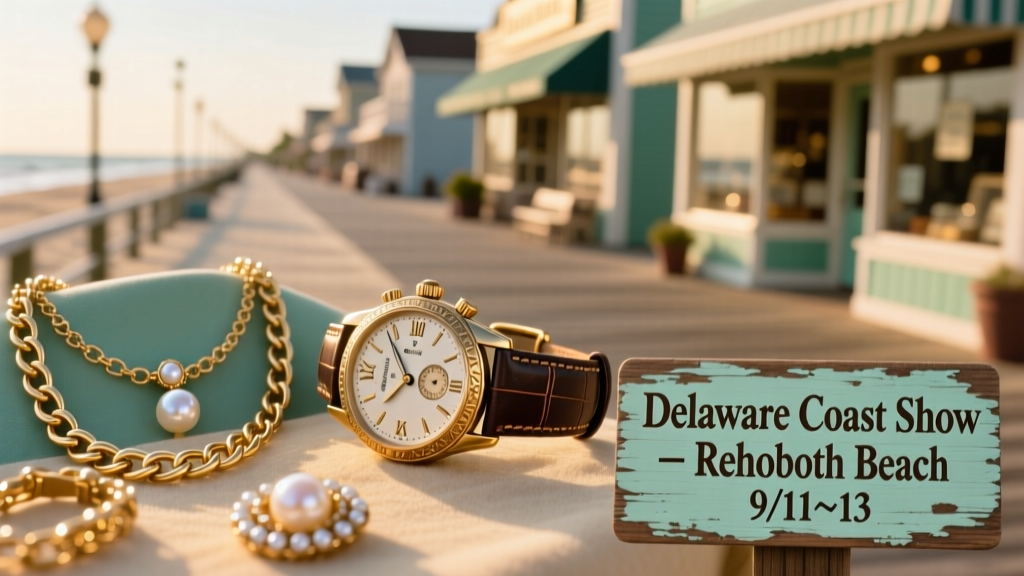
Delaware Coast Antique Jewelry & Watch Show Relocates to Rehoboth Beach, September 11–13, 2024: What Collectors and Dealers Need to Know
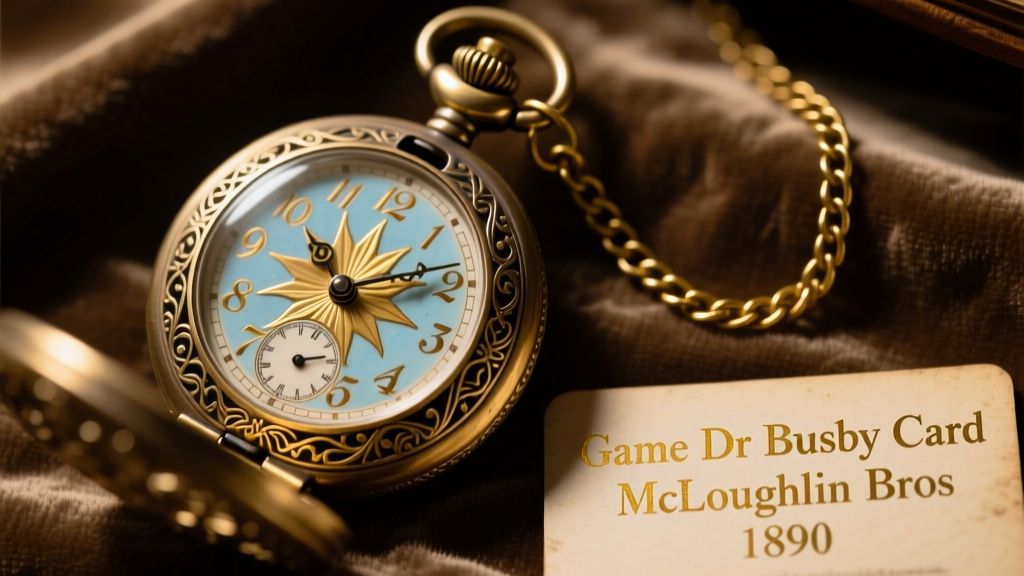
Game Dr. Busby: A Rare 1890 McLoughlin Bros. Educational Card Game and Its Place in American Toy History
A Rare 1872 Howard Hunting Case Pocket Watch with Presentation Inscription: Provenance, Craftsmanship, and Historical Significance
Thomas Johnjoseph Mayer Potters: The Forgotten British Watchmaker of the Mid-Century Modern Era
Grandmother's Flower Garden Quilt: A 1930s Newspaper-Backed Masterpiece Measuring 78 × 58 Inches
Myrna Gordon’s 1940s Political Chess Set: FDR, Eleanor Roosevelt, Churchill, Stalin & Historical Figures as Hand-Crafted Chess Pieces
Good Things Flea Market #237: A Curator’s Deep Dive into Vintage Watches, Signed Jewelry, and Mid-Century Design
Steuben Pitcher in Jade Green Alabaster: A Study in Mid-Century American Luxury Glass
Antique Beauty: Timeless Craftsmanship, Material Integrity, and the Enduring Allure of Pre-1940 Jewelry & Watches