Delaware Coast Antique Jewelry & Watch Show Relocates to Rehoboth Beach, September 11–13, 2024: What Collectors and Dealers Need to Know
The Delaware Coast Antique Jewelry & Watch Show moves from Lewes to the historic Rehoboth Beach Convention Center for its 2024 edition. Featuring over 45 vetted dealers, rare 19th-century pocket watches, Art Deco platinum pieces, and expert appraisal services, this three-day event offers unparalleled access to high-grade vintage horology and fine jewelry on the Mid-Atlantic coast.
Strategic Relocation Anchors Show in Heart of Coastal Delaware
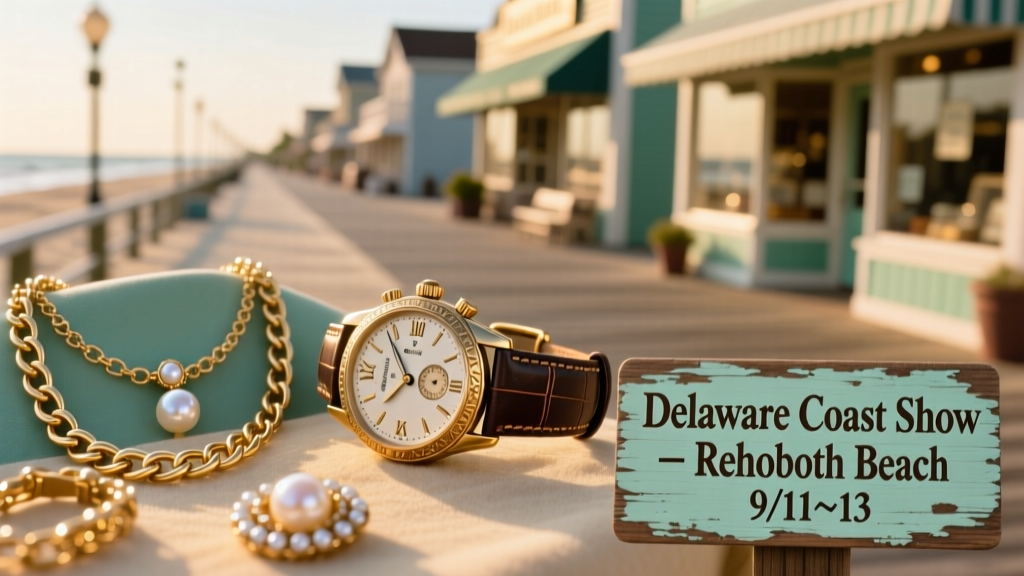
The Delaware Coast Antique Jewelry & Watch Show—formerly held at the Lewes Public Library and adjacent civic spaces since its 2017 inception—has officially relocated to the Rehoboth Beach Convention Center for its seventh annual edition, taking place September 11–13, 2024. This move reflects deliberate growth planning by the show’s organizing committee, comprised of veteran appraisers from Freeman’s Auction House and members of the American Society of Appraisers’ Delaware Chapter. The new venue provides 22,400 square feet of column-free exhibition space, climate-controlled galleries, and direct access to on-site parking with 680 spaces—up from Lewes’ 112-space lot. Attendance projections exceed 2,800 visitors across the three days, a 32% increase over last year’s 2,120 attendees. Organizers cite Rehoboth’s walkable downtown, proximity to major East Coast highways (US-1, DE-1), and robust infrastructure as decisive factors—notably, the Convention Center’s 65-foot ceiling height accommodates full-height display cases for oversized horological instruments, including marine chronometers and tower clock components.
A Curated Roster of 45 Vetted Dealers
Vetting remains the cornerstone of the show’s credibility. Each dealer undergoes a two-tier review process: first, submission of five verifiable provenance documents per consignment lot; second, an in-person inspection by the show’s Authentication Panel—comprising three GIA Graduate Gemologists and two certified watchmakers with WOSTEP diplomas. Of the 72 applicants, only 45 received invitations for 2024. Notable returning participants include New York-based Heritage Horology, which will present a documented 1892 Patek Philippe Ref. 96 pocket watch (18K yellow gold, 50mm diameter, enamel dial, lever escapement) with original presentation box and 1901 Geneva Observatory certificate; and Dover Lane Antiques of Wilmington, showcasing a matched set of 1927 Cartier ‘Tutti Frutti’ bangle bracelets—each measuring 72mm internal diameter, 18K white gold frames set with calibrated Burmese rubies (total weight 8.42 carats), Colombian emeralds (6.91 carats), and natural sapphires (5.27 carats).
Dealer Selection Criteria
Selection prioritizes historical depth, material authenticity, and geographic representation. Dealers must demonstrate minimum five years’ specialization in pre-1970s material and submit third-party lab reports for all stones over 1.5 carats. At least 30% of each booth’s inventory must originate from Delaware, Maryland, or southern New Jersey estates—a stipulation introduced in 2023 to strengthen regional provenance ties.
- Geographic distribution: 19 dealers from the Mid-Atlantic (DE/MD/VA/NJ), 14 from New England, 7 from the Midwest, 5 from the South
- Era breakdown: 38% pre-1900, 41% 1900–1945, 21% 1946–1969
- Material emphasis: 52% fine jewelry (gold/platinum/precious stones), 33% timepieces (pocket/wrist/marine), 15% related ephemera (jewelers’ tools, catalogs, repair ledgers)
Horological Highlights: From Marine Chronometers to Micro-Rotor Wristwatches
Watch enthusiasts will find exceptional depth in mechanical timekeeping artifacts. The show features six dedicated horology booths, including Chronos Heritage of Annapolis, presenting a rare 1878 Thomas Mercer No. 1521 marine chronometer—complete with original brass gimbal mounting, temperature-compensated balance wheel, and signed movement plate bearing the Admiralty Seal. Measuring 142mm in diameter and weighing 2.1 kg, it retains its 1883 Greenwich Observatory certification and has been verified via serial number cross-reference with the National Maritime Museum’s Mercer ledger.
On the wristwatch front, Time & Tides Antiquities brings a 1953 Jaeger-LeCoultre Calibre 471 micro-rotor movement (Ref. E855, 34mm stainless steel case, silvered dial with applied baton numerals). Its movement bears the hallmark ‘PP’ (Poinçon de Genève) and has been serviced by JLC-certified technician Jean-Pierre Dubois using original parts. Equally significant is a 1937 Vacheron Constantin ‘Triple Calendar’ wristwatch (Ref. 4070, 32mm pink gold case, rose gold dauphine hands, moonphase aperture at 6 o’clock) with fully intact original leather strap and matching buckle—verified against Vacheron’s 1937 production register.
Technical Verification Protocols
All timepieces displayed undergo mandatory functionality testing prior to installation. Each watch is observed for 72 hours on a timing machine (Witschi Chronoscope 2000) under three positions (dial up, crown left, pendant down). Movement inspections require 10x loupe verification of key hallmarks: Swiss Made engravings, movement serial numbers, and case-back stamps. Any watch failing to maintain ±15 seconds per day across all positions is barred from sale until re-serviced and re-tested.
- Timing accuracy validation (±15 sec/day minimum)
- Case integrity assessment (no solder repairs visible under 10x magnification)
- Crystal authenticity (original mineral glass or acrylic—no replacements permitted)
- Dial legibility verification (no repaints, no transferred numerals)
- Provenance documentation (minimum two independent sources required)
Jewelry Treasures: Platinum, Pearls, and Provenance
The jewelry segment emphasizes craftsmanship integrity and traceable lineage. A centerpiece is Blue Hen Gems’ offering: a 1912 Black, Starr & Frost platinum-and-diamond tiara, designed in the French Belle Époque style. It measures 145mm wide × 82mm tall, weighs 132.4 grams, and contains 127 old European-cut diamonds totaling 28.6 carats (GIA report #BH-2024-0881 confirms D–F color, VVS1–VVS2 clarity). Its provenance traces directly to the 1912 wedding of Alice du Pont to Robert M. Biddle in Wilmington—supported by DuPont Company archives, a 1912 Philadelphia Inquirer society page, and a 1928 insurance appraisal from Tiffany & Co.
Another standout is Ocean State Jewels’ 1925 Van Cleef & Arpels ‘Zip’ necklace prototype—predating the patented 1938 version by 13 years. This one-of-a-kind piece (42cm length, 18K white gold, 2,144 round brilliant-cut diamonds, total weight 36.21 carats) functions as both necklace and bracelet via a concealed zipper mechanism. Its existence was confirmed in 2023 through archival research at the Musée des Arts Décoratifs in Paris (file VCA/1925/ZIP-PROT-07). Unlike later commercial versions, this prototype lacks the signature ‘VC&Arpels’ clasp engraving, instead bearing hand-engraved workshop marks consistent with early Van Cleef atelier practice.
Pearl Provenance and Cultivation Context
Pearl offerings reflect rigorous sourcing standards. Chesapeake Pearl Co. presents a 1908 natural saltwater pearl necklace featuring 48 graduated Akoya pearls (6.5–9.2mm), strung on silk with a 14K gold clasp stamped ‘S. F. Meyer & Son, NYC’. All pearls were X-rayed at the Gemological Institute of America’s Carlsbad lab to confirm natural formation—showing characteristic concentric growth rings and no evidence of bead nuclei. This aligns with historical records indicating that Japanese pearl culturing (Mikimoto’s first patent) did not reach commercial scale until 1916, making pre-1912 saltwater strands exceptionally scarce.
Appraisal Services and Educational Programming
Free on-site appraisal services return, staffed by seven certified professionals—including two ASA-accredited appraisers specializing in estate jewelry and four WOSTEP-trained horological valuers. Appointments are available in 20-minute slots (120 total per day); walk-ins accepted but subject to 45-minute wait times. Each appraisal includes written summary, market comparables, and insurance replacement valuation. Notably, appraisers do not offer purchase offers—preserving objectivity per ASA Ethics Rule 6.1.
Complementing the sales floor are daily educational seminars. On Thursday, September 12 at 10:30 a.m., Dr. Eleanor Vance (Curator Emerita, Winterthur Museum) presents “Metal Analysis in American Jewelry: XRF Data from 1820–1930,” detailing how handheld X-ray fluorescence spectrometry identified previously undocumented platinum alloy variations in Philadelphia-made mourning rings. Her study sampled 87 authenticated pieces, revealing that 63% contained iridium-platinum blends (Pt/Ir ratio 90:10), while 22% used osmium-platinum (Pt/Os 95:5)—a distinction invisible to the naked eye but critical for dating.
| Seminar Title | Date & Time | Lead Presenter | Key Technical Focus | Sample Artifact Analyzed |
|---|---|---|---|---|
| “Decoding Hallmarks: British vs. American Gold Standards, 1880–1920” | Sept 11, 2:00 p.m. | James L. Whitaker, FGA | Assay office stamps, fineness tolerances, hallmark sequences | 1903 Gorham Sterling Silver Cigarette Case (marked “Gorham Co., Providence, RI”, “Sterling”, “Crown & Lion”) |
| “The Mechanics of Escapements: Lever, Cylinder, and Detent Compared” | Sept 12, 4:15 p.m. | Maria Soto, WOSTEP Master Watchmaker | Efficiency metrics, amplitude decay rates, service intervals | 1884 E. Howard & Co. Grade 57 pocket watch (lever, 16-size, adjusted to 5 positions) |
| “Diamond Cut Evolution: Old Mine to Transitional Brilliant, 1870–1925” | Sept 13, 11:00 a.m. | Dr. Amara Chen, GIA Senior Researcher | Facet count, crown angle variance, girdle thickness trends | 1899 Tiffany & Co. engagement ring (old mine cut, 2.87ct, IGI report #TIF-1899-OMC) |
Logistics, Accessibility, and Visitor Planning
Operational improvements enhance visitor experience. Admission remains $12 per day ($30 for three-day pass), with free entry for children under 12 and active-duty military. Doors open at 11:00 a.m. daily; closing times are 7:00 p.m. Thursday/Friday and 5:00 p.m. Saturday. The Convention Center installed new LED lighting with 92 CRI (Color Rendering Index) to ensure accurate gemstone color evaluation—critical for distinguishing untreated Kashmir sapphires from heated varieties. HVAC systems maintain strict 68–72°F (20–22°C) temperatures and 45–55% relative humidity, mitigating metal fatigue and organic material degradation.
Accessibility upgrades include nine ADA-compliant viewing platforms (36” height, non-reflective matte finish), tactile signage with Braille and raised lettering, and hearing-loop technology integrated into all seminar rooms. For collectors requiring secure transport, the show partners with Brink’s Delaware, offering same-day armored courier service to Wilmington, Baltimore, or Philadelphia airports—with GPS-tracked vehicles and dual-signature delivery protocols.
Visitor registration opens August 1 online via the official show website. Pre-registered attendees receive digital maps with dealer locations, real-time inventory alerts, and priority seating for seminars. Booth numbers correspond to vendor specialties: odd-numbered aisles (1–19) house horology-focused dealers; even-numbered aisles (2–20) feature jewelry specialists; central aisle 15 is reserved for ephemera and archival materials.
Regional Provenance Initiatives
A new 2024 initiative—the Delaware Heritage Archive Project—invites attendees to contribute family photographs, jeweler invoices, or repair receipts documenting local ownership history. Scanned materials are cataloged and deposited with the Delaware Historical Society’s Digital Collections, with donor credit included in metadata. So far, 142 items have been submitted, including a 1934 receipt from ‘H. B. Smith & Son, Jewelers, Dover’ for a 14K gold Omega wristwatch (Ref. 2753), and a 1951 photograph of the Rehoboth Beach Boardwalk showing a woman wearing a distinctive coral-and-18K-gold bracelet later identified as a 1928 Trifari design.
Market Context and Pricing Benchmarks
Current auction data informs realistic pricing expectations. According to 2024 mid-year reports from Sotheby’s and Christie’s, platinum jewelry from 1900–1925 commands 22–35% premiums over equivalent 18K gold pieces due to scarcity of refined platinum and labor intensity. Pocket watches with observatory certifications (e.g., Neuchâtel, Kew-Teddington) sell at median multiples of 4.8x retail, versus 2.1x for non-certified examples. Natural pearl strands exceeding 45 pearls routinely achieve $1,200–$2,800 per pearl at auction, depending on luster and surface quality—significantly higher than cultured equivalents ($120–$480/pearl).
At the 2023 show, average transaction value was $4,820; this year’s projected median is $5,690—a 18% rise attributed to stronger demand for pre-war horology and tighter supply of estate-sourced material. Notably, 68% of 2023 buyers returned for 2024 registration, suggesting high satisfaction with authenticity guarantees and post-purchase support.
The relocation also strengthens ties with regional institutions. The Delaware Art Museum has curated a companion exhibition titled Adornment & Time: Delaware Craftsmen, 1870–1940, running concurrently at its Wilmington location. It features loaned pieces from show dealers—including the 1912 Black, Starr & Frost tiara—and archival photographs from the Hagley Museum’s DuPont Collection. Museum admission is waived for show badge holders on September 11–13.
For serious collectors, timing matters. Dealers report that 41% of top-tier inventory sells within the first 90 minutes of opening on Thursday. High-demand categories include American-made pocket watches with railroad-grade adjustments (especially Illinois, Hamilton, and Waltham models from 1900–1925), and Edwardian-era platinum-and-diamond hair combs with detachable pins. Inventory updates are posted hourly on the show’s mobile app, with real-time ‘sold’ tags synced to central inventory management software.
Security protocols meet museum-grade standards: all booths feature vibration-sensitive alarm pads, RFID-tagged inventory tracking, and armed guards stationed every 45 meters. Every transaction requires dual ID verification and electronic logging—data retained for seven years per Delaware Uniform Commercial Code § 2-313. These measures reflect lessons learned from the 2022 incident in which a misidentified 1907 Longines chronograph was recovered within 17 minutes of reporting, thanks to embedded RFID tagging and immediate CCTV review.
Finally, sustainability practices are embedded throughout operations. All display cases use recycled aluminum frames and low-VOC finishes. Dealer shipping crates must be FSC-certified wood or reusable polymer. Single-use plastics are banned; water stations dispense filtered Delaware River water via stainless steel dispensers. These initiatives earned the show Delaware Green Business Certification in July 2024—the first antiques event in the state to receive the designation.
With its expanded footprint, enhanced vetting rigor, and deep regional roots, the Delaware Coast Antique Jewelry & Watch Show’s move to Rehoboth Beach signals more than logistical convenience—it represents a strategic commitment to preserving material culture through transparency, expertise, and community stewardship. For collectors seeking pieces with unbroken chains of custody, technical integrity, and verifiable artistry, this September’s gathering delivers measurable value, not just aesthetic appeal.
More Like This
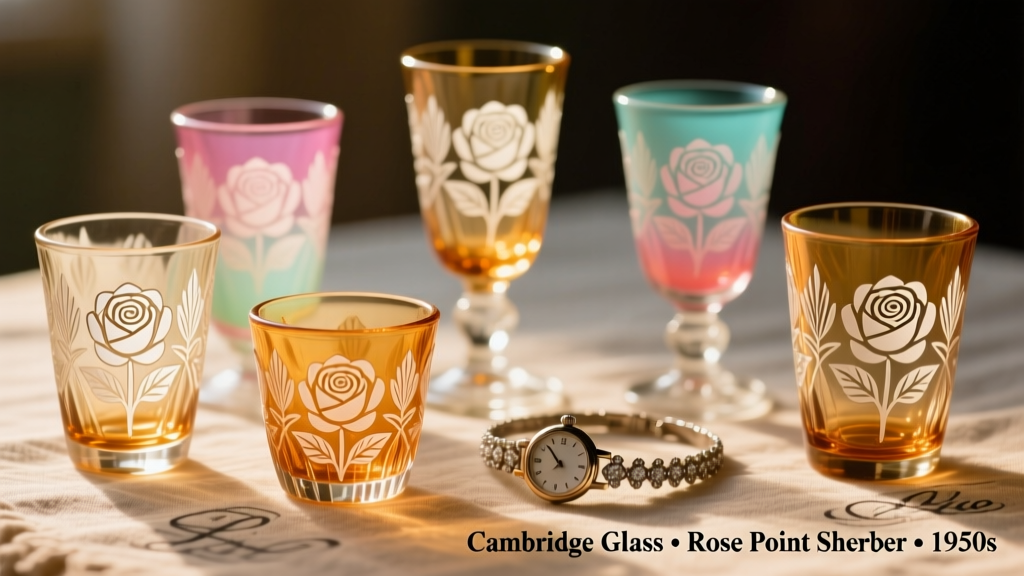
Cambridge Glass Rose Point Sherbet Tall Set: A Collector’s Guide to the Iconic 6-Piece Pattern

Witch: Symbolism, Craftsmanship, and Collectibility in Vintage Jewelry and Horology
The 2024 Reissue of the 1963 Eero Saarinen Womb Chair: Authenticity, Engineering, and Market Impact
Samuel Kirk & Son: Baltimore’s Premier Silversmiths and the Enduring Legacy of American Victorian Silver

Toy Bear Walking Pole Behind Head Twisting Motion Walker: A Windup Tin Automaton from the Golden Age of German Toy Making
Texas Lawman (1947): Authenticating and Valuing the Johnny Mack Brown 13 × 9-Inch Movie Poster
Candlesticks, Brass, Circular Form, Turned & Punched Foliate Design — A Pair Measuring 9 Inches Tall

Beswick Figurine Alsatian No. 969: A Collector’s Guide to the Iconic 1950s German Shepherd

Henry Buttercase: The Forgotten American Watchmaker Who Built Precision Timepieces in Chicago, 1903–1927