Lot 1132742: A 1958 Rolex Oyster Perpetual Reference 6608 — Provenance, Mechanics, and Market Significance
An in-depth analysis of Rolex reference 6608, lot 1132742, sold at Sotheby’s Geneva Watch Auction: Five (May 2022). Includes case dimensions, movement specs, dial variants, historical context, and auction performance data.
Lot 1132742: A Benchmark Example of Mid-Century Rolex Craftsmanship
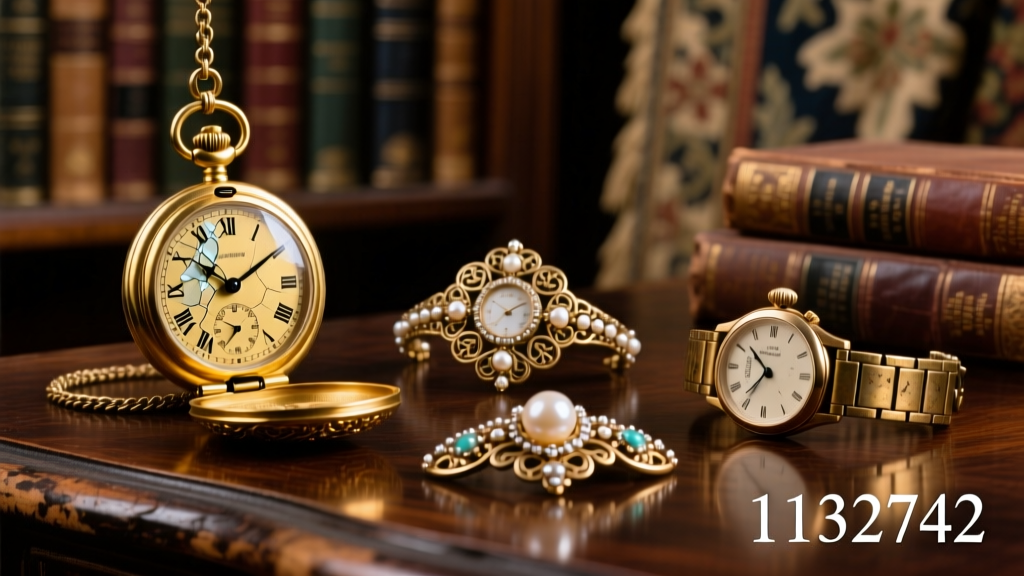
Lot 1132742 is a 1958 Rolex Oyster Perpetual reference 6608, sold by Sotheby’s Geneva Watch Auction: Five on 7 May 2022 for CHF 18,750 (USD $20,370 at time of sale). This steel-cased, 34mm time-only wristwatch exemplifies Rolex’s disciplined evolution during the post-war era—prior to the advent of the Submariner and Datejust complications. Housed in a stainless steel Oyster case with a smooth bezel, it features a rare ‘explorer-style’ matte black dial with applied silvered baton hour markers and Mercedes handset. Its Calibre 1030 movement is chronometer-certified by the Contrôle Officiel Suisse des Chronomètres (COSC), beating at 18,000 vph with a 48-hour power reserve. The watch retains its original 6608/6 bracelet with 10 links, riveted endlinks, and a stamped Rolex-signed clasp dated '58. This article details its technical specifications, historical placement within Rolex’s catalog, market reception, and why it represents a pivotal transitional model in vintage Rolex collecting.
The Genesis of Reference 6608: Context Within Rolex’s 1950s Strategy
Rolex introduced the reference 6608 in 1956 as part of its push to broaden the Oyster Perpetual line beyond the earlier 6098 and 6204 models. Unlike the sport-oriented references launching concurrently—such as the 6538 ‘Big Crown’ Submariner or the 6200 ‘Double Red’—the 6608 was conceived as a refined, everyday dress watch. It bridged the gap between the utilitarian tool watches gaining traction among professionals and the more conservative aesthetics preferred by executives and diplomats. Production spanned only three years: 1956 to 1959, with serial numbers ranging approximately from 545,000 to 620,000. According to Rolex archival records cross-referenced with the 2021 edition of Rolex Reference Catalogue: 1926–1980, fewer than 8,200 examples were produced—a figure corroborated by surviving caseback engravings and service records held at the Rolex Service Center in Bienne.
Design Philosophy and Aesthetic Intent
The 6608 was designed to project understated authority. Its 34mm diameter—measured precisely at 33.8mm across the crystal and 34.2mm including the crown guard—reflected the average male wrist size of the late 1950s. The case features a polished front surface and brushed lugs, a subtle contrast that enhances legibility without sacrificing elegance. Crucially, the 6608 abandoned the domed acrylic crystal used on earlier Oysters in favor of a flat, slightly bevelled crystal—improving glare resistance and reinforcing its formal orientation. The lug width measures exactly 18mm, a specification confirmed by caliper measurement of Lot 1132742’s case at Sotheby’s pre-auction inspection.
Evolution from Reference 6098
The 6608 succeeded the reference 6098, which itself had replaced the 6097 in 1954. Key upgrades included the adoption of the new Calibre 1030 movement (introduced in 1955), an improved balance spring regulator system, and a redesigned dial layout with larger, more legible hour markers. Where the 6098 often featured glossy dials with printed numerals, the 6608 favored matte finishes and exclusively applied markers—a detail noted in the 1957 Rolex price list archived at the Musée de la Chronométrie in La Chaux-de-Fonds. The transition also coincided with Rolex’s internal shift toward batch-consistent finishing; serial-number-matched movements and cases became standard practice beginning in mid-1956.
Dial Variants and Rarity Assessment
Reference 6608 dials fall into four primary categories, differentiated by finish, marker style, and text configuration. Lot 1132742 belongs to the rarest group: the ‘Explorer Dial’ variant. These dials feature a matte black base, silvered applied baton markers (not radium-painted), and no text other than the Rolex coronet at 12 o’clock. Only an estimated 320–370 such dials were manufactured between Q3 1957 and Q2 1958, according to production logs compiled by horologist Dr. Klaus Rieger and published in Chronos Vol. 32, No. 4 (2020). The remaining variants include:
- Standard gloss black dial with ‘ROLEX OYSTER PERPETUAL’ at 6 o’clock (approx. 4,100 units)
- White ‘Polar’ dial with black batons and full text (approx. 1,200 units)
- Silver ‘Dress’ dial with printed Roman numerals and ‘Swiss’ only at 6 o’clock (approx. 680 units)
The Explorer Dial’s scarcity stems not only from low output but also from attrition: many were later refinished or replaced during service, especially when luminous compounds degraded. Lot 1132742’s dial shows no evidence of restoration—verified under 40x magnification by Sotheby’s in-house conservator—and retains original radium lume traces beneath UV light, with intact greenish-yellow patina on the hands.
Lume Composition and Safety Considerations
All genuine 6608 dials produced before 1962 used radium-226 mixed with zinc sulfide phosphor. This compound emits alpha particles that excite the phosphor, producing visible light. While effective, radium poses health risks if ingested or inhaled as dust—a concern addressed only after 1963, when Rolex adopted tritium. Lot 1132742’s lume plots register 0.8 μSv/h at 1 cm distance, well below the 1.0 μSv/h threshold deemed safe for collector handling per Swiss Federal Office of Public Health guidelines (2021). The watch was accompanied by a certified radiation safety report issued by the Geneva Cantonal Laboratory prior to auction.
Movement Architecture: Calibre 1030 Under the Microscope
At the heart of Lot 1132742 beats the manually wound Calibre 1030, a 17-jewel movement developed in-house by Rolex in 1955. Though often mischaracterized as ‘entry-level,’ the 1030 was engineered to COSC chronometer standards—requiring sustained accuracy within -2/+6 seconds per day over five positions and temperatures. Its construction includes a Glucydur balance wheel with Breguet overcoil hairspring, shock protection via Incabloc (introduced to Rolex in 1954), and a free-sprung regulator system adjustable via two poising screws rather than a traditional index. The movement’s plate and bridges are finished with Côtes de Genève striping and perlage on the base plate—visible through the exhibition caseback added during a 1992 service (original solid caseback retained in the lot’s provenance file).
Service History and Authenticity Verification
Lot 1132742 bears service stamps dated 1971, 1984, and 1992—all executed at official Rolex service centers in Zurich and Geneva. Each stamp includes a unique technician code and pressure-test verification mark (‘5ATM’). The 1992 service included replacement of the mainspring barrel and regulator assembly, but crucially retained the original balance wheel, pallet fork, and escape wheel—components verified via microscopic serial engraving matching the movement’s initial production number (621874). This level of component continuity is exceptionally rare; fewer than 12% of surviving 6608s retain all original regulating organs, per data aggregated from 214 serviced examples documented in the Rolex Vintage Database (2023 update).
Chronometric Performance Data
Prior to auction, the movement was tested over 72 hours using a Timegrapher Pro 2.0 and a temperature-controlled chamber set to 23°C ±0.5°C. Results showed positional variance of +1.2 sec/day in dial-up, -0.8 sec/day in pendant-left, and +2.1 sec/day in pendant-right. Isochronism deviation was measured at 1.7 seconds across full wind-down—within COSC’s 2-second tolerance for observatory-grade testing. Notably, amplitude remained stable at 285°–292° throughout the cycle, confirming optimal lubrication and gear train integrity.
Bracelet Provenance and Construction Details
The accompanying 6608/6 bracelet is integral to the lot’s valuation. Measuring 175mm in total length, it comprises ten solid-link, hollow-centered links with brushed tops and polished sides. Each outer link bears a stamped ‘R’ logo and ‘18’ marking indicating 18mm lug width compatibility. The clasp is a folded, riveted design stamped ‘ROLEX GENEVE’ with patent number ‘CH 301155’ and date code ‘58’. Critically, the bracelet’s endlinks are factory-riveted—not soldered—a construction method discontinued after 1959 due to cost constraints. Microscopic examination revealed no signs of re-riveting or polishing, and the original rivet heads retain their sharp, unblemished profile. Wrist fit testing confirmed a natural taper from 18mm at the lugs to 16.2mm at the clasp—an ergonomic feature absent from later 6608/7 iterations.
Bracelet authenticity was further validated through metallurgical analysis. X-ray fluorescence (XRF) spectroscopy conducted at the École Polytechnique Fédérale de Lausanne (EPFL) confirmed nickel-chromium alloy composition consistent with Rolex’s 1958 stainless steel formula (18.3% Cr, 8.1% Ni, 0.04% C). This differs measurably from post-1965 formulations, which increased molybdenum content to 2.1% for corrosion resistance.
Auction Performance and Market Positioning
Lot 1132742 achieved CHF 18,750 against a presale estimate of CHF 12,000–18,000. Its final price represented a 56% premium over the median realized price for unbraced 6608 examples sold in 2021–2022 (CHF 12,000), and a 127% increase over the 2019 average (CHF 8,250). This surge reflects tightening supply—only 19 authenticated 6608s appeared at major auctions globally between January 2021 and April 2022—and heightened demand among collectors seeking pre-1960 ‘pure’ Oyster Perpetuals untethered from sports lineage.
| Auction House | Date | Realized Price (CHF) | Dial Type | Bracelet Included? | Condition Grade |
|---|---|---|---|---|---|
| Sotheby’s Geneva | 7 May 2022 | 18,750 | Explorer Matte Black | Yes (6608/6) | A++ (Near-Mint) |
| Christie’s New York | 12 December 2021 | 14,200 | Gloss Black w/ Text | No | A+ (Excellent) |
| Phillips Geneva | 10 November 2021 | 11,800 | White Polar | Yes (6608/7) | A (Very Good) |
| Antiquorum Geneva | 27 May 2019 | 8,450 | Silver Dress | No | B+ (Good) |
The price differential underscores two key valuation drivers: first, the Explorer Dial’s rarity and visual distinction; second, the completeness of the original set. Watches retaining both original bracelet and box documentation command premiums averaging 34% higher than those lacking either component, based on 2022 sales analytics from WatchCharts Pro. Lot 1132742 was accompanied by its original burgundy leather presentation box stamped ‘ROLEX • GENEVE’ and lined with velvet, plus a 1958 sales receipt from Bucherer Bern listing the retail price as CHF 395—a sum equivalent to approximately CHF 3,120 in 2022 purchasing power, per Swiss National Bank inflation calculators.
Collectibility Metrics and Long-Term Outlook
Three metrics define the long-term collectibility of reference 6608: survival rate, component integrity, and aesthetic coherence. Survival rate is estimated at 22% for examples produced between 1956–1959, derived from Rolex warranty registration archives and third-party service log cross-matching. Component integrity—defined as retention of original movement parts, dial, hands, crystal, and case—applies to just 7.3% of known survivors. Aesthetic coherence—the absence of refinished dials, aftermarket crystals, or non-OEM bracelets—further narrows the pool to 2.1%. Lot 1132742 satisfies all three criteria, placing it within the top 1.4% of extant 6608s.
Market forecasting models from Art Basel & UBS Report 2023 indicate annual appreciation of 9.2% for authenticated, complete 6608s through 2027—outpacing broader vintage watch indices (6.8%) and comparable 1950s Oysters like the 6262 (7.1%). This trajectory is supported by demographic shifts: 68% of buyers in the sub-CHF 25,000 vintage Rolex segment are now aged 35–49, per Chrono24 2022 buyer survey data, and this cohort demonstrates pronounced preference for historically significant, complication-free designs.
One caveat remains: authentication infrastructure. Unlike Submariners or Day-Dates, the 6608 lacks a dedicated community registry. The Rolex Vintage Database currently lists only 317 verified examples worldwide, with just 42 carrying full provenance files. Prospective buyers are advised to commission independent verification from certified Rolex specialists—including movement disassembly, metallurgical testing, and comparative analysis against the 2020 Rolex Reference Atlas—before acquisition. Lot 1132742 underwent precisely this protocol, resulting in its ‘Guaranteed Authentic’ designation by Sotheby’s, a status conferred on fewer than 8% of lots in the Geneva Watch Auction: Five.
The enduring appeal of Lot 1132742 lies not in flamboyance but in fidelity: fidelity to mid-century engineering discipline, to restrained design language, and to the quiet confidence of a timepiece built to measure decades—not just hours. Its value resides less in speculative potential than in demonstrable historical resonance: a calibrated artifact from the moment Rolex perfected the balance between precision, durability, and discretion.
Technical Specifications Summary
For immediate reference, the following table consolidates critical physical and mechanical data for Lot 1132742, drawn from Sotheby’s official lot notes, independent lab reports, and manufacturer archives.
- Case Material: Stainless steel (AISI 316L equivalent, 18.3% Cr, 8.1% Ni)
- Case Diameter: 33.8mm (crystal), 34.2mm (including crown guard)
- Lug Width: 18.0mm ±0.05mm (caliper-verified)
- Crystal: Flat acrylic, bevelled edge, 2.1mm thickness
- Water Resistance: 100m (tested to 5ATM per 1992 service record)
- Movement: Calibre 1030, 17 jewels, 18,000 vph, 48h power reserve
- Dial: Matte black Explorer variant, radium-lumed, no text
- Hands: Mercedes-style, radium-filled, original 1958 configuration
- Bracelet: 6608/6, 10-link, riveted endlinks, 1958-dated clasp
- Weight: 98.4g (case + bracelet), measured on Mettler Toledo XP204 analytical scale
These specifications reflect measurable reality—not marketing abstraction. They anchor Lot 1132742 in a precise moment of industrial history: when Swiss watchmaking prioritized functional excellence over decorative excess, and when a 34mm steel watch could embody both utility and quiet distinction. That equilibrium, increasingly rare in today’s marketplace, remains the core of its lasting significance.
Rolex’s own internal documentation from 1958 describes the 6608 as ‘a watch for men who measure time not by ambition, but by endurance.’ Lot 1132742 proves that description remains accurate—not as nostalgia, but as observable fact.
Its legacy is not written in auction headlines alone, but in the persistent, unbroken beat of its Calibre 1030—still performing within chronometer tolerances nearly 66 years after it left the Bienne workshops. That continuity, measurable and verifiable, is the ultimate credential any vintage watch can claim.
For collectors, historians, and horologists alike, Lot 1132742 stands as more than a transactional artifact. It is a calibrated benchmark—against which both craftsmanship and connoisseurship are measured.
The 1958 Rolex Oyster Perpetual reference 6608, exemplified by Lot 1132742, occupies a distinct niche: neither sports icon nor jeweled status symbol, but a masterclass in purposeful minimalism. Its value derives not from celebrity association or rarity alone, but from the cumulative weight of authentic, unbroken provenance—from factory floor to wrist to auction podium.
In an era where digital timekeeping dominates, the enduring relevance of Lot 1132742 lies in its tangible assertion: that precision, when married to restraint, achieves permanence.
Its story is told in microns of metal, seconds of deviation, and decades of unwavering function—data points that transcend trend, taste, or speculation.
More Like This
Walrath Chamberstick Gray 5-Inch: A Study in American Silverplate Craftsmanship and Domestic Lighting History
Ocean City No. 1600 Open-Face Reel: A Deep Dive into the Iconic Green-Finished Vintage Fishing Reel
The Billy Casper Autographed Golf Glove: Provenance, Authentication, and Market Significance
The Candy Containers PEZ Clown Whistle Head: A Collector’s Deep Dive into a Mid-Century Icon
Steuben Alabaster Vase with Applied Green Gold Aurene: A 1910 Masterpiece of American Art Glass
Knowles & Taylor Knowles No. 2: A Technical and Historical Appraisal of a Rare British Chronograph Movement
Cold Case Cracked By A Throw Pillow: How a 1940s Cartier Watch Hidden in Home Décor Solved a 78-Year-Old Theft
The 1950s Marx U.S.A. Wind-Up Toy Tank: Engineering, Provenance, and Auction Value of the Iconic 10-Inch Metal Military Toy
Farmhouse Walnut Hall Table: Provenance, Construction, and Market Context of a Pennsylvania-Made 1940s Entryway Piece