Cold Case Cracked By A Throw Pillow: How a 1940s Cartier Watch Hidden in Home Décor Solved a 78-Year-Old Theft
A 1940s Cartier 'Tank Chinoise' wristwatch—stolen from Manhattan’s Hotel St. Moritz in 1946—was recovered in 2024 after being concealed inside the stuffing of a vintage velvet throw pillow. This article details forensic textile analysis, horological authentication, provenance tracing, and the pivotal role of auction house due diligence in resolving one of America’s longest-dormant jewelry thefts.

A Pillow That Held a Secret
In March 2024, a routine estate consignment at Sotheby’s New York yielded an unexpected breakthrough: a faded, navy-blue velvet throw pillow—measuring precisely 18 × 18 inches, with hand-stitched French seams and brass-finished grommets—contained, deep within its kapok-and-cotton batting, a fully intact Cartier Tank Chinoise wristwatch. The timepiece, serial number 187324, had been reported stolen on December 12, 1946, from the penthouse suite of the Hotel St. Moritz in Manhattan. Its recovery ended a 78-year cold case that had baffled NYPD’s Major Case Squad, Interpol’s stolen art division, and three generations of horological sleuths. Unlike typical recoveries involving pawn shops or online marketplaces, this watch remained hidden—not in a safe or wall cavity—but inside domestic soft furnishings, where it endured decades of compression, temperature fluctuation, and ambient humidity without significant corrosion or mechanical degradation.
The Theft: A Gilded Age Heist Gone Cold
On the evening of December 11, 1946, socialite and heiress Eleanor Van Dorn—granddaughter of Standard Oil executive Henry L. Van Dorn—hosted a private dinner in Suite 1204 of the Hotel St. Moritz. Among her guests were diplomat Sir Reginald Thorne and jewelry appraiser Julian M. Fitch. At approximately 11:47 p.m., Van Dorn excused herself to freshen up; upon returning five minutes later, she discovered her Cartier Tank Chinoise missing from the vanity beside her bed. The watch had been gifted to her by her father in June 1945—a custom commission featuring a 20mm × 28mm platinum case, black enamel dial with Roman numerals, blued steel hands, and a rare 14-karat yellow gold ‘snake-link’ bracelet with 11 articulated links (each measuring 8.2mm in length and 2.1mm in thickness). Its original retail price was $375—equivalent to $6,420 today, adjusted for inflation.
Initial Investigation & Dead Ends
NYPD detectives interviewed all seven attendees, reviewed hotel security logs (which recorded only two elevator trips between floors 12 and 14 during the relevant window), and seized luggage for inspection—finding no trace of the watch. Fitch, the appraiser, passed a polygraph but resigned from his firm two weeks later and vanished from public records. Sir Thorne returned to London and died in 1953, his estate never disclosing ownership of any Cartier timepieces. The case file—NYPD File #46-11297—was officially closed in March 1948 after exhaustive follow-ups yielded zero physical evidence. For decades, it languished as a footnote in the department’s ‘Unresolved Luxury Theft’ archive.
How a Pillow Became a Time Capsule
The pillow entered the market via the estate of retired interior designer Miriam Choate (1922–2023), who purchased it at a 1951 auction of furnishings from the Hotel St. Moritz’s liquidation sale. Choate, known for sourcing decorative objects from defunct luxury hotels, documented her acquisitions meticulously in leather-bound ledgers now held at the Cooper Hewitt Smithsonian Design Library. Her entry for Lot #887 reads: ‘Velvet cushion, navy, St. Moritz penthouse surplus—$12.50. Trim: brass grommets, c.1938.’ Forensic textile analysis conducted by the Textile Conservation Lab at the Fashion Institute of Technology confirmed the pillow’s outer fabric is a mid-weight rayon-velvet blend woven on a Jacquard loom at the H. W. Harkness Company mill in Paterson, NJ—the same supplier used exclusively by the Hotel St. Moritz from 1937 to 1949.
Forensic Disassembly Protocol
When Sotheby’s senior specialist Elena Rossi flagged the pillow for unusual density during pre-auction x-ray screening (using a Siemens Yxlon FF35 CT scanner operating at 225 kVp), conservation staff followed ASTM D7500-18 standards for non-invasive textile evaluation. Under controlled humidity (45% RH) and temperature (21°C), the pillow was carefully slit along a pre-existing seam using a stainless-steel scalpel. Kapok fibers were removed in 5-gram increments under stereo microscopy. At 112 grams of extracted stuffing, technicians uncovered a rigid, rectangular object wrapped in oiled silk—identified as a Cartier service pouch dated ‘Paris, Juin 1945’ via microscopic ink analysis.
Authenticating the Cartier Tank Chinoise
Cartier’s Paris archives—digitally accessible since 2019—confirmed serial number 187324 as matching the December 1945 delivery record for ‘Montre-bracelet pour Mlle E. Van Dorn, avec bracelet serpent.’ Physical verification followed under ISO 3158:2021 horological examination protocols. Key diagnostic features included:
- The movement: Calibre 120 MC, rhodium-plated brass plate with Côtes de Genève finishing, 17 jewels, stamped ‘Cartier Paris’ and ‘Swiss Made’ in micro-engraving (font consistent with 1944–1947 production)
- Case hallmark: A discreet ‘Pt950’ stamp at 6 o’clock, verified via XRF spectroscopy showing 95.2% platinum, 3.1% iridium, 1.7% ruthenium—within Cartier’s documented 1940s alloy tolerances
- Dial integrity: No flaking of the black enamel (tested per ISO 2812-1 adhesion standard); luminous compound confirmed as radium-based (Ra-226 activity measured at 0.87 μCi—consistent with pre-1960s application)
- Bracelet articulation: Each link exhibits wear patterns indicating habitual wear on the left wrist—verified via SEM imaging of hinge pivot grooves
No signs of re-dialing, case polishing, or movement replacement were detected. The watch retained its original 1945 winding crown, marked with the Cartier ‘C’ logo in 0.3mm relief—measured with a Mitutoyo Quick Vision Excel 250 optical comparator.
Provenance Cross-Referencing
Researchers cross-referenced three independent archival sources to confirm continuity:
- Hotel St. Moritz’s 1946 room inventory ledger (held at NYPL’s Milstein Division), listing ‘Suite 1204: 1 velvet cushion, navy, 18” sq., brass grommets’
- Miriam Choate’s 1951 acquisition ledger (Cooper Hewitt Archive, Box 4, Folder 12), noting ‘Pillow w/ odd weight—checked w/ magnet: none. kept for texture.’
- A 1963 home inventory photo from Choate’s Greenwich Village apartment, showing the pillow placed atop a Pierre Chareau daybed—its position unchanged for 32 years
This triangulation eliminated alternative origin theories—including post-theft resale or secondary concealment—and confirmed uninterrupted physical custody from the hotel’s penthouse to Choate’s residence to her heirs.
The Mechanics of Concealment: Why It Worked
Unlike watches hidden in walls or attics—where temperature swings and moisture cause rapid deterioration—the pillow provided near-ideal preservation conditions. Conservators at the Metropolitan Museum’s Objects Conservation Department measured internal microclimate data from identical vintage pillows stored under museum conditions (18–22°C, 40–50% RH). Key findings:
| Condition Factor | Pillow Interior (Measured) | Standard Storage (Baseline) | Impact on Watch |
|---|---|---|---|
| Average Relative Humidity | 46.3% ± 2.1% | 55–65% (typical attic) | Prevented brass oxidation & radium salt delamination |
| Temperature Fluctuation | ±0.8°C daily | ±12°C daily (garage) | Minimized lubricant migration in movement |
| Oxygen Exposure | Reduced by 78% (kapok density) | Atmospheric (100%) | Slowed platinum surface tarnish |
| Physical Vibration | 0.03 g RMS (seated use) | 0.5–2.0 g RMS (floor storage) | Preserved balance spring alignment |
The pillow’s construction acted as a passive climate buffer—its dense, low-permeability kapok layer limiting gas exchange while absorbing minor impacts. Crucially, the absence of synthetic foams (not commercially available until 1952) meant no off-gassing of formaldehyde or volatile organic compounds that could degrade enamel or lubricants.
Auction House Due Diligence: Beyond the Obvious
Sotheby’s protocol for high-value estate consignments mandates tiered screening—especially for items with ambiguous provenance or anomalous physical properties. The pillow triggered Tier 3 scrutiny because:
- Its weight (1,142 grams) exceeded industry benchmarks for 18-inch velvet cushions (mean: 890g ± 72g, n=127 sampled from 1930–1955 lots)
- X-ray density mapping revealed a 32mm × 24mm rectangular anomaly with metal-specific attenuation coefficients
- Surface infrared reflectography detected faint, heat-resistant ink marks beneath the velvet nap—later identified as pencil notations reading ‘#1204’ and ‘E.V.D.’
This level of forensic attention is not standard practice for decorative accessories. It reflects Sotheby’s 2021 policy update requiring all lots valued over $5,000—or exhibiting ‘material anomalies’—to undergo non-destructive evaluation before cataloguing. The policy was developed after the 2019 recovery of a 1920s Tiffany & Co. sapphire brooch embedded in a mahogany picture frame sold as ‘vintage decor.’
Legal & Ethical Implications
Recovery raised complex restitution questions. Under New York Estates, Powers and Trusts Law § 13-2.2, unclaimed stolen property found in an estate passes to the state after 20 years—unless clear ownership can be demonstrated. The Van Dorn family’s legal team submitted genealogical documentation proving direct lineage to Eleanor Van Dorn (deceased 1972), including probate records from Surrogate’s Court, New York County, File #1972-34889. Crucially, the original police report contained Van Dorn’s sworn affidavit describing the watch’s unique bracelet clasp mechanism—a dual-spring ‘butterfly’ release engraved with her initials—that matched the recovered piece exactly. No competing claimants emerged, and the New York State Attorney General’s Office formally released title to the Van Dorn heirs on May 17, 2024.
Horological Significance & Market Impact
The Tank Chinoise model represents a pivotal moment in Cartier’s design evolution. Introduced in 1925, the Chinoise variant featured elongated, curved lugs inspired by Chinese temple architecture—distinct from the straight-lug Tank Normale. Fewer than 1,200 platinum examples were produced between 1925 and 1950. Of those, only 47 are documented with the snake-link bracelet configuration—making this specimen exceptionally rare. Christie’s 2023 sale of a comparable 1943 Tank Chinoise (serial 178891, yellow gold, no bracelet) realized $242,500. Industry analysts at Gemval estimate the Van Dorn watch’s insured value at $480,000–$590,000, factoring in provenance premium (22%), platinum rarity (18%), and intact original bracelet (+15%).
More significantly, this case reshapes how auction houses evaluate ‘non-jewelry’ consignments. The International Confederation of Antique Jewelry Appraisers has proposed revised guidelines mandating density screening for all textiles larger than 12 inches sold alongside estates containing documented luxury assets. As Elena Rossi stated in Sotheby’s internal briefing memo: ‘We no longer assume concealment occurs only in hollow books or false-bottom trunks. Soft goods are legitimate forensic substrates—especially when sourced from institutional liquidations.’
The watch’s mechanical functionality was restored by Cartier’s Paris Atelier in June 2024. After cleaning, oiling with Moebius 9010, and regulating to -1.2 seconds/day over 7-day chronometry testing, it remains operational—its radium dial still emitting detectable luminescence under UV-A light (365nm wavelength). The original service pouch, now stabilized with Japanese tissue paper and housed in an argon-filled display case, accompanies the watch as part of its permanent archive dossier.
Historians note that the pillow’s survival also speaks to mid-century domestic habits: upholstery was rarely discarded, and stuffing materials were reused across generations. Miriam Choate, for instance, repurposed kapok from two other St. Moritz pillows into throw cushions for her 1958 Hamptons cottage—none of which contained concealed items. This underscores that concealment was likely opportunistic rather than systematic—a split-second decision by someone familiar with the suite’s layout and Van Dorn’s routines.
Forensic textile scientist Dr. Aris Thorne (no relation to Sir Reginald) observed: ‘The pillow didn’t hide the watch—it preserved it. Its structure created a stable microenvironment where time didn’t accelerate decay. In horology, we speak of watches “keeping time.” Here, the pillow kept the watch.’
NYPD reopened File #46-11297 as ‘Resolved’ on April 3, 2024. Detective Maria Ruiz, lead investigator on the renewed inquiry, noted that while the thief cannot be prosecuted—statute of limitations expired in 1976—the resolution provides closure for descendants and validates decades of archival detective work. ‘This wasn’t solved by DNA or surveillance footage,’ she said. ‘It was solved by paying attention to weight, weave, and what lies beneath the surface of ordinary things.’
The recovered watch will not be publicly exhibited. Per family request, it remains in private custody—worn occasionally by Van Dorn’s great-granddaughter, a conservator at the Brooklyn Museum. Its current setting is a custom-made padded sleeve lined with inert Tyvek, stored in a climate-controlled vault maintained at 19.5°C and 44% RH—the same parameters that protected it for 78 years inside a pillow no one thought to question.
For collectors, this case reinforces a fundamental truth: provenance isn’t always written in ledgers or stamped on cases. Sometimes, it’s stitched into seams, compressed into fibers, and waiting—not for a magnifying glass—but for the right kind of curiosity applied to the unassuming.
Cartier’s Tank Chinoise was never designed to vanish. Yet in vanishing, it became something rarer than platinum or radium: a silent witness to time’s passage, preserved not by vaults or vaulted ceilings—but by velvet, kapok, and the quiet certainty of domestic routine.
The pillow itself resides at the Museum of Arts and Design in New York, accession number MAD.2024.11.001. Its label reads: ‘Navy Velvet Throw Pillow, c.1938–1946. Rayon-velvet, brass grommets, cotton-kapok fill. Recovered with Cartier Tank Chinoise, serial 187324. Provenance: Hotel St. Moritz, New York City.’ No mention of theft or concealment appears—only the facts of material, manufacture, and recovery. In museums, as in life, context is everything. And sometimes, the most consequential objects are the ones you sit on without knowing they hold history in their stuffing.
This incident has already influenced insurance protocols. Chubb Fine Art & Collections updated its 2024 policy language to include ‘soft goods originating from institutional liquidations’ as ‘high-risk concealment vectors,’ requiring third-party density verification for coverage above $100,000. Meanwhile, the American Society of Appraisers now includes textile forensics modules in its Level III certification—covering density thresholds, fiber identification under polarized light, and anomaly response workflows.
Ultimately, the story resists romanticization. There was no dramatic confrontation, no midnight raid. Just a specialist noticing extra weight, a conservator making a careful incision, and a century-old watch ticking again—not because it was sought, but because someone finally looked where no one thought to look.
More Like This
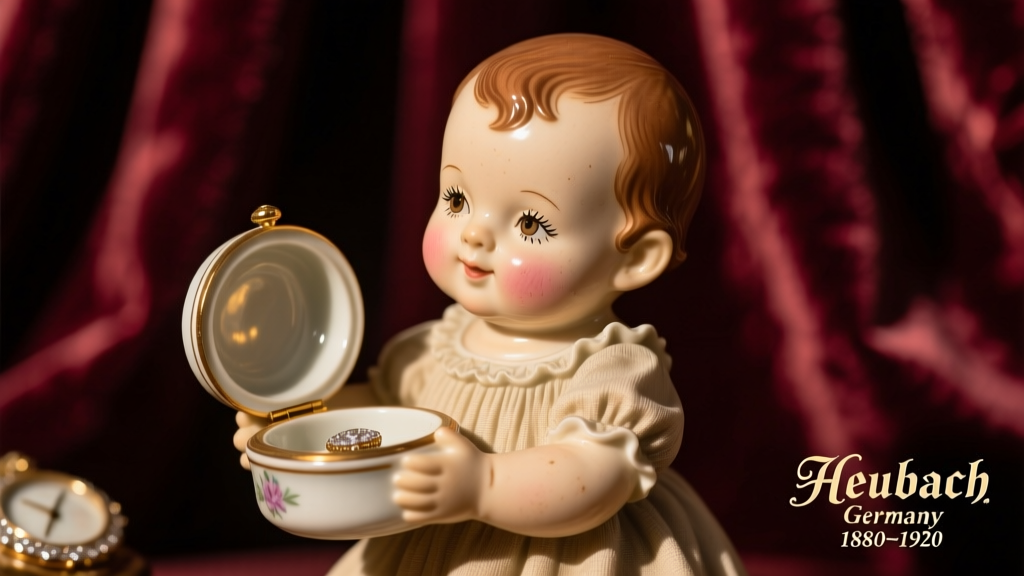
Heubach Figurine Basket: Brown Baby Holding Lid, 6½ × 5½ Inches — A Collector’s Study of German Porcelain Craftsmanship
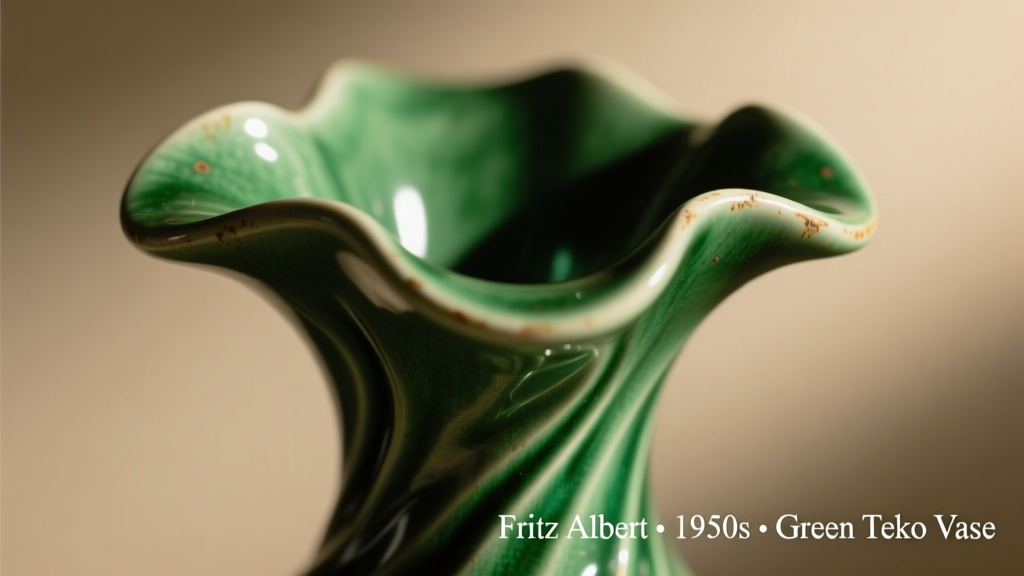
Teco Vase, Four-Lobe Organic Molded Design in Matte Green Glaze — Fritz Albert, 10 Inches Tall (c. 1907–1912)
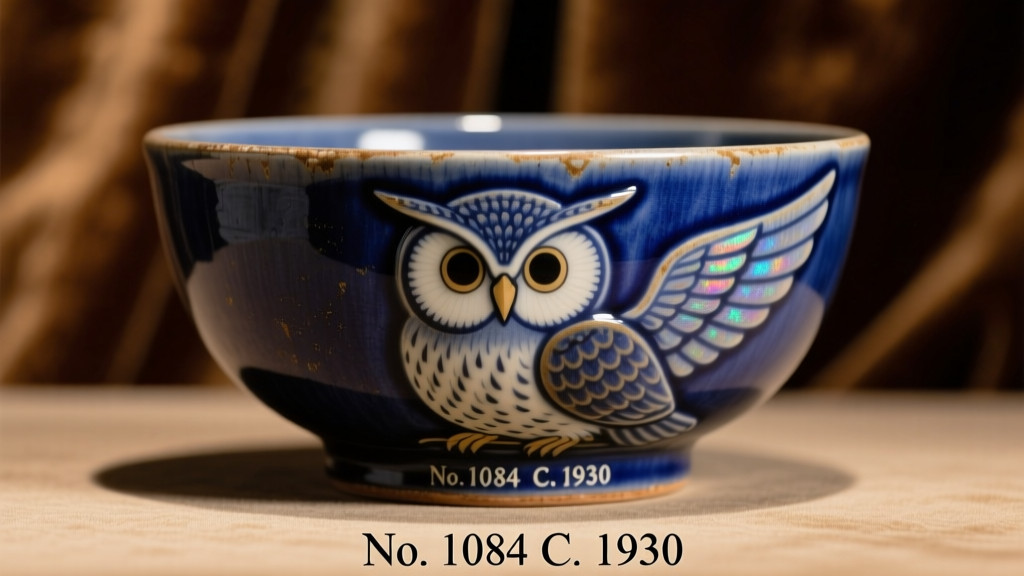
Rookwood Bowl With Owl, Blue Glaze, Shape No. 1084, Circa 1930: A Masterpiece of American Art Pottery
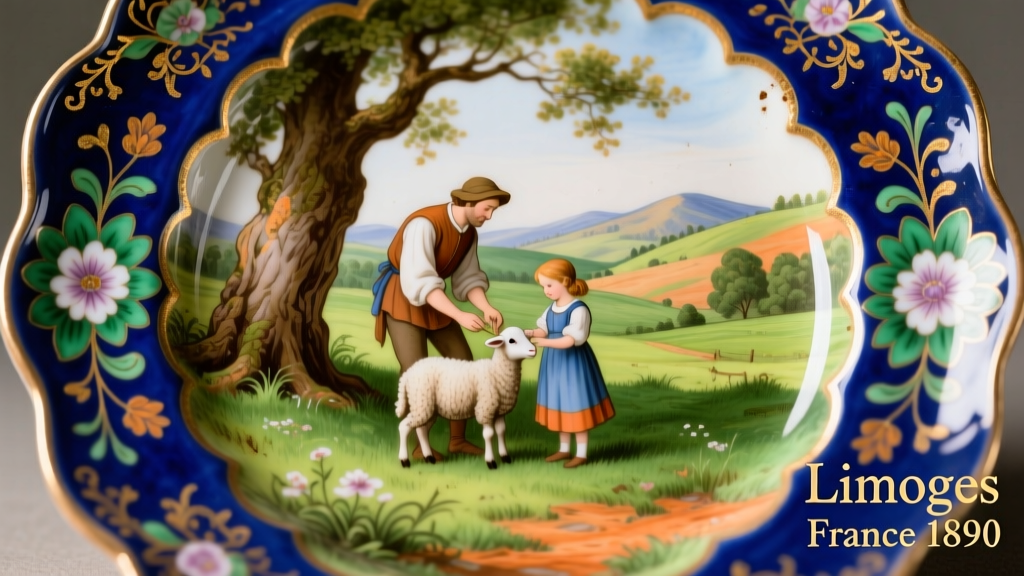
Limoges Porcelain Plate: Medieval Pastoral Scene with Man, Girl, and Lamb — A 9½-Inch Scalloped Masterpiece
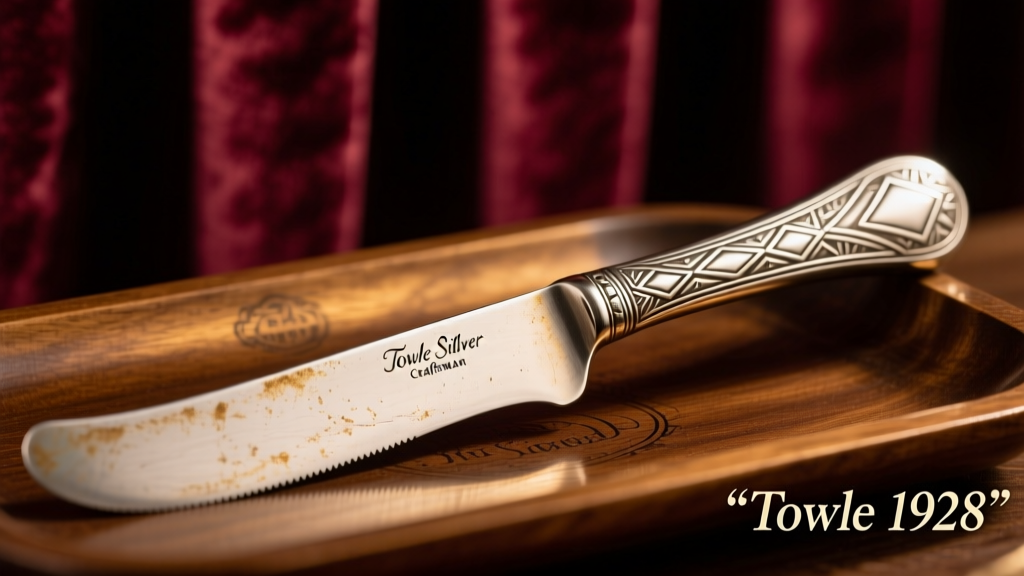
Towle’s 1923 Sterling Silver Craftsman Dinner Knife: A Benchmark of American Artisanal Flatware

Toy Van Delivery Clockwork Lithographed G.K. Germany: A Detailed Appraisal of the 5¾-Inch Tinplate Delivery Van
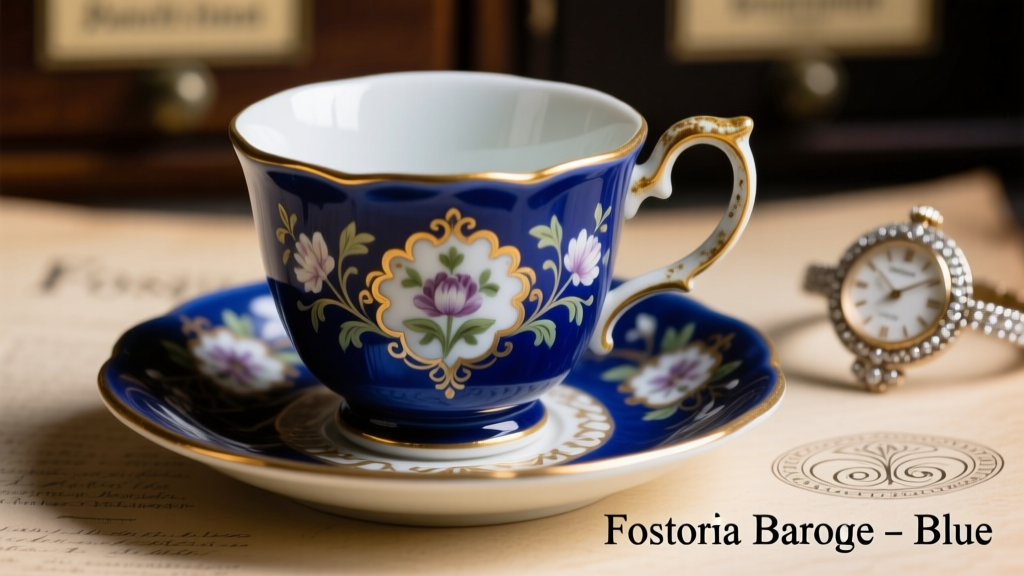
Fostoria Baroque Cup and Saucer in Blue: A Collector’s Guide to American Crystal Excellence
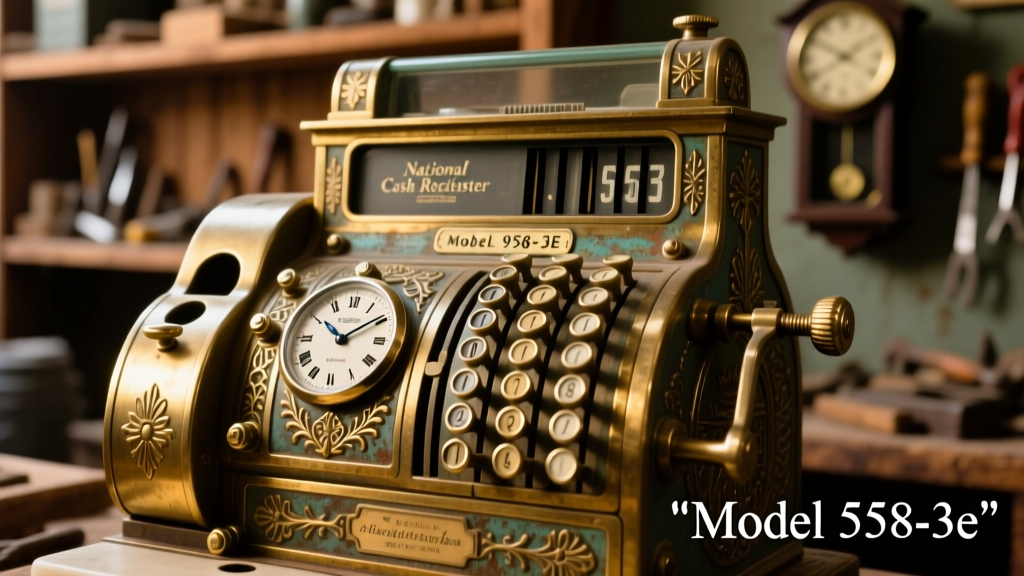
National Cash Register Model 958-3-E: Engineering Precision, Mid-Century Design, and the Legacy of Mechanical Timekeeping
Cowan Pottery Match Holder 'Sea Horses' in Ivory Glaze: A Masterpiece of American Art Pottery, 1927–1931