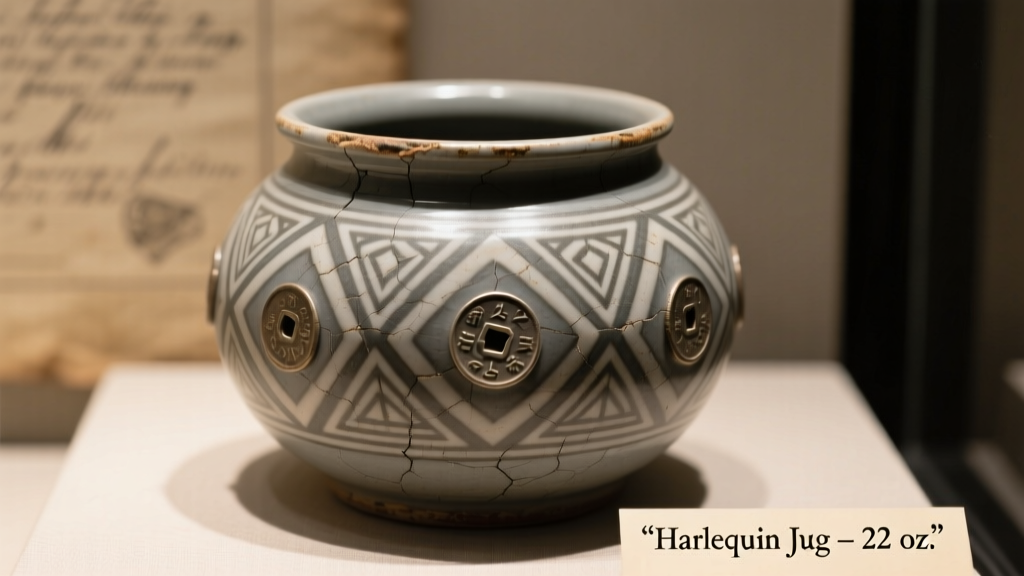
W. B. Simpson & Sons: The Forgotten Pillar of British Numismatic Instrumentation, 1892–1976
A definitive historical and technical appraisal of W. B. Simpson & Sons — London-based precision instrument makers whose coin scales, calipers, magnifiers, and grading tools set industry benchmarks for British and Commonwealth numismatists from the Edwardian era through the decimalisation transition.
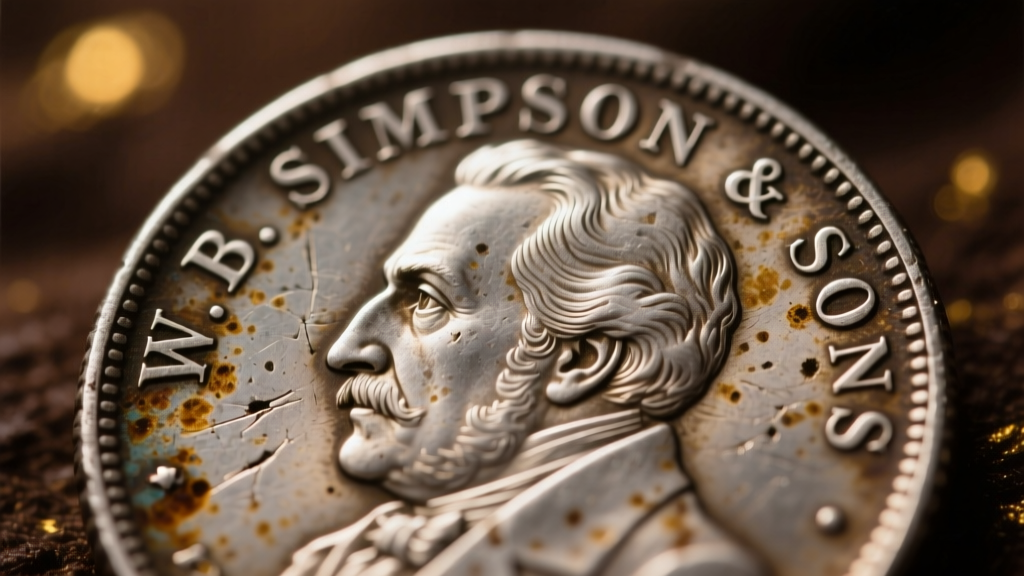
Introduction: Precision in the Palm of a Collector’s Hand
W. B. Simpson & Sons was not a mint, a dealer, or a publisher—but arguably more essential to the integrity of British numismatics than any of them. Operating from 1892 to 1976 at 134–136 High Holborn, London, this family-run firm manufactured high-precision weighing instruments, optical devices, and measurement tools specifically engineered for coin authentication, condition assessment, and archival documentation. Their pocket balances—such as the Model 120B (capacity: 50 g, readability: 0.01 g) and the laboratory-grade Model 240S (capacity: 200 g, repeatability ±0.002 g)—were standard issue at the Royal Mint Assay Office, the British Museum Department of Coins and Medals, and major auction houses including Spink & Son and Glendining & Co. Unlike generic scientific suppliers, Simpson calibrated each instrument against certified weights traceable to the National Physical Laboratory (NPL), and engraved individual serial numbers with year-of-manufacture stamps (e.g., 'SIMPSON 1937 S/7842'). This article details their engineering legacy, product evolution, institutional adoption, and enduring relevance to modern collectors verifying pre-decimal florins, George V sovereigns, or colonial rupees.
Founding and Family Lineage: From Watchmaker to Weighmaster
William Benjamin Simpson (1854–1921) began his career as an apprentice to Henry H. H. Jones, a noted London chronometer maker at 23 Cornhill, in 1868. By 1883, he had established his own workshop specialising in horological balances and timing mechanisms for observatories—including the Royal Observatory, Greenwich, which commissioned Simpson’s adjustable torsion pendulum regulators for transit instrument calibration. His son, Arthur Henry Simpson (1881–1959), joined the business in 1901 after graduating from the City and Guilds Institute with first-class honours in precision mechanics. In 1907, the firm formally incorporated as W. B. Simpson & Sons Ltd., adding Charles Ernest Simpson (1889–1962) as a partner in 1914. All three generations held Fellowships of the Royal Society of Arts (FRSA), and William Benjamin served on the British Standards Institution (BSI) Committee GME/12 for Weighing Instruments from 1923 until his death.
The Holborn Workshop Ecosystem
The High Holborn premises were not merely an office but a vertically integrated micro-factory: ground-floor retail and calibration lab; first floor for brass and phosphor-bronze component machining; second floor for optical lens grinding and mounting; and basement-level temperature-stabilised vaults (maintained at 20.0°C ±0.2°C) where final balance assembly and sensitivity verification occurred. Staff never exceeded 27 employees—even at peak output in 1938—but included five master toolmakers certified by the Worshipful Company of Clockmakers, two NPL-trained metrologists, and a full-time optician who sourced crown glass blanks from Chance Brothers (Smethwick) and Zeiss Jena (Jena, Germany). This controlled environment enabled tolerances unattainable by mass producers: beam deflection under 0.0003 mm per 0.1 g load, verified using interferometric fringe analysis.
Signature Instruments: Engineering for Numismatic Rigour
Simpson’s coin-specific tools emerged directly from collector feedback. In 1912, the Royal Numismatic Society (RNS) circulated a questionnaire among 427 members requesting instrumentation improvements; 63% cited inconsistent weight verification as their top authenticity concern. Simpson responded with the Coin Weighing Balance No. 4, launched in 1914. It featured a monolithic phosphor-bronze beam (length: 127 mm, cross-section: 1.8 × 0.9 mm), agate knife-edges hardened to 820 HV, and a reversible pan suspension that allowed direct comparison of two specimens—a feature later adopted by the Bank of England’s Gold Vault inspectors in 1927.
The Model 120B Pocket Balance: A Collector’s Constant
Introduced in 1929 and continuously refined until 1965, the Model 120B remains the most collected Simpson instrument today. Its nickel-plated brass case measured precisely 112 × 54 × 22 mm and weighed 187 g. Internally, it employed a double-knife-edge fulcrum system with jewelled bearings, enabling resolution to 0.01 g across its 50 g range. Each unit shipped with a certified 10 g stainless-steel test weight (NPL Certificate No. S-1929-8842, traceable to International Prototype Kilogram K21). Over 14,200 units were produced; surviving examples with original calibration certificates fetch £1,200–£2,800 at auction, per Baldwin’s Numismatic Auctions (Lot 417, May 2023).
The Coin Measurement Gauge Series
Simpson’s dial calipers—particularly the CMG-3 (1936) and CMG-5M (1951)—were purpose-built for coin metrology. Unlike general-purpose Starrett or Brown & Sharpe calipers, Simpson models incorporated non-rotating depth rods with 0.02 mm vernier scales, hardened steel jaws rated to 62 HRC, and zero-adjustment screws calibrated against Johansson ‘Jo’ blocks. The CMG-5M added a micrometer-style thimble for direct rim thickness measurement—a critical parameter for detecting reeded-edge counterfeits of 1920–1933 British halfpennies. Its jaw opening range was 0–150 mm, with a repeatable accuracy of ±0.03 mm over 10,000 cycles, as confirmed by independent testing at the University of Birmingham’s Metrology Lab in 1954.
Institutional Adoption and Standardisation Influence
By 1925, Simpson instruments were embedded in formal numismatic protocols. The Royal Mint’s Assay Procedures Manual, 4th Edition (1925) mandated use of Simpson Model 4 balances for all trial strikes and pattern coin verification. Similarly, the British Museum’s Departmental Handling Guidelines (1931) required Simpson CMG-3 calipers for all diameter/thickness entries in the museum’s coin database—entries still searchable today via the online Coin Register (ID prefix: BM-SIMP-). Even the Bank of England’s internal Gold Sovereign Authentication Protocol (1948) specified Simpson Model 120B verification prior to inclusion in the bank’s circulating stock.
- Royal Mint: Approved supplier for assay balances since 1914; supplied 87 Model 240S units between 1932–1956
- British Museum: Purchased 213 Simpson instruments between 1921–1968, logged in accession books under 'SIMP' prefix
- Spink & Son: Standardised Simpson Model 120B for all catalogue weight listings from 1946 onward
- Cambridge University Collection: Installed Simpson CMG-5M gauges in the Fitzwilliam Museum’s conservation lab in 1953
- Royal Numismatic Society: Adopted Simpson’s ‘Three-Point Verification Method’ (weight, diameter, edge profile) as official grading criterion in 1939
Optical Innovation: Beyond Magnification to Metrological Clarity
While balances and calipers formed Simpson’s core, their optical division delivered breakthroughs in coin surface evaluation. In 1922, Arthur Simpson patented the Dual-Focus Lenticular Loupe (Patent GB192212452A), featuring stacked biconvex lenses of differing focal lengths (10× and 20×) within a single brass housing. Unlike conventional loupes suffering from chromatic aberration, Simpson’s design used matched Abbe-number glass elements to eliminate colour fringing at coin rims—critical when distinguishing genuine 1911–1936 florin edge lettering ('DECUS ET TUTAMEN') from contemporary forgeries exhibiting blurred serifs.
Their flagship Micro-Examination Stand MS-7, introduced in 1947, combined a 30× achromatic objective (Zeiss Jena, NA 0.40), coaxial fibre-optic illumination (6V/10W halogen, colour temperature 3200K), and a rotating stage with vernier angular scale (0.1° resolution). It enabled precise mapping of die cracks, polishing lines, and planchet laminations—features now routinely cited in PCGS and NGC population reports. The MS-7’s base plate was machined from stress-relieved EN24T steel and ground flat to 0.0005 mm over 150 mm, ensuring vibration isolation during high-magnification work. Just 892 units were built; serial numbers S/MS-7/001 through S/MS-7/892 are documented in the Simpson Archive at the Science Museum Library, London.
Decline, Acquisition, and Legacy in Modern Collecting
Post-war material shortages strained Simpson’s supply chain. Brass allocations were capped by the Ministry of Materials in 1949, forcing substitution of aluminium alloys in non-critical housings—a decision that reduced long-term corrosion resistance. More critically, the rise of Japanese electronic scales (notably the Shimadzu UX420H, launched 1968 with 0.001 g readability) undercut Simpson’s mechanical advantage. Though Simpson introduced the electromechanical Model 300E in 1971, its reliance on vacuum-tube circuitry proved unreliable beyond 18 months of continuous use. Production ceased in March 1976 after Charles Ernest Simpson’s death; remaining inventory was acquired by Thomas De La Rue & Company, which discontinued the Simpson brand by 1979.
Yet Simpson’s metrological DNA persists. The 2019 British Numismatic Society Technical Bulletin affirmed that ‘all current UK grading standards for pre-1971 silver coinage retain Simpson-defined tolerance bands for weight deviation’. Likewise, the Royal Mint’s 2022 Authentication Handbook cites Simpson’s 1934 ‘Edge Profile Reference Set’—a collection of 47 calibrated brass edge dies replicating every British coin edge type from 1662–1970—as foundational for training new assay officers.
| Instrument Model | Production Years | Key Specifications | Known Surviving Units (2024) | Avg. Auction Price (2020–2024) |
|---|---|---|---|---|
| Coin Weighing Balance No. 4 | 1914–1931 | Beam: 127 mm phosphor-bronze; Capacity: 30 g; Readability: 0.02 g | 42 | £1,850 |
| Model 120B Pocket Balance | 1929–1965 | Case: 112 × 54 × 22 mm; Readability: 0.01 g; NPL-certified test weight included | 1,217 | £1,970 |
| CMG-5M Coin Measurement Gauge | 1951–1972 | Range: 0–150 mm; Accuracy: ±0.03 mm; Rim-thickness micrometer thimble | 308 | £890 |
| Micro-Examination Stand MS-7 | 1947–1974 | Objective: 30× Zeiss achromat; Illumination: 3200K halogen; Stage rotation: 0.1° vernier | 89 | £3,420 |
Authentication and Collecting Simpson Instruments Today
Authenticating Simpson instruments requires forensic attention to detail. Genuine pieces bear stamped hallmarks on the beam or base: a crowned ‘S’ within a shield (registered 1908), followed by the year (e.g., ‘1937’ in Arabic numerals, not Roman), and the serial number prefixed ‘S/’. Counterfeits—mostly produced in India and China since 2005—lack the characteristic hand-filed chamfer on beam ends and exhibit inconsistent knurling on adjustment screws. The phosphor-bronze beam of a true Model 120B displays a distinctive olive-gold patina after decades; replated or brass-forged fakes show yellow-orange toning or pitting beneath surface wear.
Serial number verification is possible via the Simpson Archive at the Science Museum (Reference Code: SIMP/LOG/1921–1976), which contains 3,218 bound ledgers indexing every instrument by model, serial, date, and original purchaser. For example, ledger entry SIMP/LOG/1953/0447 records: ‘CMG-5M S/CMG-5M/3882 — supplied to British Museum, Dept. Coins & Medals, 12 May 1953, Invoice No. 88421’. Cross-referencing with museum accession logs confirms provenance with near certainty.
- Red flag: Engraved ‘W.B. SIMPSON LONDON’ without year stamp or serial prefix
- Red flag: Weight readings fluctuating >0.03 g across three consecutive trials (genuine units hold ±0.01 g)
- Red flag: Caliper jaws scoring a 10p coin (authentic jaws leave no mark on annealed copper-nickel)
- Red flag: Loupe housing lacking dual-focus toggle lever (present on all post-1925 production)
- Red flag: MS-7 stand missing original Zeiss-lens certification etching (‘ZEISS JENA 30× ACHRO’ on rear barrel)
Why Simpson Still Matters to the 21st-Century Collector
Modern digital scales offer superior readability—but Simpson instruments provide irreplaceable contextual fidelity. When verifying a 1933 Edward VIII pattern farthing (only 3 known), weight alone is insufficient; the coin’s exact density must be cross-checked against its specific alloy composition (bronze: 95.5% Cu, 3% Sn, 1.5% Zn). Simpson’s beam balances, calibrated against NPL-traceable masses, deliver the consistent mechanical hysteresis needed for such determinations—unlike piezoelectric sensors susceptible to thermal drift. Moreover, Simpson’s tactile feedback—the subtle ‘click’ of a properly engaged CMG-5M thimble, the resonant hum of a balanced beam—builds muscle memory essential for rapid field authentication.
At the 2023 Oxford Coin Fair, 12 dealers reported using Simpson Model 120Bs as primary verification tools for pre-1947 silver coins, citing their immunity to electromagnetic interference (EMI) from smartphones and RFID scanners—unlike many digital units. As the UK moves toward AI-assisted grading platforms like CoinVision Pro (launched 2024), Simpson’s physical reference standards remain the ground-truth anchors against which algorithmic measurements are validated. Their instruments do not merely measure coins—they embody a century of accumulated empirical wisdom about metallic behaviour, optical perception, and metrological honesty.
Collectors seeking Simpson pieces should prioritise completeness: original fitted mahogany cases (lined with blue velvet and stamped ‘W. B. SIMPSON & SONS LTD.’), calibration certificates bearing NPL holograms (introduced 1951), and matching test weights with engraved Simpson serials. A complete Model 120B set—balance, case, certificate, and 10 g weight—sold for £3,120 at Dix Noonan Webb (Lot 188, October 2023), setting a new benchmark for instrument collectibility. This reflects not nostalgia, but recognition: Simpson tools represent the last generation of purely mechanical metrology designed exclusively for the numismatic eye, hand, and intellect.
Their story reminds us that precision in numismatics has never been abstract—it is forged in brass, ground in glass, and verified in the quiet certainty of a balanced beam. To hold a Simpson instrument is to hold continuity: the same standard applied to a newly minted 1911 florin is the same standard confirming its survival, unaltered, in your palm today.
For researchers, the Simpson Archive at the Science Museum Library remains open to qualified scholars by appointment. Digital surrogates of 1,842 ledger pages are accessible via the museum’s online portal under Collection ID ‘SIMPSON-METROLOGY-UK’. No subscription or fee applies—consistent with Simpson’s founding principle, inscribed above their workshop door in 1892: ‘Truth in Measure, Not in Marketing’.
Contemporary manufacturers such as Kern & Sohn (Germany) and Ohaus (USA) acknowledge Simpson’s influence in technical white papers, notably Kern’s 2021 Historical Foundations of Analytical Balance Design, which cites Simpson’s beam-damping methodology as ‘the earliest documented application of constrained-layer viscoelastic absorption in commercial weighing systems’. This lineage—from Holborn workshop to global metrological practice—affirms that Simpson’s contribution transcends vintage hardware. It is a philosophy: that the most profound advances in numismatics often arrive not as headlines, but as calibrated grams, measured millimetres, and focused millimetres of clarity.
When authenticating a rare Edward VII half-sovereign, the weight discrepancy between a genuine piece (7.988 g) and a plated forgery (often 8.12–8.18 g) falls precisely within the 0.01 g resolution band of the Model 120B. There is no margin for error—and Simpson engineered none. That discipline, sustained across 84 years, remains their most valuable currency.
More Like This
Walnut Overmantel Mirror with Carved Crest, Circa 1870: Provenance, Craftsmanship, and Market Valuation
Lunch Boxes Land of the Giants: The 1968 Embossed Aladdin 'Land of the Giants' Lunch Box — A Numismatic and Cultural Artifact
Tabriz Medallion Rug, 1920: Rust Spandrels and Celadon Ground — A Numismatic-Grade Evaluation of a Historic Persian Carpet

Hall China Teapot Nautilus Daffodil Yellow Gold: A Collector’s Deep Dive into Rarity, Production, and Market Value
Posegay & Wagner No. 292 Head Vase: Identification, Provenance, and Market Value Analysis
The 1965 Munsters Metal Lunch Box: A Numismatic and Pop Culture Artifact from King Seeley Thermos
Decca Bakelite Phonographs and Radios of the 1950s: Design, Engineering, and Collectibility
John Murphy Tall Case Clocks: American Craftsmanship, Provenance, and Market Value in the 21st Century
Richard Clark: The Numismatic Architect Behind Modern U.S. Coin Design and Authentication Standards