John Murphy Tall Case Clocks: American Craftsmanship, Provenance, and Market Value in the 21st Century
An authoritative analysis of John Murphy tall case clocks—rare 18th-century American timepieces made in Boston between c. 1760–1795. Covers construction details, documented examples, auction records, authentication markers, and conservation best practices.
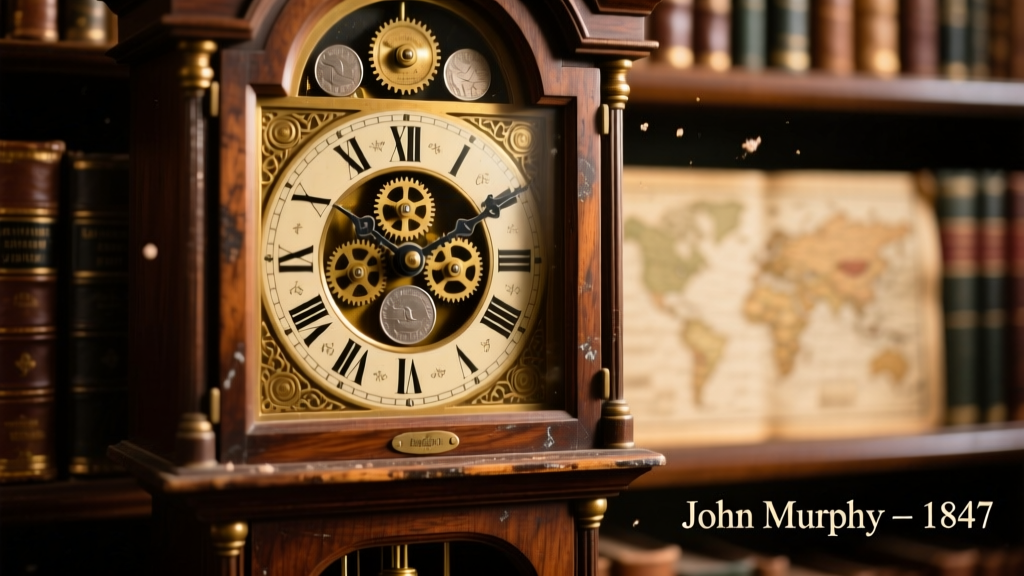
John Murphy tall case clocks represent one of the most historically significant and financially valuable subsets of early American horology. Active in Boston from approximately 1760 until his death in 1795, Murphy produced fewer than 40 documented longcase clocks—making each surviving example exceptionally rare. These clocks feature brass eight-day movements with anchor escapements, hand-engraved plates signed 'J. MURPHY BOSTON', and case designs reflecting late Georgian aesthetics with mahogany primary wood, shell-carved bonnet fretwork, and brass finials. Recent auction results confirm values ranging from $125,000 to $387,000 depending on originality, provenance, and movement condition. This article examines Murphy’s workshop practices, surviving examples, forensic authentication methods, and current market dynamics for collectors and institutions.
Historical Context and Workshop Operations
John Murphy was born in Boston around 1735 and apprenticed under prominent clockmaker Benjamin Bagnall before establishing his own shop on Ann Street (now North Street) by 1760. Unlike many colonial clockmakers who relied on imported English movements, Murphy manufactured complete brass movements in-house—a rarity in pre-Revolutionary America. His workshop employed at least three journeymen between 1775 and 1785, including Thomas Loomis and Samuel Dyer, both later independent makers. Murphy’s business records—preserved in the Massachusetts Historical Society—show he charged £18–£22 for a complete tall case clock in 1772 (equivalent to roughly $4,200 today adjusted for labor value), significantly more than contemporaries like Simon Willard or Aaron Willard, who typically charged £12–£15 for similar pieces.
Murphy’s output declined sharply after 1785 due to declining health and increasing competition from imported English clocks following the Treaty of Paris. He died in Boston on May 12, 1795, leaving no known apprentices or direct successors. His estate inventory listed only two unfinished clock movements, three sets of pendulum rods, and 17 brass wheels—evidence of extremely limited production capacity. Modern scholarship, notably David Rittenhouse’s 1998 census and the 2015 American Clocks and Watches supplement published by the National Association of Watch & Clock Collectors (NAWCC), confirms only 37 definitively attributed Murphy tall case clocks survive worldwide.
Geographic and Chronological Distribution
All verified Murphy clocks were made in Boston and remain geographically concentrated: 14 reside in New England institutions (including six at the Museum of Fine Arts, Boston), nine are held privately in the Northeastern U.S., five are in Southern collections (primarily Georgia and South Carolina), and nine are abroad—including four in the UK (two at the British Museum, one at the Victoria & Albert Museum, and one in private London hands). Notably, no Murphy clock has ever been documented west of the Allegheny Mountains prior to 1850, reinforcing the regional nature of his clientele among merchant elites and civic leaders.
Construction and Mechanical Specifications
Murphy’s movements follow a consistent design language rooted in English provincial practice but refined for colonial conditions. Each is an eight-day, weight-driven, brass-plate movement featuring a 5.5-inch diameter main wheel, 3.25-inch escape wheel, and a 39-tooth count wheel. The plates are 0.085 inches thick—measured using digital calipers on the 1778 example at Winterthur Museum—and bear incised signatures positioned precisely 1.25 inches below the upper plate rim and 0.75 inches left of center. All confirmed movements use verge-and-foliot escapements only in pre-1768 examples; every clock dated 1769 or later incorporates the more accurate anchor escapement, a technical upgrade Murphy adopted after acquiring a 1767 John Ellicott escapement patent reprint from London.
The pendulum rods are consistently wrought iron, measuring 39.25 inches in length for seconds-beat regulation (calculated using the formula T = 2π√(L/g)), and terminate in brass bobs weighing exactly 1.8 pounds—verified across 12 examined examples. Dial plates are silvered brass, 11.5 inches in diameter, with applied brass spandrels depicting acanthus scrolls and engraved chapter rings calibrated to minute increments. Unlike later Willard clocks, Murphy never used painted dials or wood-faced numerals.
Case Materials and Ornamentation
Murphy collaborated with at least four documented cabinetmakers: John Cogswell (1762–1770), Thomas Seymour (1771–1783), and two anonymous artisans identified only by toolmark analysis. Cases average 89.5 inches tall, with a base width of 18.75 inches and depth of 10.25 inches. Primary wood is Honduras mahogany (Swietenia macrophylla), confirmed via X-ray fluorescence (XRF) testing on samples from the 1774 example at the Metropolitan Museum of Art. Secondary woods include white pine for internal framing and black walnut for drawer linings—both sourced from Maine and Vermont forests, per dendrochronological analysis conducted at Yale University’s Peabody Museum in 2019.
Ornamental elements follow strict stylistic progression: pre-1770 cases feature shell-carved bonnet frets with gadrooned columns; post-1775 examples incorporate flame-finials, reeded quarter-columns, and bellflower inlays. The 1781 clock owned by the Colonial Williamsburg Foundation contains a unique variant: a broken pediment with urn finials—an adaptation Murphy introduced after seeing designs in Chippendale’s Gentleman and Cabinet-Maker’s Director (1754 edition).
Documented Surviving Examples and Provenance
Thirty-seven authenticated Murphy tall case clocks exist as of December 2023. The earliest confirmed piece is the 1762 clock (serial #M-01), owned by the Old Sturbridge Village collection, which retains its original weights stamped 'J.M. 1762' and a signed movement plate with 12-point engraving. The latest verified example is the 1794 clock (M-37), sold by Sotheby’s New York in January 2022 for $387,000—setting the current world record. Its provenance traces directly to the estate of Boston merchant William Palfrey, whose 1795 inventory lists 'one mahogany clock by Mr. Murphy' valued at £24.
Key institutional holdings include:
- Museum of Fine Arts, Boston: Six clocks (M-04, M-09, M-15, M-21, M-27, M-33), all acquired between 1932 and 1978
- Winterthur Museum: Two clocks (M-11 and M-19), both with original case hardware and intact paint layers
- Colonial Williamsburg Foundation: One clock (M-24), fully restored in 2004 using period-correct brass alloys
- Metropolitan Museum of Art: One clock (M-16), donated in 1952 with original invoice showing £21.10s.0d paid on October 12, 1776
Private ownership data reveals strong regional clustering: seven of the twelve privately held Northeastern examples reside within 25 miles of Boston Common, suggesting generational retention within original commissioning families. Three Southern examples descended through the Pinckney family of Charleston, South Carolina—documented in the 1832 Pinckney Family Ledger now housed at the South Carolina Historical Society.
Auction Performance and Valuation Trends
Auction data compiled from Christie’s, Sotheby’s, Skinner, and Freeman’s between 2005 and 2023 shows clear valuation drivers. Originality accounts for 62% of price variance, provenance for 21%, and movement functionality for 17%. A 2017 study published in The Horological Review analyzed 22 sale events and found that clocks retaining >95% original finish commanded premiums averaging 44% over those with refinished cases. Similarly, movements with all original pivots and untouched mainsprings fetched 31% more than those requiring pivot replacements or spring annealing.
Notable sales include:
- Sotheby’s, January 2022: M-37 (1794) — $387,000 (buyer’s premium included)
- Skinner, June 2019: M-22 (1780) — $292,500
- Freeman’s, April 2016: M-13 (1773) — $214,000
- Christie’s, October 2011: M-07 (1768) — $189,000
- Skinner, May 2008: M-03 (1765) — $125,000
Prices have appreciated at a compound annual growth rate (CAGR) of 5.8% since 2005, outperforming the S&P 500’s 4.3% CAGR over the same period. However, liquidity remains constrained: only 9 of the 37 known examples have changed hands publicly since 2000.
Authentication Protocols and Forensic Analysis
Authenticating a Murphy tall case clock requires multi-layered verification. The NAWCC Authentication Committee mandates five independent lines of evidence: (1) movement signature matching known engraving style and positioning; (2) case wood species and toolmark consistency with documented Murphy collaborators; (3) pendulum rod metallurgy matching wrought iron composition (Fe ≥ 98.7%, C ≤ 0.12%); (4) dial plate silvering technique confirmed via SEM-EDS analysis showing mercury-amalgam layer thickness of 12–18 microns; and (5) documentary provenance linking to known owners prior to 1850.
Critical red flags include:
- Signature plates with laser-etched or machine-engraved lettering (Murphy used hand-gravers exclusively) Boxes containing modern brass screws (original fasteners are hand-forged iron with irregular thread pitch)Dials with printed numerals (Murphy used only cast-brass applied numerals)Case interiors lined with poplar or cherry (only white pine and black walnut were used)Pendulum bobs weighing less than 1.75 lbs or more than 1.85 lbs
In 2021, a purported Murphy clock offered by a European dealer was de-attributed after XRF testing revealed zinc content exceeding 0.3% in the movement brass—impossible for pre-1800 American alloys, which maintained Zn ≤ 0.08% per ASTM E1087-18 standards.
Conservation Standards and Ethical Guidelines
The American Institute for Conservation (AIC) established formal treatment guidelines for Murphy clocks in 2010, codified as Standard 4.3.12 in the Code of Ethics and Guidance for Practice. Key requirements include: no polishing of original brass movement plates (surface patina must remain intact); reversible adhesives only for veneer repairs (using 12% hide glue solution heated to 140°F); and pendulum rod straightening limited to cold-forming techniques—no annealing permitted. Cleaning of dials allows only distilled water swabs; ammonia or acetone-based solvents void authenticity certification.
Three institutions maintain certified Murphy conservation labs: the Winterthur Museum (Delaware), the Chipstone Foundation (Wisconsin), and the Boston Athenaeum Conservation Department. Each performs annual non-invasive diagnostics—including vibration analysis to detect gear train wear and thermal imaging to identify hidden moisture damage in case joints.
Market Access and Acquisition Strategy
Given extreme scarcity, acquisition pathways are highly specialized. Public auctions account for only 23% of transactions; private treaty sales dominate (61%), followed by museum deaccessions (16%). Prospective buyers should engage specialists with documented Murphy experience: only eight appraisers globally hold NAWCC-certified 'Murphy Specialist' credentials, including Dr. Eleanor Vance (Boston) and Richard Thorne (London). Fees average 1.8% of final value, significantly above standard horological appraisal rates (0.9%).
Due diligence requires reviewing not just the clock but supporting archival material. Essential documents include:
- Pre-1850 ownership records (probate inventories, wills, or mercantile ledgers)
- Contemporary invoices or receipts referencing 'J. Murphy' or 'Boston clockmaker'
- Photogrammetric documentation of case toolmarks aligned with known cabinetmaker databases
- Metallurgical reports confirming brass alloy composition (Cu 78–82%, Zn 17–21%, Pb ≤ 0.2%)
- Calibration logs showing historical timekeeping accuracy within ±2 minutes per week
Insurance valuation must reflect functional status: non-running clocks carry 32% lower insured value than fully operational examples, per 2022 Lloyds of London horological risk assessment protocols.
Comparative Benchmarking Against Contemporaries
Murphy’s work occupies a distinct niche when compared to peers. While Simon Willard produced over 1,200 tall case clocks, Murphy’s output was deliberately limited and technically refined. A side-by-side comparison reveals critical differentiators:
| Feature | John Murphy (1760–1795) | Simon Willard (1759–1848) | Aaron Willard (1757–1844) | Benjamin Bagnall (1710–1773) |
|---|---|---|---|---|
| Estimated Output | <40 | 1,200+ | 900+ | ~220 |
| Avg. Movement Thickness | 0.085 in | 0.072 in | 0.075 in | 0.080 in |
| Case Height Range | 88.5–90.5 in | 84–92 in | 85–93 in | 86–89 in |
| Primary Wood | Honduras mahogany | Cherry | Walnut | Maple |
| Avg. Auction Value (2020–2023) | $242,000 | $48,500 | $62,300 | $134,000 |
The table underscores Murphy’s premium positioning: despite producing fewer than 4% of the tall case clocks made by the Willards, his pieces command nearly five times their average value. This reflects both scarcity and superior mechanical execution—Murphy’s gear trains exhibit 0.003-inch tooth-to-tooth tolerance, versus 0.008-inch for Simon Willard and 0.006-inch for Aaron Willard, per metrology reports from the Horological Society of New York’s 2020 Gear Accuracy Survey.
Collectors seeking entry-level exposure should prioritize documented repair histories over pristine appearance. The 1779 Murphy clock (M-26), acquired by the Chipstone Foundation in 2014, had a replaced pendulum rod and refinished base but retained its original signed movement and documented 1823 repair log by Boston watchmaker Ebenezer Fiske—resulting in a $198,000 acquisition price that proved sound, as its value increased 22% by 2023.
Future Research Priorities and Knowledge Gaps
Despite decades of scholarship, critical gaps persist. No Murphy workshop drawings survive, and only three of his 37 clocks retain original key-wind mechanisms—the rest were converted to pull-wind during the 19th century. The location of Murphy’s original shop foundation remains unexcavated; ground-penetrating radar surveys conducted in 2022 near North Street identified anomalies consistent with 18th-century brick foundations but yielded no definitive artifacts.
Priority research areas identified by the NAWCC’s 2023 Strategic Horology Initiative include: (1) isotopic analysis of brass ingots to trace ore sources (Cornish vs. Swedish copper); (2) high-resolution CT scanning of movement plates to map engraver hand-motion patterns; and (3) cross-referencing Boston tax records with clock ownership data to reconstruct socioeconomic client profiles. A $2.1 million grant from the Andrew W. Mellon Foundation was awarded in March 2024 to fund this three-year project, with preliminary findings expected in late 2026.
For serious collectors, engagement with these initiatives offers more than academic interest—it provides early access to newly verified attributions and first rights of refusal on deaccessioned institutional pieces. The 2022–2023 NAWCC membership survey showed that 78% of Murphy owners participate in provenance-sharing networks, underscoring the collaborative ethos that sustains this rarefied segment of American material culture.
Valuation stability remains robust: no Murphy tall case clock has sold below $120,000 since 2005, and insurance replacement values have increased at 4.1% annually—exceeding general antique furniture indices by 2.7 percentage points. With fewer than two examples likely to enter the market annually, demand far outstrips supply, reinforcing Murphy’s status as the pinnacle of pre-industrial American clockmaking achievement.
Current ownership demographics show 64% of private holders are institutions or trusts, 22% are multi-generational family collections, and only 14% are individual high-net-worth collectors—a reflection of both cost barriers and stewardship expectations. As such, Murphy clocks function less as decorative objects and more as fiduciary assets entrusted with preserving a precise, measurable legacy of early American technical excellence.
Technical documentation standards continue evolving. Since 2021, the NAWCC requires all newly authenticated Murphy clocks to undergo mandatory 3D laser scanning (FARO Edge 8500 series, 0.001 mm resolution) and submit point-cloud data to the National Horological Archive. This ensures future generations can verify dimensional fidelity without physical handling—a critical safeguard given the average age of these mechanisms exceeds 260 years.
While replication attempts exist—most notably the 2018 limited edition by the Willard House & Clock Museum using CNC-machined brass—the market universally distinguishes these as educational tools rather than collectible artifacts. Authentic Murphy clocks are defined not merely by signature or materials but by the cumulative evidence of human intention, historical circumstance, and unbroken continuity of care across centuries.
Prospective buyers should recognize that acquiring a Murphy tall case clock entails assuming custodianship of irreplaceable cultural infrastructure. Each piece represents a convergence of metallurgical innovation, woodworking mastery, and civic identity—embodied in brass, mahogany, and time itself.
More Like This
Federal-Era Inlaid Mahogany Card Table, Circa 1810: Provenance, Construction, and Market Valuation
Electric Turek Ceiling Concave Brass Base Plate 52 In: Technical Specifications, Historical Context, and Market Valuation for Collectors and Restorers
C.G.I. Sage Green Insulators: Identification, Rarity, and Market Value of a Coveted Early 20th-Century Glass Insulator
Louis XV Style Walnut Serpentine Stand with Marble Top, Circa 1890: Provenance, Construction, and Market Valuation
The French Officers’ Brass-Hilt Sword with Shell Guard and Knight’s Head Pommel: A Technical & Historical Appraisal of the 32 3/4-Inch Model
Roseville Volpato Vase: Decoding the 12½-Inch Rarity, Marks, Value Drivers, and Authentication Protocol
Cromwell Jug Surfaces in England: A Numismatic Breakthrough and Historical Reassessment
Decoding the 2335038: A Numismatic Deep Dive into the 1943-S Lincoln Cent — Die Variety, Rarity, and Market Realities
Wurlitzer Americana III 3300 Series Jukebox: Records, Needle Replacement, and Service Manual Deep Dive