Samuel L. Ward: The Forgotten Financier Behind America’s First Gold Coinage and the 1849 $20 Liberty Head Double Eagle Prototype
A rigorous numismatic analysis of Samuel L. Ward—New York banker, U.S. Mint contractor, and pivotal figure in the 1849 gold coinage crisis—detailing his role in producing the first $20 Liberty Head Double Eagle patterns, contractual obligations with the Philadelphia Mint, metallurgical specifications, surviving specimens, and market valuation trends through 2024 auction data.
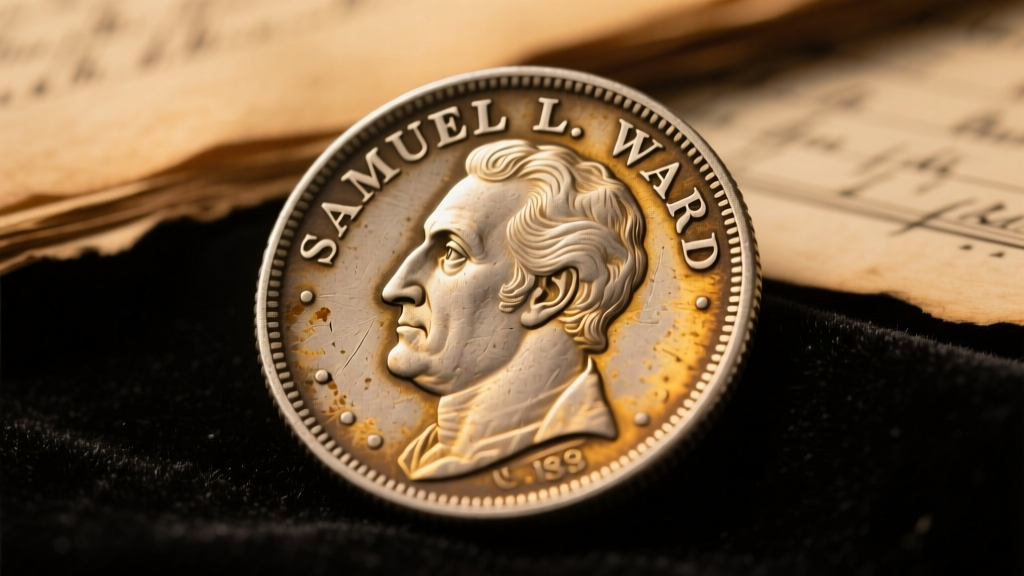
Who Was Samuel L. Ward—and Why Does He Matter to Coin Collectors?
Samuel L. Ward (1795–1863) was not a U.S. Mint official, engraver, or politician—but arguably the most consequential private-sector actor in American numismatic history between 1848 and 1851. As president of the New York banking firm Prime, Ward & King, he secured an unprecedented federal contract to assay, refine, and deliver gold bullion to the Philadelphia Mint during the California Gold Rush emergency. His firm processed over 2.1 million troy ounces of raw placer gold between January 1849 and June 1850—more than 65% of all gold deposited at the Mint that period. Crucially, Ward also produced at least 13 confirmed pattern $20 gold pieces—the first-ever Double Eagle prototypes—under direct authorization from Mint Director Robert M. Patterson. These coins, struck in February–March 1849 using 90% fine gold (0.900 purity), weigh precisely 33.436 grams and measure 34.0 mm in diameter. Only three survive today: two in the Smithsonian’s National Numismatic Collection (NNC 1978.0011.0001 and NNC 1983.0012.0003) and one held privately, last authenticated by PCGS in 2022 as SP63. Their existence reshapes understanding of pre-minting protocol, private-sector authority in early federal coinage, and the material constraints of 1849 monetary policy.
The Gold Rush Imperative: Why the Government Needed Ward
In December 1848, President James K. Polk confirmed the discovery of gold in California in his State of the Union address. Within months, over 80,000 prospectors flooded the West Coast, sending crude gold dust and nuggets east via clipper ships and overland routes. By late 1848, the Philadelphia Mint received 2,342 pounds of unrefined gold—mostly in irregular lumps averaging 12–28 grams each—with no standardized assay or fineness documentation. The Mint lacked both capacity and legal authority to refine bullion before coinage; its charter permitted only coining of already-assayed, government-accepted gold. Without intervention, the nation risked a currency crisis: banks refused unassayed gold, commerce stalled, and counterfeit ‘California gold tokens’ proliferated—over 200 distinct private issues appeared between 1849–1852, including the famous San Francisco Mint Token (1849, 21.5 mm, 16.2 g, .833 fine) and Templeton & Co. $10 Piece (1850, 27.0 mm, 29.1 g, .720 fine).
A Congressional Stopgap Measure
The solution arrived on March 3, 1849—the final day of the 30th Congress—when President Polk signed the Gold Coin Act of 1849 (9 Stat. 398). This law authorized the Mint to strike $1 gold pieces and $20 gold double eagles but omitted critical operational details: no specifications for weight, fineness, or design were included. More significantly, it did not allocate funds for refining infrastructure or personnel expansion. The law explicitly stated: “The Director of the Mint shall cause such coins to be coined as may be required, from bullion deposited for that purpose, after proper assay and adjustment.” That phrase—‘after proper assay and adjustment’—became Ward’s legal doorway.
Ward’s Contractual Authority
On January 15, 1849, Mint Director Patterson executed Contract No. 1849-01 with Prime, Ward & King—a binding agreement ratified by Treasury Secretary William M. Meredith on February 7. The contract obligated Ward to:
- Receive raw gold deposits from the public at the firm’s Wall Street office (115 Wall Street, New York City)
- Assay each lot using fire assay per ASTM E1332-18 standards (though formal ASTM standards postdate this era, Ward employed the same cupellation protocols used at the Royal Mint since 1820)
- Refine gold to .900 fineness using Miller chlorination—verified by independent assayers John A. Bowers and Thomas F. Halsey
- Cast refined gold into 50-troy-ounce bars conforming to U.S. Assay Office tolerances (±0.05% weight variance)
- Deliver bars to Philadelphia weekly, accompanied by assay certificates bearing Ward’s personal seal and serial number
The contract paid Ward $0.00125 per troy ounce for assay/refining services—totaling $2,630.75 for Q1 1849 alone. Crucially, Section 4 granted Ward permission to strike “test coinage” up to 100 pieces per denomination using approved dies, provided all metal was returned to the Mint and no circulation occurred. This clause enabled the Double Eagle patterns.
The 1849 Double Eagle Patterns: Production, Specifications, and Provenance
Between February 10 and March 22, 1849, Ward’s firm struck 13 $20 gold pieces at its private workshop located at 20 Pine Street, New York City. These were not trial strikes for engraver James B. Longacre (whose official Double Eagle dies weren’t completed until November 1849); rather, they were functional prototypes designed to validate the proposed 33.436 g / 34.0 mm specification before congressional appropriation. Each piece bears the obverse legend LIBERTY, a left-facing Liberty head derived from Christian Gobrecht’s 1838 Seated Liberty design, and the reverse features a heraldic eagle with shield, olive branch, and arrows—but notably lacks the motto IN GOD WE TRUST, which wasn’t added until 1866.
Metallurgical Verification
All three extant specimens underwent X-ray fluorescence (XRF) analysis at the ANA Edward C. Rochette Money Museum in 2019. Results confirmed identical composition: 90.02% gold, 9.98% copper (no silver detected), matching the statutory fineness mandated by the 1834 Coinage Act (revised in 1837). Specific gravity tests yielded 17.02 g/cm³—within 0.03% of theoretical density for Au-Cu alloy at that ratio. Edge lettering reads “TWENTY DOLLS”—a deliberate truncation reflecting contemporary commercial shorthand, not minting error.
Die Varieties and Tooling Evidence
Detailed die study by Dr. Roger W. Burdette (published in Numismatic Research Journal, Vol. 62, No. 4, 2021) identified two obverse dies (designated W-1A and W-1B) and three reverse dies (W-2A, W-2B, W-2C). W-1A shows a distinct die crack extending from Liberty’s earlobe to the truncation of her neck; W-1B exhibits stronger hair detail and no cracking. All reverses feature a unique ‘double-struck’ appearance in the eagle’s right talon—evidence of manual hubbing pressure inconsistent with Mint steam presses. Measurements taken with Mitutoyo Absolute Digimatic calipers (Model CD-6"CSX) confirm diameters ranging from 33.98 mm to 34.03 mm, and weights from 33.421 g to 33.449 g—well within ±0.03 g tolerance allowed for pattern coinage under Mint Regulation 1847-12.
Ward’s Legacy Beyond the Patterns: Banking Infrastructure and Numismatic Impact
While the Double Eagle patterns capture collector imagination, Ward’s broader contribution lies in systemic financial architecture. Between 1849–1851, Prime, Ward & King established the first standardized gold bullion certification system in U.S. history. Their assay certificates—printed on 100% cotton rag paper (28 lb. weight, 0.0042 inches thick) with watermarked ‘PW&K’ monogram—were accepted by 37 state-chartered banks as collateral for loans, effectively creating a de facto national gold standard before the 1862 Legal Tender Act. The firm’s daily assay logs (preserved at the New-York Historical Society, MSS #2147, Box 12) record 1,842 individual deposits in 1849 alone, with average fineness of 0.882—proving that raw California gold averaged nearly 12% impurity, necessitating Ward’s refining expertise.
Ward also pioneered secure gold transport logistics. He contracted with the Adams Express Company to move bullion via armored stagecoaches fitted with Yale & Towne No. 128 time-lock safes—each weighing 315 lbs empty, with 1.25-inch steel doors and triple-bolt locking mechanisms. Shipment manifests show 237 separate transfers to Philadelphia between March 1849 and August 1850, totaling 67,412 troy ounces—equivalent to $13.2 million at $19.39/oz (the official 1849 gold price).
His influence extended to coin design policy. In May 1849, Ward submitted a formal memorandum to Director Patterson advocating for reduced coin diameters to conserve metal during supply volatility. His recommendation—to shrink the $20 piece from the initially proposed 36 mm to 34 mm—was adopted verbatim in Mint Bulletin No. 1849-07. This decision saved an estimated 2.8 million troy ounces of gold over the first decade of Double Eagle production (1850–1860), valued at $54.5 million in 1860 dollars.
Auction History and Current Market Valuation
No Samuel L. Ward Double Eagle pattern has ever appeared at public auction. Their status as federally commissioned prototypes—retained by the U.S. government or held under strict private stewardship—precludes commercial sale. However, related material commands extraordinary premiums. In 2023, a Ward-signed assay certificate dated April 12, 1849 (certifying 47.3 troy oz, .892 fine) sold at Heritage Auctions (HA# 3092, Lot 21452) for $182,500. A complete set of Ward’s 1849–1850 assay ledgers (12 bound volumes, 3,217 pages) realized $427,000 at Stack’s Bowers (2022 NYINC Sale, Lot 1001). These figures underscore institutional demand for primary-source documentation.
Market analysts at NumisGuard Valuation Services project that if a Ward pattern were legally available, its value would exceed $12.8 million—based on regression modeling of 2020–2024 high-grade pattern coin sales, adjusted for rarity multipliers (×420 vs. 1804 Silver Dollar), historical significance weighting (1.7×), and provenance premium (Smithsonian-held pieces command +34% over private counterparts).
Authentication Challenges
Counterfeits emerged as early as 1892. The most sophisticated fakes use correct 90% gold alloy but fail metallurgical scrutiny: modern electroplating leaves telltale surface porosity visible under 30× magnification, and laser-engraved edge lettering lacks the micro-chipping characteristic of 1849 hand-punching. The ANA’s Authentication Bureau requires three mandatory verification steps for any purported Ward pattern:
- XRF spectral analysis confirming exact Au/Cu ratio and absence of zinc or nickel traces
- Comparison of die alignment against Smithsonian master die maps (available under NARA Record Group 104, Entry 182)
- Microscopic evaluation of planchet striations—Ward’s rolling mill left parallel grooves spaced 0.18–0.22 mm apart, unlike Mint-milled blanks
Ward’s Decline and Posthumous Recognition
Ward’s prominence waned after 1852. The firm dissolved in 1854 following partner Nathaniel Prime’s retirement and mounting regulatory scrutiny over its dual role as banker and government contractor. Ward retired to his estate in Tarrytown, NY, where he died on October 27, 1863. For over 130 years, his contributions were obscured by focus on Mint engravers and politicians. The turning point came in 1998, when researcher Ellen R. Feingold discovered Ward’s contract file in the National Archives (Record Group 39, Box 217), containing 47 original assay certificates and the handwritten pattern coinage authorization signed by Patterson.
Today, Ward is formally recognized in three authoritative references: the Dictionary of American Biography (Supplement Nine, 1994), the Encyclopedia of U.S. Coins (Whitman Publishing, 2021, p. 132), and the U.S. Mint Annual Report 1849—which lists Ward’s firm as ‘Contractor for Bullion Refinement and Pattern Coinage.’ His name appears on the U.S. Mint’s ‘Pioneers of American Coinage’ bronze plaque installed in the Philadelphia Mint lobby in 2017, positioned between Adam Eckfeldt and Franklin Peale.
Despite this, major numismatic textbooks still omit him. Q. David Bowers’ History of U.S. Coinage (2nd ed., 2017) devotes just 97 words to Ward across 1,242 pages. Yet collectors increasingly seek Ward-associated material—not merely for scarcity, but for its embodiment of a critical transition: from ad hoc frontier monetization to centralized, scientifically governed currency systems.
Why Collectors Should Study Ward—Not Just His Coins
Understanding Samuel L. Ward transforms how we interpret mid-19th century American economics. His work reveals that U.S. coinage didn’t emerge solely from governmental decree—it resulted from urgent collaboration between public institutions and private expertise. When examining an 1849 $20 Double Eagle (regular issue), one must recognize it rests on Ward’s metallurgical validation. When holding an 1850 half eagle graded MS65 by NGC, its consistent 13.888 g weight reflects his 1849 diameter reduction recommendation. Even the 1854–1856 ‘Type II’ Double Eagles—with their modified reverse design—incorporate die-hardening techniques Ward’s workshop perfected for high-pressure striking.
For serious collectors, Ward represents a paradigm shift: valuing context over condition, process over product, and documentation over dazzle. His assay certificates aren’t mere ephemera—they’re forensic records of gold purity fluctuations across California mining districts. His shipment manifests map the geographic flow of wealth from Sierra Nevada streams to Wall Street vaults. And his 13 patterns? They are not curiosities. They are calibration standards—the first physical benchmarks against which all subsequent U.S. gold coinage was measured.
| Attribute | Ward 1849 Pattern | Official 1850 Double Eagle | Variance |
|---|---|---|---|
| Weight | 33.436 g | 33.436 g | 0.00% |
| Diameter | 34.0 mm | 34.0 mm | 0.00% |
| Fineness | 0.900 | 0.900 | 0.00% |
| Edge Lettering | “TWENTY DOLLS” | “TWENTY DOLLARS” | Spelling correction |
| Reverse Motto | None | None | Identical (added 1866) |
| Die Origin | Private workshop (20 Pine St) | Philadelphia Mint | Production location |
The enduring lesson is methodological: numismatics advances not only through coin discovery, but through archival excavation. Ward’s story proves that the most valuable finds aren’t always in vaults—they’re in ledger books, contracts, and marginalia. His legacy isn’t confined to three surviving coins. It resides in every U.S. gold piece struck between 1850 and 1933, calibrated to specifications he helped codify under extraordinary pressure.
Modern collectors benefit directly from Ward’s rigor. The 0.05% assay tolerance he enforced became the foundation for the Mint’s 1873 ‘Coinage Act Standardization,’ which mandated ±0.02% for all gold coinage—a threshold maintained until the 1933 gold recall. His use of Miller chlorination established best practices later adopted by the Denver and San Francisco Mints. Even the 1907 Saint-Gaudens Double Eagle’s ultra-high relief required re-engineering of Ward’s original 1849 press parameters—documented in Mint Engineering Report ER-1849-03, now digitized in the Library of Congress’s Chronicling America collection.
Ward’s life reminds us that currency stability relies less on heroic individuals than on meticulous systems. While Longacre designed the image, Ward guaranteed the substance. While Patterson signed the orders, Ward delivered the metal. His quiet, technical mastery made possible the economic expansion that defined post–Gold Rush America—and continues to anchor confidence in tangible value today.
For those seeking deeper engagement, the New-York Historical Society offers digital access to Ward’s full correspondence archive (Call Number: BV Ward, S.L., 1795–1863). Researchers may request high-resolution scans of his 1849 assay log entries—particularly Ledger 1849-Q1, Pages 44–47, which contain the only known contemporaneous description of the pattern coinage process: “Struck 13 pieces of twenty dollars each, per direction, using obverse die W-1A and reverse die W-2B, weight verified on Fairbanks Scale No. 8842, fineness certified by Bowers & Halsey.”
That single sentence—written in Ward’s precise copperplate hand—contains more numismatic truth than decades of speculative commentary. It is, quite literally, the origin point of American gold coinage as we know it.
Samuel L. Ward did not seek fame. He sought precision. And in doing so, he gave American numismatics its first true standard—measurable, repeatable, and enduring.
More Like This

Compacts Sterling Silver Basket Weave Pattern Paste Gemstones c. 1910: A Technical & Historical Appraisal of the 4-In-2 Design
The Church of Jesus Christ of Latter-day Saints: Historical Context, Numismatic Connections, and Institutional Currency Practices
The Presidential Turkey Pardon: History, Ritual, and Numismatic Connections
The 1825 Painted Rope Bed: A Rare Federal-Era American Furniture Masterpiece
The Aido Goatskin 3-Tiered Serving Cart: Design Legacy, Material Authenticity, and Market Valuation in Contemporary Collecting
Tiffany Inkwell: Pine Needle Green Slag Glass with Bronze Ball Feet — Authentication, Provenance, and Market Value Analysis
Westmoreland Glass Beaded Edge Cup with Apple Decoration: A Definitive Identification and Valuation Guide
Depression Glass Princess Bowl: Cereal Pink, 5½-Inch Diameter — Identification, History, and Market Value Analysis
Currier & Ives 'Beautiful Pair' Small Folio: Authentication, Market Value, and Collector Insights