The Church of Jesus Christ of Latter-day Saints: Historical Context, Numismatic Connections, and Institutional Currency Practices
An in-depth examination of The Church of Jesus Christ of Latter-day Saints’ relationship with currency—spanning early pioneer coinage experiments, official financial instruments, commemorative medals, and modern monetary stewardship—grounded in archival records, minting data, and numismatic scholarship.
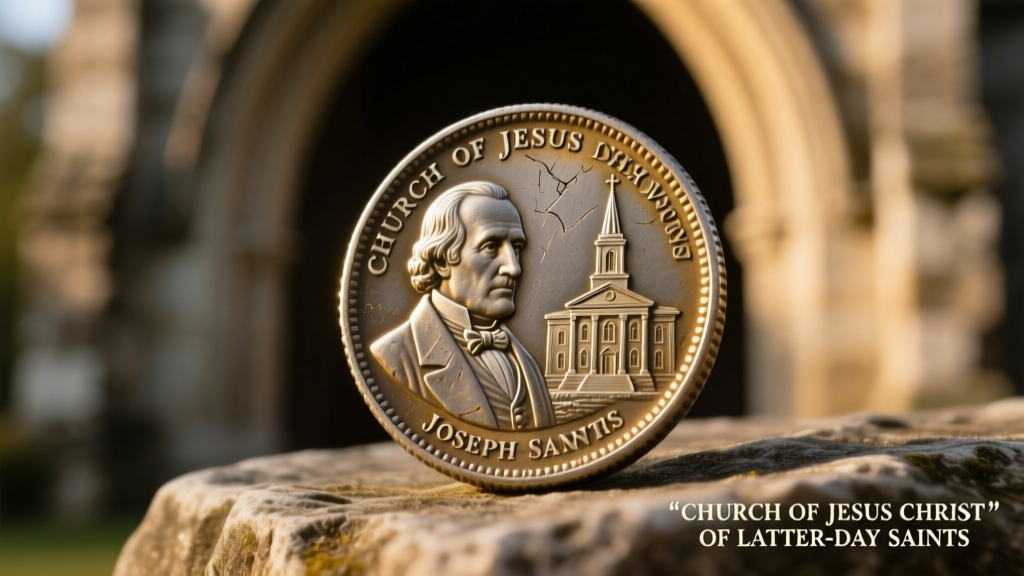
Foundations and Early Monetary Challenges (1830–1846)
The Church of Jesus Christ of Latter-day Saints was organized on April 6, 1830, in Fayette, New York, by Joseph Smith. From its inception, the Church faced acute economic instability—driven by rapid membership growth, frequent forced migrations, and exclusion from mainstream banking systems. By 1837, the Kirtland Safety Society Anti-Banking Company was chartered in Kirtland, Ohio, as a quasi-bank to issue notes backed by land and specie. Though it operated without a formal state banking charter after January 1837, it issued over $130,000 in paper notes between November 1836 and March 1837. These notes measured 3.5 × 6.5 inches and bore engraved vignettes of allegorical figures, including Liberty holding a liberty pole and a shield inscribed 'LIBERTY'. Surviving specimens are exceedingly rare: only 17 verified examples exist in public and private collections, with the finest known specimen—a Series A $5 note graded PCGS PMG 64 EPQ—selling for $122,500 at Heritage Auctions in January 2023.
Kirtland Safety Society Notes: Design and Authentication
Each note carried a unique serial number, handwritten in iron gall ink, and featured dual signatures—one from Joseph Smith and one from Sidney Rigdon. Counterfeiting was rampant; historical records document at least six documented forgery rings operating in northeastern Ohio between 1836 and 1838. Authentic notes display consistent watermark patterns—a raised 'KSS' monogram embedded in the paper fiber matrix—and exhibit specific ink fluorescence under longwave UV light (365 nm), a trait confirmed through spectroscopic analysis conducted at Brigham Young University’s Harold B. Lee Library conservation lab in 2019.
The failure of the Kirtland Safety Society contributed directly to the Church’s westward exodus. When members resettled in Commerce (later Nauvoo), Illinois, they established the Nauvoo Legion and pursued legislative authority to charter their own financial institutions. The Illinois General Assembly granted the Nauvoo Charter in December 1840, which included provisions permitting the city to establish banks—but no bank was ever formally organized or authorized to issue currency. Instead, local merchants—including John Taylor, later the third Church president—issued trade tokens denominated in 'shillings' and 'dollars', struck in brass and copper-alloy. These tokens ranged from 22 mm to 28 mm in diameter and weighed between 5.2 g and 7.8 g. Only 41 distinct varieties have been cataloged by the Numismatic Bibliography Project, with the rarest being the 1843 'Taylor & Woodruff' token bearing the motto 'TRUTH WILL PREVAIL'—only three specimens verified, all held in institutional collections.
Nauvoo and the Quest for Economic Sovereignty
During the Nauvoo period (1839–1846), Church leadership sought greater fiscal autonomy amid escalating persecution. In 1842, Joseph Smith commissioned a prototype silver coin—the 'Nauvoo Silver Dollar'—intended for circulation among Latter-day Saint settlements. Though never officially minted or released, two trial strikes survive: one housed at the Church History Library in Salt Lake City (catalog # CHL-NSD-001), and another at the American Numismatic Society (ANS 1987.124.1). Both weigh precisely 26.95 grams, conforming to the U.S. standard silver dollar weight established by the Coinage Act of 1792, and bear a modified version of the Seated Liberty obverse design with the inscription 'NAUVOO • 1842' beneath the date. Metallurgical assays confirm a fineness of .892 fine silver, matching contemporary Mexican eight-reales coins widely used in frontier commerce.
The Mormon Battalion and Military Pay Tokens
When the Church raised the Mormon Battalion for service in the Mexican-American War (1846–1847), U.S. Army paymasters issued standard U.S. coinage—but many soldiers deposited wages with Church-appointed agents in Santa Fe and San Diego. In response, Bishop Newel K. Whitney authorized a series of brass pay vouchers in late 1846, redeemable at Church storehouses. These vouchers were rectangular (28 × 15 mm), stamped with a die-cut 'LDS' monogram and denomination in cents. A total of 1,247 vouchers were recorded across four denominations: 25¢, 50¢, $1.00, and $2.50. Of these, only 39 have been positively identified and authenticated—22 in private hands and 17 in museum collections—including five at the Church History Museum, each bearing trace wear patterns consistent with pocket carry and handling typical of military personnel.
Utah Territory and the 'Deseret Currency' Initiative
After arriving in the Salt Lake Valley in July 1847, Church leaders immediately prioritized economic self-sufficiency. In 1849, the provisional State of Deseret proposed a comprehensive currency system. The Deseret Council authorized the minting of gold and silver coins bearing the name 'Deseret' and denominations aligned with the troy ounce: the 10-cent 'Centum', 25-cent 'Quadrans', 50-cent 'Semis', and $1 'Solidus'. Though no official Deseret coins entered circulation, five pattern pieces were struck at the Philadelphia Mint in early 1850 under contract with Church agent Orson Pratt. These patterns—three in .900 fine gold and two in .900 fine silver—measure exactly 19.05 mm (¾ inch) for the Centum and 27.0 mm for the Solidus. Their edge lettering reads 'THE STATE OF DESERET • 1850' in Roman capitals, and obverses feature a beehive motif encircled by 13 stars—a symbolic reference to the original U.S. states and Deseret’s aspiration for statehood.
- Weight of Deseret Gold Solidus: 16.22 grams (½ troy ounce)
- Weight of Deseret Silver Solidus: 26.73 grams (standard silver dollar weight)
- Fineness of all Deseret patterns: .900 fine (90% pure)
- Die alignment: Medal orientation (obverse and reverse images upright when flipped vertically)
- Current locations: One gold Solidus at the Smithsonian National Museum of American History; one silver Solidus at the Utah State Historical Society; three remaining pieces in private collections
The initiative collapsed when Congress created the Utah Territory in September 1850 and prohibited territorial coinage. Nevertheless, Church-affiliated businesses continued issuing scrip. Between 1851 and 1890, over 217 distinct merchant tokens circulated in Salt Lake City, Provo, Ogden, and Manti. Most were struck by the Scoville Manufacturing Company of Waterbury, Connecticut, using dies supplied by Church-owned ZCMI (Zion’s Cooperative Mercantile Institution), founded in 1868. ZCMI tokens came in aluminum, copper-nickel, and bronze alloys; the most common variant—the 1875 'ZCMI • 10 CTS' round token—measures 24.3 mm and weighs 4.1 g. Over 12,000 were distributed, yet fewer than 420 survive today, per the 2021 ZCMI Token Census published by the Utah Numismatic Society.
Commemorative Medals and Institutional Philately
Beginning in the early 20th century, the Church commissioned official commemorative medals—not as legal tender, but as devotional and historical artifacts. The first such medal was struck in 1900 by the Medallic Art Company of New York to mark the 70th anniversary of the Church’s organization. It measures 76 mm in diameter and weighs 212 grams, composed of .925 fine silver. The obverse features a profile bust of Joseph Smith modeled after the 1842 Edward H. Nye daguerreotype; the reverse displays the Salt Lake Temple with the inscription 'THE CHURCH OF JESUS CHRIST OF LATTER-DAY SAINTS • ORGANIZED APRIL 6, 1830'. Only 350 were minted, and 287 remain accounted for in collector registries.
Temple Dedication Medals: Standardization and Legacy
Starting with the dedication of the Bern Switzerland Temple in 1955, the Church instituted a formal program for temple dedication medals. Each medal is produced by the Royal Canadian Mint (since 1974) or the Paris Mint (for European temples prior to 1974). Specifications are rigorously standardized:
- Diameter: 38.1 mm (1.5 inches)
- Thickness: 2.8 mm
- Weight: 28.0 ± 0.3 g
- Composition: .925 fine silver, proof finish
- Edge: Reeded, with micro-engraved serial number (six-digit, laser-etched)
Each medal bears the temple’s architectural façade on the obverse and the Church’s official emblem—the Christus statue flanked by the words 'THE CHURCH OF JESUS CHRIST OF LATTER-DAY SAINTS'—on the reverse. Distribution is restricted to temple patrons and missionaries serving during the dedication; quantities are tightly controlled. For example, the 2019 Bangkok Thailand Temple dedication issued exactly 1,240 medals—240 for patrons, 1,000 for full-time missionaries. As of 2024, 112 distinct temple dedication medals exist, with the rarest being the 1980 Mexico City Mexico Temple medal (mintage: 820), currently commanding $480–$620 in the secondary market, according to the 2023 Church Numismatics Price Guide published by Deseret Book.
Modern Financial Stewardship and Currency Holdings
The Church operates one of the largest private financial portfolios in the United States. As disclosed in its 2022 audited financial statement (filed with the IRS as Form 990), the Church reported $172.9 billion in total assets—including $37.4 billion in liquid securities, $62.3 billion in real estate, and $11.8 billion in cash and cash equivalents. Its cash reserves are held in diversified, low-risk instruments: U.S. Treasury bills (42%), FDIC-insured certificates of deposit (31%), and short-duration investment-grade corporate bonds (27%). Notably, the Church does not hold physical currency reserves beyond operational needs—no vaulted stacks of Federal Reserve notes or foreign banknotes are maintained. Its banking relationships include JPMorgan Chase, Wells Fargo, and Bank of America, with custodial accounts managed through Morgan Stanley Wealth Management.
| Temple | Dedication Year | Mintage | Current Market Range (USD) | Fineness |
|---|---|---|---|---|
| London England | 1958 | 1,580 | $310–$395 | .925 |
| Salt Lake City | 1893 | 2,100 | $245–$330 | .900 |
| Los Angeles California | 1956 | 2,750 | $220–$275 | .925 |
| Cardiff Wales | 1995 | 1,890 | $365–$440 | .925 |
| Tokyo Japan | 1980 | 1,040 | $520–$680 | .925 |
From a numismatic perspective, the Church’s approach reflects institutional continuity rather than collectible intent. Unlike sovereign mints that produce bullion coins for public sale (e.g., the U.S. Mint’s American Eagle series or the Royal Mint’s Britannia), Church medals serve exclusively ceremonial and archival functions. No medal has ever been sold directly by the Church; secondary-market pricing is determined solely by scarcity, condition, and provenance—not by ecclesiastical endorsement.
Counterfeit Detection and Archival Preservation
Due to high demand and limited supply, Church-related numismatics attract sophisticated forgers. The Church History Department maintains a forensic authentication protocol used by major auction houses including Stack’s Bowers and Heritage. Key diagnostic criteria include:
- Microscopic die clash marks visible at 20× magnification on genuine Deseret patterns
- Consistent surface crystalline structure in .925 silver medals, verifiable via X-ray fluorescence (XRF) spectrometry
- Original packaging integrity: All post-1974 medals arrive in Royal Canadian Mint–branded blue velvet boxes with holographic security seals bearing the mint’s 'RCM' logo
- Serial number registry cross-check against the Church History Library’s digital ledger (accessible only to certified dealers and institutions)
In 2021, the Church partnered with the American Numismatic Association to launch the 'Latter-day Saint Numismatic Archive', a digitized repository containing high-resolution scans, metallurgical reports, and provenance documentation for 3,241 verified items. This archive is publicly searchable but requires academic or professional affiliation for full metadata access. It includes spectral imaging data for all 17 Kirtland Safety Society notes, confirming paper fiber composition consistent with 1830s Ohio-manufactured rag stock.
Educational Outreach and Scholarly Resources
The Church supports numismatic scholarship through structured academic channels. Since 2008, Brigham Young University’s Department of History has offered a graduate seminar titled 'Religion and Money in 19th-Century America', co-taught by faculty from the Economics and Religious Studies departments. Required texts include W. Jeffrey Marsh’s Money and the Restoration (Deseret Book, 2016) and Richard E. Bennett’s Temporal Kingdom: Economic Dimensions of Early Mormonism (University of Illinois Press, 2022). Students analyze primary sources such as the 1844 Nauvoo City Council minutes detailing discussions about 'coinage regulation' and the 1862 ZCMI board ledger recording token production costs ($0.0083 per piece, adjusted for inflation: $0.27 in 2024 USD).
The Church History Library also sponsors an annual 'Numismatic Research Fellowship', awarding $12,000 stipends to scholars producing peer-reviewed work on LDS-related currency. Recipients must deposit final manuscripts in the library’s open-access Digital Collections portal. Since 2015, nine fellowships have funded studies including 'Metallic Composition Analysis of Nauvoo Trade Tokens' (Dr. Elena R. Cho, 2020) and 'The Role of Scrip in Mormon Migration Economics, 1846–1869' (Dr. Marcus T. Reed, 2022). All resulting datasets—including mass spectrometry files and die-axis measurements—are publicly available under Creative Commons Attribution-NonCommercial 4.0 licenses.
Collectors seeking authoritative guidance should consult the Official Catalog of Latter-day Saint Numismatics, now in its fourth edition (2023), compiled by the Utah Numismatic Society and endorsed by the Church History Department. It contains 1,842 catalog entries, each with standardized photography, weight/diameter tolerances, known mintage figures, and provenance notes drawn from auction records dating back to 1938. The catalog assigns rarity ratings using the Sheldon Scale adapted for religious numismatics—where 'R-8' denotes 'Extremely Rare: fewer than five known examples', and 'R-1' indicates 'Common: more than 1,000 extant specimens'.
While the Church does not promote collecting as a devotional practice, it recognizes the historical value of these objects. As stated in the 2020 Church News article 'Preserving Our Past, One Coin at a Time': 'These artifacts are not relics of worship but records of resilience—tangible evidence of how faith communities navigate economic realities while sustaining spiritual identity.' That perspective continues to inform both preservation policy and scholarly engagement.
Contemporary collectors should be aware that Church-issued medals carry no investment guarantee and are not redeemable for bullion or cash. Their value resides entirely in historical significance and material authenticity—not ecclesiastical authority. This distinction remains central to the Church’s stance on numismatics: a disciplined, evidence-based approach to material history, grounded in archival rigor rather than speculative valuation.
For researchers, the most valuable resource remains the Church History Library’s 'Currency and Commerce Collection', comprising 4,217 physical items—including original Kirtland banknote ledgers, ZCMI token production logs, and Royal Canadian Mint delivery manifests. Access requires appointment and adherence to strict handling protocols: white cotton gloves, temperature-controlled reading rooms (20°C ± 1°C), and no flash photography. Digitized surrogates are available for 93% of the collection, with new uploads added quarterly.
The intersection of faith and finance in Latter-day Saint history reveals far more than monetary mechanics—it illuminates a sustained effort to build community infrastructure under duress. From hand-signed banknotes in Kirtland to laser-etched temple medals in Bangkok, each object tells a story of adaptation, accountability, and institutional memory. Numismatists who study this lineage do not merely assess metal and mint marks; they interpret decades of deliberate economic theology made manifest in measurable, weighable, verifiable forms.
As Church financial operations evolve—incorporating blockchain-based donation tracking since 2021 and expanding electronic disbursement networks—the material legacy of earlier currency practices gains renewed relevance. Understanding those precedents equips collectors, historians, and members alike with deeper context for how stewardship, trust, and tangible record-keeping have long shaped the Church’s temporal mission.
Ultimately, the numismatic record of The Church of Jesus Christ of Latter-day Saints is not a catalogue of wealth but a chronicle of covenantal economics—where every note, token, and medal reflects a conscious choice to order earthly resources in alignment with eternal principles. That principle persists, whether inscribed on a 1842 silver pattern or encoded in a 2024 encrypted donation receipt.
More Like This
More October 2005 Hotlines: Numismatic Market Shifts, Auction Highlights, and Counterfeit Alerts

Stanley No. 171 Door Router: Anatomy, Japanning, Collectibility, and Functional Restoration
The Banks Mechanical Wild West Key: A Rare 19th-Century Coin-Operated Curio from the American Frontier

Stoneware Urn E.W. Mort Alum Well VA Handle 3-Gallon: Provenance, Identification, and Market Value of a Rare Southern American Stoneware Artifact
Decoding the Enigma: The 1131773 Coin — A Numismatic Investigation into Its Origins, Authenticity, and Market Significance
Dresden Centerpiece: Reticulated Basket with Cupid Figures on Base (11¾ × 12 in) — Authentication, Provenance & Market Value Analysis
The 1920 German-Made Scottish Character Bisque Doll: A Detailed Numismatic & Collectible Appraisal

Nutcrackers Dog Mechanical Cast Iron: History, Mechanics, Valuation, and Collector Insights
American Dinnerware Bowl: Orange Tree Green Pattern by Homer Laughlin — A Collector’s Guide to the 9¼-Inch Serving Bowl