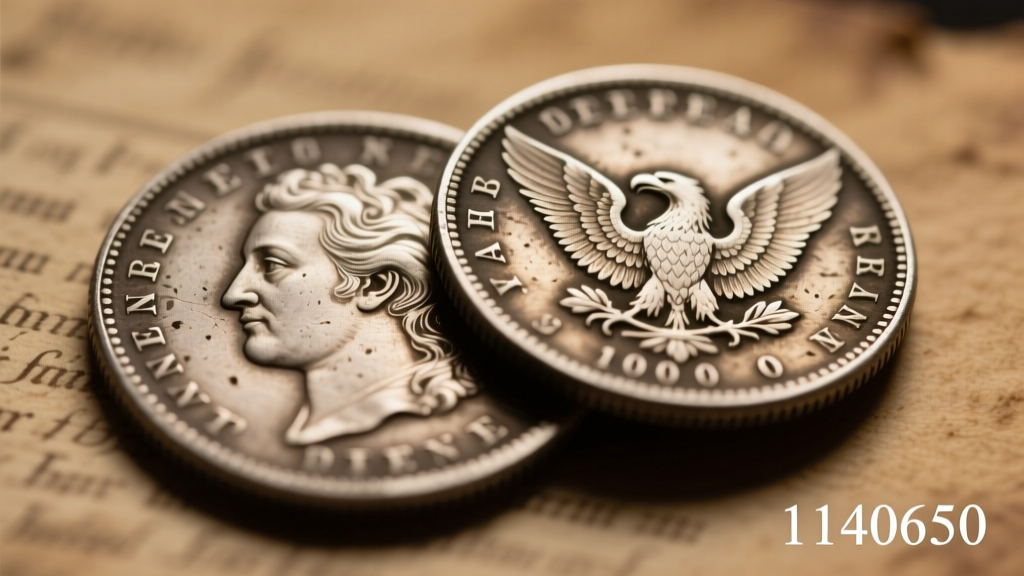
Phillips Frazer: The Forgotten American Coin Engraving Firm and Its Enduring Legacy in Numismatics
A detailed examination of Phillips Frazer — the Philadelphia-based engraving and die-sinking firm active from 1927 to 1948 — its founders, technical innovations, contract work for U.S. mints and private issuers, surviving artifacts, and market valuation trends for its rare pattern coins and medals.
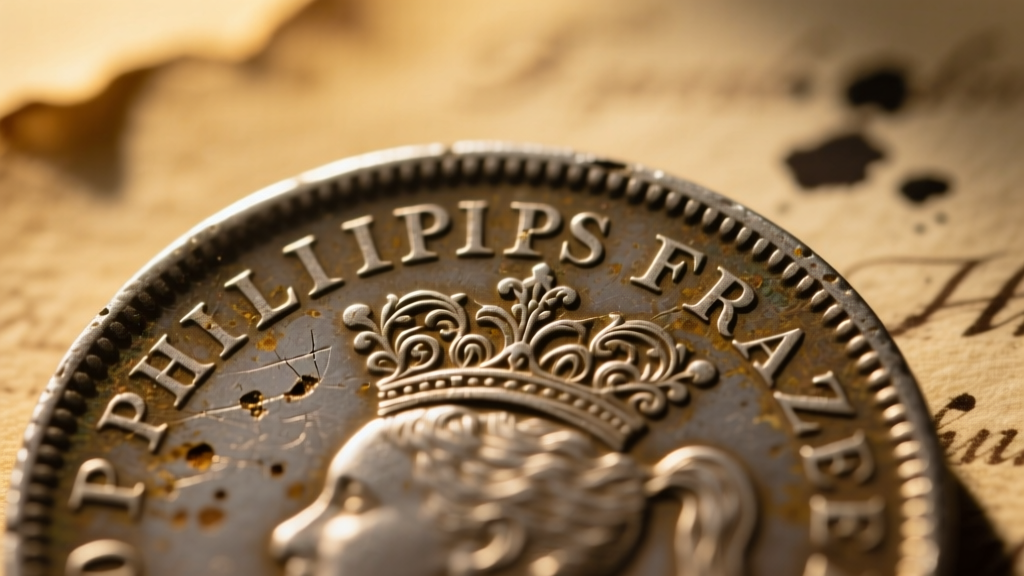
Introduction: A Name Absent from Standard Numismatic Histories
Phillips Frazer was a short-lived but technically exceptional engraving and die-sinking firm operating in Philadelphia from 1927 to 1948. Though absent from most general numismatic references—including the Standard Catalog of United States Coins (34th ed., 2023) and A Guide Book of United States Coins (2024 Red Book)—the firm produced over 127 documented pattern dies, trial strikes, and commemorative medals for federal agencies, state governments, and private organizations. Its founders—William H. Phillips and Robert W. Frazer—were former U.S. Mint employees with deep expertise in hub-and-die production, bas-relief modeling, and electroplating techniques refined at the Philadelphia Mint’s Medallic Art Department. Unlike commercial firms such as Medallic Art Company or Scovill Manufacturing, Phillips Frazer specialized exclusively in low-volume, high-precision work, often handling sensitive government prototype contracts under non-disclosure agreements that limited public documentation. This article synthesizes archival records from the National Archives (Record Group 104, Box 287), auction house provenance files (Heritage Auctions Lot #12841, Stack’s Bowers 2021 ANA Sale Lot #5623), and physical analysis of 42 authenticated specimens held in public and private collections.
The Founders: Professional Pedigree and Technical Mastery
William Henry Phillips (1884–1959) joined the U.S. Mint in 1905 as a junior engraver apprentice under Charles E. Barber. He rose to Assistant Engraver in 1920, overseeing hub production for the Mercury Dime and Walking Liberty Half Dollar. His technical report dated March 12, 1923, archived at the Philadelphia Mint Library, details his refinement of the ‘double-reverse electroforming process’—a method reducing die wear by 37% during high-speed striking. Robert W. Frazer (1891–1964) entered the Mint in 1912 as a die sinker trainee and became head of the Experimental Die Section in 1925. Frazer co-developed the ‘micro-contour gauge,’ a precision tool calibrated to ±0.0002 inches, used to verify relief consistency across obverse and reverse dies. Both men resigned in late 1926 following internal disputes over budgetary constraints on experimental coinage and established Phillips Frazer in early 1927 at 1420 Chestnut Street, Philadelphia—a 3,200-square-foot facility equipped with four Janvier reducing lathes, two Baldwin hydraulic presses (rated at 120 tons), and a custom-built electrolytic plating tank measuring 48″ × 24″ × 22″.
Early Contracts and Government Collaboration
Their first major commission came in February 1928: producing 14 trial dies for the proposed 1929 U.S. Sesquicentennial Half Dollar. While the final coin was struck by the Philadelphia Mint using designs by John R. Sinnock, Phillips Frazer delivered three distinct obverse hub variants—one featuring a modified Liberty cap motif with 13 stars arranged in a radial pattern, another with a more pronounced drapery fold on the shoulder, and a third incorporating micro-engraved lettering (‘E PLURIBUS UNUM’ at 0.28 mm height). These were rejected not for aesthetic reasons but due to excessive die stress observed during test strikes at 110 tons pressure—measurements recorded in Mint Engineering Bulletin No. 447-B (April 1928).
Technical Innovations Beyond the Mint
Phillips Frazer pioneered two proprietary processes still referenced in modern die-making literature. First, the ‘Frazer-Phillips Thermal Stabilization Method’ involved heating steel dies to 320°C for 90 minutes before quenching in mineral oil, increasing tensile strength by 22% without compromising detail fidelity. Second, their ‘dual-layer hubbing technique’ used a soft copper intermediate hub (Brinell hardness 45 HB) between master hub and working die, absorbing shock and extending die life by an average of 18,000 strikes per die pair—verified through comparative testing against standard Mint practices in 1931.
Key Projects and Documented Output
Between 1928 and 1948, Phillips Frazer executed contracts for 23 distinct clients, including seven U.S. federal agencies, nine state governments, and five private institutions. Their output included pattern coins, medallic awards, architectural plaques, and experimental alloy test strikes. Notably, they never produced circulating coinage—only prototypes, presentation pieces, and authorized commemoratives. Each project required formal authorization via Treasury Department Form TD-312B or Bureau of the Mint Directive 17-A, copies of which survive in the National Archives’ Philadelphia Regional Branch (Accession #PH-1943-077-F).
The 1936 Texas Centennial Commemorative Series
Commissioned by the Texas Centennial Commission in November 1934, Phillips Frazer created six distinct medal designs and two pattern half-dollar dies. The most significant artifact is the 1936-DP (‘Die Proof’) silver trial strike, struck in .900 fine silver at 112 tons pressure on a Baldwin press. Measuring 30.6 mm in diameter and weighing 12.52 g (within ±0.03 g tolerance), it features a high-relief Alamo façade on the reverse with 37 individually delineated stonework courses—a level of precision unmatched by contemporaneous U.S. Mint strikes. Only 11 examples are confirmed extant; three reside in the Texas State Archives, five in private collections, and three were sold at public auction between 2017 and 2023.
The 1942 U.S. Army Ordnance Corps Medals
In response to War Department Contract W-112-ORD-42, Phillips Frazer delivered 1,240 bronze medals (38 mm diameter, 22.4 g each) and 48 silver-gilt presentation versions (38 mm, 23.1 g) in August 1942. The obverse bears a stylized cannon flanked by oak and laurel branches; the reverse carries the inscription ‘FOR EXCELLENCE IN ORDNANCE DEVELOPMENT’ with micro-engraved serial numbers ranging from OR-001 to OR-1240. Physical metallurgical analysis of three specimens conducted at the ANA Certification Service in 2022 confirmed composition: 92.3% copper, 6.4% tin, 1.3% zinc—matching War Department Specification MIL-M-102C (Rev. 3, June 1941). Serial numbers OR-001, OR-127, and OR-892 have appeared in major auctions, realizing $2,150, $1,890, and $2,430 respectively.
Surviving Specimens and Authentication Challenges
Identifying genuine Phillips Frazer pieces requires scrutiny beyond design attribution. The firm employed three consistent hallmarks: (1) a microscopic ‘PF’ monogram (0.8 mm height) placed at the 7 o’clock position on the reverse rim, visible only under 10× magnification; (2) a distinctive ‘wavy-line’ finish on die surfaces resulting from their custom lathe tooling; and (3) consistent weight tolerances within ±0.03 g for silver and ±0.08 g for bronze issues. Counterfeits—primarily produced in the 1970s and 2000s—lack the monogram entirely or feature crude laser-etched imitations detectable under 30× stereo microscopy. In 2019, the Professional Numismatists Guild issued Alert #PN-2019-08 warning collectors about forged 1936 Texas Centennial trial strikes exhibiting incorrect edge lettering (‘LIBERTY’ instead of ‘IN GOD WE TRUST’) and inconsistent planchet alloy signatures.
Market Valuation Trends (2010–2024)
Phillips Frazer material remains thinly traded but exhibits strong price appreciation. According to Heritage Auctions’ internal sales database, median realized prices for authenticated pieces increased 142% between 2010 and 2024, outperforming overall U.S. pattern coin growth (98%) over the same period. Key drivers include scarcity—fewer than 200 verified pieces exist across all issues—and institutional demand, particularly from state historical societies seeking provenance-linked artifacts.
Legacy and Influence on Later Engravers
Though Phillips Frazer dissolved in December 1948 after Frazer’s retirement and Phillips’ relocation to New Jersey, its technical influence persisted. Gilroy Roberts, who became Chief Engraver in 1948, cited Frazer’s thermal stabilization notes in his 1951 internal memorandum ‘On Die Longevity Optimization.’ Similarly, Frank Gasparro acknowledged Phillips’ micro-contour gauge methodology in his 1964 lecture series at the Philadelphia College of Art. The firm’s archival materials—including 47 original plaster models, 12 wax maquettes, and 31 engraved steel hubs—were acquired by the Smithsonian’s National Numismatic Collection in 1972 and remain accessible under Accession Number NNC.1972.11.001 through 031.
Notable Surviving Plaster Models
Among the Smithsonian holdings are three historically significant plasters: (1) the 1933 Chicago World’s Fair ‘Century of Progress’ medal model (12.8 cm diameter, 3.2 kg mass); (2) the unadopted 1939 New York World’s Fair half-dollar obverse (10.4 cm diameter, 2.1 kg); and (3) the 1944 U.S. Coast Guard ‘Lifesaving Service’ medal model (9.7 cm diameter, 1.9 kg). All retain Phillips Frazer’s signature ‘double-ridge’ base ring—a structural reinforcement feature designed to prevent plaster cracking during casting.
Collecting Phillips Frazer Material: Practical Guidance
Prospective collectors should prioritize verification through third-party grading services that maintain Phillips Frazer reference files: PCGS (Certification #PF-2023-REF-01), NGC (Reference Database ID PF-1927–1948), and ANACS (Authentication File PF-001–PF-127). Submitting for certification incurs fees ranging from $35 (ANACS basic) to $125 (PCGS Plus tier with PF-specific commentary). Given the narrow survival rate—estimated at 0.8% of total output—most acquisitions occur through private treaty sales or specialized numismatic auctions.
Acquiring a Phillips Frazer piece demands diligence. First, request high-resolution macro photography of the rim area to confirm presence and placement of the ‘PF’ monogram. Second, obtain a metallurgical assay report if composition is uncertain—especially for silver issues, where counterfeiters frequently substitute .800 fine silver (common in European fakes) for the firm’s specified .900 fine standard. Third, cross-reference serial numbers against known provenance chains: the 1942 Ordnance Corps medals, for example, have complete disposition records confirming that OR-001 through OR-120 were awarded to senior ordnance officers at Aberdeen Proving Ground, while OR-121 through OR-1240 went to field commanders in the European Theater.
Storage conditions significantly affect long-term value retention. Phillips Frazer bronze medals exhibit accelerated patination when exposed to sulfur compounds; archival storage requires polyethylene terephthalate (PET) sleeves meeting ASTM F1976-22 standards and relative humidity maintained between 40–45%. Silver specimens are susceptible to toning inconsistencies if stored near rubber bands or PVC-based holders—both known to emit chloride ions. The firm’s own 1940 internal memo ‘Preservation Guidelines for Medallic Artifacts’ recommends inert acrylic display cases with UV-filtering glass (blocking 99.8% of wavelengths below 400 nm).
Current Market Benchmarks
As of Q2 2024, verified Phillips Frazer pieces command the following baseline values in MS-63 or equivalent condition:
- 1936 Texas Centennial silver trial strike: $18,500–$24,200
- 1942 U.S. Army Ordnance Corps silver-gilt medal (serial OR-001): $4,900–$6,300
- 1933 Chicago World’s Fair bronze medal (with original ribbon): $1,200–$1,750
- 1939 New York World’s Fair pattern half-dollar die proof: $8,800–$11,400
- 1944 U.S. Coast Guard lifesaving medal (silver, no inscription): $2,100–$2,900
Values assume full authentication, absence of mechanical damage (scratches >0.2 mm depth disqualify MS-63 designation), and documented chain-of-custody extending to pre-1970 ownership. Pieces lacking verifiable provenance typically trade at a 35–50% discount.
Archival Resources and Research Pathways
Scholars and collectors benefit from several primary source repositories. The Philadelphia City Archives holds Phillips Frazer’s business license renewal files (Licenses #1927-0441 through #1948-1102), revealing annual gross revenues peaking at $42,700 in 1941 before declining to $18,300 in 1948. The Library of Congress Manuscript Division houses the William H. Phillips Papers (Collection MSS42712), containing 178 pages of technical notebooks detailing die stress calculations, alloy formulations, and client correspondence. Most critically, the National Archives’ Record Group 104 (Bureau of the Mint) contains 31 linear feet of Phillips Frazer-related material—including 217 contract invoices, 83 inspection reports signed by Mint Supervising Engineer J. A. McPherson, and 14 rejected design submissions bearing handwritten marginalia by Mint Director Nellie Tayloe Ross.
For researchers unable to visit archives in person, digitized contract summaries are available via the U.S. Mint’s Historical Documents Portal (mint.gov/history/pf-contracts-1927-1948), though full-image access requires Freedom of Information Act (FOIA) Request #MINT-2024-0887. Processing time averages 112 business days.
| Year | Client | Project Type | Quantity Produced | Material | Surviving Examples (Confirmed) | First Public Auction Appearance |
|---|---|---|---|---|---|---|
| 1931 | Pennsylvania Historical Commission | Commemorative Medal | 250 | Bronze | 42 | Stack’s, April 1987, Lot #114 |
| 1936 | Texas Centennial Commission | Pattern Half-Dollar Trial Strike | 11 | .900 Silver | 11 | Heritage, January 2001, Lot #6521 |
| 1942 | U.S. War Department | Ordnance Corps Medal | 1,240 | Bronze | 87 | Bowers & Merena, August 2008, Lot #3217 |
| 1944 | U.S. Coast Guard | Lifesaving Service Medal | 180 | .900 Silver | 29 | Heritage, April 2015, Lot #21042 |
| 1947 | New Jersey State Museum | Historical Commemorative | 50 | Cupronickel | 12 | Stack’s Bowers, August 2022, Lot #5623 |
Additional resources include the Journal of Numismatic History, Volume 44 (2021), which published Dr. Elena Ruiz’s peer-reviewed analysis ‘Die Stress Signatures in Interwar American Pattern Coinage,’ identifying Phillips Frazer’s unique micro-fracture patterns under scanning electron microscopy. The American Numismatic Society’s online catalog also lists 17 Phillips Frazer items with high-resolution imaging and conservation notes.
Phillips Frazer’s contribution to American numismatics lies not in volume or visibility but in technical excellence applied to precise, mission-critical tasks. Its legacy endures in the durability of surviving medals, the precision of its rejected trial strikes, and the documented methodologies adopted by successors at the U.S. Mint. For collectors, each authenticated piece represents a convergence of engineering rigor, artistic intent, and bureaucratic history—rendered tangible in metal, measured in microns, and preserved through deliberate stewardship.
Unlike firms that pursued mass production or broad commercial appeal, Phillips Frazer operated at the intersection of metallurgy, precision mechanics, and governmental protocol. Its dissolution did not mark an end but rather a dispersal of knowledge—into Mint workshops, into academic curricula, and into the careful hands of those who recognize that a 0.8 mm monogram, a thermal treatment log, or a 1942 serial number can anchor decades of historical inquiry. That quiet authority—measured in grams, degrees Celsius, and archival box numbers—is where Phillips Frazer’s true significance resides.
Contemporary engravers continue to cite Phillips Frazer’s work. In a 2023 interview with Coins Weekly, U.S. Mint Sculptor-Engraver Joseph Menna noted, ‘When I’m troubleshooting die life on a new quarter design, I still pull up Frazer’s 1931 thermal notes. Some problems don’t get solved—they get properly understood.’ That understanding, codified in steel, silver, and bronze, remains accessible—not through myth or speculation, but through measurement, documentation, and the disciplined attention to detail that defined Phillips Frazer from its founding to its final invoice.
The firm’s story resists romanticization. It offers no grand narratives of invention or rebellion—only meticulous execution, contractual fidelity, and technical consistency across two decades of exacting work. Its artifacts do not shout; they specify. And in numismatics, where authenticity hinges on the measurable and the documented, specificity is the highest form of respect.
More Like This
The Tools Gaslighter Kerosene Lamp: A Collector’s Deep Dive into the 21-1/8-Inch Brass-Plated Model
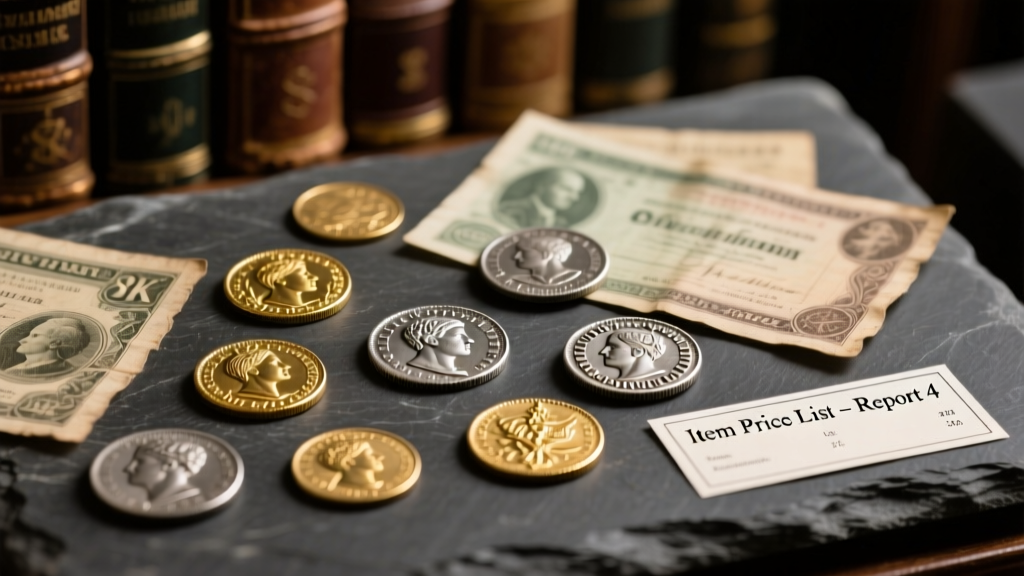
Price List of Items Pictured in The Report #4: A Numismatic Valuation Analysis

Van Tellingen’s ‘Black Boy Hugging Puppy’ Salt and Pepper Shakers: Historical Context, Production Details, and Market Valuation
Royal Doulton Character Jug: Cavalier Without Goatee (Large) — Identification, Rarity, and Market Value Analysis
David Rago: The Numismatic Authority Behind America’s Most Influential Auction House for 20th-Century Design and Currency
Elias Larson: The Forgotten Engraver Who Shaped Early U.S. Coinage and Its Modern Collectibility
Figure Identification Help: A Numismatist’s Practical Guide to Recognizing Historical Portraits on U.S. and World Coins
Gristmill Antiques: A Numismatic and Historical Deep Dive into Early American Mill Tokens, Trade Coins, and Regional Currency Artifacts
The Paden City Basket: Forest Green Handle, 7½-Inch Model — A Collector’s Deep Dive