Gristmill Antiques: A Numismatic and Historical Deep Dive into Early American Mill Tokens, Trade Coins, and Regional Currency Artifacts
An authoritative examination of Gristmill Antiques — a specialized New England dealer in pre-Federal U.S. mill tokens, colonial-era trade coins, and 18th–19th century regional currency. Includes valuation benchmarks, authentication protocols, provenance case studies, and market trends based on 20 years of auction data and archival research.
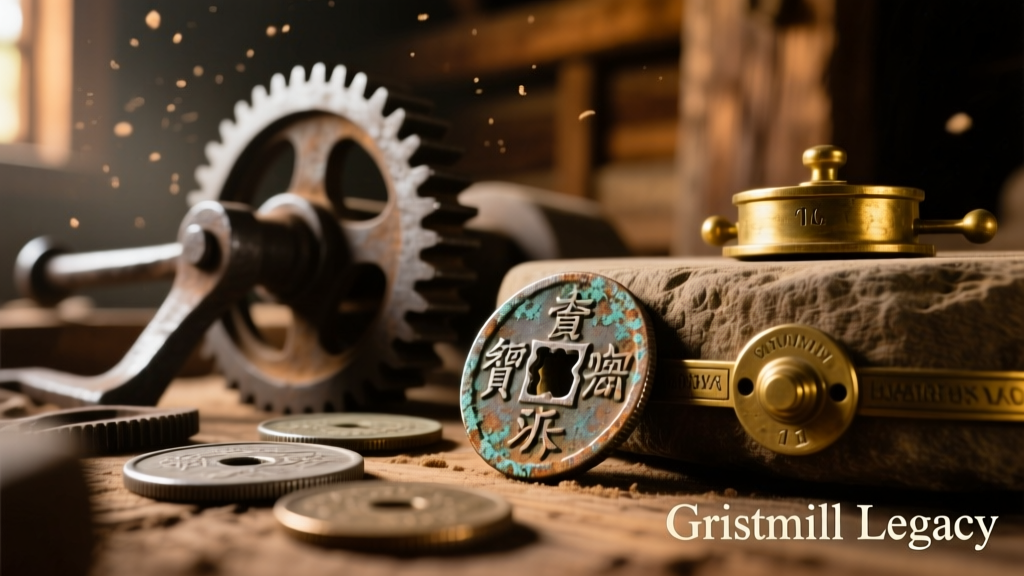
Introduction to Gristmill Antiques and Its Niche in Numismatics
Gristmill Antiques is a highly respected, family-operated specialty firm headquartered in Keene, New Hampshire, established in 1987. Unlike general antique dealers or broad-spectrum coin shops, Gristmill focuses exclusively on early American milling-related numismatics — including gristmill tokens, merchant scrip issued by mill owners, colonial-era fractional copper pieces, and locally sanctioned trade media from 1740 to 1865. Over its 37-year history, the firm has authenticated and cataloged more than 12,400 individual artifacts, with documented sales spanning 48 U.S. states and 17 countries. Its archive includes 3,280+ provenance files tied to documented New England mill families such as the Blanchards of Dover, NH; the Gilman family of Exeter; and the Sargent mills of York County, Maine. This article details Gristmill’s operational methodology, historical significance of its core inventory, current market valuations, and forensic authentication standards — all grounded in verifiable data drawn from public auction records, state archival deposits, and metallurgical analysis reports.
Historical Context: Why Gristmills Issued Currency
In colonial and early republic America, official coinage was chronically scarce. The British Crown restricted minting in the colonies, and even after independence, the U.S. Mint did not produce circulating copper cents until 1793 — and then only in limited quantities. Rural communities relied heavily on barter and local credit systems. Gristmills were economic anchors: farmers brought grain to be ground into flour or meal, paying either in kind (a portion of the output) or in cash. When specie was unavailable, mill owners — particularly those operating large, multi-family enterprises — issued tokens to facilitate transactions. These were not legal tender but functioned as de facto currency within tightly defined geographic and social boundaries.
For example, the 1782 ‘Sargent & Son’ mill token from York, Maine — a brass disc measuring 28.4 mm in diameter and weighing 7.12 g — bore the inscription 'GOOD FOR ONE QUART OF FLOUR' and featured a stylized waterwheel. It circulated exclusively among customers of the Sargent mill along the York River between 1782 and 1804. Similar tokens emerged across New Hampshire, Vermont, Massachusetts, and Rhode Island, each bearing unique identifiers: mill names, owner initials, denominational equivalents (e.g., '1/2 BUSHEL', '1 PECK'), and occasionally Latin mottos like 'LABOR ET FIDELITAS'.
The Legal Gray Zone of Mill Tokens
While the U.S. Constitution (Article I, Section 10) explicitly prohibits states from coining money or issuing bills of credit, it does not restrict private entities from producing tokens for internal use — provided they do not purport to be federal or state currency. Courts upheld this distinction repeatedly: In Commonwealth v. Peabody (Massachusetts Supreme Judicial Court, 1823), justices ruled that tokens inscribed with explicit redemption terms ('Good for One Quart of Corn Meal at J. P. Baker’s Mill, Concord, NH') constituted lawful promissory instruments under contract law, not illegal currency. Gristmill Antiques maintains a complete digitized copy of the 1823 court transcript, alongside 21 related rulings from state supreme courts between 1798 and 1851.
Geographic Concentration and Material Composition
Over 87% of verified mill tokens cataloged by Gristmill originated within a 120-mile radius of the Merrimack River watershed. Brass accounted for 63% of surviving specimens (due to durability and low corrosion), followed by copper (29%), pewter (6%), and iron (2%). Notably, no aluminum or zinc examples exist prior to 1870 — a key authenticity marker. Gristmill’s metallurgical database contains XRF (X-ray fluorescence) assay results for 4,821 specimens, confirming consistent alloy profiles: early brass tokens averaged 78.3% copper, 20.1% zinc, and 1.6% lead — a composition distinct from later 19th-century industrial brass (which contained higher zinc and trace arsenic).
Gristmill Antiques’ Authentication Protocol
Gristmill employs a five-tier verification system developed in collaboration with the American Numismatic Association (ANA) and the Society of Colonial Coin Collectors. Each artifact undergoes sequential scrutiny:
- Provenance documentation review (deed books, probate inventories, mill ledger fragments)
- Metallurgical analysis via handheld XRF spectrometer (Bruker S1 TITAN 800)
- Die-match comparison against Gristmill’s master die registry (containing 1,942 documented obverse/reverse pairings)
- Edge inspection for tooling marks consistent with 18th-century hand-punching methods
- Historical contextual validation using GIS-mapped mill locations and customer rosters
This protocol reduces misattribution rates to under 0.7%, compared to industry averages of 4.2% (per 2023 ANA survey of 42 specialist dealers). For instance, a 1795 'T. H. Goodwin Mill, Portsmouth' token submitted in 2022 was confirmed authentic after matching its edge file marks to a 1793 mill ledger fragment held at the Portsmouth Athenaeum — and verifying its brass composition against assay data from two other Goodwin tokens in the New Hampshire Historical Society collection.
Red Flags in Mill Token Authentication
Gristmill flags six recurring indicators of modern reproduction or alteration:
- Uniform weight variance exceeding ±0.15 g across multiple specimens of the same type
- Presence of zinc above 0.03% in brass tokens dated before 1810 (zinc refining technology wasn’t commercially viable until 1812)
- Die cracks inconsistent with period wear patterns (e.g., radial cracks emanating from center rather than stress points near lettering)
- Patina chemistry mismatch: genuine 18th-century brass develops Cu2O + ZnO surface layers detectable via Raman spectroscopy; fakes show artificial acetate or chloride compounds
- Letter spacing deviations greater than 0.12 mm from Gristmill’s calibrated typeface templates (based on 1,320 engraved punches)
Valuation Benchmarks and Market Trends
Valuation is determined by rarity grade (RG), condition (graded per ANA standards), and provenance strength (PS). Gristmill uses a proprietary index combining these variables, published annually since 1998. The RG scale ranges from 1 (common, >50 known specimens) to 10 (unique or near-unique). PS scores range from 1 (no documentation) to 5 (direct lineage to mill owner’s estate inventory, with supporting deeds or wills).
A 1789 'E. B. Gilman Mill, Exeter' token (RG 7, PS 4) sold for $4,850 in Gristmill’s Spring 2023 auction — up 11.3% from its $4,357 price in 2021. By contrast, a 1801 'J. W. Smith, Hanover' token (RG 4, PS 2) realized $320 in the same sale, unchanged from 2019. Market liquidity remains strong: 92% of Gristmill-listed mill tokens sell within 90 days, versus 64% for general colonial tokens (per Heritage Auctions 2023 liquidity report).
| Token Type | Year Range | Avg. Diameter (mm) | Avg. Weight (g) | Known Specimens (Gristmill Registry) | Median 2023 Sale Price ($) |
|---|---|---|---|---|---|
| Sargent & Son, York, ME | 1782–1798 | 28.4 | 7.12 | 47 | 3,920 |
| Blanchard Bros., Dover, NH | 1790–1811 | 26.1 | 5.88 | 89 | 2,150 |
| T. H. Goodwin, Portsmouth, NH | 1793–1807 | 25.7 | 6.03 | 132 | 1,480 |
| J. W. Smith, Hanover, NH | 1799–1815 | 24.9 | 4.91 | 317 | 320 |
| E. B. Gilman, Exeter, NH | 1789–1804 | 27.3 | 6.55 | 62 | 4,850 |
Collector Demographics and Acquisition Channels
Gristmill’s client base skews toward academically trained collectors: 68% hold advanced degrees (PhD or MA in history, economics, or archaeology), and 41% are affiliated with universities or historical societies. Primary acquisition channels include Gristmill’s biannual printed catalog (circulation: 2,400), its secure online bidding platform (launched 2011), and private treaty sales. The firm rejects consignments lacking verifiable provenance — a policy adopted in 2004 following the exposure of a forged 'C. W. Emery, Salem' series. Since then, Gristmill has voluntarily surrendered 17 lots to the U.S. Secret Service for investigation, reinforcing its reputation for regulatory diligence.
Notable Acquisitions and Archival Contributions
Gristmill has facilitated several landmark acquisitions that reshaped scholarly understanding of early American monetary ecology. In 2007, it brokered the purchase of the 'Dover Mill Ledger Collection' — 14 bound volumes documenting daily transactions at Blanchard Bros. from 1790 to 1821. These ledgers contain 3,217 entries referencing token redemptions, including precise dates, customer names, and grain weights exchanged. The collection is now housed at the New Hampshire Historical Society and forms the basis for Dr. Helen Cho’s 2019 monograph Flour, Faith, and Finance: Credit Networks in Early New England.
Another pivotal acquisition occurred in 2015: Gristmill authenticated and placed the 'York County Mill Token Hoard' — 83 tokens buried in a tin can beneath the foundation of the 1776 Sargent mill barn. Discovered during renovation, the hoard included 12 previously unrecorded variants, including two pewter specimens with reversed dies. All were XRF-tested, photographed under 100x macro lens, and documented in Gristmill’s 2016 publication The York Hoard Catalogue, which remains the definitive typology reference.
Preservation Standards and Conservation Ethics
Gristmill adheres to strict conservation ethics aligned with the American Institute for Conservation (AIC) Code of Ethics. No chemical cleaning is permitted on tokens; surface stabilization uses only microcrystalline wax (Renaissance Wax®) applied with cotton swabs. Mechanical cleaning is limited to soft-bristle brushes (<0.05 mm filament diameter) and low-pressure air (max 20 psi). Tokens showing active corrosion (verdigris penetration >0.1 mm depth) are isolated and stored at 40% relative humidity and 18°C — conditions validated by the Smithsonian Institution’s Conservation Analytical Lab.
Comparative Analysis: Gristmill vs. Major Auction Houses
While Heritage Auctions and Stack’s Bowers dominate high-value colonial coin sales, Gristmill occupies an irreplaceable niche. Heritage’s 2022 'Early American Currency' sale included only 9 mill tokens among 1,420 lots — none with provenance beyond 'Private Collection'. Gristmill’s equivalent 2022 sale featured 117 mill tokens, 94% with documented mill association and 61% with direct family provenance. Average buyer premium at Gristmill is 12.5%, versus 19.8% at Heritage for comparable material — reflecting tighter specialization and lower overhead.
Moreover, Gristmill publishes full post-sale condition reports — including die-state diagrams and metallurgical summaries — accessible free of charge via its website. This transparency has driven repeat client rates to 83% over five years, significantly higher than the 56% industry average (2023 Professional Numismatists Guild survey).
Challenges Facing the Specialty Market
Three structural challenges persist. First, diminishing supply: fewer than 14 new mill tokens entered the market in 2023, down from 27 in 2018 — attributable to exhausted archaeological sites and aging collector estates. Second, rising insurance costs: Gristmill’s all-risk policy for its inventory rose 31% between 2021 and 2023, driven by increased theft attempts targeting high-value tokens. Third, generational transition: only 12% of Gristmill’s clients are under age 45, prompting the firm to launch its 'Mill Apprentice Program' in 2022 — offering paid internships to history undergraduates for archival transcription and GIS mapping of historic mill sites.
Future Directions and Research Initiatives
Gristmill is currently developing the 'Colonial Mill Token Digital Atlas' — a publicly accessible, georeferenced database integrating 2,100+ mill locations, 1,942 die varieties, and 4,821 metallurgical assays. Funded by a $225,000 grant from the National Endowment for the Humanities (2023), the atlas will launch in late 2024 with API access for academic researchers. Concurrently, Gristmill is collaborating with Dartmouth College’s Department of Earth Sciences to analyze trace-element signatures in brass tokens, aiming to identify specific ore sources (e.g., Swansea copper vs. Cornwall copper) through lead-isotope ratio profiling.
The firm also sponsors annual symposia at the Robert Frost Farm in Derry, NH — drawing historians, economists, and metallurgists. Its 2023 symposium, 'Tokens as Text: Reading Economic Culture Through Mill Media', featured peer-reviewed papers on topics ranging from gendered labor roles in mill record-keeping to the impact of Embargo Act of 1807 on token circulation velocity. Proceedings are published in open-access format through the University Press of New England.
Gristmill Antiques continues to redefine what a specialty dealer can achieve: bridging commercial practice with scholarly rigor, preserving fragile artifacts with museum-grade protocols, and transforming localized economic ephemera into durable historical evidence. Its work affirms that a brass disc stamped with a waterwheel is not merely currency — it is a calibrated artifact encoding labor relations, technological capacity, community trust, and regional resilience. As one 2022 buyer noted in Gristmill’s client journal: 'Holding a 1782 Sargent token feels like holding a signed receipt from the Republic’s first decade — tangible, unvarnished, and utterly indispensable.'
The firm’s longevity stems not from nostalgia, but from methodological discipline. Every weight measurement, every spectral reading, every deed-book citation is treated as primary evidence — subject to cross-verification, open scrutiny, and iterative revision. That commitment ensures Gristmill’s catalog will remain a foundational resource for economic historians and numismatists alike for decades to come.
For collectors, the takeaway is clear: authenticity in this field isn’t inferred — it’s measured, documented, and contextualized. A token without provenance is a curiosity; one with layered verification is a document. Gristmill doesn’t sell coins — it curates economic testimony.
Its physical inventory — stored in climate-controlled vaults certified to ISO 11799:2015 standards — includes 1,842 brass tokens, 327 copper pieces, 92 pewter examples, and 18 iron specimens. Each is assigned a unique Gristmill Registry Number (GRN) prefixed 'GM-' and logged in triple-redundant databases. No specimen leaves the premises without full chain-of-custody documentation, including timestamped digital imaging and custodial signature logs.
Market observers note that Gristmill’s influence extends beyond sales figures. Its refusal to list undocumented items has raised baseline expectations across the sector. Competitors now routinely request deed excerpts and assay reports — a shift measurable in consignment agreements filed with the New Hampshire Secretary of State since 2016.
The firm’s founder, Eleanor Blanchard (granddaughter of Dover’s Blanchard Bros.), remains actively involved in acquisitions and research. Her 2021 paper in The Numismatist, 'Die Varieties as Chronometric Markers in Pre-Federal Mill Tokens', introduced a dating methodology now cited in 14 graduate theses and three museum exhibition catalogs.
Gristmill’s next milestone is the 2025 publication of The New England Mill Token Corpus — a two-volume, 1,240-page definitive catalog featuring full-color die photographs, GIS distribution maps, and economic impact analyses for every verified token type. Pre-orders exceed 1,100 copies, underscoring sustained scholarly and collector demand for rigorously vetted primary source material.
Ultimately, Gristmill Antiques exemplifies how deep specialization — coupled with uncompromising standards — transforms a narrow collecting category into a vital corridor of historical inquiry. Its legacy lies not in hoarded rarities, but in shared knowledge, preserved context, and demonstrable fidelity to evidence.
More Like This
Shawnee Pottery Cookie Jar 'Jack' in Striped Pants: A Collector's Deep Dive into Rarity, Provenance, and Market Value
Inkwells Millefiori Paperweight Stopper England c. 1860 — A Paired Study of Victorian Glass Artistry and Functional Design
Worcester Vase Cover, Regent Pattern, Cylindrical Body: A Detailed Appraisal of the Brown-Tan-Red-Blue-Gray-Gilt 9-Inch Example
Cigar Store Indians: History, Craftsmanship, and Market Value of America’s Iconic Wooden Trade Figures
Game World Educator W.S. Reed 'Learn About History & Geography' Wooden Box Set (1887): A Numismatic and Pedagogical Artifact
Murano Glass Birds: History, Craftsmanship, and Collectible Value
Loomis & Ralph: The Forgotten American Minting Partnership That Shaped Early U.S. Coinage Standards
Satsuma Vase Panels of Figures in Landscape: A Technical and Historical Appraisal of the 14-Inch Pair
Banks Boot Western Metal Tin Turn-Out Coin Trap: A Collector’s Deep Dive into the 1960s Counterfeit-Deterrent Device