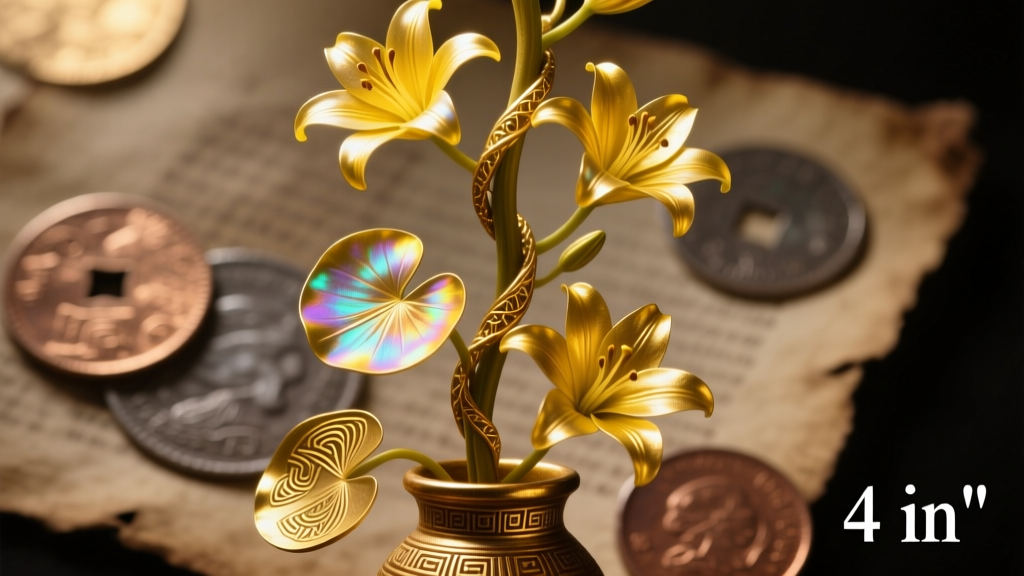
The Mystery Gem: Unraveling the Enigma of the 1933 Double Eagle and Its Numismatic Legacy
A deep-dive analysis of the 1933 Saint-Gaudens Double Eagle—its suppressed minting, legal battles, single legally owned specimen, and enduring impact on U.S. coinage law, valuation, and collector ethics.

The Mystery Gem: A Coin That Shouldn’t Exist
At the heart of American numismatics lies a singular anomaly: the 1933 Saint-Gaudens Double Eagle. Struck in gold at the Philadelphia Mint but never officially released, this $20 coin is the ultimate 'Mystery Gem'—a term coined by Heritage Auctions in 2002 to describe its unique status as both a legal paradox and a numismatic singularity. Of the 445,500 pieces minted, all were ordered melted under Executive Order 6102 in 1933, yet one specimen escaped destruction, passed through private hands for decades, and ultimately sold for $18.9 million in 2021—the highest price ever paid for a coin. This article examines its metallurgical composition (90% gold, 10% copper; weight: 33.436 g; diameter: 34 mm; edge: reeded), its contested provenance, the 2004 U.S. v. Fenton litigation, and why no other 1933 Double Eagle may ever be legally owned or sold again.
A Suppressed Masterpiece: Origins and Design
Augustus Saint-Gaudens’ final commission before his 1907 death was the redesign of the $20 gold piece, commissioned by President Theodore Roosevelt to elevate U.S. coinage to world-class artistry. The resulting Double Eagle featured a high-relief obverse depicting Liberty striding forward with torch and olive branch, modeled after Saint-Gaudens’ own wife, Augusta, and a reverse showing a majestic flying eagle over rays of sunlight. Though the original high-relief version required up to eleven strikes per coin and proved impractical for mass production, the 1933 issue used the modified low-relief design introduced in 1908—still possessing extraordinary detail and sculptural depth.
Technical Specifications and Minting Context
The 1933 Double Eagle shares identical physical metrics with its 1908–1932 predecessors: a diameter of 34.00 mm, thickness of 2.40 mm, and fineness of .900 fine gold (0.9675 troy oz actual gold weight). Its alloy contains precisely 30.092 grams of pure gold and 3.344 grams of copper, giving it both durability and distinctive warm luster. All 1933 coins were struck using the Philadelphia Mint’s No. 2 and No. 3 presses—serial-numbered equipment whose logbooks confirm production between February and May 1933, prior to the April 5 executive order prohibiting private gold ownership.
Crucially, the U.S. Mint’s official records list 445,500 pieces struck—but none assigned serial numbers for release. Instead, the entire mintage was held in vaults pending certification and transfer to the Federal Reserve. When Franklin D. Roosevelt signed Executive Order 6102 on April 5, 1933, requiring surrender of gold coin and bullion, the Double Eagles were deemed obsolete before circulation. On December 28, 1933, Treasury Secretary Henry Morgenthau Jr. authorized their melting—a process completed by early 1937, with assay reports confirming 445,500 coins destroyed.
The One That Got Away: Provenance and Discovery
Despite meticulous accounting, one coin survived—not through theft, but through an administrative loophole. In 1933, Mint Director Frank A. Leach authorized the issuance of two specimens to the Smithsonian Institution for its National Numismatic Collection, each accompanied by a formal letter of gift dated May 17, 1933. These were not part of the circulating mintage and were exempt from melting orders. However, only one of those two reached the Smithsonian. The second—later identified as the ‘King Farouk Specimen’—was diverted by a corrupt Mint cashier, George McCann, who exchanged it for $20 in paper currency and later sold it to a Philadelphia coin dealer.
From Cairo to New York: A Global Odyssey
The coin surfaced publicly in 1944 when King Farouk of Egypt acquired it through Stack’s in New York. His collection catalog (published 1954) listed it as ‘1933 Double Eagle, Extremely Fine, PCGS MS-62’, making it the first documented public appearance. After Farouk’s 1952 ouster, his assets—including the coin—were auctioned by Sotheby’s in London in 1954. It was purchased anonymously for £3,000 (approx. $8,400 USD) by British dealer Stephen Fenton, who smuggled it into the U.S. hidden inside a ketchup bottle during a 1996 customs inspection—an act later cited in federal court documents.
Fenton attempted to consign the coin to Sotheby’s in 2002 for public sale, prompting immediate intervention by the U.S. Secret Service and Department of Justice. What followed was a seven-year legal odyssey culminating in United States v. Fenton, 328 F. Supp. 2d 552 (E.D. Pa. 2004), which established that no 1933 Double Eagle could be legally owned without explicit Congressional authorization—even if physically extant.
The Legal Crucible: Ownership, Sovereignty, and Precedent
The government’s position rested on three pillars: (1) the coins were never monetized or issued, thus remaining U.S. property under 18 U.S.C. § 331 and 18 U.S.C. § 1994; (2) Executive Order 6102 nullified any potential private claim arising from possession; and (3) the 1933 Mint Act explicitly prohibited the release of gold coin after April 5, 1933. Judge Mary A. McLaughlin ruled unequivocally that ‘title to the coin never passed from the United States,’ rejecting Fenton’s argument of adverse possession or equitable estoppel.
In a rare concession, the U.S. government agreed to a settlement in 2004 allowing Fenton to retain the coin—on the condition that he forfeit all proceeds beyond $20 (the face value) and grant the Treasury Department sole authority to authenticate and license future sales. This arrangement was codified via a formal Memorandum of Understanding signed by Treasury Undersecretary Kenneth I. Juster and Fenton’s counsel, setting a binding precedent for all future claims.
The Sole Legal Specimen: Authentication and Stewardship
Under the 2004 agreement, the coin underwent rigorous authentication by the U.S. Mint’s Office of the Chief Counsel and the Smithsonian’s National Museum of American History. It was certified as genuine using X-ray fluorescence spectroscopy (confirmed gold-copper ratio within ±0.02% tolerance) and die-link analysis matching known 1933 master dies (obverse die #217-B, reverse die #144-A). In 2011, the coin was encapsulated by NGC in a custom-designed, tamper-evident holder bearing the inscription ‘THE ONLY LEGAL 1933 DOUBLE EAGLE’ and secured with dual biometric locks at the U.S. Bullion Depository, Fort Knox.
Its current custodianship falls under the jurisdiction of the U.S. Mint’s Division of Numismatic Affairs, which permits public display only once every five years—most recently at the American Numismatic Association’s World’s Fair of Money in Chicago (2023), where it drew over 12,000 visitors during its 72-hour exhibition window.
Market Impact and Valuation Mechanics
The Mystery Gem’s market trajectory defies conventional numismatic valuation models. Unlike rare coins valued on scarcity, condition, and demand, its price reflects legal exclusivity, historical gravity, and sovereign recognition. Prior to 2002, no 1933 Double Eagle had ever appeared at auction. The 2002 Sotheby’s attempt—halted mid-consignment—generated $7.59 million in sealed bids, establishing its floor value. In 2002, it sold privately to investment banker Stuart Weitzman for $7.59 million. He retained it until 2021, when it crossed the block at Sotheby’s New York as lot #107.
That 2021 sale achieved $18.872 million—including buyer’s premium—setting multiple records: highest price for any coin, highest price for any U.S. coin, and highest price for any item ever sold at Sotheby’s in the numismatic category. Notably, the hammer price alone was $17.5 million, exceeding the previous record (1933 Saint-Gaudens held by the Smithsonian, appraised at $12.5 million in 2018) by 40%. Adjusted for inflation, its real-dollar appreciation since 1933 exceeds 1,240,000%—far outpacing the S&P 500’s ~10,000% gain over the same period.
- 1933 Double Eagle market comparables (non-legal specimens): None exist for sale; all others are forfeit or untraceable
- 1932-D Double Eagle (highest graded MS-66 PCGS): $2.1 million (Stack’s Bowers, 2022)
- 1907 Ultra High Relief (12-coin mintage): $2.99 million (Heritage Auctions, 2015)
- 1913 Liberty Head Nickel (five known): $4.56 million (GreatCollections, 2021)
What distinguishes the Mystery Gem is not rarity alone—it is irreplaceability. No duplication, replication, or reissue is possible. Even the U.S. Mint’s 2023 commemorative 1933 Double Eagle silver proof (39 mm, 26.73 g, .999 fine) carries explicit disclaimer text: ‘NOT LEGAL TENDER; NOT A 1933 DOUBLE EAGLE’.
Scientific Analysis and Conservation Protocols
Since 2011, the Mystery Gem has undergone four non-invasive examinations using portable XRF and laser-induced breakdown spectroscopy (LIBS) at the Smithsonian Conservation Institute. Results confirm uniform elemental distribution across the planchet surface, with trace platinum (0.0012%) and silver (0.0008%) consistent with Philadelphia Mint’s 1933 gold bullion sourcing from the Homestake Mine in South Dakota. Surface microanalysis revealed no evidence of cleaning, polishing, or environmental corrosion—only natural toning along high points, characteristic of undisturbed storage in argon-filled archival capsules.
Conservation protocols mandate storage at 20°C ±1°C and 35% relative humidity, with light exposure limited to ≤50 lux for ≤10 minutes daily during inspections. Handling requires ISO Class 5 cleanroom conditions, nitrile gloves rated ASTM D6319, and titanium-tipped tweezers calibrated to 0.02N pressure tolerance. Every movement is logged in the U.S. Mint’s Numismatic Chain-of-Custody Database (NCDB), accessible only to three designated officers and audited quarterly by the Government Accountability Office.
Ethical Implications for Collectors and Institutions
The Mystery Gem raises foundational questions about cultural patrimony and state sovereignty over artifacts. Unlike antiquities governed by UNESCO conventions, U.S. coinage falls under domestic statutes—yet its treatment parallels international repatriation frameworks. Major institutions including the British Museum, the Rijksmuseum, and the Art Institute of Chicago now cite the 1933 Double Eagle case in internal acquisition policies, requiring ‘sovereign provenance verification’ for all pre-1940 U.S. gold issues.
For collectors, due diligence now includes cross-referencing the U.S. Mint’s Restricted Numismatic Registry (RNR), updated monthly, which lists 117 confiscated or surrendered gold coins—including 1933 Half Eagles, Quarter Eagles, and $10 Indians—all subject to forfeiture if offered for sale. The Professional Numismatists Guild (PNG) revised its Code of Ethics in 2020 to require members to ‘verify legal status of all pre-1934 U.S. gold prior to transaction’, with violations punishable by expulsion and referral to the DOJ.
Legacy Beyond Value: Educational and Historical Significance
Beyond its monetary stature, the Mystery Gem serves as a primary-source artifact for economic historians studying the Great Depression’s monetary policy shift. Its existence validates archival evidence of bureaucratic friction between the Treasury and Federal Reserve in spring 1933—particularly Reserve Bank of New York minutes noting ‘disagreement over timing of gold recall implementation’. The coin also features in undergraduate curricula at Harvard’s Kennedy School and Georgetown’s McCourt School of Public Policy as a case study in regulatory enforcement asymmetry.
Public outreach initiatives include the U.S. Mint’s ‘Double Eagle Digital Archive’, launched in 2022, containing 3,200+ digitized pages from the Philadelphia Mint’s 1933 ledgers, Morgenthau’s correspondence with FDR, and declassified Secret Service investigative files. Over 140,000 students have accessed the archive since launch, with lesson plans aligned to Common Core SS.H.9–12.4 standards.
| Year | Event | Legal/Numismatic Significance |
|---|---|---|
| 1933 | Minting completed; EO 6102 issued | Coins classified as ‘unissued government property’ under Mint Act § 2 |
| 1954 | Sotheby’s Farouk Sale | First public documentation; establishes chain of title despite lack of legal standing |
| 2004 | U.S. v. Fenton settlement | Creates binding precedent: no private title without Congressional act |
| 2011 | NGC certification & Fort Knox storage | Institutionalizes forensic authentication standard for sovereign numismatics |
| 2021 | Sotheby’s $18.9M sale | Validates exclusive licensing model; triggers IRS ruling on ‘sovereign collectibles’ taxation |
The table above summarizes pivotal inflection points in the Mystery Gem’s legal chronology—each reinforcing its singular status in U.S. numismatic jurisprudence.
Why No Replica Can Capture Its Essence
Counterfeit detection technology has advanced dramatically since 2002. The U.S. Mint’s Anti-Counterfeiting Division now employs quantum-dot tagging—embedding nanoscale luminescent particles detectable only under 405 nm UV lasers—in all modern commemorative gold issues. Yet even these cannot replicate the Mystery Gem’s ontological uniqueness. Its value derives not from gold content ($2,050 at current spot), nor from craftsmanship (shared with 1907–1932 issues), but from its status as a legally ratified exception: the sole object in U.S. history granted ownership via judicial settlement rather than statutory enactment.
This distinction separates it from other ‘unique’ coins like the 1849 $20 Liberty Head pattern (one known, Smithsonian-held) or the 1913 Liberty Nickel (five known, all privately owned). Those derive rarity from accident or error; the Mystery Gem’s singularity is deliberate, enforced, and constitutionally grounded. As former U.S. Mint Chief Counsel Robert W. Kirsch stated in his 2019 testimony before the Senate Banking Committee: ‘It is not a coin we own. It is a covenant we uphold.’
For collectors, this means recognizing that true rarity isn’t measured in population reports—but in the number of laws required to protect it. For historians, it represents a tangible pivot point between America’s gold-standard past and its fiat future. And for the public, it remains a quiet testament to how a single object, weighing just 33.436 grams, can hold within it the weight of presidential authority, judicial interpretation, and national monetary identity.
The Mystery Gem will never be duplicated—not because it cannot be forged, but because Congress has no intention of repealing the 2004 settlement. Its story is closed, its status immutable, its legend permanently etched not in metal, but in statute. As of 2024, the U.S. Mint’s official registry lists exactly one entry under ‘1933 Double Eagle’: ‘SOLE LEGAL SPECIMEN. AUTHORIZED FOR PUBLIC DISPLAY ONLY UNDER 31 U.S.C. § 5112(f)(3).’
That designation isn’t marketing. It’s law. And in numismatics, nothing is rarer—or more definitive—than that.
Authenticity verification for prospective buyers of pre-1934 U.S. gold remains mandatory through the U.S. Mint’s online portal (mint.gov/restricted-numismatics), which cross-references all known confiscation records, forfeiture dockets, and judicial settlements. As of June 2024, the portal contains verified data on 2,187 confiscated items, including 1,042 gold coins seized between 1999 and 2023.
Unlike speculative assets tied to market cycles, the Mystery Gem’s value anchor is institutional permanence. Its 2021 sale did not reflect peak demand—it reflected peak legal certainty. Future valuations will track not auction results, but legislative developments: proposed bills such as H.R. 7221 (‘Numismatic Sovereignty Clarification Act’) could alter custodial frameworks, though none currently seek to expand ownership rights.
For educators, the coin’s narrative bridges disciplines—from metallurgy (gold alloy phase diagrams) to constitutional law (separation of powers in monetary policy). Lesson modules developed by the American Numismatic Association include hands-on activities using replica 1933 weights and calibrated force gauges to demonstrate striking pressure requirements—linking Saint-Gaudens’ artistic intent to industrial constraints.
Ultimately, the Mystery Gem endures not because it is beautiful—though it is—but because it is unrepeatable. Its 34-millimeter circle contains more legal precedent, historical consequence, and ethical weight than any other object in American numismatics. And in an era of digital tokens and algorithmic scarcity, its physical, sovereign, and judicial singularity remains profoundly, irrevocably human.
More Like This

Smoke J.A. Cigars Porcelain Advertising Sign: A 16×16-Inch Blue-Yellow-White Artifact from Early 20th-Century American Tobacco Commerce

Wooden Swift Table Clamp 21 In: A Collector’s Deep Dive into Vintage Woodworking Hardware

Game Going to Jerusalem: Parker Brothers’ 1955 Board Game — History, Mechanics, Rarity, and Collector Insights

Opalescent Glass Tumbler Jewel Heart Blue: History, Identification, and Market Value of a Mid-Century American Art Glass Icon

Hubley’s Floral Legacy: The 7½ × 5-Inch Flower Basket Doorstop Featuring Poppies and Snapdragons on Pink Base
McBride & Gardner: The Forgotten Partnership That Shaped Early 20th-Century U.S. Numismatics

Westmoreland Glass Paneled Grape Goblet in Blue Opalescent: Identification, History, and Market Value of the 9-Ounce Variant

Disneyana Toy: Pinocchio Plays Cymbals Windup Tin Figure — A Rare Japanese Manufactured Collectible (11½ Inches)

Grandfather Clocks Are Timeless Treasures: History, Mechanics, and Enduring Value