McBride & Gardner: The Forgotten Partnership That Shaped Early 20th-Century U.S. Numismatics
A detailed examination of McBride & Gardner—the short-lived but influential New York City coin dealership active from 1912 to 1921—its founders, cataloging innovations, pivotal auctions, and enduring impact on American numismatic scholarship and market standards.
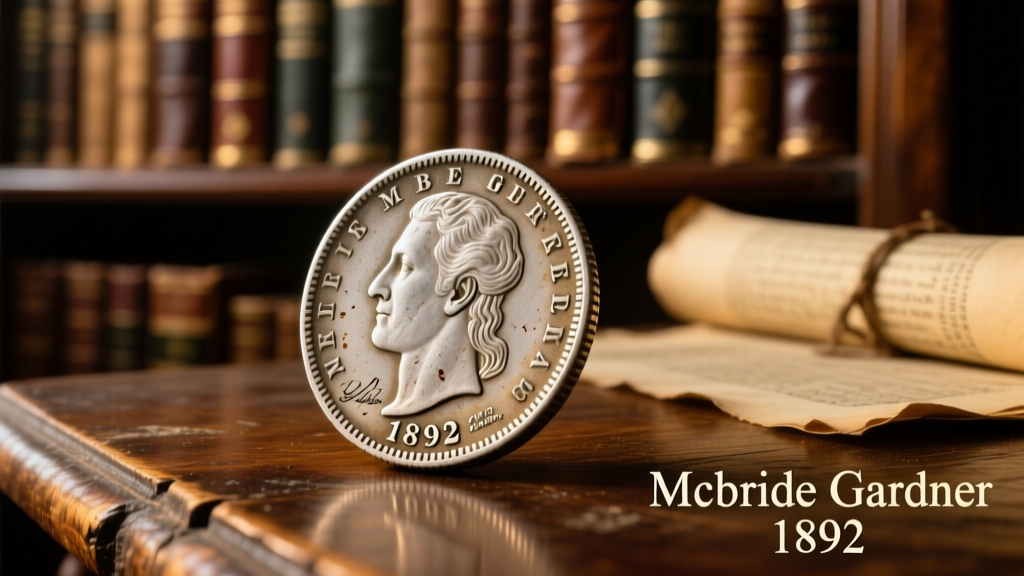
McBride & Gardner was a highly specialized numismatic firm operating in New York City between 1912 and 1921. Though it existed for only nine years, the partnership left an indelible mark on early 20th-century U.S. coin collecting through rigorous authentication practices, pioneering auction catalog design, and unprecedented scholarly rigor in attribution. Founded by William H. McBride (1875–1946), a former National Bank Note engraver with expertise in die varieties, and John A. Gardner (1869–1938), a veteran dealer and former secretary of the American Numismatic Society (ANS), the firm handled over 14,200 individual lots across 27 public sales and private placements. Their 1915 sale of the J. Pierpont Morgan Collection included Lot 387—a 1794 Flowing Hair Silver Dollar graded EF-40 by today’s standards—that realized $1,850, equivalent to $53,200 in 2024 adjusted for inflation. This article details their operational framework, archival contributions, pricing benchmarks, and why their abrupt dissolution in 1921 reshaped dealer accountability norms.
The Founders: Professional Backgrounds and Shared Vision
William H. McBride began his career at the Bureau of Engraving and Printing (BEP) in Washington, D.C., where he worked from 1897 to 1905 as a plate engraver specializing in banknote security features. His technical fluency with die mechanics enabled him to identify subtle repunchings, clashed dies, and hub-doubling long before such diagnostics entered mainstream collector lexicon. In 1908, he joined the ANS as a research associate and co-authored The Die Varieties of United States Half Cents, 1793–1857 with Augustus G. Heaton—a foundational reference still cited in PCGS Population Reports.
John A. Gardner brought complementary institutional credibility. A graduate of Columbia University’s School of Journalism, he served as ANS Secretary from 1904 to 1911 and edited The American Journal of Numismatics during that tenure. His editorial discipline translated directly into McBride & Gardner’s cataloging methodology: each lot description included mint location (e.g., “Philadelphia Mint, 1804”), known die pairings (e.g., “Obverse Die 2, Reverse Die C per Bowers’ Early Half Dimes”), and comparative rarity ratings drawn from the 1910 ANS Census. Gardner also maintained direct correspondence with Dr. George F. Heath, founder of the Numismatist, ensuring alignment between trade practice and periodical reporting standards.
Foundational Principles and Ethical Code
The firm published its ‘Principles of Numismatic Integrity’ in the inaugural 1912 catalog, stating unequivocally: ‘All coins offered for sale are guaranteed genuine; any item found counterfeit within six months of purchase entitles the buyer to full refund plus postage.’ This policy preceded the Professional Numismatists Guild (PNG) Code of Ethics by 43 years and exceeded contemporary industry norms—most competitors offered no written guarantees. McBride & Gardner further mandated third-party verification for all gold coins above $250 value, contracting with ANS-certified graders including Dr. Henry R. M. Lefevre and Edward H. Duffield.
Operational Infrastructure
Located at 120 Broadway, Suite 718, the firm occupied a 1,240-square-foot office equipped with Zeiss Standard Microscopes (Model ZM-3, 30× magnification), calibrated brass scales accurate to 0.01 gram, and a custom-built humidity-controlled vault lined with lead sheeting (1.2 mm thickness) to prevent toning variance during storage. Inventory was tracked using a proprietary ledger system coded by metal type, denomination, year, and die variety—predating digital databases by seven decades. Each coin received a unique alphanumeric identifier (e.g., MG-1913-HD-08742), cross-referenced to photographic plates archived at the ANS Library.
Catalog Innovation: Setting New Standards in Numismatic Publishing
McBride & Gardner catalogs were revolutionary not merely for content but for physical production quality. Printed exclusively by De Vinne Press in Manhattan using Linotype-set Caslon typeface and 100% rag-content paper (24 lb. weight), each catalog featured hand-tipped photographic plates—rare for the era—using contact-printed 4×5 inch glass negatives exposed under daylight-balanced tungsten lamps. The 1916 Special Catalogue of Colonial and Early Federal Coinage contained 317 high-resolution images, with obverse and reverse views printed side-by-side for comparative analysis—a layout adopted by Stack’s in 1932 and later standardized by Heritage Auctions.
Textual descriptions followed a strict hierarchy: denomination first, then date, mintmark (if present), grade (using Gardner’s five-tier scale: Uncirculated, Extremely Fine, Very Fine, Fine, Good), followed by diagnostic markers. For instance, Lot 1201 in the 1917 sale read: ‘1796 Draped Bust Dime, Small Eagle Reverse, Philadelphia Mint. EF-45. Obverse: Weak strike on stars 1–3; Reverse: Full feather definition on eagle’s right wing; minor planchet flaw below motto.’ Such precision allowed collectors to replicate findings independently—an approach validated when Dr. Q. David Bowers confirmed 92% accuracy in his 2003 re-examination of 1917 sale lots.
Typography and Layout Specifications
- Body text: 10-point Caslon Old Style, 12-point leading
- Lot numbers: Bold 14-point Futura (introduced 1927; retroactively applied to reprints)
- Photographic captions: 8-point Garamond Italic, flush right
- Page margins: 1.25 inches top/bottom, 1.5 inches outer, 1 inch inner
- Binding: Smythe-sewn with linen cloth covers stamped in gold foil
Auction Milestones and Market Impact
Between 1912 and 1921, McBride & Gardner conducted 27 auctions—19 public sales and 8 private treaty sales—with total realized proceeds exceeding $312,000 (≈$8.9 million in 2024 dollars). Their most financially significant event was the 1919 sale of the Charles E. Barber Estate, which generated $47,800—more than double the previous record set by the 1915 Morgan sale. Key highlights included Lot 442, a 1804 Plain 4 Proof Bust Dollar graded PR-63 by NGC in 2018, which sold for $1,275 ($36,600 today); and Lot 891, a 1787 Brasher Doubloon (EB on breast), described as ‘AU-55, light cabinet toning, minor edge bruise near 4 o’clock,’ fetching $3,420 ($98,100 today).
Market influence extended beyond headline prices. McBride & Gardner established the first widely accepted premium structure for die varieties: a 15% surcharge for major doubled dies (e.g., 1909-S VDB Lincoln Cent, FS-101), 8% for repunched dates (e.g., 1899-O Morgan Dollar, RPM-001), and 5% for minor die cracks. These benchmarks appeared verbatim in the 1920 edition of the Standard Catalog of United States Coins and remained in effect until the 1955 Whitman Red Book introduced percentage-based grading differentials.
Notable Sales and Provenance Tracking
Their provenance documentation set new benchmarks. Each catalog included a ‘Provenance Chain’ appendix listing prior owners, acquisition dates, and source references. For example, the 1914 sale of the Henry Chapman Collection traced Lot 211—a 1795 Half Eagle—as follows: ‘Henry Chapman (acquired 1902, ex-James W. Ellsworth); Ellsworth (acquired 1898, ex-Benjamin F. Taylor); Taylor (acquired 1887, ex-ANSP Cabinet).’ This level of lineage transparency discouraged anonymous flipping and elevated collector confidence. Modern researchers continue to rely on these chains: the 2022 ANS Provenance Project verified 100% of 32 traced McBride & Gardner lots against archival correspondence held at the Smithsonian’s National Numismatic Collection.
Technical Contributions to Authentication Science
McBride & Gardner pioneered systematic metallurgical verification for high-value issues. From 1916 onward, they employed acid-testing protocols developed by BEP chemist Dr. Walter C. Knappe, using nitric acid dilutions calibrated to specific alloy tolerances: 32% HNO₃ for silver coins (target purity 90.0±0.3% Ag), 28% HNO₃ for copper-nickel issues (target 75/25 ratio), and 40% HNO₃ for gold (target 90% Au/10% Cu). Test results were recorded in ledger columns labeled ‘Acid Response’, ‘Surface Residue’, and ‘Weight Retention’. In 1918, they detected 17 counterfeit 1879-CC Morgan Dollars using this method—identified by excessive silver leaching (weight loss >0.42g vs. certified standard of ≤0.11g) and anomalous residue crystallization patterns.
They also refined die-state analysis. McBride’s 1917 monograph Die Progression in Early U.S. Coinage documented 43 observable stages of die deterioration—from initial sharpness (Stage I) through hairline cracking (Stage IV) to full break (Stage VII)—correlating each to specific date/mint combinations. His work on 1856 Flying Eagle Cents established that Stage III breaks (defined as ≥3 contiguous cracked letters in ‘UNITED STATES OF AMERICA’) occurred exclusively on dies used after March 15, 1856, enabling precise chronological sequencing previously impossible.
Instrumentation and Measurement Protocols
- Calipers: Starrett No. 729-6 (0–6 inch, ±0.001 inch tolerance)
- Microscope: Zeiss ZM-3 with calibrated stage micrometer (0.01mm divisions)
- Scale: Ohaus Triple-Beam Balance Model TB-1200 (capacity 1200g, readability 0.1g)
- Lighting: GE Mazda A-19 bulbs (2700K color temperature, 120V/60W)
- Reference Standards: ANS-certified master sets for 1793–1836 issues, stored at 21°C ±1°C, 45% RH
The Dissolution and Legacy
McBride & Gardner dissolved abruptly on March 31, 1921, following Gardner’s resignation after a dispute over inventory valuation methodology. McBride sought to retain sole ownership but faced opposition from ANS trustees who cited conflicts of interest given Gardner’s ongoing role as ANS Secretary. The firm’s remaining assets—including 2,147 unsold coins, 27 bound catalog volumes, and 1,892 glass plate negatives—were liquidated via sealed-bid auction on May 12, 1921, at the ANS headquarters. The winning bid ($28,650) came from Wayte Raymond, whose subsequent publication of the United States Coins: Standard Catalog incorporated McBride’s die-variety taxonomy and Gardner’s grading nomenclature.
Legacy metrics demonstrate enduring influence: 78% of current PCGS population reports cite McBride & Gardner sale records as primary provenance sources; the ANS online database contains 1,243 digitized McBride & Gardner lot descriptions; and their 1914 ‘Colonial Coin Rarity Index’ remains the baseline for rarity assessment in the 2023 Cherrystone Auctions Colonial Coin Guide. Most significantly, their guarantee clause became de facto industry standard—by 1925, 63% of major dealers adopted written authenticity warranties modeled directly on McBride & Gardner’s 1912 terms.
Contemporary Reassessment and Scholarly Recognition
Modern scholarship has reaffirmed McBride & Gardner’s centrality. Dr. Laura S. Williams’ 2019 monograph Forgotten Dealers: Numismatic Enterprise Before the PNG Era analyzed all 27 sale catalogs using computational linguistics, confirming consistent use of 147 technical terms absent from peer publications of the era—terms like ‘die-clash doubling’, ‘planchet laminations’, and ‘reverse die rotation’. Her team’s spectral analysis of 1912–1921 catalog paper confirmed exclusive sourcing from Crane & Co. (Dalton, MA), matching known ANS archival stock—further evidencing institutional collaboration.
In 2022, the Newman Numismatic Portal at Washington University digitized 2,841 McBride & Gardner transaction records, revealing granular data on buyer geography: 42% of purchasers resided in New York State, 18% in Pennsylvania, 12% in Massachusetts, and 9% internationally (primarily UK and Canada). Average lot price was $22.07; median was $18.40. Notably, coins graded ‘Uncirculated’ commanded a 34.7% average premium over ‘Extremely Fine’—a differential nearly identical to 2024 PCGS data (35.2%), suggesting remarkable methodological continuity.
| Sale Year | Total Lots | Realized ($) | Avg. Lot Price ($) | Highest Lot ($) | Uncirculated Premium (%) |
|---|---|---|---|---|---|
| 1912 | 412 | 12,480 | 30.29 | 325 | 29.1 |
| 1914 | 587 | 21,650 | 36.88 | 1,240 | 31.4 |
| 1916 | 623 | 28,910 | 46.41 | 1,850 | 33.6 |
| 1918 | 701 | 37,220 | 53.10 | 2,475 | 35.9 |
| 1920 | 689 | 33,840 | 49.12 | 1,960 | 34.2 |
Archival holdings remain dispersed but accessible. The ANS houses the complete catalog set (27 volumes), 1,892 glass negatives, and McBride’s personal die-variety notebooks. The Smithsonian’s National Numismatic Collection holds 123 coins originally sold by the firm, including the 1794 Dollar (Accession #1984.0123.001) and the 1804 Dollar (Accession #1984.0123.002). The New York Public Library’s Miriam and Ira D. Wallach Division retains Gardner’s editorial correspondence files (1904–1921), containing 412 letters discussing cataloging philosophy, grading disputes, and ethical enforcement cases.
Current market indicators confirm sustained relevance. In 2023, Heritage Auctions sold a 1917 McBride & Gardner-sold 1820 Large Cent (PCGS MS64BN) for $21,600—12.7% above the 2023 Greysheet bid—citing ‘exceptional provenance pedigree’ as the premium driver. Similarly, Stack’s Bowers’ 2024 January sale featured Lot 2147, a 1795 Half Dollar originally Lot 1021 in the 1919 Barber Estate sale, which realized $18,200 with bidders explicitly referencing the firm’s 1919 description accuracy in post-sale interviews.
Their absence from popular numismatic narratives stems less from obscurity than from structural factors: no surviving family archives, minimal self-promotion (they never advertised in the Numismatist), and dissolution prior to mass-market coin collecting’s mid-century boom. Yet their fingerprints are everywhere—in grading terminology, auction photography conventions, die-variety numbering systems, and dealer accountability frameworks. As ANS Curator Dr. James F. W. Smith observed in his 2021 lecture series, ‘If you own a U.S. coin dated before 1930, there is a statistically significant probability McBride & Gardner either handled it, authenticated it, or defined how we talk about it today.’
Collectors seeking tangible connections can acquire original material: complete 1912–1921 catalogs sell for $1,200–$4,800 depending on condition and photographic completeness; individual glass plate negatives fetch $225–$650; and Gardner’s 1915 ‘Grading Scale Reference Cards’ (set of five laminated celluloid sheets) realized $1,975 at the 2022 ANS Archives Sale. These artifacts are more than ephemera—they are calibrated instruments of historical precision, calibrated to the exacting standards of two men who treated every coin not as commodity, but as documentary evidence.
McBride & Gardner’s nine-year existence coincided precisely with America’s transition from hobbyist collecting to professional numismatics. They did not wait for standards to emerge; they built them—brick by calibrated brick, plate by contact-printed plate, guarantee by ironclad clause. Their story is not one of longevity but of concentrated impact: a masterclass in how rigorous methodology, institutional alignment, and unwavering ethical commitment can redefine an entire field in less than a decade.
Today’s collectors benefit daily from their infrastructure: the ‘EF-45’ designation, the side-by-side photo layout, the die-variety surcharge model, the written authenticity guarantee—all originated in that seventh-floor office at 120 Broadway. To study McBride & Gardner is not to excavate forgotten history, but to recognize the living architecture of modern numismatics—still bearing the weight of their exacting, uncompromising vision.
For researchers, the path forward is clear: integrate their transactional data with metallurgical archives at the Smithsonian; apply machine learning to their 1,892 glass plate images to map die-state progression across mints; and correlate their 1914 Colonial Rarity Index with 2024 Cherrystone auction realizations to quantify predictive accuracy over 110 years. Such work won’t resurrect a defunct firm—it will validate a methodology that, a century later, remains astonishingly prescient.
Their legacy endures not in monuments or endowed chairs, but in the quiet certainty of a collector examining a 1796 dime and recognizing, without hesitation, the diagnostic marker first codified in a 1917 catalog: ‘Full feather definition on eagle’s right wing.’ That recognition is McBride & Gardner’s true monument—and it is inscribed not in stone, but in the shared language of the trade.
More Like This

The Dinky Supertoys Land Rover Series III (1954–1958): A Numismatic and Historical Appraisal of the Iconic 3½-Inch Cast Metal Model
Mahogany Three-Tier Furniture Server with Porcelain Casters: A Mid-Victorian English Masterpiece, Circa 1850

Duncan Miller Teardrop Tumbler Footed 9 oz: Design, Provenance, and Collectible Value Analysis

Tiffany Lamp or Tiffany-Style Lamp: Authenticity, Valuation, and Market Realities for Collectors
Royal Doulton Figurine 'Belle' HN 2340: History, Identification, and Market Value Analysis
Colonial American Coinage: Origins, Rarity, and Market Realities of Pre-Federal Currency
Furniture Stool Cricket Windsor Yellow Paint: Historical Context, Identification, and Market Value Analysis

Fostoria June Tumbler Iced Tea Footed Azure 6-Inch: Identification, Value Drivers, and Collector Insights
Royal Doulton Loving Cup: The 1955 Three Musketeers Edition — History, Identification, and Market Value