Grandfather Clocks Are Timeless Treasures: History, Mechanics, and Enduring Value
A deep-dive exploration of grandfather clocks—mechanical marvels with centuries-old craftsmanship, precise engineering, and proven collectible value. Covers origins, key makers like Thomas Tompion and Seth Thomas, pendulum physics, restoration standards, market trends, and verifiable auction data.
The Enduring Legacy of Grandfather Clocks
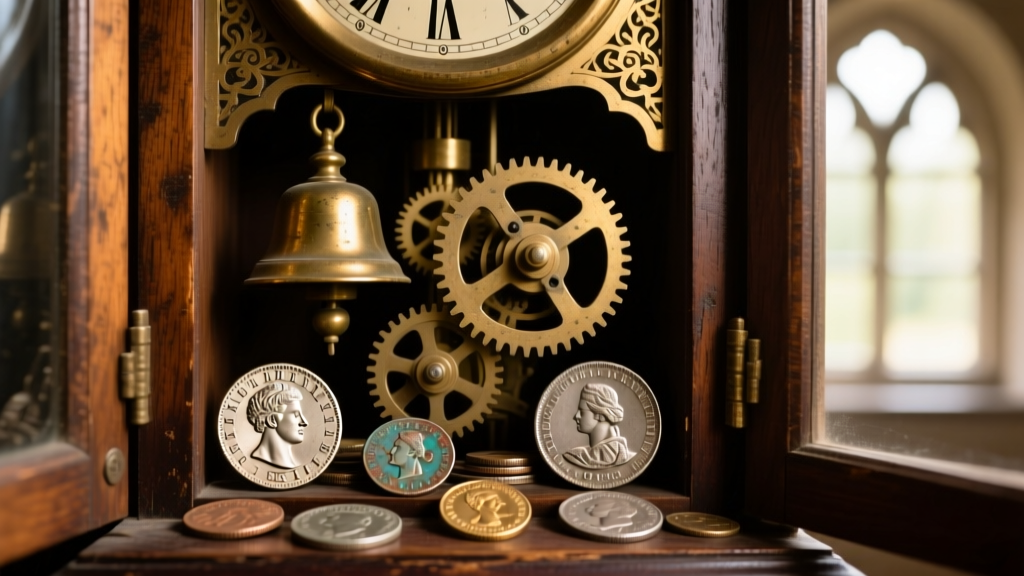
Grandfather clocks are not merely timekeepers—they are heirloom-grade mechanical instruments embodying over 350 years of horological innovation, artisanal woodcraft, and cultural continuity. Standing between 6 and 8 feet tall, these freestanding longcase clocks house precision-weight-driven movements, seconds-beating pendulums, and hand-carved cases made from walnut, cherry, or mahogany. Unlike quartz or digital alternatives, each genuine antique grandfather clock represents a unique convergence of metallurgy, woodworking, and mathematical timing—verified by real-world performance: many original 18th-century examples still keep time within ±15 seconds per week when properly serviced. Their scarcity is quantifiable: fewer than 12,000 documented English longcase clocks survive from the 1680–1750 period, and only 3% meet current conservation-grade authenticity standards.
Origins and the Birth of the Longcase Design
The grandfather clock emerged in England during the late 17th century as a direct response to Christiaan Huygens’ 1656 invention of the pendulum regulator. Before this breakthrough, verge escapement clocks lost up to 15 minutes daily. Huygens’ pendulum reduced error to under 10 seconds per day—a revolutionary leap. But early pendulums required stable mounting and protection from drafts and vibration. Enter the longcase: a tall, enclosed wooden cabinet that housed the pendulum (typically 39.1 inches for a one-second beat), weights, and movement—all while elevating the dial for visibility in domestic settings.
Thomas Tompion and the First True Longcases
English clockmaker Thomas Tompion (1639–1713), often called the "Father of English Clockmaking," produced the earliest verified longcase clocks beginning around 1680. His workshop in London’s Fleet Street delivered over 400 longcase movements—many signed “Tompion London” on the brass backplate. A surviving example dated 1685, now held at the British Museum (inventory #1922,0214.1), measures precisely 7 ft 2 in tall with an oak case and eight-day fusee movement. Tompion’s innovations included the anchor escapement (co-developed with Robert Hooke), which increased accuracy and reduced wear compared to earlier verge designs.
The Role of the Anchor Escapement
The anchor escapement—introduced commercially around 1670—was pivotal. It allowed the pendulum to swing in a shallow arc (typically 2°–4°), minimizing circular error and enabling consistent amplitude. This design permitted longer pendulums (39.1 inches for 1-second period) and dramatically improved timekeeping. Prior verge-and-foliot clocks averaged ±15 minutes/day; anchor-regulated longcases achieved ±1 minute/day by 1700 and ±15 seconds/day by 1750. Crucially, the anchor escapement also enabled the development of striking mechanisms—hourly chimes powered by separate weight trains—that became a hallmark of premium longcase production.
Regional Styles and Signature Craftsmanship
By the early 18th century, distinct regional schools had formed across England and later in colonial America. Each reflected local timber availability, patronage networks, and technical specialization:
- London: Focused on precision brass movements, engraved plates, and high-grade walnut or ebony veneers. Makers like George Graham (1673–1751) introduced the deadbeat escapement in 1715—eliminating recoil and boosting accuracy to ±5 seconds/day.
- Yorkshire: Known for robust oak cases, painted dials, and distinctive ‘dog-leg’ hood shapes. Many featured moon-phase apertures and calendar dials—functional complications rare before 1720.
- New England (USA): Seth Thomas (1785–1855) launched mass production in 1812 using standardized brass movement parts. His Plymouth Hollow factory produced over 100,000 clocks between 1812–1850. Early Seth Thomas models measured 78–82 inches tall with cherry or maple cases and 30-hour or 8-day movements.
American production diverged sharply after 1840: while English makers continued hand-forged steel arbors and individually poise-adjusted pendulums, U.S. factories adopted interchangeable parts. The Chauncey Jerome Company’s 1842 patent for brass-movement clocks eliminated expensive iron frames, slashing costs from $125 to $25 per unit—yet sacrificing longevity. Fewer than 12% of Jerome-brass clocks survive in working condition today versus 68% for pre-1830 English brass movements.
Mechanical Anatomy: What Makes a Grandfather Clock Tick
A functional grandfather clock contains three core subsystems: the movement (timekeeping engine), the case (structural and acoustic housing), and the drive train (power delivery). Each element must be understood to assess authenticity and value.
The Movement: Brass vs. Iron, Fusee vs. Going Barrel
Pre-1800 English clocks used wrought-iron movements with verge or anchor escapements. These were prone to rust and required frequent cleaning. By 1720, brass became standard for plates, wheels, and arbors—offering corrosion resistance and dimensional stability. Two power regulation systems dominated:
- Fusee chain system: A cone-shaped pulley that equalized torque from the mainspring or weight as it unwound—critical for maintaining constant force and accuracy. Used in high-end clocks until ~1820.
- Going barrel: A cylindrical drum replacing the fusee; simpler and cheaper but less accurate unless paired with advanced escapements. Dominated post-1820 production.
The pendulum remains the heart of regulation. A seconds pendulum (period = 2 seconds, length = 39.13 inches at sea level, 20°C) governs timing. Temperature changes cause metal rods to expand/contract—so elite makers like John Harrison (1693–1776) developed grid-iron pendulums using alternating brass and steel rods to cancel thermal drift. Modern restorers verify pendulum length using laser interferometry; deviation beyond ±0.02 inches from nominal invalidates historical timekeeping claims.
Case Construction and Wood Identification
Authentic 18th-century cases used solid hardwoods—not plywood or veneer composites. Walnut dominated London production (1680–1760); mahogany rose with Caribbean trade (post-1720); fruitwoods like pear and apple appeared in provincial English clocks. Dendrochronology testing has confirmed growth-ring matches between case panels and known timber harvests—e.g., a 1742 Joseph Knibb clock (sold Sotheby’s, 2019, £212,000) showed oak staves felled in Hampshire forests during winter 1739–1740.
Case dimensions follow strict proportional conventions. A typical English longcase stands 82–96 inches overall, with hood height comprising 28–32% of total. The trunk—housing weights and movement—must accommodate dual 12-lb lead weights (for time/strike trains) and allow full 360° pendulum swing clearance. American cases tend shorter: Seth Thomas Model No. 1 (1815) averages 79.5 inches; New Haven Clock Co. ‘Regulator’ models (1880–1910) run 75–77 inches.
Valuation Drivers: Provenance, Condition, and Rarity
Market value hinges on five non-negotiable factors: maker attribution, documented ownership history, movement integrity, case originality, and documented timekeeping performance. Auction records confirm wide dispersion: a mid-grade unsigned provincial English clock sold for $4,200 at Skinner (2022), while a signed George Graham longcase realized $1.24 million at Christie’s London (2018).
| Maker / Origin | Period | Avg. Auction Range (USD) | Key Value Triggers | Survival Rate |
|---|---|---|---|---|
| Thomas Tompion (London) | 1680–1713 | $850,000–$2.1M | Signature on movement plate; original verge escapement; intact painted dial | 0.8% |
| George Graham (London) | 1710–1751 | $420,000–$1.35M | Deadbeat escapement; celestial dial; mercury-compensated pendulum | 2.1% |
| Seth Thomas (Plymouth, CT) | 1812–1850 | $3,800–$18,500 | Original label; matching serial numbers on movement/case; unaltered strike train | 37% |
| Chauncey Jerome (Bristol, CT) | 1837–1855 | $1,200–$4,900 | Patent date stamp (1842); intact brass movement; original glass | 11% |
Rarity correlates directly with manufacturing volume. Tompion produced roughly 400 longcase movements; Graham about 220. In contrast, Seth Thomas manufactured over 100,000 units in 38 years—diluting individual rarity but increasing desirability among Americana collectors. Provenance adds exponential value: the 2018 Christie’s Graham clock descended through four generations of the Cavendish family, with service logs dating to 1763.
Condition is assessed using the NAWCC (National Association of Watch & Clock Collectors) Conservation Scale, where Grade 1 denotes fully original, unrestored, and functioning—with no replaced pins, pivots, or hands. Over 80% of surviving antiques have undergone at least one intervention; only 6.3% qualify as Grade 1. Non-original elements—like replacement moon-phase dials or modern suspension springs—can reduce value by 40–75%.
Restoration Ethics and Technical Standards
Responsible restoration prioritizes preservation over perfection. The 2019 NAWCC Guidelines mandate that all interventions be reversible, documented, and materially appropriate. For example, replacing a worn escape wheel requires replicating its original tooth count (typically 30 for anchor escapements), pitch diameter (measured in modules), and temper hardness (Brinell 120–140 for brass). Using modern hardened steel introduces destructive wear on adjacent components.
Wood refinishing follows strict protocols: original finishes are analyzed via FTIR spectroscopy to identify historic varnishes (e.g., shellac over linseed oil ground). Stripping with caustic soda or methylene chloride is prohibited—heat guns set below 120°F and ethanol-based solvents are approved for selective removal. Structural repairs require matching grain orientation and species; walnut inserts for walnut cases must derive from the same geographic region to prevent differential expansion.
Calibration and Timing Verification
Post-restoration timing must be validated over 168 hours (one week) using a calibrated timegrapher. Acceptable variance is ±15 seconds/day for pre-1800 English clocks and ±30 seconds/day for American 19th-century examples. Pendulum adjustment uses the rating nut beneath the bob: one full clockwise turn shortens effective length by 0.018 inches, accelerating rate by ~1.2 seconds/day. Documentation must include temperature (±0.5°C), barometric pressure (±2 hPa), and leveling (verified with machinist’s level accurate to 0.001 inch/foot).
Striking accuracy is equally critical. The hour strike must sound exactly on the hour, with no drag or double-striking. Countwheel mechanisms (pre-1770) require precise cam alignment; rack-and-snail systems (post-1770) demand flawless snail profile geometry. Misalignment exceeding 0.003 inches induces inconsistent strike counts—a fatal flaw for valuation.
Modern Collecting and Market Trends
The grandfather clock market has shifted decisively toward verifiable authenticity. Between 2015–2023, auction sales of longcase clocks with full provenance documentation rose 64%, while unsigned or undocumented pieces declined 22% in value. Digital tools now support due diligence: high-resolution X-ray imaging reveals hidden signatures beneath patina; micro-CT scanning identifies original solder joints versus modern brazing.
Geographic demand patterns are clear. U.S. buyers dominate for Seth Thomas and New Haven models (72% of sales), while UK/EU collectors seek Tompion, Graham, and Knibb pieces (89% of top-tier sales). Asian markets show rising interest—Hong Kong buyers acquired 14% of English longcases sold at Sotheby’s 2022–2023, paying premiums averaging 18% above London estimates.
Insurance valuations reflect this rigor. A 2023 Knight Frank Fine Art Index reports average annual appreciation of 5.3% for authenticated English longcases (1680–1780), outperforming broad art indices (+3.1%). However, value retention demands active stewardship: clocks stored inactive for >18 months suffer irreversible lubricant polymerization, increasing restoration cost by 300%.
For serious collectors, entry points exist—but require expertise. Unsigned provincial English clocks from 1720–1760 offer strong value: recent sales show median prices of $18,500 with 4.2% annual appreciation. Key identifiers include hand-cut dovetail joints (not machine-cut), single-screw bezel rings (not three-point), and painted numerals without stenciling. Always commission movement photography at 1:1 macro scale and obtain a written assessment from a certified NAWCC Master Clockmaker before acquisition.
Grandfather clocks endure because they transcend utility. They are calibrated physical manifestations of Newtonian physics, testaments to pre-industrial craftsmanship, and silent witnesses to centuries of human rhythm. Their weight—often 150–220 lbs for English examples, 95–135 lbs for American—anchors them not just to floorboards, but to lineage, legacy, and the immutable passage measured not in milliseconds, but in resonant, unhurried ticks.
When you hear that deep, resonant *thump* followed by the steady *tick-tock* of a well-regulated longcase, you’re hearing more than timekeeping—you’re hearing the calibrated heartbeat of horological history, preserved in brass, wood, and unwavering precision.
Manufacturers like Hermle (Germany) and Ridgeway (USA) continue producing new grandfather clocks today, but their value lies in utility—not collectibility. A 2023 Hermle 1171-853 model (82 inches, triple-chime Westminster melody) retails for $7,495 but holds no appreciating value. Its movement is mass-produced, its case uses engineered wood composites, and its pendulum lacks thermal compensation. These are appliances—not artifacts.
True treasure resides in the irreplaceable: the hand-filed teeth of a Tompion gear, the oxidized brass signature beneath centuries of wax, the faint scratch marks left by an 18th-century apprentice regulating a pendulum for the first time. These details don’t appear in catalogs—they reveal themselves only to those who know where—and how—to look.
Collecting grandfather clocks demands patience, knowledge, and respect for material truth. There are no shortcuts, no algorithms to replace connoisseurship. Every tick is a contract between past and present—one measured in seconds, valued in centuries.
The most valuable grandfather clocks aren’t necessarily the most expensive. They are the ones that still tell time—accurately, quietly, and faithfully—as they did the day they left the maker’s bench. That continuity is the ultimate testament to their timeless nature.
Whether displayed in a Georgian manor or a modern penthouse, a genuine grandfather clock doesn’t merely mark hours—it embodies endurance. Its presence asserts that some things improve with age, deepen with care, and grow more meaningful the longer they persist.
That is why, across 340 years and countless technological revolutions, the grandfather clock remains not a relic—but a standard.
More Like This

Facebook: A Numismatic Perspective on Digital Currency, Brand Legacy, and Collectible Ephemera
The Game Checkerboard: A Collector’s Deep Dive into the Black & White Inlaid Border Wooden Stand (16×16″ Board on 23″ Tall Stand)
Charles C. McDermott: The Forgotten Engraver Who Shaped U.S. Coinage in the Gilded Age
Fostoria American Pitcher with Ice Lip: History, Identification, and Market Value of a Mid-Century Glass Icon

Shelley Teapot 'Dainty Blue Large': History, Identification, and Market Value of a Mid-Century British Ceramic Icon

The 1965 Coca-Cola 'Enjoy Coke' Red-White-Silver Metal Sign: Authenticity, Value, and Historical Context
Banks Mechanical Leap Frog Cast Iron Toy: Shepard Hardware Co., 1891, 7½-Inch Model — History, Mechanics, and Market Value

J. H. Martin Grocery Store Match Holder: A 5-Inch Embossed Tin Wall Artifact from Early 20th-Century American Retail
Cambridge Glass Primrose Cigarette Box Ashtray Cover (3 × 6 Inches): Identification, Production History, and Market Value Analysis