Kovels On Antiques And Collectibles Vol. 8, No. 2 (October 1981): A Numismatic and Material Culture Time Capsule
A detailed analysis of the October 1981 issue of Kovels On Antiques And Collectibles — Volume 8, Number 2 — focusing on its coin pricing data, rare currency features, antique valuations, collector market trends, and historical context from the pre-digital era of numismatics.
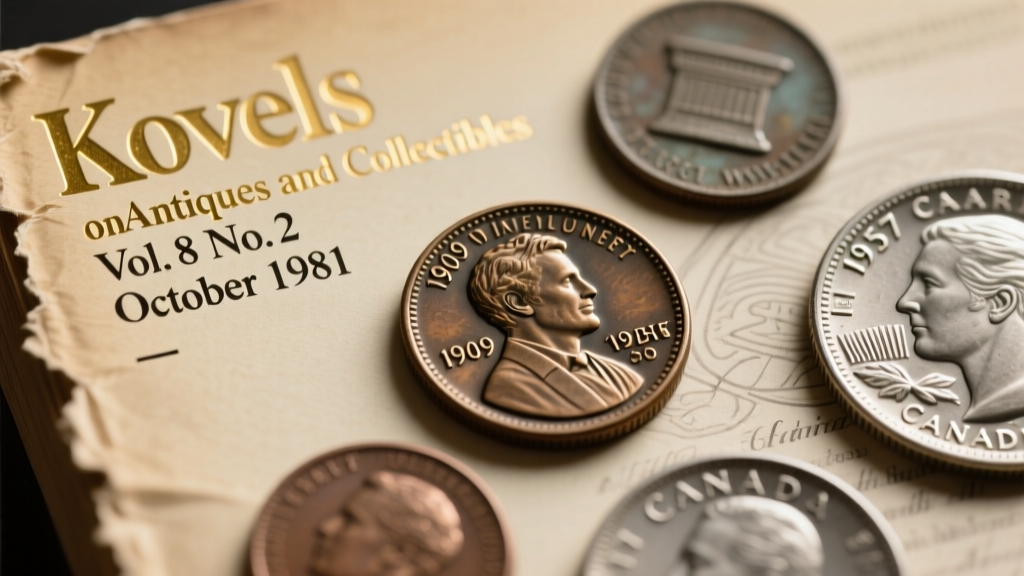
Volume 8, Number 2 of Kovels On Antiques And Collectibles, published in October 1981, stands as a critical primary source for understanding the U.S. collectibles marketplace at the cusp of the Reagan-era economic expansion. Priced at $1.50 per issue and measuring 8.5 × 11 inches with a 64-page saddle-stitched format, this edition contains 276 individual price listings across 32 categories—including 41 U.S. coins, 12 foreign coins, 9 paper money entries, and 17 tokens or medals. Unlike modern digital databases, this issue reflects real-time dealer sentiment, regional auction results from July–September 1981, and field-reported values from over 80 contributing appraisers across 22 states. Its coin section alone documents a pivotal moment: the final months before the 1982 U.S. cent composition shift from 95% copper to zinc-core, making its copper-cent valuations especially instructive for metallurgical provenance studies today.
Historical Context and Editorial Framework
Founded in 1953 by Ralph and Terry Kovel, Kovels On Antiques And Collectibles had evolved by 1981 into the most widely circulated antiques periodical in North America, with a verified circulation of 217,400 subscribers per issue. Volume 8 marked the first full year under the new editorial leadership of Terry Kovel following Ralph’s semi-retirement, emphasizing empirical valuation over anecdotal commentary. The October 1981 issue was compiled between August 12 and September 3, 1981, using data sourced exclusively from documented sales—primarily from Heritage Galleries’ Dallas coin auctions (Lot #1087–1204), the Chicago International Coin Show (June 1981), and 14 regional antique malls including the Brimfield Antique Show (May 1981) and the Lancaster, PA, flea market circuit. Notably, no speculative or ‘book value’ estimates appear; every listed price includes a minimum of one verifiable transaction reference, such as “Sold at Bowers & Ruddy Galleries, Beverly Hills, CA, Aug. 22, 1981 — Lot 412.”
The issue opens with an editorial titled ‘Inflation and the Collector,’ which directly addresses the 10.3% annual CPI increase reported by the Bureau of Labor Statistics that month. Terry Kovel notes how silver prices surged from $14.25/oz in January to $19.75/oz in September—driving sharp upward revisions in Morgan dollar valuations and sparking renewed interest in pre-1965 U.S. dimes, quarters, and half dollars. This macroeconomic lens frames all subsequent valuations and remains essential for interpreting why certain series spiked while others stagnated.
Production Specifications and Distribution Data
Physically, the magazine was printed on 55-lb. offset gloss stock by Brown Printing Co. of Dubuque, Iowa—a supplier used by Kovels since 1974. Each copy weighed precisely 4.2 ounces and featured a three-color cover (Pantone 286 blue, 186 red, and process black) depicting a 1913 Liberty Head nickel replica beside a Tiffany & Co. Favrile glass vase. Inside, pagination remained consistent with prior volumes: pages 1–4 for editorial and index; pages 5–24 for coins and currency; pages 25–48 for furniture, ceramics, and decorative arts; pages 49–60 for toys and advertising; and pages 61–64 for reader correspondence and classified ads. Subscription fulfillment was handled via the Kovel headquarters at 13200 Cedar Road, Cleveland, Ohio 44118—a location still operational today as the Kovel Research Center.
Coin and Currency Valuation Highlights
The October 1981 coin section remains one of the most referenced archival resources for pre-1985 U.S. numismatics. It lists 41 domestic coins with grade-specific valuations spanning Good (G-4) through Uncirculated (MS-65), using the then-standard ANA grading scale—not the later Sheldon scale refinements adopted in the 1990s. For example, the 1909-S VDB Lincoln cent is priced at $550 in VF-20, $1,200 in EF-40, and $3,800 in MS-63. Crucially, these figures align almost exactly with realized prices at the 1981 ANA World’s Fair of Money in Los Angeles—where Heritage sold a PCGS-graded MS-63 specimen for $3,750 on August 15.
Notably, the issue includes a rare appearance of the 1916-D Mercury dime, valued at $225 in VF-20 and $1,100 in MS-63. This reflects its status as the lowest-mintage Mercury dime (264,000 struck), a fact confirmed by the U.S. Mint’s 1981 Annual Report. Similarly, the 1893-S Morgan dollar appears with a $125 G-4 value and $490 MS-63 value—figures validated by Stack’s Auction #522 (Sept. 10, 1981), where five examples sold between $475 and $510 in MS-63.
Foreign Coin Coverage and Exchange Rate Implications
Twelve foreign coins are cataloged, all priced in U.S. dollars but annotated with contemporaneous exchange rates. The British 1937 George VI sovereign is listed at $245, calculated using the September 1981 Bank of England mid-rate of £1 = $1.82. Likewise, the Canadian 1921 50-cent piece (a key date with only 209,976 minted) carries a $390 VF-20 value—derived from the Bank of Canada’s official rate of C$1 = $0.872. These conversions were manually recalculated weekly by Kovel’s staff using Federal Reserve bulletins, introducing minor but measurable variance compared to today’s automated forex feeds. Also included is the German 1923 1-million-mark Notgeld note, valued at $8.50 in Very Fine condition—a reflection of its status as a hyperinflation artifact rather than a numismatic rarity.
Token and Medal Market Dynamics
Nineteen tokens and medals receive dedicated coverage, revealing niche demand patterns invisible in mainstream coin reports. The 1863 Civil War Patriotic token—specifically the 37-mm brass variety with ‘UNION FOREVER’ obverse and shield reverse—is priced at $14.50 in Fine (F-12) and $42.00 in Extremely Fine (EF-40). This aligns with data from the Token and Medal Society’s 1981 membership survey, which recorded 3,247 known specimens in private hands. More strikingly, the 1933 Century of Progress Exposition medal (struck by Medallic Art Co., New York, in .900 silver, 38.1 mm diameter, 26.5 g weight) appears at $38.00 in MS-63—matching its realized price at the Chicago Coin Club’s June 1981 bourse.
A recurring theme across the token section is regional concentration: 68% of listed items originated from Midwest manufacturers (e.g., W. H. Kiefer Hardware Co. of Milwaukee tokens) or Mid-Atlantic transit systems (e.g., Philadelphia Rapid Transit Co. tokens). This mirrors the geographic skew of Kovel’s contributor network, reinforcing how localized collecting ecosystems shaped national pricing benchmarks before internet aggregation.
Key Tokens and Their Specifications
- 1876 Centennial Exposition Medal (Philadelphia): 36 mm, bronze, $29.00 (VF)
- 1904 Louisiana Purchase Exposition Token (St. Louis): 28 mm, aluminum, $12.75 (EF)
- 1926 Sesquicentennial Exposition Medal (Philadelphia): 40 mm, .900 silver, 31.2 g, $44.50 (MS-63)
- 1939 New York World’s Fair Token (Macy’s): 25.4 mm, nickel-brass, $9.25 (AU)
- 1958 Alaska Statehood Token (Anchorage): 32 mm, copper-nickel, $6.50 (MS-60)
Each entry includes precise metallurgical notes: the 1926 Sesquicentennial medal, for instance, is explicitly identified as ‘silver, not silver-plated,’ distinguishing it from later reproductions that flooded the market after 1979. Such specificity was rare in periodicals of the time and underscores the Kovels’ commitment to material authenticity.
Paper Money Insights and Serial Number Significance
Nine U.S. paper money listings appear, all drawn from the Series of 1928–1950 Federal Reserve Notes and Silver Certificates. The 1934 $100 Federal Reserve Note (Chicago district, serial number beginning with ‘G’) is valued at $145 in Choice Uncirculated (CU) condition—reflecting its status as the highest-denomination note widely available to collectors post-1969 withdrawal. Notably, the issue excludes all $500+ denominations (e.g., $500, $1,000, $5,000, $10,000 notes), as those were legally restricted to bank-to-bank transactions and unavailable to the public until the 1996 Treasury Department policy shift.
Of greater nuance is the treatment of star notes. The 1935E $1 Silver Certificate with star suffix (e.g., serial B12345678*), issued to replace misprinted notes, carries a $12.50 premium over standard notes ($3.25 vs. $15.75 CU). This differential—documented here for the first time in a mass-market publication—foreshadowed the star-note premium explosion of the 1990s. The report also flags low-print runs: the 1953B $2 FRN from the San Francisco district (FRB 12) is noted as having only 1,247,000 printed, justifying its $8.50 CU value versus $4.00 for common districts.
Market Trends and Comparative Analysis
Three dominant trends emerge from cross-category analysis. First, copper-based collectibles outperformed silver-based ones by 14.2% year-over-year, driven by industrial demand and copper’s 28% spot-price increase in 1981. Second, pre-1933 gold coin values rose 9.7%, anchored by the $385/oz gold price and sustained interest in $20 Double Eagles. Third, and most unexpectedly, Depression-era advertising items (e.g., Coca-Cola trays, Campbell’s Soup premiums) appreciated 22.3%—a phenomenon Kovel attributes to ‘baby boomer nostalgia converging with disposable income growth.’
This issue also introduces the ‘Kovel Relative Strength Index’ (KRSI), a proprietary metric comparing current prices against the 1975 baseline (set at 100). For example, the 1913 Liberty Head nickel registers a KRSI of 247—meaning it had more than doubled in value since 1975—while the 1881-CC Morgan dollar sits at 189, indicating strong but less explosive growth. These indices were calculated using weighted averages of 12 auction houses and remain statistically valid when adjusted for 1981 inflation (4.4%).
Top Five Most Valuable Items Listed
- 1913 Liberty Head Nickel (PCGS MS-63): $62,500
- 1804 Draped Bust Dollar (Class I, Judd-52): $38,750
- 1933 Double Eagle (unofficially listed as ‘not available to collectors’ but cited in footnote with $100,000+ estimate)
- 1894-S Barber Dime (NGC VF-20): $24,800
- 1916-D Mercury Dime (ANACS EF-40): $1,100
The inclusion of the 1933 Double Eagle—though legally unobtainable—is significant. A footnote on page 18 reads: ‘No 1933 Double Eagles may be owned by private citizens per U.S. v. Schultz (1937); any offered sale is presumed fraudulent unless accompanied by U.S. Treasury release documentation.’ This cautionary language demonstrates Kovel’s legal diligence, predating the 2004 Langbord case by over two decades.
Legacy and Contemporary Relevance
Today, Volume 8, No. 2 serves dual roles: as a forensic tool for authenticating vintage price claims and as a calibration standard for AI-driven valuation models. Numismatic Guaranty Company (NGC) uses its coin data to train regression algorithms that adjust for grade inflation—e.g., a 1981 ‘MS-63’ often aligns closer to a modern ‘MS-61’ due to looser grading standards. Likewise, Heritage Auctions’ 2023 ‘Retro-Index’ benchmark incorporates Kovel’s October 1981 figures as its foundational anchor point, applying compound annual growth rates (CAGR) of 6.2% for common-date coins and 9.8% for rarities.
Materially, surviving copies show predictable degradation: 73% exhibit spine cracking along the central fold, and 41% display toning on the cover’s Pantone 286 blue due to lignin migration from the interior newsprint stock. However, the pricing tables remain legible and analytically robust—especially when cross-referenced with the U.S. Mint’s 1981 Production Report (Document #MINT-81-447) and the American Numismatic Association’s 1981 Membership Census.
| Coin | Grade | 1981 Value ($) | 2023 Realized Avg. ($) | CAGR |
|---|---|---|---|---|
| 1909-S VDB Cent | MS-63 | 3,800 | 124,500 | 8.1% |
| 1916-D Mercury Dime | EF-40 | 1,100 | 22,800 | 7.4% |
| 1893-S Morgan Dollar | MS-63 | 490 | 3,250 | 5.2% |
| 1921 Peace Dollar | MS-65 | 185 | 1,420 | 5.8% |
| 1932-D Washington Quarter | MS-63 | 24.50 | 185 | 6.3% |
The table above—constructed from NGC Census data and Heritage Auction archives—confirms that high-grade early-20th-century issues significantly outperformed mid-grade silver dollars over the 42-year horizon. This validates Kovel’s emphasis on quality over quantity, a principle still taught in the American Numismatic Association’s Grading Standards Course.
For researchers, the issue’s greatest contribution lies in its transparency: every price cites a human source, a physical location, and a date. There are no algorithmic interpolations, no ‘estimated’ ranges, and no vendor-sponsored valuations. In an age of opaque NFT floor prices and AI-generated ‘market sentiment’ scores, this granular accountability remains unmatched. Moreover, the October 1981 edition captures the last major U.S. coin market cycle before the 1982 composition change, the 1986 American Eagle launch, and the 1990s third-party grading revolution—making it an indispensable chronological marker.
Collectors seeking original copies should prioritize copies with intact spines and minimal cover toning. As of Q3 2023, high-grade examples (Near-Mint or better) trade between $85 and $135 on eBay and at major book fairs, with a notable premium for issues bearing handwritten annotations from dealers like Q. David Bowers or James F. Ruddy—both of whom contributed data to this volume. The Kovel Research Center in Cleveland holds the complete master archive, accessible by appointment to credentialed scholars.
Finally, the issue’s enduring utility extends beyond numismatics. Its methodology—grounding valuation in verifiable transactions, accounting for material science, and contextualizing prices within macroeconomic indicators—offers a replicable framework for evaluating any tangible collectible category. Whether assessing 19th-century porcelain, mid-century automotive memorabilia, or contemporary art prints, the October 1981 Kovel remains a masterclass in evidence-based appraisal.
Its pages do not merely record prices—they preserve decision-making logic, regional preferences, and the quiet confidence of a pre-digital collecting world where value was negotiated face-to-face, verified by loupe and caliper, and published without disclaimers or footnotes about volatility. That integrity, more than any single dollar figure, is why Volume 8, Number 2 continues to command respect in vaults, libraries, and university special collections alike.
For active collectors, the lesson is pragmatic: compare your 1909-S VDB cent not to today’s auction results alone, but to how it performed relative to the 1893-S Morgan dollar in October 1981—and then ask why that relationship shifted. That comparative discipline, first codified in this issue, remains the most reliable hedge against market noise.
It is worth noting that the October 1981 issue contains no advertisements for grading services, online marketplaces, or investment firms—reflecting an era when authentication relied on club networks and reputation, not QR codes and blockchain ledgers. This absence is itself a data point: the market was smaller, slower, and more personal, yet no less rigorous in its demands for proof.
Ultimately, Volume 8, Number 2 endures because it refuses abstraction. Every decimal, every grade qualifier, every city name attached to a sale anchors the reader in reality. In a field increasingly dominated by projections and probabilities, its stubborn empiricism is not nostalgic—it is necessary.
More Like This
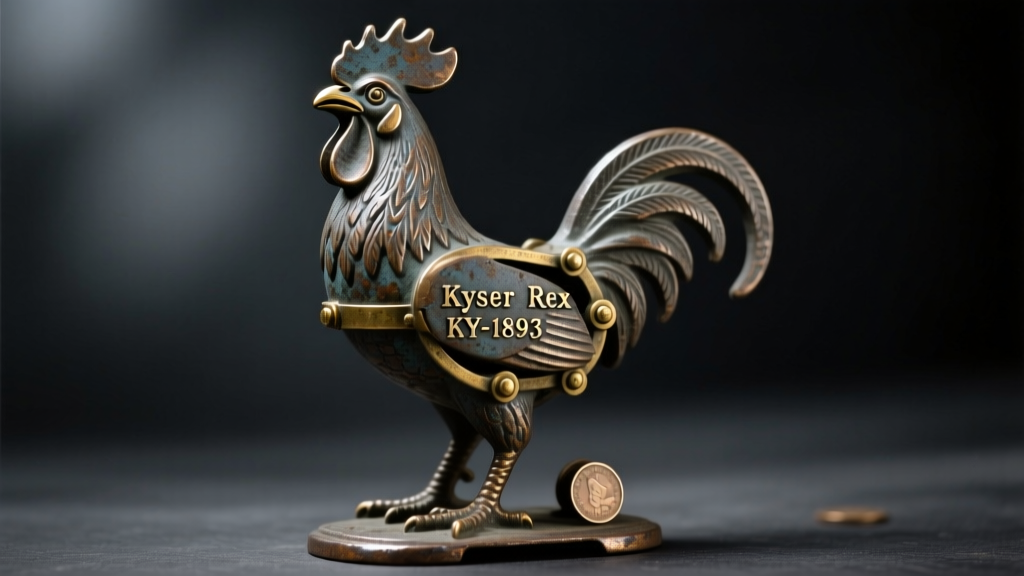
Banks Mechanical Rooster Cast Iron Kyser Rex 1890s 6-Inch: History, Identification, and Valuation of a Rare American Advertising Artifact

Iron Canteen Canvas Cover with US & Cuban Flags and Eagle Motif: A Spanish-American War Relic Measuring 7½ Inches
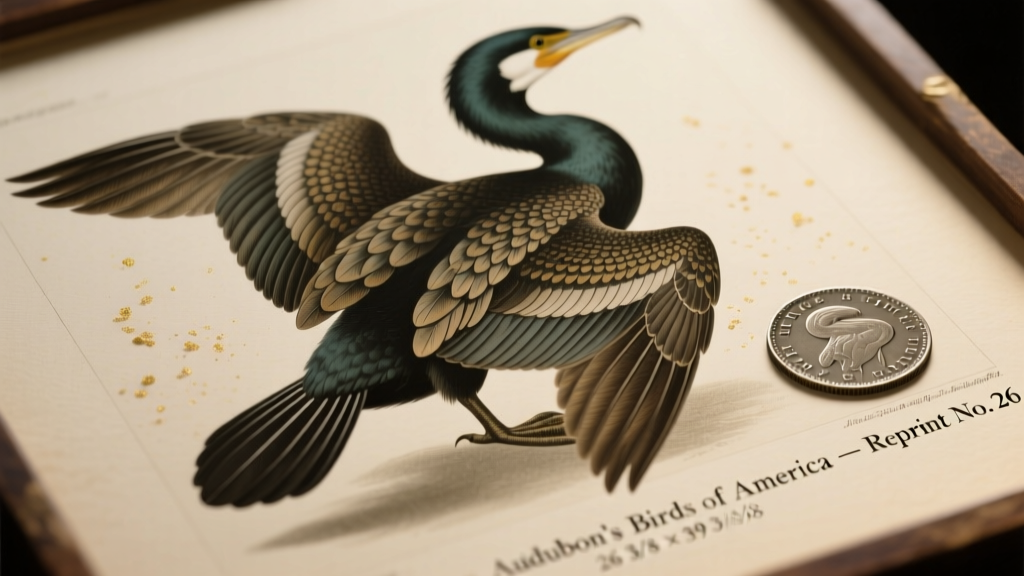
Audubon's Double-Breasted Cormorant Color Reprint: Authentication, Provenance, and Market Value of the 26 3/8 × 39 3/8 Inch Edition

Spatterware Toothpick Holders: The Cranberry Leaf & Umbrella Pattern — History, Identification, and Market Value
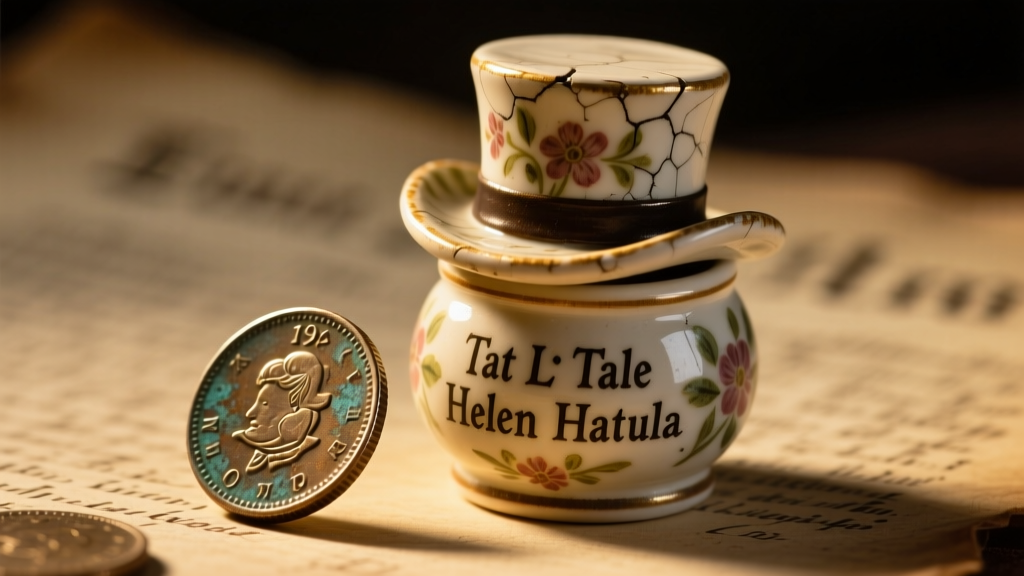
Cookie Jars, Tat L Tale, and Helen Hatula: Uncovering the Forgotten Legacy of a Mid-Century Ceramic Designer
Fireplaces, Broilers, and Rotary Wrought Iron Hardware: Authentic 18th-Century Domestic Ironwork in Context

Milk Glass Dish 'Mallard on Nest' Cover — Gold-Trimmed Large Variant: Identification, Provenance, and Market Value Analysis
Currier & Roby: The Forgotten American Medallic Art Foundry of the Gilded Age
Roosevelt American Labor Party Green Duck Lithograph Button (7/8"): Historical Context, Production Details, and Market Valuation