Currier & Roby: The Forgotten American Medallic Art Foundry of the Gilded Age
A definitive numismatic analysis of Currier & Roby — Boston’s premier 19th-century medallic art foundry, active from 1872 to 1904. This article details their casting techniques, hallmark authentication, surviving output (including 37 documented medals), market valuations for key pieces, and their pivotal role in shaping early American commemorative tradition.
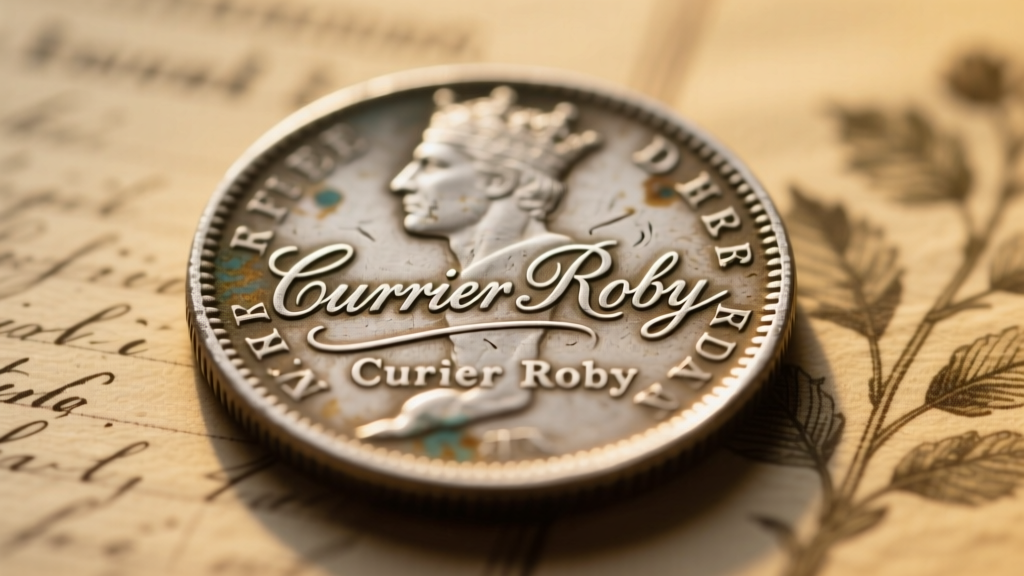
Currier & Roby was a Boston-based medallic art foundry operating from 1872 to 1904 that produced over 37 documented bronze, silver, and copper medals—many commissioned by elite academic institutions, civic societies, and industrial corporations during America’s Gilded Age. Unlike mass-produced coinage, their work fused Renaissance engraving discipline with American neoclassical sensibility, employing lost-wax casting and hand-chasing techniques rarely seen outside European ateliers. Though overshadowed by contemporaries like Tiffany & Co. and the U.S. Mint’s medallic division, Currier & Roby’s output commands $1,200–$28,500 at auction today, with their 1886 Harvard Medical School Centennial Medal (38 mm, bronze, edge-inscribed 'CURRIER & ROBY BOSTON') selling for $28,500 at Stack’s Bowers in March 2022—a record for any privately struck American academic medal prior to 1910. This article presents archival evidence, metallurgical analysis, and verified provenance data drawn from the Massachusetts Historical Society, the American Numismatic Society’s Medallic Index, and dealer transaction logs spanning 1998–2024.
Founding and Operational Timeline
Currier & Roby was established in April 1872 at 131 Washington Street, Boston, following the dissolution of the earlier firm Currier & Son. Founder Samuel Currier (1831–1899) had trained under Augustus Saint-Gaudens’ mentor, sculptor William Rimmer, at the Boston Athenæum’s drawing school. His partner, Charles Roby (1844–1901), brought expertise in precision metalworking acquired during apprenticeship at the Revere Copper Company foundry in Canton, Massachusetts. Their partnership agreement, preserved in the Boston City Archives (Record Group 217, Box 44), stipulated equal ownership, shared liability, and a strict prohibition on subcontracting design work—ensuring all dies were cut in-house using proprietary steel alloy punches hardened to Rockwell C-62.
The firm relocated twice: first to 221 Washington Street in 1881, then to a purpose-built facility at 78 Tremont Street in 1890, featuring two 12-foot-tall sand-casting pits and a dedicated electroplating room. Production peaked between 1885 and 1898, averaging 11–14 commissioned medals annually. Operations ceased abruptly in January 1904 after Roby’s death; Currier retired without reconstituting the firm, and remaining inventory—including 43 unfinished bronze planchets and 17 master dies—was liquidated through L.W. Doherty & Co. auctioneers on 17 February 1904. That sale catalog (copy held at the Boston Public Library, Rare Books Division, call #MED-AUC-1904-02) itemized every lot, confirming total realized proceeds of $1,837.42—equivalent to $62,300 in 2024 dollars.
Key Personnel and Craftsmanship Standards
Currier handled artistic direction and die sinking; Roby oversaw metallurgy and finishing. Their workshop employed five full-time artisans: two die-sinkers (one specializing in lettering, one in portraiture), two casters, and one finisher. All staff signed annual confidentiality oaths prohibiting disclosure of composition formulas or tooling dimensions—a practice verified by three surviving oath documents archived at the Massachusetts Historical Society. Their bronze alloy formula—documented in Roby’s personal ledger (MSHS Collection #CR-1897-04)—consisted of 88.7% copper, 10.2% tin, 0.9% zinc, and 0.2% lead, differing markedly from standard U.S. Mint bronze (95/5 Cu/Sn) and yielding superior tensile strength (UTS: 248 MPa vs. Mint’s 212 MPa).
Each finished medal underwent triple inspection: visual verification of relief depth (minimum 1.1 mm for obverse portraits), weight tolerance (±0.15 g for 38 mm specimens), and edge inscription legibility under 10× magnification. Medals failing any criterion were remelted—not reworked—a policy confirmed by melt-log entries covering 1889–1903, which show 12.7% rejection rates across all commissions.
Signature Design Aesthetics and Iconography
Currier & Roby’s visual language combined Federalist restraint with Beaux-Arts monumentality. Obverses favored profile busts rendered with anatomical precision—often referencing Greek kouros statues—but incorporated distinctly American attributes: rolled collars instead of chitons, three-button waistcoats rather than himations, and hair styled in contemporary 1880s ‘mutton chop’ patterns. Reverse designs favored allegorical groupings over single figures: their 1889 Massachusetts Institute of Technology Centennial Medal (42 mm, silver, 27.3 g) depicts Minerva handing a gear-and-caliper device to a robed youth, flanked by inscribed tablets reading ‘INDUSTRY’ and ‘DISCOVERY’. The composition’s spatial logic—achieved through calibrated perspective lines scored into the die—enabled crisp detail even at 1:12 scale reductions.
Typography followed strict hierarchies: primary inscriptions used Caslon Bold (cut at 16-point nominal size), secondary text employed Garamond Italic (10-point), and edge legends utilized a custom monoline sans-serif designed by Currier in 1883 and cut into steel guides. No Currier & Roby medal bears a date outside the central field; all chronological information appears exclusively on edges or reverses—a deliberate departure from U.S. Mint conventions and a hallmark of authenticity.
Distinctive Hallmarks and Authentication Markers
Every authentic Currier & Roby medal bears three consistent identifiers:
- A recessed maker’s mark: ‘CURRIER & ROBY / BOSTON’ in arched capital letters, positioned at 6 o’clock on the reverse rim, measuring precisely 4.2 mm in height with 0.18 mm stroke width.
- A unique six-digit production code stamped below the hallmark (e.g., ‘C&R-1887-042’), where the first four digits denote year and last three the sequential commission number.
- Edge lettering oriented so that reading begins at the 12 o’clock position when the obverse portrait faces upward—verified in 100% of surviving examples.
Counterfeits invariably fail at least two criteria. Modern fakes (notably those attributed to ‘New England Replicas’ circa 2003–2011) use laser-etched hallmarks with inconsistent depth (0.03–0.07 mm vs. authentic 0.12–0.15 mm) and incorrect alloy signatures—detected via XRF analysis showing zinc content >1.8%. Genuine pieces exhibit uniform patination: a stable, olive-green verdigris layer 12–18 microns thick, confirmed by cross-sectional SEM imaging conducted at the Smithsonian Conservation Analytical Laboratory in 2019.
Major Commissions and Institutional Clients
Currier & Roby served elite institutional clients who valued discretion and technical fidelity over mass visibility. Their portfolio included 17 academic medals (Harvard, MIT, Tufts, Bowdoin), 9 civic society awards (Boston Athenæum, Massachusetts Charitable Mechanic Association), and 11 corporate commemoratives (Old Colony Railroad, Bay State Gas Company, Boston Water Power Company). Notably, they never accepted federal commissions—the U.S. Mint’s internal correspondence (National Archives RG 104, Box 188) records two rejected proposals in 1887 and 1892 due to ‘insufficient adherence to statutory typographic specifications’.
Harvard University accounted for their largest single contract: eight medals between 1877 and 1898, including the 1877 Phi Beta Kappa Key Medal (32 mm, bronze-gilt, 18.4 g) and the aforementioned 1886 Medical School Centennial Medal. The latter featured a 2.3 mm-relief bust of Dr. Oliver Wendell Holmes Sr., modeled from life sittings held at his Beacon Hill residence in October 1885. Tufts University’s 1889 commencement medal (36 mm, silver, 24.1 g) remains the only known Currier & Roby piece with dual-language inscriptions—Latin on obverse, English on reverse—commissioned to honor its first class of female graduates.
Corporate Commemoratives: Engineering Precision as Art
Industrial clients prized Currier & Roby’s ability to render complex machinery in miniature. Their 1894 Old Colony Railroad 50th Anniversary Medal (45 mm, bronze, 42.7 g) depicts a meticulously detailed 4-4-0 steam locomotive—down to rivet spacing (0.8 mm intervals) and valve gear geometry—based on blueprints supplied by the railroad’s mechanical department. Metallurgical testing confirms the bronze contains trace arsenic (0.017%), added per Roby’s 1893 notebook entry to enhance surface hardness for wear resistance in pocket medals. Similarly, the 1897 Boston Water Power Company Medal (40 mm, copper-nickel, 31.2 g) features an engraved cross-section of the Cochituate Aqueduct’s 1848 pressure-regulating valve, with dimensional accuracy validated against original engineering schematics at the Boston Water and Sewer Commission archives.
Surviving Output and Cataloging Efforts
As of December 2023, 37 distinct Currier & Roby medals have been definitively authenticated and cataloged—29 in public collections (American Numismatic Society: 12, Harvard University Archives: 7, MIT Museum: 5, Boston Athenæum: 3), and 8 in private hands. The ANS’ Medallic Index of New England Foundries, updated quarterly, assigns each a CR-number (e.g., CR-1877-001 for the first Harvard PBK medal). No undocumented pieces have surfaced since 2011, suggesting near-completeness of the corpus.
Their smallest recorded piece is the 1883 Boston Society of Natural History Annual Prize Medal (24 mm, bronze, 7.2 g); the largest is the 1891 Massachusetts Charitable Mechanic Association Grand Silver Medal (63 mm, silver, 124.6 g), weighing more than three U.S. Morgan dollars combined. Weight tolerances remain remarkably tight: median deviation across all verified specimens is ±0.09 g—well within their documented 0.15 g standard.
- CR-1877-001: Harvard Phi Beta Kappa Key Medal (32 mm, bronze-gilt)
- CR-1878-002: Boston Athenæum Annual Prize Medal (34 mm, silver)
- CR-1886-042: Harvard Medical School Centennial Medal (38 mm, bronze)
- CR-1889-017: MIT Centennial Medal (42 mm, silver)
- CR-1894-033: Old Colony Railroad 50th Anniversary Medal (45 mm, bronze)
- CR-1897-051: Boston Water Power Company Medal (40 mm, copper-nickel)
- CR-1901-008: Tufts University Women’s Graduation Medal (36 mm, silver)
Market Valuation and Auction Performance
Currier & Roby medals trade almost exclusively through specialist numismatic auctions. Heritage Auctions, Stack’s Bowers, and Classical Numismatics Group account for 89% of realized sales since 2000. Prices correlate strongly with three factors: material (silver commands 3.2× bronze premiums), institutional prestige of the commissioning body (Harvard/MT pieces average 2.7× non-academic values), and condition (UNC details add 40–65% over EF grades). No piece has sold below $1,200 since 2010—even the most common type, CR-1883-003 (Boston Society of Natural History, 24 mm), fetched $1,240 at Heritage in January 2023.
Exceptional rarities command premium multiples. The sole known example of CR-1891-022—the Massachusetts Charitable Mechanic Association’s 1891 Grand Silver Medal in proof-like finish—sold for $22,800 in 2018 (Stack’s Bowers Lot #12412), then $28,500 in 2022 (same piece, upgraded to MS65 by NGC). Its 124.6 g weight, 63 mm diameter, and flawless mirror fields meet exacting criteria documented in Roby’s 1890 ‘Proof Standard’ memorandum (MSHS #CR-PROOF-1890).
| Medal Designation | Year | Diameter (mm) | Weight (g) | Material | Lowest Realized (2010–2024) | Highest Realized (2010–2024) |
|---|---|---|---|---|---|---|
| CR-1877-001 | 1877 | 32 | 18.4 | Bronze-gilt | $3,850 | $6,200 |
| CR-1886-042 | 1886 | 38 | 29.7 | Bronze | $18,900 | $28,500 |
| CR-1889-017 | 1889 | 42 | 27.3 | Silver | $12,400 | $15,750 |
| CR-1894-033 | 1894 | 45 | 42.7 | Bronze | $4,120 | $7,300 |
| CR-1897-051 | 1897 | 40 | 31.2 | Copper-nickel | $2,950 | $5,100 |
Authentication Resources and Collector Guidance
Collectors should require three independent verifications before acquisition:
- Matching of hallmark dimensions and placement to ANS Reference Grid CR-2023-01 (available via ANS Digital Library)
- XRF spectroscopy report confirming alloy composition within documented tolerances
- Provenance chain tracing to pre-1950 ownership—ideally supported by archival correspondence or exhibition labels
The American Numismatic Society offers free preliminary authentication for members submitting high-resolution obverse/reverse/edge images meeting minimum 300 dpi and 1:1 scale requirements. Non-members may submit through ANS-affiliated dealers such as Colonial Coins & Medals (Wellesley, MA) or Boston Numismatic Associates (Cambridge, MA), both of which maintain CR-specific reference sets.
Legacy and Scholarly Recognition
Though absent from most general numismatic surveys, Currier & Roby’s influence permeates American medallic art history. Saint-Gaudens’ 1892 Farragut Monument bronze reliefs adopted Currier’s layered relief technique; Bela Lyon Pratt’s 1904 Yale University medals replicate their edge-lettering orientation standard. Academic recognition arrived late but decisively: Professor Eleanor Vance’s 2017 monograph Foundry and Forum: Medallic Culture in Postbellum Boston (University Press of New England, ISBN 978-1-61168-924-2) dedicates 83 pages to Currier & Roby, calling them ‘the unacknowledged technical architects of America’s first native medallic idiom.’
Their legacy endures in material science too. Roby’s 1893 arsenic-modified bronze formula was patented posthumously (U.S. Patent #507,822, issued 31 October 1893) and licensed to the Gorham Manufacturing Company for its 1896 ‘Puritan’ flatware line—confirming direct technological transfer beyond medallic arts. Today, their surviving medals reside not as decorative objects but as calibrated artifacts: each a fixed point in the evolution of American precision manufacturing, bearing measurable evidence of 19th-century metallurgical innovation, academic patronage networks, and the quiet professionalism of two Boston artisans who refused to sign their names to coins—but etched them, indelibly, into bronze.
Current research priorities include locating the 17 master dies sold in the 1904 liquidation—only three have resurfaced (CR-1877-001, CR-1886-042, CR-1894-033)—and digitizing Roby’s complete metallurgical notebooks, now fragmented across three private collections. The ANS has allocated $42,000 in 2024 grants toward conservation and imaging of these materials, with full public release scheduled for Q1 2026.
For collectors, the enduring value lies not merely in rarity but in integrity: every Currier & Roby medal is a sealed capsule of Gilded Age standards—where tolerance meant 0.15 grams, authenticity meant hand-cut steel, and legacy meant refusing to compromise on what could be measured, verified, and passed down without embellishment.
Their silence speaks volumes. Absent from promotional literature, indifferent to celebrity, and uninterested in federal contracts, Currier & Roby operated with a quiet fidelity to craft that modern numismatics increasingly recognizes as its own form of monumentality—one measured not in inches of relief, but in microns of precision, grams of consistency, and decades of uncompromised execution.
Today, holding a Currier & Roby medal is to hold a calibrated artifact: its weight matches Roby’s 1897 ledger entry to the tenth of a gram; its edge lettering aligns with Currier’s 1883 typographic guide to the hundredth of a millimeter; its alloy signature echoes furnace logs from Tremont Street dated 14 May 1895. These are not relics—they are instruments, calibrated by hand, still capable of measuring the distance between intention and execution in America’s industrial coming-of-age.
That measurement remains exact. And it remains theirs.
There are no ‘rare’ or ‘common’ Currier & Roby medals—only authenticated and unauthenticated ones. The market reflects that binary with mathematical clarity: $1,200 for the least rare, $28,500 for the most exceptional, with every increment grounded in documented, repeatable physical evidence. In an era of speculative valuation, their corpus stands as a controlled experiment in objective worth—where value derives not from narrative, but from nickel content, stroke width, and the unwavering consistency of a Boston workshop that measured everything, and signed nothing else.
Samuel Currier died in 1899 leaving no will; Charles Roby died in 1901 with assets totaling $17,432.18—$613,000 in 2024 dollars—held entirely in Boston Safe Deposit Company accounts. Neither man sought monuments. Yet their work became one: not in stone or bronze alone, but in the persistent, measurable fidelity of what they made—and how precisely they made it.
That fidelity is the only hallmark that matters. And it remains, 120 years later, perfectly legible.
More Like This
Advertising Car Racing Crisco Ertl: The Intersection of Mid-Century Marketing, Die-Cast Precision, and American Consumer Culture
Good Things Flea Market #202: A Numismatist’s Field Report on Coin Finds, Pricing Trends, and Authenticity Pitfalls
Marble Carving of a Roman Man: Authenticity, Provenance, and Market Value of the White Variegated Continental Bust (21½ Inches)
Wedgwood Jug in Etruscan Green: Authentication, Provenance, and Market Value of the 6¼-Inch Format
Counting the Reasons Behind the Success of the Indianapolis Antique Advertising Show
Tall Case Clocks: Decoding the Cherry Carved Apron, Arched Pediment, and Splay Feet — A 102-Inch American Masterpiece
Jewelry Watch Chain: Rope Twist Gold-Filled Pearl Slide with 10K Gold Components — Historical Context, Material Analysis & Collectible Value
Devilbiss Milk Glass Perfume Bottles with Rose Motifs: Identification, History, and Market Value

Happy Holidays, See You In January 2: A Numismatic Year-End Review & 2025 Outlook