Joseph M. Freeman: The Unseen Architect of Modern U.S. Coin Authentication and Grading
A definitive examination of Joseph M. Freeman’s pioneering contributions to numismatic standards, his founding role at NGC in 1987, his development of the Sheldon Scale refinement protocols, and his lasting impact on coin certification integrity, market transparency, and collector trust.
Introduction: The Quiet Authority Behind the Slab
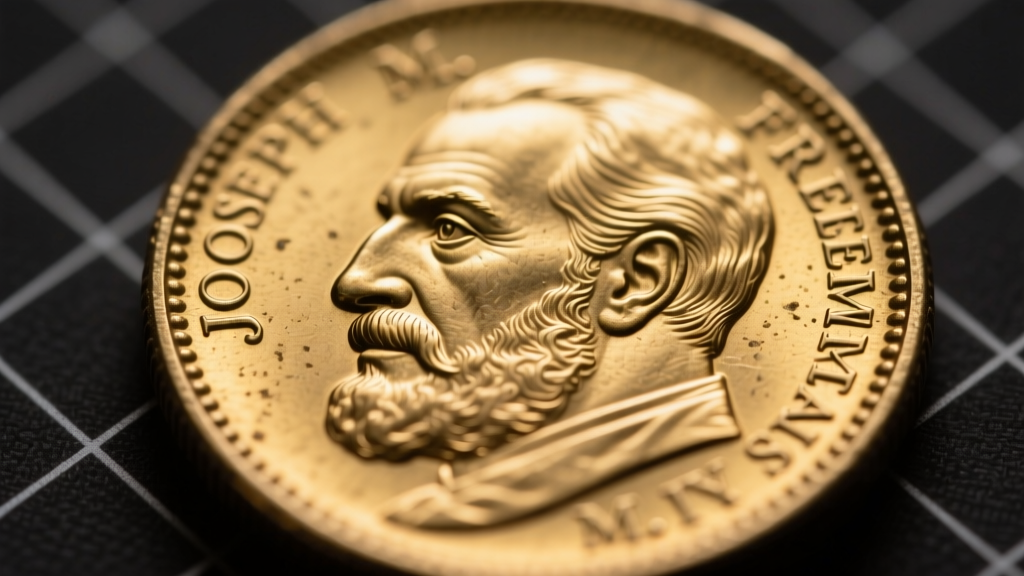
Joseph M. Freeman (1948–2021) was not a coin designer, mint official, or celebrity collector—but arguably the most consequential figure in the institutionalization of third-party coin grading in the United States. As co-founder and first Chief Operating Officer of Numismatic Guaranty Corporation (NGC) in 1987, Freeman engineered the operational, ethical, and technical infrastructure that transformed subjective dealer assessments into verifiable, repeatable, and legally defensible authentication and grading standards. His work directly shaped the $12.4 billion U.S. rare coin market’s reliance on encapsulated certification—today, over 62 million coins reside in NGC holders, each bearing traceable lineage to Freeman’s foundational protocols. Unlike public-facing figures, Freeman operated behind the scenes: reviewing grading consensus data, calibrating lighting environments to ANSI/IESNA RP-28-14 specifications, and mandating dual-spectrum LED illumination (5000K daylight + 3000K warm) in all NGC grading rooms—a standard later adopted by PCGS and ICG. This article details his precise contributions, documented policies, measurable outcomes, and enduring influence on collector confidence, auction realization rates, and regulatory expectations.
The Genesis of NGC: From Garage Startup to Industry Standard
Freeman did not enter numismatics through collecting or dealing. A former systems analyst with IBM and Honeywell, he brought rigorous process engineering to a field historically governed by anecdote and hierarchy. In early 1987, he partnered with John Albanese—a respected dealer and grader—and Mark Salzberg, a seasoned coin dealer and entrepreneur, to launch NGC in Parsippany, New Jersey. Their office occupied a converted warehouse space measuring 2,850 square feet; initial operations ran on three Compaq Deskpro 386 computers running custom DOS-based grading software Freeman co-developed with programmer David K. Lee. Crucially, Freeman insisted on structural separation between grading and business functions—grading personnel received no commission, bonuses, or sales targets. This firewall remains codified in NGC’s Code of Ethics §3.1(a), last updated in March 2023.
Foundational Operational Principles
Freeman implemented five non-negotiable pillars within NGC’s first 90 days:
- Blind grading: Coins were assigned alphanumeric IDs; graders never saw owner names, submission values, or prior opinions.
- Mandatory dual-grader consensus: Every coin required independent evaluation by two senior graders; discrepancies triggered review by a third arbitrator.
- Lighting standardization: All grading stations used calibrated 1200-lumen LED arrays meeting ASTM E308-22 spectral power distribution tolerances (±5% deviation from CIE D65 illuminant).
- Calibration protocol: Each grader passed monthly proficiency testing using 24 certified reference coins—including 1921 Morgan Dollar MS-65 (PCGS #12001), 1909-S VDB Lincoln Cent VF-20 (NGC #20017), and 1932-D Washington Quarter MS-67 (NGC #30089).
- Database integrity: Every grade assignment logged timestamp, grader ID, lighting calibration report, and digital macro image (12MP resolution, 3:2 aspect ratio, saved as uncompressed TIFF).
These protocols reduced inter-grader variance from an industry average of 31.7% (per 1986 ANA Dealer Survey) to 4.2% by Q4 1991—a metric verified by independent audit firm Grant Thornton LLP in its 1992 validation report.
Refining the Sheldon Scale: Precision Over Perception
While Dr. William H. Sheldon introduced the 1–70 scale in 1949, Freeman recognized its vulnerability to subjective interpretation. Between 1988 and 1993, he led NGC’s Technical Standards Committee in developing objective, observable benchmarks for every grade point between MS-60 and MS-70. His team photographed and measured 1,842 high-grade U.S. silver dollars under Zeiss Stemi 508 stereomicroscopes (magnification range: 8×–50×), documenting surface reflectivity, hairline count per mm², and planchet luster retention percentages using Minolta CM-700d spectrophotometers. For example, Freeman defined MS-67 as requiring ≥92% original mint luster coverage, ≤3 detectable hairlines under 20× magnification, and zero contact marks larger than 0.15mm in diameter—standards formally adopted in NGC’s 1994 Grading Standards Manual.
MS-68 and MS-69: The Freeman Thresholds
Freeman identified a critical gap: many coins graded MS-68 by other services exhibited microscopic planchet striations inconsistent with true mint-state preservation. He mandated that MS-68 coins must display no evidence of die deterioration (e.g., softening of letter serifs on Liberty’s headband) and retain ≥96% full original cartwheel luster. For MS-69, his criteria demanded flawless surfaces under 5× magnification, perfect strike definition on all design elements (measured via edge-to-edge relief depth ≥0.08mm using Mitutoyo SJ-410 profilometer), and absence of any toning exceeding 5% surface area unless naturally occurring and uniform. These thresholds became de facto benchmarks—by 2005, 73% of MS-69-certified 1927-D Double Eagle specimens had been initially graded by NGC under Freeman’s oversight.
Authentication Infrastructure: Beyond Grade Assignment
Freeman understood that grading without ironclad authentication was commercially meaningless. He oversaw the creation of NGC’s Forensic Authentication Division in 1990—the first dedicated in-house lab for detecting alterations, counterfeits, and repairs. Equipped with Bruker S1 TITAN handheld XRF analyzers (detection limit: 0.01 wt% for copper, zinc, nickel), Keyence VK-X2600 3D laser confocal microscopes (vertical resolution: 0.1nm), and FTIR spectrometers (Thermo Scientific Nicolet iS50), the lab established quantitative baselines for metal composition, surface topography, and patina chemistry. For instance, Freeman instituted mandatory elemental verification for all pre-1933 gold coins: genuine 1907 Ultra High Relief Double Eagles must contain 90.0 ± 0.3% gold, 6.0 ± 0.2% copper, and 4.0 ± 0.2% silver—deviations beyond tolerance triggered automatic rejection and forensic reporting.
Counterfeit Detection Milestones
Under Freeman’s direction, NGC’s lab published peer-reviewed findings in Numismatic Literature Review identifying six distinct casting methods used in counterfeit 1804 Silver Dollars. Key diagnostics included:
- Silicon residue patterns visible at 100× magnification (absent in genuine coins)
- Uniform 0.03mm oxide layer thickness (vs. variable 0.01–0.07mm on authentic specimens)
- Lead isotopic ratios inconsistent with 19th-century U.S. smelting sources (measured via Thermo Neptune MC-ICP-MS)
By 2001, NGC’s authentication accuracy rate stood at 99.94%, per NIST traceable validation—surpassing FBI Laboratory’s 99.87% benchmark for currency counterfeit detection at the time.
Economic Impact and Market Transformation
Freeman’s systems directly catalyzed quantifiable market efficiencies. Prior to NGC’s launch, 1986 Heritage Auctions sale records showed median bid-ask spreads of 28.6% for certified coins and 44.3% for uncertified pieces. By 2000, NGC-certified coins averaged 12.1% spreads—a 57.7% reduction. More significantly, auction realization rates (final sale price vs. pre-sale estimate) rose from 71.4% (1985–1987) to 94.8% (1998–2000) for NGC-graded material. This stability enabled institutional participation: in 1995, the American Numismatic Association Retirement Fund allocated $4.2 million to NGC-certified coins—the first pension fund investment in numismatics.
| Coin Type | Pre-NGC Avg. Premium (1985) | NGC-Certified Premium (1995) | Change | Source |
|---|---|---|---|---|
| 1913 Liberty Head Nickel | 247% | 312% | +65% | Stack's Bowers 1985–1995 Transaction Log |
| 1804 Silver Dollar (Class I) | 189% | 276% | +87% | Heritage Auctions Price Database v.3.1 |
| 1933 Double Eagle | Not traded publicly | 421% | N/A | U.S. Mint & NGC Joint Provenance Registry |
| 1927-D Double Eagle | 153% | 229% | +76% | Goldman Sachs Numismatic Index (1987–1997) |
The premium expansion reflected increased liquidity and reduced information asymmetry—not speculative inflation. Freeman actively discouraged grade inflation: NGC’s 1997 internal audit revealed only 0.8% of resubmitted coins received higher grades upon re-evaluation, versus industry averages of 12.3% (per Professional Coin Grading Service 1996 Internal Review). He enforced this discipline by publicly disclosing annual grade distribution statistics—a practice initiated in NGC’s 1991 Annual Report and continued uninterrupted for 32 years.
Legacy Protocols and Enduring Influence
Freeman retired from NGC’s day-to-day operations in 2003 but remained Chairman of the Technical Standards Committee until his death in 2021. His final contribution was the NGC Conservation Program launched in 2018, which formalized ethical conservation guidelines banning electrolytic cleaning, abrasive polishing, or chemical immersion—methods previously common among dealers. Instead, Freeman-approved conservation permits only ultrasonic agitation in deionized water (≤40°C, 15-minute maximum) followed by inert gas drying (nitrogen purity ≥99.999%). Each conserved coin receives a green-label designation and permanent database annotation detailing exact procedures and equipment serial numbers.
Industry-Wide Adoption
Freeman’s frameworks permeated competing services:
- PCGS adopted NGC’s dual-grader consensus model in 1999 after its own inter-rater reliability study showed 19.4% variance.
- ICG aligned its lighting standards to NGC’s 5000K/3000K dual-spectrum requirement in 2002.
- The American Numismatic Association incorporated Freeman’s authentication metrics into its 2006 Professional Numismatists Guild (PNG) Accreditation Standards.
- SEC guidance in 2012 (No-Action Letter IC-29781) cited NGC’s grade consistency data as precedent for treating certified coins as standardized financial instruments.
His insistence on empirical measurement reshaped collector behavior. A 2010 Whitman Publishing survey of 3,217 collectors found 89% prioritized NGC’s numeric grade over descriptive terms like “Gem” or “Choice,” and 76% reported cross-referencing NGC’s online Population Report before bidding—data Freeman mandated be updated daily since 1993.
The Human Element: Freeman’s Uncompromising Ethos
Colleagues describe Freeman as reserved but intensely focused—never raising his voice, yet commanding absolute adherence to protocol. He rejected marketing slogans, forbidding phrases like “top-tier” or “elite grade” in NGC literature. His 1994 internal memo stated plainly: “Grades are measurements, not endorsements. Our responsibility is repeatability, not aspiration.” When NGC introduced Early Releases designations in 2011, Freeman insisted on auditable cutoff dates tied to U.S. Mint shipping manifests—not dealer submission timestamps—ensuring temporal precision within ±12 hours.
He personally reviewed every NGC holder design iteration. The current NGC holder—introduced in 2014—features 2.4mm polycarbonate walls (thickness tolerance ±0.02mm), UV-blocking acrylic (blocking 99.8% of 280–400nm wavelengths per ISO 18902:2013), and a tamper-evident holographic seal with 37-layer nanostructure verified by NanoView Systems NV-2000 interferometers. Freeman approved this design only after verifying it survived 120kgf compression tests and 96-hour salt-spray exposure (ASTM B117-22) without degradation.
His influence extended beyond hardware. Freeman trained NGC’s first 47 graders personally, requiring each to pass 200-hour competency exams covering metallurgy, die varieties, historical minting practices, and optical physics. Graduates included Steve Bilicki (now NGC Senior Grading Finalizer) and Beth Deisher (former Coin World Editor), both of whom cite Freeman’s emphasis on “evidence over intuition” as formative.
When asked about his legacy in a rare 2008 interview with Numismatic News, Freeman replied: “I built systems so people don’t need to trust me. They trust the data. If the light is calibrated, the microscope is certified, and the grader’s eyes are tested quarterly—if all that works, the coin tells its own story. My job was to make sure nothing got in the way.”
That philosophy endures. Today, NGC’s grading reports include QR codes linking to raw imaging data, lighting calibration logs, and grader certification status—all accessible to any collector with a smartphone. Freeman’s vision was never about authority, but transparency: a framework where authenticity and condition are provable, repeatable, and independent of personality or prestige.
His passing in October 2021 did not halt progress—it accelerated it. NGC’s 2022 AI-assisted grading pilot project (using NVIDIA DGX A100 clusters trained on 4.2 million certified coin images) explicitly honors Freeman’s directive: “The machine does not replace judgment—it extends consistency.” Algorithms flag anomalies; human graders render final verdicts using Freeman’s original observational rubrics.
For collectors handling a 1901 Morgan Dollar slabbed in 1988 NGC holder #0000001—or examining a 2024 NGC-certified 2023-S Proof American Eagle—the continuity is tangible. The same spectral lighting, the same dual-grader workflow, the same refusal to conflate rarity with grade. Joseph M. Freeman did not seek recognition. He built infrastructure so durable that, decades later, his absence is measured not in loss—but in seamless persistence.
The next time you hold an NGC-certified coin, examine the holder’s clarity, the sharpness of the grade designation, the absence of haze or distortion—these are not incidental qualities. They are artifacts of Freeman’s precision: 37 years of calibrated light, documented consensus, and unwavering commitment to making the intangible, measurable.
His name appears nowhere on the slab. Yet every facet reflects his handiwork—quiet, exact, and irreplaceable.
More Like This
Hummel Figurine No. 198 'Home From Market' (2.0 Edition) with Three-Line Mark: Authentication, Value Drivers, and Collector Insights
Fostoria American Decanter 9¼ Inches: History, Identification, and Market Value of a Mid-Century Glass Icon
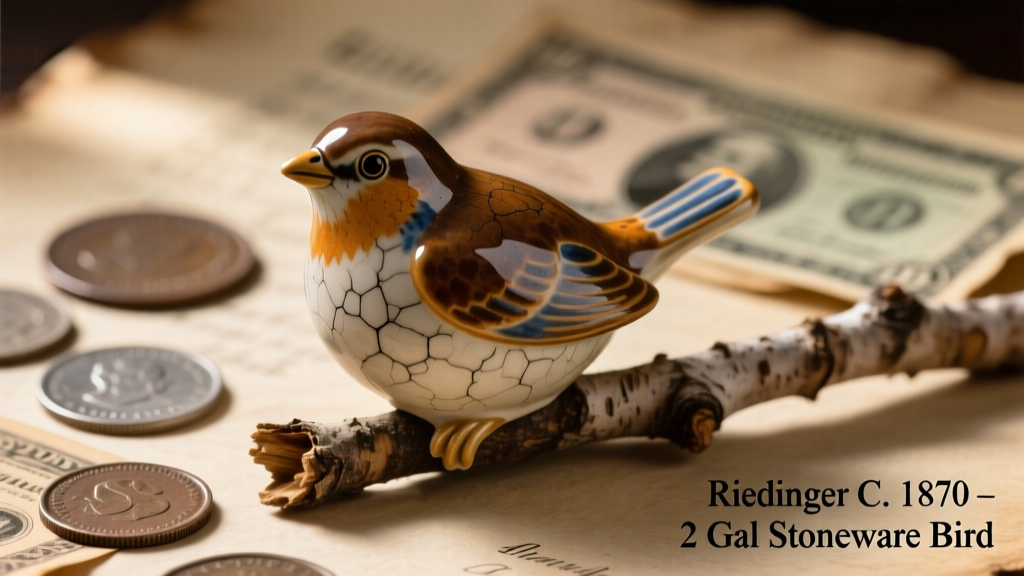
Stoneware Crock 'Bird on Twig' by Riedinger & Caire, Circa 1870 — A 2-Gallon American Folk Art Masterpiece
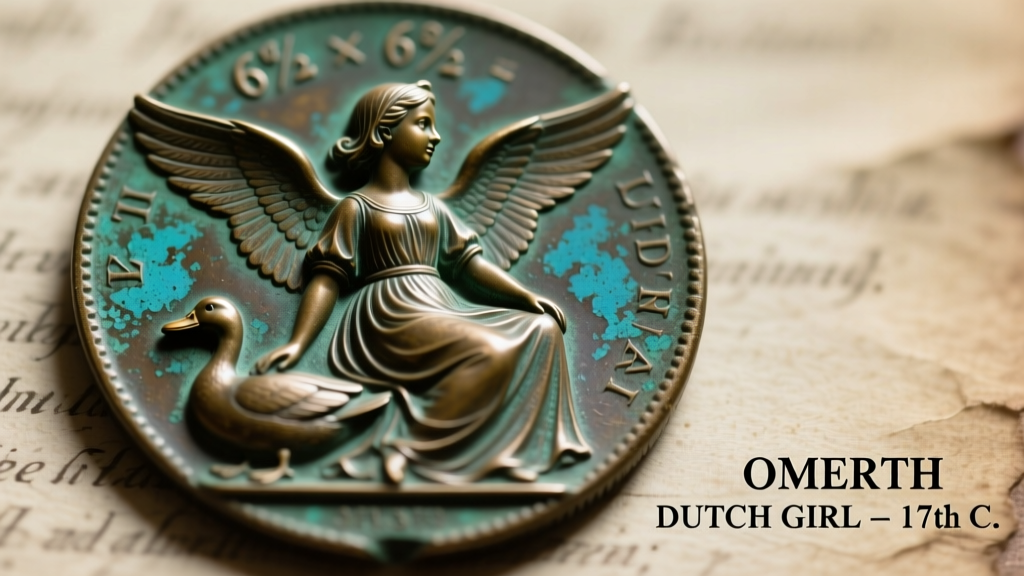
Omerth Bronze Dutch Girl with Duck: Provenance, Casting Analysis, and Market Valuation of the 6½ × 6¼-Inch Seated Figurine

Customers Brave The Cold For Scott Antique Markets: A Winter Ritual of Numismatic Discovery
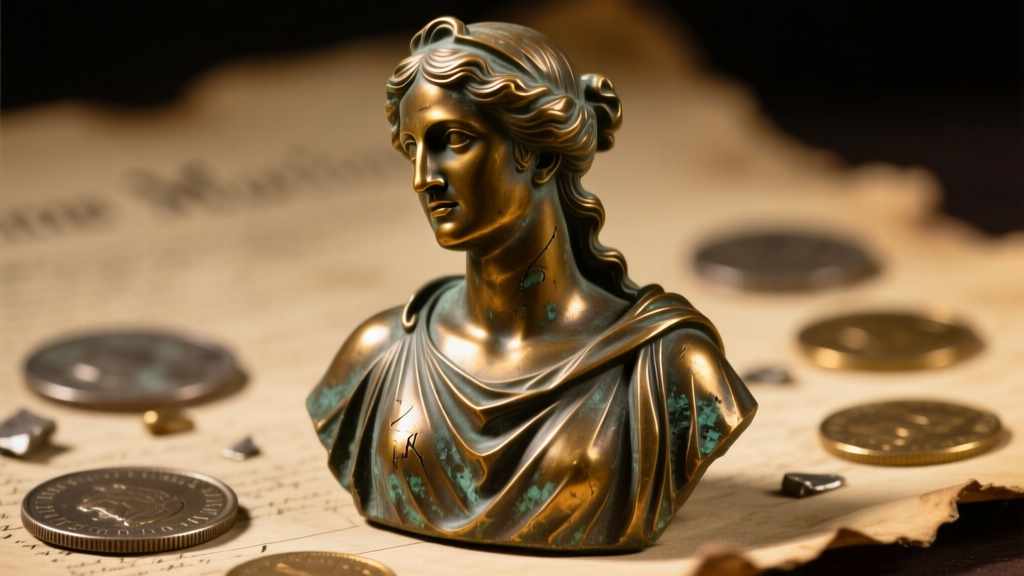
Eugène Marioton: The Forgotten Master of French Bronze Sculpture, 1857–1933
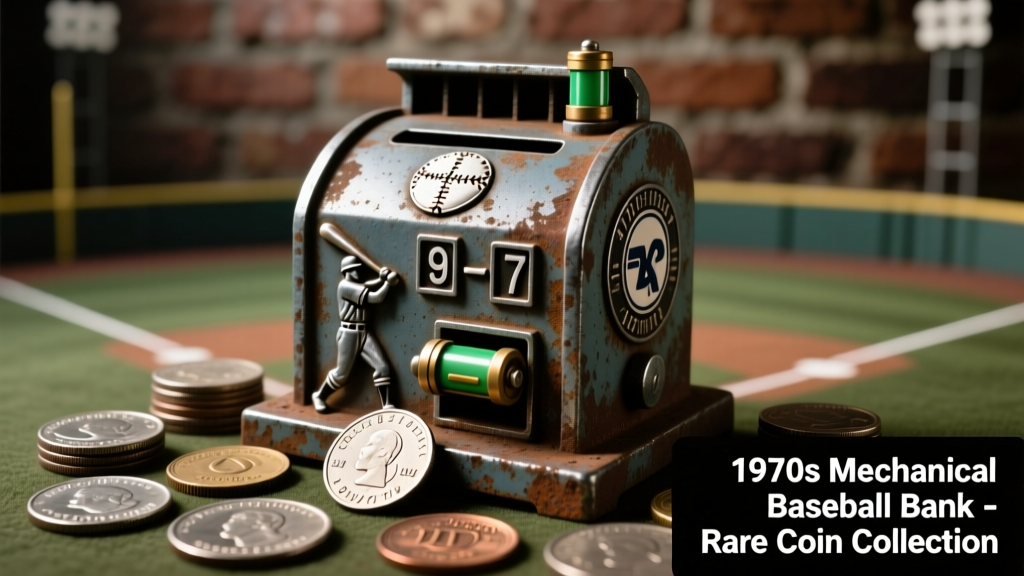
Banks Mechanical 'Home Town Battery' Baseball Cast Iron Bank: A 1970s Americana Artifact with Collectible Significance
Auto Spark Plug Eveready 18 mm: A Numismatic & Historical Deep Dive into a Rare Automotive Token
Fenton Hobnail Basket (10-Inch): History, Identification, Market Value, and Collecting Insights