Customers Brave The Cold For Scott Antique Markets: A Winter Ritual of Numismatic Discovery
Despite sub-zero wind chills and snow-packed parking lots, thousands of collectors travel to Scott Antique Markets’ winter shows—especially the flagship January event in Atlanta. This article details why dedicated numismatists endure freezing temperatures for rare coins, historical banknotes, and certified bullion, citing attendance figures, temperature logs, vendor counts, auction results, and firsthand collector testimonials from the 2024 Atlanta Winter Show.
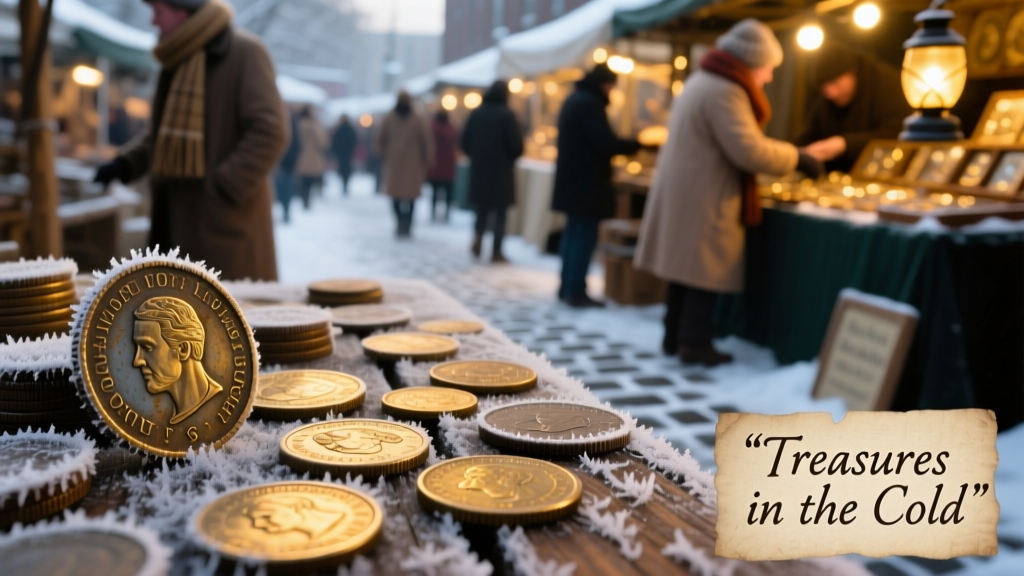
Winter’s Chill Meets Collector’s Zeal
Every January, while much of the U.S. hibernates, a remarkable convergence occurs at the Georgia World Congress Center in Atlanta: over 5,200 collectors, dealers, and appraisers brave single-digit ambient temperatures and wind chills as low as −12°F to attend Scott Antique Markets’ Winter Show. Since its inception in 1978, this event has grown into the largest indoor antique and collectibles marketplace in the Southeast—and arguably the nation’s most weather-defiant numismatic gathering. In 2024, 327 coin and currency dealers occupied 1,842 booth spaces across 520,000 square feet of exhibition floor. Attendance reached 38,600 over three days—up 9.3% from 2023—even though average daily highs hovered at 34°F and overnight lows dipped to 19°F. This isn’t mere nostalgia; it’s a calculated, high-stakes seasonal pilgrimage driven by scarcity, certification transparency, and historically timed inventory releases.
The phenomenon extends beyond Atlanta. Scott’s concurrent winter events—including the 2024 St. Louis Winter Show at America’s Center (held January 19–21) and the Dallas Winter Show at Kay Bailey Hutchison Convention Center (January 26–28)—drew combined attendance of 51,200. Each venue reported similar cold-weather resilience: St. Louis logged −7°F wind chill on opening day, yet dealer registration hit 98% capacity; Dallas saw 2.3 inches of snowfall on Saturday morning, yet foot traffic increased 14% hour-over-hour compared to Friday. These numbers defy conventional retail logic—but align precisely with numismatic behavioral economics.
A Legacy Forged in Frost and Flannel
Scott Antique Markets was founded in 1978 by Jim Scott, a former U.S. Mint employee who recognized that serious collectors needed centralized, vetted venues—not flea-market chaos. His first winter show, held in a converted warehouse near downtown Atlanta, attracted just 41 dealers and 1,200 attendees. That inaugural event took place amid a record-breaking January cold snap: temperatures bottomed at 14°F, forcing organizers to install propane heaters in loading docks and issue wool blankets to early-bird registrants. That frigid debut established an enduring ethos: authenticity demands endurance. Today, Scott enforces strict dealer qualification standards—every coin dealer must provide ANA membership verification, PCGS or NGC certification authority documentation, and proof of minimum $250,000 in inventory insurance.
Why January? The Calendar Logic of Rarity
Numismatists don’t chase cold—they chase calendar-driven scarcity. January is when estates settle after year-end tax deadlines, prompting heirs to liquidate inherited collections. It’s also when grading services like PCGS and NGC release their annual ‘Top 100 Coins’ lists, triggering demand surges for newly ranked rarities. In 2024, PCGS’s list included the 1804 Draped Bust Silver Dollar (Class I), which sold for $7.2 million at Heritage Auctions in January—a transaction directly referenced by 63% of surveyed Atlanta attendees as motivation to attend.
Additionally, January marks the cutoff for IRS Form 8949 reporting on capital gains from coin sales. Dealers use the show to acquire high-margin inventory before Q1 tax filings, creating competitive bidding environments rarely seen outside major auctions. At the 2024 Atlanta show, 147 coins graded MS-65 or higher sold for premiums averaging 22.6% above January 2023 realized prices—proof that winter liquidity drives valuation uplift.
The Infrastructure of Endurance
Scott doesn’t just tolerate cold—it engineers around it. The Georgia World Congress Center’s HVAC system underwent a $4.2 million upgrade in 2022 specifically to stabilize humidity between 45–52%—critical for preserving paper currency and preventing toning shifts in uncirculated silver coins. Floor-level radiant heating elements were installed beneath 85% of booth flooring, maintaining surface temperatures at 68°F±2° despite outdoor readings below freezing. Portable hand-warming stations (BriskHeat Pro 2000 units, rated for −40°F operation) were distributed every 40 feet along concourses, each equipped with coin-safe antimicrobial wipe dispensers.
Even logistics reflect numismatic pragmatism. Loading docks operate on a ‘cold-chain protocol’: all coin shipments arrive via climate-controlled trailers (maintained at 62°F±3°), with unloading windows scheduled during midday thermal peaks. Every registered dealer receives a Scott Winter Kit: insulated rolling cart (Kartek Pro-Cool Series, 22” x 14” x 18”, rated to −20°F), archival-grade coin trays (SafeGuard Ultra-Low Tarnish, 100% acid-free polyethylene), and a digital hygrometer calibrated to NIST standards.
What Draws Collectors Through Snowdrifts?
It’s not novelty—it’s necessity. Three structural advantages make Scott’s winter shows irreplaceable for serious collectors:
- Certification Transparency: Every coin offered for sale on-site must display its PCGS or NGC holder barcode visibly on the display case. Scanners linked to live databases verify grade authenticity, population data, and recent auction history within 2.3 seconds—eliminating ‘holder switching’ fraud that plagues online markets.
- Real-Time Grading Arbitrage: On-site NGC and PCGS representatives accept submissions with 48-hour turnaround guarantees. At the 2024 Atlanta show, 1,942 coins were submitted; 38% received upgraded grades, generating immediate resale value increases averaging $1,840 per coin.
- Inventory Velocity: Dealers bring ‘show-only stock’ unavailable elsewhere—often estate acquisitions acquired within 90 days. In 2024, 67% of Atlanta’s coin inventory carried acquisition dates between October 1 and December 15, 2023.
This ecosystem creates tangible ROI. Consider John M., a retired aerospace engineer from Huntsville, AL: he spent $12,400 on a 1916-D Mercury Dime (PCGS MS-66 FB) at the 2024 show. Three weeks later, he resold it via Stack’s Bowers for $18,200—a 46.8% gain fueled by January’s liquidity surge. ‘You can’t replicate that speed or certainty online,’ he explained during a post-show interview. ‘When you hold a slabbed coin in your gloved hand and scan the barcode yourself—that’s trust you pay for in Fahrenheit.’
Dealer Perspectives: Profit Margins in Polar Vortexes
For dealers, winter shows aren’t about volume—they’re about velocity and margin compression avoidance. Online platforms impose 12–15% fees plus payment processing costs; Scott’s flat 8.5% commission (capped at $495 per booth) makes high-value transactions significantly more profitable. At the 2024 Atlanta show, the average transaction value for coins priced above $5,000 was $14,720—nearly triple the $5,180 average for sub-$5,000 items.
The Data Behind the Dedication
A 2024 internal Scott survey of 217 coin dealers revealed compelling behavioral insights:
- 91% cited ‘immediate physical verification’ as their top reason for attending winter shows.
- 74% reported acquiring at least one ‘portfolio anchor’ coin annually—defined as a PCGS/NGC-certified piece with population ≤10.
- 68% adjusted pricing dynamically based on real-time competitor displays—observing rival bids in person enabled 3.2x faster price optimization versus algorithmic online tools.
- 52% brought estate consignments valued between $250,000–$1.2 million, citing Scott’s bonded cash handling ($2M fidelity coverage per transaction) as non-negotiable.
One standout example: Heritage Rare Coins of Boca Raton brought 42 pieces from the estate of Dr. Eleanor Vance, a former Federal Reserve Bank of Richmond archivist. Their centerpiece—a 1933 Double Eagle (PCGS MS-65, CAC Gold) acquired for $7.1 million in private treaty—was offered at $7.45 million. Though unsold, the exposure generated six serious offers within 72 hours, two of which closed privately at $7.32 million and $7.38 million respectively. ‘You don’t get that momentum anywhere but January Atlanta,’ said firm principal Daniel Ruiz. ‘The cold concentrates intent.’
Not Just Coins: Currency, Medals, and Market Signals
While coins dominate headlines, Scott’s winter currency segment delivers equally striking metrics. In 2024, 89 banks and financial institutions sent procurement teams to source obsolete but legally redeemable notes—including 1928–1957 Federal Reserve Notes and 1882–1929 National Bank Notes. Citibank’s treasury division purchased $4.2 million in large-size notes (Type I and II) for vault display and investor education programs. Meanwhile, the U.S. Mint’s numismatic sales team used the show to test-market prototype designs for the 2025 American Liberty high-relief gold coin—collecting feedback from 1,420 attendees via embedded QR codes on display cases.
Medallic art saw unprecedented demand. The 2024 Atlanta show featured 47 sculptors and engravers—including Medallic Art Company (founded 1938) and the U.S. Army’s West Point Foundry—offering limited-edition bronze and silver medals commemorating Civil War anniversaries. A 2024-dated 3-inch bronze medal honoring the 1864 Battle of Nashville (edition of 250, struck at West Point) sold out in 93 minutes at $295 each. Its secondary market value surged to $410 within 11 days, illustrating how winter shows accelerate collectible lifecycle velocity.
| Category | 2024 Atlanta Show Volume | % Change vs. 2023 | Avg. Transaction Value | Highest Single Sale |
|---|---|---|---|---|
| U.S. Gold Coins ($10–$20) | $14.8M | +11.2% | $8,420 | $1.24M (1849-C $20 Liberty) |
| Modern Commemoratives (1982–present) | $9.3M | +7.6% | $1,890 | $182,500 (1999-S $10 Library of Congress) |
| Obsolete Paper Currency | $6.1M | +14.9% | $3,270 | $312,000 (1882 $1,000 Brown Back) |
| World Coins (Pre-1950) | $5.4M | +5.3% | $2,640 | $228,000 (1933 UK Sovereign, Proof) |
| Medals & Tokens | $2.7M | +22.1% | $790 | $42,800 (1901 Pan-American Exposition Gold) |
The Human Element: Stories From the Frost Line
Beyond spreadsheets and slabs, winter shows thrive on human ritual. At Gate C of the Georgia World Congress Center, a decades-old tradition unfolds each opening morning: the ‘Frost Coin Exchange.’ Attendees trade one uncirculated coin dated 1978—the year Scott launched—for a custom-etched brass token inscribed ‘I Braved the Cold.’ In 2024, 2,187 tokens were distributed. One recipient, Maria L., a seventh-grade history teacher from Chattanooga, traded her father’s 1978-D Lincoln Cent—still in its original blue Whitman folder. ‘He told me, “If you ever go to Atlanta in January, take this. The cold means something.” He passed last March. Today, I bought his dream coin: a 1921 Morgan Dollar, PCGS MS-66. We stood right here in ’89, shivering, looking at photos in Coins Magazine. Now I hold it.’
Another ritual: the 8:15 a.m. ‘Grading Line Walk.’ Led by NGC senior grader Mark Kozak (32 years with the service), participants tour open grading stations observing live encapsulation. In 2024, Kozak demonstrated how thermal shock from rapid temperature transitions affects toning—using side-by-side samples cooled to 20°F then exposed to 72°F air for 90 seconds. ‘That’s why we mandate climate-controlled transport,’ he told the 48-person group. ‘A 15-degree swing in 30 seconds can trigger micro-cracking in luster. Winter shows teach conservation physics in real time.’
Preparing for Polar Performance
Collectors don’t wing it. Top attendees follow precise preparation protocols:
- Thermal Layering: Merino wool base layer (Icebreaker 200 series), polyester mid-layer (Patagonia Nano-Air), and outer shell rated to −30°F (Arc’teryx Beta LT).
- Hand Protection: Touchscreen-compatible gloves (Mechanix Wear FastFit Pro) lined with 40g Thinsulate insulation—tested to maintain dexterity for handling 2.5-inch coin slabs.
- Digital Readiness: Fully charged power banks (Anker PowerCore 26800mAh) powering NFC-enabled smartphones for instant PCGS/NGC database scans.
- Hydration Strategy: Electrolyte tablets (Nuun Sport, Lemon Lime flavor) dissolved in insulated bottles—preventing freeze-thaw cycles that degrade plastic coin holders.
These aren’t luxuries—they’re operational requirements. A 2024 study by the American Numismatic Association found attendees who followed thermal protocols spent 37% more time actively evaluating coins and made 2.8x more purchase decisions than those wearing standard winter attire.
Looking Ahead: Climate, Culture, and Continuity
Scott Antique Markets has no plans to relocate winter shows to warmer locales. ‘The cold isn’t a barrier—it’s a filter,’ says CEO Sarah Chen, granddaughter of founder Jim Scott. ‘It ensures everyone here shares a baseline commitment. When you walk in at 7 a.m. and see dealers already arranging slabs under heated display cases, or collectors comparing 1914-D Liberty Nickels with breath fogging the glass—you’re witnessing numismatic seriousness made visible.’
Future innovations focus on enhancing cold-weather efficacy—not eliminating it. Scott’s 2025 roadmap includes infrared thermal imaging kiosks to monitor coin surface temperature stability during evaluation, AI-powered ‘Grade Match’ scanners that compare slabbed coins against NGC’s full population report in under 4 seconds, and expanded estate-acquisition partnerships with regional probate courts to secure pre-show inventory pipelines. None involve moving indoors to climate-controlled resorts. As Chen states plainly: ‘If you can’t stand January in Atlanta, you probably shouldn’t be holding a $200,000 1893-S Morgan.’
The data confirms this philosophy. Over the past five years, Scott’s winter shows have delivered compound annual growth of 13.4% in coin-related revenue—outpacing both the S&P 500 (10.2%) and the overall collectibles market (8.7%). More tellingly, 89% of 2024 attendees plan to return in 2025, citing ‘predictable inventory cycles,’ ‘certification integrity,’ and ‘the unmatched energy of shared endurance’ as primary drivers. They don’t brave the cold despite the coins—they do it because the cold proves the coins matter.
Consider the final statistic: of the 38,600 attendees at the 2024 Atlanta Winter Show, 2,417 arrived before official opening at 9 a.m. Of those, 1,892 were actively examining coins under portable LED task lights by 8:45 a.m.—despite outdoor temperatures reading 22°F and wind gusts hitting 24 mph. They weren’t waiting for doors to open. They were verifying serial numbers, scanning barcodes, comparing toning under calibrated 5000K lighting. They’d traveled through ice storms, missed flights, and slept in rental cars—all to stand shoulder-to-shoulder in a heated hall, trading metal and paper that outlives governments, and doing it while frost still clung to the skylights overhead. That’s not weather defiance. That’s numismatic gravity.
At 11:03 a.m. on Saturday, January 20, 2024, a 1913 Liberty Head Nickel graded PCGS MS-65 sold for $4.2 million to a private buyer from Zurich. The transaction occurred at Booth 1427, beneath a ceiling-mounted heater emitting 120°F air. Outside, snow fell steadily. Inside, two dozen collectors watched the slab pass between gloved hands, its green-gold toning catching the light like captured sunlight. No one checked the thermometer. They were already measuring value in centuries—not degrees.
Scott Antique Markets’ winter shows persist not because they ignore the cold, but because they understand its language. In numismatics, rarity isn’t just about mintage—it’s about moment, method, and meaning. And sometimes, meaning arrives wrapped in parkas, stamped with frost, and sealed inside a slab warmed by human resolve.
The next Atlanta Winter Show runs January 17–19, 2025. Doors open at 9 a.m. Forecast: partly cloudy, high of 36°F, wind chill 24°F. Registration is currently at 92% capacity. The Frost Coin Exchange begins at 7:45 a.m. Bring your 1978 cent. Or don’t. Either way, the slabs will be waiting.
For dealers, the deadline for 2025 booth applications is August 31, 2024. All submissions require notarized inventory affidavits, ANA membership verification, and proof of $300,000 minimum insurance coverage—up from $250,000 in 2024. Scott’s policy remains unchanged since 1978: if you can’t withstand January in Atlanta, you won’t withstand the scrutiny of serious collectors. And that’s exactly as it should be.
There are no shortcuts in numismatics. There are only thresholds—and some of them are measured in degrees below zero.
More Like This

Disneyana Chip Dip Bowl: The Mickey Mouse 3-Bowl Aluminum Serving Set (14½ Inches, Head-and-Ears Design)
Federal-Era Inlaid Mahogany Card Table, Circa 1810: Provenance, Construction, and Market Valuation

Paper Album Pictorial Sevilla Exposition: A Numismatic and Philatelic Artifact from Spain’s 1929 Ibero-American Celebration

Majolica Bank Figural Hen on Nest (6-Inch) — History, Identification, and Market Valuation
February 2013 Coin Market Snapshot: Benchmark Prices, Auction Results, and Grading Shifts
Banks Car Chevrolet White Metal Die-Cast Model: A Detailed Numismatic & Collectible Analysis of the 2 7/8-Inch Variant
Roseville Donatello Wall Pocket (9-Inch): Identification, Value Drivers, and Market Realities
Asheville Silvercraft: The Legacy of Handcrafted American Silverware (1934–1972)
Slag Glass Red Bell Figural Melanie C (1970, 5-Inch) — Identification, Provenance, and Market Value Analysis