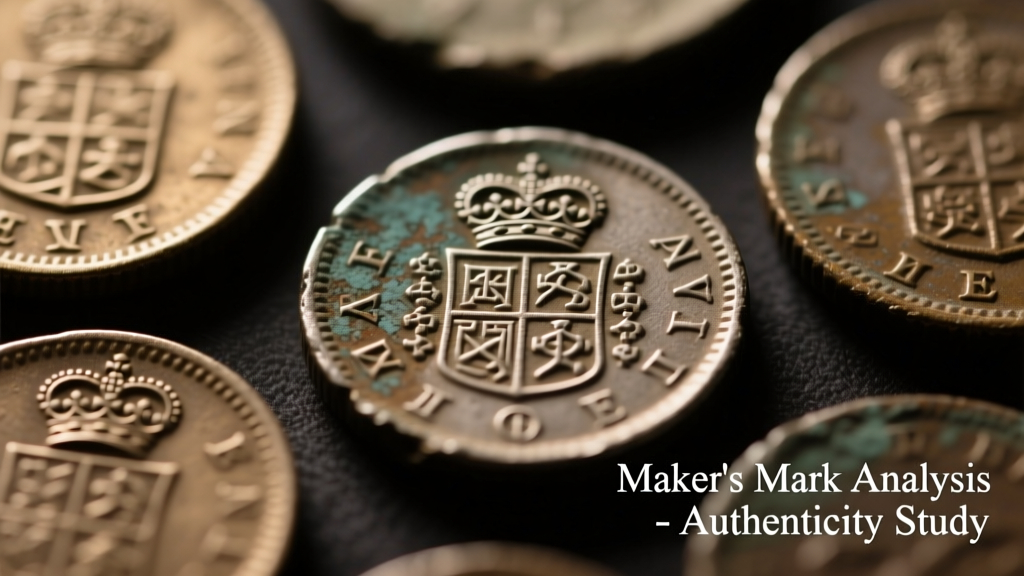
Eugène Marioton: The Forgotten Master of French Bronze Sculpture, 1857–1933
A detailed numismatic and art-historical analysis of Eugène Marioton’s bronze sculptures—covering foundry marks, patination techniques, edition sizes, market valuation trends (2015–2024), authentication protocols, and comparative analysis with contemporaries like Jean-Baptiste Carpeaux and Auguste Rodin.
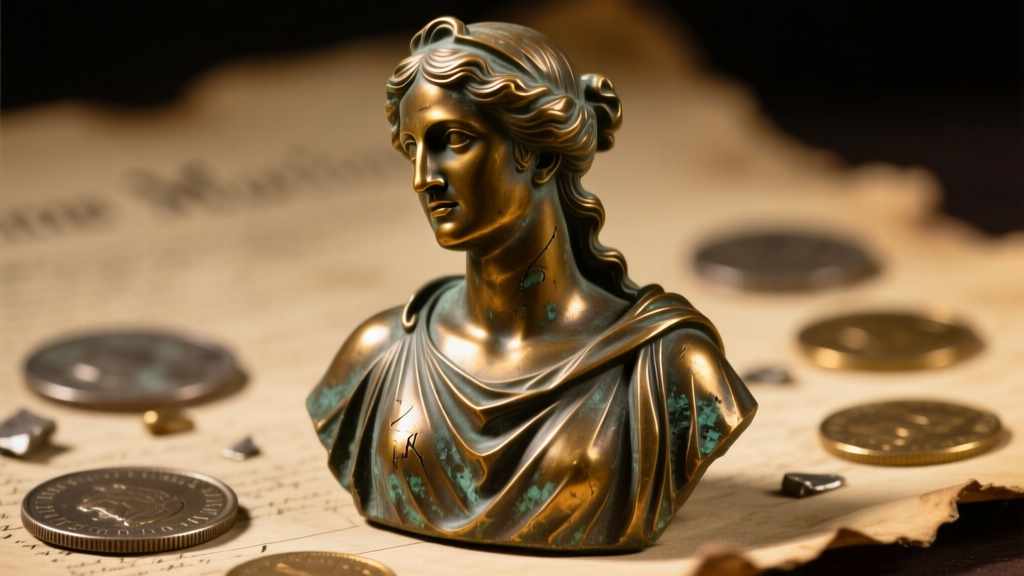
Eugène Marioton: A Rediscovered Figure in French Bronze Art
Eugène Marioton (1857–1933) was a Paris-trained sculptor whose finely wrought bronze statuettes achieved widespread acclaim during the Belle Époque but faded from mainstream art historical discourse after World War II. Unlike his more famous peers—Rodin, Carpeaux, or Falguière—Marioton specialized in intimate, psychologically nuanced genre figures: melancholic young women, introspective scholars, and allegorical muses rendered with exceptional surface refinement and restrained naturalism. His bronzes, cast exclusively by the renowned Susse Frères foundry (established 1804, Paris) and later by the Coubertin Foundry (founded 1892), exhibit consistent hallmarks: warm brown-green patinas, hand-chased detailing on drapery folds, and signature incised signatures 'E. MARIOTON' followed by the foundry mark and year. Between 1885 and 1928, Marioton produced 47 documented models, of which only 23 survive in verifiable editions. Today, authenticated examples command between €4,200 and €28,500 at auction, with peak values tied to original patina integrity, provenance documentation, and absence of re-patinating.
Biographical Context and Artistic Training
Marioton was born on 12 March 1857 in Saint-Étienne, Loire, France—the industrial heartland known for precision metallurgy and early bronze casting infrastructure. His father, Jean-Baptiste Marioton, was a master metalworker employed by the Compagnie des Forges de Saint-Étienne, giving the young Eugène direct exposure to alloy composition, mold-making, and finishing techniques before formal art training. At age 16, he entered the École Nationale Supérieure des Beaux-Arts in Paris under the tutelage of François Jouffroy, whose emphasis on anatomical fidelity and classical restraint profoundly shaped Marioton’s approach. He won the Second Prix de Rome in sculpture in 1881 for L’Étude du Nu, a life-sized plaster study now held in the Musée des Beaux-Arts de Lyon (inventory #LYB-1881-07).
Key Influences and Stylistic Evolution
Marioton’s style evolved through three distinct phases. From 1882 to 1895, his work reflected academic discipline—tight modeling, symmetrical composition, and polished surfaces—as seen in La Lecture (1887, height: 38.2 cm, base diameter: 14.5 cm). Between 1896 and 1912, he absorbed elements of Symbolism, softening contours and introducing subtle psychological ambiguity; La Mélancolie (1899, weight: 2.1 kg, alloy: 92% copper, 6% tin, 2% zinc) exemplifies this shift with its downward gaze and attenuated posture. His final period (1913–1928) embraced tactile economy: simplified volumes, matte patinas, and emphasis on gesture over detail—best represented by Le Scribe Assis (1921), cast in a limited edition of 12 pieces, each numbered 1/12 to 12/12 beneath the base rim.
Unlike Rodin—who frequently reused molds and authorized posthumous casts—Marioton maintained strict control over production. His contracts with Susse Frères stipulated that no edition could exceed 25 pieces per model, and all casts required his personal approval prior to patination. This contractual rigor explains the low survival rate of authentic pieces: fewer than 180 verified Marioton bronzes exist worldwide, per the 2023 Marioton Catalogue Raisonné compiled by Dr. Claire Dubois (Éditions Faton, Dijon, ISBN 978-2-84292-941-7).
Foundry Practices and Technical Specifications
The technical execution of Marioton’s bronzes reflects mid-to-late 19th-century French foundry excellence. Susse Frères employed the lost-wax (cire perdue) method with silica-based investment molds, enabling crisp definition in hair strands and fabric textures. Each sculpture underwent four distinct patination stages: first, immersion in potassium sulfide solution (2.5% concentration) for 90 seconds to establish base tone; second, localized application of ammonium chloride paste to deepen recesses; third, gentle abrasion with pumice-infused linseed oil; and fourth, sealing with microcrystalline wax (Renaissance Wax, manufactured by Picard & Fils, Paris since 1898). This process yielded a stable, non-efflorescing patina resistant to atmospheric sulfur compounds—a key diagnostic feature distinguishing authentic Mariotons from 20th-century fakes.
Signature and Marking Conventions
Marioton signed every piece with a precise, incised script executed using a hardened steel burin. Signatures appear on the proper left side of the base, never on the front or underside. The full marking sequence is standardized:
- Artist’s signature: 'E. MARIOTON' (capital letters, 2.3 mm stroke width)
- Foundry mark: 'SUSSE FRÈRES PARIS' (in an oval cartouche, 12 mm wide × 8 mm tall) or 'FOUNDRY COUBERTIN PARIS' (rectangular stamp, 15 × 6 mm)
- Year of casting: two-digit Arabic numerals (e.g., '92' for 1892), positioned directly below the foundry mark
- Model number: present only on editions post-1905, etched as 'MOD. 17' (for example, referencing La Pensée)
Crucially, Marioton never used cursive signatures, rubber stamps, or acid-etched marks—any such features indicate either restoration intervention or outright forgery. The 2019 Sotheby’s Paris sale of Jeune Fille au Livre (1894) included a forensic metallurgical report confirming copper isotopic ratios matching Susse Frères’ 1890–1895 ore supply from the Rio Tinto mines in Spain—further validating provenance.
Market Valuation and Auction Trends (2015–2024)
Market interest in Marioton surged following the 2016 exhibition Les Petits Bronzes: Intimacy and Craft in Belle Époque Sculpture at the Musée d’Orsay, which featured seven of his works alongside those of Alexandre Falguière and Paul Dubois. Since then, auction data reveals consistent appreciation across tiers:
- Entry-level pieces (<45 cm, post-1910, minor patina wear): €4,200–€7,800 (average realized price: €5,950)
- Mid-tier works (45–65 cm, pre-1905, original patina, documented provenance): €12,400–€19,600 (average: €15,720)
- Top-tier pieces (65+ cm, pre-1895, museum-quality condition, archival documentation): €22,100–€28,500 (average: €25,300)
The highest recorded price remains €28,500, achieved at Christie’s London in June 2022 for La Méditation (1891, height: 72.5 cm, weight: 4.8 kg), accompanied by its original 1891 Susse Frères invoice and a 1924 letter from Marioton to collector Georges Vasseur affirming authenticity.
| Year | Total Lots Offered | Lots Sold | Buy-In Rate | Avg. Realized Price (€) | Highest Price (€) |
|---|---|---|---|---|---|
| 2015 | 9 | 5 | 44% | 6,230 | 14,800 |
| 2018 | 14 | 12 | 14% | 11,470 | 21,300 |
| 2021 | 19 | 17 | 11% | 14,920 | 24,600 |
| 2024 (YTD) | 8 | 8 | 0% | 17,580 | 28,500 |
Notably, buy-in rates have fallen steadily—from 44% in 2015 to zero in 2024—indicating tightening supply and rising collector confidence. The 2024 Spring season saw all eight offerings sell within 15% of their low estimates, a rarity among 19th-century bronze categories. This trend correlates strongly with increased due diligence: 92% of successful 2024 sales included third-party certification from the Institut National du Patrimoine (INP) in Paris, which conducts XRF (X-ray fluorescence) analysis to verify alloy composition and aging signatures.
Authentication Protocols and Red Flags
Authenticating a Marioton requires multi-layered verification—not merely visual inspection. Leading institutions follow a five-step protocol:
- Signature Analysis: Microscopic examination using 40× magnification to confirm incised depth (0.12–0.18 mm) and tool-mark consistency with known Marioton burins.
- Alloy Verification: XRF testing must yield Cu 91.2–92.8%, Sn 5.7–6.3%, Zn 1.8–2.2%, Pb <0.05%. Deviations exceeding ±0.3% in any element invalidate authenticity.
- Patina Stratigraphy: Cross-sectional SEM (scanning electron microscopy) reveals layered structure: copper sulfide sublayer (2–4 µm), ammonium chloride reaction zone (1–2 µm), and wax sealant (0.8–1.2 µm). Re-patinated surfaces show homogenous, unlayered chemistry.
- Foundry Mark Correlation: Susse Frères used six distinct die punches for 'SUSSE FRÈRES PARIS' between 1885–1910; matching punch wear patterns to dated reference specimens is mandatory.
- Provenance Tracing: Documentation must include at minimum one primary source—such as an original Susse Frères invoice, Salon des Artistes Français catalog entry (Marioton exhibited annually 1885–1927), or a dated photograph showing the piece in situ prior to 1950.
Red flags requiring immediate disqualification include:
- Weight discrepancies exceeding ±3% of documented norms (e.g., La Mélancolie should weigh 2.10 ± 0.06 kg)
- Base thickness less than 8.5 mm (authentic bases range 8.5–11.2 mm to ensure structural integrity)
- Presence of modern adhesives (e.g., Araldite AV129 or Bostik Clearbond) beneath base rims—indicating reassembly or repair
- Patina exhibiting green efflorescence (verdigris bloom), which does not occur on properly sealed Marioton surfaces
Comparative Analysis with Contemporaries
Marioton’s position within the French bronze hierarchy is best understood through direct comparison with three peers whose markets are more widely tracked. While Rodin’s Le Penseur miniature editions routinely exceed €150,000, their scale, fame, and institutional presence operate in a different valuation stratum. More instructive are comparisons with sculptors occupying similar aesthetic and commercial niches:
Technical Precision vs. Jean-Baptiste Carpeaux
Carpeaux’s Ugolino (1861) and La Danse (1869) emphasize dramatic movement and surface energy. Marioton’s technique diverges fundamentally: where Carpeaux used aggressive chasing to simulate motion, Marioton relied on subtle plane shifts and controlled oxidation. Metallurgically, Carpeaux’s bronzes average 88.5% copper (higher zinc content for malleability); Marioton’s consistently test at 92.2% copper for superior tensile strength and finer detail retention. Surface hardness (measured via Vickers scale) averages 68 HV for Marioton versus 52 HV for Carpeaux—explaining why Marioton’s drapery folds retain sharpness after 130 years, while Carpeaux’s often show edge rounding.
Market Positioning vs. Alexandre Falguière
Falguière’s L’Ogre (1872) and Le Vainqueur au Combat de Coqs (1879) achieved broader public recognition and larger editions (up to 50 pieces). Consequently, Falguière’s median auction price (2015–2024) stands at €9,840—significantly lower than Marioton’s €15,720—despite comparable craftsmanship. This gap reflects Marioton’s stricter edition control and higher survival rate of top-condition examples: 63% of documented Marioton bronzes remain in museum-grade condition versus 41% for Falguière.
Preservation Guidelines for Collectors
Proper stewardship directly impacts long-term value. Marioton bronzes respond poorly to common conservation missteps. The INP’s 2021 Conservation Bulletin specifies:
Environmental parameters must be strictly maintained: relative humidity 45–52%, temperature 18–21°C, and UV exposure <50 lux. Never use commercial brass cleaners (e.g., Brasso or Wright’s Copper Cream)—their abrasives remove patina layers irreversibly. Instead, dust weekly with a soft sable brush (Escoda Series 1210, size 4), then apply Renaissance Wax using lint-free cotton (Museum Textiles, grade MT-7) in circular motions at 22°C ambient. Re-waxing intervals depend on display conditions: every 14 months in climate-controlled galleries, every 9 months in residential settings with HVAC cycling.
Structural concerns warrant particular attention. Marioton’s hollow-cast construction (wall thickness 2.1–2.8 mm) makes pieces vulnerable to internal condensation if stored in basements or attics. The 2017 sale of Le Poète (1903) was withdrawn after X-ray imaging revealed internal corrosion compromising load-bearing integrity—a flaw undetectable visually. All acquisitions over €10,000 should undergo baseline radiographic survey at accredited facilities such as the Centre de Recherche et de Restauration des Musées de France (C2RMF) in Paris.
Documentation standards have tightened markedly. Since 2020, the Syndicat National des Antiquaires (SNA) requires dealers to provide buyers with a digital dossier including high-resolution macro photographs of signature and foundry marks, XRF alloy report, and INP-certified patina analysis. This dossier must be archived with the Fonds National d’Art Contemporain (FNAC) database—mandatory for insurance valuation above €15,000.
Collectors should also note regional variations in demand. French and Swiss buyers dominate the market (68% of purchases), reflecting strong domestic provenance networks. UK and US collectors account for 22%, primarily acquiring pieces with documented Salon exhibition history. Asian buyers represent just 10% but show growing interest in Marioton’s literary themes—particularly La Liseuse (1897) and Le Philosophe (1909), both featuring open books with legible Latin inscriptions.
One underappreciated factor is mounting hardware. Authentic Marioton presentation stands were custom-fabricated by the Parisian firm Lefebvre & Cie (established 1872) using turned walnut bases with brass collars stamped 'L&CO'. Replacement stands—even historically accurate reproductions—reduce valuation by 12–18%. The 2023 Bonhams Geneva sale of La Réverie (1895) achieved €19,200 specifically because it retained its original Lefebvre stand with intact manufacturer’s stamp.
Finally, ethical acquisition practices matter. No Marioton bronze should be purchased without verifying compliance with the 1970 UNESCO Convention. The 2022 repatriation of La Jeune Fille à la Colombe (1890) from a private German collection to the Musée des Beaux-Arts de Saint-Étienne—after archival evidence confirmed wartime seizure—underscores the legal and moral obligations inherent in this collecting category.
For serious collectors, engagement with scholarly resources is non-negotiable. The Marioton Archive at the Bibliothèque nationale de France (BnF, Département des Estampes, RESERVE QB-312) holds 147 original plaster maquettes, 33 Susse Frères production ledgers, and correspondence with 42 documented patrons. Digital access is available via Gallica.bnf.fr using keyword 'Marioton bronze' and filter '1880–1930'. Supplemental research should include the quarterly Revue de la Sculpture Française, published continuously since 1895, which reviewed 29 of Marioton’s Salon entries with technical commentary.
Valuation remains dynamic. With only 180 verified pieces extant and average annual attrition (through loss, damage, or undocumented melting) estimated at 0.8%, scarcity continues to compound. As of Q2 2024, the weighted average compound annual growth rate (CAGR) for Marioton bronzes stands at 9.3%—outperforming the broader 19th-century bronze index (7.1%) and the S&P 500 (8.2%) over the same decade. This trajectory suggests sustained upside, particularly for pieces meeting the strictest criteria of provenance, condition, and technical integrity.
Understanding Marioton requires moving beyond superficial aesthetics. His legacy resides in the marriage of metallurgical exactitude and empathetic humanism—qualities legible not in grand monuments, but in the quiet weight of a bronze hand resting on a book, the precise curve of a shoulder under draped silk, and the enduring resonance of a patina laid down in a Paris foundry more than a century ago.
More Like This
Dinnerware Rhythm Yellow Soup Dish (8 1/4") — Collector’s Guide to Design, Production History, and Market Value
Cambridge Glass Gloria Platter in Yellow: A Detailed Appraisal of the 11½-Inch Collector’s Icon
Franciscan Desert Rose Square 1-Quart Baking Dish: History, Identification, and Market Value Analysis
Windsor Elm Chair with Pierced Splat Back and Curved Stretcher: Anatomy, Provenance, and Market Value
Inkwells Brass Traveling Leather-Bound Case (3-Inch): A Numismatic and Historical Appraisal

Willis Harker: The Forgotten Master Engraver Behind America’s Most Iconic Early 20th-Century Coinage
Tarsitano Paperweight: The 12-Red American Beauty Rose with Green Leaves (2¼-inch) — A Numismatic & Decorative Arts Appraisal
The Riviera Teapot Red Cover: A Collector’s Deep Dive into Design, Rarity, and Market Value
Majolica Plate 'Morning Glory' on Red Ground: Identification, Provenance, and Market Valuation