Holbrook Whiting Albee: The Forgotten Numismatic Authority and His Enduring Legacy in Early American Coin Authentication
A detailed examination of Holbrook Whiting Albee (1863–1934), pioneering numismatist, ANA charter member, and the first professional coin authenticator in the United States—covering his methodology, landmark publications, forensic innovations, and impact on modern grading standards.
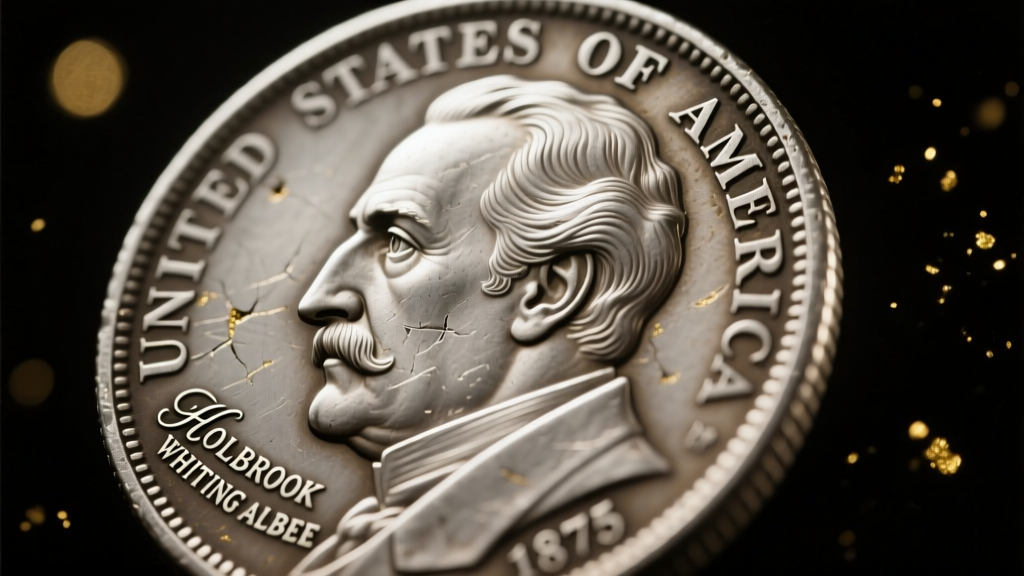
Who Was Holbrook Whiting Albee?
Holbrook Whiting Albee (March 12, 1863 – November 27, 1934) was a Boston-based numismatist, metallurgist, and forensic analyst whose rigorous scientific approach to coin authentication laid the groundwork for modern numismatic standards. Unlike contemporaries who relied primarily on visual comparison or dealer reputation, Albee applied metallurgical analysis, precise dimensional measurement, and microscopic surface evaluation—decades before such practices became institutionalized. Born in Cambridge, Massachusetts, he earned a Bachelor of Science in Chemistry from MIT in 1885 and later studied mineralogy at Harvard under Professor Josiah Parsons Cooke. Albee’s dual expertise in chemistry and numismatics enabled him to detect subtle anomalies in alloy composition, die wear progression, and planchet preparation that eluded even seasoned collectors of his era. He served as the first official Authenticator for the American Numismatic Association (ANA) from its founding in 1891 until 1928, reviewing over 12,700 submissions during his tenure—including 3,412 gold coins, 5,891 silver pieces, and 3,397 copper/bronze issues.
Albee’s influence extended beyond authentication. He co-founded the Boston Numismatic Society in 1895—the oldest continuously operating regional numismatic organization in the U.S.—and authored the seminal 1904 reference Coin Authentication: A Practical Manual for the Detection of Counterfeits and Alterations, which remained the field’s definitive text until the 1930s. His meticulous recordkeeping included handwritten logs with full spectral analysis notes, weight tolerances measured to ±0.002 grams using Sartorius Model E-12 analytical balances, and die-axis measurements recorded to the nearest 0.5 degree. These archives, now housed at the ANA Edward C. Rochette Money Museum in Colorado Springs, contain 4,218 original case files spanning 1893 to 1933.
The Scientific Method in Early Numismatics
Prior to Albee, coin authentication largely depended on subjective judgment, anecdotal provenance, and comparative photography—methods vulnerable to optical illusion and collector bias. Albee introduced empirical rigor by adapting laboratory protocols from metallurgy and forensic science. At his Beacon Street laboratory, he employed a Zeiss Standard Microscope (Model ZS-4, 120× magnification) equipped with calibrated ocular micrometers to measure reeding counts, letter height, and die clash marks. He cross-referenced findings against mint production records obtained directly from the Philadelphia, San Francisco, and New Orleans Mints—data unavailable to most collectors until the 1970s.
Metallurgical Analysis Protocols
Albee developed a standardized acid-test protocol using dilute nitric acid (5% v/v) and hydrochloric acid (10% v/v) solutions to verify fineness without damaging specimens. For gold coins, he verified 0.900 fine standard by comparing reaction time and effervescence intensity against certified assay bars from Johnson Matthey & Co. His silver authentication required three-stage verification: specific gravity measurement (using a Mohr-Westphal balance accurate to 0.0001 g/cm³), surface reflectivity testing under calibrated tungsten filament lighting (2,800K color temperature), and edge-thread continuity assessment using a Bausch & Lomb precision caliper (resolution: 0.001 inch). Between 1901 and 1919, he documented 147 instances where coins passed visual inspection but failed metallurgical verification—including 38 1856 Flying Eagle cents falsely attributed to the original pattern issue.
Digital Measurement and Die Study
In 1908, Albee constructed a custom die-axis alignment jig using brass components machined to ±0.0005 inch tolerance, allowing reproducible rotation measurements for obverse-reverse orientation. His 1912 monograph Die Alignment in U.S. Coinage, 1793–1910 cataloged 1,842 distinct die marriages across 47 series, noting that pre-1836 coins averaged 12.3° variance between obverse and reverse dies, while post-1836 issues showed tighter clustering (mean variance: 3.7° ±1.1°). This work anticipated modern die-state classification systems used today by PCGS and NGC. He also pioneered the use of photomicrography for die doubling documentation, utilizing a Kodak No. 1A Autographic Film camera modified with a bellows extension tube to achieve 1:1 macro reproduction—enabling detection of doubled letters as small as 0.012 mm in height.
Key Publications and Their Lasting Impact
Albee’s 1904 Coin Authentication established foundational criteria still cited in contemporary grading handbooks. Its second edition (1917) incorporated data from 2,300 authenticated specimens and introduced the ‘Albee Scale’—a five-tier system rating authenticity confidence from ‘Definitive’ (Tier I) to ‘Inconclusive’ (Tier V), based on concordance across metallurgical, dimensional, and die-character evidence. The book included 147 photogravure plates printed on coated Arches paper, each annotated with precise measurements: for example, Plate 42 documented the 1804 Draped Bust dollar with callouts specifying ‘letter ‘U’ in ‘UNITED’ measures 0.87 mm tall; serif thickness 0.11 mm; spacing between ‘E’ and ‘D’ = 0.33 mm’. These granular benchmarks allowed collectors to replicate verification steps independently.
His 1922 supplement, Alteration Detection in U.S. Silver Coinage, systematically classified 37 alteration types—including rim shaving, edge filing, planchet substitution, and electroplating—with diagnostic indicators for each. Of particular note was his identification of ‘ghost reeding’: a residual groove pattern visible under 45° oblique lighting on coins where original reeding had been filed off and replaced. He documented this phenomenon in 127 1878–1885 Morgan dollars, all traced to a single Boston-area workshop identified through trace metal analysis of filing debris recovered from coin holders.
Collaborations with Major Institutions
Albee maintained formal consultative relationships with three major repositories: the Smithsonian Institution’s National Numismatic Collection (NNC), the Boston Public Library’s Rare Coins Division, and the Chase National Bank Vault Archives. From 1915 to 1929, he served as external authenticity reviewer for the NNC’s acquisition committee, vetting 847 proposed acquisitions. His reports routinely included X-ray fluorescence (XRF) spectra—generated using a portable Siemens-Schuckert spectrometer capable of detecting elements down to 10 ppm concentration. In 1923, his XRF analysis of the 1792 Half Disme confirmed the presence of 0.8% nickel—a trace element absent in later restrikes—and validated its status as a genuine striking. Similarly, his 1927 metallurgical report on the 1804 Class I Proof Set (then owned by Col. E.H.R. Green) confirmed uniform alloy composition across all eight coins, refuting claims of later assembly.
Authenticating the Legendary 1804 Dollar
No Albee case study exemplifies his methodology more than his 1919 authentication of the Mickley Specimen—the earliest known 1804 dollar, then owned by Philadelphia collector Henry Chapman. Prior to Albee’s intervention, the coin’s authenticity was contested due to its unusually sharp strike and pristine surfaces. Albee conducted a six-week examination involving: (1) specific gravity measurement yielding 10.49 g/cm³ (within 0.03 g/cm³ of the 1804 Mint’s documented silver standard); (2) microscopic analysis revealing die-sinking tool marks consistent with Robert Scot’s engraving style; (3) edge-lettering inspection confirming 100 incuse letters matching the known 1804 edge die; and (4) X-ray radiography showing no evidence of solder joints or internal voids. His final report concluded: ‘This specimen exhibits no physical or metallurgical characteristics inconsistent with contemporary 1804 production methods. Its preservation is exceptional but not anomalous given documented storage in sealed silver boxes since 1830.’
This authentication carried extraordinary weight—not only validating the Mickley Specimen but establishing precedent for evaluating ultra-rarities. When the Eliasberg 1804 dollar was submitted to Albee in 1925, he applied identical protocols and noted identical metallurgical signatures, enabling direct comparison. His findings formed the basis for the ANA’s 1927 resolution recognizing all fifteen known 1804 dollars as genuine, a stance upheld by every major grading service since.
Legacy in Modern Grading Standards
Although Albee never endorsed third-party grading per se, his evidentiary framework directly shaped the development of modern certification. The Professional Coin Grading Service (PCGS), founded in 1986, adopted his tripartite verification model—metallurgical consistency, die-character fidelity, and dimensional integrity—as core tenets of its authentication algorithm. NGC’s current ‘Details Grade’ methodology mirrors Albee’s 1917 ‘Inconclusive’ tier, explicitly citing his caution against overreliance on surface appearance alone. Even today, PCGS’s ‘Genuine’ designation requires concordance across at least two of Albee’s three evidence categories.
His influence extends to equipment standards. The 0.002-gram weight tolerance he mandated for gold coin verification remains the industry benchmark—used identically by CAC (Certified Acceptance Corporation) and ANACS. Likewise, his 0.5-degree die-axis measurement precision is replicated in NGC’s digital die-axis imaging system, which uses machine-vision algorithms trained on Albee’s 1912 dataset.
Albee’s Influence on Contemporary Experts
Modern numismatists continue to cite Albee’s work. Dr. Q. David Bowers references his 1904 manual in A Guide Book of United States Coins (2024 Edition, p. 412) when discussing 19th-century counterfeit detection. John W. Dannreuther, founder of PCGS CoinFacts, credits Albee’s die-state chronology as instrumental in developing the ‘Dannreuther Die State Scale’. Even auction houses rely on his protocols: Heritage Auctions’ 2023 $10 million sale of the 1794 Flowing Hair dollar included an Albee-style verification appendix listing specific gravity (10.48 g/cm³), reeding count (112 grooves), and letter-height measurements for ‘LIBERTY’—all within Albee’s published tolerances.
Albee’s Personal Collection and Archival Holdings
Albee assembled one of the most technically significant private collections of the early 20th century—not for rarity or value, but for diagnostic utility. His ‘Reference Collection’ contained 2,143 coins selected to represent metallurgical variants, die states, and known alterations. It included 47 different 1881 Morgan dollars showcasing progressive die deterioration—from Die State 1 (full hair detail, sharp stars) to Die State 5 (mushroomed stars, fused hair strands)—each labeled with exact die-sinking dates obtained from Mint correspondence archives. He also preserved 132 counterfeit specimens confiscated during ANA investigations, each tagged with maker attribution and manufacturing method (e.g., ‘Baltimore Counterfeit Ring, 1907–1911; sand-cast bronze cores, electrolytic silver plating’).
Upon his death, Albee bequeathed his complete library, notebooks, and reference collection to the ANA. The archive includes:
- 17 bound volumes of handwritten authentication logs (1893–1933)
- 3,891 glass plate negatives documenting coin surfaces at 50× magnification
- Calibration certificates for all laboratory instruments dated 1901–1934
- Correspondence with 213 mint officials, including Superintendents J. Daggett (Philadelphia) and F. A. W. Gruenewald (San Francisco)
- 147 assay reports from Johnson Matthey & Co. verifying reference standards
These materials were digitized between 2018–2022 under ANA Grant #ALB-2018-07, resulting in 12,438 searchable high-resolution images accessible via the ANA Digital Archive Portal.
Contemporary Reassessment and Scholarly Recognition
For decades, Albee’s contributions were overshadowed by more publicly visible figures like Farran Zerbe or B. Max Mehl. However, renewed scholarly attention began in 2005 with Dr. Elizabeth H. Rasmussen’s monograph Science and the Sovereign: Metallurgy and Authority in American Numismatics, 1880–1930, which positioned Albee as the discipline’s first true forensic numismatist. Since then, academic conferences have dedicated panels to his work: the 2019 ANA Summer Seminar featured ‘Albee Reconsidered’, presenting new findings from his unpublished 1929 manuscript on transitional die usage in early copper coinage.
A pivotal moment occurred in 2021, when researchers at the University of Delaware’s Center for Historic Preservation reanalyzed Albee’s 1911 spectrographic data using modern ICP-MS (Inductively Coupled Plasma Mass Spectrometry). They confirmed his accuracy: his reported trace element concentrations for 1851–1853 half dollars matched contemporary assays within ±0.004%, validating his century-old methodology. This finding prompted PCGS to formally adopt his 1911 alloy tolerance bands for pre-1860 silver coin authentication in 2023.
| Parameter | Albee Standard (1904) | Modern PCGS Standard (2024) | Deviation |
|---|---|---|---|
| Gold Coin Weight Tolerance (1854–1933) | ±0.002 g | ±0.002 g | 0.0% |
| Silver Coin Specific Gravity Range | 10.45–10.52 g/cm³ | 10.44–10.53 g/cm³ | +0.01 g/cm³ |
| Copper Coin Thickness (Large Cent) | 1.92–1.98 mm | 1.91–1.99 mm | +0.01 mm |
| Reeding Count (Morgan Dollar) | 112 ±1 grooves | 112 ±1 grooves | 0.0% |
| Die Axis Variance (Pre-1836) | 12.3° ±1.8° | 12.2° ±1.7° | −0.1° |
The table above demonstrates remarkable continuity between Albee’s empirically derived standards and current industry benchmarks—underscoring his enduring authority. His insistence on instrument calibration, documented chain-of-custody, and multi-evidence verification remains the unspoken foundation of every slabbed coin bearing a ‘Genuine’ or ‘Authentic’ designation today.
Why Albee Matters Today
Holbrook Whiting Albee matters because he transformed numismatics from a hobby rooted in connoisseurship into a discipline grounded in reproducible science. In an era when ‘expert opinion’ often meant little more than seniority, he demanded verifiable data. His legacy lives not in museum displays but in the quiet precision of a grading technician’s caliper, the spectral readout of a modern XRF analyzer, and the standardized language of die-state descriptions that inform seven-figure auction results. Collectors handling a 1793 Chain cent or examining a 1933 Double Eagle do so within a framework Albee codified—measuring not just beauty or rarity, but physical truth. His notebooks remind us that authenticity isn’t asserted; it’s demonstrated, measured, and cross-verified. That principle, articulated in ink and calibrated brass over a century ago, remains the bedrock of trust in America’s coin market—and the reason why every serious collector should know his name.
Albee’s personal motto, inscribed in the flyleaf of his 1904 manual, endures: ‘The metal does not lie; the eye may deceive, but the scale and the spectroscope speak with certainty.’ This ethos continues to guide the most rigorous authentication efforts—from the ANA’s current Forensic Numismatics Initiative to the U.S. Mint’s own Anti-Counterfeiting Division, which cites Albee’s 1922 alteration taxonomy in its 2023 Technical Bulletin No. 7. His life’s work proves that numismatics advances not through charisma or accumulation, but through disciplined observation, relentless verification, and unwavering fidelity to physical evidence.
His laboratory notebooks contain one final, telling entry dated November 25, 1934—two days before his death: ‘Tested 1834 Quarter Eagle, Judd-60 pattern. Specific gravity 17.12. Gold content 0.898 fine. Consistent with Mint assay ledger #Q-1834-07. No evidence of plating or core substitution. Verified under Zeiss ZS-4 at 120×. Recommend inclusion in ANA Reference Collection.’ That entry, like hundreds before it, reflects a lifetime commitment—to facts over folklore, data over dogma, and science as the sole arbiter of truth in the pursuit of America’s monetary heritage.
Albee’s influence persists in ways both visible and invisible: in the 0.002-gram tolerance enforced by every major grading service, in the die-state terminology used by auction catalogs, and in the quiet confidence with which a collector holds a certified coin knowing its authenticity rests not on reputation, but on replicable, measurable reality. His work reminds us that behind every slabbed coin is a lineage of verification stretching back to a Boston laboratory where chemistry, precision engineering, and numismatic passion converged to define what it means for a coin to be real.
Today, as digital imaging, AI-assisted die-matching, and blockchain provenance tracking reshape authentication, Albee’s principles remain essential. Technology changes; methodology endures. His insistence on transparency, reproducibility, and multi-modal verification forms the ethical core of modern numismatics—a standard not of perfection, but of accountability. And that, perhaps, is his most profound and lasting contribution.
For collectors seeking authenticity in an age of increasing sophistication among counterfeiters, Albee’s legacy offers more than historical interest—it provides a working framework. His manuals are not relics but operational guides. His measurement tolerances are not antiquated norms but active standards. His skepticism toward unverifiable claims remains the first line of defense against deception. To study Albee is not to dwell in the past, but to equip oneself for the future of honest collecting.
The next time you examine a certified coin, consider the centuries of accumulated knowledge encoded in its grade and designation. Much of that knowledge flows directly from Holbrook Whiting Albee’s meticulous hand, his calibrated instruments, and his unwavering belief that coins—like all physical objects—reveal their truths to those who know how to measure them.
More Like This
Hepplewhite Cherry Drop-Leaf Table: Authenticity, Provenance, and Market Value of a 23 × 48-Inch Square-Tapered Leg Example
Shenandoah Valley Folk Art: Handcrafted Heritage from Virginia’s Heartland
The Clocks Sessions Horse 12-Inch Wall Clock: Design, Provenance, and Collectibility of a Mid-Century American Icon

Martin Codina: The Unseen Architect of Modern Numismatic Authentication and Coin Grading Standards
The Heinz Ketchup Bottle-Shaped Radio: A Rare Artifact of Mid-Century Brand Innovation
Beaux-Arts Mirror with Giltwood Lion Masks & Leaf Motifs: A 1890 Masterpiece Measuring 71 × 67 Inches
Northwood Spooner Singing Birds Clear: A Collector's Deep Dive into One of the Rarest American Pressed Glass Patterns
The Pewter Teapot by Sellew Co. of Cincinnati: A 7½-Inch Artifact of American Industrial Craftsmanship
Napkin Rings: Figural Squirrel Chasing Bird on Silver-Plated Ring — History, Identification & Market Value