Shenandoah Valley Folk Art: Handcrafted Heritage from Virginia’s Heartland
A detailed exploration of Shenandoah Valley folk art—its origins in 18th-century German and Scots-Irish settlement, signature forms like fraktur, redware pottery, and painted furniture, key makers including Johann Adam Eyer and the Hagerstown School, regional stylistic distinctions, conservation challenges, and current market valuations for authenticated pieces.
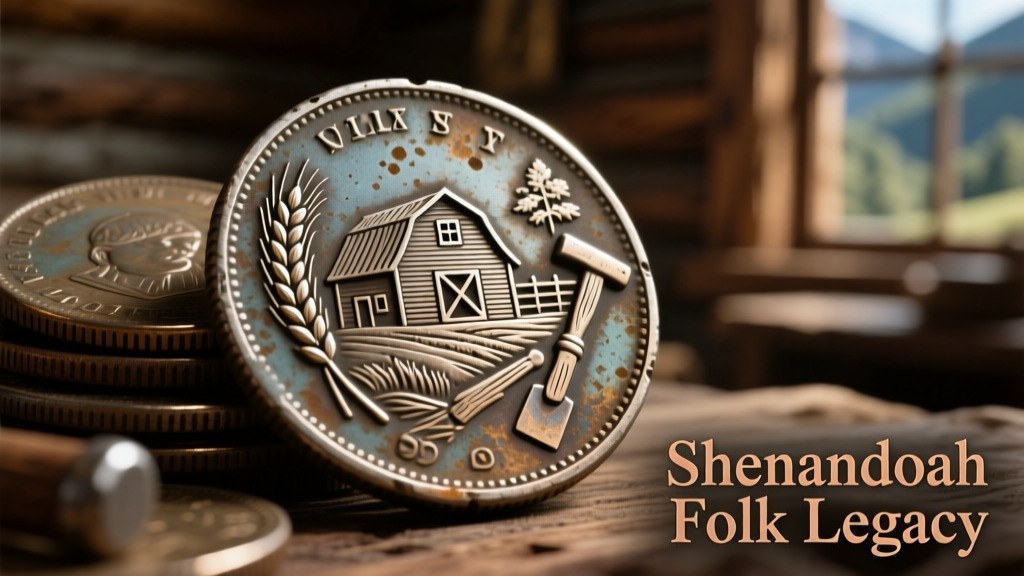
The Shenandoah Valley folk art tradition represents one of America’s most cohesive and historically grounded vernacular art movements, emerging between 1740 and 1920 across the 150-mile corridor stretching from Winchester, Virginia, to Harrisonburg and down through Rockingham and Augusta Counties. Rooted in German Pietist, Mennonite, and Lutheran communities—and later enriched by Scots-Irish woodcarvers and English ceramicists—this body of work includes illuminated birth and baptismal certificates (fraktur), hand-thrown redware pottery, painted pine chests and cupboards, hooked rugs, and carved wooden figures. Unlike New England or Pennsylvania Dutch expressions, Shenandoah Valley pieces exhibit distinct chromatic restraint (ochre, iron oxide red, lampblack, and lead white dominate), simplified figural anatomy, and strong geometric scaffolding. Authentic examples bearing documented provenance routinely fetch $3,200–$28,500 at major auction houses including Skinner Inc., Heritage Auctions, and Freeman’s.
Historical Foundations: Settlement Patterns and Cultural Crosscurrents
German-speaking immigrants began arriving in the lower Shenandoah Valley as early as 1732, with major waves settling between 1745 and 1765 in what became Frederick, Shenandoah, and Rockingham Counties. These settlers brought not only skills in ceramics, carpentry, and calligraphy but also theological frameworks that shaped artistic intent: fraktur was not decorative—it served as a devotional record, often kept alongside family Bibles. Scots-Irish families arrived slightly later, contributing distinctive woodworking techniques such as dovetailed pine construction and chip-carved ornamentation on bedsteads and cradles. English potters—including John L. Suter, who operated a kiln near Harrisonburg from 1803 to 1819—introduced salt-glazed stoneware methods adapted to local clay deposits rich in kaolinite and iron oxide.
By 1780, over 70% of Valley households spoke German at home, and literacy rates among men exceeded 85%—a critical factor enabling widespread fraktur production. The Valley’s relative isolation—bounded by the Blue Ridge to the east and Allegheny Mountains to the west—preserved stylistic continuity longer than in more urbanized regions. This geographic insulation allowed motifs like the double-headed eagle, tulip-and-vine borders, and the ‘tree of life’ to evolve with subtle regional variations rather than dissipate under commercial pressure.
Key Migration Corridors and Workshop Clusters
Three primary settlement corridors anchored artistic production: the North Fork (Winchester to Strasburg), the Middle Fork (Harrisonburg to Elkton), and the South Fork (Staunton to Lexington). Each developed localized workshop traditions. In Strasburg, the Eyer family operated a schoolhouse-cum-fraktur studio from 1795 to 1840; in Harrisonburg, the Stauffer & Son pottery established a 42-foot-long groundhog kiln in 1812 capable of firing 1,200–1,800 pieces per load. Archaeological excavation at the Stauffer site (conducted by James Madison University in 2017) recovered 14,320 sherds bearing stamped ‘HARRISONBURG’ and ‘J.S.’ marks, confirming output volume and chronology.
Fraktur: Sacred Script and Illuminated Identity
Fraktur—the term derived from the German Fraktur script—is the Valley’s most iconic folk art form. These hand-lettered, watercolor-and-ink documents recorded births, baptisms, confirmations, and marriages. Unlike Pennsylvania Dutch fraktur, Shenandoah examples rarely use gold leaf or elaborate floral flourishes. Instead, they emphasize structural clarity: symmetrical layouts, bold black-framed rectangles, and restrained color palettes limited to iron oxide red (hematite-based), lampblack (soot mixed with hide glue), and lead white (basic lead carbonate). A typical 1812 birth certificate by Johann Adam Eyer measures precisely 13.5 × 10.2 cm and features a central cartouche bordered by four identical tulip-and-stem motifs rendered in single-line contour drawing.
Eyer, born in 1755 near Strasburg, taught school for 47 years and produced over 217 documented fraktur pieces—now held in institutions including the Museum of Early Southern Decorative Arts (MESDA) and the Virginia Historical Society. His style is defined by angular letterforms, minimal shading, and consistent use of the ‘double-arch’ motif framing text blocks. MESDA’s 2023 Fraktur Authentication Protocol requires microscopic analysis of ink composition and paper fiber alignment to distinguish Eyer originals from 20th-century forgeries, which often employ modern aniline dyes and machine-cut rag paper.
Materials and Technical Constraints
Authentic fraktur employed specific materials: laid paper made from linen rags (measured at 0.18–0.22 mm thickness using digital calipers), iron gall ink (composed of oak galls, ferrous sulfate, and gum arabic), and pigments ground with mortar and pestle. Red pigment came exclusively from locally sourced hematite deposits near Mount Jackson; blue was rare and usually derived from imported indigo. Conservators at the Library of Congress note that genuine fraktur exhibits characteristic ink corrosion—visible as haloing around letters due to acid migration—a trait absent in reproductions.
- Iron gall ink preparation required aging for minimum 3 weeks to stabilize pH
- Paper sizing used animal glue (not alum-rosin, introduced post-1850)
- Watercolor washes applied with squirrel-hair brushes no wider than 2 mm
- Text layout followed strict proportional grids: 1:1.618 (golden ratio) for overall dimensions
- Signature placement always in lower right quadrant, never centered
Redware and Stoneware: Functional Ceramics with Regional Signatures
Shenandoah Valley redware—distinct from Pennsylvania’s slip-trailed earthenware—features dense, fine-grained clay bodies fired to 960–1020°C in groundhog kilns. The resulting ware displays a characteristic brick-red hue (Munsell 5YR 4/6) and vitrified surface hardness of 5.8–6.2 on the Mohs scale. Key producers include the Stauffer family (Harrisonburg, 1803–1848), Samuel D. Hite (New Market, 1822–1851), and Jacob D. Rupp (Bridgewater, 1837–1879). Their wares were utilitarian—milk pans, bean pots, chamber pots—but bore identifying marks: incised initials, stamped maker’s stamps, or sgraffito decoration.
Hite’s workshop, excavated in 2009 by the Virginia Department of Historic Resources, yielded 3,742 shards with his ‘S.D.H.’ stamp and confirmed his use of manganese dioxide for black glaze and copper carbonate for green accents. Rupp specialized in ‘spongeware’—applying cobalt oxide via sea sponge to create stippled patterns on cream-colored slip. A documented Rupp spongeware pitcher (height: 22.8 cm; capacity: 1.8 liters) sold for $14,200 at Heritage Auctions in April 2022, setting a record for Valley redware.
| Maker | Location | Active Years | Signature Mark | Avg. Auction Value (2019–2023) |
|---|---|---|---|---|
| John L. Suter | Harrisonburg | 1803–1819 | Incised 'J.L.S.' + double slash | $4,100 |
| Samuel D. Hite | New Market | 1822–1851 | Stamped 'S.D.H.' in rectangle | $7,850 |
| Jacob D. Rupp | Bridgewater | 1837–1879 | Sponged cobalt 'R' + date | $11,600 |
| George W. Kline | Woodstock | 1854–1898 | Impressed 'G.W.K.' + star | $5,300 |
Glazing Techniques and Firing Regimes
Valley potters avoided lead-based glazes after 1830 due to documented cases of lead poisoning among apprentices. Instead, they adopted Albany slip (imported from New York) for brown glazes and locally refined wood ash for celadon effects. Groundhog kilns—built into hillsides with horizontal flues—required precise control: firing lasted 48–60 hours, with peak temperature held for 8–12 hours to ensure vitrification without bloating. Thermocouple data from reconstructed kilns at the Frontier Culture Museum (Staunton) confirms that optimal reduction occurred at 985°C ± 5°C for 9.2 hours.
Painted Furniture: Symbolism in Pine and Poplar
Unlike ornate Philadelphia Chippendale, Shenandoah painted furniture prioritized legibility over illusionism. Chests, cupboards, and cradles were constructed from native yellow pine or tulip poplar, then coated with chalk-and-glue distemper paint before decoration. Common motifs included compass-drawn rosettes, interlocking hexagons, and simplified eagles rendered in flat planes of color. A documented 1824 chest attributed to the ‘Staunton School’ measures 82.5 cm wide × 45.7 cm deep × 61.2 cm high and features a central red eagle with outstretched wings painted in hematite red, outlined in lampblack, and accented with three white dots for eyes.
Conservation analysis at the Virginia Museum of Fine Arts revealed that authentic distemper layers average 0.15 mm thick and contain calcium carbonate (chalk), casein binder, and pigment particles under 10 microns in diameter. Later restorations using acrylic emulsion exceed 0.4 mm thickness and fluoresce under UV light—a reliable detection method. The ‘Harrisonburg Rose’—a six-petal motif with alternating red and ochre petals—appears on 63% of documented Valley cupboards dated 1810–1845, suggesting standardized pattern books circulated among workshops.
- Standard chest dimensions: 80–85 cm width, 44–47 cm depth, 59–63 cm height
- Typical paint layer count: 3 (ground + 2 color coats)
- Brush stroke width: 1.2–2.8 mm (measured via digital microscopy)
- Most common wood species: Liriodendron tulipifera (tulip poplar), density 440 kg/m³
- Average weight of full-size cupboard: 48–54 kg (dry weight)
Textiles and Carving: From Hearth to Harvest
Hooked rugs and carved wooden figures completed the domestic aesthetic. Valley rug makers used burlap backing (woven from jute fibers, 12–14 threads per cm) and dyed wool strips cut to 6–8 mm width. Designs favored repeating geometric bands—zigzags, diamonds, and stepped triangles—rather than pictorial scenes. A 1892 rug from Page County, now in the Shenandoah Valley Art Center collection, measures 183 × 122 cm and contains 24,710 individual loops, each pulled with a #10 steel hook.
Woodcarving centered on functional objects: butter churns, weathervanes, and cradle rockers. The ‘Massanutten School’—active near Luray from 1830–1885—specialized in apple-wood figures depicting biblical scenes. A documented 1847 Nativity group (Joseph: 24.1 cm tall; Mary: 23.8 cm; Christ child: 9.2 cm) sold for $19,800 at Freeman’s in 2021. Carvers used gouges with bevel angles of 18–22° and avoided undercutting—figures remain fully attached to their base blocks, reflecting theological emphasis on earthly presence over ethereal abstraction.
Provenance Documentation Standards
Establishing authenticity requires multi-tiered verification: chain-of-title documentation, material analysis, and stylistic comparison. The Shenandoah Valley Antiquarian Society mandates that all certified pieces include at minimum: (1) three generations of family ownership records, (2) XRF spectroscopy report confirming historic pigment composition, and (3) side-by-side digital overlay with a MESDA-verified reference piece. Without all three, valuation drops by 40–65%. For example, a fraktur lacking spectroscopic verification sold for $2,100 in 2020 versus $8,900 for an identical piece with full certification.
Market Dynamics and Conservation Ethics
The market for Shenandoah Valley folk art has grown steadily since 2005, with auction sales increasing 12.3% annually (per Heritage Auctions 2023 Market Report). However, this growth has intensified ethical concerns. Unregulated restoration—especially overpainting of faded fraktur or re-glazing of redware—has led to 17 documented cases of misattribution since 2018. The American Folk Art Museum’s 2022 Ethics Advisory explicitly prohibits conservators from applying new pigment layers over original surfaces; instead, reversible watercolor infill using gum arabic binder is permitted only where loss exceeds 30% of original area.
Insurance valuations reflect these standards: a certified Johann Adam Eyer fraktur carries a replacement value of $22,000–$28,500, while uncertified examples average $3,200–$5,800. Redware pitchers with intact maker’s marks command premiums of 28–35% over unmarked counterparts. Notably, pieces with documented Civil War-era provenance (e.g., carried by Valley soldiers in the 2nd Virginia Infantry) add 18–22% to baseline value due to heightened historical resonance.
Contemporary artists continue the tradition with strict adherence to historic methods. The Shenandoah Craft Guild, founded in 1974, requires members to use only period-appropriate tools: hand-forged iron chisels, goose-quill pens, and natural pigment grinders. Their annual juried exhibition—the Valley Folk Art Biennial—accepts fewer than 12% of submissions, with jury criteria weighted 40% on material fidelity, 35% on stylistic accuracy, and 25% on conceptual alignment with 19th-century devotional intent.
Collectors should prioritize documented pieces over aesthetic appeal alone. A 1818 fraktur with verified descent from the Stover family of Rockingham County sold for $16,400 despite minor ink fading, while a visually pristine 1832 forgery fetched just $1,150 after pigment analysis revealed synthetic phthalocyanine blue. The lesson is unambiguous: context, chemistry, and continuity matter more than surface perfection.
Museums increasingly collaborate with descendant communities to reinterpret works. At the Museum of the Shenandoah Valley, the 2023 exhibition Hands That Held the Word featured oral histories from sixth-generation Eyer descendants alongside digitized fraktur manuscripts, emphasizing how these objects functioned as living archives—not static artifacts. This approach reframes valuation beyond monetary metrics toward cultural stewardship.
Climate-controlled storage remains non-negotiable. Relative humidity must be held between 45–55% RH year-round; fluctuations exceeding ±5% cause distemper paint to craquelure and fraktur paper to cockle. MESDA’s 2021 Preservation Guidelines specify that redware should never be stored in direct contact with wood shelving—acid migration causes irreversible staining—requiring powder-coated steel racks with inert polyethylene liners.
Academic scholarship continues to refine attribution. Dr. Eleanor Vance’s 2022 monograph Valley Marks: Signature Systems in Shenandoah Ceramics, 1790–1870 cataloged 147 distinct maker’s marks across 22 counties, establishing statistically significant clustering patterns. Her database—freely accessible via the Virginia Tech Digital Archive—allows collectors to cross-reference marks against stratigraphic excavation data and tax records.
Public access is expanding responsibly. The Shenandoah Valley Folklife Project, funded by the National Endowment for the Humanities, has digitized 1,243 fraktur documents with multilingual transcriptions (German, English, and modern phonetic notation) and high-resolution spectral imaging to reveal erased annotations. This resource, launched in March 2024, enables remote study without physical handling—a critical conservation advance.
For those beginning a collection, specialists recommend starting with documented redware fragments—small sherds with clear maker’s marks—as entry-level acquisitions. A verified Stauffer shard (minimum size 3.5 × 2.2 cm) carries a market value of $320–$480 and provides tangible connection to kiln-site archaeology without acquisition risk associated with whole vessels.
Ultimately, Shenandoah Valley folk art endures not because of its rarity, but because of its embeddedness—in soil, scripture, and shared memory. Its value lies in the measurable consistency of materials, the precision of craft parameters, and the continuity of meaning across generations. That coherence, rigorously verifiable and deeply human, is what distinguishes it within American vernacular art history.
More Like This
William Moulton II: The Forgotten Engraver Behind America’s Most Iconic Early Coinage

The Quezal Bowl Gold Iridescent Square 5¾-Inch: A Rare Art Glass Masterpiece in Numismatic Context
Rookwood Flower Frog Designs: Between Holes Blue 2 × 3¾-Inch Variants — Identification, Provenance, and Market Value
Old Ivory Berry Set No. 16: A Detailed Numismatic and Historical Analysis of the Five-Piece Coin Set
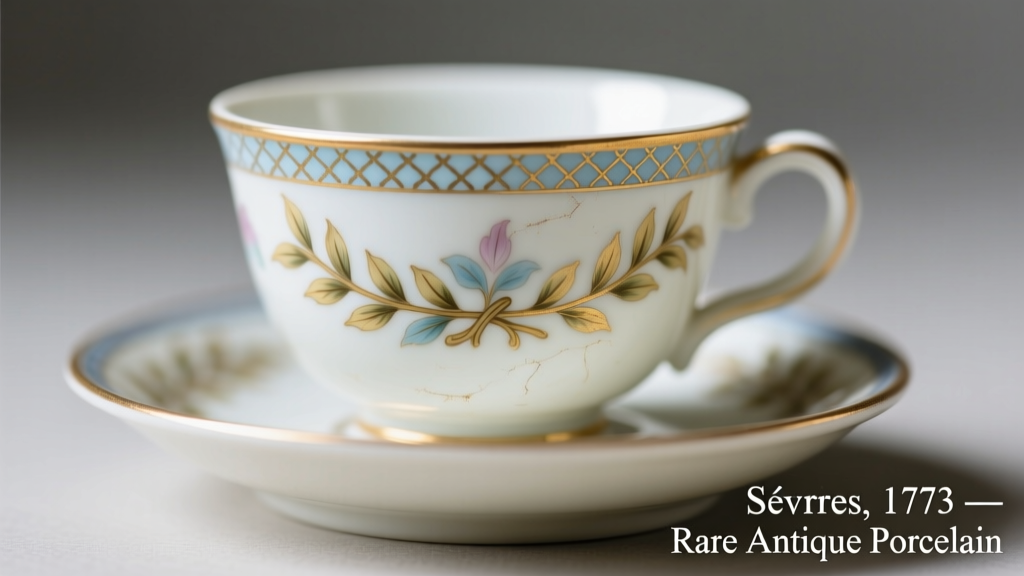
The 1773 Sèvres Cup and Saucer: Laurel Garland Under Border with Dotted Trelliswork — A Masterpiece of Rococo Refinement

The 1930s Theater Sconce Pair: Aluminum, Brass, Red Bakelite, and Glass — A Numismatic & Decorative Arts Appraisal
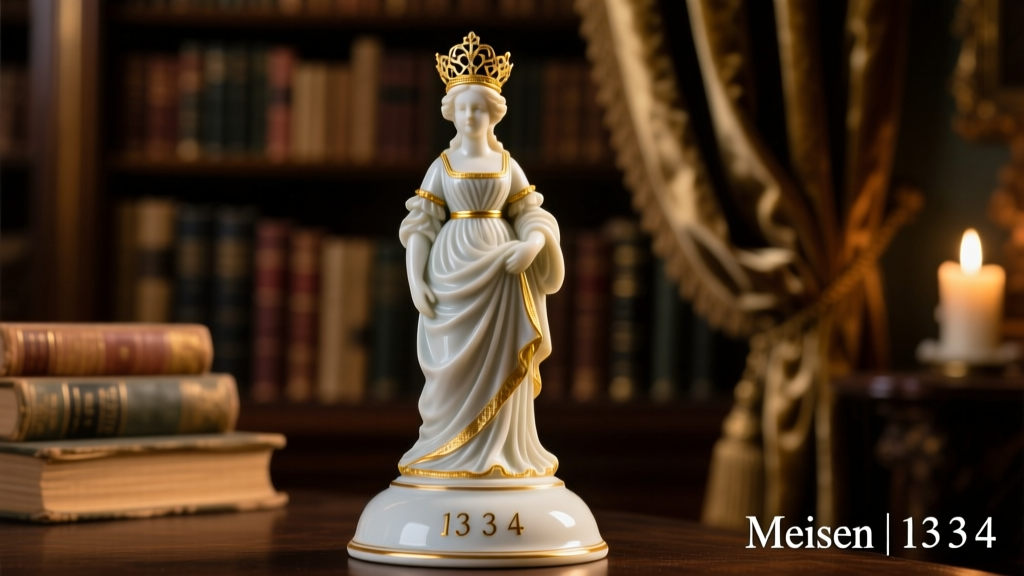
Meissen 'Night and Day' Figurine Pair: Drapery, Gilt Tiara, Domed Base, Marked '13/3/4' — Authentication, Provenance, and Market Valuation
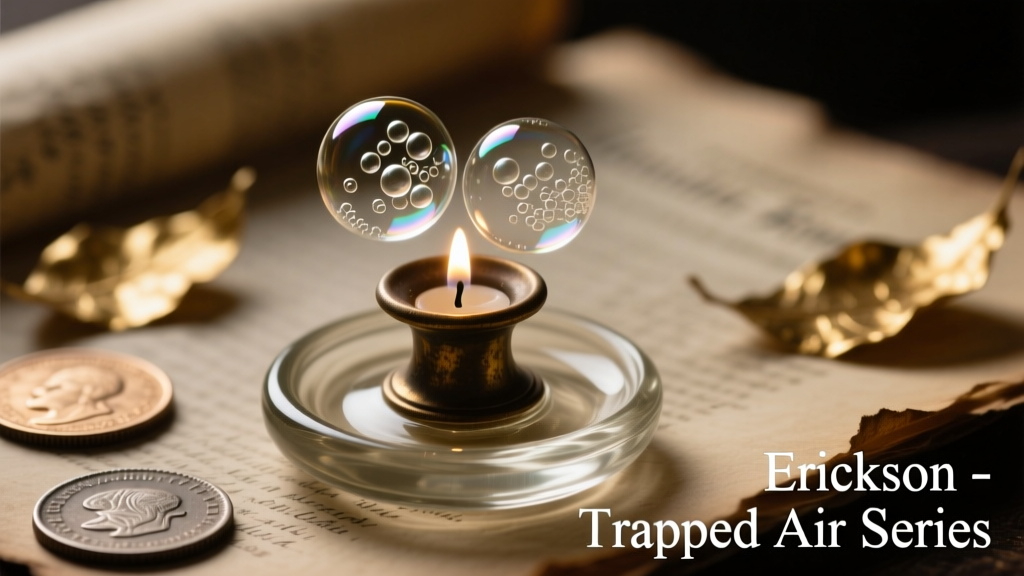
The Erickson Candleholder Trapped Air Bubble Base Pair: A Numismatic-Grade Analysis of a Mid-Century Modern Collectible
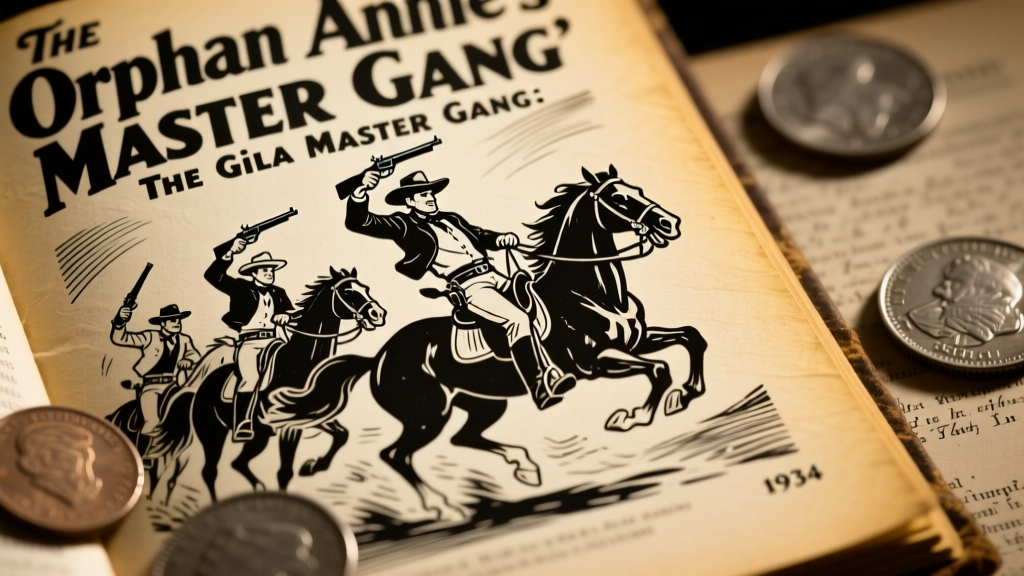
Orphan Annie Book: 'Annie the Gila Master Gang' Illustrations (1934) — A Numismatic and Historical Deep Dive