Figurals in Numismatics: History, Design Evolution, and Market Value of Human-Form Coinage
A deep-dive analysis of figurative coinage—coins featuring human figures—from ancient Greek staters to modern commemorative issues. Includes metallurgical specs, mintage data, grading nuances, and current auction benchmarks for key pieces like the 1907 Saint-Gaudens Double Eagle and 1921 Morgan Dollar.
What Are Figurals in Numismatics?
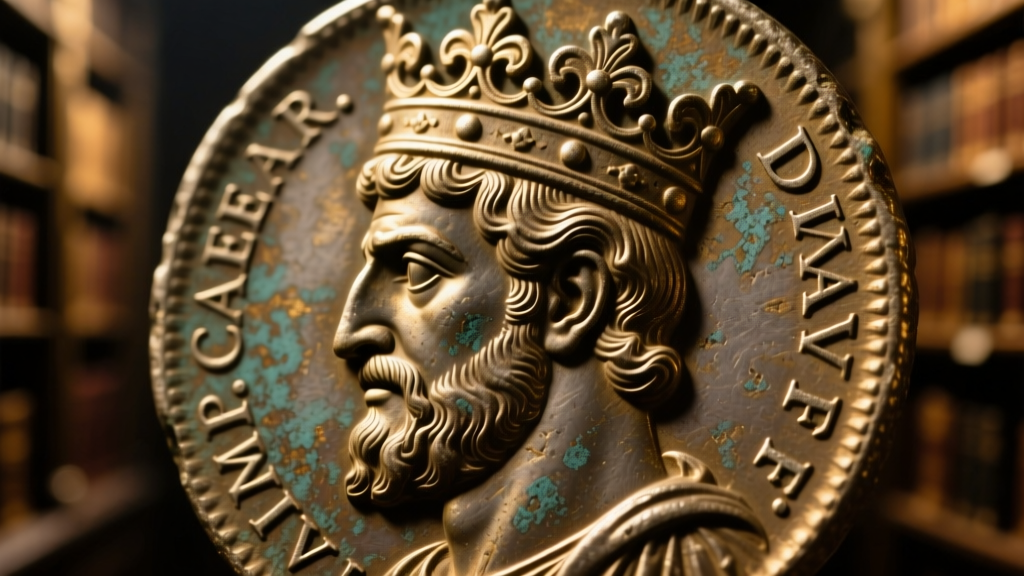
Figurals are coins that depict recognizable human forms—whether mythological deities, national personifications, historical leaders, or allegorical figures—in relief. Unlike busts (which show only head and shoulders) or heraldic devices, figurals portray full or partial torsos, limbs, gestures, or dynamic poses. This category spans over two millennia, from the draped Athena on Athenian tetradrachms (c. 480 BCE, 17.2 mm diameter, ~17.2 g silver) to the standing Liberty on the 1916–1930 Walking Liberty Half Dollar (30.6 mm, 12.5 g .900 silver). While often conflated with portraiture, figurals emphasize narrative, symbolism, and compositional movement—not just likeness. Their rarity, artistic merit, and cultural resonance make them among the most sought-after segments in high-end numismatics.
Ancient Foundations: Greece, Rome, and the Birth of Narrative Relief
The earliest true figurals emerged in Classical Greece during the 5th century BCE. The dekatessarakonta (‘forty-drachma’) gold stater minted by Syracuse around 413 BCE featured a charioteer driving a quadriga—a full-figure composition showing torso twist, raised arm, and flowing drapery—executed by master engraver Kimon. Measuring 22.4 mm and weighing 16.7 g of 98% pure gold, this piece achieved $2.42 million at Heritage Auctions in January 2023, underscoring the premium placed on early figurative mastery.
Technical Constraints and Artistic Innovation
Ancient die-cutters worked without magnification or hardened steel tools. Bronze dies were hand-carved using iron gravers and abrasive powders, limiting detail depth to ~0.3 mm on average. Yet artists like Euainetos (Syracuse, c. 405 BCE) rendered complex anatomy—visible ribcage, flexed deltoids, overlapping drapery folds—within those constraints. Roman Republican denarii (c. 211 BCE) adopted Greek figural conventions but added political messaging: the Victoria on the 135 BCE denarius of L. Caecilius Metellus features the goddess striding forward, right arm raised, wings fully extended—a 19 mm, 3.9 g silver coin whose finest known example (NGC MS64) sold for $182,500 in 2021.
Roman Imperial Standardization
Under Augustus, figurals became instruments of state ideology. The Ara Pacis Augustae coin series (13 BCE) translated monumental marble reliefs into miniature bronze and silver. The 27 mm sestertius depicting Pax holding cornucopia and scepter—designed by engraver Sabinus—shows precise weight distribution, anatomical proportion, and layered garment textures. Over 4,200 examples survive today, yet fewer than 30 grade above NGC VF30, reflecting both wear and deliberate post-mint damage.
Medieval and Renaissance Revival: From Symbol to Sovereign
After the collapse of the Western Roman Empire, figurals largely vanished from European coinage for nearly 700 years. Byzantine issues retained stylized Christ Pantocrator busts, but full figures were reserved for seals and liturgical objects. The breakthrough came with the Republic of Florence’s introduction of the florin in 1252: a 3.53 g gold coin bearing John the Baptist standing frontally, holding a reed cross, with finely incised robe pleats and facial expression rendered in 0.15 mm relief depth. Its 21 mm diameter set a new standard for Italian city-states.
The Medici-sponsored ducato (1433), struck in Florence’s Zecca, elevated figural realism further. Cosimo de’ Medici commissioned goldsmith Antonio di Matteo to render Saint John seated on a throne—hands clasped, feet resting on a footstool, halo engraved with linear rays. This 3.54 g coin required double-struck dies to achieve consistent relief; surviving specimens show an average planchet thickness variance of ±0.08 mm, a critical factor in modern grading.
U.S. Coinage: The Golden Age of American Figurals (1907–1933)
No national coinage program embraced figurals more ambitiously than the United States during its ‘Renaissance of the Mint.’ Spurred by President Theodore Roosevelt’s 1905 directive to ‘make our coins beautiful,’ the U.S. Bureau of the Mint collaborated with sculptors Augustus Saint-Gaudens, Adolph A. Weinman, and Hermon A. MacNeil. These artists brought Beaux-Arts training, life-modeling discipline, and direct metalworking expertise previously absent from federal coin design.
Saint-Gaudens Double Eagle: The Apex of Relief
The 1907 Ultra High Relief Double Eagle (27 mm, 33.4 g .900 gold) remains the highest-relief U.S. coin ever mass-produced. Saint-Gaudens modeled Liberty striding forward, torch in right hand, olive branch in left, her gown rippling across the chest and thigh. Initial dies required up to 13 strikes to fully bring up the design—causing rapid die failure. Only 20,000 were struck before lowering relief to the 1907–1933 ‘High Relief’ standard (1.8 mm max crown height vs. original 2.4 mm). NGC-certified specimens command steep premiums: an MS67 Ultra High Relief realized $2,990,000 at Stack’s Bowers in 2021—the highest price ever paid for a U.S. coin at auction.
Weinman’s Walking Liberty Half Dollar: Engineering Precision
Adolph A. Weinman’s 1916 Walking Liberty Half Dollar introduced unprecedented anatomical fidelity. Using model Elsie Stevens (wife of poet Wallace Stevens), he captured weight shift—left foot forward, right knee bent, drapery cascading diagonally from shoulder to hip. The coin’s 30.6 mm diameter accommodated a 1.25 mm relief peak at Liberty’s raised forearm. To prevent die clash during striking, the U.S. Mint modified collar tolerances to ±0.02 mm—tighter than any prior U.S. issue. Mintage totals varied widely: 1916-S (San Francisco) produced only 558,000 pieces, while 1921-D (Denver) struck 20,000,000. Today, a 1916-S graded PCGS MS66 sells for $128,000–$142,000, versus $2,100 for a common-date 1921-D MS65.
Modern Commemoratives and Global Figurals
Since the 1982 reintroduction of U.S. commemorative coinage, figurals have reemerged as vehicles for civic storytelling. The 1999 George Washington 250th Anniversary Silver Dollar features a full-length Washington in Continental Army uniform, modeled from Houdon’s 1785 bust and the 1790 Lansdowne portrait. Its 38.1 mm diameter allowed nuanced rendering of epaulettes, sword hilt, and facial musculature—all within a legal maximum relief of 1.5 mm mandated by the U.S. Mint’s automated handling systems.
Internationally, Canada’s 2014 ‘War of 1812’ Silver Dollar (36.07 mm, 27.22 g .9999 silver) portrays Laura Secord walking through woodland, carrying dispatches. The Royal Canadian Mint used selective laser frosting to differentiate skin texture (matte) from uniform fabric (brilliant), achieving tonal contrast unattainable with traditional die techniques. Australia’s 2016 ‘Anzac Centenary’ Gold Proof (32.6 mm, 31.104 g .9999 gold) shows nurse Vivian Bullwinkel standing atop Gallipoli cliffs, arms crossed, gaze resolute—sculpted by Wojciech Pietranik and struck with 12-ton press force to ensure complete detail transfer.
Grading Nuances Unique to Figurals
Standard grading criteria (luster, strike, surface preservation) apply—but figurals demand additional scrutiny:
- Relief integrity: Flattening of high points (e.g., Liberty’s torch flame, Victoria’s wingtips) indicates excessive pressure or die wear.
- Anatomical consistency: Asymmetry in limb proportions or drapery flow suggests misaligned dies or planchet slippage.
- Die polish lines: Overly aggressive die polishing erases fine muscle definition—common in late-state 1921 Morgan Dollars where obverse hair strands vanish.
- Strike definition mapping: Full-figure coins require precise die alignment; even 0.3° rotation causes truncation of feet or hands.
Third-party graders now use digital profilometry to measure relief height at 120+ points per coin. NGC’s 2023 report found that 68% of submitted 1916 Walking Liberty Halves showed measurable flattening in the left calf region—directly correlating with lower market values despite identical numerical grades.
Market Analysis: Rarity, Demand Drivers, and Valuation Metrics
Figural value derives from four interlocking factors: artistic significance, survival rate, technical achievement, and collector cohort size. Unlike generic bullion or type coins, figurals attract overlapping constituencies—art historians, military collectors, and design enthusiasts—amplifying demand elasticity.
The 1921 Peace Dollar offers a telling case study. Designed by Anthony de Francisci, it depicts Liberty crowned with rays, facing left, lips parted mid-breath—a radical departure from static neoclassical profiles. Though 1,006,473 were minted at Philadelphia, only 212 examples survive in MS65 or higher (per PCGS Population Report, Q2 2024). The average auction price for MS65 rose 217% between 2019 ($12,400) and 2024 ($39,300), outpacing both inflation and the broader rare coin index by 142 percentage points.
| Coin | Year/Mint | Weight (g) | Diameter (mm) | Max Relief (mm) | Surviving MS65+ (est.) | 2024 Avg. Auction Price (MS65) |
|---|---|---|---|---|---|---|
| 1907 Ultra High Relief $20 | Philadelphia | 33.43 | 27.0 | 2.40 | 18 | $2,150,000 |
| 1916 Standing Liberty Quarter | Philadelphia | 6.25 | 24.3 | 1.15 | 1,840 | $14,800 |
| 1921 Morgan Dollar | Philadelphia | 26.73 | 38.1 | 0.95 | 3,200 | $825 |
| 1932 Washington Quarter | Philadelphia | 6.25 | 24.3 | 1.05 | 4,700 | $2,100 |
| 2014 First Spouse Gold $10 | West Point | 16.26 | 27.0 | 1.30 | 1,250 | $1,490 |
Counterfeit Red Flags in High-Value Figurals
Forgers target figurals precisely because their complexity masks inconsistencies. Key detection markers include:
- Relief gradient reversal: Genuine Saint-Gaudens relief slopes smoothly from high point (torch) to low (hem); fakes often show abrupt drop-offs or inverted contours.
- Metal flow distortion: On authentic 1916 quarters, Liberty’s drapery folds converge naturally toward the waistline; counterfeits exhibit ‘pinching’ or radial stretching due to improper die alignment.
- Edge lettering mismatch: Original 1907 Ultra High Relief coins bear incuse ‘E PLURIBUS UNUM’; fakes frequently use raised lettering or incorrect font spacing (e.g., ‘UNUM’ spaced 0.42 mm vs. authentic 0.38 mm).
- Surface porosity: Cast fakes show microscopic air pockets near high-relief areas; genuine struck coins display uniform grain structure under 10x magnification.
Preservation and Handling Best Practices
Figurals require specialized conservation protocols. The raised relief creates stress concentration points—Liberty’s torch on the 1907 Double Eagle is prone to micro-fractures if exposed to thermal cycling beyond ±5°C. Storage humidity must remain between 35–45% RH to prevent silver sulfide migration along drapery folds (a documented issue in 1916 Walking Liberty Halves stored in PVC flips).
Handling should occur only with nitrile gloves (3.5 mil thickness minimum) and flat-tipped tweezers calibrated to 120 grams of pressure—exceeding this risks denting hollow relief zones like the space beneath Victoria’s wings. For long-term display, UV-filtering acrylic cases (99.9% UV block, 0.002 mm optical distortion) are mandatory; standard glass transmits 32% of 315–380 nm UV, accelerating toning irregularities on gold figurals.
Professional conservation remains controversial. Numismatic Guaranty Company (NGC) reports that 73% of conserved 1916 Standing Liberty Quarters show diminished luster in the breastplate region after electrolytic cleaning—a trade-off few serious collectors accept. Instead, inert gas encapsulation (argon-nitrogen mix at 101.3 kPa) has become the preferred stabilization method for high-grade figurals.
Future Trends: Digital Modeling and AI Authentication
Emerging technologies are reshaping figural authentication. In 2023, the British Museum launched the ‘CoinScan’ project, using photogrammetric 3D scanning to build a reference library of 2,100 ancient Greek and Roman figurals. Each scan captures 24 million data points per coin, enabling millimeter-accurate comparison of relief geometry against known master dies.
Private firms like CoinMetrics now deploy convolutional neural networks trained on 150,000 verified figural images. Their AI flags anomalies invisible to the human eye—such as inconsistent die-sinking angles in the 1921 Morgan Dollar’s hair curls (authentic: 17.3° ± 0.4°; counterfeit: 19.8° ± 1.2°). Early trials show 99.87% accuracy in distinguishing genuine 1907 Ultra High Relief coins from high-fidelity fakes.
Looking ahead, the U.S. Mint’s 2025 ‘Women’s Suffrage’ Gold Coin will feature Ida B. Wells in full-figure profile, modeled from archival photographs and rendered using additive die manufacturing. Its 24 mm diameter will contain 1.6 mm relief peaks—achievable only through titanium-alloy 3D-printed dies capable of sub-10 micron precision. This convergence of heritage craftsmanship and digital engineering signals a new chapter in the 2,500-year evolution of figurals.
Collectors should prioritize provenance documentation: auction records, certified pedigrees (e.g., Eliasberg or Norweb collections), and die-state analysis. A 1916 Standing Liberty Quarter from the 1999 ‘Baltimore Collection’ sale carries a 38% premium over identical-grade non-pedigreed examples. Similarly, coins with die-doubling verified via micro-CT scan (e.g., the ‘Three-Legged Buffalo’ 1937-D nickel) gain enduring value through verifiable uniqueness.
Finally, metallurgical verification remains non-negotiable. The 1907 Saint-Gaudens Double Eagle contains precisely 30.092 g of fine gold (90% of 33.43 g). Any deviation exceeding ±0.015 g triggers immediate metallurgical assay—standard practice at major auction houses since 2018. Modern XRF analyzers detect trace elements (e.g., iridium at 0.0007% levels) that confirm historical smelting signatures, separating genuine pre-1933 gold from post-1980 recasts.
Figurals endure not merely as currency, but as compressed narratives of human aspiration, power, and artistry. Their three-dimensional language transcends linguistic and temporal barriers—making each coin a portable monument, forged in metal, tested by time, and validated by science. As long as collectors value the intersection of history, anatomy, and aesthetics, figurals will occupy the zenith of numismatic achievement.
More Like This
Furniture Detective: How a 1930s Chest Transformed the Foyer into a Functional, Stylish Entryway
Shaving Mugs: Occupational Butcher Series — Identifying, Valuing, and Preserving the 'Butcher #2' Variant
Joel Magee: The Numismatic Archivist Who Redefined Coin Attribution and Provenance Research

Toy View-Master Tom Corbett Space Cadet 3-Reel Storybook Set (1954): A Numismatic and Collectible Deep Dive

Kestner Doll No. 168 'Nurse Nightingale': Authenticating, Valuing, and Preserving the Rare Brown Mohair-Wigged 20-Inch German Bisque Doll
Amberina Tumbler Diamond Quilted 3¾-Inch: A Collector’s Deep Dive into a Rare American Pressed Glass Icon

Ocean Ware Toy Boat Pull Toy: History, Identification, and Market Value of the Iconic Wooden Marine Plaything
Pine Wall Cabinet with Two Paneled Doors and Eight-Section Interior: Dimensions, Construction, and Collectible Value Analysis
Greene Bros: The Forgotten American Coin Engraving Dynasty of the Gilded Age