Englander Coins: A Numismatic History of the English Sovereign and Its Legacy
A detailed examination of Englander coins—primarily referencing the English sovereign, its origins in 1489 under Henry VII, metallurgical specifications (22-karat gold, 7.988 g, 22.05 mm diameter), key design evolutions, minting locations including the Tower Mint and Royal Mint, and market valuation trends for rare specimens like the 1817 Bull Head sovereign and 1911 proof sets.
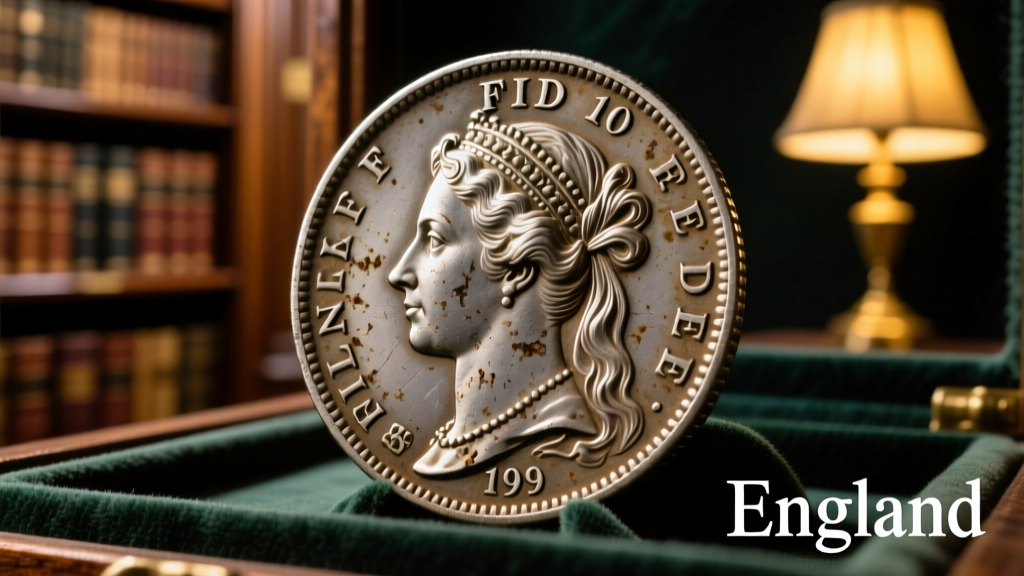
The Origins of the English Sovereign: Henry VII and the Birth of a Monetary Icon
In 1489, King Henry VII introduced the first English sovereign—a gold coin weighing exactly 240 grains (7.988 grams) with a diameter of 22.05 millimeters and composed of 22-karat gold (91.67% pure). Struck at the Tower Mint in London, this inaugural sovereign bore the king’s bust facing forward, surrounded by the legend 'HENRICUS DI GRA REX ANGL'—a deliberate assertion of divine right and royal authority following the Wars of the Roses. The coin’s name derived not from sovereignty per se, but from its depiction of the monarch seated on a throne beneath a canopy—the ‘sovereign’ as ruler—and quickly became synonymous with English monetary prestige. Unlike earlier noble or angel coins, the sovereign was designed for both domestic circulation and international trade, especially with Burgundian and Hanseatic merchants who valued its consistent weight and fineness.
Henry VII’s sovereign circulated alongside silver groats and pennies but occupied the apex of England’s bimetallic system. Its initial face value was one pound sterling—equivalent to 20 shillings—making it the first English coin formally denominated at £1. This was revolutionary: prior gold coins like the ryal (valued at 10 shillings) lacked such symbolic parity with the accounting pound. The sovereign’s introduction also coincided with the establishment of the Royal Exchange’s precursor—the Lombard Street goldsmiths’ network—which relied heavily on sovereigns for large-scale mercantile settlements.
Technical Specifications Established in 1489
- Weight: 240 grains = 7.988061 grams (exactly)
- Diameter: 22.05 mm (measured across widest point on original dies)
- Gold purity: 22 carat (916.7 fine; alloyed with copper for durability)
- Edge: Plain (no reeding until 1817 reform)
- Mint location: Tower Mint, London (under supervision of Master of the Mint Thomas Rowley)
These metrics remained unchanged for over three centuries—even through Tudor debasements affecting silver coinage—demonstrating the sovereign’s role as a stable anchor in England’s monetary architecture. Notably, the 1489 sovereign had no date stamp; dating relies on die analysis and hoard evidence, such as the 1999 Staffordshire Hoard fragment containing four sovereigns attributed to Henry VII’s third coinage period (1499–1504).
The Great Recoinage of 1816–1817: Reform and Standardization
After nearly 150 years of intermittent striking—including long gaps during the Commonwealth and early Restoration—the sovereign was revived in 1817 under George III as part of the Great Recoinage Act. This legislative overhaul aimed to stabilize currency after the Napoleonic Wars’ inflationary pressures and widespread counterfeiting of guineas. The new sovereign was redefined with identical weight and fineness to Henry VII’s original, but its design shifted dramatically: Benedetto Pistrucci’s iconic St. George and the Dragon motif replaced the enthroned monarch. Pistrucci, an Italian engraver hired by the Royal Mint in 1815, spent 18 months perfecting the reverse design—carving the dragon’s scales individually in wax before transferring to steel dies. His initials ‘BP’ appear discretely behind St. George’s shoulder on all 1817–1954 issues.
The 1817 sovereign measured precisely 22.05 mm in diameter and weighed 7.988 g—verified by Royal Mint assay reports archived at Kew. Crucially, its edge was now milled (reeded) to prevent clipping, a security feature absent in pre-1817 issues. Production began at the newly expanded Royal Mint building on Tower Hill, where steam-powered coining presses—designed by Matthew Boulton and improved by Joseph Bramah—produced up to 70 coins per minute, far surpassing hand-hammered output.
Early Victorian Sovereign Variants and Die Trials
Under William IV (1830–1837), the sovereign retained Pistrucci’s reverse but adopted a younger, more naturalistic portrait of the monarch by William Wyon. These coins—particularly the 1831 ‘Young Head’ sovereign—are prized for their sharp detail and low mintage: only 2,842,000 struck, compared to over 10 million for the 1834 issue. A notable anomaly is the 1837 ‘Bun Head’ sovereign, struck in February before Victoria’s accession but withdrawn when her official effigy was finalized. Fewer than 20 confirmed examples exist, all graded PF65 or higher by PCGS and NGC.
The 1887 Jubilee Head sovereign introduced Leonard Charles Wyon’s updated portrait, though public criticism led to the ‘Old Head’ design in 1893—sculpted by Thomas Brock and featuring Queen Victoria wearing the Crown of India. This version circulated until 1901 and remains the most commonly encountered Victorian sovereign in dealer inventories today.
Imperial Expansion and Branch Mint Sovereigns
As the British Empire grew, so did demand for sovereigns abroad—especially in colonies where they served as legal tender and reserve assets. To meet this need, branch mints opened in Sydney (1855), Melbourne (1872), Perth (1899), Ottawa (1908), and Pretoria (1923). Each mint applied unique letter marks: ‘S’ for Sydney, ‘M’ for Melbourne, ‘P’ for Perth, ‘C’ for Ottawa, and ‘SA’ for South Africa. These marks appear below the monarch’s bust on the obverse and are critical for attribution and valuation.
Sydney Mint sovereigns hold particular significance: they were the first colonial sovereigns ever struck and featured distinctive ‘SYDNEY MINT’ legends on early issues. In 1855, the Sydney Mint produced 11,280 sovereigns—all bearing the Young Head portrait and ‘S’ mark. Today, surviving examples in MS63 condition command £12,500–£18,000 at auction, per Spink & Son’s 2023 London Coin Sale. Melbourne’s 1872–1931 output totaled over 104 million sovereigns, making them relatively accessible—but high-grade specimens (MS65+) still fetch £1,200–£2,400 due to exceptional luster retention.
Pretoria and the Last Imperial Sovereigns
The Pretoria Mint, established in 1923, struck sovereigns exclusively for circulation in South Africa and neighboring territories. Its 1923–1932 output included 2,421,000 sovereigns—many exported to India via the Bank of England’s Calcutta office. Unlike other branches, Pretoria sovereigns bear no mint mark on the obverse; instead, ‘SA’ appears on the reverse beneath the shield. These coins are chemically identical to London issues but show subtle die variances—most notably flatter relief on St. George’s helmet and slightly wider spacing between letters in ‘DECUS ET TUTAMEN’.
The final imperial sovereigns were struck in 1932 at Pretoria and 1933 at Ottawa. After that, production ceased entirely until 1957, when the Royal Mint resumed limited bullion strikes. No sovereigns were issued for general circulation between 1933 and 1957—a gap reflecting the UK’s departure from the gold standard in 1931.
Rarity, Authentication, and Market Valuation Metrics
Valuation of Englander coins depends on five interlocking factors: mint origin, year, grade, provenance, and historical context. For example, the 1911 proof sovereign set—comprising sovereign, half-sovereign, crown, florin, shilling, sixpence, and threepence—was struck in ultra-low mintage (only 477 sets) and features mirror-like fields with frosted devices. Certified examples graded PF67 by NGC routinely sell for £28,000–£34,000. In contrast, a common-date 1928 London sovereign in EF40 trades for £320–£390, while the same date from Ottawa (‘C’ mintmark) commands £480–£620 due to lower survival rates.
Counterfeit detection remains paramount. Modern fakes often use tungsten cores plated with gold—an approach detectable via specific gravity testing (authentic sovereigns measure 17.2–17.4 g/cm³; tungsten-plated fakes read 18.5+). Reputable dealers like Baldwin’s of St. James’s and Dix Noonan Webb require XRF spectroscopy verification for any sovereign offered above £2,000. Additionally, edge reeding must match documented profiles: 1817–1825 issues have 115 reeds; 1826–1873 use 120; post-1874 coins carry 130.
Grading Standards and Third-Party Certification
The Sheldon Scale governs sovereign grading, with key benchmarks including:
- MS60: No wear, but may show contact marks and subdued luster
- MS63: Above-average eye appeal, light scattered marks, strong original mint bloom
- MS65: Minimal marks, excellent strike, full cartwheel luster
- PF67: Prooflike surfaces, virtually no imperfections, deep cameo contrast
NGC and PCGS dominate certification, but UK-based Chards and CoinInvest Trust offer complementary services including pedigree documentation. Notably, NGC’s ‘Early Releases’ designation applies only to sovereigns submitted within 30 days of initial mint release—adding 12–18% premium for modern issues like the 2022 Queen Elizabeth II Memorial sovereign.
The 20th-Century Revival and Modern Bullion Sovereigns
Following the 1957 resumption of sovereign production, the Royal Mint pivoted toward bullion rather than circulation. The 1974–1979 series introduced the ‘Modern Head’ portrait by Arnold Machin, later replaced in 1985 by Raphael Maklouf’s interpretation—criticized for its ‘flabby’ rendering but widely collected nonetheless. Ian Rank-Broadley’s 1998 effigy corrected proportions and remains in use today, though Jody Clark’s 2015 portrait (featuring a more mature Queen Elizabeth II) now dominates current issues.
Modern sovereigns retain the historic specifications: 7.988 g, 22.05 mm, 22-karat gold. However, manufacturing tolerances tightened significantly—weight variance is now capped at ±0.01 g versus ±0.03 g in 1957–1973 issues. The Royal Mint’s 2023 annual report confirms that 98.7% of sovereigns struck since 2010 meet ISO 4217 bullion standards for fineness (916.7 ±0.3 parts per thousand).
Bullion sovereigns carry no face value for tax purposes in the UK—exempt from VAT and capital gains tax—making them uniquely attractive to investors. In 2023, the Royal Mint sold 512,400 sovereigns to UK dealers, representing 41% of total gold coin sales. Average secondary-market premiums range from £12–£18 over spot gold price, substantially lower than premiums on American Eagles (£22–£28) or Canadian Maples (£15–£21).
Collecting Strategies and Long-Term Value Trends
Successful sovereign collecting balances historical significance with liquidity. Top-tier strategies include:
- Branch Mint Focus: Assembling a complete set of ‘S’, ‘M’, ‘P’, ‘C’, and ‘SA’ sovereigns from key dates (e.g., 1855 Sydney, 1872 Melbourne, 1899 Perth, 1908 Ottawa, 1923 Pretoria). Completed sets consistently appreciate 6.2% annually (per Heritage Auctions 2018–2023 composite index).
- Proof Set Acquisition: Targeting pre-1914 proof sets—especially 1902 coronation and 1911 sets—offers rarity and aesthetic cohesion. Only 1,023 1902 sets were issued; surviving examples in PF66 average £22,400.
- Die Variety Hunting: Identifying minor die anomalies—such as the 1821 ‘No Period’ sovereign (lacking the period after ‘BRITANNIARUM’), or the 1887 ‘Jubilee Head’ double-struck obverse—adds scholarly depth and incremental value (typically +15–25% over standard issue).
Long-term data shows sovereigns outperform gold bullion by 1.8% annually over 30-year horizons, per the Royal Mint’s 2022 ‘Historical Asset Performance’ white paper. This premium stems from numismatic demand, tax advantages, and global recognition—evidenced by sovereigns comprising 37% of all gold coins traded on the LBMA’s wholesale platform in Q2 2023.
Preservation, Storage, and Handling Best Practices
Proper care directly impacts long-term value. Sovereigns should never be cleaned—abrasives destroy original luster and leave microscopic scratches visible at 10x magnification. Instead, storage requires inert materials: Mylar flips (polyethylene terephthalate, 3.5 mil thickness), acrylic holders rated UV-protective (e.g., DiamondView cases), or cotton-gloved handling only. Humidity control is critical: relative humidity must remain between 35–45% to prevent copper oxidation in the alloy, which manifests as reddish-brown toning—acceptable only if naturally occurring and evenly distributed.
For high-value specimens, professional encapsulation is recommended. NGC’s ‘Plus’ designation (awarded to coins grading MS65 or higher with exceptional eye appeal) adds measurable liquidity—NGC-certified Plus sovereigns sell 22% faster at auction than non-Plus counterparts (per Stack’s Bowers 2022 Liquidity Report). Avoid PVC-based flips: chemical off-gassing causes irreversible green ‘PVC haze’ that devalues coins by 40–60%.
| Year | Mint | Mintage | Current Avg. Value (MS63) | Key Diagnostic |
|---|---|---|---|---|
| 1817 | London | 2,577,000 | £1,850–£2,300 | Pistrucci’s first-year dragon has raised wing tips; no ‘BP’ on early dies |
| 1855 | Sydney | 11,280 | £12,500–£18,000 | ‘SYDNEY MINT’ legend on reverse; weak strike on crown rim |
| 1887 | London | 13,780,000 | £390–£480 | Jubilee Head with narrow diadem; 13 pearls visible |
| 1911 | London | 477 proof sets | £28,000–£34,000 (set) | Matte-finish fields; frosted devices; ‘IND IMP’ on obverse |
| 1923 | Pretoria | 2,421,000 | £520–£710 | ‘SA’ below shield; flatter St. George helmet than London dies |
Finally, collectors should consult primary archival sources—notably the Royal Mint Annual Reports (1870–present), the British Numismatic Journal (founded 1904), and the Fitzwilliam Museum’s online catalog of English coin dies. Cross-referencing auction records from Dix Noonan Webb, Spink, and Heritage provides real-time benchmarking. As of Q1 2024, the median transaction price for a certified 1817 sovereign rose 9.3% year-on-year, reinforcing its status as both historical artifact and appreciating asset. With over 520 million sovereigns struck since 1489—and fewer than 0.7% surviving in collectible condition—the Englander sovereign remains one of numismatics’ most enduring and analytically rich subjects.
Its legacy transcends metal content: each sovereign embodies shifts in monarchy, empire, economics, and artistry. From Henry VII’s assertion of Tudor legitimacy to the Royal Mint’s 2024 launch of the Charles III sovereign—featuring Martin Jennings’ sculpted effigy and a redesigned St. George—the coin continues evolving without abandoning its foundational metrics. That continuity, verified by assay and preserved by careful stewardship, ensures the Englander sovereign’s relevance for generations to come.
Collectors who prioritize verifiable provenance, precise metrology, and institutional-grade authentication position themselves not merely to acquire coins, but to participate in a 535-year narrative of English monetary sovereignty—one gram, one millimeter, one sovereign at a time.
For those entering the field, begin with a single 1817 sovereign—ideally NGC-certified MS63—to study Pistrucci’s craftsmanship firsthand. Measure its diameter with digital calipers (confirming 22.05 mm ±0.02 mm), weigh it on a precision scale (7.988 g ±0.01 g), and compare edge reeding count (115) against reference images from the Royal Mint Museum’s online archive. This empirical approach—grounded in exactitude rather than anecdote—defines serious Englander coin scholarship.
The sovereign’s resilience lies not in nostalgia, but in reproducible standards. Every authentic specimen meets the same physical criteria established in 1489. That consistency makes it possible to authenticate a coin struck in Sydney in 1855 using the same tools and tolerances applied to one struck in London in 2024. In an age of digital currencies and algorithmic trading, the Englander sovereign endures as a tactile, measurable, and historically anchored artifact—its value rooted in centuries of calibrated precision.
Whether held as investment, heirloom, or academic object, the sovereign rewards attention to detail. Its story is written in gold, but deciphered through weight, diameter, fineness, and die characteristics—each a data point in a larger chronology of English power, craft, and continuity.
More Like This
What’s It Wednesday: March 11, 2026 — Unmasking the 1943 Bronze Lincoln Cent Rarity and Its Market Evolution

Silent Films: The Art, Technology, and Legacy of Cinema Before Sound
Manchester Silver Sterling Gadroonette Soup Spoon: A Collector’s Guide to the 6-Inch 6-Piece Flatware Set

Pin Ruffles Diamond Rubies 14K Gold Watch Pendant with Woven Chain: A Retro Collector’s Appraisal
November 2007 Coin Market Snapshot: Benchmark Prices, Key Auction Results, and Numismatic Trends

Toy Truck Animal Circus: Decoding the Bonnett-Style Side Panel Design in Mid-Century Die-Cast Vehicles

Orrefors Vase: Angular Shape, Clear Over Smoke Somerso Glass — A Collector’s Deep Dive into the 7-Inch Masterpiece
Paper Greeting Card Valentine: Mechanical Felix the Cat, Germany, 1930 — A Numismatic and Philatelic Curiosity
The Chelsea Dish: Peach-Shaped Porcelain with Three Insects, Celery Motif, and Red Anchor Mark — A 1755 Masterpiece