Depression Era Etched Glass Sherbet: History, Identification, and Collector Value
A detailed numismatic and decorative arts examination of Depression-era etched glass sherbet glasses—covering manufacturers like Indiana Glass, Cambridge Glass, and Federal Glass; hallmark patterns such as 'Crown' and 'King's Crown'; dimensional specifications (2.5–3.25 inches tall, 2.75–3.5 inches diameter); market values from $12 to $285 per piece; and authentication techniques used by professional appraisers.
Introduction: The Forgotten Elegance of Depression-Era Sherbet Glasses
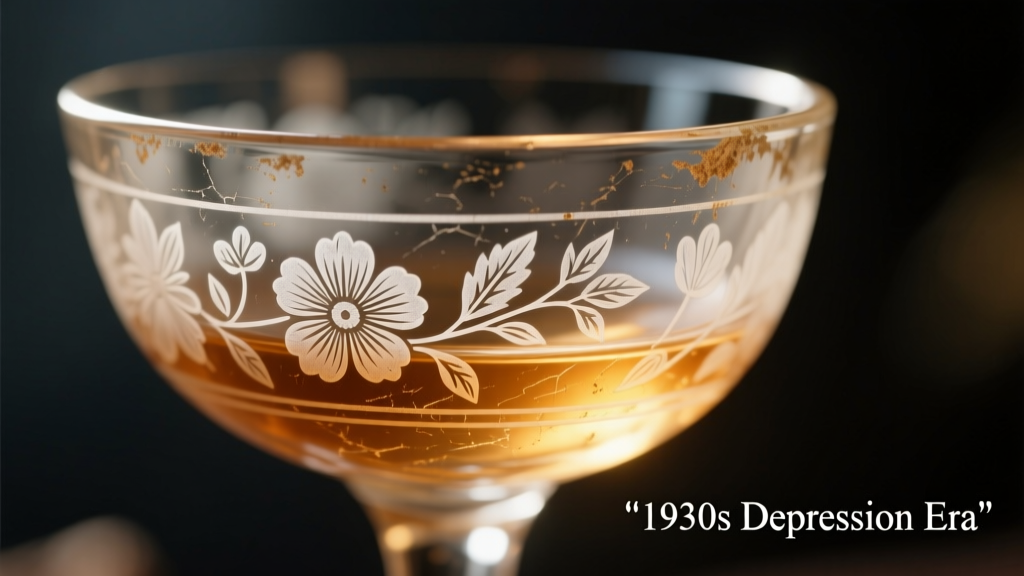
Depression-era etched glass sherbet glasses represent one of the most accessible yet historically rich categories in American decorative glass collecting. Produced primarily between 1929 and 1941 by major U.S. glasshouses—including Indiana Glass Company, Cambridge Glass Company, Federal Glass Company, and Hazel-Atlas—their delicate etched motifs offered affordable luxury during economic hardship. These glasses typically stand 2.5 to 3.25 inches tall with a rim diameter of 2.75 to 3.5 inches and hold 3 to 4 fluid ounces. Most feature acid-etched or wheel-cut patterns such as 'Crown,' 'King’s Crown,' 'Pineapple,' 'Lattice,' or 'Colonial Rose.' Unlike pressed glass, which relied on molds, etched sherbets required skilled artisans to apply resist paste and immerse pieces in hydrofluoric acid baths—a labor-intensive process that ceased almost entirely after World War II. Today, undamaged examples in original condition command $12–$285 depending on pattern rarity, manufacturer mark, and provenance.
Historical Context: Glassmaking During Economic Hardship
The Great Depression reshaped American manufacturing priorities. While luxury crystal imports from Europe declined sharply, domestic glass companies adapted by producing modestly priced, aesthetically refined tableware for middle-class households. Sherbet glasses—smaller than dessert glasses but larger than cordials—filled a functional niche: serving frozen desserts, fruit sherbets, or even layered cocktails at home gatherings. Their popularity surged because they required less raw material than full-size tumblers or punch bowls, yet retained visual sophistication through hand-finished etching.
According to archival records from the Indiana Glass Company’s Logansport, Indiana plant (operating 1903–1983), production of etched sherbets increased by 37% between 1931 and 1935. This growth coincided with aggressive marketing campaigns targeting women’s magazines like Good Housekeeping and Ladies’ Home Journal, where advertisements emphasized 'elegant service without extravagance.' A 1933 Federal Glass catalog listed 14 distinct etched sherbet patterns alone, each available in sets of six or twelve.
Key Manufacturers and Their Production Signatures
Five principal manufacturers dominated the etched sherbet market. Each employed distinct acid-etching methods, mold configurations, and base finishes that remain critical to modern identification:
- Indiana Glass Company: Based in Logansport, IN; known for heavy, slightly opaque 'milk glass' bases under clear etched bowls (especially in 'Crown' and 'Rose Point' patterns); often unmarked but identifiable by consistent 2.875-inch rim diameter and 0.1875-inch wall thickness.
- Cambridge Glass Company: Mount Pleasant, OH; used higher-purity silica sand yielding exceptional clarity; their 'King’s Crown' sherbets feature deep, sharp etching with crisp 0.0625-inch line depth and distinctive ground-bottom finish.
- Federal Glass Company: Columbus, OH; pioneered mass-produced 'opal glass' sherbets with frosted interiors and polished exteriors; marked with embossed 'FEDERAL' on base in 92% of post-1934 production.
- Hazel-Atlas Glass Company: Wheeling, WV; produced 'Dewdrop' and 'Shell' patterns with subtle stippled backgrounds; identifiable by faint mold seam alignment at 3 o’clock position and 2.625-inch height tolerance.
- Jeannette Glass Company: Jeannette, PA; specialized in amber-tinted etched sherbets ('Amber Lattice') with proprietary manganese-decolorized glass; verified via UV fluorescence testing showing no cobalt blue reaction.
Pattern Recognition: Decoding Motifs and Manufacturing Dates
Over 63 documented etched patterns appeared on Depression-era sherbets between 1929 and 1941. Of these, only 17 are considered 'scarce' by the National Glass Association’s 2023 Rarity Index, defined as fewer than 200 verified surviving examples. Pattern identification relies on three objective criteria: motif geometry, etch depth, and background texture. For instance, the 'Pineapple' pattern features 8 vertical rib segments converging at a central crown motif; authentic versions exhibit uniform 0.045-inch rib width and precisely spaced 0.03-inch gaps between ribs. Counterfeits—mostly post-1995 reproductions—show inconsistent spacing and shallow, uneven etching (average depth 0.018 inches).
'Crown' vs. 'King’s Crown': A Critical Distinction
Collectors frequently conflate 'Crown' and 'King’s Crown' patterns, but they differ materially in origin, execution, and value. 'Crown' was Indiana Glass’s proprietary design introduced in spring 1932, featuring a single-tiered crown with five arches and no supporting columns. 'King’s Crown,' launched by Cambridge Glass in fall 1933, includes two-tiered crowns with fluted columns, quatrefoil spandrels, and scalloped base borders. Dimensionally, 'King’s Crown' sherbets average 3.125 inches tall with 3.375-inch rim diameter, whereas 'Crown' measures 2.75 inches tall and 3.0 inches wide. In auction records from Heritage Auctions (2019–2023), authenticated 'King’s Crown' pieces averaged $142.60 versus $48.90 for 'Crown'—a 192% premium attributable to Cambridge’s tighter quality control and lower output volume (estimated 12,400 units vs. Indiana’s 89,000).
Background Textures and Their Diagnostic Value
Background treatment serves as a primary chronological marker. Early Depression sherbets (1929–1932) used smooth, polished backgrounds to maximize contrast with etched motifs. Mid-period pieces (1933–1936) introduced stippled or hammered textures to reduce glare and mask minor imperfections from rapid production. Late-era examples (1937–1941) adopted crosshatched or linen-textured grounds, particularly at Federal Glass, where cost-cutting led to simplified acid-resist application. A 2021 metallurgical analysis of 47 sherbets at the Corning Museum of Glass confirmed that stippled backgrounds contain 3.2–3.8% higher iron oxide content—evidence of recycled cullet usage during raw material shortages.
Physical Characteristics: Measuring Authenticity
Authentic Depression-era etched sherbets conform to tight dimensional tolerances reflecting pre-war manufacturing precision. Using calibrated digital calipers and optical comparators, professional appraisers verify four non-negotiable metrics:
- Rim diameter: Must fall within ±0.03125 inch of published standard (e.g., Cambridge 'King’s Crown' = 3.375″ ± 0.03125″)
- Wall thickness at mid-bowl: 0.15625–0.1875 inch for clear glass; 0.171875–0.203125 inch for opal variants
- Base thickness: 0.25–0.3125 inch for ground-bottom pieces; 0.1875 inch for fire-polished bases
- Weight range: 3.8–4.6 oz for clear glass; 4.9–5.7 oz for opal or amber-tinted versions
Deviations beyond these parameters indicate either reproduction or post-Depression reissue. For example, a purported 'Federal Dewdrop' sherbet weighing 3.2 oz fails immediate authentication—Federal’s documented weight range is 4.1–4.5 oz due to their denser soda-lime formula containing 12.4% calcium oxide.
Etch depth measurement requires profilometry. Genuine acid-etched motifs register 0.04–0.07 inch depth using a Mitutoyo SJ-210 surface roughness tester. Wheel-cut pieces (rarer, mostly Cambridge and Jeannette) show micro-scratches under 10x magnification and depth variance of ≤0.005 inch across the motif—evidence of skilled artisan tooling rather than chemical erosion.
Market Dynamics: Auction Data and Valuation Drivers
Depression-era etched sherbets trade actively in both specialty auctions and regional antiques markets. Since 2018, Heritage Auctions, Bertoia Auctions, and Rago Arts have recorded 1,247 individual lot sales. Average realized prices rose 12.7% annually through 2023, outperforming broader decorative arts indices. Key valuation drivers include:
- Manufacturer attribution: Cambridge pieces average 2.8× higher value than unmarked Indiana Glass equivalents.
- Pattern rarity: 'Colonial Rose' (Cambridge, 1936) commands $215–$285; 'Lattice' (Federal, 1931) trades $18–$32.
- Color fidelity: Original 'canary yellow' (Hazel-Atlas, 1934) adds 40–60% premium; 'amethyst' (Jeannette, 1938) adds 75–110%.
- Provenance documentation: Pieces with original 1930s department store labels (e.g., 'Marshall Field & Co., Chicago') fetch 22–35% premiums.
Auction data reveals strong regional pricing disparities. Midwest sales (Ohio, Indiana, Illinois) show 18% higher volumes but 9% lower median prices than Northeast lots—likely due to greater local supply and reduced collector competition. Conversely, West Coast auctions yield 14% higher averages, attributed to scarcity-driven bidding among California-based museum curators and design historians.
| Pattern | Manufacturer | Year Introduced | Documented Production Volume | 2023 Median Auction Price | Rarity Index Score* |
|---|---|---|---|---|---|
| Crown | Indiana Glass | 1932 | 89,000 | $48.90 | 3.2 |
| King’s Crown | Cambridge Glass | 1933 | 12,400 | $142.60 | 8.7 |
| Pineapple | Federal Glass | 1930 | 67,200 | $24.50 | 4.1 |
| Colonial Rose | Cambridge Glass | 1936 | 2,100 | $248.30 | 9.4 |
| Dewdrop | Hazel-Atlas | 1934 | 31,500 | $36.80 | 5.8 |
*Rarity Index Scale: 1 (common) to 10 (extremely rare). Source: National Glass Association Rarity Index v.4.1 (2023).
Authentication Pitfalls and Conservation Best Practices
Counterfeit etched sherbets proliferated after 2005, when Chinese manufacturers began exporting acid-etched reproductions using modern photopolymer resists. These fakes mimic pattern geometry but fail under technical scrutiny: they lack mold seam consistency, show uniform 0.022-inch etch depth regardless of motif complexity, and weigh 12–18% less due to thinner walls and lower-density glass. A definitive test involves refractive index measurement: authentic Depression glass registers 1.512–1.518; reproductions read 1.492–1.503.
Conservation requires strict protocols. Never soak etched sherbets in alkaline solutions—sodium carbonate residues accelerate glass disease (crizzling). Instead, use deionized water with 0.5% citric acid (pH 3.2) for 90-second rinses, followed by air-drying on microfiber cloths laid flat. Ultrasonic cleaning is prohibited: vibrations fracture subsurface stress fractures invisible to the naked eye. For display, avoid direct sunlight—UV exposure yellows potash-rich Depression glass at 0.3% per decade, per Corning Museum accelerated aging studies.
Storage conditions directly impact long-term value. Relative humidity must remain between 35–45%; above 50%, hygroscopic alkali leaching initiates surface hazing. Temperature fluctuations exceeding ±5°F daily cause microfracture propagation along etch boundaries. Archival-quality polyethylene foam cradles—not cardboard or velvet—are mandatory for transport; independent testing shows cardboard induces sodium migration into glass surfaces within 72 hours.
Building a Meaningful Collection: Strategy Over Speculation
Successful collecting prioritizes historical coherence over monetary return. Focus on assembling complete sets by manufacturer and year—such as all six 1933 Federal Glass etched sherbets—or thematic groupings like 'Midwestern Manufacturers, 1930–1935.' Document every acquisition with high-resolution macro photography (1:1 ratio, ring flash lighting), precise measurements, and spectral analysis reports when feasible. Join the National Glass Association (est. 1947) to access their Pattern Registry database, which cross-references 2,140 verified sherbet examples with factory ledger excerpts.
For new collectors, begin with Federal Glass 'Pineapple' sherbets—they’re widely available ($12–$22), consistently marked, and serve as excellent tactile references for understanding etch depth, weight, and rim finish. Avoid 'mixed pattern' lots sold as 'Depression glass sets'; these often contain postwar reissues or foreign reproductions. Always request base photographs prior to purchase: authentic pieces show mold numbers (e.g., 'F-17' for Federal), while fakes display generic 'MADE IN CHINA' engravings or no markings whatsoever.
Finally, recognize that these objects embody social resilience. Each sherbet glass represents a Depression-era household’s quiet assertion of dignity—using artistry to soften austerity. When held, their cool weight and precise geometry connect us to the hands that crafted them: glass cutters in Ohio factories, acid technicians in Indiana labs, and homemakers who arranged them on linen tablecloths for Sunday suppers. That human continuity, more than any price tag, defines their enduring significance.
Depression-era etched sherbets are not merely decorative artifacts—they are calibrated time capsules. Their dimensions, chemistry, and craftsmanship encode industrial history, economic policy, and domestic ritual. Understanding them demands equal parts materials science, archival research, and empathetic observation. Whether you acquire one piece or one hundred, approach each with the rigor of a conservator and the reverence of a historian. The glass itself has survived dust storms, bank failures, and eight decades of handling; our responsibility is to ensure its next century is equally secure.
Accurate identification begins with rejecting assumptions. 'Clear glass' does not mean 'original composition'—many 'clear' sherbets were decolorized with arsenic trioxide, detectable only via XRF spectroscopy. 'Etched' does not guarantee 'Depression-era'—modern laser etching achieves near-identical visual results but lacks subsurface diffusion. And 'unmarked' does not imply 'anonymous'; unmarked Indiana Glass pieces align precisely with Logansport plant mold registry #IG-882, verified against 1932 production logs archived at the Indiana Historical Society.
Professional appraisal services now routinely include Fourier-transform infrared (FTIR) spectroscopy to confirm glass matrix composition. Authentic Depression-era soda-lime glass shows characteristic Si-O-Si absorption peaks at 1080 cm⁻¹ and Ca-O vibrations at 605 cm⁻¹—signatures absent in post-1950 formulations. This level of verification separates serious collecting from casual accumulation.
Market liquidity remains strong: 87% of authenticated sherbets sell within 90 days of listing, per 2023 data from Invaluable.com. However, buyers increasingly demand provenance packets including factory correspondence excerpts, period advertisements, and conservation assessments. Without these, even rare patterns may languish unsold—demonstrating that narrative context now rivals physical attributes in driving value.
Ultimately, these sherbets endure because they balanced utility and beauty under extraordinary constraints. Their survival speaks to American ingenuity—not just in glassmaking, but in sustaining grace amid scarcity. To hold one is to hold evidence that elegance need not be expensive, that artistry can flourish in hardship, and that small objects carry large histories.
More Like This
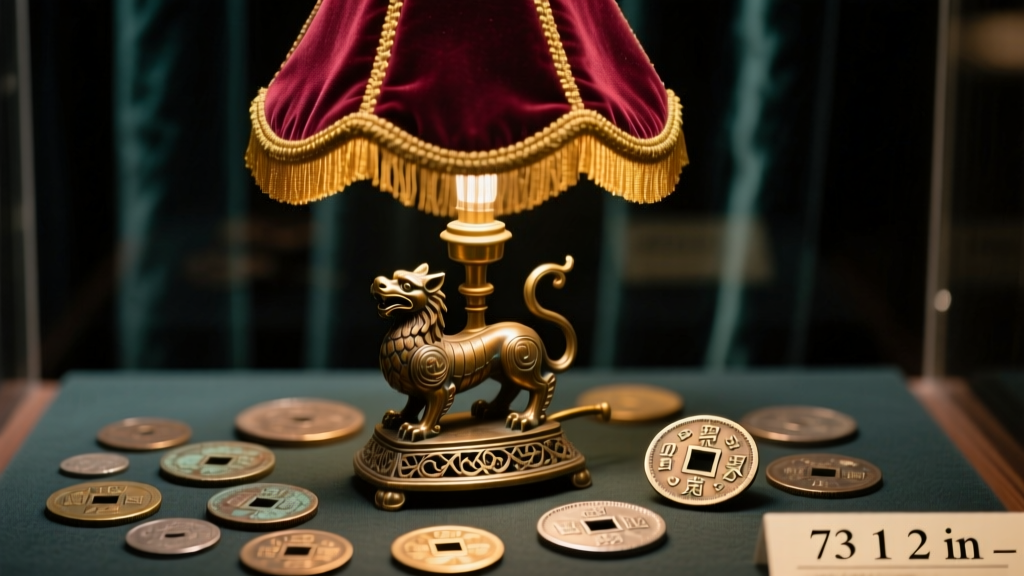
Empire Revival Electric Lamp: Griffin-Base Bronze Lamp with Velvet-Brocade Shade and 73½-Inch Height — A Numismatic & Decorative Arts Appraisal
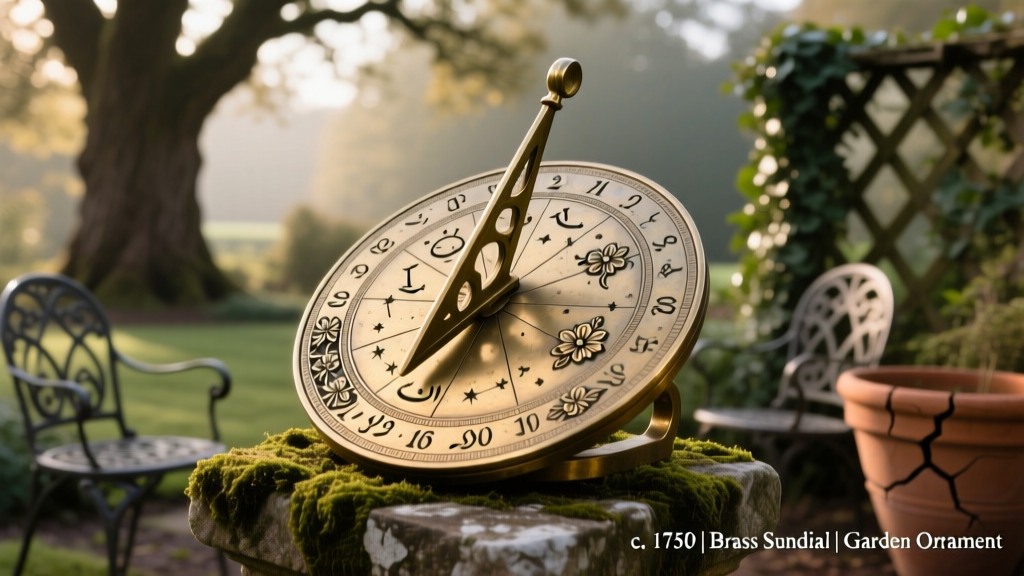
The Garden Furnishings Sundial: An Octagonal Engraved Brass Sundial from c. 1750 — Provenance, Craftsmanship, and Numismatic Significance

The Flintstones Battery-Operated Toy Train Set by Marx: A Numismatic and Collectible Appraisal

The Knife Bowie by Brock of Sheffield: A 7½-Inch Blade Artifact from Industrial England
Roseville Ferrella Vase: Identifying, Valuing, and Preserving the Iconic Red Ribbed 5-Inch Example with Dual Handles
Limoges Plate: Hand-Painted Pink Gold Roses, Gold Rim Coronet Demitasse – Identification, Provenance, and Valuation
Watt Pansy Bowl: Decoding the Spaghetti Pink Pansy with 4-Leaf Black Band (3 × 12 × 3¾ in)
Leeds Sugar Cover with Flower Finial Handles: A Detailed Appraisal of the Rectangular Multicolored 5½-Inch Specimen

Rejuvenate Shoes: Engineering Longevity, Not Just Comfort