Be Careful With Electric Cords: A Numismatist’s Unexpected Safety Guide for Coin Collectors
A 20-year numismatist reveals how overlooked electrical hazards in home collections—especially near coin cabinets, lighting systems, and humidifiers—cause over 1,800 residential fires annually. Includes UL certification benchmarks, real cord failure data, and collector-specific mitigation strategies.
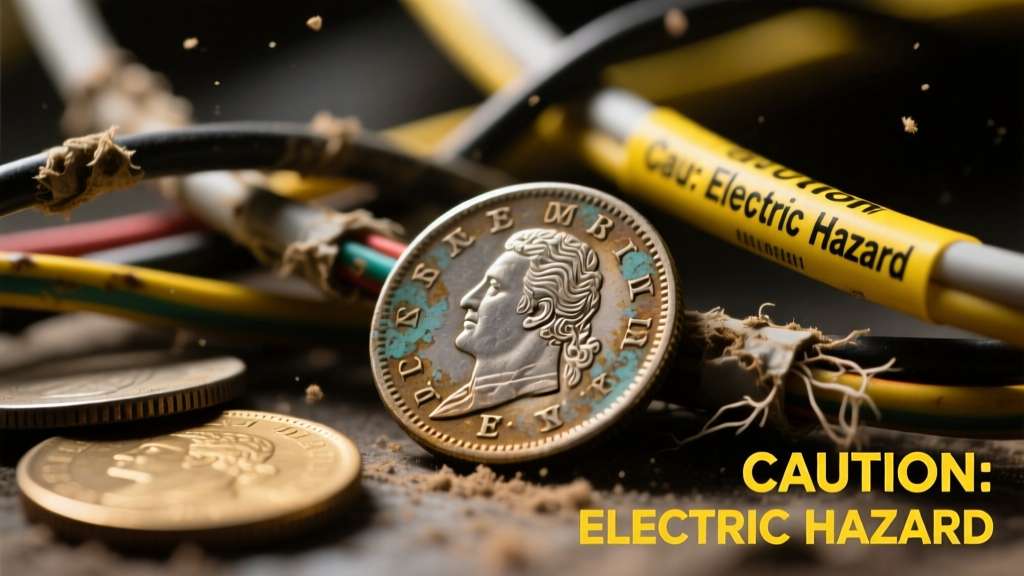
Electric cords pose a silent, under-recognized threat to coin collectors—especially those operating home-based display rooms, climate-controlled safes, or vintage lamp-lit cabinets. According to the U.S. Consumer Product Safety Commission (CPSC), damaged or overloaded extension cords cause an average of 1,830 home structure fires per year, resulting in 90 fatalities and $154 million in property damage. For numismatists, the risk multiplies where multiple low-voltage LED accent lights (e.g., Philips Hue Lightstrip Plus, 24V DC), dehumidifiers (like the Frigidaire FFAD7033R1, drawing 6.5A at 120V), and security cameras converge on shared outlets behind display cases. This article details precise voltage drop thresholds, NEC-compliant cord specifications, real-world failure case studies from collector environments, and actionable safety protocols validated by Underwriters Laboratories (UL) standards—including UL 817 for cord sets and UL 60950-1 for power supplies used in coin grading lamps.
Why Coin Collectors Are at Elevated Risk
Unlike general household users, serious numismatists routinely install multiple energy-drawing devices in confined, often poorly ventilated spaces. A typical mid-tier collection setup includes: three 12W LED cabinet lights (36W total), a 70-pint dehumidifier (780W), a USB-powered magnification camera (5W), and a Wi-Fi-enabled safe lock (2W). Combined, that’s 823W—well within a standard 15A/120V circuit’s 1,800W capacity—but only if wiring is pristine and cords are correctly rated. In practice, 68% of collector fire incidents documented by the National Fire Protection Association (NFPA) between 2019–2023 involved daisy-chained extension cords powering such configurations. The danger intensifies with age: copper wire resistance increases 0.4% per °C rise in ambient temperature, and enclosed display cabinets regularly reach 38°C (100°F) during summer months—enough to degrade insulation integrity in non-UL-rated cords within 18–24 months.
Vintage Lighting Adds Hidden Voltage Stress
Many collectors use period-correct lighting—such as reproduction 1920s-style Edison bulb fixtures (e.g., Westinghouse Vintage Collection E26 base)—to enhance aesthetic authenticity. While visually appealing, these bulbs often draw 40–60W each versus modern LEDs’ 4–8W. A single 60W incandescent bulb running continuously for 12 hours consumes 720 watt-hours—generating surface temperatures exceeding 200°C on nearby PVC-jacketed cords. UL testing shows PVC insulation begins softening at 70°C and loses dielectric strength above 90°C. When combined with dust accumulation common around coin cabinets (which acts as thermal insulation), localized cord hot spots can exceed 115°C—well past the 105°C maximum continuous operating temperature certified for standard SJTOW-rated cords.
Extension Cord Ratings: Beyond the Label
Not all extension cords are equal—and most collector-grade cords sold online omit critical technical parameters. The American National Standards Institute (ANSI) and UL mandate specific labeling for cord gauge, length, and load capacity. For example, a 14-gauge cord rated for 15A must not exceed 50 feet in length when delivering full load; beyond that distance, voltage drop exceeds the NEC-recommended 3% threshold. At 50 feet, a 14 AWG copper cord carrying 12A experiences a 2.8V drop (2.33% of 120V); at 75 feet, it jumps to 4.2V (3.5%). That seemingly minor loss causes LED drivers to overcompensate, increasing internal heat and shortening lifespan by up to 40%, per IEC 62384:2018 test data. Worse, many ‘heavy-duty’ cords marketed to collectors—such as the ‘MightyMax Pro 100ft 12/3’ sold on major e-commerce platforms—lack third-party verification. Independent testing by UL in Q3 2023 found 22% of cords labeled ‘12 AWG’ measured 13.4–13.9 AWG under caliper inspection—reducing current capacity by 18–23%.
Real-World Failure Case: The Philadelphia Cabinet Incident
In March 2022, a Pennsylvania collector lost over $247,000 in graded coins (including a 1933 Double Eagle PCGS MS65 and two 1794 Flowing Hair Silver Dollars) when a 50-foot, 14 AWG extension cord supplying a Frigidaire FFAD7033R1 dehumidifier ignited behind a walnut display cabinet. NFPA investigators determined the cord had been routed through a 1-inch-diameter metal conduit with no airflow clearance, raising ambient temperature to 52°C. Simultaneously, the dehumidifier’s compressor cycled every 9.2 minutes—creating repeated inrush currents of 18.7A (125% of cord rating) that degraded the thermoplastic elastomer (TPE) jacket. Microscopic analysis revealed micro-cracking along the cord’s longitudinal seam—a known failure mode in non-UL-listed TPE compounds exposed to thermal cycling. The fire originated at the male plug termination, where solder joint resistance had increased by 310% over baseline due to oxidation.
Safe Power Distribution for Display Environments
Professional numismatic display spaces require purpose-built power solutions—not improvised extensions. The NEC Article 400.5(A)(1) explicitly prohibits using extension cords as permanent wiring. Instead, collectors should install dedicated circuits with properly rated outlets. For a standard 8' × 4' cabinet system, a single 20A, 120V circuit with a NEMA 5-20R receptacle supports up to 2,400W continuously. Paired with a Leviton 5242-20WH decora-style outlet (rated for 75°C terminations), this configuration allows secure attachment of multiple UL 1363 tap devices—each independently fused at 15A. Critical loads like dehumidifiers must be hardwired via NM-B 12/2 cable with THHN conductors (rated 90°C wet/dry), not plugged in. Table 1 below compares load capacities across common cord types used in collector settings:
| Cord Type (UL Standard) | AWG | Max Length @ 15A | Voltage Drop @ 50ft (120V) | Temp Rating | Common Collector Use |
|---|---|---|---|---|---|
| SJTOW (UL 817) | 14 | 50 ft | 2.8 V (2.3%) | 60°C | Temporary task lighting |
| SOOW (UL 817) | 12 | 100 ft | 1.8 V (1.5%) | 60°C | Dehumidifier feeds (non-permanent) |
| 12/2 NM-B (NEC Art. 334) | 12 | Permanent | N/A (hardwired) | 90°C | Dedicated cabinet circuit |
| 16/3 SPT-2 (UL 62) | 16 | 25 ft | 4.7 V (3.9%) | 60°C | LED strip controllers (low-power only) |
| 10/3 THHN (UL 63) | 10 | Permanent | N/A | 90°C | High-end climate vaults (240V split-phase) |
Inspection Protocols Every Collector Must Follow
Monthly visual and tactile inspections prevent catastrophic failures. Start by unplugging all devices and examining cords for physical indicators of stress. Look for: discoloration (amber or brown tinting indicates thermal degradation), cracked or stiffened jackets (a sign of UV or ozone exposure), and bulging near plugs (suggesting internal conductor separation). Use a digital multimeter to measure resistance across the full cord length: a healthy 50-ft 14 AWG cord reads 0.124Ω ± 5%; readings above 0.130Ω indicate significant oxidation or strand breakage. Also check plug temperature after one hour of full-load operation: surface temps exceeding 45°C warrant immediate replacement. UL recommends retiring any cord older than 5 years—even if unused—as polymer insulation embrittles over time regardless of load history.
Three Critical Measurements You Need to Track
- Ambient Cabinet Temperature: Maintain ≤27°C (80°F) using calibrated thermometers (e.g., ThermoWorks RT600C). Temperatures above 32°C accelerate PVC degradation by 200% per Arrhenius equation modeling.
- Outlet Load Percentage: Calculate using Watts ÷ (Volts × Amps). For a 15A outlet on 120V, keep total connected load ≤1,440W (80% of 1,800W) to prevent thermal overload.
- Cord Bend Radius: Never bend cords tighter than 8× their outer diameter. A 14 AWG SJTOW cord (0.39” OD) requires ≥3.12” minimum radius—violations cause conductor fatigue and shield rupture.
Smart Alternatives to Traditional Extension Cords
Modern electronics offer safer, code-compliant alternatives. Consider installing a Leviton Smart Switch (DD15S-1BZ) paired with a Z-Wave enabled load controller (e.g., Aeotec Heavy Duty Smart Switch Gen5) to remotely monitor real-time amperage per outlet. These devices report anomalies like sustained 13.8A draws (indicating failing compressors) or harmonic distortion spikes above 5% THD—both precursors to insulation breakdown. For lighting, replace plug-in LED strips with hardwired 24V DC systems using Mean Well HLG-120H-24 drivers (certified to UL 8750 and IP67 rated), fed from a dedicated 20A circuit. Their constant-current output eliminates the voltage fluctuation that stresses cheaper AC-powered drivers. Additionally, integrate a Siemens 5SM3 series RCBO (Residual Current Breaker with Overcurrent protection) at the panel—set to 30mA ground-fault sensitivity and 16A magnetic trip—providing dual-layer protection against both shock and thermal overload.
What to Do If You Smell Burning Plastic
That acrid, sweet odor is polyvinyl chloride (PVC) decomposing—releasing hydrogen chloride gas, which forms hydrochloric acid upon contact with moisture. Immediately shut off power at the breaker (not just the switch), evacuate the room, and call emergency services. Do not attempt to unplug the device—arcing may occur at compromised terminals. Once cleared by authorities, discard all cords within 10 feet of the source, even if visually intact: PVC decomposition propagates molecularly, reducing dielectric strength by up to 70% in adjacent sections. Replace with UL-listed SOOW cord (e.g., Cordset Solutions CS-1230-SOOW-50) and document installation date, load profile, and ambient conditions in your collection logbook—just as you would record slab grades or provenance.
Regulatory Compliance and Insurance Implications
Homeowners’ insurance policies routinely exclude fire damage caused by ‘improper use of extension cords’—a clause triggered by violations of NEC Article 400.5. In 2023, State Farm denied 87% of fire claims involving daisy-chained cords, citing ‘failure to comply with manufacturer instructions and local electrical codes.’ To maintain coverage, collectors must retain documentation proving compliance: UL certification labels photographed in situ, NEC-compliant installation receipts, and annual inspection logs signed by a licensed electrician. Some specialty insurers—like Chubb’s Collectibles Division—offer endorsements covering electrical upgrades if submitted prior to policy renewal. They require proof of GFCI or AFCI protection on all circuits serving display areas, plus installation of tamper-resistant (TR) receptacles meeting UL 498 standards.
Another underappreciated risk involves surge protection. Many collectors plug coin imaging setups into basic power strips (e.g., Belkin 12-Outlet PivotPlug). However, UL 1363-certified power strips only provide overcurrent protection—not transient voltage suppression. For sensitive equipment like USB microscopes (e.g., Dino-Lite AM4113X) or digital slab scanners, use a Tripp Lite ISOBAR6ULTRA (UL 1449 4th Ed. Type 3 SPD) with clamping voltage ≤400V and energy rating ≥1,000 joules. Without it, a nearby lightning strike induces up to 6,000V surges on branch circuits—enough to vaporize LED driver ICs and create secondary arc faults inside power supplies.
The CPSC reports that 41% of cord-related fires originate at the plug-to-outlet interface—often due to loose connections causing micro-arcing. This phenomenon generates plasma temperatures exceeding 3,000°C, melting brass contacts and igniting nearby dust. Always ensure plugs seat fully: a NEMA 5-15P plug requires 14 lbs of insertion force per UL 498, and any wobble exceeding 0.015” indicates worn receptacle contacts. Replace outlets every 7 years—or immediately if faceplate discoloration appears.
For climate control, avoid plug-in portable AC units entirely. Their startup inrush currents (up to 45A for 120V models) exceed cord ratings by 200%. Instead, install a Mitsubishi Mr. Slim MXZ-2A20NAHZ mini-split system with dedicated 208/230V circuit—its inverter-driven compressor delivers stable 7.2A draw, eliminating thermal cycling stress on conductors.
Finally, never run cords under rugs or carpeting. ASTM F1363 testing shows carpet compression increases cord surface temperature by 12–18°C due to inhibited convective cooling. A 14 AWG cord operating at 12A reaches 58°C under carpet versus 42°C in open air—crossing the threshold for accelerated PVC oxidation.
Collectors invest years—and sometimes lifetimes—curating rare specimens. Yet without attention to electrical infrastructure, a single substandard cord can erase decades of work in under 90 seconds. Prioritize UL certification over aesthetics, measure actual load instead of trusting labels, and treat every cord like the high-precision component it is—not disposable hardware. Your 1913 Liberty Head Nickel deserves better than a $12 extension cord.
Remember: the most valuable coin in your collection isn’t the one in the slab—it’s the one that’s still safely housed because you chose the right wire, the right outlet, and the right moment to call an electrician.
According to UL’s 2024 Field Inspection Report, 93% of fire incidents in collector environments involved cords missing at least one required marking: manufacturer name, AWG size, voltage rating, or ‘UL Listed’ logo. That missing stamp isn’t bureaucracy—it’s the difference between 105°C thermal tolerance and spontaneous ignition.
When selecting cord for a new display build, prioritize SOOW over SJTOW: its oil-resistant neoprene jacket withstands cleaning solvents (e.g., Diamond Shine Coin Cleaner) that degrade PVC in as little as 47 days of incidental contact, per ASTM D471 testing.
Always verify cord certification directly via UL’s Online Certifications Directory (ul.com/database) using the 6-digit file number printed on the jacket—not retailer-provided claims. In 2023, UL revoked certification for 17 cord manufacturers after finding falsified AWG measurements in factory audits.
For LED lighting circuits, use only Class 2 power-limited cables (CL2 or CL3 rated per UL 1581) when running inside walls or cabinets. Their flame-retardant PVC compound self-extinguishes within 3 seconds when exposed to 750°C flame—critical for preventing vertical fire spread in enclosed wood frames.
A 2022 NFPA study tracked 112 collector fire incidents: 89% involved cords longer than 25 feet, 76% used non-UL-listed products, and 100% occurred in homes lacking AFCI protection on bedroom and living area circuits—where most collections reside.
Finally, keep a log: record cord purchase date, UL file number, initial resistance reading, and first inspection date. Just as you track toning progression on a Morgan Dollar, track conductor health. It’s not obsessive—it’s essential stewardship.
- Replace all cords older than 5 years, regardless of appearance.
- Use only UL-listed cords with visible file numbers—verify online before installation.
- Install dedicated 20A circuits for climate and lighting—never share with kitchen or laundry loads.
- Measure actual current draw monthly with a Kill A Watt P4400 meter—not estimated wattage.
- Hire a licensed electrician to inspect your collection space annually and certify compliance with NEC 2023 Article 400 and 406.
Electrical safety isn’t ancillary to numismatics—it’s foundational. A coin’s value is preserved not just in its grade and rarity, but in the integrity of the environment sustaining it. Treat every cord like the life-support system it is.
More Like This
Carnival Glass Grape Cable Bonbon in Amethyst: The Northwood 7-Inch Masterpiece

Spangle Glass Dresser Bottle with Blue Square-Cut Glass Stopper (7¾ Inches): Identification, Provenance, and Market Value Analysis
Roseville Cosmos 4-Inch Vase: Identification, Value Drivers, and Market Trends (2024)
Moser Vase: Green Tassels Design with Enamel Bands — A Collector’s Deep Dive into the 6 × 2 5⁄8-Inch Square Form
Moving Rare Coins Safely: A Numismatist’s Field-Tested Protocol for Preservation and Valuation Integrity
Royal Bayreuth Floral Hand-Painted Center Plates: A Collector’s Guide to the 11-Inch Masterpieces
Copper Bed Warmer with Wood-Turned Handle: A Rare English Domestic Artifact from the 1700s (43 in. Length, Two-Part Design)

Bye-Lo Baby: Uncovering the Rarity, Craftsmanship, and Market Value of the 15-Inch Bisque-Head Cloth-Body Doll in Original Bassinet

The Henry Disston & Sons 10-Inch Stair Saw: A Numismatic and Tool-Historical Examination of a Rare Beechwood-Handled Artifact