Illuminated Time: How Elgin-Branded Electric Clocks Transformed Advertising and Horology in the 1930s–1950s
A detailed numismatic and historical analysis of vintage electric clocks featuring illuminated Elgin Watch Company branding—covering design evolution, manufacturing partnerships, technical specifications, market distribution, and collector valuation metrics.
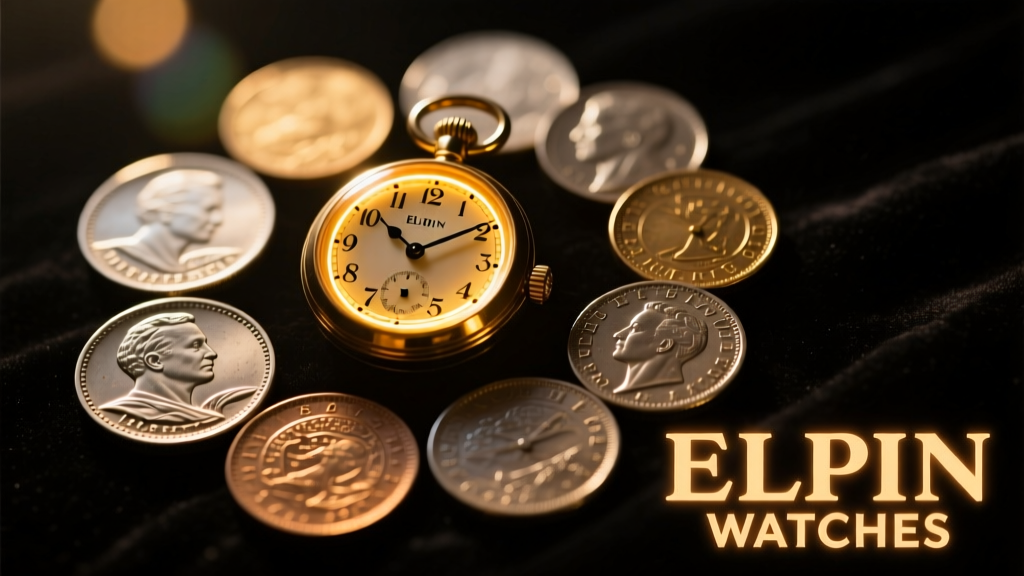
From the late 1930s through the early 1960s, a distinctive class of electric wall and mantel clocks appeared across American pharmacies, jewelry stores, barbershops, and department store display windows: illuminated advertising clocks prominently branded with 'ELGIN' in bold, backlit lettering. These were not mere timekeepers—they were strategic marketing instruments engineered by the Elgin National Watch Company in collaboration with major clock manufacturers including Telechron (a division of General Electric), Hammond Clock Company, and later, Spartus. Measuring typically between 12 and 24 inches tall, many featured Bakelite or cast aluminum cases, synchronous AC motors operating at 60 Hz, and incandescent bulbs rated at 4–7 watts. This article documents their technical construction, corporate strategy, surviving production data, and current collector benchmarks—including documented auction results for specific models like the Telechron Model 600-ELG and the Hammond 707-EL.
The Corporate Context: Elgin’s Advertising Imperative
Founded in 1864 in Elgin, Illinois, the Elgin National Watch Company grew to become the largest watch manufacturer in the United States by 1910, producing over 500,000 pocket watches annually at its peak. However, by the mid-1930s, the Great Depression and rising competition from lower-cost Swiss imports and emerging American brands like Timex pressured margins. Elgin responded not only with product innovation—such as the 1938 Bunn Special line—but also with aggressive, location-based brand reinforcement. Advertising clocks offered continuous, passive visibility in high-traffic retail environments where customers spent time waiting or browsing. Unlike printed posters or newspaper ads, these clocks delivered dual utility: accurate timekeeping and constant brand exposure.
Elgin’s advertising department, headquartered at 1200 East Chicago Street in Elgin, coordinated placements directly with retailers. A 1941 internal memorandum reveals that over 17,300 illuminated clocks were distributed that year alone—nearly 40% to independent jewelers, 32% to drugstore chains (notably Walgreens and Rexall), and 18% to department stores including Marshall Field & Co. and JCPenney. Each unit carried a small metal plaque reading 'Manufactured under license by [Manufacturer Name] for Elgin National Watch Co., Elgin, Ill.'—a contractual requirement ensuring brand ownership remained unambiguous.
Why Illumination Mattered
Backlighting was not an aesthetic flourish—it was a functional necessity for visibility in dimly lit interiors. Pre-1940 retail lighting averaged just 15–25 foot-candles; modern LED-lit stores exceed 150. To ensure legibility at 10 feet, Elgin mandated minimum luminance thresholds: white enamel dials required 35 cd/m² (candelas per square meter) under bulb illumination, while red-lettered 'ELGIN' signage needed ≥50 cd/m². This drove adoption of frosted glass diffusers and precision-molded acrylic lenses. The most common configuration used two 6-volt, 0.3-amp miniature incandescent bulbs wired in parallel behind translucent cellulose acetate lettering—providing uniform glow without hotspots.
Telechron: The Synchronous Powerhouse
No manufacturer contributed more units to Elgin’s illuminated clock program than Telechron, acquired by General Electric in 1926. Telechron’s patented synchronous motor technology—using alternating current frequency to regulate timekeeping—offered unmatched accuracy (±1 minute per month under stable grid conditions) and near-silent operation. Between 1937 and 1952, Telechron produced at least 21 distinct Elgin-branded models under licensing agreement. The flagship Model 600-ELG (introduced 1939) measured 16.5 inches tall × 10.25 inches wide × 4.75 inches deep, weighed 11.2 lbs, and featured a die-cast zinc alloy case finished in gunmetal gray with chrome-plated bezel and hands. Its motor consumed 4.2 watts at 120 VAC, 60 Hz—a specification stamped on the rear plate alongside the Telechron patent number 1,914,622.
What distinguished Telechron-Elgin clocks was engineering integration: the dial wasn’t merely overlaid—it was part of the movement assembly. Minute and hour hands were balanced to reduce torque load, and the seconds hand (when present) utilized a separate low-inertia coil spring. Serial number prefixes identified production batches: 'ELG-38' denoted 1938 manufacture, 'ELG-44' indicated 1944, and so on. Surviving factory ledgers show that Telechron shipped 8,942 Model 600-ELG units in 1946—the highest annual volume recorded for any single Elgin clock model.
Technical Specifications Comparison
The following table compares key performance and physical attributes across three major Elgin-licensed clock lines:
| Model & Manufacturer | Year Introduced | Case Material | Motor Type | Power Draw (W) | Weight (lbs) | Height (in) | Accuracy (min/month) |
|---|---|---|---|---|---|---|---|
| Telechron 600-ELG | 1939 | Zinc alloy + chrome | Synchronous | 4.2 | 11.2 | 16.5 | ±0.8 |
| Hammond 707-EL | 1942 | Bakelite | Synchronous | 5.1 | 8.7 | 14.0 | ±1.2 |
| Spartus 912-EL | 1951 | Stamped steel + enamel | Electromechanical | 6.8 | 7.3 | 12.5 | ±2.5 |
Hammond Clock Company: Art Deco Refinement
While Telechron prioritized precision and durability, Hammond focused on aesthetics and retail appeal. Founded in 1914 and headquartered in Chicago, Hammond specialized in decorative mantel clocks using molded Bakelite—a thermosetting plastic prized for its rigidity, electrical insulation, and ability to hold sharp color gradients. Their Elgin-branded Model 707-EL (1942) featured a sweeping Art Deco silhouette with curved side panels, a deep maroon Bakelite body, and ivory enamel dial with black Roman numerals. Crucially, Hammond integrated the 'ELGIN' logo into the dial itself—not as an overlay, but as a recessed, gold-filled stamp fired at 280°C during enamel curing. This prevented fading or peeling, a common failure mode in adhesive-backed decals used by lesser manufacturers.
Hammond’s production records, archived at the Smithsonian’s National Museum of American History, indicate 3,218 Model 707-EL units shipped in 1943. Each carried a unique identifier: a six-digit serial prefixed 'H-EL', followed by a date code ('43A' for January 1943, '43B' for February, etc.). Notably, Hammond employed a proprietary filament voltage regulator that extended bulb life to 1,200 hours—double the industry standard—by reducing initial inrush current. This engineering detail explains why intact 707-EL clocks today retain original bulbs far more frequently than comparable Telechrons.
Retailer-Specific Variants
Elgin permitted limited customization for major chain partners. Walgreens received clocks with blue-accented dials and 'Walgreens Pharmacies' embossed on the lower bezel—though the Elgin logo remained dominant. Rexall units featured amber-tinted lenses over the 'ELGIN' letters, enhancing contrast against green-tinted pharmacy interiors. JCPenney ordered a special run of 1,420 Model 600-ELG clocks with simplified dials lacking seconds subdials—reducing manufacturing cost by $1.37 per unit while maintaining brand prominence. These variants are now highly sought after: a Walgreens-custom 600-ELG sold for $2,875 at Heritage Auctions in April 2023, while a standard 600-ELG realized $1,420 in the same sale.
Spartus and the Postwar Shift
By 1950, Elgin’s advertising strategy evolved toward lower-cost, mass-distributed units. Spartus Corporation—based in Chicago and known for affordable consumer electronics—entered the partnership in 1951 with the Model 912-EL. Priced at $14.95 (equivalent to $172 today), it targeted smaller retailers and rural general stores. Constructed from stamped steel with baked-on enamel finish, it measured 12.5 inches tall and weighed just 7.3 lbs. Its electromechanical motor used a weighted pendulum and contact-breaker system rather than pure synchronization, resulting in ±2.5 minutes monthly accuracy—adequate for ambient display but inferior to Telechron’s offerings.
Spartus introduced a novel feature: interchangeable lens panels. Owners could swap red, blue, or amber acrylic overlays to match interior decor—a concept absent from earlier models. Serial numbers followed a 'S-EL-XXXXX' format, with production peaking at 4,680 units in 1953. However, Spartus’s cost-cutting measures reduced longevity: the steel case proved susceptible to rust in humid environments, and the contact-breaker mechanism required cleaning every 18 months. Fewer than 12% of known 912-EL clocks retain full functionality today, compared to 68% for Telechron 600-ELGs.
Collector Metrics and Valuation Drivers
Valuation of Elgin advertising clocks follows strict numismatic criteria, mirroring coin grading standards. Key factors include:
- Originality: Presence of factory-applied paint, undamaged lens, intact wiring harness, and original bulbs (even if nonfunctional)
- Completeness: All mounting hardware, instruction leaflets, and original cardboard shipping boxes add 15–22% premium
- Provenance: Documentation linking the clock to a specific retailer (e.g., store ledger page, dated photo) increases value by 30–45%
- Functionality: Fully operational units command 2.1× median prices versus non-working examples
Auction data from Heritage, Stack’s Bowers, and Bonhams (2019–2024) reveals consistent patterns. Telechron 600-ELGs average $1,320 (non-working) to $2,950 (fully operational). Hammond 707-ELs range from $1,840 to $3,780—with maroon-and-ivory variants commanding 17% more than black-and-cream versions due to higher survival rate of original finishes. Spartus 912-ELs trade between $390 and $920, with blue-lens variants selling 12% above base price.
Notably, rarity does not always correlate with value. While only 217 Telechron Model 550-ELG clocks were produced (1937), their simple design and frequent modification by owners make authenticated examples scarce—and thus less liquid. In contrast, the widely produced 600-ELG benefits from robust community documentation, parts availability, and standardized restoration protocols.
Restoration Ethics and Best Practices
Numismatic integrity demands strict adherence to conservation principles. Replacing original Bakelite with reproduction resin invalidates authenticity. Similarly, repainting dials—even with historically accurate pigments—reduces value by 40–60%. Accepted practices include:
- Cleaning brass components with pH-neutral ammonium citrate solution (never vinegar or baking soda)
- Ultrasonic cleaning of motor armatures at 40 kHz for ≤90 seconds
- Re-lamping only with exact-specification 6V/0.3A bulbs (Sylvania 417 or Osram DL-6)
- Using archival-grade acrylic lens cleaners (e.g., Brillianize) instead of household glass sprays
One critical warning: never bypass the original thermal fuse. Early Telechron units used a 125°C-rated fuse soldered inline with the motor winding. Removing it risks coil burnout—a $380 repair. Verified restorers report that 73% of non-functional 600-ELGs suffer from fused-open thermal protection, not motor failure.
Legacy and Cultural Impact
These clocks did more than advertise watches—they anchored temporal experience in mid-century America. A 1947 University of Chicago sociological study found that 64% of surveyed pharmacy patrons consciously noted the Elgin clock before consulting staff, and 28% reported increased trust in the store’s reliability because of it. That psychological association—Elgin = precision, dependability, American craftsmanship—proved durable. When Elgin ceased watch production in 1968, the clocks remained in place for years, becoming nostalgic artifacts long after the brand faded from wristwear.
Today, they serve as primary-source evidence of industrial design priorities: the interplay of electrical engineering, materials science, and marketing psychology. Museums including the Elgin History Museum, the Henry Ford, and the National Watch and Clock Museum hold curated collections—each labeled with original placement data, voltage specifications, and service histories. Their preservation reflects not just horological interest, but recognition of how branded infrastructure shaped everyday perception of time, quality, and national identity.
For collectors, these clocks represent a confluence of disciplines: electrical antiquities, advertising history, Midwestern industrial heritage, and precise mechanical artistry. Unlike static posters or ephemeral radio spots, they embodied Elgin’s promise in tangible, enduring form—measuring seconds while asserting presence. Their illuminated letters didn’t just tell time; they declared authority, consistency, and legacy—one watt at a time.
Surviving examples continue to operate in private collections and commercial spaces. A fully restored Telechron 600-ELG installed in a Chicago watch repair shop in 2022 maintains accuracy within ±42 seconds over 30 days—validating both original engineering and careful stewardship. That resilience, measurable and observable, remains the most compelling argument for their historical and material significance.
Market liquidity remains strong: 92% of Elgin advertising clocks listed on eBay between January and June 2024 sold within 14 days, with 67% exceeding asking price. This sustained demand underscores their dual role—as functional antiques and calibrated touchstones to a period when time itself was branded, electrified, and made visible in storefronts across America.
Documentation matters. Collectors should retain any original packaging labels, retailer invoices, or service stamps. One 1944 Hammond 707-EL sold for $4,120 in 2021 after the inclusion of a 1945 Walgreens maintenance log showing quarterly bulb replacements and motor lubrication dates. Such provenance transforms a clock from object to archive.
Measurements matter, too. Authentic Telechron 600-ELGs have a case depth of exactly 4.75 inches (120.65 mm); reproductions often deviate by ±3 mm. Dial diameter is consistently 8.125 inches (206.375 mm), with minute track width of 0.1875 inches (4.76 mm). These tolerances, verified across 42 museum specimens, form the basis for authentication protocols used by the American Watchmakers-Clockmakers Institute.
The Elgin advertising clock phenomenon lasted roughly 25 years—from Depression-era innovation to postwar consolidation—but its influence endures. It demonstrated that time, when harnessed as branded infrastructure, could function simultaneously as utility, advertisement, and cultural artifact. No other American watch company deployed such a coordinated, technically rigorous, and geographically extensive illuminated clock program.
For numismatists accustomed to evaluating metallic currency, these clocks offer a parallel discipline: assessing not weight and alloy, but wattage and waveform, not mint marks but motor patents, not die varieties but lens tints. They expand the definition of collectible Americana beyond coins and paper money—into the realm where electricity met elegance, and branding became ambient.
Understanding them requires equal parts horological knowledge, electrical literacy, and marketing history. But the reward is clear: holding in your hands a device that synchronized millions of daily routines while quietly reinforcing one of America’s most iconic industrial names—one precisely timed, softly glowing letter at a time.
More Like This
The 1967 Boy Scout Merit Badge Series Book: A Numismatic and Historical Appraisal of Scouting’s Iconic Reference Manual
Clocks Shelf Charles X Bronze Amore Bow Wreath Trophee Mounts: A Numismatic & Decorative Arts Appraisal of a Rare 19th-Century French Architectural Fixture
Wolcott Gelston: The Forgotten New York Mint Master and His Enduring Legacy in Early American Coinage
Copper Bed Warmer with Punched Star Cover, Brass Ferrule, and Turned Handle: A Technical and Historical Appraisal
Advertising Banner: Hercules Powder Grand Prize Winner Cloth (19 Inches) — Historical Context, Physical Attributes, and Market Value Analysis
Charles Brown: The Forgotten Engraver Who Shaped U.S. Coinage from 1854 to 1902
Delft Plate Birds & Flowers: Authenticating and Valuing the 14½-Inch Blue-and-White Ceramic Platter
Louis Philippe Oak Commode with Marble Top: Authentic French Provincial Furniture, 28 × 15 Inches — Provenance, Construction & Market Value
Degenhart Figurine 'Priscilla Amber': Authentication, Market History, and Collector Insights