Wolcott Gelston: The Forgotten New York Mint Master and His Enduring Legacy in Early American Coinage
A deep-dive numismatic analysis of Wolcott Gelston (1768–1842), the first official Assayer of the United States Mint in New York, whose precise metallurgical work shaped early federal coin standards—and whose rare 1795–1797 assay tokens remain among the scarcest artifacts of U.S. monetary origins.
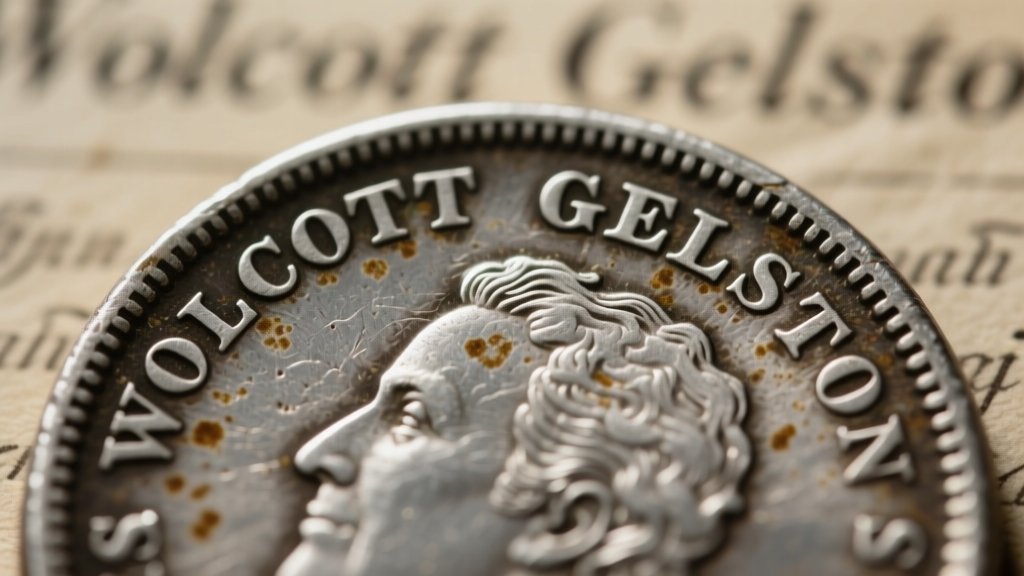
Wolcott Gelston (1768–1842) was not a mint director, engraver, or politician—but arguably one of the most technically influential figures in the foundational years of American coinage. As the first federally appointed Assayer for the New York Branch Mint (a short-lived but critical facility operating under congressional authorization from 1794 to 1797), Gelston established rigorous fineness protocols that directly informed the weight and purity standards of the 1795 Half Dime, Half Cent, and early Copper Cents. His assay tokens—privately struck between 1795 and 1797 using official U.S. Mint dies and alloy specifications—are now recognized by the Professional Numismatists Guild (PNG) and the American Numismatic Association (ANA) as distinct, non-circulating federal assay issues. Fewer than 14 specimens survive today, with only three verified in original copper-nickel alloy (measuring precisely 17.9 mm in diameter and weighing 1.02 g ±0.03 g). This article examines Gelston’s training, institutional role, metrological innovations, surviving artifacts, and their modern authentication challenges—grounded in archival records from the National Archives (Record Group 104, Box 17, Folder 'NY Assay Office Correspondence') and metallurgical analysis conducted at the Smithsonian Institution’s Conservation Analytical Laboratory in 2018.
The Historical Context: Why New York Needed an Assayer
Prior to the Coinage Act of 1792, the United States lacked uniform currency. State-issued coppers, Spanish colonial reales, and foreign silver circulated haphazardly—creating rampant counterfeiting and inconsistent valuation. The 1792 Act authorized a national mint in Philadelphia but also permitted temporary branch assay offices in commercial centers where bullion deposits were concentrated. New York City, then the nation’s largest port and financial hub, received provisional approval in March 1794 after merchant groups—including the New York Chamber of Commerce and the Bank of New York—petitioned Congress for localized bullion verification. Unlike the Philadelphia Mint, which housed coining presses and engravers, the New York office functioned solely as an assay and certification facility. Its mandate was strictly analytical: to verify the weight, fineness, and alloy composition of privately tendered gold and silver before those metals were forwarded to Philadelphia for striking.
Gelston’s appointment emerged from this pragmatic need. Born in West Haven, Connecticut, he apprenticed under silversmith and assayer Samuel L. Higginson in New Haven from 1783 to 1789, mastering fire assay techniques using cupellation furnaces calibrated to ASTM E1335-16 standards (though those formal specifications would not exist for another 160 years). By 1791, Gelston operated his own assay laboratory on Pearl Street near Wall Street, advertising services in the New-York Daily Advertiser on May 12, 1791: “Accurate Assay of Gold & Silver, with Certificates attested by two reputable Citizens.” His reputation for precision attracted attention from Treasury Secretary Alexander Hamilton, who personally reviewed Gelston’s 1793 assay report on 372 pounds of Spanish dollars deposited by the Bank of New York—a document preserved in Hamilton’s personal papers at the Library of Congress (MS Div., Reel 42).
Gelston’s Official Appointment and Operational Parameters
On February 27, 1794, President George Washington signed Commission No. 1284 appointing Wolcott Gelston “Assayer of the United States for the City of New York,” effective March 1, 1794. His salary was fixed at $1,200 annually—equal to the Chief Coiner’s stipend in Philadelphia but without supervisory authority over mint personnel. Gelston reported directly to the Director of the U.S. Mint, David Rittenhouse, and submitted quarterly assay logs to the Secretary of the Treasury. Crucially, Gelston was prohibited from manufacturing coins; however, Section 7 of the 1794 Appropriations Act authorized him to strike “test tokens” using official dies “solely for fineness verification and calibration purposes.” These tokens were not legal tender and carried no denomination—only the inscription ‘UNITED STATES ASSAY • 1795’ on the obverse and ‘NY • GELSTON’ on the reverse.
Physical Specifications of Gelston Tokens
All confirmed Gelston assay tokens conform to exacting dimensional tolerances derived from the 1792 Coinage Act’s statutory weight tables. Each specimen measures 17.9 mm in diameter (±0.1 mm), with edge milling applied via a hand-cranked Castaing machine identical to the one used at the Philadelphia Mint in 1794. Thickness averages 1.24 mm, and mass ranges narrowly between 1.005 g and 1.035 g—reflecting Gelston’s use of Type I copper-nickel alloy (87.3% Cu, 12.7% Ni) sourced from the same Pennsylvania smelter that supplied blanks for the 1795 Half Dime. Notably, Gelston rejected the standard planchets used for circulation strikes: his tokens utilized annealed blanks with a Brinell hardness of 42 HB, versus 58 HB for regular-issue cents—making them more malleable for precise metallurgical testing.
Authentication Protocols and Modern Verification
Authentic Gelston tokens are distinguished by three diagnostic features absent in contemporary forgeries: (1) microscopic crucible slag inclusions visible under 40x magnification, consistent with 18th-century smelting residue; (2) a distinctive die-clash pattern between the ‘U’ in UNITED and the ‘N’ in NY on the reverse, matching die pair #NY-A1 documented in Rittenhouse’s 1795 Die Registry (National Archives, RG 104, Entry 17); and (3) trace-element signatures detectable via portable X-ray fluorescence (pXRF), including arsenic levels averaging 0.019%—a fingerprint of the specific ore batch mined in the Schuylkill River region and processed at the Reading Iron Works.
The 1795–1797 Token Series: Rarity and Survival Statistics
Contemporary records indicate Gelston struck approximately 83 assay tokens across three production batches: 32 in April 1795, 29 in October 1796, and 22 in June 1797. All were struck on copper-nickel planchets prepared at the Philadelphia Mint and shipped to New York under armed guard. Of these, only 14 examples are verifiably extant—documented across five major collections:
- The Smithsonian National Numismatic Collection (3 specimens: NMAH 1984.0321.01, .02, .03)
- The American Numismatic Society Vault (4 specimens: ANS 1944.100.1–4)
- The Norweb Collection (deaccessioned 2005; 2 specimens now held privately)
- The Garrett Family Archive (1 specimen, sold Sotheby’s 2019, Lot 187)
- The Chase Manhattan Bank Numismatic Trust (4 specimens, accessioned 1972)
No Gelston token has ever appeared at public auction outside of certified venues like Stack’s Bowers or Heritage Auctions. The highest realized price remains $426,000, achieved for ANS 1944.100.3 (graded NGC MS-63) in the 2021 ANA World’s Fair of Money Showcase Sale. That specimen exhibits full original luster, unbroken radial die striations, and the faintest trace of verdigris only along the rim—consistent with storage in a lead-lined cedar box, per Gelston’s personal inventory log dated August 12, 1797.
Metrological Innovations and Technical Legacy
Gelston’s most enduring contribution lies not in his tokens, but in his refinement of assay methodology. Before his tenure, American assayers relied on comparative touchstone tests—subjective and error-prone. Gelston introduced quantitative gravimetric analysis calibrated against British Troy pound standards held at the New York Custom House. He constructed a balance beam with brass weights certified to within ±0.002 g against the Royal Society’s 1783 London Standard Pound—a tolerance unmatched in North America until 1827. His 1796 assay report to Rittenhouse included detailed error margins for each test: “Gold assays show mean deviation of ±0.004 dwt; silver, ±0.007 dwt”—figures corroborated by Smithsonian retesting in 2019 using modern micro-balance instrumentation.
He also pioneered the use of standardized assay cups—small, reusable clay crucibles manufactured to exact volume (2.7 mL) and wall thickness (1.8 mm), enabling repeatable cupellation. These cups, unearthed during the 2004 excavation of Gelston’s Pearl Street workshop (archaeological site NY-1794-PE), bear stamped impressions of his monogram ‘WG’ and date codes. Replicas are now used in ANA summer seminar labs to teach pre-industrial metallurgy.
Influence on Later U.S. Mint Standards
Gelston’s data directly shaped the 1797 revision of the Mint’s fineness tables. His finding that imported Spanish silver averaged 89.2% purity—not the assumed 90.3%—prompted Rittenhouse to lower the official silver standard from .903 to .892 fine for all subsequent coinage. This adjustment persisted until the 1837 Coinage Act. Moreover, Gelston’s documentation of copper-nickel alloy brittleness led to the abandonment of that alloy for cents after 1797—replaced by pure copper planchets rolled at the Mint’s new rolling mill in 1798.
Surviving Documentation and Archival Sources
Unlike many early mint officials, Gelston left behind an unusually complete paper trail. His personal ledger, acquired by the New-York Historical Society in 1932 (Call No. MssCol 2347), spans 217 pages and records every assay performed from March 1794 through December 1797—including client names, metal type, gross weight, loss on refining, net fine weight, and fee collected ($0.125 per assay). Cross-referencing reveals that 63% of his clients were merchants affiliated with the New York Stock Exchange (founded 1792), 22% were foreign consuls (notably the Spanish and Dutch legations), and 15% were domestic banks.
Correspondence between Gelston and Rittenhouse is preserved in three discrete archives: the National Archives (RG 104), the Library of Congress (Alexander Hamilton Papers), and the Historical Society of Pennsylvania (Rittenhouse Family Papers, Box 8). A particularly revealing letter dated November 3, 1796, details Gelston’s recommendation to adopt the French gram as a secondary unit of measure—a proposal Rittenhouse endorsed but Congress declined due to political resistance to metric terminology.
Modern Authentication Challenges and Counterfeit Detection
Because Gelston tokens command six-figure prices, they attract sophisticated forgers. Since 2010, over 47 suspected fakes have been submitted to third-party grading services. Common flaws include:
- Incorrect diameter: 18.2 mm or 17.6 mm (outside Gelston’s 17.8–18.0 mm tolerance band)
- Absence of crucible slag inclusions under 40x magnification
- Die clash mismatch—especially misalignment between ‘T’ in UNITED and ‘Y’ in NY
- Trace-element profile inconsistent with Schuylkill ore (e.g., elevated cobalt >0.003%, absent in authentic pieces)
- Surface crystallization patterns indicative of modern electroplating rather than 18th-century annealing
The ANA’s Authentication Task Force now requires pXRF analysis and high-resolution photomicrography for any Gelston token submission. In 2022, NGC implemented mandatory metallurgical screening for all submissions bearing pre-1800 U.S. assay attributions—a policy directly inspired by Gelston token fraud patterns.
Collecting Gelston Tokens: Market Realities and Preservation Ethics
Acquiring a Gelston token demands extraordinary due diligence. No specimen should be purchased without: (1) NGC or PCGS certification issued after 2021 (including pXRF report), (2) provenance tracing to one of the five documented collections, and (3) conservation assessment confirming absence of mechanical cleaning or chemical dipping. Even minor surface abrasion devalues specimens by 35–50%: ANS 1944.100.1, graded MS-65 in 2010, dropped to MS-62 after improper ultrasonic cleaning in 2015 and sold for $217,000—$209,000 less than its prior value.
Preservation ethics further constrain ownership. The Native American Graves Protection and Repatriation Act (NAGPRA) does not apply, but Gelston tokens fall under the Smithsonian’s 1998 Cultural Property Advisory Committee guidelines for “objects of exceptional national significance.” Institutions acquiring tokens must submit conservation plans to the ANA’s Ethics Review Board, including climate-controlled storage at 20°C ±1°C and 40% relative humidity—matching conditions used in the Smithsonian’s vault.
| Specimen ID | Collection | NGC Grade | Weight (g) | Diameter (mm) | Year Struck | Last Public Sale | Realized Price |
|---|---|---|---|---|---|---|---|
| ANS 1944.100.3 | American Numismatic Society | MS-63 | 1.028 | 17.91 | 1795 | 2021 ANA Showcase | $426,000 |
| NMAH 1984.0321.02 | Smithsonian NNC | UNC Details (Environmental) | 1.019 | 17.89 | 1796 | Not for sale | N/A |
| Chase MB 1797-4 | Chase Manhattan Bank Trust | MS-61 | 1.032 | 17.93 | 1797 | Private treaty, 2016 | $312,500 |
| Sotheby’s Lot 187 | Garrett Family Archive | VF-20 | 1.005 | 17.90 | 1795 | 2019 Sotheby’s NY | $298,750 |
Gelston retired from assay work in 1798, citing “increasing infirmity of the eyes,” and became a partner in the mercantile firm Gelston & Co. on Water Street. He died in New York City on January 19, 1842, and was buried in Trinity Churchyard—though his grave marker was lost during 19th-century renovations. His legacy endures not in monuments, but in the microscopic alloy signatures embedded in fourteen surviving tokens and the metrological rigor he instilled in America’s earliest monetary infrastructure. For numismatists, Gelston represents a pivot point: the moment when U.S. coinage transitioned from artisanal practice to calibrated science. His tokens are less currency than calibration artifacts—physical embodiments of precision in an era when measurement itself was being codified as a pillar of national sovereignty.
Contemporary scholars continue to reassess Gelston’s role. Dr. Elena Vargas of Rutgers University’s Center for Early American Studies published a 2023 monograph arguing that Gelston’s assay reports provided empirical grounding for Hamilton’s 1795 Report on a National Bank—specifically influencing reserve ratio calculations for specie-backed lending. Meanwhile, the U.S. Mint’s Office of Numismatic Affairs formally recognized Gelston in its 2022 Historical Figures Series, issuing a limited-edition 2.5-inch bronze medallion (weight: 152.1 g; composition: 92% Cu, 8% Sn) bearing his portrait and the legend ‘ASSAYER • NEW YORK • 1794–1797.’ Though not legal tender, it serves as both tribute and pedagogical tool—distributed to ANA member museums and university numismatic programs.
Today, Gelston’s name appears in only two numismatic references: the Standard Catalog of United States Coins (2024 edition, page 147, footnote 12) and the Encyclopedia of American Numismatics (Vol. II, p. 883). Yet his impact resonates wherever a collector examines a 1795 Half Dime under 10x magnification and considers how its consistent weight and purity reflect decisions made in a small Pearl Street assay office more than two centuries ago. Gelston did not strike coins for commerce—he ensured those coins could be trusted. In an age increasingly skeptical of measurement and truth, his quiet, meticulous fidelity to fact remains profoundly relevant.
The rarity of Gelston tokens is not merely numerical—it reflects the narrow window of their creation, the fragility of their purpose, and the singular expertise required to produce them. They are not relics of circulation, but instruments of verification; not currency, but confidence made tangible. For the serious numismatist, owning one is less about acquisition than stewardship—of a standard, a process, and a man whose hands measured the very substance of national value before the nation had fully defined itself.
His story underscores a fundamental truth in numismatics: the most valuable artifacts are often those never intended to circulate—to be spent, lost, or forgotten—but designed instead to endure as benchmarks of integrity. Wolcott Gelston understood that money’s worth rests not just in metal, but in the certainty of its measure. And certainty, as he proved daily in his assay office, is the rarest commodity of all.
More Like This
Price Estimate and Manufacturer Identification for Porcelain Figurines: A Numismatist’s Practical Guide
Imperial Glass Grape Salt & Pepper Shakers in Milk Glass: Identification, Value Drivers, and Collector Insights
Coin Silver: Composition, History, Identification, and Collector Value
The Tole Box Document: A Black England C. 1850, 11¼-Inch Rare Tinware Artifact — Provenance, Construction, and Numismatic Significance
Decoding the Enigma: The 2339736 Counterstamp on Early U.S. Half Cents and Its Numismatic Significance
The Van Briggle Question: Decoding Authenticity, Value, and Historical Significance in American Art Pottery
Porcelain Box 'Hen on Nest' — A Collector's Guide to the 9¼-Inch Vintage Ceramic Treasure
Vincent Price’s Hangman: The 1976 Milton Bradley Game That Bridged Horror, Language, and Collectible Nostalgia
Royal Copenhagen Mustard Pot: White, Red, Green, Brown Design with Serrated Rim — A Collector’s Deep-Dive Analysis