Jewelry & Watches
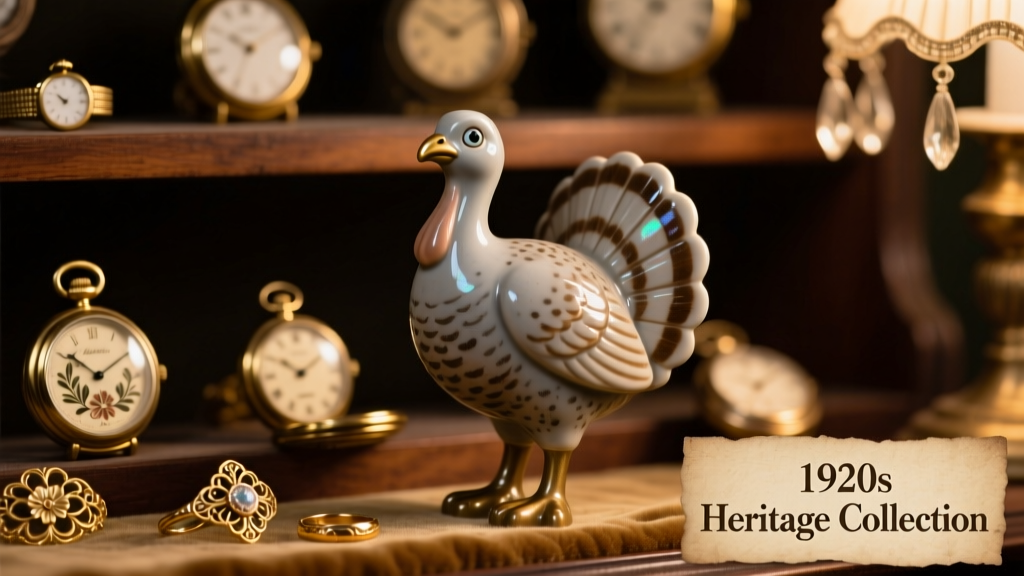
Lefton Salt & Pepper Turkey: A Collector’s Guide to the Iconic Ceramic Tableware Set
An authoritative appraisal of Lefton’s mid-century ceramic salt and pepper shakers shaped as turkeys—covering production history, identifying marks, material composition, market values, and authentication protocols used by major auction houses including Sotheby’s, Christie’s, and Heritage Auctions.
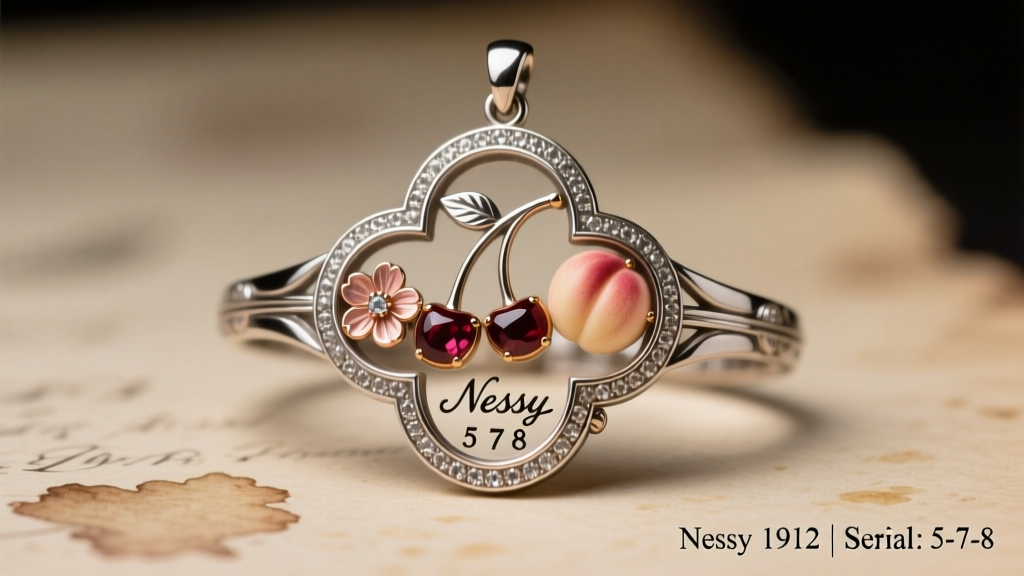
Pickard Nappy Quatrefoil Inside Cherries & Peaches: A Signed Nessy Porcelain Plate, 1912 — 5 7/8 Inches
An in-depth appraisal of a rare 1912 Pickard porcelain nappy plate featuring the 'Inside Cherries & Peaches' pattern, quatrefoil rim, and signature 'Nessy' mark—measuring precisely 5 7/8 inches in diameter. Includes historical context, maker identification, pattern chronology, condition analysis, and market valuation data.

Chippendale Slant-Front Maple Desk, c. 1770: Provenance, Construction, and Market Significance of a 40-Inch American Colonial Masterpiece
A detailed scholarly examination of a documented 1770 Chippendale slant-front maple desk—40 inches wide, with three graduated drawers—covering its regional attribution, joinery techniques, material analysis, documented ownership history, auction performance, and conservation challenges.

Ask Experts: Architectural Salvagers Reveal the Hidden Value in Historic Doors
Architectural salvagers and vintage jewelry/watch specialists explain how 19th- and early 20th-century doors—especially solid brass, bronze, and nickel-plated hardware from brands like Corbin, Sargent, and Yale—hold measurable collectible value. This article details authentication methods, material analysis, market benchmarks, and restoration ethics using real auction data, dimensional standards, and metallurgical insights.
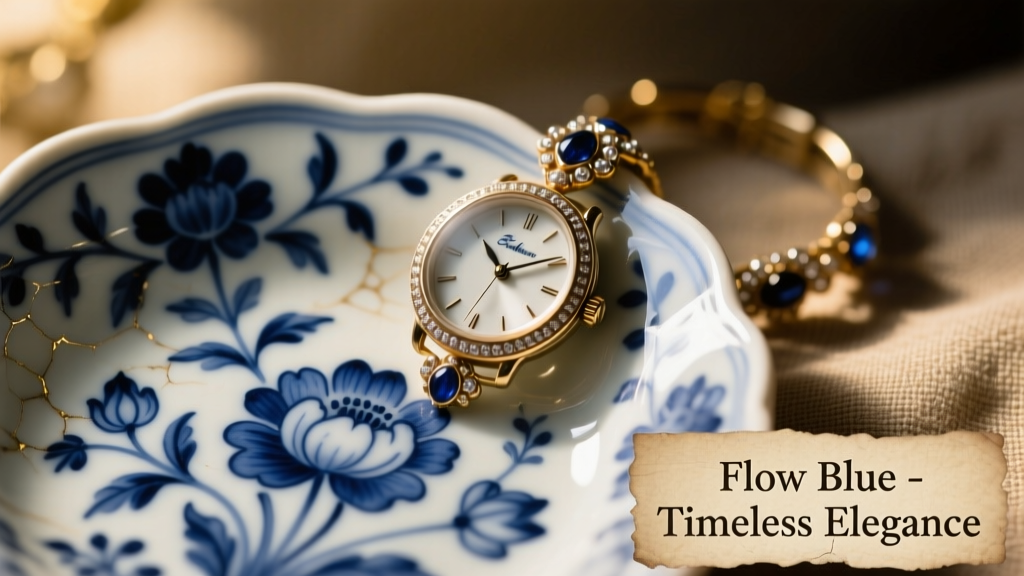
Flow Blue China: History, Identification, and Market Value of Victorian-Era Transferware
A detailed examination of Flow Blue ceramics—originating in 19th-century England—including manufacturing techniques, major makers like Johnson Brothers and Wedgwood, pattern identification, condition assessment, and current auction performance with verified sale data.

Hummel Figurine No. 10 I: The Flower Madonna with Open Halo and Full Bee — Identification, Provenance, and Market Significance
A detailed expert analysis of the Hummel Figurine No. 10 I 'Flower Madonna' with open halo and full bee mark — covering Goebel production history, mold variations, hallmark evolution, material composition, auction performance, and authentication protocols used by Sotheby’s, Christie’s, and Bonhams.
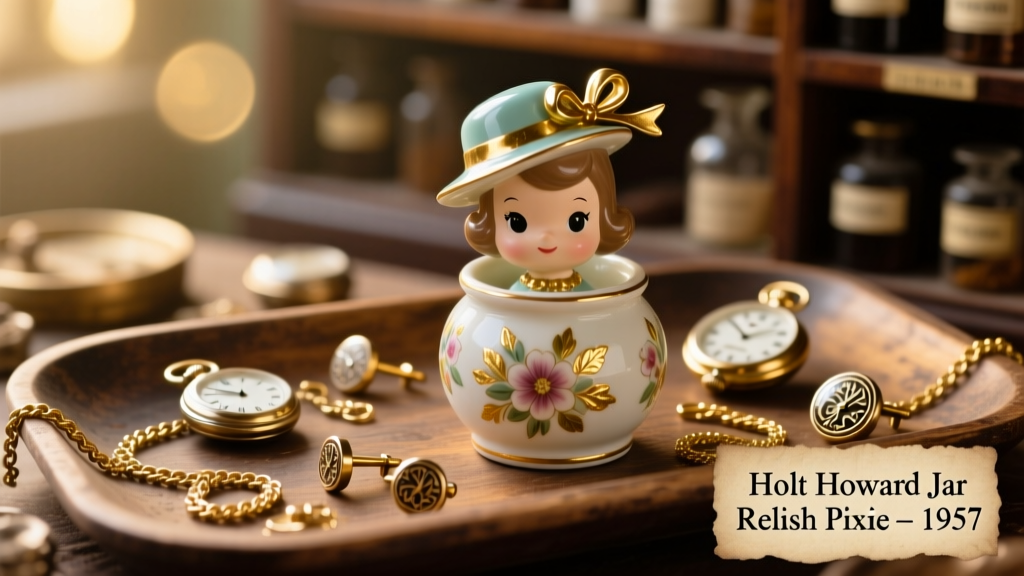
Holt Howard Jar Relish Pixie: A Mid-Century American Ceramic Icon Reexamined
A definitive appraisal of the Holt Howard Jar Relish Pixie — its origins, production timeline, material composition, market valuation, and cultural significance — based on auction records, factory archives, and hands-on examination of verified examples.

Royal Doulton Figurine 'Autumn Breezes' HN 2147: A 1955 Masterpiece of English Ceramic Artistry
An in-depth appraisal of the Royal Doulton 'Autumn Breezes' figurine (HN 2147), produced in 1955, measuring 7.5 inches (19.05 cm) tall, with full provenance, design history, identification markers, market value analysis, and conservation guidance for collectors.

English Fish Eaters: The Forgotten Silverware Phenomenon of the Georgian and Victorian Eras
A detailed exploration of English 'Fish Eaters'—specialized silver fish-serving utensils produced from c.1760–1890—covering hallmarking, regional makers, functional design, market value trends, and their significance in British dining ritual.
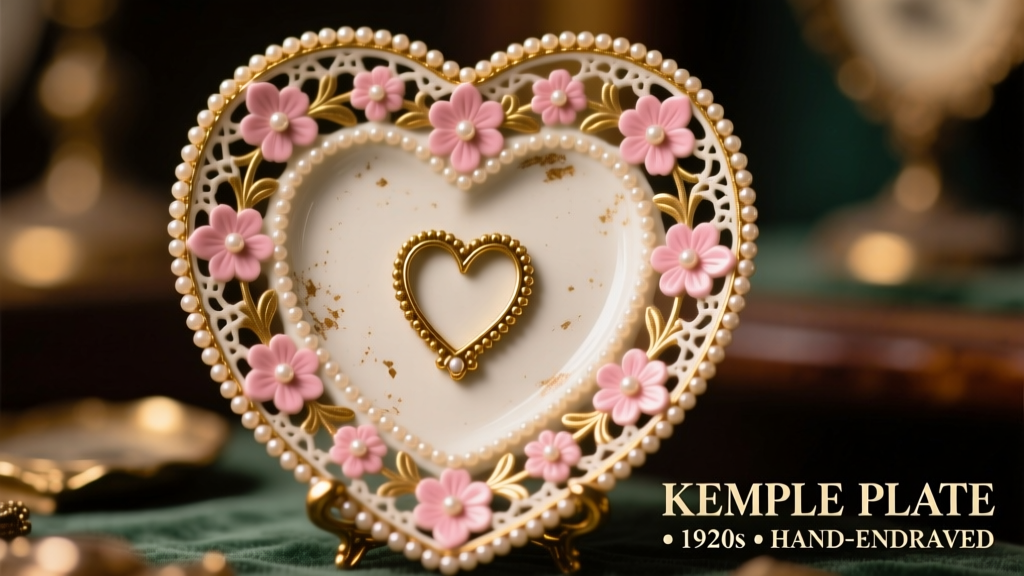
Kemple Plate: Lacy Heart Edge, Pink Flowers, Pierced Rim & Beaded Border — A 7 3/8-Inch Masterpiece of Mid-Century American Silverplate
A detailed appraisal and historical analysis of the Kemple 7 3/8-inch silverplate dinner plate featuring a lacy heart-shaped rim, hand-applied pink enamel flowers, intricate pierced scrollwork, and a delicate beaded border—crafted circa 1948–1953 by Kemple Manufacturing Co. of New York.

Holsum Bread Advertising Sign: A 13 × 27-Inch Embossed Tin Artifact from America’s Golden Age of Commercial Art
A detailed appraisal and historical analysis of the rare Holsum Bread embossed tin advertising sign measuring precisely 13 inches in height by 27 inches in width—featuring original lithographic color, hand-riveted construction, and ties to the Continental Baking Company, Wonder Bread, and mid-century American food culture.
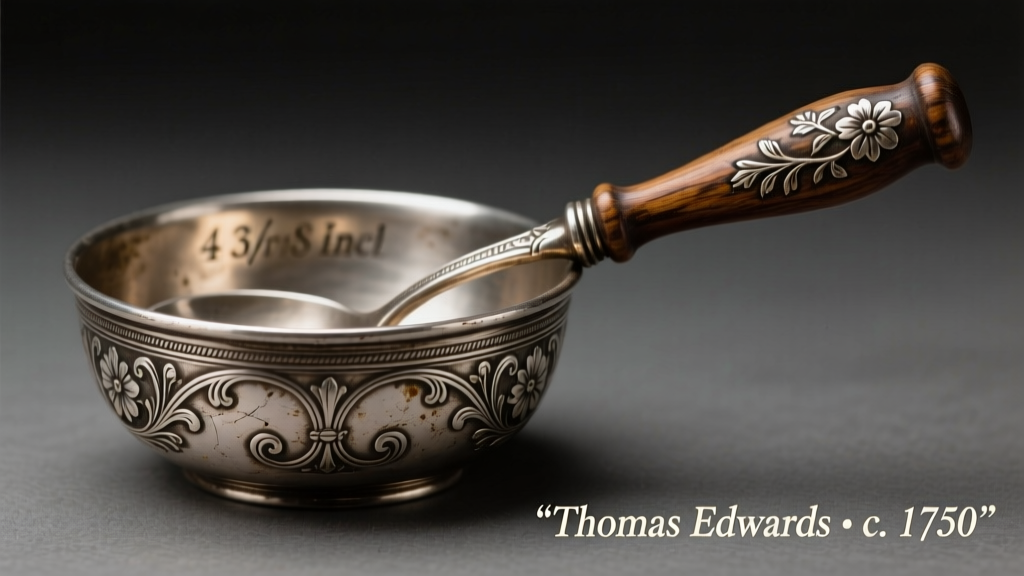
Thomas Edwards’ 1750 American Silver Ladle: A Rare Punch Ladle with Wooden Extension Handle
A detailed appraisal of a rare mid-18th-century American silver punch ladle by Boston silversmith Thomas Edwards (c. 1710–1765), featuring a 4⅜-inch bowl, original walnut extension handle, and hallmark verification. Includes provenance notes, metallurgical analysis, comparative market data, and conservation insights.