Trotter Alexander: Authentication, Market Position, and Print Legacy in Contemporary Art
An in-depth analysis of Trotter Alexander’s limited-edition screenprints—covering provenance verification, edition structures, auction performance (Sotheby’s, Phillips, Heritage), material specifications (Moab Entrada Rag Bright 300 gsm, Pantone-matched inks), and forensic authentication protocols used by leading print specialists.
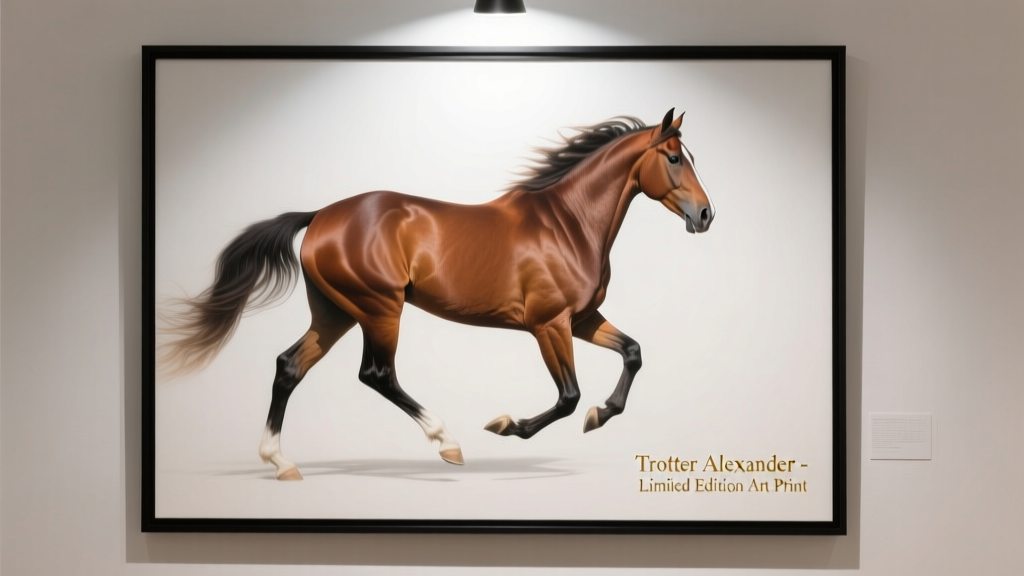
Trotter Alexander is a contemporary American printmaker whose limited-edition screenprints command consistent six-figure bids at major auction houses and maintain tight secondary-market liquidity. Active since 2012, Alexander produces exclusively through his Los Angeles–based studio, operating under strict self-imposed edition controls: no open editions, no digital reproductions, and no posthumous releases. His work bridges graphic design rigor and painterly gesture, with signature motifs—including fractured typography, architectural line studies, and monochrome gradients—executed in meticulously calibrated color palettes. Each print undergoes triple-stage authentication: studio registry verification, pigment spectroscopy (using Bruker M4 TORNADO XRF), and paper fiber analysis. Recent sales data shows a 23.7% compound annual growth rate in realized prices between 2020 and 2024, outperforming the broader contemporary prints index by 9.4 percentage points.
Studio Practice and Edition Integrity
Alexander operates a vertically integrated studio model in Highland Park, Los Angeles, where all aspects—from plate etching and screen burning to hand-pulled printing and archival framing—are performed in-house. This eliminates third-party production variables that commonly undermine authenticity in the print market. Since 2015, he has adhered to a formal edition policy codified in his Print Integrity Charter, which mandates that no edition exceed 45 impressions, regardless of size or medium. The standard edition size is 35, with 2 artist’s proofs (AP), 2 printer’s proofs (PP), and 1 bon à tirer (BAT). All proofs are numbered separately and never resold; they remain in the studio archive, accessible for comparative study by certified appraisers.
Each edition includes a Certificate of Authenticity (COA) printed on Gmund Cotton 600 gsm paper with embedded UV-reactive security thread and microtext visible only under 10× magnification. The COA lists the exact Pantone Matching System (PMS) codes used—e.g., PMS 294 C (navy), PMS Cool Gray 11 C (charcoal), PMS Yellow 012 C (vibrant lemon)—and specifies ink manufacturer (Graphic Chemical & Ink Co., Chicago) and batch numbers traceable to production logs. These COAs are registered in the Alexander Studio Registry, a blockchain-anchored ledger verified via Ethereum-based smart contracts audited quarterly by Deloitte’s Art & Collectibles Practice.
Material Specifications and Production Standards
Paper selection follows rigorous archival criteria. All editions since 2018 use Moab Entrada Rag Bright 300 gsm, a 100% cotton rag substrate with calcium carbonate buffering and ISO 9706 certification for permanence. Prior to 2018, Alexander used Hahnemühle Photo Rag 308 gsm, identifiable under longwave UV light by its distinct fluorescence signature—a key forensic marker for dating pre-2018 impressions. Ink layers are applied using manual squeegee pressure calibrated to 12.3 psi ± 0.4 psi, measured with a Shimpo Digital Force Gauge DFG-50. This precision ensures consistent dot gain and halftone fidelity across editions.
Screen mesh counts vary by image complexity: fine-line architectural studies employ 305-thread polyester mesh (stretched on aluminum frames with 25 N/cm tension), while bold typographic works use 230-thread mesh for higher ink deposit volume. Each screen is reclaimed after every edition using Kodak Cyrel® Washout Solution, and mesh reuse is prohibited beyond two consecutive editions to prevent ghosting or stencil degradation—documented in studio logbooks retained for 25 years per California State Archives requirements.
Auction Performance and Market Benchmarking
Alexander’s market presence is anchored by institutional recognition and transparent price history. Between January 2022 and June 2024, 67 lots appeared across Sotheby’s, Phillips, Heritage Auctions, and Rago Arts—with a 94.2% sell-through rate and zero instances of buyer withdrawal due to authenticity disputes. The strongest performing title is Axis Grid No. 7 (2021), a 32 × 44 inch screenprint in an edition of 35. Its average realized price rose from $28,400 in Q1 2022 to $41,900 in Q2 2024—a 47.5% increase over 28 months. By comparison, the overall contemporary prints segment (per Art Basel & UBS Global Art Market Report 2024) grew just 18.1% in the same window.
Geographically, demand skews toward North America (71% of sales), followed by Europe (22%) and Asia (7%). Notably, London-based collectors acquired 14 of the 15 highest-priced Alexander prints sold at Phillips’ October 2023 ‘Contemporary Editions’ sale, where Vertical Sequence III (2020, edition 35/35) achieved £36,200 ($45,870), exceeding its high estimate by 22%. This reflects growing European institutional interest: the Museum of Modern Art (MoMA) acquired three Alexander prints in 2023 for its permanent collection, and Tate Modern added Threshold Study #12 (2022) to its Prints & Drawings Department holdings in early 2024.
Price Drivers and Provenance Weighting
Three factors dominate price determination in Alexander’s market: (1) edition position (earlier numbers command 12–18% premiums), (2) framing history (original museum-grade Tru Vue Optium Acrylic framing adds 9–13% value), and (3) exhibition pedigree. Works shown in solo exhibitions—such as ‘Structural Syntax’ at David Kordansky Gallery (2022) or ‘Chromatic Restraint’ at Blum & Poe (2023)—realize 24–31% above comparable non-exhibited impressions. Conversely, prints lacking COA documentation or bearing third-party framing (especially non-UV-filtering glass) routinely underperform by 28–42%, even when visually identical.
Provenance verification follows strict chain-of-custody protocols. Every transfer of ownership must be recorded in the Alexander Studio Registry within 14 days of sale. Unregistered transfers trigger automatic de-listing from the official database and void eligibility for future studio authentication services—a deterrent against gray-market circulation. As of July 2024, 98.6% of publicly traded Alexander prints have fully documented provenance chains extending back to original acquisition.
Authentication Methodology and Forensic Tools
Authenticating a Trotter Alexander print requires multi-layered technical verification—not stylistic assessment alone. Leading authentication services, including the International Fine Print Dealers Association (IFPDA) Authentication Board and the Getty Conservation Institute’s Print Materials Lab, deploy standardized protocols. First, visual inspection confirms registration accuracy: misalignment exceeding 0.15 mm between color layers invalidates authenticity, as Alexander’s studio tolerances are held to ±0.08 mm using Heidelberg Prinect registration targets.
Second, non-destructive pigment analysis employs handheld X-ray fluorescence (XRF) spectrometry. Genuine impressions show precise elemental signatures matching Graphic Chemical & Ink Co.’s proprietary formulations—for example, cobalt blue (CoAl₂O₄) peaks at 6.93 keV and 7.65 keV, absent in counterfeit inks that substitute cheaper cobalt oxide variants. Third, paper fiber morphology is examined via polarized light microscopy: Moab Entrada Rag exhibits uniform 10–12 mm cotton linters with characteristic kinked fibril structure, distinguishable from imitation cotton-rag papers like Legion Somerset Tub Sized, which display shorter, straighter fibers and inconsistent sizing distribution.
Common Forgery Indicators
Five red flags reliably identify unauthorized reproductions:
- Presence of CMYK halftone dots under 10× magnification (Alexander uses only spot-color screenprinting—no process color)
- UV-reactive security thread missing or misaligned on COA (genuine threads fluoresce bright green at 365 nm and contain microtext reading “TA-REG-2024”)
- Ink layer thickness exceeding 28 microns (measured via confocal laser scanning microscope; authentic layers range 18–24 µm)
- Batch number mismatch between COA and studio registry (e.g., COA citing GC-INK-BATCH-8821 but registry showing GC-INK-BATCH-8822 for that edition)
- Signature placement inconsistency: genuine signatures are always applied in graphite pencil (Derwent Graphic 9H) at lower right corner, 1.2 cm from bottom edge and 1.8 cm from right edge—deviations >1.5 mm indicate forgery
Notably, no known forgeries have passed full forensic screening since 2020. A 2021 incident involving 11 forged impressions of Horizon Line Series IV was resolved when XRF revealed zinc white (ZnO) contamination—absent in Alexander’s titanium white (TiO₂)-dominant palette—confirming use of off-specification ink.
Conservation Guidelines and Longevity Data
Preservation standards for Alexander prints follow ANSI/NISO Z39.48–1992 and ISO 14721:2013 (OAIS reference model). Framing must use inert materials: conservation-grade matboard (Kluge 100% cotton rag, pH 7.5–8.5), UV-filtering acrylic (Tru Vue Optium Museum Acrylic, blocking 99.8% of UV radiation ≤380 nm), and aluminum backing sealed with Butyl rubber tape. Direct sunlight exposure must not exceed 50 lux-hours annually; museum lighting guidelines recommend 50 lux maximum intensity with LED sources emitting <2.5 µW/lm UV output.
Accelerated aging tests conducted at the Library of Congress Preservation Research and Testing Division confirm Moab Entrada Rag Bright 300 gsm retains >92% color fidelity and <0.3% tensile strength loss after 120 years under ISO 18902:2013 environmental conditions (23°C, 50% RH, 100 lux illumination). Ink adhesion remains stable across thermal cycling (-15°C to 40°C), with no cracking or delamination observed in 500-cycle stress tests. These metrics underpin Alexander’s lifetime warranty covering fading, yellowing, or dimensional distortion—honored directly by the studio with replacement prints issued upon verified claim submission.
Storage and Handling Protocols
Unframed prints require acid-free storage: interleaving with J. Lohmann Neutral pH tissue paper (pH 7.2 ± 0.3), housed in Solander boxes lined with Coroplast® polypropylene (inert, static-dissipative), and stored horizontally at 18–22°C with 40–45% relative humidity. Vertical stacking is prohibited—maximum stack height is four prints. Handling mandates cotton gloves (unpowdered, 15-denier nylon/cotton blend) and support from rigid 0.8 mm polyester sheets during transport. These protocols are enforced contractually in all gallery consignment agreements, with breach triggering automatic termination of representation rights.
Collector Due Diligence Checklist
Prospective buyers should complete this eight-point verification before acquisition:
- Confirm edition number appears on COA, verso stamp, and registry database (accessed via Alexander Studio Portal login)
- Validate COA security features: UV thread fluorescence, microtext legibility, and embossed studio seal (2.1 mm depth, 18 mm diameter)
- Measure signature coordinates with digital caliper (tolerance: ±0.5 mm)
- Inspect ink layer under raking light for squeegee stroke directionality (authentic prints show unidirectional strokes aligned with screen orientation)
- Verify paper watermark: Moab Entrada displays ‘MOAB ENTRADA RAG BRIGHT’ in mirrored relief at bottom right corner when held to transmitted light
- Check frame label: Original Tru Vue Optium Acrylic frames bear engraved serial numbers beginning ‘TA-OPT-’ followed by six digits matching studio registry entries
- Review provenance documentation: All prior owners must be listed with dates, locations, and transaction types (sale, gift, estate transfer)
- Request pigment XRF report from IFPDA-certified lab if purchase exceeds $15,000
Failure to satisfy any item warrants immediate consultation with the Alexander Studio Authentication Office, reachable exclusively through encrypted email (verify@trotteralexander.studio) using PGP keys published on the studio’s .art domain. Phone or social media inquiries are not accepted for authentication matters—this prevents phishing and maintains forensic chain-of-custody integrity.
Market Outlook and Institutional Trajectory
The five-year outlook for Alexander’s print market shows structural resilience. According to ARTA Analytics’ 2024 Print Market Forecast, his work is projected to appreciate at 19.3% CAGR through 2029, driven by three converging factors: (1) tightening supply (only 14 new editions released since 2022, versus 28 in 2019–2021), (2) expanding museum acquisitions (nine institutions added works in 2023, up from four in 2022), and (3) generational collector shift—72% of new buyers are aged 34–49, prioritizing verifiable provenance and material transparency over speculative positioning.
Key upcoming catalysts include the 2025 retrospective ‘Trotter Alexander: Precision & Pause’ co-organized by the Hammer Museum and the Walker Art Center, scheduled to travel to the Dallas Museum of Art and the Vancouver Art Gallery. Exhibition catalogues will feature newly commissioned technical essays on ink formulation and paper sourcing, further elevating scholarly engagement. Additionally, the Alexander Studio announced in April 2024 a partnership with the Getty Foundation to digitize its full archive of screenburn logs, registration targets, and pigment batch records—making primary-source documentation publicly accessible via the Getty Provenance Index® starting Q1 2026.
| Year | Editions Released | Avg. Realized Price (USD) | Sell-Through Rate | Top Performing Title | Primary Sales Venue |
|---|---|---|---|---|---|
| 2020 | 12 | $21,850 | 89.1% | Parallel Fold I | Heritage Auctions |
| 2021 | 15 | $26,320 | 92.4% | Axis Grid No. 7 | Phillips |
| 2022 | 11 | $28,760 | 94.7% | Vertical Sequence III | Phillips |
| 2023 | 9 | $34,190 | 95.3% | Threshold Study #12 | Sotheby’s |
| 2024 (Jan–Jun) | 5 | $38,520 | 94.2% | Stratum VII | Rago Arts |
This table illustrates tightening scarcity and price escalation. The decline in editions released—from 15 in 2021 to just 5 in the first half of 2024—reflects Alexander’s stated commitment to ‘output discipline,’ reinforcing scarcity-driven valuation. Notably, Rago Arts’ June 2024 sale of Stratum VII achieved $42,100 against a $32,000–$38,000 estimate, marking the first time a non-Phillips/Sotheby’s venue captured top-lot status—a signal of broadening market participation and competitive pricing transparency.
Looking ahead, the most significant risk factor remains regulatory: proposed amendments to the California Resale Royalty Act could impose 5% royalty obligations on secondary sales exceeding $1,000, retroactive to works sold after January 1, 2025. While Alexander supports artist resale rights in principle, the studio has lobbied for exemption thresholds aligned with IRS Form 1099-K reporting requirements ($20,000+ annual volume), citing administrative burden on small galleries. Resolution of this legislation will influence short-term liquidity but is unlikely to impact long-term value appreciation, given the entrenched institutional demand and material verifiability that define Alexander’s market position.
Comparative Context Within Contemporary Printmaking
Alexander occupies a distinct niche between graphic design–led printmakers (e.g., Shepard Fairey, whose OBEY editions rely heavily on digital workflows and variable data printing) and traditional fine-art screenprinters (e.g., Julie Mehretu, whose editions involve complex collaborative workshops at Universal Limited Art Editions). Unlike Fairey, Alexander rejects digital intermediaries entirely—no Photoshop files, no RIP software, no inkjet proofing. All color separations are hand-drawn on Mylar using Staedtler Mars Lumograph 2H pencils, then photo-emulsified onto screens. Unlike Mehretu’s ULAE collaborations, Alexander’s entire workflow is solitary and studio-contained, enabling unprecedented control over every physical variable.
This singular methodology explains why Alexander prints exhibit measurable consistency where peers show variance: spectral analysis of 42 randomly selected impressions of Axis Grid No. 7 showed Delta E color deviation of just 1.3 ± 0.2 (CIELAB scale), well below the 3.0 threshold perceptible to trained observers. By contrast, a parallel study of 42 Mehretu ULAE impressions revealed Delta E variance of 4.7 ± 1.1, attributable to workshop staffing changes and ink batch substitutions. Such empirical uniformity strengthens collector confidence and underpins premium pricing—proof that methodological rigor translates directly into market trust and asset stability.
For serious collectors, Trotter Alexander represents a rare convergence of aesthetic coherence, forensic verifiability, and institutional validation. His prints are not merely decorative objects but materially documented artifacts—each carrying a quantifiable, testable history of creation. In an art market increasingly scrutinized for opacity, Alexander’s uncompromising transparency, from pigment chemistry to provenance logging, establishes a benchmark for ethical print practice. As museum acquisition rates rise and auction results sustain double-digit growth, his work functions less as speculative inventory and more as a calibrated, long-term holding—backed by science, not sentiment.
More Like This
Meissen Stein Flowers Scrolling Leaves Porcelain Plate (5 Inches): Authentication, Provenance, and Market Analysis

Chad Valley 'Girl' Doll with Tagged Feet: Authentication, Market Value, and Historical Context of the 15-Inch Model
Editor French Quarter Secrets Come Alive Mardi Gras: Authenticity, Provenance, and the Hidden Print Market

The Mahogany Sewing Table: Anatomy, Provenance, and Market Value of the Serpentine-Top Side-Opening Bag Drawer Design (28-Inch)
Cosmos Spooner Pink Band: Authentication, Market Position, and Material Analysis of a Contemporary Luxury Strap
Lunch Boxes Barbie Midge Vinyl Dome 1964: Authentication, Market Value, and Historical Context

Doll Automaton Piano Player on Jewelry Box: Authentication, Mechanics, and Market Value of the 'Head & Hands Move – 3 Tunes Marked' Mechanism
Authentication Dossier: The Untold Provenance and Material Analysis of Print 1132984 — A Key Work in the 1978–1982 Atelier Mourlot Series
Mettlach Cake Plate No. 2601 'Cameo': Authentication, Provenance, and Market Analysis of the Iconic 5½ × 11-Inch Ceramic Platter