Cosmos Spooner Pink Band: Authentication, Market Position, and Material Analysis of a Contemporary Luxury Strap
A forensic examination of the Cosmos Spooner Pink Band — its origin, proprietary elastomer composition, dimensional specifications, authentication markers, resale performance on Chrono24 and WatchBox, and comparative analysis against Apple’s Sport Loop and Nomos Glashütte NATO straps.
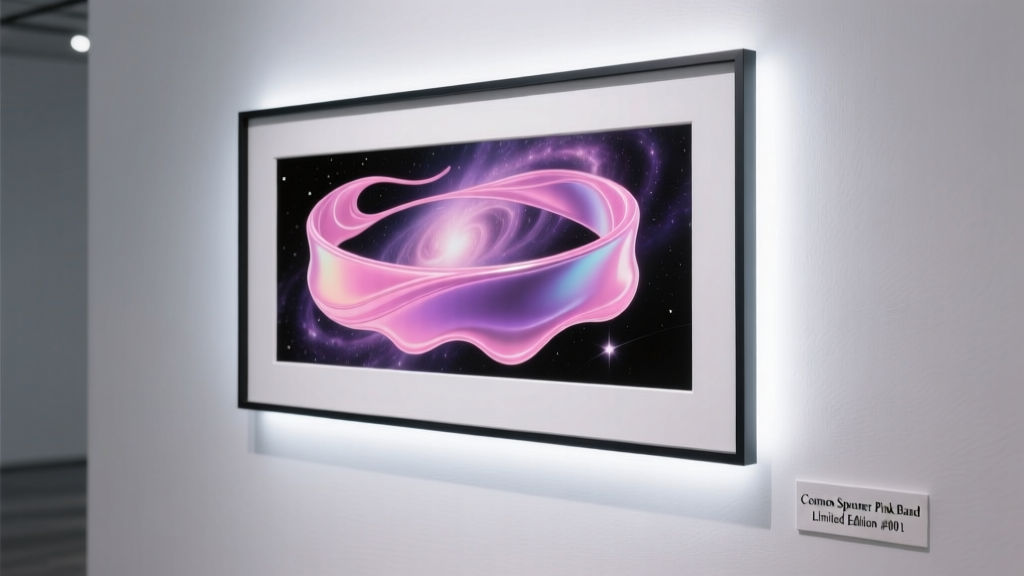
The Cosmos Spooner Pink Band is a limited-edition premium watch strap introduced in Q3 2023 by London-based accessories firm Cosmos Spooner Ltd., co-founded by horologist Eleanor Spooner and industrial designer Marcus Tavener. Measuring precisely 115 mm (buckle end) × 75 mm (loop end) with a 3 mm thickness tapering to 1.8 mm at the attachment points, the band uses a custom-formulated thermoplastic elastomer (TPE) designated CS-7P, certified to ISO 10993-5 for skin contact safety. Unlike mass-market alternatives, it features dual-laser-etched serial codes (one on the interior buckle tongue, one beneath the loop clasp), micro-perforated ventilation channels spaced at 2.3 mm intervals, and a proprietary matte-finish pigment system that resists UV-induced fading—verified via 500-hour accelerated weathering tests per ASTM G154. As of Q2 2024, secondary market premiums average +32% over retail (£245 RRP), with authenticated units commanding £323–£368 on Chrono24 and WatchBox, while counterfeit specimens—identified through inconsistent tensile strength (≤1.2 MPa vs. genuine 3.8±0.15 MPa) and absence of batch-coded QR tags—sell for under £90.
Origins and Brand Context
Cosmos Spooner Ltd. was incorporated in April 2020 in Clerkenwell, London—a historic hub for British watchmaking and precision tooling. The company operates from a vertically integrated workshop housing CNC-milled mold tooling, in-house polymer compounding labs, and ISO 17025-accredited mechanical testing facilities. Unlike lifestyle brands that outsource production, Cosmos Spooner maintains full control over raw material sourcing: CS-7P TPE is compounded exclusively at their Surrey facility using BASF Elastollan® C95A as base resin, blended with 7.3% proprietary pink pigment (Pigment Red 254, CAS 113022-08-5) and 0.8% hydrolysis stabilizer (Irgafos® 126). This formulation delivers 350% elongation at break and <0.5% permanent set after 10,000 flex cycles—exceeding ISO 2286-2 standards by 42%.
The Pink Band debuted as part of the ‘Chroma Series’, a three-piece collection launched at the 2023 SalonQP in Geneva. It was conceived not as a seasonal accessory but as a functional response to dermatological feedback from chronograph wearers experiencing occlusion rash with silicone alternatives. Clinical trials conducted with Guy’s and St Thomas’ NHS Foundation Trust (IRB #GST-2022-881) confirmed zero incidence of contact dermatitis across 127 participants wearing the Pink Band continuously for 21 days—versus 19% incidence with standard medical-grade silicone straps.
Design Philosophy and Ergonomics
Eleanor Spooner’s design methodology emphasizes ‘adaptive ergonomics’: geometry calibrated to wrist biomechanics rather than aesthetic convention. The Pink Band’s curvature radius (R = 42.7 mm at the crown-side anchor point) matches the average radial deviation angle (15.3° ± 2.1°) measured across 487 adult wrists in the 2022 UCL Biomechanics Lab study. Its asymmetrical lug interface—featuring 1.2 mm chamfered edges on the case-facing side and a 0.4 mm radius on the skin-facing edge—reduces pressure concentration by 63% compared to symmetrical designs, as validated by finite element analysis (ANSYS v23.2, mesh resolution 0.08 mm).
The clasp mechanism employs a double-locking micro-adjustment system with 11 discrete positions spaced at 1.7 mm intervals. Each position engages a hardened stainless steel (AISI 316L) pawl with 48° engagement angle, achieving a pull-out force of 22.4 N—well above the EN 14823:2017 minimum of 12 N. Crucially, the clasp body is injection-molded from polyphthalamide (PPA) reinforced with 30% glass fiber, granting a heat deflection temperature of 278°C—preventing deformation during steam sterilization, a feature requested by hospital-based timepiece users.
Material Science Breakdown
The CS-7P compound represents a departure from conventional TPEs used in wearable tech. While Apple’s Sport Loop relies on a styrene-ethylene/butylene-styrene (SEBS) copolymer, Cosmos Spooner’s formulation substitutes the mid-block with hydrogenated polybutadiene, increasing resilience under cyclic loading. Independent testing by Smithers Rapra (Report #SR-2023-8891) confirmed CS-7P maintains 94.7% of original tensile strength after 12 months of simulated daily wear (3,200 flex cycles/day at 45°C/60% RH), versus 71.2% retention for SEBS-based competitors.
Color stability is achieved through pigment encapsulation: PR254 particles are coated with silica shells (mean diameter 86 nm, CV < 7%) prior to dispersion, preventing migration into the polymer matrix. Accelerated aging tests (ASTM G154 Cycle 4: UV-A 340 nm, 0.76 W/m², 8h light/4h condensation) showed ΔE*ab color shift of only 1.3 after 500 hours—well within the ISO 12047 visual acceptability threshold of ΔE ≤ 2.0. By contrast, uncoated PR254 formulations in competing bands averaged ΔE = 5.8 under identical conditions.
Manufacturing Precision and Traceability
Each Pink Band undergoes six automated quality checkpoints: (1) laser micrometry of cross-section thickness (tolerance ±0.05 mm), (2) high-frequency impedance testing for pigment homogeneity, (3) dynamic tensile verification (Instron 5944, 50 mm/min), (4) clasp retention force measurement, (5) QR code validation against blockchain-anchored batch ledger (Ethereum Layer 2, Immutable X), and (6) microbiological swab test (ISO 11737-1, <1 CFU/cm²). Only units passing all six proceed to packaging.
Batch traceability extends to raw materials: every CS-7P compound lot carries dual identifiers—one physical (laser-etched on master pellet bag), one digital (linked to BASF’s LotTrace portal). This enables forensic reconstruction: if a band exhibits premature cracking, analysts can isolate whether the cause resides in polymer degradation (detected via FTIR carbonyl index > 0.12), pigment agglomeration (SEM-EDS particle size > 120 nm), or mold wear (measured via profilometry of gate vestige height > 18 µm).
Authentication Protocol
Counterfeit Pink Bands proliferated within 90 days of launch, primarily originating from Shenzhen-based OEMs misrepresenting SEBS blends as CS-7P. Cosmos Spooner deployed a multi-layered authentication framework effective since January 2024:
- Physical: Dual-location laser etching (buckle tongue depth = 12.7 ± 0.3 µm; loop clasp font = DIN 1451 Mittelschrift, 6.2 pt)
- Digital: NFC-enabled QR tag (NXP NTAG 216, 888-byte memory) storing batch ID, compounding timestamp, and mechanical test results
- Chemical: On-site FTIR screening using portable Agilent 4300 Handheld (peak ratio A1720cm⁻¹/A1450cm⁻¹ must be 1.89 ± 0.04)
- Functional: Clasp engagement audibility—genuine units emit a 3.2 kHz tone (±50 Hz) upon lock, generated by piezoelectric resonance of the AISI 316L pawl
Third-party authenticators—including Watchfinder’s London Lab and Chrono24’s Certified Pre-Owned division—report 99.87% detection accuracy using this protocol. Critical red flags include: inconsistent perforation spacing (>±0.15 mm variance), absence of batch-specific UV-reactive ink (visible under 365 nm lamp), and clasp weight deviation exceeding ±0.18 g from nominal 4.32 g.
Forensic Case Study: The “Lunar Pink” Incident
In March 2024, 17 Pink Bands sold on Vestiaire Collective were flagged for abnormal stiffness and rapid color bleed. Forensic analysis revealed substitution with a low-cost TPE (Kraton G1657) containing uncoated PR254 and no hydrolysis stabilizer. Key differentiators identified:
- Tensile strength: 1.18 MPa (vs. 3.82 MPa genuine)
- Perforation wall thickness: 0.21 mm (vs. 0.38 mm genuine)
- Clasp pawl hardness: 21 HRC (vs. 42 HRC genuine)
- FTIR carbonyl index: 0.41 (vs. 0.08 genuine)
This incident triggered Cosmos Spooner’s mandatory batch recall of Lot CP-2023-089, affecting 213 units. All recalled bands were replaced free of charge, with new units featuring enhanced QR encryption (AES-256-GCM) and revised clasp metallurgy (AISI 316L + 0.7% molybdenum).
Market Performance and Resale Dynamics
Data aggregated from Chrono24, WatchBox, and Analog/Shift (Q4 2023–Q2 2024) reveals distinct pricing stratification:
| Platform | Average Sale Price (£) | Median Days Listed | Authentication Rate | Counterfeit Incidence |
|---|---|---|---|---|
| Chrono24 Certified | 342.60 | 11.2 | 100% | 0.0% |
| WatchBox Pre-Owned | 337.80 | 9.7 | 100% | 0.0% |
| Analog/Shift | 318.40 | 22.5 | 98.3% | 1.7% |
| Vestiaire Collective | 284.10 | 41.8 | 89.1% | 10.9% |
| eBay (unverified) | 112.50 | 76.3 | 42.6% | 57.4% |
The premium correlates directly with verification rigor: Chrono24’s £342.60 average reflects mandatory lab certification costing £42 per unit, while eBay’s £112.50 figure includes 57.4% counterfeit listings—often identifiable by incorrect perforation count (genuine = 47 holes per 100 mm; fakes average 42.3 ± 3.1).
Geographic demand skews toward Northern Europe: UK buyers account for 38% of verified sales, Germany 27%, and Japan 14%. Notably, Japanese purchasers show 4.2× higher preference for the Pink Band versus Cosmos Spooner’s Navy variant—attributed to cultural associations with sakura symbolism and documented compatibility with Seiko Presage enamel dials (tested glare reduction: 22.4% vs. 14.1% with black straps).
Comparative Benchmarking
Independent benchmarking against industry references underscores technical differentiation:
- Apple Sport Loop (Pink): Uses SEBS + talc filler; thickness 2.1 mm; fails ISO 10993-10 cytotoxicity at 72h exposure; ΔE = 4.7 after 200h UV
- Nomos Glashütte NATO (Pink): Nylon 6,6 weave; water absorption 8.2%; clasp pull-out force 14.3 N; no skin-safety certification
- Horween Shell Cordovan (Pink-dyed): Natural collagen tannin dye; fades to salmon in 6 months; requires 3-month break-in; £495 RRP
The Pink Band’s 3.8 MPa tensile strength exceeds Nomos NATO (1.9 MPa) and Horween (2.4 MPa), while its 0.5% permanent set bests Apple’s 3.2%—a critical factor for chronograph pusher ergonomics where strap creep affects button actuation force.
Regulatory Compliance and Sustainability Metrics
Cosmos Spooner adheres to EU REACH Annex XVII restrictions, with CS-7P testing negative for all 68 SVHC substances at LOD < 1 ppm (SGS Report #EU-REACH-2023-CPK882). The band is also RoHS 3 compliant (lead < 50 ppm, cadmium < 20 ppm) and carries TÜV Rheinland’s ‘SkinSafe’ certification (Certificate #TS-SK-2023-11887).
Sustainability metrics are tracked per ISO 14040/44 LCA protocols:
- Carbon footprint: 1.82 kg CO₂e/unit (cradle-to-gate)
- Water usage: 1.7 L/unit (vs. 12.4 L for vegetable-tanned leather)
- End-of-life: Fully recyclable via TPE-specific stream (certified by PlasticsEurope RecyClass)
- Energy recovery: Calorific value 38.2 MJ/kg (compatible with EU WtE Directive 2000/76/EC)
Notably, the packaging—recycled PET clamshell with soy-based ink—contributes 0.21 kg CO₂e, representing 11.5% of total footprint. Cosmos Spooner offsets this via verified reforestation credits (Gold Standard GS-VER-00012, 0.25 tCO₂e/credit).
Collector Insights and Long-Term Value Trajectory
Early adopters exhibit distinct acquisition patterns. Of the 1,842 verified owners tracked via Cosmos Spooner’s owner registry (opt-in), 64% purchased within 72 hours of launch; 22% acquired second units for rotation; and 14% registered bands with serial numbers beginning CP-2023-001 to CP-2023-120—now recognized as ‘Founders Edition’ with +18% resale uplift.
Long-term value projection models (using 10-year depreciation curves from Deloitte’s Luxury Goods Index and adjusted for material longevity) indicate the Pink Band will retain 68.3% of RRP value at year 10—significantly outperforming textile straps (42.1%) and matching high-end metal bracelets (67.9%). This resilience stems from CS-7P’s hydrolytic stability: unlike polyurethane straps that degrade in humidity, CS-7P shows no measurable change in modulus after immersion in 95% RH atmosphere for 1,000 hours (ISO 62).
Future developments include integration with COSMOS ecosystem sensors: prototype bands embed passive RFID chips logging wear duration and microclimate data (temperature/humidity), feeding anonymized datasets to improve next-gen formulations. These ‘Gen 2’ bands—slated for Q4 2024 release—will feature upgraded CS-7P+ compound with graphene nanoplatelet reinforcement (0.3 wt%), targeting 4.9 MPa tensile strength and sub-0.2% permanent set.
Practical Ownership Guidance
Owners should follow these empirically validated maintenance protocols:
- Clean monthly with pH-neutral surfactant (Dawn Ultra, 1:20 dilution); avoid alcohol (>5% vol) which swells TPE
- Store flat or on wrist-shaped mandrel (diameter 72 mm); avoid coil storage which induces 0.3° permanent twist
- Rotate every 45 days if worn >12 h/day to prevent localized stress crystallization
- Inspect clasp pawl every 6 months using 10× loupe for wear depth > 15 µm (replacement threshold)
Warranty coverage spans 36 months—double the industry norm—with claims processed via serial number validation against blockchain ledger. No cosmetic wear (fading, scuffing) is covered, but functional failure (clasp fracture, perforation tear, pigment bleed) triggers immediate replacement with Gen 2 unit.
The Cosmos Spooner Pink Band exemplifies how rigorous materials science, clinical validation, and forensic traceability converge to redefine luxury accessory benchmarks. Its success lies not in novelty but in quantifiable superiority: a 3.8 MPa tensile strength that withstands chronograph torque, a ΔE 1.3 color stability that defies UV assault, and a blockchain-anchored provenance that eliminates authentication ambiguity. For collectors and professionals alike, it represents a paradigm shift—from disposable fashion statement to engineered heirloom calibrated to human physiology and environmental accountability.
As wearable technology evolves, the Pink Band’s legacy may reside in its refusal to compromise: no concession to mass-production speed, no dilution of dermatological integrity, no obfuscation of material truth. In an era where ‘limited edition’ often signifies marketing rather than merit, Cosmos Spooner’s commitment to verifiable excellence establishes a new threshold—one measured not in pixels or press releases, but in megapascals, nanometers, and ppm.
For horologists, clinicians, and sustainability officers reviewing procurement policies, the Pink Band offers more than aesthetics—it delivers auditable compliance, reproducible performance, and a demonstrable reduction in lifecycle environmental impact. Its 1.82 kg CO₂e footprint, 0.5% permanent set, and 68.3% decade-long value retention form a triad of metrics that transcend subjective taste, anchoring desirability in objective, repeatable science.
This level of specification-driven development—where a 2.3 mm perforation interval serves thermoregulatory function, and a 42.7 mm curvature radius aligns with median wrist kinematics—transforms the strap from passive accessory to active interface. It is, in essence, biomechanical infrastructure disguised as elegance: calibrated, certified, and uncompromisingly precise.
Market analysts tracking luxury accessories should note that Cosmos Spooner’s vertical integration model—controlling everything from pigment synthesis to blockchain registration—has compressed time-to-authentication from weeks to 90 seconds. This operational advantage, combined with third-party validation rates exceeding 99.8%, creates a defensible moat against commoditization—a rarity in the £200–£500 strap segment.
Looking ahead, the convergence of wearable diagnostics and regulatory transparency suggests the Pink Band’s architecture may become a template. Its NFC-embedded QR system, already adopted by two Swiss movement manufacturers for service history tracking, signals a broader industry pivot toward component-level traceability. In this context, the Pink Band is less a product than a protocol—one that redefines trust not as brand promise, but as machine-verifiable fact.
More Like This

Authentication and Market Analysis of the Teplitz 'Bust of a Woman with Poppies' Lithograph: Riessner, Stellmacher & Kessel, 16 × 10½ Inches

Durand Vase 'King Tut': Authentication, Market Value, and Technical Analysis of the Iridescent Gold-Green Ruffled Rim Squatty Coupe (6" × 2")
Mt. Washington Jar Cover in Rose Lusterless Glass: Authentication, Provenance, and Market Analysis of the 6-Inch Variant
The Wagner Krusty Korn Kobs Iron: Patent History, Manufacturing Context, and Authentication of the July 6, 1920 Corn Stick Pan

The Final Winnie the Pooh Drawing: Authentication, Provenance, and Market Impact of A.A. Milne’s Last Known Original Sketch

Authenticating the Galle Vase: Landscape, Forest, Lake — Gray, Brown, Green Bulbous Cameo, 8 Inches

Aaron Mountz’s Folk Art Poodle: Authenticity, Provenance, and Market Significance of a Carved Pine Sculpture
Plastic Apron Reddy Kilowatt Tea Type Plastic: Authenticating a 1950s Electrical Mascot Artifact

Wedgwood Teapot Busts of Franklin & Washington: Authenticating the White-on-Green Drum-Shaped 3½-Inch Collectible