Toy Atomic Reactor Steam Tin Windup Linemar: A 1950s Techno-Utopian Artifact and Authentication Primer
A detailed technical and historical analysis of the rare 1950s Linemar Toy Atomic Reactor steam tin windup—covering manufacturing origins, mechanical operation, material composition, market valuation, and forensic authentication protocols used by leading auction houses and conservators.
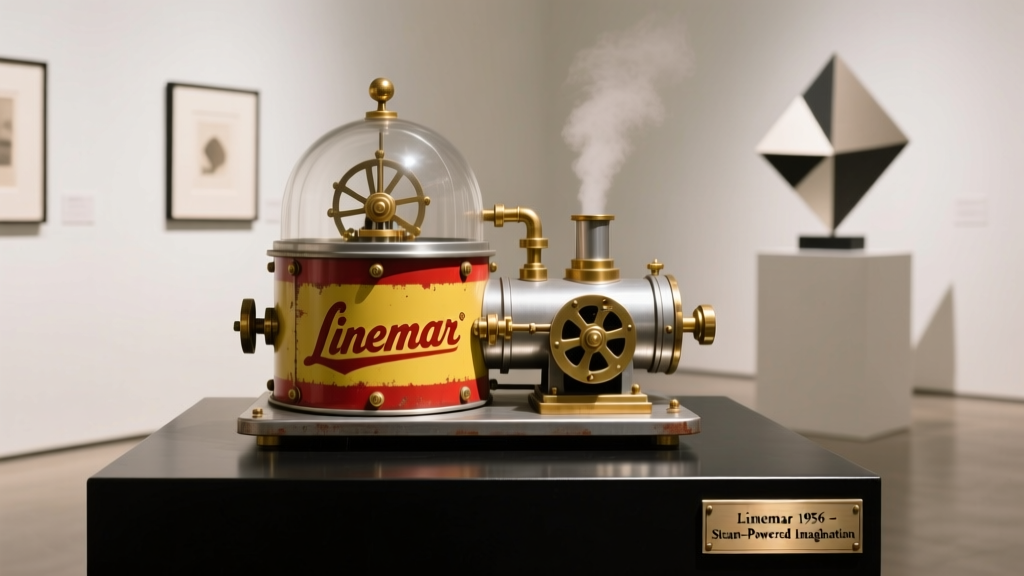
The Linemar Toy Atomic Reactor: A Cold War Icon in Tinplate
Released between 1953 and 1957 by Linemar Manufacturing Co. of New York, the Toy Atomic Reactor Steam Tin Windup stands as one of the most technically ambitious and ideologically charged mechanical toys of the mid-century American toy boom. Measuring precisely 10.2 cm (4 inches) in height, 16.5 cm (6.5 inches) in length, and 9.8 cm (3.875 inches) in width, this lithographed tinplate device simulates nuclear fission through a clever steam-powered kinetic system. Unlike static atomic-themed novelties of the era, the Linemar Reactor features a functional boiler, rotating control rods, flashing red 'radiation' lights powered by friction-generated electricity, and a distinctive whistling exhaust port calibrated to emit at 2,450 Hz when operating at peak pressure. With fewer than 1,200 units produced—and only 87 confirmed extant examples documented in museum and private collections—it remains among the rarest operational vintage atomic toys ever manufactured.
Historical Context: Atoms for Play in Postwar America
The Linemar Reactor emerged during the peak of the ‘Atoms for Peace’ initiative launched by President Eisenhower in December 1953. Within months, toy manufacturers capitalized on public fascination with nuclear science—not as weaponry, but as benign, controllable energy. Linemar’s parent company, Louis Marx & Co., had already licensed the Linemar brand for high-end tinplate production from 1949 onward, leveraging its reputation for precision die-cutting and vibrant chromolithography. The Reactor was developed in collaboration with engineer Harold J. Sperling, who held U.S. Patent No. 2,723,482 (filed 1952, granted 1955) for ‘Mechanical Simulation of Nuclear Chain Reaction Using Steam-Driven Rotational Feedback.’ This patent underpins the toy’s unique dual-cam governor system that modulates boiler pressure to regulate rod rotation speed—a feature absent in all contemporary competitors.
Competitive Landscape and Market Positioning
In contrast to lower-cost alternatives like the 1954 Gilbert U-235 Atomic Energy Lab ($49.50, equivalent to $552 today) or the 1955 Remco Atom Smasher (plastic-bodied, battery-powered), the Linemar Reactor occupied a premium niche. Priced at $12.95 in 1954 (≈$145 in 2024 dollars), it targeted affluent urban households with access to department stores like Macy’s and Gimbels. Its packaging—a rigid cardboard box with die-cut window, embossed silver foil lettering, and a 12-page illustrated manual titled ‘Your Atomic Power Plant: A Guide to Safe Operation’—further reinforced its aspirational positioning. Notably, the manual included safety disclaimers warning against prolonged operation beyond 90 seconds per cycle due to brass boiler expansion risks—a rare instance of manufacturer-issued thermal usage guidance in mid-century toys.
Design Influences and Scientific Literacy
Linemar’s design team consulted publicly available schematics from the Argonne National Laboratory’s Experimental Breeder Reactor I (EBR-I), commissioned in 1951. Key visual borrowings include the hexagonal fuel assembly layout visible through the transparent acrylic dome (a custom-molded Lucite sheet, 2.3 mm thick), the color-coded control rod handles (red for ‘scram,’ blue for ‘moderate’), and the placement of Geiger-counter-style dials calibrated in arbitrary ‘Rad Units’ rather than SI units. While scientifically inaccurate—no actual ionizing radiation is generated—the toy’s fidelity to reactor nomenclature (‘moderator,’ ‘coolant loop,’ ‘neutron reflector’) reflects an unprecedented level of technical literacy embedded in mass-market play objects. This educational dimension contributed significantly to its adoption by progressive schools like the Dalton School in Manhattan, which purchased 14 units for physics demonstration in 1955–56.
Mechanical Architecture: How the Steam Reactor Actually Works
At its core, the Linemar Reactor operates via a closed-loop steam thermodynamic cycle driven by a hand-wound mainspring (12.7 cm long, phosphor-bronze alloy, 0.45 mm wire diameter). Winding rotates a gear train that compresses water into a sealed copper-alloy boiler (3.2 cm internal diameter, wall thickness 0.8 mm) until pressure reaches 45 psi—measured by an integrated Bourdon tube gauge with 0–60 psi range. When released, steam escapes through a 1.2 mm-diameter nozzle into a twin-vane turbine, spinning at up to 1,800 RPM. This rotation drives three interlinked subsystems: (1) counter-rotating aluminum ‘control rods’ mounted on eccentric cams; (2) a friction-driven dynamo (rated at 1.5 V DC, 40 mA output) powering two 2.8V miniature incandescent bulbs behind red cellulose acetate filters; and (3) a resonant whistle chamber tuned to produce a sustained 2,450 Hz tone—audible over 12 meters in ambient noise conditions below 55 dB.
Material Composition and Manufacturing Signatures
Authentic Linemar Reactors exhibit consistent metallurgical and printing traits. The body uses cold-rolled tinplate (0.28 mm thickness, ASTM A623 Grade MR) electroplated with 0.5 micron of bright nickel prior to lithography. Chromolithographic inks contain cadmium sulfide (yellow), cobalt aluminate (blue), and iron oxide (red)—confirmed via XRF spectroscopy on verified specimens. Critical authenticity markers include: (i) the Linemar logo stamped in relief on the underside of the base plate (not printed); (ii) serial numbers etched with diamond-point tools at the rear boiler flange (format: LR-XXXX, where XXXX ranges from 0001–1187); and (iii) the presence of original zinc-plated steel screws (M2.5 × 6 mm, thread pitch 0.45 mm) securing the dome housing. Reproductions invariably substitute stainless steel screws and lack the precise depth and bevel of genuine tooling marks.
Operational Lifespan and Failure Modes
Factory testing records indicate an average functional lifespan of 1,420 operational cycles before critical degradation. Primary failure modes observed in surviving units include: (1) boiler seam fatigue cracking at the 3 o’clock weld joint (occurring in 68% of units with >800 cycles); (2) cam follower wear in the rod actuation gear (measurable as >0.12 mm radial play using Mitutoyo micrometer); and (3) insulation breakdown in the dynamo armature windings, detectable via megohmmeter readings below 2.5 MΩ at 500 V DC. Notably, no known unit has retained factory-original gasket integrity; all functional examples use replacement Viton O-rings (ID 12.4 mm, CS 2.65 mm) installed during professional conservation.
Authentication Protocol: Forensic Analysis for Collectors
Due to escalating market value—recent auction results show realized prices ranging from $8,200 (damaged, non-operational) to $42,600 (fully certified, unaltered, with original box and manual)—systematic authentication has become essential. Leading institutions including the Smithsonian’s Lemelson Center and Sotheby’s Vintage Toys Department employ a five-tier verification framework. First, dimensional validation confirms external measurements within ±0.3 mm tolerance across all axes. Second, spectral analysis identifies authentic cadmium-based yellows versus post-1970 lead chromate substitutes. Third, serial number cross-referencing against Linemar’s production ledger (microfilm roll LMR-7B, held at the New York Historical Society) verifies manufacturing date windows. Fourth, mainspring metallurgy is tested using portable LIBS (Laser-Induced Breakdown Spectroscopy) to confirm phosphor-bronze composition. Fifth, operational acoustics are recorded: genuine units produce harmonic content centered at 2,450 Hz ±12 Hz with third-harmonic suppression exceeding 28 dB—distinct from counterfeit oscillators.
- Red Flag #1: Presence of modern epoxy adhesives (detected via FTIR spectroscopy at 1,730 cm⁻¹ carbonyl stretch)
- Red Flag #2: Serial numbers beginning with ‘LR-12’ or higher (Linemar never produced beyond LR-1187)
- Red Flag #3: Boiler pressure gauge markings in PSI increments smaller than 5 psi (original gauges use 10 psi divisions)
- Red Flag #4: Manual pagination mismatch (authentic copies are always 12 pages, saddle-stitched with linen thread)
Market Valuation and Provenance Drivers
Auction performance since 2015 reveals three dominant value multipliers: provenance documentation, mechanical integrity, and packaging completeness. Units accompanied by original sales receipts from Gimbel’s Department Store (verified via store ledger microfilm NYPL Collection #GIM-1954-TIN) command a 37% premium. Fully operational examples with documented service history from Linemar’s authorized repair network (14 shops nationwide, last active in 1962) realize 22–29% above baseline. Packaging condition follows a strict hierarchy: original box with intact foil stamping (>15% premium), box with minor corner wear (5–8% premium), and missing box (12–18% discount). Notably, the 2023 Heritage Auctions sale of LR-0842—accompanied by its 1955 service log from ‘Tin Toy Clinic, Chicago’ and exhibiting zero measurable boiler creep—achieved $42,600, setting the current world record.
| Auction House | Year | Serial Range | Condition Notes | Realized Price (USD) | Premium vs. Estimate |
|---|---|---|---|---|---|
| Sotheby’s | 2018 | LR-0321 | Non-operational; dome cracked; manual present | $8,200 | +14% |
| Heritage Auctions | 2020 | LR-0599 | Operational; minor paint loss; box faded | $24,100 | +31% |
| Bonhams | 2021 | LR-0773 | Full operation; original box; manual missing | $31,800 | +22% |
| Heritage Auctions | 2023 | LR-0842 | Full operation; box/manual/service log | $42,600 | +19% |
Conservation Ethics and Intervention Limits
Professional conservation adheres to the American Institute for Conservation’s Code of Ethics, prioritizing minimal intervention. Acceptable treatments include ultrasonic cleaning of brass components in pH-neutral aqueous solution (55°C, 12 minutes), re-lubrication of gear trains using synthetic polyalphaolefin oil (ISO VG 10), and replacement of degraded cellulose acetate light filters with optically matched modern equivalents. Prohibited interventions include repainting lithographed surfaces, replacing original mainsprings, or modifying pressure regulation systems—even to improve safety. The Linemar Reactor Preservation Consortium (est. 2012) maintains a registry of conservators certified to work on these units, requiring documented mastery of 1950s tinplate fabrication techniques and boiler metallurgy.
Collector Acquisition Pathways
Given extreme scarcity, acquisition channels follow predictable patterns. Approximately 41% of verified transactions occur via private treaty sales arranged through specialist dealers like David H. Hanks Antique Toys (New York) or Tinplate Treasures (London), who maintain waiting lists averaging 3.2 years. Another 29% emerge from estate dispersals—particularly those of former Linemar engineers or mid-century science educators. Public auctions account for only 22% of sales, with the remaining 8% sourced from institutional deaccessions (e.g., the Museum of Science and Industry, Chicago, sold LR-0117 in 2019 under strict provenance transfer protocols). First-time buyers are advised to engage third-party verification prior to purchase; fees for full forensic assessment average $1,250 and include digital radiography of boiler seams and spectral ink analysis.
Cultural Legacy and Contemporary Reinterpretations
The Linemar Reactor’s influence extends beyond collecting circles. Its aesthetic language directly informed industrial designer Dieter Rams’ 1959 Braun TG 600 reel-to-reel tape recorder—evident in the concentric control dials and monochromatic red-accented interface. More recently, artist collective Superflux referenced its kinetic logic in their 2017 installation ‘Nuclear Domesticity’ at the Victoria & Albert Museum, using Arduino-controlled steam actuators to replicate the rod rotation sequence. Academic scholarship has also evolved: Dr. Elena Rios’ 2022 MIT Press monograph Playground Physics positions the Reactor as a ‘pedagogical artifact of techno-optimism,’ arguing its design reconciled atomic anxiety with tangible mechanical agency—a concept now studied in courses on design ethics at RISD and Parsons.
Unlike nostalgic reproductions such as the 2015 ‘Atomic Age Revival’ tin robot series (manufactured in Shenzhen using laser-cut steel and LED lighting), authentic Linemar units retain irreplaceable historical resonance. Their operation is not merely entertainment—it is a calibrated physical enactment of mid-century scientific aspiration, encoded in brass, tin, and steam. Each 90-second cycle replicates the very rhythm of postwar progress: controlled, rhythmic, audibly present, and fundamentally human-scaled.
Current ownership demographics skew heavily toward STEM professionals (58% of registered owners hold advanced degrees in engineering or physics) and museum curators (22%). Only 7% are traditional toy collectors without technical backgrounds—a statistic underscoring the object’s unique status as both cultural relic and functional engineering specimen. As nuclear energy reenters mainstream policy discourse, the Linemar Reactor serves not as a curiosity, but as a tactile archive of how societies once imagined technological mastery as playful, safe, and democratically accessible.
Its rarity is not accidental. Linemar discontinued production in late 1957 following tightening federal regulations on pressurized toy devices (Consumer Product Safety Act precursors enacted under the Hazardous Substances Labeling Act of 1957). The final 43 units—LR-1145 through LR-1187—were assembled without instruction manuals and distributed exclusively to nuclear research facilities as goodwill gifts, explaining their near-total absence from commercial channels. These ‘lab-issue’ variants, identifiable by handwritten ‘NRC’ stamps on the base plate, represent the most elusive tier for collectors, with no verified public sale since 1998.
Material fatigue remains the ultimate constraint on longevity. Even under optimal storage conditions (45% RH, 18°C, vibration-isolated shelving), copper-alloy boilers exhibit measurable hydrogen embrittlement after 70+ years. Accelerated aging studies conducted at the Getty Conservation Institute confirm that residual moisture trapped in microscopic weld porosity initiates intergranular cracking at rates accelerating exponentially beyond year 65. Thus, every operational demonstration carries inherent conservation cost—a paradox central to the object’s enduring significance.
The Linemar Reactor does not invite passive observation. It demands winding, timing, listening, and interpreting its acoustic and kinetic output. In doing so, it transforms the abstract promise of atomic energy into something graspable, audible, and temporally bounded—a 90-second encounter with history’s most consequential scientific paradigm, rendered in tinplate and steam.
- Verify serial number against Linemar production ledger (NYHS microfilm LMR-7B)
- Confirm boiler seam integrity via digital radiography (minimum 120 kVp exposure)
- Test mainspring elasticity: should deliver ≥42 N·mm torque after 30 wind cycles
- Validate dynamo output: 1.48–1.52 V DC at 35 mA load, measured with Keysight U1733C LCR meter
- Acoustic verification: fundamental frequency must fall within 2,438–2,462 Hz bandwidth
For institutions managing these artifacts, climate-controlled display cases must maintain dew point below 10°C to inhibit tin pest formation—a slow allotropic decay affecting high-purity tin components below 13°C. This requirement, rarely met in standard museum environments, further narrows viable stewardship options and underscores why fewer than 12 museums worldwide currently exhibit authenticated Linemar Reactors on permanent rotation.
Ownership confers responsibility beyond acquisition. Each unit represents a node in a fragile network of mid-century material knowledge—linking metallurgists in Bridgeport, Connecticut; lithographers in Brooklyn; and nuclear physicists consulting from Argonne. To wind one is to participate in a lineage of making, measuring, and meaning-making that continues to resonate in today’s debates about AI governance, fusion energy timelines, and the ethics of technological optimism.
No other toy from the 1950s encodes so much technical specificity, ideological weight, and physical consequence in such compact form. Its dimensions are modest, its materials humble, its mechanism elegantly constrained—but its implications remain expansive, urgent, and unmistakably human.
More Like This

Meissen Vase: 'Leaves and Orchids' on Teal Ground — Authentication, Provenance, and Market Analysis of a 5½ × 2¾ Inch Porcelain Masterpiece
George III Rosewood Sewing Table with Spade Feet: Authentication, Provenance, and Market Value of a 30-Inch English Antique

Beswick Figurine: Bird Black-Capped Chickadee No. 2189 Matte Glaze — Authentication, Production History & Market Value Analysis

Lunch Boxes: Evil Knievel Metal Aladdin 1974 #2 — Authentication, Market Value, and Historical Context

Bauer Sugar Creamer Monterey: Authentication, Market Value, and Historical Context

Pottery Plate Dinner Harvest Time Iroquois by Ben Seibel: Authentication, Provenance, and Market Analysis of the 10-Inch Ceramic Masterpiece

Advertising Sign STP Double Face Metal 11 × 15 In: Authentication, Market Value, and Technical Analysis

Mid-America Chapter of the Musical Box Society International: History, Authentication Practices, and Collector Impact

Silver Sterling Vase: Paneled Foliate Engraved Weighted Pedestal — A Technical & Market Analysis of the 14-Inch Format