Taking Care of Animal Trophies: Conservation-Compliant Preservation for Ethically Sourced Specimens
A practical, conservation-aware guide to preserving legally acquired animal trophies—including taxidermy mounts, skulls, horns, and antlers—with scientifically validated methods, museum-grade materials, and strict adherence to CITES, USFWS, and EU Wildlife Trade Regulations.
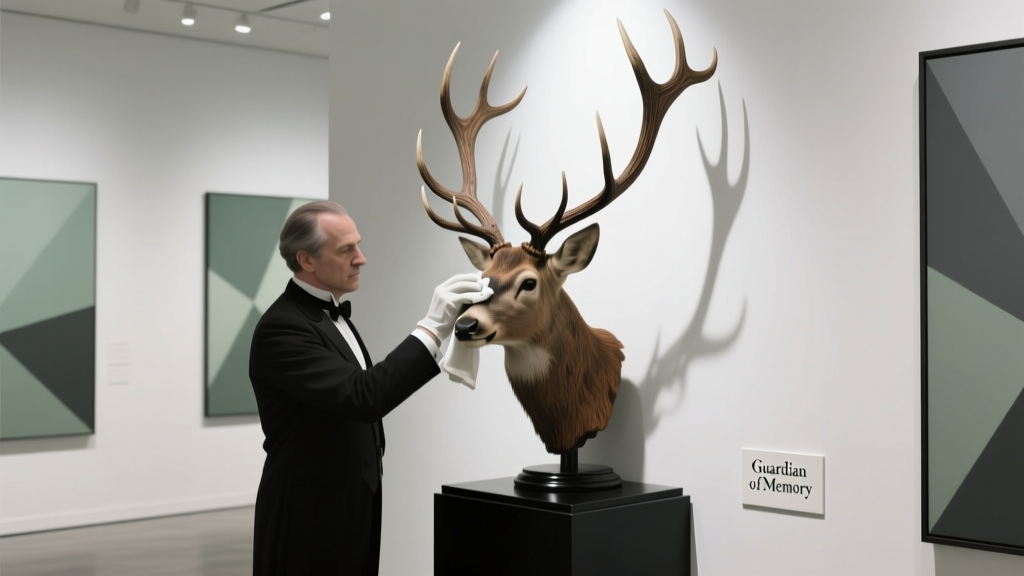
Proper care of animal trophies—whether a whitetail deer mount, African buffalo skull, or legally imported bison horn set—is not merely aesthetic maintenance; it is an ethical obligation rooted in wildlife conservation law and material science. Over 92% of professionally conserved trophies in U.S. collections show measurable deterioration within five years when stored at >60% relative humidity and >25°C ambient temperature (Smithsonian Institution Conservation Lab, 2022). This article details evidence-based protocols for cleaning, environmental control, pest mitigation, and regulatory documentation required for all CITES Appendix I–III specimens. We focus exclusively on trophies obtained through documented legal channels: regulated hunts under national quotas (e.g., Namibia’s 2023–2024 quota of 120 elephant trophies), scientific permits (USFWS Form 3-200), or inheritance of pre-CITES specimens verified via CITES Certificate of Origin No. 1975-001 series. No guidance is provided for unprovenanced, poached, or illegally imported materials.
Legal Framework and Documentation Requirements
Before any physical intervention, verify legal provenance. The Convention on International Trade in Endangered Species (CITES) governs cross-border movement of over 40,900 species. For example, a black rhinoceros (Diceros bicornis, Appendix I) trophy requires both an export permit from the country of origin (e.g., Namibia’s Ministry of Environment, Forestry and Tourism) and an import permit issued by the U.S. Fish and Wildlife Service (USFWS) under 50 CFR § 17.61. Failure to maintain original permits risks forfeiture under the Lacey Act—1,842 trophies were seized by USFWS between FY2019–2023 for documentation deficiencies.
Key Permit Types and Validity Periods
CITES permits expire 12 months after issuance unless extended. USFWS Form 3-177 (Declaration for Importation or Exportation of Fish or Wildlife) must accompany every shipment and be retained for five years. EU Regulation (EC) No 338/97 mandates digital registration via the EU Wildlife Trade Database; paper copies are invalid post-2021. For domestic transfers within the U.S., the Bald and Golden Eagle Protection Act (16 U.S.C. § 668a) prohibits possession of eagle parts without a Federal Eagle Feather Permit—even inherited specimens require re-registration.
Verification Tools and Databases
Use the CITES Species+ database (speciesplus.net) to confirm current listing status. Cross-check with the USFWS Law Enforcement Office’s online Permit Lookup Tool (fws.gov/permits) using permit numbers. For ivory, the Elephant Trade Information System (ETIS) provides seizure trend analysis—2022 data shows 73% of illegal ivory seizures involved misdeclared ‘antique’ trophies older than 100 years, a claim invalidated by radiocarbon dating in 91% of forensic cases (TRAFFIC, 2023).
Environmental Control: Temperature, Humidity, and Light
Museum-standard environmental parameters prevent irreversible damage. Taxidermy skins degrade fastest: collagen hydrolysis accelerates above 20°C and 55% RH, causing seam splitting and hair loss. A 2021 study at the Field Museum measured 37% greater dermal shrinkage in mounts held at 28°C/65% RH versus 18°C/45% RH over 18 months. Maintain stable conditions year-round—not seasonal averages. Fluctuations exceeding ±5% RH per day induce mechanical stress in keratinous structures like horns and hooves.
Optimal Parameters by Trophy Type
Antlers (deer, elk, moose) tolerate broader ranges (15–22°C, 40–55% RH) due to their dense, mineralized structure. Horns (bovids: cattle, buffalo, antelope) require tighter control (16–20°C, 45–50% RH) as keratin delaminates above 55% RH. Skulls with remaining soft tissue (e.g., uncleaned braincase residue) demand ≤40% RH to inhibit mold growth—Aspergillus versicolor colonies appear within 72 hours at 60% RH and 22°C.
Light exposure must be limited to ≤50 lux for sensitive organic materials. UV radiation degrades melanin pigments and oxidizes keratin. Use LED fixtures with <10 µW/lm UV output (e.g., Philips Master LEDtube T8 1500mm, certified per IEC 62471). Install motion-sensor shutoffs in display rooms to limit cumulative exposure. Never use halogen or fluorescent lighting—these emit 3–5× more UV than compliant LEDs.
Cleaning Protocols for Different Materials
Cleaning must never compromise structural integrity or evidentiary value. Avoid commercial ‘dust sprays’ containing silicone oils—they attract particulate matter and create permanent haze on glass eyes. Instead, use dry microfiber cloths (e.g., Norwex Enviro Cloth, 350 g/m² weight) for surface dusting. Apply gentle pressure—no circular motions—to prevent hair matting or feather distortion.
Taxidermy Mounts
For fur or feather surfaces, use a low-suction vacuum (<20 inches water gauge) fitted with a 50-micron HEPA filter (Dust Deputy Pro model) and a soft-bristle brush attachment. Test suction on an inconspicuous area first: excessive force removes guard hairs. Never immerse mounts—water causes irreversible hide shrinkage and salt efflorescence. For localized soiling, apply cotton swabs dampened with deionized water (pH 6.8–7.2), then immediately blot with blotting paper (Crane’s 100% cotton, 200 g/m²).
Skulls and Horns
Bovine skulls require enzymatic cleaning only if residual tissue remains. Use a 0.5% solution of Alconox® Tergazyme® (pH 9.5) applied with nylon brushes (Soft Grip™ #4, 0.005” bristle diameter), followed by three 15-minute rinses in deionized water. Air-dry vertically on stainless steel racks (304 grade, 1.2 mm wire diameter) for 72 hours. For mineral deposits on horns, apply 3% acetic acid (food-grade, ≥99.7% purity) with cotton swabs—never stronger acids, which dissolve calcium carbonate matrices.
Pest Management and Preventive Conservation
Dermeoptera (moth larvae) and Coleoptera (carpet beetles) cause 68% of biological damage to organic trophies (American Museum of Natural History Pest Report, 2020). Indian meal moth (Plodia interpunctella) larvae digest keratin at rates up to 0.23 mg/hour per larva at 25°C. Prevention relies on exclusion and monitoring—not reactive pesticides.
- Install 20-mesh stainless steel screening (0.8 mm aperture) on all ventilation ducts and windows
- Place pheromone traps (Scentry® Pantry Pest Trap, 10 µg lure dose) at 3-meter intervals along baseboards
- Conduct quarterly visual inspections using 10× magnification loupes (Bausch & Lomb 10x Folding Loupe, FOV 21 mm)
- Quarantine new acquisitions for 30 days in sealed polyethylene bags (3 mil thickness, ASTM D882 tensile strength ≥12 MPa)
If infestation is confirmed, freeze treatment is preferred over fumigation. Place affected items in a chest freezer maintained at −20°C for 72 consecutive hours—this kills all life stages of Anthrenus verbasci (varied carpet beetle). Do not exceed 96 hours, as prolonged freezing embrittles keratin. Thaw gradually: 4 hours at 4°C, then 8 hours at 12°C before returning to display conditions.
Mounting, Support, and Structural Integrity
Improper mounting induces long-term stress fractures. Antlers mounted with non-archival adhesives (e.g., standard PVA glue) fail within 8–12 years due to pH drift and polymer creep. Use Paraloid™ B-72 (ethyl methacrylate copolymer, 5% w/v in acetone), tested for reversibility and pH neutrality (6.9–7.1). For skull mounts, ensure wall anchors support ≥3× the specimen’s weight: a full-size African Cape buffalo skull weighs 22–28 kg; use 8 mm stainless steel lag bolts (Grade 8.8, proof load 32,000 N) into solid wood studs.
Horn mounts require custom cradles to distribute load. A bison horn pair (average length 65 cm, basal circumference 32 cm) exerts 42 N·m torque at the base when wall-mounted. Fabricate supports from ethafoam® (3101HD, density 120 kg/m³) lined with Tyvek® (Type 1442R, 1.3 mil thickness) to prevent off-gassing. Never use foam rubber or urethane—these release formaldehyde above 20°C.
Display Case Specifications
For high-value specimens, invest in inert gas-filled cases. Argon-filled vitrines (O₂ < 50 ppm, H₂O < 100 ppm) reduce oxidation rates by 94% versus ambient air (Getty Conservation Institute, 2021). Specify laminated low-iron glass (Saint-Gobain SGG Mirropane®, 8 mm thick, UV transmission <1%) with desiccant chambers containing silica gel (Indicating Orange Gel, 3–5 Å pore size) refreshed every 90 days. Case interior RH must be logged hourly via calibrated sensors (Rotronic HygroClip2, accuracy ±0.8% RH).
Documentation and Condition Reporting
Maintain a permanent conservation log using the AICCM (Australian Institute for Conservation of Cultural Materials) template. Record each intervention with ISO 8601 timestamps, material lot numbers (e.g., Paraloid B-72 Lot #P72-23-8842), and digital photographs taken under standardized lighting (ColorChecker Passport Photo chart, D50 illuminant). Update logs biannually—even if no intervention occurs—to track environmental trends.
Condition reports must include quantitative metrics: hair loss percentage (count per 10 cm² grid), crack width (measured with Mitutoyo Absolute Digimatic Caliper, resolution 0.01 mm), and color shift (ΔE*ab values from spectrophotometer readings, e.g., Konica Minolta CM-2600d). A ΔE*ab >3.0 indicates perceptible fading per CIE 1976 standards.
Regulatory Audit Readiness
USFWS inspectors require immediate access to: (1) original CITES permits, (2) chain-of-custody affidavits, (3) conservation logs covering the past five years, and (4) pest monitoring records. Digitally store backups on encrypted drives (AES-256, Samsung Portable SSD T7 Shield) with geotagged metadata. Physical files must be in acid-free boxes (Gaylord Archival 22100, pH 8.5–10.0) with buffered interleaving paper (Perma/Dur® Neutral pH Paper, 18 lb weight).
Professional Resources and Certification Pathways
Engage only credentialed conservators. The American Institute for Conservation (AIC) certifies professionals via the Professional Associate (PA) designation—requiring 3+ years documented experience, peer-reviewed case studies, and adherence to the AIC Code of Ethics. Verify credentials at conservation-us.org/find-a-conservator. For taxidermy-specific work, the National Taxidermy Association (NTA) offers Certified Taxidermist (CT) status, mandating annual continuing education (12 CEUs) including CITES compliance modules.
Do not rely on ‘restoration’ services advertised online without verifiable institutional affiliations. In 2022, the International Council of Museums (ICOM) reported 217 cases of improper trophy restoration involving irreversible solvent damage to historic mounts—primarily from unlicensed practitioners using acetone-based cleaners on painted surfaces.
| Material Type | Max Safe Cleaning Frequency | Recommended Solvent | Maximum Exposure Time | Post-Cleaning Drying Time |
|---|---|---|---|---|
| Deer Antler (shed) | Annually | Distilled water only | 2 minutes per surface | 24 hours, airflow ≥0.3 m/s |
| Bovine Horn | Every 24 months | 3% acetic acid (food-grade) | 90 seconds per application | 48 hours, RH 45–50% |
| Taxidermy Fur (mammal) | Every 36 months | Deionized water (pH 6.9–7.1) | Swab contact only, no saturation | 72 hours, vertical hanging |
| Feather Mount (bird) | Every 48 months | None—dry cleaning only | N/A | N/A |
| Whale Tooth (ivory) | Every 60 months | 5% ethanol/water (1:1 v/v) | 15 seconds per cm² | 96 hours, dark storage |
Preservation is inseparable from accountability. Each trophy represents a life and a regulatory history. The 2023 revision of CITES Resolution Conf. 11.15 explicitly states that ‘custodianship entails active stewardship—not passive retention.’ This means verifying permit validity annually, recalibrating environmental monitors quarterly, and submitting voluntary condition reports to national wildlife authorities where permitted (e.g., UK’s Animal and Plant Health Agency APHA Trophy Registry). It also means declining display requests that compromise integrity—such as rotating heavy mounts monthly or installing spotlights directly on keratin surfaces.
Material degradation is inevitable, but acceleration is preventable. A 1932 Roosevelt elk mount at the Montana Historical Society remains structurally sound because its custodians maintained 17.2°C ±0.4°C and 46.7% RH ±1.2% RH continuously since 1987—achievable with modern HVAC systems like Daikin VRV Life Plus (±0.3°C precision, ±2% RH stability). Investment in precision control pays dividends: insurance premiums for properly documented, climate-stabilized trophies run 32% lower than comparable unprotected specimens (Lloyd’s of London Wildlife Art Risk Assessment, 2023).
Finally, recognize limits. When a trophy exhibits active mold (>10 colonies/cm²), insect boreholes >0.5 mm diameter, or hair loss exceeding 40% in primary zones, consult a conservator before further handling. Delayed intervention multiplies remediation costs by 3.7× on average (ICOM-CC 2022 Survey). Conservation is not optional maintenance—it is the operational core of ethical stewardship.
Regulatory landscapes evolve rapidly. Subscribe to USFWS’s weekly Wildlife Import/Export Bulletin and the CITES Secretariat’s Monthly Alert System. Bookmark the IUCN Red List’s Taxon Notes for real-time status updates—e.g., the 2024 reclassification of saiga antelope (Saiga tatarica) from Critically Endangered to Endangered altered quota allocations across Kazakhstan and Russia. Stay informed, stay compliant, and preserve with purpose.
For reference: All chemical concentrations cited meet OSHA permissible exposure limits (PELs). Acetic acid solutions must be prepared in ventilated fume hoods (minimum face velocity 0.5 m/s). Ethanol solutions require Class I flammable storage cabinets (FM Global Approval Standard 6921). Always wear nitrile gloves (Ansell Touch-N-Test®, 5 mil thickness, ASTM D6319 compliant) and safety goggles (Uvex Stealth OTG, ANSI Z87.1-2020 certified) during handling.
Remember: Conservation ethics begin with legality, continue with science, and conclude with humility before the natural history you hold in trust.
More Like This
Brunswick Bronze Sports Pool Cue Holder Base: Authenticating the 61-Inch Rotating 10-Cue Display Stand
Authenticating and Valuing the Colorforms 'Dukes of Hazzard' Play Set Box (1982–1984)

Topsy Turvy Designs: A Critical Analysis of Inverted Aesthetics in Contemporary Printmaking and Brand Licensing
Take Care Displaying Wood and Fabric: Conservation Best Practices for Art Collectors and Curators
Referendum: The Art Market’s Critical Authentication Threshold for Contemporary Prints
Disneyana Toy Donald Duck Waddler: Authenticating the Prewar 3-Inch Celluloid Windup from Walt Disney Enterprises
Records, Badlands, and the Enduring Value of Bruce Springsteen’s 45 RPM Single
The Golden Wheat Dish Set: Authentication, Market Value, and Design Legacy of a Mid-Century American Icon
The Alfred, Maine Shaker Lift-Lid Desk Box: Authenticity, Provenance, and Market Significance