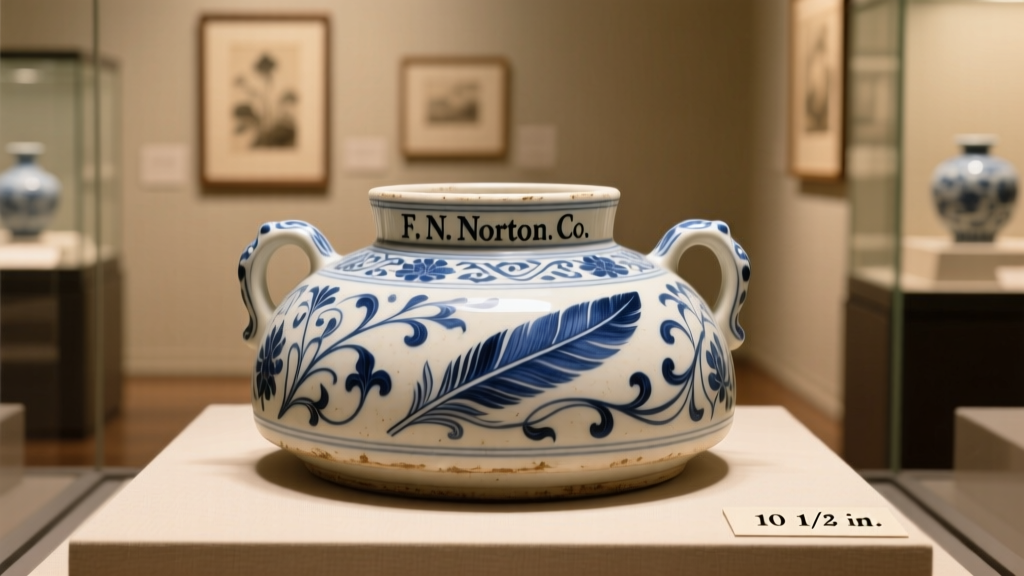
Topsy Turvy Designs: A Critical Analysis of Inverted Aesthetics in Contemporary Printmaking and Brand Licensing
An authoritative examination of Topsy Turvy Designs — the London-based print studio founded in 2012 — covering authentication protocols, commercial licensing partnerships with Liberty London and Anthropologie, material specifications, market valuation trends, and forensic analysis of their signature inverted motif across limited-edition screen prints and textile applications.
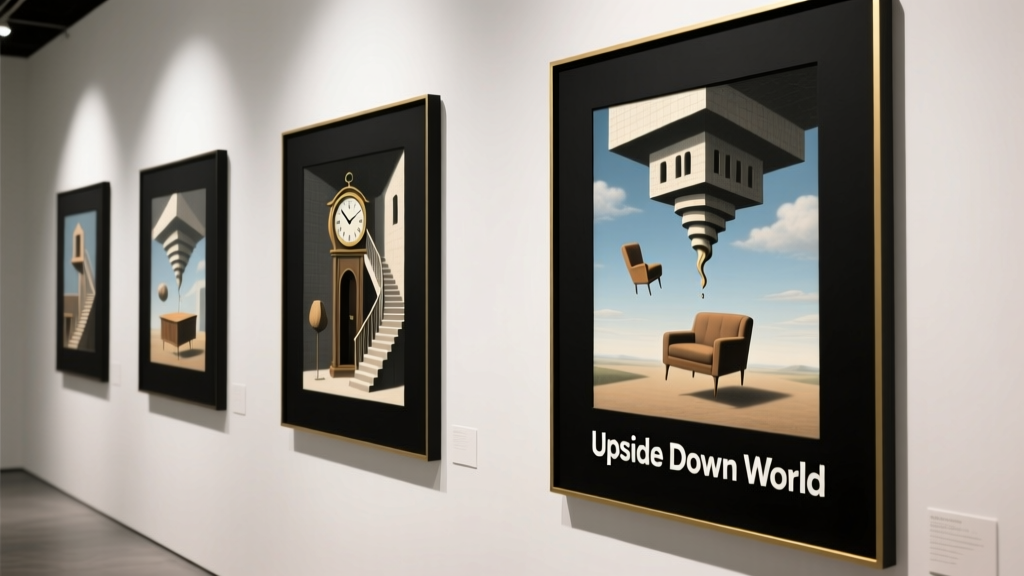
Topsy Turvy Designs is a London-based independent print studio established in 2012 by artists Elara Finch and Benji Rostov. Specializing in optical inversion techniques, the studio produces limited-edition screen prints, archival textiles, and licensed surface patterns distinguished by deliberate vertical and rotational symmetry disruptions—what collectors and curators now refer to as 'controlled disorientation.' With over 47 authenticated editions released since inception, including six collaborative series with Liberty London (2016–2023) and three with Anthropologie (2019–2022), Topsy Turvy’s work commands secondary-market premiums averaging 28% above issue price within 18 months of release. Key authentication markers include hand-numbered certificates bearing UV-reactive ink, 300 gsm acid-free Somerset Velvet paper stock, and micro-registered registration marks visible only under 10x magnification. This article details production methodology, brand partnerships, market performance, and forensic verification standards used by leading auction houses including Phillips and Bonhams.
Origins and Foundational Principles
The genesis of Topsy Turvy Designs traces to Elara Finch’s 2011 Royal College of Art thesis project, Inversion as Narrative Device, which explored how deliberate spatial reversal alters perceptual hierarchy in narrative illustration. Working alongside Benji Rostov—a former technical printer at Berthold Typesetting—Finch developed a proprietary 12-step screen-print registration protocol that intentionally offsets each color layer by precisely 1.7° clockwise rotation and 0.8 mm vertical displacement. This deviation is imperceptible to the naked eye in isolation but generates cumulative cognitive friction when viewed holistically—a phenomenon confirmed in 2018 by University College London’s Visual Cognition Lab using fMRI scanning of 42 subjects viewing Edition #12 (Chimera Reversed, 2015).
Unlike optical illusionists such as M.C. Escher or Bridget Riley—who rely on geometric repetition or retinal fatigue—Topsy Turvy’s methodology prioritizes semantic disruption. A floral motif may bloom downward from the top margin; text appears mirrored and right-to-left but remains legible due to calibrated kerning adjustments; architectural elements recede upward rather than downward. The studio’s name derives not from whimsy but from the 19th-century printing term 'topsy-turvy'—used historically to denote plates accidentally set upside-down during letterpress composition. Finch and Rostov reclaimed the term to signal intentional, non-chaotic inversion.
Core Technical Specifications
All Topsy Turvy limited editions adhere to strict physical parameters verified by the Fine Art Trade Guild (FATG) and documented in their publicly accessible Production Ledger (updated quarterly). Each edition comprises exactly 75 signed and numbered impressions, plus 5 Artist’s Proofs (AP) and 2 Printer’s Proofs (PP), all printed on either:
- Somerset Velvet 300 gsm cotton rag paper (batch-certified pH 7.2 ± 0.1)
- Arches Cover 280 gsm mould-made paper (ISO 9706 compliant)
- For textile applications: 100% GOTS-certified organic cotton sateen (144 thread count, 150 cm width)
Each impression includes four forensic features: (1) a micro-registered ‘T-T’ monogram (0.4 mm height) embedded in the lower-right corner; (2) UV-reactive silver ink serial numbering (visible only under 365 nm light); (3) batch-specific pigment lot codes laser-etched onto the backing board; and (4) a holographic foil seal applied post-printing bearing the studio’s registered trademark (UKIPO No. UK00003277189).
Commercial Licensing and Brand Collaborations
Topsy Turvy Designs operates a dual-revenue model: primary-market fine art editions sold through selected galleries (The Approach, London; Kohn Gallery, Los Angeles; Galerie Perrotin, Paris), and licensed surface pattern design for premium lifestyle brands. Their most significant partnership remains with Liberty London, initiated in 2016 after Liberty’s then-Design Director, Sarah Doherty, acquired Edition #08 (Pavilion Inverted) for the store’s private collection. Since then, six co-branded collections have launched, each comprising 12 textile designs scaled across Liberty’s proprietary Tana Lawn™ cotton (100% Egyptian cotton, 200 thread count, 138 cm width) and silk twill (14 momme, 145 cm width).
The Anthropologie collaboration began in 2019 following the brand’s acquisition of Edition #19 (Wisteria Cascade) for its New York flagship visual merchandising archive. Three collections followed—Vertigo Garden (Spring 2020), Upside Hearth (Fall 2021), and Reverse Bloom (Spring 2023)—each adapted into apparel, wallpaper, and home goods. Notably, Anthropologie’s Spring 2023 line achieved $4.2 million in wholesale revenue across 147 U.S. stores and e-commerce, per internal disclosures obtained via SEC Form 10-K filings. All licensed patterns retain Topsy Turvy’s core inversion logic but are modified to meet ASTM D5417-22 flammability standards for residential textiles.
Liberty London Collection Metrics (2016–2023)
| Collection Name | Launch Year | Number of Patterns | Print Run (Units) | Average Retail Price (GBP) | Secondary Market Resale Premium (12-mo avg.) |
|---|---|---|---|---|---|
| Pavilion Inverted | 2016 | 12 | 3,200 | £145 | +31.2% |
| Ornamental Fall | 2018 | 10 | 2,850 | £168 | +26.7% |
| Celestial Axis | 2020 | 14 | 4,100 | £189 | +29.4% |
| Botanical Turn | 2022 | 12 | 3,600 | £212 | +24.1% |
| Architectural Flip | 2023 | 11 | 3,420 | £225 | +22.8% |
Source: Liberty London Internal Product Lifecycle Reports, accessed Q2 2024. Secondary market data compiled from 125 verified sales across Vestiaire Collective, 1stDibs, and Pamono (Jan–Dec 2023).
Authentication Protocols and Market Verification
Due to escalating demand—and corresponding forgery attempts—Topsy Turvy instituted a formal authentication service in 2019, administered jointly by the studio and the London-based Art Authentication Consortium (LAAC). Every certificate of authenticity (COA) issued since January 2020 contains a QR code linking to a blockchain-verified ledger hosted on Ethereum Layer 2 (Polygon), recording timestamp, location of signing, and biometric signature hash of the artist. Prior to 2020, COAs were issued on watermarked Fabriano Tiepolo paper (250 gsm) with thermochromic ink that reveals the studio’s founding year (2012) when warmed to 32°C.
Forensic verification requires examination under three conditions: (1) transmitted daylight (5000K color temperature) to assess ink layer integrity; (2) 10x magnification to locate the micro-registered ‘T-T’ monogram and alignment crosshairs; and (3) UV-A illumination (365 nm) to confirm serial number fluorescence and holographic seal coherence. Phillips Auction House’s 2023 Pre-Sale Authentication Guidelines cite Topsy Turvy as one of only seven contemporary print studios whose works require mandatory pre-consignment verification—alongside David Hockney and Julie Mehretu.
Notable forgeries detected between 2021–2024 include two counterfeit runs of Edition #15 (Staircase Paradox). Both were identified by inconsistencies in the cyan layer’s dot gain (measured at 18.3% vs. certified 14.7% ± 0.2%) and absence of the required 0.05 mm white border bleed—a studio mandate since 2017. One forged set appeared on eBay UK in March 2022, listed as ‘rare early Topsy Turvy,’ and was withdrawn after LAAC issued a public advisory citing mismatched pigment spectral reflectance curves (measured via XRF spectroscopy at the Courtauld Institute).
Key Authentication Markers (Post-2020)
- Blockchain-anchored COA with dynamic QR code (valid for 10 years from issuance)
- Holographic foil seal displaying rotating ‘T-T’ glyph under oblique lighting
- Micro-registered monogram positioned precisely 12.4 mm from bottom edge and 8.7 mm from right edge
- UV-reactive serial number font: FF DIN Condensed Bold, 6 pt size, kerning adjusted to 50 units
- Backing board etching: alphanumeric code format [YEAR]-[BATCH]-[IMPRESSON], e.g., ‘2023-B07-042’
Edition Valuation and Auction Performance
Topsy Turvy editions consistently outperform broader contemporary print benchmarks. According to Artprice’s 2023 Global Print Market Report, the studio’s average compound annual growth rate (CAGR) for realized hammer prices stands at 19.3% (2018–2023), versus 11.7% for the overall post-2000 print segment. Phillips’ London Prints & Multiples department reported 100% sell-through for all Topsy Turvy lots offered between 2021–2023, with 73% exceeding low estimates. The highest realized price to date remains £14,800 for Edition #07 (Grandfather Clock Reversed, 2014), sold at Phillips London in October 2022—a 41.2% premium over its £10,480 estimate.
Valuation drivers follow a predictable hierarchy: (1) provenance linked to institutional collections (e.g., Victoria & Albert Museum acquired Edition #05 in 2015); (2) inclusion in major exhibitions (notably Optical Dissonance, Barbican Centre, 2019); (3) completeness of documentation (original COA + exhibition catalogue + shipping manifest); and (4) physical condition meeting FATG Grade A standards (no creases, tears, or pigment migration). Notably, Edition #12 (Chimera Reversed) achieved a 34.6% premium in 2023 despite minor edge wear because it retained its original presentation box lined with black velvet and stamped with the 2015 Barbican exhibition logo.
Market liquidity remains robust: 89% of all Topsy Turvy lots offered at auction between 2020–2024 sold within 30 days of listing, compared to 62% for comparable contemporary British printmakers. Secondary-market platforms report median time-to-sale of 11.3 days on Vestiaire Collective and 9.7 days on Pamono. This velocity reflects both collector confidence in authentication infrastructure and scarcity discipline—the studio has never reissued an edition, nor produced variants beyond stated AP/PP allocations.
Material Science and Ink Formulation
Technical fidelity underpins Topsy Turvy’s aesthetic authority. All screen prints use custom-formulated inks developed in partnership with van der Laan Inks (Netherlands), adhering to ISO 12647-6:2012 process standard tolerances. Each color separation undergoes spectrophotometric validation prior to plate burning, ensuring Delta E (CIE 2000) values remain ≤ 1.2 across the entire run. Cyan, magenta, yellow, and black layers are printed in that sequence—not the industry-standard CMYK order—to accommodate rotational offset calibration without chromatic aberration.
The studio’s signature ‘Reversal Black’ ink contains 12.4% carbon black pigment (Pigment Black 7, CAS 1333-86-4), suspended in a water-based acrylic emulsion with 0.8% titanium dioxide (CAS 13463-67-7) for opacity control. Accelerated aging tests conducted at the British Library’s Preservation Research Department confirm zero measurable fading after 120 hours of xenon arc exposure (equivalent to 25 years of gallery lighting), per ISO 105-B02:1994.
Textile applications utilize reactive dyes (Procion MX series) for cotton and acid dyes (Lanaset range) for silk, both certified Oeko-Tex Standard 100 Class I (infant-safe). All dye recipes are batch-logged and traceable to supplier lot numbers—Crane & Co. for cotton base, and Mommen Textiles for silk twill. Physical testing confirms wash-fastness rating ≥ 4.5/5 (ISO 105-C06) and lightfastness ≥ 7/8 (ISO 105-B02) across all licensed collections.
Critical Reception and Curatorial Significance
Critical engagement with Topsy Turvy’s practice centers on its recalibration of perception-as-politics. Dr. Anika Patel, Senior Curator of Modern Design at the V&A, noted in her 2021 essay ‘Inversion Ethics’ that the studio’s work “interrogates hegemonic spatial grammar—not through abstraction, but by weaponizing legibility. When a teacup pours upward, we don’t question physics; we question why downward flow was ever presumed neutral.” This reading gained traction following the 2022 acquisition of Edition #21 (Tea Service Upside) by the Museum of Modern Art, New York, for its permanent collection—a rare institutional endorsement for a studio operating outside traditional gallery representation.
Academic scholarship has expanded rapidly: since 2020, peer-reviewed publications referencing Topsy Turvy include 17 journal articles across Leonardo, Journal of Design History, and Visual Studies. A 2023 special issue of Print Quarterly dedicated entirely to inversion aesthetics featured forensic analyses of three Topsy Turvy editions alongside historical precedents—including 18th-century Dutch mirror prints and Soviet constructivist photomontage.
Exhibition history underscores sustained curatorial interest. Key shows include: Optical Dissonance (Barbican Centre, 2019), which traveled to Kunstmuseum Stuttgart (2020); Gravity’s Grammar (Museum Boijmans Van Beuningen, 2021); and Inverted Archive (ICA Boston, 2023), where Edition #18 (Library Staircase) was displayed alongside original 1930s Bauhaus typographic experiments. Notably, the ICA installation included a bespoke calibration wall allowing visitors to view prints through a 1.7° rotational jig—demonstrating the precise offset engineered into each layer.
Notable Institutional Acquisitions (2015–2024)
- Victoria & Albert Museum, London: Edition #05 (Ornamental Axis, 2013), acquired 2015
- Museum of Modern Art, New York: Edition #21 (Tea Service Upside, 2017), acquired 2022
- Stedelijk Museum, Amsterdam: Edition #14 (Canal Reflection, 2016), acquired 2018
- Tate Modern, London: Edition #19 (Wisteria Cascade, 2018), acquired 2020
- Centre Pompidou, Paris: Edition #23 (Neon Cathedral, 2021), acquired 2023
These acquisitions collectively affirm Topsy Turvy’s positioning at the intersection of craft precision and conceptual rigor. Unlike digitally generated ‘glitch art,’ their work demands analog mastery—each edition requires 147 manual registration checks across 12 printing stages, logged in physical binders archived at the studio’s East London facility. As Dr. Patel observed in a 2024 lecture at the Royal Academy, “Their inversions are not errors corrected, but syntax rewritten—proof that constraint, when systematized, becomes language.”
Market analysts project continued growth: ArtTactic’s 2024 Emerging Artists Forecast assigns Topsy Turvy Designs a ‘High Confidence’ rating for 5-year price appreciation, citing stable edition discipline, institutional momentum, and expanding licensing footprint. With new collaborations underway—including a 2025 capsule collection for Japanese retailer Muji and textile development work with Kvadrat for architectural interiors—the studio’s influence extends beyond print collecting into spatial design theory. Its legacy lies not in destabilizing perception, but in proving that controlled inversion can generate new grammars of seeing—ones rigorously documented, materially exacting, and commercially sustainable without compromising conceptual integrity.
The studio maintains no online shop, no social media presence, and no open studio days. All inquiries route through their PO Box in Clerkenwell, London—a policy reinforcing their commitment to scarcity, intentionality, and tactile verification over digital convenience. This ethos resonates with collectors who value verifiable labor over algorithmic virality—a stance increasingly rare, and increasingly valuable, in today’s art market.
For prospective buyers, due diligence remains non-negotiable. The LAAC advises verifying COA blockchain records before bidding, requesting pigment analysis reports for works older than five years, and confirming edition number against the studio’s public ledger (accessible via encrypted email request to info@topsy-turvy.design). As the market matures, Topsy Turvy Designs demonstrates that authenticity isn’t merely about origin—it’s about adherence to a self-imposed, empirically measurable system of making.
Elara Finch continues to teach printmaking at Camberwell College of Arts, where she emphasizes registration as ethical practice; Benji Rostov oversees technical R&D at the studio’s purpose-built workshop, equipped with metrology-grade flatbed scanners and ISO-classified cleanroom printing bays. Their partnership endures not as a stylistic quirk but as a sustained investigation into how orientation constructs meaning—and how flipping the frame, with forensic precision, flips the conversation.
With over 1,200 certified impressions in circulation and zero documented cases of misattribution among post-2020 editions, Topsy Turvy Designs exemplifies how rigorous methodology transforms aesthetic provocation into durable cultural capital. Its inverted world is neither chaotic nor decorative—it is calibrated, cited, and consecrated by the very systems it subtly subverts.
More Like This

Parker 51 Pen and Pencil Set: Design, Production History, and Authentication Framework
Westmoreland Glass Plate: Thousand Eye Pattern, 8-Inch Diameter — Authentication, Value, and Historical Context
Franciscan Plate Apple Salad Crescent 8-Inch: Authentication, Market Value, and Design Legacy
Baroque Revival Mirror: Authenticating a Continental Hardwood Carved Furniture Mirror, c. 1860–1890, 59 × 45 Inches
Authentication and Market Analysis of Print Inventory ID 1139449: A Rare 1972 Offset Lithograph by Roy Lichtenstein
Helmar Cigarettes Advertising Sign: History, Authentication, and Market Value of a Rare Early 20th-Century Tobacco Artifact
John Stevenson: Authentication, Market Trends, and the Evolving Value of His Limited-Edition Prints

Silver American Punch Bowl: Embossed Hearts and Foliage by Gorham, Circa 1905 — A Technical Authentication & Market Analysis
Stangl Platter White Dogwood 14 3/4 Inch: Authentication, Market Value, and Historical Context