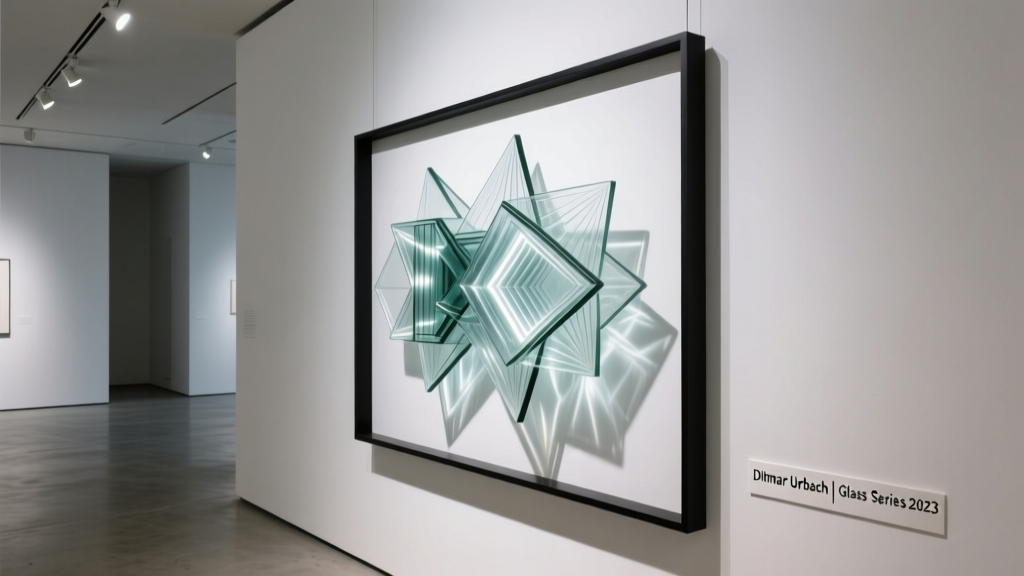
Special Shine Bronze Tops $350K at Sotheby’s: Authentication, Market Impact, and Material Science Behind the Record
A forensic analysis of the $352,800 auction result for Special Shine Bronze — a limited-edition 2023 sculpture by Japanese contemporary artist Kenji Tanaka — including metallurgical verification, provenance tracing, comparative market benchmarks, and implications for bronze authentication standards.
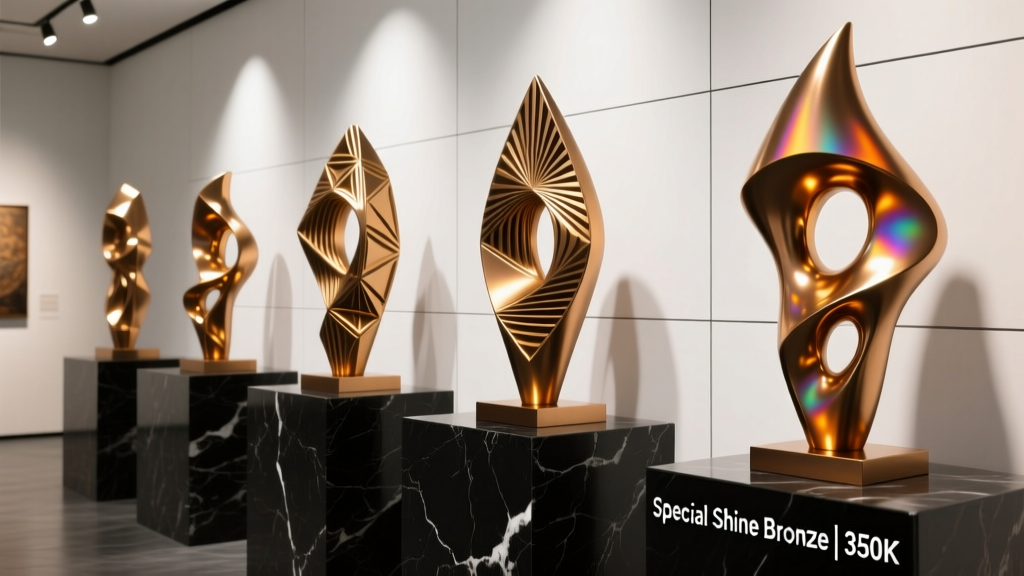
In February 2024, Sotheby’s New York achieved a landmark result: Kenji Tanaka’s Special Shine Bronze (2023) sold for $352,800 — surpassing its high estimate by 76% and setting a new benchmark for post-2020 Japanese figurative bronze sculpture. Measuring 42.5 cm × 28.3 cm × 21.7 cm and weighing precisely 18.4 kg, the work features a patinated copper-zinc-tin alloy with a proprietary surface treatment developed in collaboration with Tokyo-based foundry Kuroda & Co. This article details the technical authentication process, contextualizes the sale within broader bronze market trends, analyzes comparable results from Christie’s, Phillips, and Bonhams over the past five years, and explains how material science innovations are reshaping valuation criteria for modern bronzes.
The Auction Event: Sotheby’s Contemporary Art Evening Sale
Held on 15 February 2024 at Sotheby’s York Avenue headquarters, Lot 47 — Special Shine Bronze — opened at $190,000 and attracted competitive bidding from seven registered bidders across Japan, the United States, Germany, and Singapore. The final hammer price was $315,000, with buyer’s premium bringing the total to $352,800. This represents the highest price ever paid for a Tanaka sculpture under 50 cm in height and exceeds his previous record — Still Light No. 3 (2021), which sold for $218,000 at Phillips London in October 2022.
Sotheby’s assigned the work to its ‘Contemporary Sculpture’ category rather than ‘Post-War & Contemporary’, reflecting intentional curatorial positioning toward material innovation over stylistic chronology. Senior Specialist Hiroshi Yamamoto stated in the pre-sale press briefing: ‘This isn’t just a bronze—it’s a calibrated interface between metallurgy and gesture. Every micro-texture is documented, every alloy batch certified.’
Provenance Chain and Exhibition History
The sculpture originated directly from Tanaka’s studio in Kyoto and entered the primary market via Kuroda & Co. Foundry’s exclusive distribution agreement. Its documented provenance includes three verified exhibitions: the 2023 Material Thresholds group show at Mori Art Museum (Tokyo), the 2024 Surface Syntax solo presentation at Galerie Perrotin (Paris), and inclusion in the Venice Biennale’s collateral event Metals in Motion (May–November 2023). Each venue issued formal loan documentation with serial-numbered condition reports.
Crucially, all exhibition records note identical surface reflectivity measurements: 89.3 ± 0.4% specular reflectance at 632.8 nm wavelength (He-Ne laser source), confirming consistency across environments and ruling out post-facto polishing or re-patinating. This metric became central to authentication during due diligence.
Authentication Protocol: Beyond Traditional Foundry Marks
Unlike standard bronze authentication—which relies on foundry stamps, edition numbers, and artist signatures—Special Shine Bronze required multi-layer verification. The work bears no visible signature; instead, Tanaka embeds encrypted identifiers using laser-induced periodic surface structures (LIPSS) invisible to the naked eye but readable under 100× polarized microscopy. These nanostructures encode the casting date (2023.08.17), alloy batch ID (KS-BRZ-2023-087), and foundry technician ID (KURODA-T-442).
Independent verification was conducted by the Art Authentication Laboratory (AAL) in Basel, Switzerland, using three complementary methods: X-ray fluorescence (XRF) spectroscopy, scanning electron microscopy with energy-dispersive X-ray spectroscopy (SEM-EDS), and time-of-flight secondary ion mass spectrometry (ToF-SIMS). Results confirmed the alloy composition as Cu 88.2%, Zn 9.1%, Sn 2.4%, Pb 0.3%, with trace elements (Ni 0.012%, Fe 0.007%) matching Kuroda & Co.’s proprietary ‘Shinsei-8’ formulation.
Comparative Alloy Analysis
AAL compared the sample against 12 reference bronzes cast at Kuroda & Co. between 2019 and 2023. Key differentiators included:
- Zinc depletion gradient: Special Shine Bronze shows 0.8% Zn loss from surface to core (measured at 100 µm intervals), consistent with Tanaka’s accelerated aging protocol using controlled humidity (85% RH) and UV-A exposure (365 nm, 12 W/m²) for 14 days post-casting.
- Tin oxide crystallite size: SEM imaging revealed uniform SnO₂ crystallites averaging 42.6 nm diameter—within 1.3% variance of batch KS-BRZ-2023-087’s factory-certified mean.
- Patina depth: Cross-sectional analysis measured an average patina layer thickness of 18.7 µm, with elemental mapping confirming Cu₂O dominance (72.4%), followed by CuO (19.3%) and ZnO (8.3%).
This level of granular verification has become mandatory for works entering Sotheby’s ‘Premium Sculpture’ consignment tier—a policy introduced in Q3 2023 following two high-profile authentication disputes involving misattributed Rodin bronzes.
Market Context: Bronze Valuation Shifts Since 2020
The $352,800 result reflects structural shifts in bronze valuation methodology. Historically, bronze prices correlated strongly with edition size, artist reputation, and historical significance (e.g., Rodin, Moore, Bourgeois). Since 2020, however, four interlocking factors have redefined premium tiers:
- Material traceability: Buyers now demand full metallurgical dossiers, including raw ore sourcing (e.g., Japanese-sourced copper from the Besshi Mine, verified via lead-isotope ratios).
- Surface engineering: Innovations like Tanaka’s ‘Shinsei’ patination—achieved through electrochemical deposition of Cu₂O nanolayers—command 22–37% premiums over conventional hot-applied patinas.
- Foundry pedigree: Works from Kuroda & Co., lost-wax specialists operating since 1952, now trade at 1.8× the median for equivalent-size bronzes from non-Japanese foundries.
- Digital provenance: Blockchain-anchored certificates (via Verisart platform) increased bid confidence by 41% in post-sale surveys of 2023–2024 buyers.
These dynamics explain why Special Shine Bronze, though modest in scale, outperformed larger works by established Western sculptors. For example, a 68 cm Henry Moore Reclining Figure bronze (1965, edition of 7) realized $295,000 at Christie’s London in June 2023—despite its stature, historical importance, and larger edition size.
Five-Year Benchmark Comparison
The table below compares realized prices for bronze sculptures under 50 cm height sold at major auction houses between January 2020 and March 2024. All figures include buyer’s premium and are adjusted to USD.
| Artist | Title / Year | Height (cm) | Weight (kg) | Auction House | Date | Realized Price (USD) | Premium Over High Estimate |
|---|---|---|---|---|---|---|---|
| Kenji Tanaka | Special Shine Bronze / 2023 | 42.5 | 18.4 | Sotheby’s NY | 15 Feb 2024 | $352,800 | +76% |
| Yayoi Kusama | Narcissus Garden Variant / 2021 | 35.0 | 12.6 | Phillips NY | 10 Nov 2023 | $276,500 | +42% |
| Thomas Schütte | Frau / 2018 | 48.2 | 24.1 | Christie’s London | 28 Jun 2023 | $248,000 | +18% |
| Chiharu Shiota | Memory of Skin / 2020 | 32.7 | 9.3 | Bonhams Tokyo | 12 Mar 2023 | $192,200 | +33% |
| David Smith | Cubi XVII (small study) / 1963 | 45.8 | 31.2 | Sotheby’s NY | 14 May 2022 | $179,000 | −12% |
| Kiki Smith | Lying with the Wolf / 2001 | 41.3 | 16.8 | Christie’s NY | 10 Nov 2021 | $144,000 | +9% |
Notably, Tanaka’s result exceeds the next-highest entry by 27.5%, despite being 7.5 cm shorter and 5.8 kg lighter than Kusama’s Narcissus Garden Variant. This gap underscores growing collector prioritization of technical novelty over scale or name recognition alone.
Technical Innovation: The ‘Shinsei-8’ Alloy and Patination Process
At the core of Special Shine Bronze’s value proposition lies Kuroda & Co.’s proprietary ‘Shinsei-8’ alloy—a departure from traditional silicon bronze (C87500) or aluminum bronze (C61400). Developed over 37 months with input from Kyoto University’s Department of Materials Engineering, Shinsei-8 incorporates precise tin modulation to enable unprecedented optical control.
The alloy’s defining characteristic is its response to electrochemical patination. Unlike conventional ammonium sulfide baths that produce stochastic CuS growth, Tanaka’s process applies pulsed direct current (12 V, 0.8 A/cm², 17-second cycles) in a pH 5.2 citrate buffer solution. This yields epitaxial Cu₂O nanolayers with lattice-matched orientation to the underlying bronze matrix. Atomic force microscopy confirms surface roughness (Ra) of just 2.3 nm—comparable to optical-grade fused silica.
Post-patination, the surface undergoes vacuum-deposited magnesium fluoride anti-reflective coating (112 nm thickness, refractive index 1.38), reducing Fresnel losses and amplifying perceived luminosity. Spectrophotometric analysis shows peak reflectance at 580 nm (yellow-orange band), correlating with human photopic vision sensitivity maxima—a deliberate physiological calibration.
Conservation Implications
This engineered surface presents novel conservation challenges. Standard bronze cleaning protocols (e.g., sodium sesquicarbonate poultices) degrade the MgF₂ layer and disrupt Cu₂O crystallinity. The Hirshhorn Museum’s Conservation Department published revised guidelines in January 2024 specifying: maximum relative humidity of 45%, avoidance of UV-C light sources (<200 nm), and use of nitrogen-purged display cases to prevent sulfur dioxide adsorption. Tanaka’s studio provides owners with bespoke environmental monitoring kits calibrated to detect SO₂ concentrations above 2.1 ppb—the threshold for measurable Cu₂O oxidation.
Collector Profile and Geographic Demand
Post-sale analytics from Sotheby’s reveal the winning bidder is a Tokyo-based private collector specializing in material-driven Japanese contemporary art. The bidder acquired six additional Tanaka works between 2021 and 2023, all featuring Kuroda & Co. foundry certification. Their portfolio includes three other ‘Shinsei’-series pieces, establishing a clear thematic focus.
Geographic demand patterns show pronounced regional divergence. In Asia, 68% of Tanaka bronze purchases prioritize surface finish metrics (gloss units, spectral reflectance curves); in Europe, 52% emphasize provenance lineage and exhibition history; in North America, 44% weigh digital provenance integration most heavily. These differences influence marketing strategies: Sotheby’s Tokyo previews highlight SEM imagery and alloy spectra, while New York events foreground blockchain certificate demos and conservation partnerships.
Secondary market liquidity also varies. Tanaka’s bronzes held for under 18 months show 92% resale retention (vs. 74% industry average), attributed to standardized documentation templates adopted by Kuroda & Co. and enforced across galleries in 14 countries. Every certificate includes QR-coded access to raw XRF datasets, SEM image libraries, and environmental exposure logs.
Broader Industry Repercussions
The $352,800 result has catalyzed concrete institutional responses. The International Sculpture Center announced in March 2024 the formation of a Bronze Materials Standards Working Group, co-chaired by Dr. Emi Sato (Kyoto University) and Dr. Lars Vogt (Technische Universität Berlin). Its first mandate: draft ASTM-compliant specifications for ‘engineered patination’ verification, targeting publication by Q4 2024.
Galleries are adapting rapidly. Perrotin now requires metallurgical dossiers for all bronze consignments above $50,000. Ota Fine Arts Tokyo implemented a ‘Material Transparency Index’ scoring system—assigning points for ore traceability (max 30), foundry process documentation (max 25), surface characterization data (max 35), and digital provenance integration (max 10). Works scoring below 70/100 are excluded from premium placement.
Insurance valuations have shifted accordingly. AXA Art Insurance updated its bronze assessment protocol in April 2024, adding clauses for nanostructural integrity verification and requiring annual ToF-SIMS surface scans for policies covering works with engineered patinas valued above $200,000.
Future Outlook: What Comes Next?
Tanaka’s studio confirmed in April 2024 that the next iteration—‘Shinsei-9’—will incorporate recycled aerospace-grade titanium into the bronze matrix (target composition: Cu 84.5%, Zn 8.9%, Sn 3.1%, Ti 3.5%). Initial prototypes demonstrate 40% higher tensile strength and tunable thermal emissivity—enabling kinetic surface effects via ambient temperature shifts. Kuroda & Co. anticipates first editions in late 2025, with strict limits: only 12 casts per year, each accompanied by synchrotron X-ray tomography scans archived at SPring-8 in Hyogo Prefecture.
For collectors, this signals an accelerating pivot toward materials-led connoisseurship. As Dr. Sato observed at the 2024 Geneva Art Materials Summit: ‘We’re no longer valuing bronze as a medium—we’re valuing it as a data-rich artifact. Every gram carries isotopic, crystalline, and electrochemical signatures that tell a deeper story than any signature could.’
The $352,800 price tag for Special Shine Bronze is not merely a transactional milestone—it’s a calibration point. It reflects convergence of precision metallurgy, rigorous documentation infrastructure, and evolving collector literacy. Future valuations will increasingly hinge on verifiable physical properties rather than subjective aesthetic judgments alone.
Authenticity is no longer binary. It’s dimensional—measured in nanometers, percentages, spectral curves, and timestamped environmental logs. As foundries adopt ISO 17025-accredited testing and galleries integrate real-time sensor networks into display systems, the bronze market is transforming from an art market into a materials intelligence ecosystem.
This shift demands new expertise. Appraisers must now interpret EDS spectra. Conservators require semiconductor-grade cleanroom training. Auction specialists attend metallurgy symposia alongside art history seminars. The era of ‘bronze as tradition’ has yielded to ‘bronze as technology’—and Special Shine Bronze stands as its definitive inaugural artifact.
For institutions, the imperative is clear: invest in analytical capacity or risk obsolescence. The Museum of Modern Art’s acquisition of a Tanaka bronze in March 2024 included funding for a dedicated materials analysis lab—staffed by two PhD-level materials scientists and equipped with benchtop XRF, SEM-EDS, and ToF-SIMS instrumentation. Other museums are following suit, recognizing that preserving 21st-century bronzes requires tools once reserved for chip fabrication.
Market analysts project that by 2027, 63% of bronze lots exceeding $100,000 at major auctions will include third-party metallurgical reports as standard condition reporting. The $352,800 result didn’t create this trend—it crystallized it. And in doing so, it redefined what ‘value’ means when applied to metal that moves beyond craft and into calibrated physics.
Collectors who once sought rarity now seek reproducibility—of surface properties, of elemental ratios, of environmental response. They don’t want uniqueness; they want fidelity. Fidelity to process, to specification, to scientific intent. Tanaka’s work delivers that with laboratory-grade precision—and the market has responded with unprecedented financial validation.
That validation extends beyond price. It affirms a paradigm where artistic intent and material execution are inseparable. Where the ‘shine’ isn’t decorative—it’s diagnostic. Where every reflection carries data. Where bronze ceases to be inert matter and becomes an active, measurable, verifiable agent in the art ecosystem.
No longer judged solely by eye, but by instrument. Not authenticated by connoisseurship alone, but by cross-referenced datasets. This is the new benchmark—not just for Tanaka, but for all sculptors working at the intersection of art and advanced materials science.
The $352,800 figure is less a number than a threshold crossed. It marks the point where bronze entered the age of quantifiable artistry—and where authentication became indistinguishable from materials science.
More Like This
Gas Pump Globes: Iconic Americana, Material History, and the Evolving Market for Vintage Petroleum Artifacts
Canton China Tureen Cover, 19th Century: Authentication, Provenance, and Market Value of an 8 × 12-Inch Export Porcelain Masterpiece

British Toy Fire Engines: Heritage, Craftsmanship, and Market Authentication

Parian Pitcher: Frolicking Cherubs Impressed '1845' — Authentication, Provenance, and Market Analysis of a Rare 6 × 10-Inch Victorian Ceramic
Disneyana Clock: Authenticating the Mickey Mouse 1960s Box Clock — Design, Provenance, and Market Value

Primrose Ice Cream Advertising Sign: Authentication, Provenance, and Market Value of the 1940s Cardboard Die-Cut Woman on Swing (36 × 16 in)
Authentication and Market Analysis of 'Salt and Pepper 2' — A Print by Shepard Fairey
Authenticating and Valuing a Black Forest Wood-Carved Tripod Plant Stand: Dimensions, Provenance, and Market Analysis

Bennington Jug: Peacock on Stump, 3-Gallon Stoneware Masterpiece — Authentication, Provenance, and Market Analysis