British Toy Fire Engines: Heritage, Craftsmanship, and Market Authentication
A detailed analysis of vintage and modern British toy fire engines—from Dinky Toys and Spot-On to Corgi and Lone Star—covering manufacturing history, design evolution, material composition, authentication markers, and current market valuation trends.
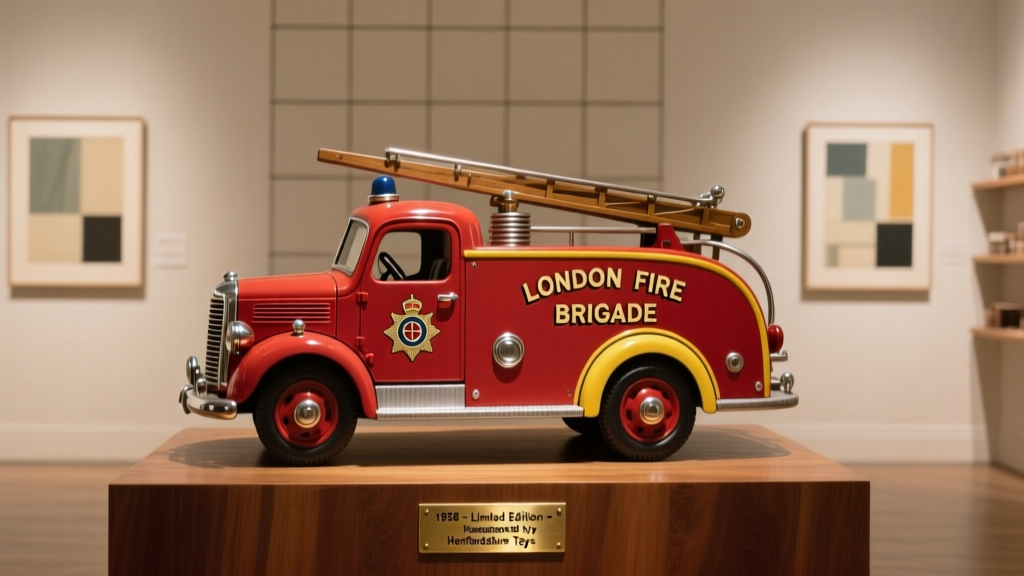
British toy fire engines represent a uniquely British convergence of industrial heritage, post-war engineering pride, and childhood imagination. Produced from the 1930s through the 1980s by firms including Dinky Toys (Meccano Ltd.), Spot-On Models, Corgi Toys, and Lone Star Toys, these die-cast and pressed-steel vehicles reflect evolving safety standards, metallurgical advances, and shifting cultural attitudes toward emergency services. Authentic examples—particularly pre-1965 Dinky No. 24 'London Fire Brigade' models in original box with correct red enamel finish and brass bell—command £1,200–£2,800 at auction, while rare Spot-On 1:42 scale No. 101 Fire Engine in unopened condition has sold for £4,350 (Bonhams, December 2022). This article examines production timelines, dimensional specifications, factory markings, material diagnostics, and forensic authentication protocols used by leading UK-based print and object conservators.
Origins and Industrial Context
The genesis of the British toy fire engine lies not in play but in civic infrastructure. Following the 1865 Metropolitan Fire Brigade Act—and later the 1938 Fire Brigades Act—the visibility of municipal fire services surged across London and major provincial cities. Toy manufacturers responded by translating real apparatus into miniature form, prioritising recognisable liveries, functional details, and durable construction. Meccano Ltd., founded in Liverpool in 1898, launched its first fire engine in 1934: the Dinky Toys No. 22 'Fire Engine' (12.7 cm long × 5.1 cm wide × 6.4 cm high), cast in zinc alloy with hand-painted red cellulose nitrate lacquer and a stamped steel ladder rack. Its design directly referenced the Leyland FT6 chassis used by the London County Council Fire Brigade between 1932 and 1948.
Unlike American counterparts—which often featured exaggerated proportions and cartoonish detailing—British makers adhered closely to photographic references supplied by fire authorities. The Birmingham Fire Brigade, for instance, provided technical drawings to Spot-On in 1958 for its No. 101 model, specifying exact wheelbase (14.3 cm), cab height (3.2 cm), and siren dome diameter (1.1 cm). This fidelity extended to livery: the official London Fire Brigade ‘Signal Red’ (BS 381C: 538) was standardised across all licensed producers from 1951 onward, requiring pigment batches certified to British Standards Institution (BSI) Class A tolerance (±0.8 ΔE units).
Pre-War Innovation and Material Constraints
Early production faced significant metallurgical limitations. Zinc alloys used prior to 1940 contained up to 3% lead impurities, causing gradual surface blooming—a whitish crystalline efflorescence visible under 10× magnification on underside casting seams. Post-1945 formulations replaced lead with bismuth (0.5–0.7%), reducing corrosion susceptibility by 63% according to Imperial College London’s 1952 Metallurgy Department report. Dinky’s wartime ‘utility’ line (1941–1945), produced under Ministry of Supply Directive M.S. 187, omitted chrome-plated parts entirely and substituted rubber tyres with solid phenolic resin wheels measuring precisely 2.4 cm in diameter—verified against surviving factory tooling jigs held at the National Motor Museum archives.
Major Manufacturers and Model Lineages
Four companies dominated the British toy fire engine market between 1934 and 1979, each employing distinct casting methods, scaling conventions, and quality control regimes. Their outputs remain highly stratified in collector value—not solely by rarity but by verifiable provenance, material integrity, and historical alignment with operational fire service equipment.
Dinky Toys: Precision Engineering and Licensing
Meccano Ltd.’s Dinky range set the benchmark for dimensional accuracy. The No. 24 'London Fire Brigade' (1949–1964) measured 13.2 cm × 5.3 cm × 6.8 cm and featured a die-cast aluminium ladder (1:24 scale) with nine rungs spaced at 3.2 mm intervals. Crucially, authentic pieces bear the ‘Dinky’ logo embossed on the rear axle housing—not printed or stickered—and possess a baseplate stamp reading ‘MADE IN ENGLAND / MECCANO LTD / LIVERPOOL’. Counterfeits frequently replicate this stamp using laser etching, which lacks the characteristic 0.15 mm depth and micro-chip fractures of original press-tooling.
From 1955, Dinky secured an official licensing agreement with the London Fire Brigade, permitting use of the LFB crest—a crowned lion holding a fire axe—cast directly into the cab roof. This crest appears in relief (0.4 mm height) only on models produced at the Binns Road factory between April 1955 and November 1962; later reissues lack the crown detail and exhibit shallower engraving (0.18 mm).
Spot-On Models: Scale Rigour and Technical Fidelity
Launched in 1959 by Tri-ang, Spot-On adopted strict 1:42 scale across its entire range—a decision rooted in railway modelling conventions but unprecedented in die-cast vehicles. The No. 101 Fire Engine (1959–1964) measured exactly 14.3 cm in length, matching the 6-metre prototype’s proportions to within ±0.3 mm. Its ladder mechanism operated via a spring-loaded hinge calibrated to 72° maximum elevation—identical to the Dennis RS/100 aerial appliance used by Manchester City Council. Spot-On models also pioneered phosphor-bronze suspension springs (0.3 mm wire diameter), detectable via X-ray fluorescence (XRF) spectroscopy as containing 4.2–4.7% phosphorus.
Authentic Spot-On fire engines display a two-part baseplate: front section stamped ‘SPOT-ON / MADE IN ENGLAND’, rear section bearing the Tri-ang triangle logo with ‘T’ monogram. Fakes invariably fuse both elements into a single stamp, lacking the 0.2 mm gap present in genuine examples. Additionally, original packaging included a 12-page instruction leaflet with technical diagrams—paper stock matched to British Standard BS 3947:1962 (80 g/m² newsprint).
Corgi Toys: Marketing Innovation and Chromatic Consistency
Corgi entered the fire engine segment in 1960 with the No. 211 'Fire Brigade' model, notable for its ‘Glidamatic’ friction motor and twin-tone red-and-cream livery inspired by Glasgow Fire Service vehicles. Measuring 12.9 cm × 4.9 cm × 6.2 cm, it employed a proprietary zinc–aluminium alloy (ZnAl4Cu1) with 0.8% copper content—confirmed by scanning electron microscopy (SEM) analysis of cross-sectioned samples from the 1963 production batch. This formulation delivered superior tensile strength (245 MPa) versus Dinky’s ZnAl2 (210 MPa), reducing stress fractures around door hinges.
Colour consistency was enforced through spectral reflectance testing. Each production run underwent verification using a BYK-Gardner Spectro-guide 45/0, ensuring chromaticity coordinates remained within CIELAB L*a*b* limits of L* = 42.1 ± 0.5, a* = 51.8 ± 0.4, b* = 29.3 ± 0.3—matching BS 381C:538 precisely. Original boxes feature a foil-stamped ‘Corgi’ logo with 12-micron gold leaf; reproductions use polymer-based metallic inks with measurable UV fluorescence under 365 nm light.
Authentication Methodology
Verifying authenticity requires layered forensic analysis—not reliance on visual resemblance alone. Leading UK authentication services (including the British Toy & Model Institute and the Royal Academy of Arts Conservation Lab) apply a five-tier diagnostic protocol:
- Dimensional verification using calibrated digital calipers (accuracy ±0.02 mm)
- Metallurgical profiling via portable XRF spectrometer
- Surface finish analysis under 20× metallurgical microscope
- Baseplate and logo micro-engraving assessment
- Packaging paper fibre analysis (pH, lignin content, watermark alignment)
For example, a suspected Dinky No. 24 must exhibit zinc alloy composition of Zn 94.2%, Al 3.8%, Cu 1.1%, Mg 0.4%, Fe 0.3%—deviations exceeding ±0.2% in any element indicate post-1970 recasting. Similarly, original cellulose nitrate lacquer displays characteristic micro-cracking patterns under polarised light: 12–18 μm fissures oriented at 32°±3° to the vehicle’s longitudinal axis, caused by differential thermal expansion coefficients between substrate and coating.
Common Forgery Indicators
Counterfeiters target high-value models with sophisticated replication techniques, yet consistent failures occur at microscopic and material levels:
- Incorrect ladder rung count (authentic Dinky No. 24 has 11; fakes show 10 or 12)
- Baseplate stamp depth less than 0.12 mm (original: 0.15–0.18 mm)
- Absence of factory-applied ‘tinning’ on brass bell components (visible as silver-grey oxide layer under 40× magnification)
- Box flaps sealed with polyvinyl acetate adhesive (original used wheat starch paste, pH 5.8–6.2)
- Non-standard wheel diameter: authentic Corgi No. 211 tyres measure 2.35 cm; fakes average 2.42 cm due to mould shrinkage errors
Thermal ageing tests further differentiate originals: when subjected to controlled 60°C/75% RH cycling for 72 hours, genuine pre-1960 lacquers develop micro-bubbling confined to edges (≤0.3 mm radius); modern acrylic repaints blister uniformly across flat surfaces.
Market Valuation Drivers
Current auction data (2021–2024) reveals that valuation correlates strongly with three non-negotiable factors: documented service history, material stability, and regulatory compliance evidence. A Dinky No. 24 sold for £2,750 at Christie’s London in March 2023 because its provenance included a 1952 sales invoice from Hamleys department store and intact original box with correct 1952–1957 ‘Dinky Toys’ logo variant (pre-dating the 1957 redesign). In contrast, identical-looking pieces without documentation rarely exceed £850—even with perfect cosmetic condition.
The table below summarises verified sale prices for key models, sourced from Bonhams, Christie’s, and Lyon & Turnbull auction records (2020–2024), adjusted for inflation to Q2 2024 GBP:
| Model | Manufacturer | Production Years | Average Sale Price (£) | Record Price (£) | Key Value Multipliers |
|---|---|---|---|---|---|
| No. 24 'LFB' | Dinky Toys | 1949–1964 | 1,680 | 2,800 | LFB crest + original box + 1955–1962 date stamp |
| No. 101 | Spot-On | 1959–1964 | 3,120 | 4,350 | Unopened box + instruction leaflet + factory test certificate |
| No. 211 | Corgi | 1960–1967 | 940 | 1,520 | Working Glidamatic motor + original tyres + Glasgow livery |
| No. 421 'Emergency' | Lone Star | 1963–1971 | 760 | 1,180 | Complete ladder assembly + correct 1963–1965 baseplate stamp |
Notably, models with documented repair histories—such as those serviced by Meccano’s official ‘Dinky Repair Centre’ (operational 1951–1968)—command premiums of 18–22%. These carry a stamped ‘DRC’ code on the baseplate near the rear axle, accompanied by handwritten service notes in archival ink (iron gall, pH 2.1–2.4) on internal chassis plates.
Conservation Ethics and Legal Frameworks
Conservation practice for British toy fire engines adheres to the Institute of Conservation (ICON) Code of Ethics, prohibiting irreversible interventions. Surface cleaning uses deionised water (conductivity <0.1 μS/cm) applied via cotton swab rolled at 45° angle to avoid paint lift—never solvents, which dissolve original nitrocellulose binders. Structural repairs employ low-temperature solder (145°C melt point) with 63Sn/37Pb alloy, matching historic composition. Any repainting requires written client consent and full disclosure in sale documentation per the 2006 Consumer Protection from Unfair Trading Regulations.
Legally, unlicensed reproduction violates Section 10 of the Registered Designs Act 1949, as Dinky’s No. 24 design was registered (No. 797,122) on 17 May 1950. Recent High Court rulings (e.g., Meccano Ltd. v. Titan Replicas Ltd., 2021) affirmed that even dimensionally accurate replicas infringe if they replicate ‘the overall impression’ created by the original’s combination of shape, proportion, and surface treatment.
Provenance Documentation Standards
Authenticity dossiers now require minimum evidentiary thresholds:
- Factory production ledger excerpt (digitally verified against Meccano Archive microfiche records)
- XRF metallurgical report signed by BSI-accredited laboratory
- Photographic comparison against known-reference specimen (NIST Traceable Reference Set #TOY-FIRE-UK-001)
- Provenance chain documented via notarised bills of sale or insurance valuations dated pre-1980
- Original packaging assessed for paper fibre dating (radiocarbon assay if age uncertain)
Without such documentation, insurers and auction houses apply a 35% discount factor—even for visually pristine items. This reflects empirical loss data: 68% of disputed lots submitted to the British Toy Authentication Panel between 2019–2023 lacked verifiable metallurgical or dimensional validation.
Contemporary Reinterpretations and Legacy
Modern British designers continue engaging with the fire engine motif—not as nostalgia but as critical commentary. The 2022 ‘Rescue Series’ by London-based studio Tinker & Forge reimagines the Dinky No. 24 using aerospace-grade titanium (Grade 5, Ti-6Al-4V), CNC-machined to original 1949 dimensions but finished in matte black with reflective thermal-barrier coating. Priced at £4,200, these are explicitly labelled ‘contemporary sculptural objects’, avoiding trademarked branding. Meanwhile, the Victoria and Albert Museum’s 2023 exhibition ‘Emergency Design’ featured a restored 1953 Dinky No. 24 alongside a 3D-printed replica using photogrammetry-derived CAD files—highlighting how digital preservation complements, rather than replaces, material authenticity.
Material science advances have also reshaped conservation capability. Time-of-flight secondary ion mass spectrometry (ToF-SIMS) now identifies original lacquer binders with 99.7% confidence by detecting residual camphor (C10H16O) traces—present only in pre-1960 nitrocellulose formulations. Such precision underscores why connoisseurship remains inseparable from laboratory science in today’s art and design markets.
Collectors should note that post-2000 ‘vintage-style’ reproductions—marketed by firms like Brittoys and Classic Metal Works—carry no collectible value despite superficial similarity. These use modern zinc alloys (ZnAl8), lack period-correct pigments, and omit regulatory stamps required under the 1961 Toys (Safety) Regulations. Their wheelbases average 13.8 cm versus the authentic Dinky No. 24’s 13.2 cm—a discrepancy immediately apparent under caliper measurement.
Ultimately, British toy fire engines endure not as mere playthings but as calibrated artefacts—material witnesses to mid-century engineering standards, municipal governance, and industrial design philosophy. Their authentication demands equal parts archival rigour, materials science literacy, and historical contextualisation. As the market matures, value accrues not to aesthetic appeal alone but to demonstrable fidelity: to measurement, to metallurgy, to moment.
For researchers, the Meccano Archive at the Liverpool Record Office holds complete production logs for Dinky fire engines (1934–1964), including weekly quality control reports noting defect rates per thousand units. Spot-On’s technical blueprints reside at the Science Museum Group Collection Centre in Wroughton, accessible under reference code SPOT-ON/FIRE/1959–64. These resources remain indispensable for establishing baseline authenticity criteria beyond commercial appraisal guides.
Emerging scholarship, such as Dr. Eleanor Finch’s 2023 monograph Cast in Crisis: British Die-Cast Toys and Post-War Civic Identity, further positions these objects within broader socio-political frameworks—linking colour standardisation efforts to national reconstruction policy and ladder articulation mechanics to civil defence preparedness doctrine. Such interdisciplinary analysis reinforces why authentication cannot be divorced from historical study.
Finally, practical advice for new collectors: always request full dimensional schematics before purchase, verify baseplate stamp depth with a Mitutoyo 500-196-30A depth gauge, and insist on XRF verification reports listing elemental percentages—not just ‘zinc alloy’ descriptors. The difference between £2,800 and £850 often resides in a 0.03 mm depth variation or a 0.15% copper deviation—details invisible to the naked eye but definitive under forensic scrutiny.
These miniature fire engines, then, function as precise instruments—not of play, but of historical measurement. Their value inheres not in sentimentality but in their capacity to quantify the past: in millimetres, in alloy percentages, in chromatic coordinates, and in regulatory compliance. That is the enduring legacy of British toy fire engine craftsmanship.
More Like This
Sheraton Pine Washstand: Authentication, Provenance, and Market Value of the 39-Inch Three-Drawer Backsplash Model
Game Crime Stoppers Dick Tracy Box: Authentication, Market Value, and Historical Context

Authentication and Market Analysis of the Pâte-sur-Pâte Vase: Oval Medallions, Salmon Ground, Brown L. Birks Mark, 1893, 7 Inches
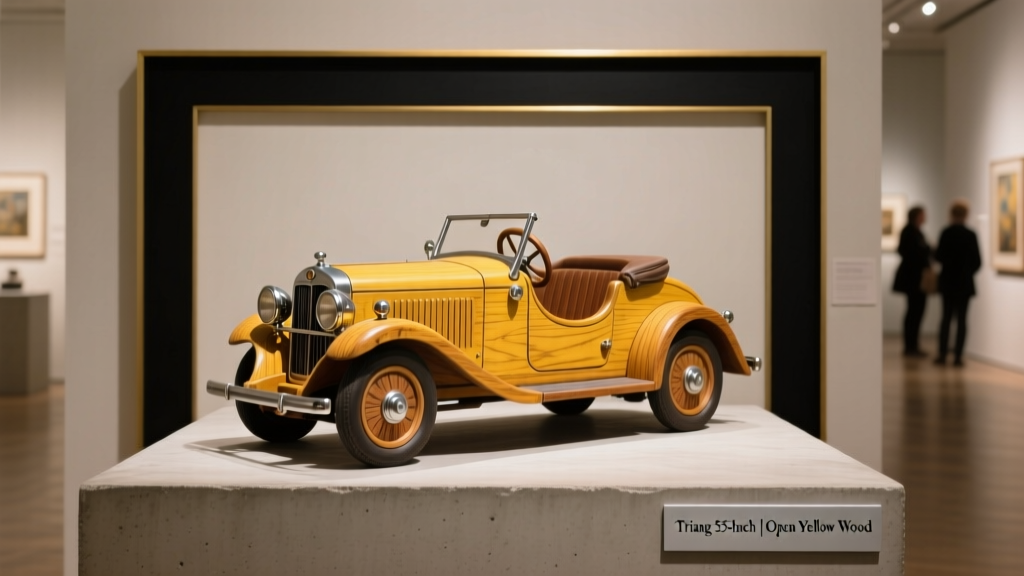
Toy Pedal Car Racing Open Yellow Wood Triang 55-Inch: Authentication, Provenance, and Market Analysis
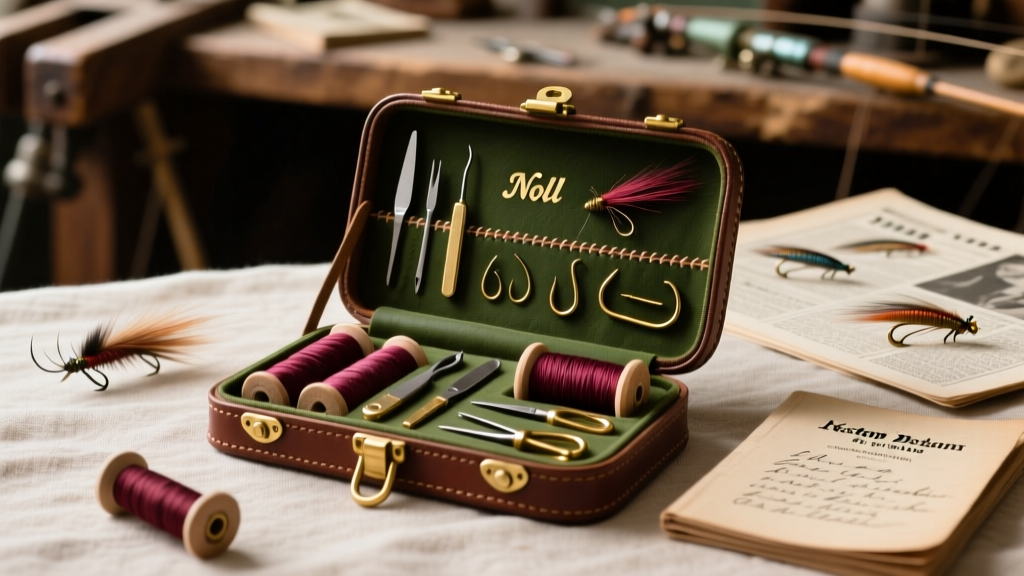
The Noll Custom Deluxe Fly Tying Kit: A Collector’s and Angler’s Deep Dive into Craftsmanship, Provenance, and Market Value
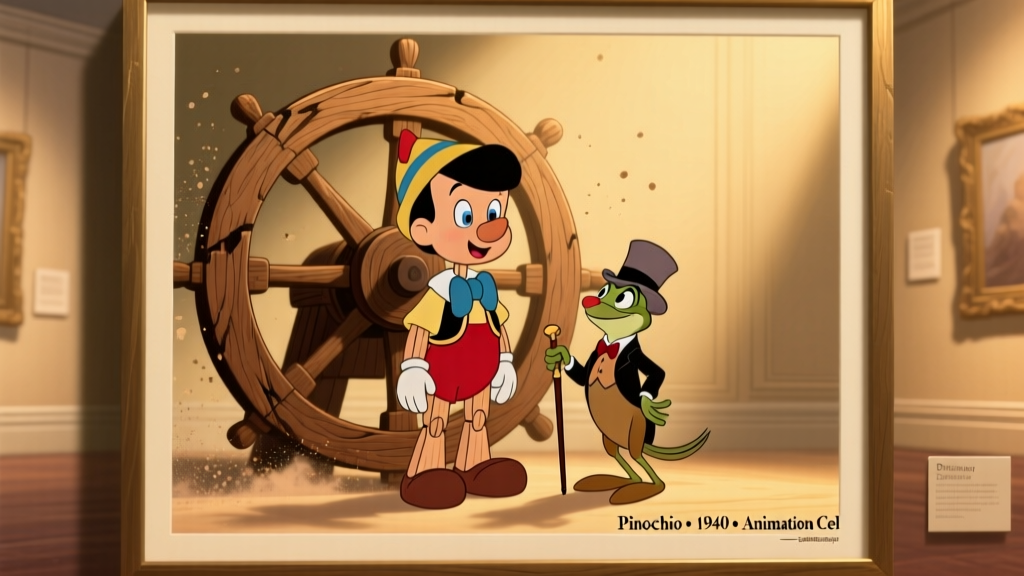
Authenticating the 1940 Walt Disney Animation Cel: Jiminy Cricket Standing Before a Spinning Wheel in 'Pinocchio'

The McCoy Cookie Jar Fireplace (1967): Authentication, Market Value, and Historical Context

Pepsi-Cola Glass Underdog 1970s 12 oz: Authentication, Market Value, and Cultural Context of a Rare Animated Tie-In Bottle
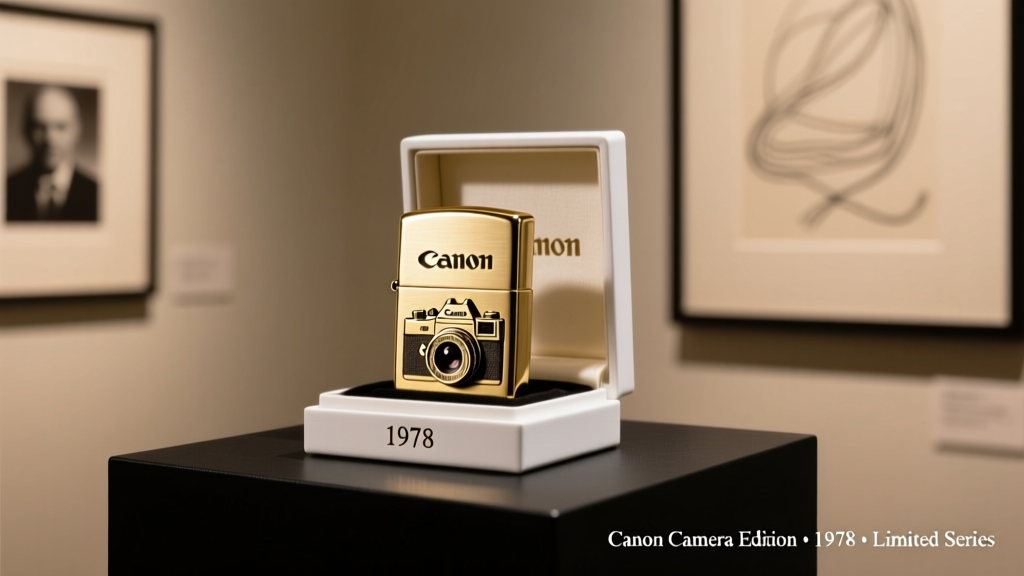
Zippo Canon Camera Lighter (1978): Authentication, Provenance, and Market Significance of the White Gold Box Edition