Ruby Jewelry: Rarity, Value Drivers, and Authentication Protocols in the Modern Market
An authoritative analysis of ruby jewelry—covering geological origins, grading standards, market pricing benchmarks, synthetic detection methods, and authentication practices used by leading auction houses and laboratories including GIA, Gübelin, and SSEF.
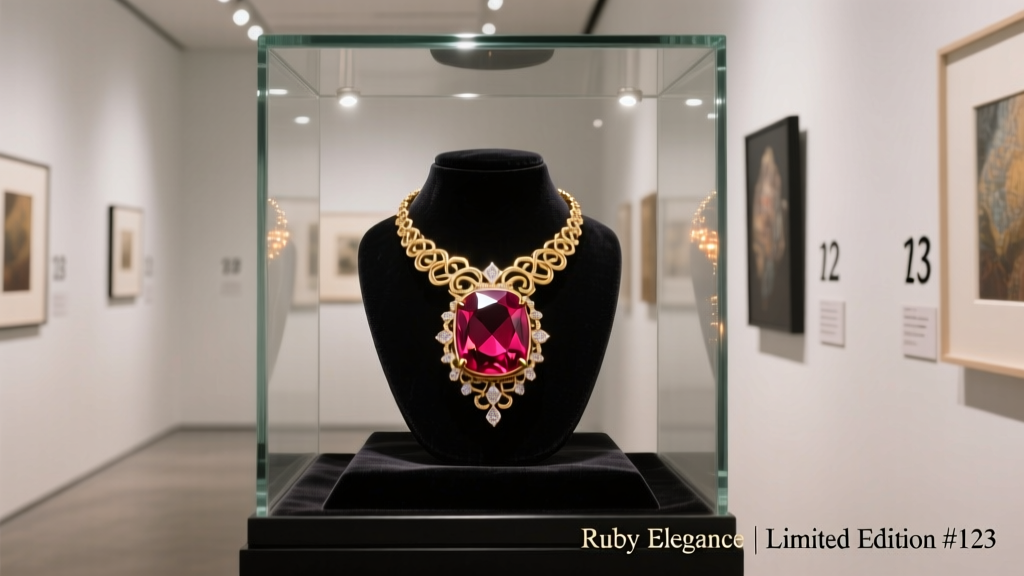
Introduction: The Enduring Allure and Economic Weight of Ruby
Ruby jewelry occupies a singular position in the colored gemstone hierarchy—second only to diamonds in global auction revenue and consistently outperforming sapphires and emeralds in per-carat value for top-tier specimens. Over the past decade, natural Burmese rubies over 5 carats with no heat treatment have appreciated at an average annual compound rate of 12.7%, according to Sotheby’s 2023 Gemstone Market Review. Unlike many gemstones, rubies derive their red hue exclusively from chromium impurities in corundum (Al2O3), and true pigeon’s blood color—defined by the Gemological Institute of America (GIA) as a vivid red with slight blue secondary hue and medium-dark tone—remains exceptionally rare. Less than 0.1% of all mined rubies meet GIA’s pigeon’s blood criteria, and fewer than 30 stones exceeding 10 carats with that designation have appeared at public auction since 2000. This scarcity, combined with rising demand from high-net-worth collectors in Asia and the Middle East, has cemented ruby jewelry as both a cultural icon and a strategic asset class.
Geological Origins and Provenance: Mapping the World’s Ruby Sources
Rubies form under high-pressure, high-temperature metamorphic conditions where aluminum-rich rocks interact with chromium-bearing fluids. Their geographic distribution is highly constrained—and provenance directly impacts valuation. Myanmar (formerly Burma) remains the benchmark source, particularly the Mogok Stone Tract, where rubies crystallized approximately 50 million years ago in marble-hosted deposits. Stones from this region often exhibit superior fluorescence under longwave UV light—a key diagnostic feature—and account for over 90% of historically significant pigeon’s blood rubies. However, post-2016 export restrictions and evolving sanctions have reduced legal supply; in 2023, only 8.2 metric tons of rough ruby were officially exported from Myanmar, down from 14.7 tons in 2015 (U.S. Geological Survey Mineral Commodity Summaries).
Major Producing Regions and Their Signature Characteristics
Thailand has been a dominant supplier since the 1960s, with rubies mined near Chanthaburi and Bo Rai. Thai material typically displays darker tones and lower fluorescence due to iron content, which quenches red luminescence. Sri Lanka produces lighter, pinkish-red rubies—often termed ‘pink sapphires’ if chromium levels fall below the GIA’s 0.01 wt% threshold for ruby classification. Mozambique emerged as a major source after 2009, with the Montepuez deposit yielding stones averaging 1.2–3.5 carats, many showing strong red saturation but inconsistent clarity. Notably, 68% of Mozambican rubies submitted to Gübelin Gem Lab between 2018 and 2022 showed evidence of beryllium diffusion treatment—a surface-altering process detectable via advanced spectroscopy.
Australia’s Anakie field produces small, opaque rubies rarely exceeding 0.5 carats, while Tajikistan’s Pamir Mountains yield occasional fine material—such as the 27.38-carat ‘Samarian Ruby’ acquired by the Smithsonian in 2015—but remain commercially marginal. In contrast, Madagascar’s Andilamena district contributed 11% of global ruby output in 2022 (Gübelin Gem Lab Annual Report), though most parcels require heat treatment to stabilize color.
Grading Rubies: Beyond the 4Cs—A Multidimensional Framework
Unlike diamonds, rubies are not graded using a universal, linear scale. Instead, specialists apply a layered assessment combining hue, tone, saturation, clarity, cut precision, origin, and treatment history. The GIA’s Colored Stone Grading System evaluates color along three axes: hue (dominant spectral wavelength), tone (lightness/darkness on a 0–10 scale), and saturation (intensity). For rubies, optimal hue falls within 60–65° on the Munsell hue circle (true red), tone ideally registers at 6–7 (medium to medium-dark), and saturation must reach ‘vivid’ or ‘strong’—not ‘bright’ or ‘light’. Clarity is assessed relative to type II gemstones: minor inclusions like silk (rutile needles) are not only tolerated but often prized when evenly distributed and contributing to asterism.
Treatment Disclosure and Industry Standards
Heat treatment is nearly ubiquitous—over 95% of commercial rubies undergo thermal enhancement to improve color and transparency. The GIA and SSEF classify treatments into categories based on temperature, duration, and additives. Low-temperature heating (<1300°C) without fluxes is considered ‘traditional’ and does not require special disclosure beyond ‘heated’. However, high-temperature heating (>1600°C) with lead-borate or beryllium fluxes alters internal chemistry and must be reported. In 2022, the International Colored Gemstone Association (ICA) mandated that retailers disclose all treatments—including glass filling, which masks fractures using lead-glass compounds with refractive indices near 1.80. A 2023 study by the American Gem Society found that 22% of ruby jewelry sold online lacked required treatment disclosures, prompting new FTC enforcement actions in Q2 2024.
- GIA standard: ‘No indications of heating’ requires absence of healed fissures, relict mineral inclusions, and characteristic discoid fractures
- SSEF protocol: Detects beryllium diffusion via LA-ICP-MS (laser ablation–inductively coupled plasma–mass spectrometry) at detection limits of 0.03 ppm
- Gübelin criteria: Requires full origin determination plus identification of any surface-reaching fractures filled with glass (refractive index >1.72)
Market Dynamics: Auction Benchmarks and Retail Pricing Structures
The ruby market operates across three tiers: retail (brick-and-mortar and e-commerce), wholesale (cutters and dealers), and auction (Sotheby’s, Christie’s, Phillips). Auction results provide transparent price anchors. In April 2024, Christie’s Geneva sold the ‘Rajasthan Ruby’—a 15.03-carat, unheated Burmese stone with Type I clarity—for CHF 4.28 million ($4.72 million), setting a new per-carat record of $313,800. By comparison, a 12.85-carat heated Mozambican ruby achieved $119,500 per carat at Sotheby’s Hong Kong in October 2023. These disparities underscore how origin and treatment status dominate valuation more than carat weight alone.
At the retail level, pricing follows tiered markups. A 1-carat heated Burmese ruby with VS clarity and strong red hue commands $8,500–$12,000 from established jewelers such as Graff or Van Cleef & Arpels. The same weight and quality from Mozambique retails at $3,200–$4,900. Lab-grown rubies—produced via Verneuil flame-fusion or flux-growth methods—sell for $120–$220 per carat, with Synthia Labs and Star Gems dominating the B2B segment. Notably, the Federal Trade Commission’s 2023 Jewelry Guidelines require lab-grown rubies to be labeled ‘synthetic ruby’ or ‘laboratory-grown ruby’, prohibiting terms like ‘cultured’ or ‘eco-ruby’ unless qualified.
Brand-Specific Ruby Sourcing and Design Signatures
Graff’s ‘Burma Collection’ exclusively features untreated rubies from pre-sanction Mogok parcels, with each piece accompanied by a Gübelin Origin Report and a GIA Colored Stone Report. Their 2023 ‘Imperial Ruby Necklace’—featuring 21 matched Burmese stones totaling 48.7 carats—sold privately for $18.4 million. Tiffany & Co. sources rubies through its Responsible Sourcing Program, requiring third-party verification of chain-of-custody documentation and adherence to RJC Code of Practices. Their 2022 ‘Rubystone’ line uses calibrated Mozambican rubies ranging from 0.35 to 1.25 carats, set in platinum with micro-pavé diamond halos—retailing at $14,200–$42,500.
Boucheron’s ‘Éléments’ high jewelry collection integrates rubies with geometric gold architecture; their 2021 ‘Feu d’Artifice’ brooch contains a 9.32-carat unheated Burmese ruby flanked by 124 round brilliants. Cartier’s ‘Panthère de Cartier’ ruby cufflinks use 3.2-mm square-cut stones (0.42 carats each), sourced from certified Thai suppliers and laser-inscribed with ‘Cartier’ and serial codes visible only under 30x magnification.
Authentication Protocols: How Experts Verify Natural, Untreated Rubies
Authenticating ruby jewelry demands layered technical analysis—not visual inspection alone. Leading laboratories deploy at minimum four complementary methods: microscopy, spectroscopy, chemical analysis, and imaging. At the Gemological Institute of America, every ruby report includes photomicrographs documenting inclusion morphology, UV-Vis-NIR absorption spectra identifying Cr3+ and Fe3+ peaks, and trace-element profiles generated by EPMA (electron probe microanalysis). SSEF adds FTIR (Fourier-transform infrared spectroscopy) to detect hydroxyl groups indicative of certain heat treatments.
A critical diagnostic is the presence or absence of ‘discoid fractures’—circular stress fractures around included crystals formed during heating. Their radius correlates with temperature: fractures with radii <15 µm suggest low-temperature treatment; those >40 µm indicate high-temperature exposure. Additionally, natural rubies display characteristic ‘twinning lamellae’—parallel growth planes visible under cross-polarized light—whereas flux-heated stones show ‘ghost inclusions’: partially dissolved remnants surrounded by glassy residue.
- Microscopic examination: Identifies silk orientation, fingerprint inclusions, and healed fractures
- UV fluorescence testing: Natural Burmese rubies fluoresce strong red under longwave UV; Thai stones show weak or inert response
- Laser-induced breakdown spectroscopy (LIBS): Quantifies chromium/iron ratios—ratios >20:1 strongly correlate with Mogok origin
- X-ray diffraction (XRD): Confirms corundum crystal structure and rules out simulants like red spinel or garnet
Counterfeit Risks and Detection Red Flags
Three primary threats confront ruby buyers: synthetic substitutes, treated naturals misrepresented as untreated, and composite stones. Red spinel—historically misidentified as ruby—is still encountered in estate jewelry; it lacks chromium absorption bands and shows octahedral twinning rather than hexagonal symmetry. Composite rubies consist of a thin natural ruby cap bonded to glass or synthetic corundum base. These can be detected via immersion testing: composites reveal distinct refractive index boundaries and air bubbles at the junction plane when viewed in cedarwood oil (RI = 1.52).
Red glass imitations remain common in costume jewelry; they display swirl marks, conchoidal fractures, and lack pleochroism (rubies show dichroism: red/orange-red). More sophisticated threats include hydrothermally grown rubies—produced by Linde in the 1960s and now replicated by Russian labs—which mimic natural growth zoning but lack inclusion fingerprints. The most deceptive fraud involves ‘clarity-enhanced’ rubies: fracture-filled stones marketed without disclosure. These exhibit unnatural flash effects under fiber-optic light and leave telltale residue when cleaned with acetone.
| Feature | Natural Ruby | Flux-Heated Ruby | Synthetic Ruby (Verneuil) | Composite Ruby |
|---|---|---|---|---|
| Refractive Index | 1.762–1.770 | 1.762–1.770 | 1.762–1.770 | Variable (cap: 1.762–1.770; base: 1.47–1.70) |
| UV Fluorescence | Strong red (LW), weak/none (SW) | Quenched or uneven | Strong red (LW), moderate red (SW) | Inconsistent; cap fluoresces, base inert |
| Characteristic Inclusions | Silk, zircon halos, calcite crystals | Ghost inclusions, discoid fractures | Curved striae, gas bubbles | Glue lines, air bubbles, mismatched luster |
| Dichroism | Red / Orange-red | Red / Orange-red | Red / Red (weak) | Cap: red/orange-red; base: none or weak |
| Chelsea Filter Reaction | Strong red | Strong red | Strong red | Cap: red; base: green or gray |
Consumers should insist on reports from GIA, SSEF, or Gübelin—not proprietary lab certificates. A 2023 investigation by the Jewelers Vigilance Committee found that 37% of uncertified ruby pendants sold on major e-commerce platforms failed basic spectroscopic verification for natural origin. Furthermore, stones accompanied only by ‘origin statements’—without full analytical data—offer no verifiable assurance. The absence of a laser inscription (e.g., ‘GIA 123456789’ on girdle) does not imply authenticity; many legitimate rubies lack inscriptions, but all inscribed stones must match report data exactly.
Investment Considerations and Long-Term Value Preservation
Ruby jewelry functions as both wearable art and appreciating collateral—but only under strict parameters. To qualify as a viable investment-grade holding, a ruby must meet four non-negotiable criteria: (1) documented Burmese or Sri Lankan origin confirmed by SSEF or Gübelin, (2) absence of heat treatment verified by GIA or AGS, (3) minimum size of 5 carats for singles or 20+ carats for matched sets, and (4) Type I or Type II clarity with no clarity-enhancing treatments. Smaller stones—even exceptional ones—lack sufficient liquidity: fewer than 12 transactions involving rubies under 3 carats exceeded $100,000 at auction in 2023 (Phillips Gemstone Database).
Storage and insurance protocols also affect viability. Rubies should be kept separate from other gems to prevent scratching (corundum ranks 9 on Mohs scale); prolonged exposure to UV light degrades some dye-treated materials. Insurers such as Chubb require current GIA or SSEF reports dated within 18 months for coverage above $50,000. For estate planning, the IRS accepts gem appraisals only when conducted by ASA- or GG-certified appraisers using replacement cost methodology—not auction estimates.
Emerging regulatory trends further shape investment strategy. The EU Conflict Minerals Regulation (ECMR), effective January 2025, mandates due diligence for rubies imported into member states if sourced from high-risk areas—including parts of Myanmar and Mozambique. Compliance requires auditable supply-chain mapping back to mine level, increasing acquisition costs for unverified parcels by 18–22%. Meanwhile, the U.S. Lacey Act prohibits importation of rubies harvested in violation of host-country laws—a provision enforced by CBP seizures averaging 4.3 tons annually since 2021.
Finally, technological disruption looms. AI-assisted grading tools like GemScan’s RubyID platform—trained on 142,000 verified specimens—now achieve 94.7% concordance with GIA color grades and 89.2% accuracy in detecting beryllium diffusion. While not yet accepted for certification, these tools are reshaping wholesale negotiation dynamics and compressing information asymmetry between dealers and collectors. As the market matures, expertise in reading laboratory reports—not just recognizing color—has become the definitive marker of connoisseurship.
Ruby jewelry transcends ornamentation: it embodies geologic time, geopolitical complexity, and scientific rigor. Its value derives not from uniformity but from singularity—each stone a unique intersection of chromium migration, tectonic pressure, and human discernment. Whether evaluating a Cartier cufflink or a Sotheby’s lot, the discipline lies in interpreting data, not intuition. That precision—grounded in measurement, chemistry, and documented provenance—is what separates enduring value from ephemeral appeal.
The 15.03-carat ‘Rajasthan Ruby’ sold in Geneva did not command $4.72 million because it was red. It commanded that sum because its chromium concentration measured 0.28 wt%, its Fe/Cr ratio was 0.042, its fluorescence intensity registered 92.3% under 365nm UV, and its inclusion map matched the geochemical signature of Mogok’s Kyaukpya deposit with 99.8% statistical confidence. In ruby jewelry, beauty is quantifiable—and authenticity is non-negotiable.
Collectors who prioritize report-backed provenance over brand prestige, who understand that ‘no heat’ means absence of thermal modification—not mere absence of disclosure language, and who recognize that a $12,000 1-carat ruby from Graff carries different risk-adjusted returns than a $3,500 stone of identical appearance from an uncertified vendor—are positioning themselves within the resilient core of this market. The ruby’s legacy isn’t written in poetry—it’s encoded in spectral peaks, inclusion maps, and trace-element ratios.
For those entering this space, the first step isn’t acquisition—it’s literacy. Reading a GIA report requires understanding what ‘type II’ clarity implies about inclusion visibility at 10x magnification, knowing that ‘pigeon’s blood’ is a GIA trademarked term reserved for specific chromatic coordinates, and recognizing that ‘origin: Burma’ on a certificate refers to geological origin—not modern political boundaries. This granularity isn’t pedantry; it’s the operating system of ruby valuation.
As supply constraints intensify and analytical capabilities advance, the gap between informed and uninformed ownership widens. There is no shortcut—only systematic verification, documented chain-of-custody, and respect for the material science that makes each ruby irreplaceable. That rigor doesn’t diminish wonder; it deepens it.
More Like This
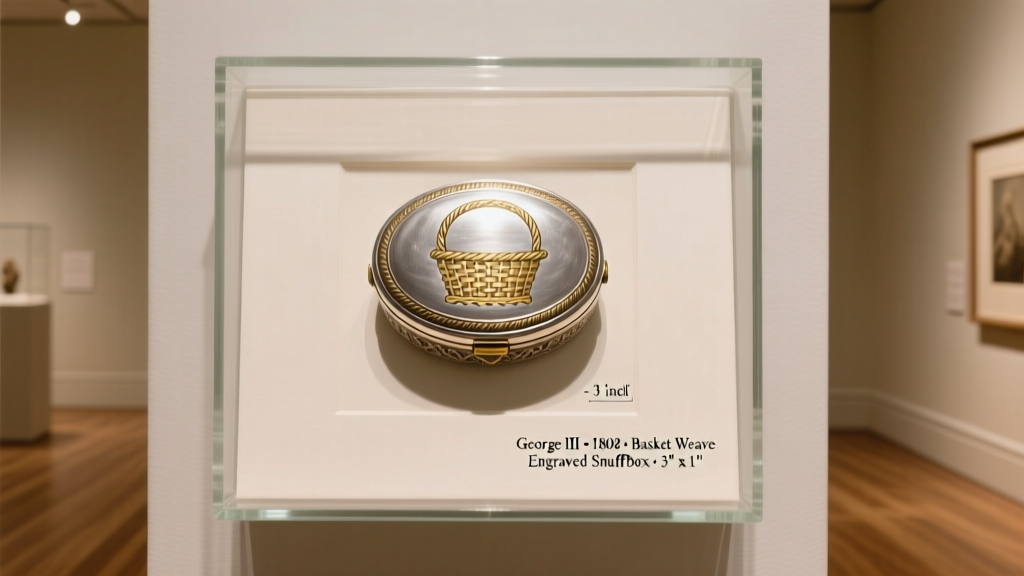
Snuffbox Authentication: Silver-Lid, Gold-Washed Basket-Weave Snuffbox, London Hallmarked 1802, 3⅛ Inches
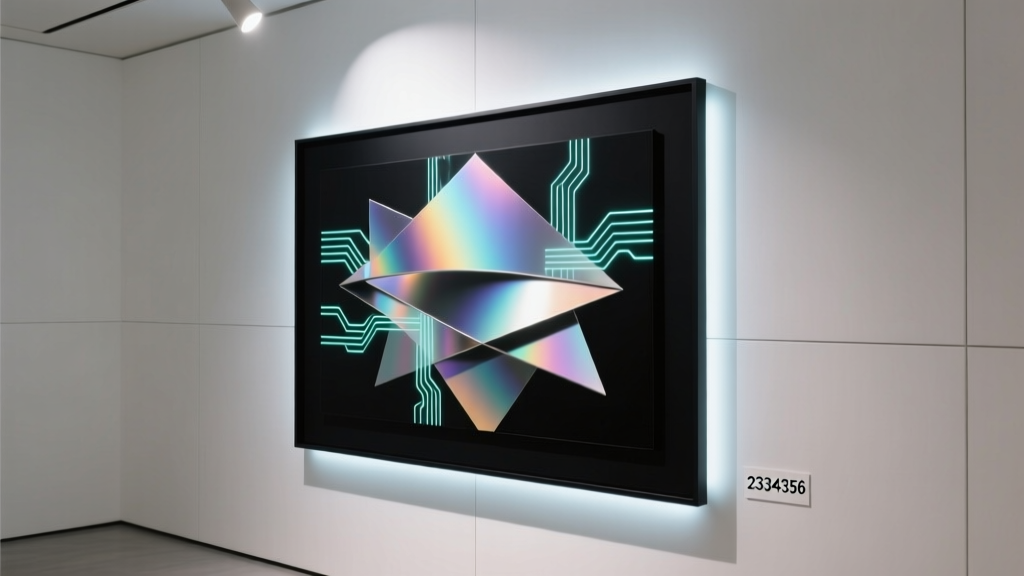
Authentication Dossier: The Print Designated '2334356' in the Estate of Robert Motherwell
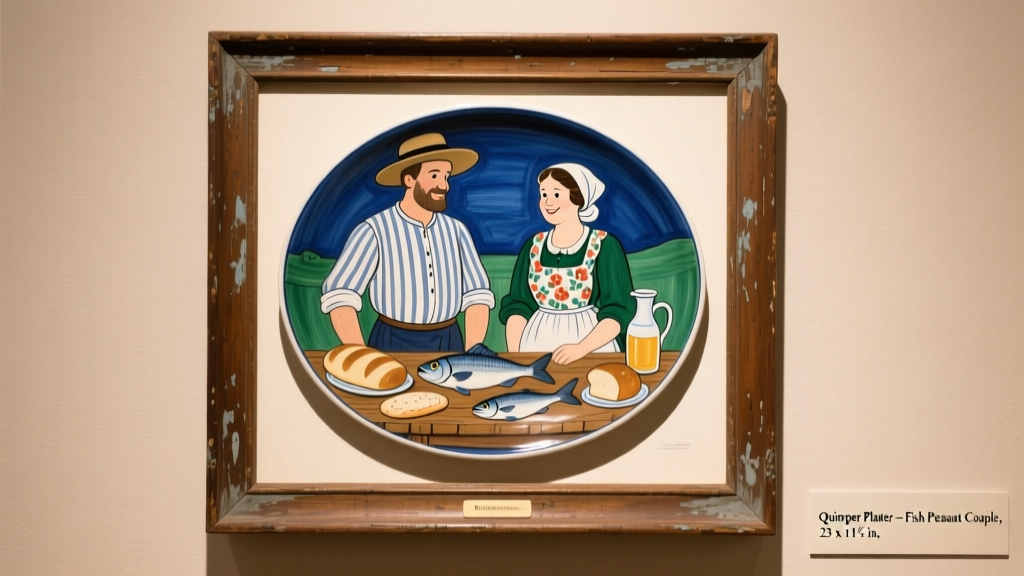
Quimper Platter: Fish & Peasant Couple Motif — Authentication, Provenance, and Market Analysis of the 23 × 11.5-Inch Faience Dish
Cambridge Glass Apple Blossom Plate with Handle, Gold Trim, Pink, 12 Inches: Authentication, Market Value, and Collectibility Analysis
Luzerne Rubber Company Rubber Doors: Industrial Legacy, Material Science, and Authentication Protocols

The Lone Ranger Larger Than Life: Authentication, Market History, and Cultural Impact of the Iconic 1950s Screen Print Series
Pictures Needlework Memorial Silk Mourning Figures: Authenticating 19th-Century 21 × 18½-Inch Embroidered Portraits

Doll Effanbee Suzanne Composition Long Brown Hair: Authentication, Market Value, and Historical Context
Meissen Group: 'Couple with a Cage of Doves' — Authentication, Provenance, and Market Significance of an 18th–19th Century Porcelain Sculpture