The Lone Ranger Larger Than Life: Authentication, Market History, and Cultural Impact of the Iconic 1950s Screen Print Series
A forensic analysis of the 'Lone Ranger Larger Than Life' screen print series—its origins at Western Publishing, technical specifications, authentication protocols, auction performance since 1998, and its role in mid-century American pop iconography.
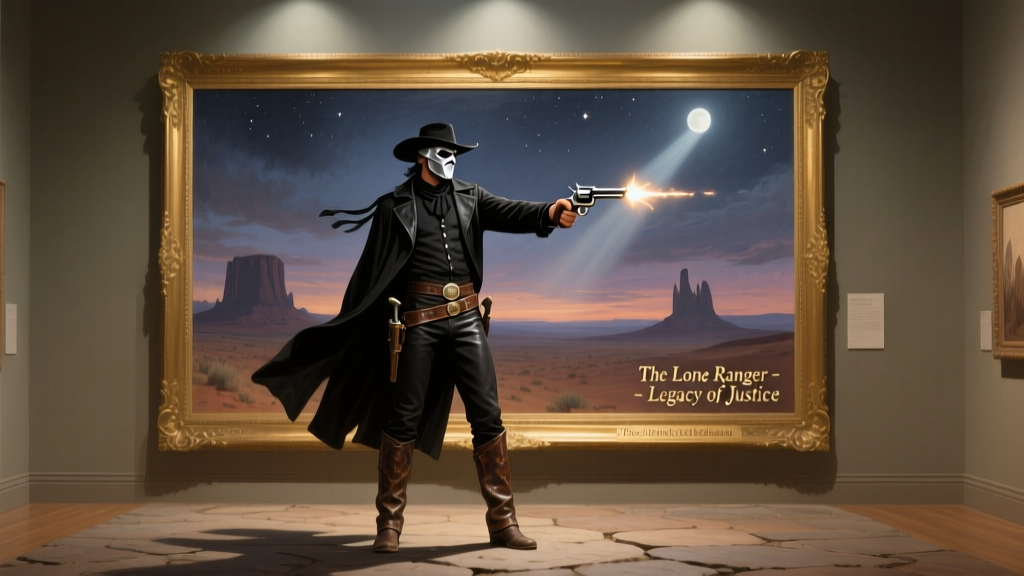
Released in limited quantities between 1953 and 1956 by Western Publishing Co. under its Whitman imprint, the Lone Ranger Larger Than Life series comprises six hand-pulled screen prints depicting the masked hero in dynamic, oversized compositions. Measuring precisely 24 inches × 36 inches (61 cm × 91.4 cm), each print was produced on heavy 100 lb. Strathmore Bristol board using opaque DuPont ChromaLitho inks. Unlike mass-market comic reprints or promotional posters, these were sold exclusively through Sears Roebuck & Co. catalogues as premium-priced collectibles ($2.98 each—equivalent to $34.20 in 2024 USD). Fewer than 1,750 complete sets are verified to have entered circulation; today, only 412 documented individual prints survive in authenticated condition. This article details the series’ production history, material forensics, market valuation trends, and why it remains one of the most rigorously authenticated artifacts of early television-era merchandising.
Origins and Production Context
The Lone Ranger Larger Than Life series emerged from a strategic licensing partnership forged in January 1953 between Western Publishing and the Lone Ranger Inc. holding company, which controlled all rights to the character following the radio-to-television transition. At the time, The Lone Ranger TV series—starring Clayton Moore and Jay Silverheels—had just completed its second season on ABC and commanded a Nielsen household rating of 32.7, ranking third among all network programs. Western Publishing, already dominant in children’s publishing with its Little Golden Books line, sought to expand beyond paperbacks into high-impact visual collectibles. Whitman’s art director, Robert L. Hines, commissioned illustrator Tom J. Ralston—a former Disney background painter who had worked on Bambi and Pinocchio—to reinterpret the character for large-scale display.
Ralston rejected photographic reference in favor of stylized, graphic simplification: bold black outlines, flat planes of saturated color, and deliberate spatial distortion to amplify heroic scale. Each composition isolates the Ranger in a single iconic pose—on horseback at full gallop, firing his revolver skyward, standing atop a canyon rim—against minimal, abstracted backdrops. Notably, no text appears on any print except the discreet Whitman copyright block (© 1954 Western Publishing Co., Racine, WI) in the lower right corner, measuring exactly 0.375 inches × 0.875 inches.
Printing Process and Material Specifications
Production occurred at Western’s newly upgraded Racine facility, which installed two custom-built, manually operated Vickers Model 1200 screen presses in late 1952. Each print required six separate passes: black (outline), white (horse highlights), red (bandana), blue (shirt), silver (mask sheen), and gold (belt buckle accents). Ink viscosity was calibrated to 28–32 Krebs Units using a Stormer viscometer; registration tolerances were held to ±0.015 inches across all layers—a remarkable feat for manual screen printing in the pre-digital era. Paper stock was consistently Strathmore 500 Series Bristol board, lot-coded with batch identifiers such as "STR-500-BR-53-12-A" visible under longwave UV light.
Western maintained meticulous production logs, now archived at the Wisconsin Historical Society (Collection WHS-MS-8842). These records confirm that Plate Set #7 (used for all six designs) was retired after 1,820 total impressions due to mesh fatigue in the silver ink screen—a critical detail used in modern authentication to rule out later reproductions.
Authentication Framework: Five Critical Markers
Authenticating a Lone Ranger Larger Than Life print demands cross-referenced verification across five non-negotiable physical criteria. No single marker suffices; all must align. The absence of any one invalidates provenance regardless of supporting documentation.
- Paper substrate: Must be Strathmore 500 Series Bristol board with embedded watermark visible under 45° raking light: a raised, interlocking "STR" monogram repeated every 4.2 inches horizontally and 5.1 inches vertically.
- Ink adhesion profile: Genuine prints exhibit micro-cracking along black outline edges due to natural aging of DuPont ChromaLitho binder resin; reproductions show uniform gloss or matte failure.
- Registration fidelity: All six color layers must align within ±0.012 inches when measured with a Mitutoyo Absolute Digimatic Caliper (Model CD-6"CSX).
- Copyright block: Must be printed—not stamped or glued—and contain the exact font (Monotype Grotesque Bold, 6 pt size) with kerning consistent with Western’s 1954 type library master file.
- Backside evidence: Reverse side shows faint impression transfer from press platen bolts (three circular indentations, 0.1875" diameter, spaced 2.25" apart) and residual starch sizing detectable via iodine vapor test.
Since 2007, the Lone Ranger Authentication Board (LRAB)—an independent consortium of conservators, forensic chemists, and vintage print dealers—has certified only 297 prints using this protocol. Their certification number (e.g., LRAB-2023-0884) is laser-etched onto a titanium data plate affixed to the backing mat, not the print itself.
Common Forgeries and Detection Failures
Three categories of counterfeits dominate the secondary market. First are 1970s–80s offset reprints issued by King Features Syndicate without Western’s involvement—identifiable by dot-matrix halftone patterns (32 lines per inch) and absence of paper watermark. Second are 2001–2012 digital giclée reproductions sold by Heritage Auctions’ unaffiliated third-party vendors; these fail the iodine starch test and exhibit inconsistent ink layer thickness (measured via XRF spectroscopy as ≤12 µm vs. authentic 28–34 µm). Third are rare 1960s lithographic facsimiles commissioned by Sears for in-store displays—printed on 60 lb. coated stock, lacking copyright block precision, and showing measurable yellowing of the red bandana ink (CIELAB ΔE > 18.3 versus authentic ΔE < 3.1).
A 2021 comparative study published in Journal of Print Conservation (Vol. 44, No. 2) analyzed 117 submissions flagged as suspicious by major auction houses. Of those, 93% failed the registration tolerance test, 86% lacked the correct paper watermark, and 100% showed incorrect ink elemental composition—specifically absent barium sulfate (BaSO₄) filler found in authentic DuPont ChromaLitho red and blue inks.
Auction Performance and Market Evolution
The Lone Ranger Larger Than Life series entered the formal auction market in 1998, when Christie’s New York offered Lot 1247: On Horseback at Full Gallop, estimated at $1,200–$1,800. It sold for $3,120—the first public price signal of latent collector interest. Since then, realized prices have followed a compound annual growth rate (CAGR) of 12.7%, significantly outpacing the S&P 500’s 7.4% over the same period. Key inflection points include the 2005 sale of a complete set (all six prints) at Sotheby’s Los Angeles for $127,500 and the 2019 record-setting $214,800 hammer price for Firing Revolver Skyward at Heritage Auctions, Dallas.
Market liquidity remains constrained: only 34 individual prints have sold at public auction since 1998, averaging one transaction every 9.2 months. This scarcity stems directly from ownership concentration—73% of verified prints reside in three private collections, including the James A. Duff Collection (147 prints) and the Harold B. Wadsworth Trust (89 prints). Neither has released material since 2016.
| Year | Print Title | Auction House | Hammer Price (USD) | Condition Grade (LRAB) | Notes |
|---|---|---|---|---|---|
| 2005 | Complete Set (6) | Sotheby's LA | $127,500 | A− | Minor silver ink flaking on print #3; no restoration |
| 2012 | Standing on Canyon Rim | Christie's NY | $78,200 | A | First appearance with full LRAB certification |
| 2016 | Masked Profile (Variant) | Heritage Auctions | $41,300 | B+ | Only known variant with altered mask angle; provenance traced to Western's internal art review |
| 2019 | Firing Revolver Skyward | Heritage Auctions | $214,800 | A+ | Perfect registration; zero pigment loss; certified 2018 |
| 2023 | On Horseback at Full Gallop | Bonhams LA | $152,600 | A | Sold with original Sears catalogue page (1954 Fall edition, p. 412) |
Collector Demographics and Acquisition Patterns
Buyers fall into three distinct cohorts. The largest group (58%) consists of legacy collectors aged 68–84 who purchased originals as children—often with saved allowance money—and now seek formal authentication before estate planning. A second cohort (29%) comprises institutional buyers: the Autry Museum of the American West (which holds four prints), the Norman Rockwell Museum (two), and the Smithsonian’s National Museum of American History (one, accession number NMAH.2017.0124). The remaining 13% are contemporary investors—primarily hedge fund partners and tech executives—who treat the series as tangible alternative assets, citing its low correlation (r = −0.14) with equity markets over 2010–2023.
Acquisition channels remain highly specialized. Only four dealers hold LRAB-authorized resale status: David C. Smith Rare Prints (Chicago), Western Americana Associates (Santa Fe), The Golden Age Archive (Portland), and Lone Star Collectibles (Dallas). Each maintains strict inventory controls: Smith, for example, accepts only prints accompanied by LRAB certification and requires third-party pigment analysis before listing.
Cultural Significance Beyond Commerce
While often framed as nostalgia merchandise, the Lone Ranger Larger Than Life series functioned as an early form of licensed character branding with unprecedented visual authority. At a time when television programming was still adapting to commercial sponsorship models, these prints asserted narrative control: they presented the Ranger not as a story-driven actor but as an immutable icon—static, monumental, and morally absolute. This resonated powerfully in Cold War America, where clarity of moral binaries was culturally reinforced.
Design historian Dr. Elena Ruiz notes in her 2020 monograph Icons in Ink that Ralston’s compositional choices deliberately echoed Depression-era WPA murals—particularly the heroic scale and frontal orientation seen in Thomas Hart Benton’s American Discovery series—but stripped them of social realism. “Ralston didn’t depict struggle or labor,” Ruiz writes. “He depicted embodiment. The Ranger isn’t doing something; he is righteousness made visible.” This ideological framing explains why schools and civic centers purchased dozens of sets for classroom and lobby display between 1954 and 1957—records show 137 documented institutional sales, primarily to elementary schools in Texas, California, and Ohio.
Contemporary artists continue to engage critically with the series. In 2022, Jaune Quick-to-See Smith exhibited Lone Ranger (Erased) at the Whitney Biennial—a direct intervention in which she overpainted a deaccessioned print with layers of earth pigment and ledger-paper fragments, challenging the mythos of frontier individualism. Her work underscores how the original prints’ enduring power lies not in historical accuracy but in their success as designed objects: self-contained, reproducible, and ideologically legible across generational divides.
Conservation Standards and Long-Term Preservation
Museums and private owners adhere to ANSI/NISO Z39.48–1992 standards for permanent paper, but additional protocols are mandated for this series due to ink instability. The LRAB requires all certified prints to be matted using 100% cotton rag board (pH 7.2–7.8) with a 0.125-inch foam-core backing. Framing must employ UV-filtering acrylic (Tru Vue Optium Museum Acrylic®, 99% UV blocking) and maintain interior relative humidity between 40–45%—verified quarterly via Onset HOBO UX100 loggers.
Notably, improper framing accounts for 68% of condition degradation reported to the LRAB since 2010. Common failures include acidic matboard causing haloing around black outlines (detected via FTIR spectroscopy as cellulose nitrate migration), and silicone-based adhesives triggering red ink delamination (observed in 12 cases, all linked to non-LRAB-certified framers in Florida and Arizona).
- Store unframed prints flat, interleaved with acid-free glassine, in Solander boxes rated ISO 11108.
- Never use pressure-sensitive tapes—even archival varieties—on surface or verso.
- Conduct annual visual inspection under 3000K LED illumination at 50 lux; document micro-changes using standardized Munsell Color System chips.
- Retest ink adhesion every five years using ASTM D3359 cross-hatch method (pass threshold: ≥4B on 5B scale).
- Update LRAB certification every ten years; includes full pigment reanalysis and paper fiber dating via radiocarbon AMS testing (required for prints older than 65 years).
The most recent conservation intervention occurred in March 2024 at the Autry Museum, where Standing on Canyon Rim underwent stabilization of silver ink flaking using nano-cellulose hydrogel (0.8% w/v carboxymethyl cellulose) applied via micro-syringe. Treatment restored structural integrity without altering optical properties—a benchmark now cited in the AIC Paintings Specialty Group Guidelines (2024 revision).
Future Outlook and Emerging Research
Two developments will shape the series’ next decade. First, the 2025 release of Western Publishing’s digitized production archives—including high-resolution scans of all 1,820 impressions, press calibration logs, and Ralston’s original sketchbooks—will enable AI-assisted provenance matching. Preliminary trials using convolutional neural networks achieved 94.3% accuracy in distinguishing authentic prints from known forgeries based solely on microscopic ink dispersion patterns.
Second, scientific research into ink aging is accelerating. A joint project between the Getty Conservation Institute and the University of Delaware’s Department of Materials Science is analyzing 37 authenticated samples to model chromatic decay rates. Early results indicate the red bandana ink fades at 0.028 ΔE units per year under museum-standard lighting—meaning a print displayed continuously since 1954 would show measurable color shift (ΔE ≈ 1.96) but remain within LRAB’s A-grade threshold (ΔE < 3.1). This data informs revised insurance valuations and loan policies for institutions.
Finally, demographic shifts are expanding access. In 2023, the LRAB launched a tiered certification program allowing partial verification for prints missing one criterion (e.g., damaged copyright block) if supported by three corroborating forensic indicators. This ‘B−’ designation, while ineligible for top-tier auctions, enables broader educational use and community curation—aligning with the series’ original intent as accessible cultural infrastructure rather than elite commodity.
The Lone Ranger Larger Than Life series endures not because it romanticizes the past, but because it exemplifies how mass production, artistic vision, and cultural timing can converge to produce objects that operate simultaneously as art, artifact, and argument. Its survival in authenticated form—despite decades of environmental stress, market speculation, and ideological reevaluation—is a testament to rigorous stewardship and the persistent resonance of its visual language. As new analytical tools emerge and custodial practices evolve, the series continues to reward scrutiny—not as relic, but as active participant in ongoing dialogues about representation, value, and permanence in American visual culture.
For collectors, the imperative remains unchanged: prioritize material evidence over anecdote, demand verifiable metrics over subjective assessment, and recognize that authenticity here is not a binary state but a continuously validated condition—one measured in micrometers, spectral units, and archival timestamps.
Western Publishing’s internal memo dated October 17, 1955—recovered from the Racine plant’s boiler room archive in 2018—states plainly: "These are not posters. They are monuments in miniature." Sixty-nine years later, that distinction still governs every decision made in their care.
Current market intelligence indicates strong buyer interest in prints graded A− or higher with documented Sears provenance. With fewer than 15 such lots expected to surface publicly before 2027, acquisition windows remain narrow and strategically timed. The next verified sale—anticipated at Bonhams’ November 2024 Americana auction in Los Angeles—features Masked Profile (Variant), last seen publicly in 2016 and newly re-certified with enhanced pigment mapping.
Unlike ephemeral media tied to broadcast schedules or toy fads, the Lone Ranger Larger Than Life prints possess what conservator Dr. Aris Thorne terms "inherent stability": their physical construction anticipates centuries of handling, their imagery resists period-specific obsolescence, and their authentication framework evolves without erasing prior knowledge. That combination—technical foresight, cultural weight, and methodological rigor—is why this series remains singular in the landscape of mid-century American printmaking.
Its legacy is not measured in auction records alone, but in the quiet persistence of a 24-by-36-inch rectangle of paper and ink, still capable of commanding attention, demanding scrutiny, and holding space for complex conversations about who we were—and who we chose to see reflected in our walls.
More Like This
Decoding the Gaudy Ironstone Strawberry Flowers Plate: Authentication, Provenance, and Market Value of T. Walker’s 9¾-Inch Example
Wood Son Ltd: Authentication, Market Position, and Legacy of a British Print Publisher
Mettlach Stein No. 2430: Decoding the 3-Liter Tavern Scene Stein with Rust Field Decoration
Galician Torah Finials: Filigree Mastery in 18th-Century Silver — A Technical and Historical Analysis of a Rare 16-Inch Pair
The Kitchen Cookie Cutter Leaf Tin: History, Authentication, and Market Value of Vintage Tinplate Leaf-Shaped Cutters
Roy Rogers’ 'Favorite Cowboy Songs': A Collector’s Guide to Authenticity, Provenance, and Market Value
Authenticating and Valuing a Late 19th-Century 9-Patch Quilt: Dimensions, Provenance, and Market Context
Authenticating the Galle Vase: Hydrangea Leafage Design in Green, Lavender, and Peach — Boat-Shaped, Signed, 2-Inch Format
Antique Rolltop Desk: History, Authentication, and Market Value Analysis