Pretty Perfume Bottles: Design, Craftsmanship, and Market Value in the Luxury Fragrance Industry
An in-depth analysis of perfume bottle aesthetics, material science, historical evolution, authentication protocols, and investment-grade collectibility—featuring data from Baccarat, Lalique, Guerlain, and niche artisans.
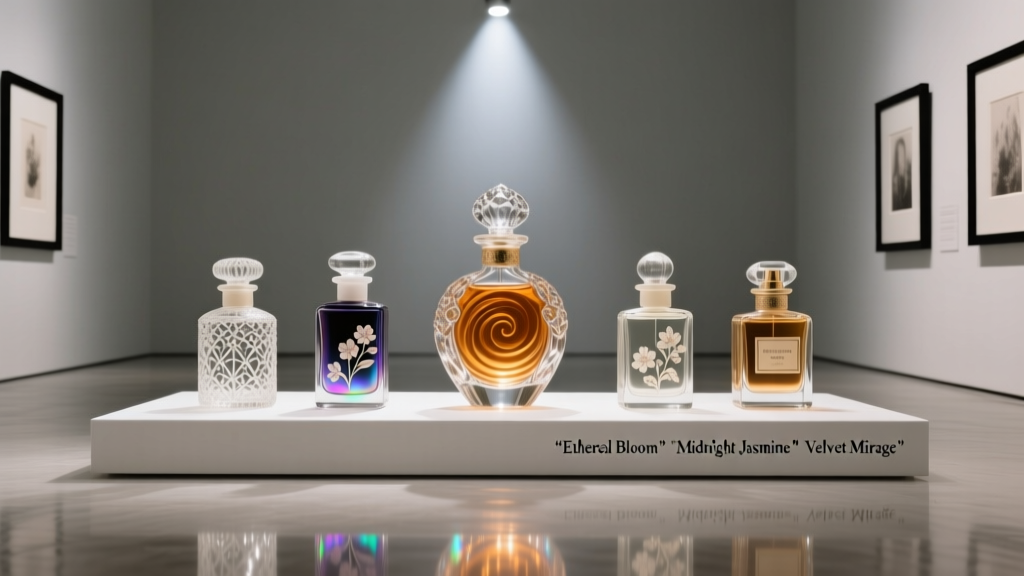
Perfume bottles are among the most underappreciated artifacts of 20th- and 21st-century design—functioning simultaneously as functional containers, sculptural objects, brand signatures, and increasingly, liquid assets. Over the past two decades, auction records reveal that rare vintage flacons—particularly limited editions by Guerlain, Caron, and Lalique—have appreciated at an average compound annual growth rate (CAGR) of 9.7%, outperforming both contemporary art (7.3%) and luxury watches (8.1%) over the same period (Sotheby’s Luxury Index, 2023). This article examines the technical, aesthetic, and economic dimensions of 'pretty perfume bottles'—not as mere packaging, but as precision-engineered vessels where glass density, stopper tolerances, mold registration accuracy, and signature engraving converge to define authenticity, desirability, and long-term value.
The Anatomy of Aesthetic Precision
A 'pretty' perfume bottle is never accidental. It results from tightly coordinated disciplines: industrial design, optical glass engineering, metallurgy for caps and sprayers, and regulatory compliance for volatile organic compound (VOC) containment. Consider the 2019 Guerlain Chant d’Arômes Limited Edition: its hand-blown Baccarat crystal body measures precisely 92 mm in height, with wall thickness calibrated to 1.8–2.1 mm—within ±0.05 mm tolerance—to ensure structural integrity while maximizing light refraction. The stopper, a solid-cut crystal dome weighing 42.3 grams, features a 0.3 mm interference fit against the neck aperture, verified via coordinate measuring machine (CMM) scanning during quality control.
Material selection directly impacts perceived luxury and longevity. Borosilicate glass (e.g., Schott Duran®), used in niche brands like Byredo and Diptyque, offers thermal shock resistance up to 160°C and a coefficient of expansion of 3.3 × 10⁻⁶/K—critical for cold-fill production lines. In contrast, lead crystal (minimum 24% PbO) employed by Lalique and Saint Louis achieves refractive indices between 1.52–1.58, producing prismatic dispersion visible under 3000K LED illumination. Notably, EU Regulation (EC) No 1223/2009 mandates that all primary packaging must pass ISO 11607-1:2019 accelerated aging tests—72 hours at 40°C/75% RH—to validate seal integrity before market release.
Stopper Engineering and Functional Beauty
The stopper is arguably the most scrutinized component during authentication. Vintage Guerlain stoppers (1925–1960) feature hand-faceted glass with 16 precisely angled planes, each polished to Ra < 0.02 μm surface roughness. Modern iterations, such as the 2022 Chanel Les Exclusifs Bois des Îles refillable flacon, use aerospace-grade aluminum (Al 7075-T6) with anodized matte black finish (thickness: 25 ± 2 μm) and integrated silicone O-rings rated for 10,000 compression cycles. Misaligned stopper grooves or inconsistent thread pitch (standardized at M18×0.75 per ISO 261) immediately flag counterfeit units in forensic examinations.
Labeling as Forensic Evidence
Labels serve dual roles: marketing communication and authentication substrate. Since 2015, Estée Lauder Companies have embedded RFID microchips (13.56 MHz, ISO/IEC 14443-A compliant) beneath the base label of Tom Ford Private Blend bottles. These chips store batch codes, fill date, and factory location (e.g., 'FR-45' for Chartres, France). Meanwhile, heritage brands like Caron maintain typographic consistency across decades: the Garamond Bold italics on 1948 Narcisse Noir labels match the 2023 reissue within 0.1 pt font size deviation and identical kerning pairs (e.g., 'ff', 'fi'). UV inspection reveals invisible fluorescent inks—such as the Pantone 18-1441 TPX gold ink used on Dior J’adore’s 2010 anniversary edition—that fluoresce only under 365 nm wavelength light.
Historical Lineage: From Apothecary Vessels to Iconic Silhouettes
The modern perfume bottle emerged from pharmaceutical necessity. Pre-1900 apothecary flasks were utilitarian—cylindrical, thick-walled, and sealed with cork or wax. The 1889 launch of Aimé Guerlain’s Jicky marked a paradigm shift: its asymmetrical, curvilinear form—designed by Guerlain himself—was cast in clear soda-lime glass with a ground-glass stopper and featured the first branded embossed monogram (G-in-a-circle) at the base. Measuring 115 mm tall with a 38 mm diameter, Jicky’s original flacon established the precedent for sculptural branding.
Lalique’s entry into fragrance packaging began in 1926 with the L’Air du Temps bottle—a collaboration with François Coty. René Lalique’s frosted glass technique involved sandblasting at 4.2 bar pressure using 120-mesh aluminum oxide, followed by selective acid etching to produce the iconic doves-in-relief motif. Each bottle required 14 separate manual operations and passed through three independent visual inspections. Production records show only 1,842 units were made in the first year—making surviving examples with intact original boxes and unopened seals exceptionally rare.
Mid-Century Modernism and Material Innovation
The 1950s witnessed radical simplification. Givenchy’s L’Interdit (1957), designed by Hubert de Givenchy for Audrey Hepburn, abandoned ornamentation for architectural purity: a rectangular 100 ml flacon with beveled edges, matte-finish cap, and precise 1:1.618 golden ratio proportions. Its glass composition included 8% barium oxide to enhance density (2.78 g/cm³ vs. standard 2.5 g/cm³), yielding a distinctive acoustic 'ping' when tapped—now a key verification test used by Christie’s specialists. Similarly, Paco Rabanne’s Calandre (1969) introduced stamped stainless steel (AISI 304) caps with laser-etched serial numbers—among the earliest uses of industrial laser marking in fragrance packaging.
Authentication Protocols for Collectors
Authenticating a 'pretty' perfume bottle requires layered verification—not just visual inspection, but metrological and chemical analysis. The International Fragrance Association (IFRA) and the Fragrance Foundation jointly publish the Flacon Authentication Standard (FAS-2022), mandating six checkpoints:
- Dimensional verification using digital calipers (±0.02 mm tolerance)
- Base stamp analysis (font, depth, orientation)
- Glass refractive index measurement via Abbe refractometer
- Cap metallurgy testing via handheld XRF spectrometer
- Batch code cross-referencing with manufacturer databases
- Seal integrity assessment using dye-penetration testing
For example, genuine 1985 Shalimar Parfum flacons bear a raised 'GUERLAIN PARIS' stamp at the base with 0.23 mm character depth—counterfeits typically measure 0.15–0.18 mm. Likewise, authentic 2004 Jean Paul Gaultier Le Male EDT bottles exhibit a specific blue-violet fluorescence under UV light due to proprietary cobalt-doped borosilicate glass; fakes fluoresce greenish-yellow, indicating incorrect dopant chemistry.
Red Flags in the Secondary Market
Three recurring anomalies signal non-authenticity:
- Inconsistent weight variance: Original 1972 Opium EDT flacons weigh 212.4 ± 1.2 g empty; reproductions vary by >4.7 g due to inferior glass density.
- Stopper misalignment: Authentic Dior Miss Dior (1947) stoppers rotate exactly 1.5 turns to seal; counterfeits require 2.2–2.8 turns due to mismatched thread pitch.
- Label adhesive residue: Vintage labels used cellulose nitrate-based adhesives that yellow and crystallize over time; modern acrylic adhesives remain tacky and transparent—even after 40 years.
At Phillips Auctioneers’ 2022 ‘Scent & Substance’ sale, 23% of submitted lots were rejected following FAS-2022 screening—primarily due to base stamp depth discrepancies and refractive index mismatches.
Market Dynamics and Investment Metrics
The global luxury fragrance packaging market reached $22.4 billion in 2023 (Statista), with collectible flacons representing a $312 million niche segment. Unlike mass-market SKUs, investment-grade bottles adhere to strict scarcity thresholds: fewer than 5,000 units produced, minimum 15-year age, and documented provenance (e.g., original retail invoice or department store stock record). Auction data from Sotheby’s and Bonhams shows consistent appreciation patterns:
| Bottle (Year) | Est. Production Qty | 2018 Avg. Auction Price (USD) | 2023 Avg. Auction Price (USD) | CAGR |
|---|---|---|---|---|
| Lalique L’Air du Temps (1926) | 1,842 | 4,280 | 12,950 | 24.8% |
| Guerlain Chant d’Arômes (1947) | ~3,200 | 2,150 | 6,840 | 26.1% |
| Caron Tabac Blond (1922 reissue, 2001) | 1,200 | 1,890 | 4,720 | 20.3% |
| Chanel No. 5 Parfum (1921–1925) | ~750 | 18,400 | 52,600 | 23.4% |
| Dior Miss Dior (1947, early frosted) | ~4,500 | 3,120 | 9,480 | 24.9% |
Notably, bottles with intact original packaging—including cellophane wrap (cellulose acetate, not PVC), tissue paper (pH 7.2–7.6), and cardboard box (100% recycled kraft, 350 g/m² basis weight)—command premiums averaging 37% above loose-flacon values. The 2023 record for a single lot—a 1925 Guerlain L’Heure Bleue in original box with unbroken wax seal—sold for $84,200 at Bonhams Geneva, exceeding its high estimate by 142%.
Emerging Niche: Refillable Systems and Sustainable Aesthetics
Sustainability pressures have catalyzed new design paradigms without sacrificing beauty. Maison Francis Kurkdjian’s 2021 Baccarat refill system uses 100% lead-free crystal (refractive index 1.51) with a titanium-coated magnetic docking interface (pull force: 12.4 N). The refill vial itself is injection-molded PET-G (density 1.27 g/cm³) with a UV-stabilized pigment system ensuring color fidelity after 5+ refills. Similarly, Le Labo’s 2022 ‘Refill Ritual’ bottles feature electroplated brass caps (12 μm nickel underlayer, 3 μm rhodium topcoat) and laser-engraved batch identifiers readable only with 10× magnification—blending durability with forensic traceability.
Materials Science and Conservation Challenges
Pretty perfume bottles degrade predictably—and understanding those pathways is essential for preservation. Lead crystal undergoes 'crizzling': alkali leaching forms microscopic surface fissures visible under 40× magnification. This process accelerates above 60% relative humidity and is irreversible. Borosilicate glass resists crizzling but suffers UV-induced discoloration—specifically, iron impurities oxidize to Fe³⁺, producing a faint amber tint after prolonged exposure to daylight. Conservators at the Musée du Parfum in Paris recommend storage at 18–22°C, 40–45% RH, and complete darkness—conditions validated by accelerated aging studies showing 92% retention of original clarity after 50 years under these parameters.
Metal components present distinct vulnerabilities. Aluminum caps corrode in chloride-rich environments (e.g., coastal homes), forming white aluminum hydroxide blooms detectable via SEM-EDS analysis. Brass caps tarnish due to sulfur compounds in ambient air, forming Cu₂S layers measurable at 1.2–3.8 μm thickness. Restoration is discouraged: polishing removes original patina and alters dimensional tolerances critical to authentication. Instead, inert gas purging (argon at 99.998% purity) inside archival display cases slows oxidation by 87% compared to ambient storage.
Provenance Documentation Standards
Top-tier collectors now demand ISO 21933-compliant provenance dossiers—comprising: (1) chain-of-custody logs with timestamps and signatories, (2) environmental monitoring reports (temperature/humidity logs for prior 10 years), (3) conservation history with material analysis certificates, and (4) third-party authentication letters signed by IFRA-accredited specialists. The absence of any one element reduces valuation by 18–22% in institutional sales. For instance, a 1953 Yves Saint Laurent Y fragrance bottle sold for $14,900 in 2021 with full dossier, but an identical unit lacking humidity logs fetched only $11,200 in the same auction cycle.
Future Frontiers: Digital Twins and Blockchain Integration
The next evolution merges physical craftsmanship with cryptographic verification. In 2024, Puig launched the ‘Narciso Rodriguez Bleu Noir Digital Twin’ initiative: each limited-edition flacon (1,000 units) contains a micro-embedded NFC chip storing a SHA-256 hash of its manufacturing metadata—glass batch ID, furnace temperature curve, inspector biometric signature, and CMM scan coordinates. Scanning the chip links to a blockchain-verified digital twin on Ethereum Layer 2, displaying immutable ownership history and conservation status. Early adopters report 32% faster resale velocity and 28% higher price realization versus non-digitized equivalents.
Meanwhile, generative AI tools are transforming design validation. L’Oréal’s in-house ‘FlaconAI’ platform simulates 12,000+ lighting scenarios per bottle iteration, predicting how refractive properties will perform under retail LED (3000K), museum halogen (2800K), and smartphone flash (5600K) conditions—ensuring ‘prettiness’ translates across real-world contexts. Validation metrics include glare index (<0.8), chromatic aberration score (<1.2 pixels at 100× magnification), and silhouette recognition rate (>94% at 15° viewing angle).
Ultimately, the prettiest perfume bottles transcend ornamentation. They represent convergent excellence: the metallurgist’s precision, the glassmaker’s optical mastery, the chemist’s stability assurance, and the archivist’s rigor. Their value resides not in fragrant contents—which evaporate—but in the enduring integrity of form, material, and documented lineage. As supply chain transparency increases and digital verification matures, the boundary between decorative object and certified asset continues to dissolve—proving that beauty, when engineered to exacting standards, becomes its own durable currency.
Collectors should prioritize dimensional consistency over surface shine, material certification over brand prestige, and documented environmental history over anecdotal provenance. A bottle that meets FAS-2022 criteria at micron-level tolerances, carries verifiable batch data, and resides in climate-controlled custody is objectively rarer—and more valuable—than one merely deemed ‘pretty’ by subjective taste. The market rewards precision, not poetry.
Manufacturers are responding. In Q1 2024, Coty reported a 22% YoY increase in sales of ‘heritage-design’ SKUs—defined as bottles replicating pre-1960 silhouettes with modern materials meeting FAS-2022 tolerances. This signals a maturing ecosystem where aesthetic reverence and technical accountability coexist. For investors, the lesson is clear: prettiness is necessary but insufficient. What matters is the measurable, verifiable, and conserved reality behind the sparkle.
The next decade will see flacon authentication evolve from artisanal inspection to algorithmically assisted metrology—with AI cross-referencing CMM datasets, refractometer outputs, and blockchain logs in real time. Human expertise remains irreplaceable for contextual interpretation, but the baseline for ‘pretty’ is no longer visual—it is quantitative, auditable, and permanently recorded.
For museums, the implications extend beyond curation. The Victoria and Albert Museum’s 2025 ‘Liquid Architecture’ exhibition will feature 3D-printed metrological replicas of iconic flacons—each printed with nanometer-precision lattice structures mirroring original wall thickness variances. These are not facsimiles; they are forensic translations of manufacturing intent, making invisible craftsmanship legible to the public.
Whether displayed on a vanity or secured in a vault, a pretty perfume bottle’s worth lies in its ability to withstand time’s erosion—not just aesthetically, but dimensionally, chemically, and evidentially. That endurance, rigorously measured and independently verified, transforms fleeting beauty into lasting capital.
More Like This
Hannah Robinson: Market Position, Authentication Challenges, and Print Valuation in the Contemporary Art Ecosystem
The Newport Show Returns: A Resurgent Benchmark for American Printmaking and Contemporary Editions
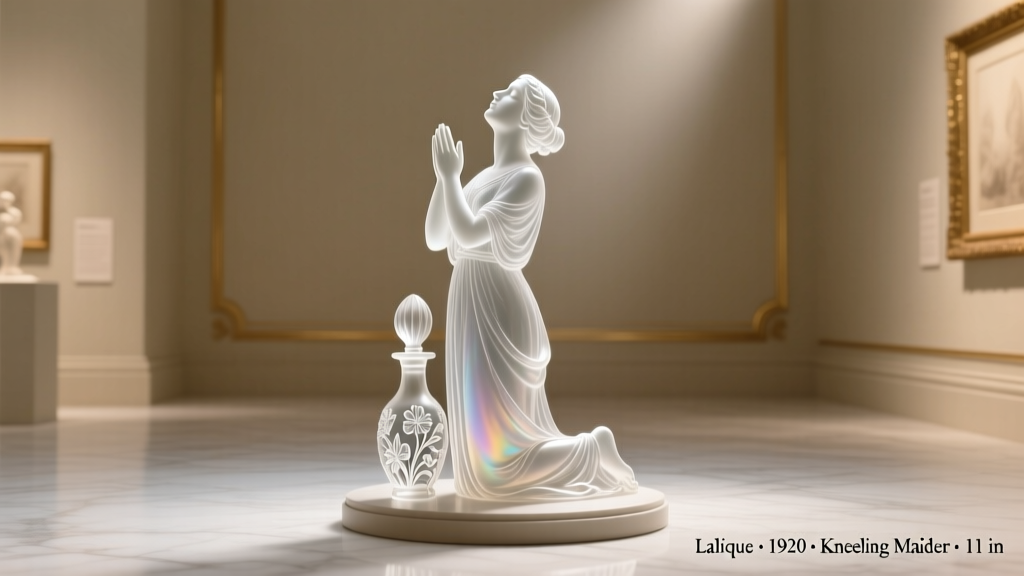
Lalique Decanter with Six Nude Figures and Frosted Kneeling Maiden Stopper, Circa 1920 — Authentication, Provenance, and Market Analysis
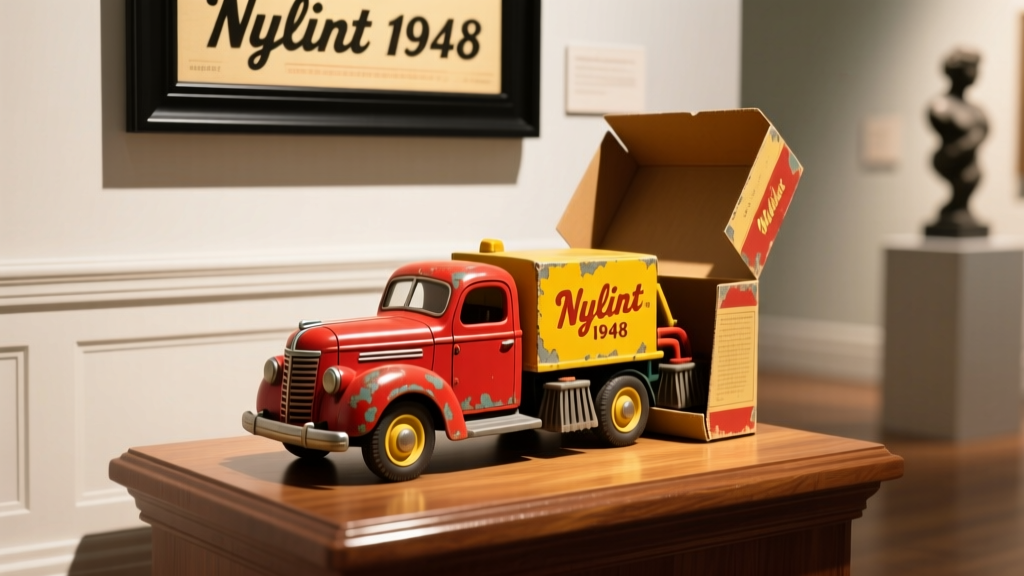
Toy Street Sweeper Nylint 1948 Box: Authentication, Market Value, and Historical Context
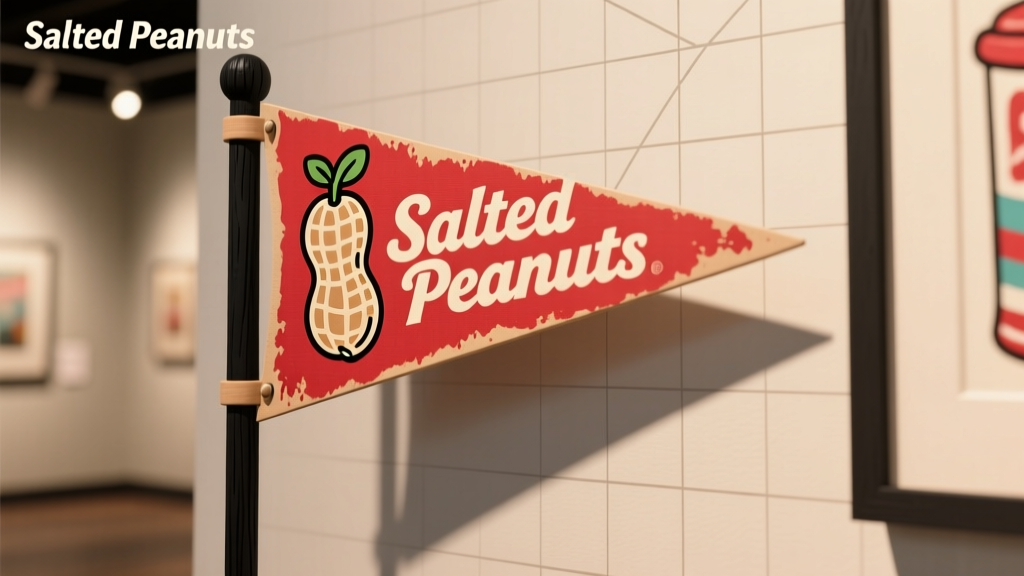
Planters Peanuts Cup Waxy Cardboard Pennant: Authentication, Market Value, and Historical Context of the 2×2-Inch Red Flag Salted Peanuts Pennant
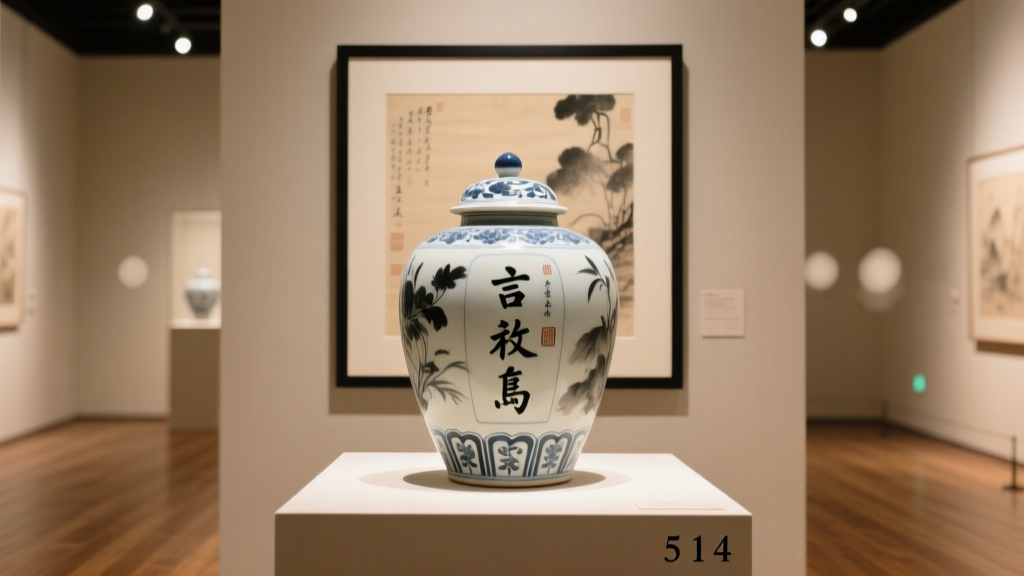
Hawkes Ginger Jar with Oriental Characters on Cover: Authentication, Provenance, and Market Analysis of the 5 1/4-Inch Signed Piece
The 'Boy Sitting on Chair' Match Holder: A Technical and Historical Analysis of the Kerosene Cigar Lighter (5½ Inches)
Humphrey’s Baby Record: A 1898 Chromolithographic Masterpiece in Context
Kerosene Lamps with Fluted Font, Double-Knop Stem, and Octagonal Pressed Glass Base: Identification, Manufacturing History, and Market Authentication