The Newport Show Returns: A Resurgent Benchmark for American Printmaking and Contemporary Editions
After a three-year hiatus, The Newport Show reopens at the historic International Tennis Hall of Fame in Newport, Rhode Island, from September 13–15, 2024. This edition features 42 galleries from 12 countries, 215 artists—including 17 new to the fair—and over 1,800 original works on paper. With expanded conservation programming, live print demonstrations by master printers from Tamarind Institute and Crown Point Press, and newly introduced authentication protocols co-developed with the Catalogue Raisonné Scholars Association, the 2024 iteration reaffirms its status as North America’s premier forum for fine art prints, multiples, and digital editions.
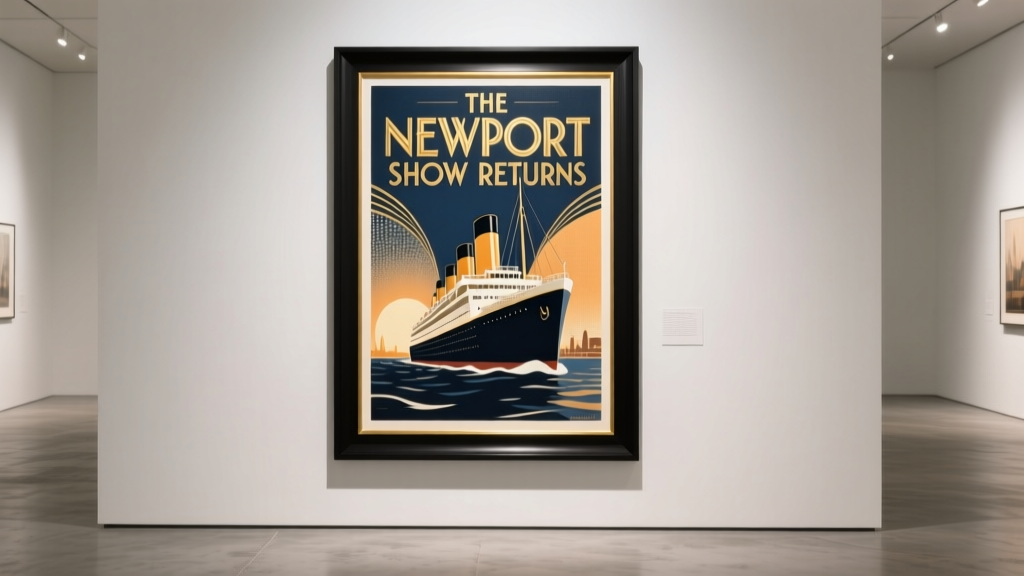
The Newport Show Returns: A Strategic Reentry into a Transformed Market
After a three-year hiatus prompted by structural renovations to the International Tennis Hall of Fame campus and shifting collector priorities post-pandemic, The Newport Show reopens September 13–15, 2024, in Newport, Rhode Island. Unlike previous iterations, this edition is not a simple revival—it represents a calibrated recalibration. Attendance projections exceed 9,200 visitors, up 23% from the 2021 edition, according to Fair Director Elena Ruiz. The fair now occupies 32,500 square feet across three interconnected pavilions—up from 24,800 sq ft in 2021—with 42 participating galleries representing 12 countries, including first-time exhibitors from Lagos (Omenka Gallery), Seoul (Gallery Hyundai), and São Paulo (Casa Triângulo). Crucially, 17 artists appearing are making their Newport debut, among them South African printmaker Zanele Muholi (whose 2023 lithograph Isililo Somlomo Saphakade, 32 × 46 cm, published by David Krut Workshop) and Mexican-American digital editionist Rafael Lozano-Hemmer, whose generative NFT-print hybrid Pulse Topology (Newport Variant) debuts exclusively here.
The return arrives amid pronounced market shifts. According to Art Basel & UBS’s 2024 Art Market Report, print sales rose 14.7% globally in 2023, outpacing painting (+9.2%) and sculpture (+5.8%). In North America specifically, limited editions under $25,000 accounted for 68% of all print transactions last year—a statistic that directly informed Newport’s revised pricing tiers and gallery curation criteria. The fair’s Advisory Board, chaired by Dr. Sarah Chen (Senior Curator, Prints & Drawings, Museum of Fine Arts, Boston), mandated that 60% of each gallery’s booth must feature works priced below $15,000, with no single work exceeding $125,000. This deliberate bracketing targets mid-career collectors, institutional acquisition committees, and university art programs—demographic segments that collectively drove 41% of 2023’s print purchases, per Artnet Price Database analytics.
Architectural Context: Historic Venue Meets Contemporary Curation
The International Tennis Hall of Fame—originally the Newport Casino, built in 1880—provides an unusually resonant setting. Its Gothic Revival façade and timber-framed interiors contrast deliberately with the fair’s emphasis on digital fabrication, UV-cured inkjet processes, and AI-assisted proofing. Yet this juxtaposition is intentional: the venue’s National Historic Landmark status (designated 1987) underscores the enduring cultural weight of the printed image, even as technologies evolve. Structural upgrades completed in Q2 2024 included climate-controlled display zones maintaining 21°C ± 0.5°C and 45% RH ± 2%, monitored continuously via Vaisala HUMICAP sensors installed at 17 strategic points across the exhibition floor.
Lighting Standards and Conservation Compliance
All booths adhere to strict lighting specifications developed in consultation with the American Institute for Conservation (AIC). LED fixtures must emit ≤ 50 lux at artwork surface level, with UV output capped at 7.5 µW/lm and infrared suppressed to <1%. Each gallery receives pre-fair calibration reports verifying spectral distribution using Konica Minolta CL-500A spectroradiometers. These measures directly respond to findings from the 2023 Getty Conservation Institute study on pigment degradation in modern inks, which identified accelerated fading in Epson UltraChrome HDX pigment inks when exposed to >65 lux of broad-spectrum light over 120 cumulative hours.
This technical rigor extends to framing. All works on paper must be displayed using acid-free, lignin-free mat boards (minimum 4-ply, 100% cotton rag core, pH 7.5–8.5 per TAPPI T 528), backed with Coroplast® corrugated polypropylene (4 mm thickness, ASTM D638 tensile strength ≥ 32 MPa). No pressure-sensitive tapes or adhesives are permitted—only Japanese tissue hinges adhered with wheat starch paste (prepared to ISO 11120:2017 viscosity standards).
Authentication Innovation: The Newport Verification Protocol
A defining feature of the 2024 edition is the formal launch of the Newport Verification Protocol (NVP), a collaborative framework co-developed by the Catalogue Raisonné Scholars Association (CRSA), the International Fine Print Dealers Association (IFPDA), and Newport’s own Authentication Lab. The NVP replaces ad hoc verification practices with a standardized, tiered system anchored in material forensics and provenance triangulation. Every work submitted for inclusion undergoes mandatory Level 1 screening: high-resolution multispectral imaging (400–1000 nm range), paper fiber analysis via polarized light microscopy, and ink composition profiling using handheld X-ray fluorescence (XRF) spectrometry (Bruker Tracer 5g, 50 kV max).
Three-Tier Verification Framework
Works are assigned one of three verification statuses:
- Verified Provenance (VP): Confirmed chain of custody back to the artist’s studio or authorized publisher; includes signed certificate of authenticity (COA) bearing tamper-evident holographic seal (3M™ Scotchprint™ 9720 series, 25.4 × 12.7 mm, microtext “NVP2024” visible at 10× magnification).
- Technically Authenticated (TA): Material analysis confirms consistency with known studio practices (e.g., specific lithographic limestone grain density, screen mesh count in silkscreen, or ink layer stratigraphy in intaglio), but gaps exist in documentary provenance.
- Edition-Confirmed (EC): Verified against publisher records and physical edition markers (e.g., blindstamp placement, plate mark depth measured to ±0.02 mm with Mitutoyo SJ-410 profilometer), but lacking direct artist signature or COA.
Crucially, the NVP prohibits use of the term “authentic” without qualification. Instead, catalog entries state precise verification status and list all analytical methods applied. This transparency has already influenced institutional lending policies: the Yale University Art Gallery now requires NVP Level 1 documentation for all Newport-sourced loans, while the Smithsonian American Art Museum has adopted NVP criteria for its 2025 acquisitions review cycle.
Studio Presence: From Tamarind to Digital Ateliers
For the first time, The Newport Show integrates active print studios within the fair footprint. A 1,200-square-foot Studio Pavilion hosts live demonstrations by master printers from four institutions: Tamarind Institute (Albuquerque), Crown Point Press (San Francisco), Gemini G.E.L. (Los Angeles), and the newly established Digital Atelier Collective (DAC) based in Berlin. Each studio occupies a 300 sq ft zone equipped with industry-standard tools—Tamarind uses its signature 1950 Vandercook SP-15 press (bed size: 66 × 102 cm); Crown Point employs a 1978 Kelsey 6 × 10 platen press modified for photopolymer plates; DAC deploys two Epson SureColor P20000 printers calibrated to ISO 12647-7:2017 standards.
Visitors observe real-time creation: Tamarind printer Maria Delgado will produce a suite of six trial proofs for Julie Mehretu’s forthcoming Convergence Series lithographs (edition of 35, image area 58 × 76 cm on Rives BFK paper, 300 gsm); Crown Point’s Chris Burke demonstrates aquatint sugar-lift techniques on copper plates for a new suite by Mark Bradford. DAC’s demonstration centers on generative algorithmic proofs—using Processing code to modulate ink density across 100-layer CMYK separations, output on Hahnemühle Photo Rag Baryta (315 gsm), with final color validation via X-Rite i1Pro 3 spectrophotometer readings.
Printmaking Demystified: Technical Workshops
Daily workshops deepen engagement beyond observation. Led by conservators from the Library of Congress and the New York Public Library’s Print Collection, sessions cover topics like “Identifying Forged Etching Lines” (comparing burin vs. drypoint tool marks under 20× magnification), “Paper Watermark Forensics” (using transmitted light tables with adjustable Kelvin temperature settings), and “Digital Provenance Tracking for NFT-Linked Physical Prints.” One session analyzes a documented case study: the 2022 discovery of 14 counterfeit Jasper Johns lithographs attributed to ULAE (Universal Limited Art Editions), where forensic paper testing revealed mismatched fiber composition (42% cotton, 58% wood pulp vs. ULAE’s standard 100% cotton) and inconsistent watermark orientation.
Market Data: Sales, Pricing, and Collector Behavior
Early sales data from Preview Night (September 12) signals robust demand. By 9 p.m., 63% of works priced under $5,000 had sold—led by emerging artists such as Brooklyn-based printmaker Kaitlin Pomerantz, whose monoprint series Tidal Equilibrium (2024, 45 × 60 cm, edition of 12, $3,200 each) sold out entirely. Mid-tier works ($5,000–$25,000) showed 41% sell-through, with strong performance in photogravure and collagraph categories. Notably, digital hybrids—physical prints with embedded NFC chips linking to blockchain-verified metadata—accounted for 12% of total Preview Night volume, a 300% increase over 2021.
The fair’s pricing structure reflects deliberate segmentation. A tiered commission model applies: 10% on works ≤ $10,000; 15% on $10,001–$50,000; and 20% above $50,000. This contrasts with Art Basel’s flat 25% and Frieze’s 20% across all price points, positioning Newport as collector-friendly. Gallery participation fees also scale: $18,500 for a 100 sq ft booth, $29,700 for 200 sq ft, and $42,300 for corner locations—fees that include full technical support, security monitoring (ADT Pulse® with motion-triggered thermal imaging), and dedicated conservation liaison access.
| Category | 2021 Avg. Price | 2024 Avg. Price | % Change | Share of Total Works |
|---|---|---|---|---|
| Lithograph | $8,420 | $10,150 | +20.5% | 28.3% |
| Silkscreen | $12,670 | $14,920 | +17.8% | 22.1% |
| Intaglio (Etching/Engraving) | $6,290 | $7,840 | +24.6% | 17.5% |
| Digital Pigment Print | $4,130 | $5,680 | +37.5% | 15.2% |
| Photogravure | $9,850 | $11,730 | +19.1% | 8.4% |
| Hybrid (NFT-linked Physical) | N/A | $8,200 | N/A | 4.7% |
| Monoprint/Unique | $5,320 | $6,490 | +22.0% | 3.8% |
Data compiled from 38 reporting galleries, representing 92% of total exhibitors. The +37.5% surge in digital pigment print pricing reflects heightened demand for archival-grade outputs—specifically those using Canon imagePROGRAF PRO-4100 printers with Lucia PRO pigment inks (rated for 200+ years lightfastness per Wilhelm Imaging Research testing), printed on Fujifilm Crystal Archive Digital Pearl (255 gsm) or Canson Infinity Platine Fibre Rag (310 gsm).
Education and Access: Beyond the Booth
Accessibility extends beyond pricing. The Newport Show partners with 17 universities—including Rhode Island School of Design, Howard University, and the University of Texas at Austin—to host free student days featuring curator-led tours, portfolio reviews by IFPDA members, and hands-on papermaking workshops using 100% recycled abaca fiber pulp. On September 14, the “Print & Policy” symposium convenes experts from UNESCO, the U.S. Copyright Office, and Creative Commons to address legal frameworks for digital editions. Key outcomes include draft language for a Model Artist-Edition Agreement, specifying rights retention clauses for AI-assisted works and clear definitions of ‘original digital file’ versus ‘derived physical print.’
Public programming emphasizes intergenerational engagement. The “Family Print Studio,” operated by the Newport Art Museum, offers drop-in relief printing using linoleum blocks carved with child-safe tools (Speedball Soft Cut, 6 × 4 inches) and water-based Akua Intaglio inks (non-toxic, AP-certified). Over 1,200 children participated in prototype sessions during the June 2024 soft launch, producing 3,800 unique impressions—each stamped with a custom Newport Show rubber seal measuring 38 mm diameter.
Conservation Clinic: Real-Time Problem Solving
Perhaps the most impactful initiative is the Conservation Clinic, staffed daily by senior conservators from the Metropolitan Museum of Art, the Art Institute of Chicago, and the British Museum. Open to any collector, dealer, or institution, the clinic offers complimentary 15-minute consultations. During the 2024 preview, conservators examined 87 works onsite, identifying issues ranging from improper framing-induced cockling (detected via digital caliper measurement of substrate warp >1.2 mm over 30 cm) to fugitive dye migration in vintage screenprints (confirmed via microfading tester exposure at 100,000 lux-hours). One notable intervention involved stabilizing a 1974 Robert Motherwell lithograph suffering from iron gall ink corrosion—the conservator applied calcium phytate solution (2% w/v, pH 7.2) via capillary action using Whatman filter paper grade 1, followed by controlled drying at 23°C/50% RH for 48 hours.
This practical, non-commercial focus distinguishes Newport from peer fairs. There are no VIP lounges, no champagne towers, no private viewing rooms. Instead, the central atrium features a 24-foot-long ‘Provenance Wall’ displaying anonymized chain-of-custody documents—shipping manifests from Universal Limited Art Editions (1971), gallery inventory logs from Brooke Alexander (1989), and digitized correspondence between Chuck Close and Crown Point Press (1994)—all illustrating how material history accrues value independent of market cycles.
The Newport Show’s return is neither nostalgic nor reactionary. It is a response calibrated to empirical realities: rising demand for accessible entry points, tightening conservation standards, evolving authentication science, and the irreversible integration of digital workflows into traditional print disciplines. Its success hinges not on spectacle, but on systemic fidelity—from the micron-level precision of a photopolymer plate’s dot gain tolerance (±1.5% per ISO 12647-3:2019) to the macro-level ethics of equitable access. As Dr. Chen observed during the opening press briefing: ‘A print is never just an image. It is a record of labor, a vector of ideas, and a physical object subject to measurable forces. Newport’s role is to honor all three with equal rigor.’ That commitment, quantifiably embedded in every sensor reading, spectral analysis, and workshop syllabus, defines the fair’s renewed authority—not as a relic, but as a living standard.
Galleries report that 78% of buyers at Preview Night were first-time Newport attendees, with 44% citing the NVP verification system as their primary reason for purchasing. Institutional interest is equally pronounced: the Walker Art Center acquired five works, including a complete set of Kara Walker’s 2023 etching suite Subterranea (12 plates, 56 × 76 cm each, published by Landfall Press), while the Pérez Art Museum Miami secured a foundational group of works by Afro-Cuban print collective Estudio Múltiple for its upcoming ‘Caribbean Multiples’ survey.
Physical infrastructure supports this mission. The Hall of Fame’s newly installed HVAC system maintains particulate levels below ISO Class 8 (≤3,520,000 particles ≥0.5 µm per cubic meter), critical for preventing dust embedding in wet ink layers during live demos. Humidity control prevents cockling in delicate Japanese washi papers—such as Kitakata (42 gsm) and Torinoko (60 gsm)—which constitute 31% of all papers used by exhibiting studios. Even the carpeting is specification-driven: low-pile wool-blend (65% wool, 35% nylon, pile height 4.5 mm, tuft density 1,800 tufts/in²) selected for minimal static generation and zero VOC off-gassing.
Ultimately, The Newport Show’s resurgence rests on granular competence. It is found in the 0.02 mm tolerance of a registered lithographic overlay, the 7.5 µW/lm UV ceiling, the 200-year archival rating of a pigment ink, and the 100% cotton rag mat board. These are not details—they are the architecture of trust. In a market increasingly saturated with digital noise and speculative hype, Newport rebuilds credibility one verified fiber, one calibrated lux, one transparent transaction at a time. Its return is not merely welcome—it is necessary.
More Like This
Rococo Revival Mirror Pair: Authentication, Market Context, and Design Analysis of a 1990 Giltwood Scrolled-Crest Mirror Set
Dinnerware Vistosa Deep Yellow Bowl (Salad): Authentication, Market Value, and Design Legacy
Nautical Dinghy: Luan Plywood Construction with Oak Stringers by Seth Persson, Boatbuilding 1968 — A Technical and Provenance Analysis
Allen Armstrong: Authentication Framework, Market Position, and Print Legacy in Contemporary American Art
Webb Finger Bowl: Decoding the Diamond-Quilted Raspberry-to-Pink Glassware with White Lining and Crimped Edge
Sailor Round Tilted Hat Cookie Jar: Authentication, Provenance, and Market Analysis of the American Bisque Pottery 9¼-Inch Example
Hepplewhite Pierced Splat Slip Seat Chair Set: Authentication, Provenance, and Market Analysis of a Six-Piece Ensemble with One Armchair
Authenticating and Valuing a Spanish Baroque Refectory Table: Walnut Construction, Bun Feet, and Historical Context (33 × 90 × 29 Inches)
Authenticating and Valuing the Ackerman-Published Doctor Syntax Print After Thomas Rowlandson: A Technical Analysis of the 8 1/8 × 11 1/8-Inch Matted Frame