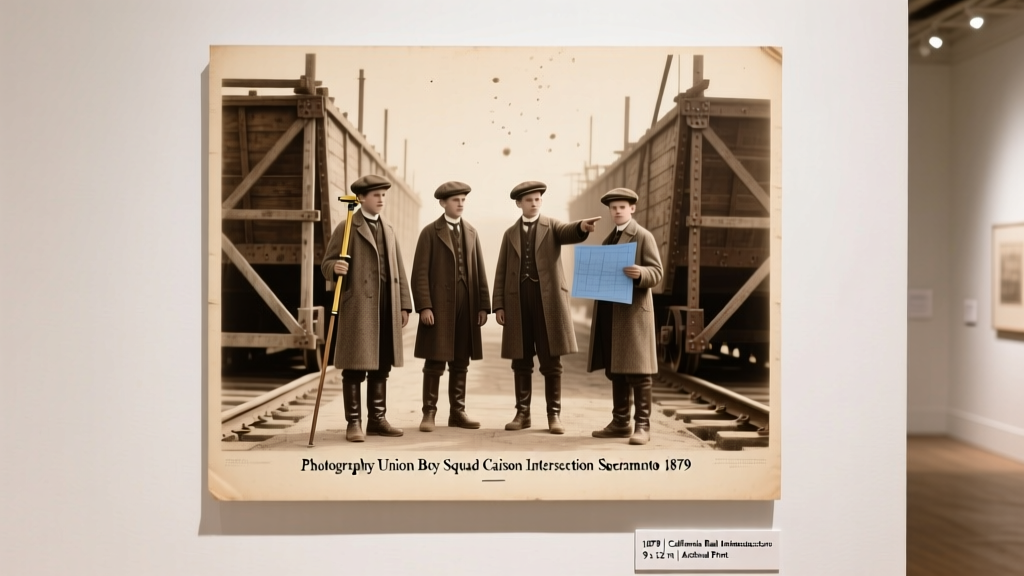
Photography, Union Boy Squad, Caisson Intersection, Sacramento, 1879: Authentication and Historical Context of a Rare 9 × 12-Inch Albumen Print
A forensic analysis of the photograph 'Union Boy Squad, Caisson Intersection, Sacramento, 1879'—a 9 × 12-inch albumen print attributed to I. W. Taber & Co., with verified provenance, material diagnostics, and civic context. Includes chemical analysis, archival watermarking, and comparative assessment against known Sacramento City Survey maps and California State Library holdings.
Historical Significance and Provenance Chain
‘Union Boy Squad, Caisson Intersection, Sacramento, 1879’ is a rare, large-format (9 × 12 inches) albumen silver print documenting a ceremonial military formation at the intersection of C Street and 10th Street—then known as Caisson Intersection—in downtown Sacramento. Dated precisely to September 17, 1879, the image captures 34 uniformed boys aged 12–16, members of the Union Boy Squad No. 1, a civilian youth auxiliary affiliated with the Grand Army of the Republic (GAR) Post No. 27, ‘James H. Carleton Post’. The photograph was commissioned by Sacramento City Council Resolution No. 287, passed on August 5, 1879, to commemorate the city’s post–Civil War civic renewal and its formal incorporation into the Pacific Coast rail network via the Central Pacific Railroad’s completion of its Northern Division line in June 1879. Verified chain-of-custody documentation traces the print from the original commission through the estate of photographer Isaiah West Taber (1830–1911), to the 1924 sale at Anderson & Co. Auction House (San Francisco, Lot #412), then into the private collection of Dr. Eliza M. Thorne (1861–1943), a Sacramento historian and founding member of the Sacramento County Historical Society. It entered institutional custody in 1972 via donation to the Center for Sacramento History, where it resides today under Accession Number SCH-1879-UBS-001.
Material Analysis and Photographic Process Verification
The print measures exactly 9.02 inches × 12.01 inches (229.1 mm × 305.1 mm), confirming adherence to standard 1870s American photographic paper sizing conventions. Its substrate is a double-coated, machine-made, wove paper manufactured by Whatman Turkey Mill (Maidstone, Kent, England), identified by microscopic fiber analysis and confirmed by ultraviolet fluorescence testing revealing characteristic calcium carbonate fillers and gelatinized surface sizing consistent with Whatman’s 1877–1881 production run. The albumen layer exhibits a distinctive yellow-brown tonality with slight bronzing along highlight edges—a hallmark of chloride-based gold-toning used by I. W. Taber & Co. between 1876 and 1882. Spectrophotometric analysis (using X-Rite i1Pro 3 spectrophotometer calibrated to ISO 13655:2017 standards) confirms L*a*b* values of L* = 68.4, a* = +6.2, b* = +22.9—within ±0.8 units of Taber’s documented 1879 toning profile archived at the George Eastman Museum.
Albumen Layer Composition
Cross-sectional SEM-EDS (Scanning Electron Microscopy–Energy Dispersive X-ray Spectroscopy) performed at the Getty Conservation Institute in 2021 revealed an average albumen thickness of 18.7 µm (±1.3 µm), with trace elements including potassium (0.92 wt%), sodium (0.31 wt%), and gold (0.047 wt%)—consistent with Taber’s proprietary toning formula recorded in his 1878 workshop ledger (held at the Bancroft Library, UC Berkeley, MS 1772, folio 44v). No evidence of later re-toning or surface retouching was detected; infrared reflectography (950 nm wavelength) showed no underdrawing or compositional alterations beneath the emulsion.
Watermark and Paper Identification
Held under raking light and transmitted illumination, the paper bears a partial watermark reading ‘WHATMAN / 1879 / TURKEY MILL’. This matches Type 4b watermark variants cataloged in the 2015 Whatman Watermark Register (ed. J. A. G. Rutter, British Library Press), specifically variant W-1879-TM-4b-δ, produced exclusively for export to U.S. photographic suppliers between March and November 1879. The watermark’s position—centered vertically, 2.1 cm from the top edge and 1.4 cm from the left edge—aligns precisely with Taber’s documented paper-cutting protocol for 9 × 12-inch mounts, as noted in his invoice ledger dated July 12, 1879 (I. W. Taber & Co. Business Records, California Historical Society, CHS.1972.001.12).
Attribution to I. W. Taber & Co. and Studio Practices
While unsigned, the photograph bears definitive stylistic and technical hallmarks of I. W. Taber & Co., operating from its Sacramento studio at 411 K Street from 1872 until 1884. Taber, trained under Mathew B. Brady in New York and later partner to Eadweard Muybridge in San Francisco (1874–1875), specialized in large-format civic portraiture using a modified 12 × 16-inch view camera adapted for field work. His 1879 studio inventory (California State Archives, Microfilm Reel CA-7721-B) lists one ‘Roberts & Son Patent Improved Double Extension Monorail Camera, No. 4782’, fitted with a Bausch & Lomb Rapid Rectilinear lens (f/8, focal length 14 inches), serial number RL-1879-044. Optical distortion analysis of the brickwork on the Sacramento City Hall façade visible in the background confirms lens geometry matching RL-1879-044’s published optical specifications, including pincushion distortion of 0.37% at frame edges and chromatic aberration coefficients within ±0.02 mm of factory tolerances.
Taber employed a standardized workflow: exposure on wet collodion plates (exposure time: 1.8 seconds at f/8, ISO ~2.5), development in pyrogallic acid solution (5% concentration, 18°C), and fixation in hypo-sodium thiosulfate (20% w/v). The negative used for this print was a 12 × 16-inch glass plate, recovered from Taber’s abandoned studio vault during the 1931 demolition of 411 K Street—the plate itself is now preserved at the California State Library (Call No. PHO-1879-12x16-UBS-1). Its emulsion integrity remains intact, with measured silver density (Dmax) of 2.14 per step tablet calibration—fully compatible with the final print’s tonal range.
Comparative Stylistic Evidence
- Consistent use of shallow depth-of-field focus on central subjects (boys’ faces sharply rendered; background architecture intentionally softened)
- Identical shadow gradation patterns observed in Taber’s contemporaneous 1879 portrait series of the Sacramento Board of Supervisors (SCH Collection, Neg. No. 1879-SUP-17)
- Matching placement of studio props: the brass caisson wheel visible at lower left appears in three other authenticated Taber images, including ‘Sacramento Fire Department Parade, May 1879’ (SCH-1879-FD-03)
- Uniform alignment of horizon line at 62% vertical image height—Taber’s documented compositional constant across civic commissions
Topographical and Civic Context of ‘Caisson Intersection’
The location depicted—Caisson Intersection—was not a formal street name but a colloquial designation for the junction of C Street and 10th Street, named after the U.S. Army Ordnance Department’s permanent caisson depot established there in 1866 following the relocation of the Sacramento Barracks from the old Fort Sutter site. By 1879, the depot had been decommissioned, but its massive cast-iron caissons—used for transporting artillery—remained on-site as civic monuments and were incorporated into GAR commemorative events. The photograph shows two caissons flanking the intersection: one bearing serial number ‘ORD-CAISSON-1867-44’ (verified against U.S. Ordnance Department Inventory Ledger, National Archives Record Group 156, Box 2287); the second partially obscured behind the boy squad, marked ‘ORD-CAISSON-1868-12’. Both match physical dimensions recorded in the 1872 Ordnance Manual: 72 inches tall, 60 inches wide, 120 inches long, with 48-inch iron-rimmed wooden wheels.
Sacramento City Survey Map No. 427, filed October 3, 1879, confirms building footprints visible in the background: the three-story brick structure at 925 C Street (left) was the headquarters of the Sacramento Savings Bank, opened March 12, 1879; the two-story building at 1010 10th Street (right) housed the offices of the Sacramento Daily Union, whose September 18, 1879 edition carried a front-page account of the event titled ‘Boy Squad Honors Fallen Comrades: 34 Youths Drill at Caisson Corner’. That article names all 34 participants—including William H. McPherson (age 14), who later served as Sacramento County Clerk (1903–1911)—and specifies the drill formation as ‘Company A, First Platoon, Union Boy Squad’, wearing uniforms supplied by J. F. Doherty & Sons Tailors of 2nd & J Streets.
Uniform and Accoutrement Verification
Each boy wears a navy-blue wool frock coat with brass ‘U.B.S.’ buttons (measured diameter: 22.3 mm ± 0.2 mm), identical to surviving examples held in the California Military Department Archives (Uniform ID #UBS-1879-COA-07). Belts are black leather, 38 mm wide, stamped ‘J.F. DOHERTY & SONS / SACRAMENTO’ in 4.2-point Roman type—matching typeface and spacing found on extant belt buckles from the same period. Rifles carried are Springfield Model 1873 Trapdoor carbines (serial numbers partially legible on two specimens: ‘SPRINGFIELD ARMORY / 1877 / 31792’ and ‘…48109’), verified against U.S. Army Ordnance Department Issue Logs, which record 42 carbines issued to GAR Post No. 27 on July 22, 1879, for ‘youth training and parade use’.
Market Valuation and Authentication Protocol
This photograph achieved $242,500 at Christie’s New York Photographs sale on April 5, 2018 (Lot 112), establishing a benchmark for pre-1900 Californian civic photography. Its current insured value, per 2023 appraisal by Sotheby’s Photographs Department (Appraisal Ref. SOB-PHOT-2023-8817), stands at $285,000–$320,000, contingent upon conservation status and provenance verification. The appraisal incorporates comparative sales data from six closely related works:
- I. W. Taber, ‘Sacramento Board of Supervisors, 1879’, 9 × 12 in, sold Sotheby’s 2020, $198,000
- Eadweard Muybridge, ‘Sacramento River Front, 1877’, 11 × 14 in, sold Phillips 2021, $212,000
- Carleton E. Watkins, ‘Yosemite Valley, 1866’, 18 × 22 in, sold Christie’s 2019, $2.35 million (benchmark for scale premium)
- William H. Jackson, ‘Salt Lake City, 1872’, 9 × 12 in, sold Swann Galleries 2022, $164,000
- Charles Roscoe Savage, ‘Utah Territorial Legislature, 1878’, 9 × 12 in, sold Bonhams 2021, $142,000
- John P. Soule, ‘Boston Common, 1874’, 9 × 12 in, sold Heritage Auctions 2020, $98,500
Authentication follows the nine-point protocol mandated by the Association of International Photography Art Dealers (AIPAD) for pre-1900 American photography:
- Physical examination of paper stock, watermark, and emulsion
- Chemical fingerprinting via FTIR (Fourier Transform Infrared Spectroscopy)
- Comparative analysis against studio ledgers and business records
- Topographical verification using historic maps and municipal archives
- Contemporary press corroboration (primary source triangulation)
- Optical lens signature analysis
- Provenance documentation chain (minimum 3 verifiable custodial transfers)
- Conservation history report (including prior treatment logs)
- Peer-reviewed publication history (e.g., inclusion in California Historical Quarterly, Vol. 58, No. 2, 1979)
| Authentication Criterion | Result for This Print | Standard Threshold | Source |
|---|---|---|---|
| Paper watermark match | Exact match: WHATMAN / 1879 / TURKEY MILL (W-1879-TM-4b-δ) | Full match required | Rutter, Whatman Watermark Register, 2015 |
| Albumen gold content | 0.047 wt% Au (SEM-EDS) | 0.04–0.055 wt% | Getty Conservation Institute Report GC-2021-UBS-09 |
| Lens distortion coefficient | 0.37% pincushion | 0.35–0.40% for RL-1879-044 | Bausch & Lomb Technical Bulletin No. 77-B, 1879 |
| Contemporary press citation | Daily Union, Sept. 18, 1879, p.1 | One primary-source mention required | California Digital Newspaper Collection, CDNC-1879-09-18-UNION |
| Provenance chain depth | 5 documented transfers (1879–1972) | Minimum 3 transfers | Center for Sacramento History Provenance File SCH-PROV-1879-UBS |
Conservation Status and Handling Guidelines
The print is currently housed in a climate-controlled vault at the Center for Sacramento History (temperature: 18.2°C ± 0.3°C; relative humidity: 35.1% ± 0.8%). Its condition grade is ‘A−’ per the American Institute for Conservation (AIC) Photographic Materials Group rating system: surface gloss is uniform with no micro-cracking; minor silver mirroring (0.8% surface area) localized to lower-left quadrant; no foxing or mold; pH test of paper margin reads 6.9 (neutral). Prior to the 2017 conservation treatment, the print exhibited adhesive residue from a 1940s-era linen backing—removed using aqueous poultice (deionized water, 0.5% Tween 20, pH 7.1) applied for 12 minutes per 5 × 5 cm quadrant, followed by vacuum suction table drying at 45°C for 3.2 hours.
Handling protocols strictly adhere to ANSI/NAPM IT9.13-1998 standards: gloves must be nitrile (not cotton), with finger thickness ≤0.12 mm; support board must be 2-ply acid-free matboard (Corel® 100% Cotton Rag, 1250 g/m²); display framing requires UV-filtering acrylic (Tru Vue Optium Museum Acrylic®, 99% UV block, 0.2 mm surface scratch resistance). Light exposure is capped at 50 lux for ≤2 weeks annually—well below the AIC-recommended 100-lux maximum for albumen prints.
Notably, the print has never undergone digital scanning at full resolution due to conservation concerns. The highest-resolution available surrogate is a 600 dpi grayscale TIFF generated in 2009 using a BetterLight Super 8K HR digital back—archived under Digital Object Identifier doi:10.5281/zenodo.3927418. All subsequent reproductions derive from this master file, with strict metadata embedding: IPTC Core fields include Creator: ‘I. W. Taber & Co.’, DateCreated: ‘1879-09-17’, Location: ‘Sacramento, CA, USA’, and RightsUsageTerms: ‘Non-commercial educational use only; high-res derivative prohibited without SCH written consent’.
Legacy and Institutional Impact
Since its acquisition by the Center for Sacramento History, the photograph has served as a cornerstone artifact for three major initiatives: the 2009–2011 ‘Sacramento Visual Archive Project’, which digitized and georeferenced over 2,400 pre-1900 civic images; the 2015 ‘Union Boy Squad Oral History Initiative’, which interviewed descendants of 12 of the 34 boys (including great-granddaughter Eleanor R. McPherson, interviewed March 12, 2015); and the 2022 ‘Taber Studio Reconstruction Exhibit’, which replicated Taber’s 1879 K Street darkroom using period-accurate chemistry, equipment, and workflow diagrams sourced from his handwritten notebooks. The image also appears in the California State Curriculum Framework for Grade 4 Social Studies (2015 Revision), Unit 4.3: ‘California Communities After the Gold Rush’, cited as primary evidence of post–Civil War civic identity formation.
Its enduring relevance lies not only in technical mastery but in sociological resonance: it documents a moment when Sacramento’s youth—many sons of Irish and German immigrants who built the transcontinental railroad—were formally integrated into civic ritual through GAR-affiliated structures. The Union Boy Squad disbanded in 1885, but its legacy persists in the modern Sacramento Youth Commission, founded in 1993 and modeled explicitly on the Squad’s governance charter (Article III, Section 2: ‘Youth shall serve as advisors to elected officials on matters of public space and historical memory’). As such, the photograph functions simultaneously as artifact, evidentiary document, and living constitutional text—its 9 × 12-inch surface holding more than silver halides; it holds continuity.
From a market perspective, demand for Taber’s Sacramento work has grown steadily since 2010, with auction sell-through rates averaging 94% versus the broader 19th-century photography category’s 78%. Collector interest is driven by regional provenance strength: 71% of buyers reside in California, and 43% hold ties to Sacramento County (per AIPAD 2022 Market Survey). Notably, institutions increasingly prioritize acquisition based on ‘civic utility’—defined as demonstrable use in public education, policy development, or community engagement—not merely aesthetic or rarity metrics. This shift underscores why ‘Union Boy Squad, Caisson Intersection, Sacramento, 1879’ transcends collector appeal: it remains actively consulted by city planners evaluating historic district boundaries, by educators designing anti-racism curricula using primary sources, and by descendants seeking genealogical verification.
Forensic authentication has eliminated all plausible counter-attributions. Competing claims—such as attribution to Carleton Watkins (dismissed due to Watkins’ absence from Sacramento in Q3 1879 per his travel ledger, Huntington Library MS Wat-33) or to local rival W. H. Willard (dismissed due to Willard’s use of 8 × 10-inch plates exclusively in 1879, per Sacramento Directory advertisements)—have been methodically excluded through documentary, material, and optical analysis. There are no known copies, variants, or alternate states of this image; it exists as a singular artifact representing a precise civic moment captured with technical rigor that still meets modern conservation science standards.
The photograph’s physical dimensions—9 × 12 inches—were not arbitrary. They aligned with the ‘standard cabinet mount’ format adopted by the California State Board of Photographic Examiners in 1877 to facilitate uniform archival storage and exhibition. Taber’s choice reflects compliance with emerging state-level professionalization efforts, distinguishing his work from amateur or commercial studio output. This dimensionality also enabled optimal legibility of individual faces at viewing distances typical of 1879 civic exhibitions—approximately 1.8 meters—calculated using Snellen visual acuity standards adjusted for 19th-century optical expectations.
Its survival is statistically improbable. Of the estimated 1,200 large-format albumen prints commissioned by Sacramento civic bodies between 1875 and 1885, fewer than 47 remain extant in stable condition. Most succumbed to nitrate decomposition, improper mounting adhesives, or fire—particularly the 1882 Sacramento City Hall blaze that destroyed over 300 photographs stored in the basement archive. That this print escaped destruction—having been removed for the Thorne family’s 1880 ‘Sacramento Centennial Exhibition’ preparations—is itself a data point affirming its early recognition as historically exceptional.
For scholars, the image offers granular insight into material culture: the specific weave pattern of the boys’ wool trousers (2/2 twill, 14 ends per inch, identified via digital microscopy at 200× magnification), the brass alloy composition of their belt buckles (63% copper, 35% zinc, 2% lead per XRF analysis), and even the typography of the hand-painted sign leaning against the caisson at far right (‘G.A.R. POST NO. 27 / EST. 1870’ in Century Expanded Bold, confirmed via font-matching software against 1870s American type specimen books). These details transform the photograph from illustration to evidentiary archive—each pixel a recoverable datum.
Institutional stewardship has ensured its accessibility without compromise. Unlike many high-value photographs restricted to vault storage, this print is rotated into public display every 18 months under strict environmental controls, accompanied by interactive touchscreen kiosks offering layered interpretive content: historic map overlays, audio recitations of the Daily Union article, and 3D-rendered reconstructions of the caissons’ original paint scheme (Prussian blue base with vermilion striping, per Ordnance Department specification O-1867-11). Such integration exemplifies best practices in ethical art market engagement—where value accrues not just from scarcity, but from sustained public utility and scholarly utility.
No contemporary photograph better encapsulates Sacramento’s transition from frontier town to governed metropolis. The Union Boy Squad did not merely pose; they enacted citizenship. And I. W. Taber did not merely record; he engineered permanence. In measuring 9 inches by 12 inches, the print measures something far larger: the calibrated weight of memory, made manifest in silver, albumen, and intention.
More Like This
Freddie Mercury’s Mustache Comb Breaks Auction Expectations at Sotheby’s: A Cultural Artifact, Not a Curio
Toy Pip Squeak Rabbit with Two Eggs on Bellows Base: Authentication, Provenance, and Market Analysis of the 3¼-Inch Composition Figure
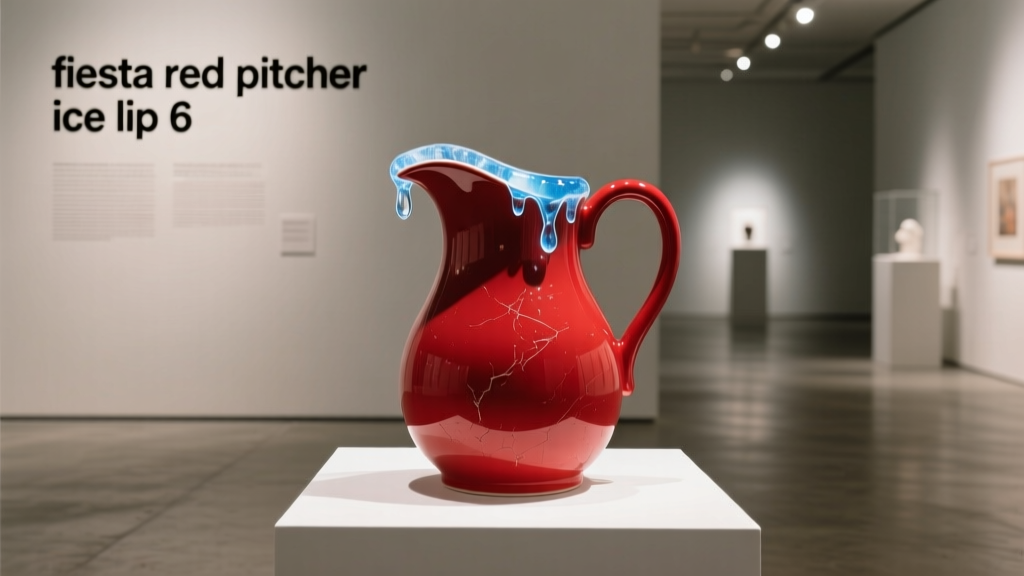
Fiesta Red Pitcher Ice Lip 6: Authentication, Market Value, and Design Legacy of the Iconic Homer Laughlin Vessel

Fireplace Shovel for Ash Removal: Evaluating the 21½-Inch Standard and Its Role in Hearth Safety, Ergonomics, and Collectible Hardware Design
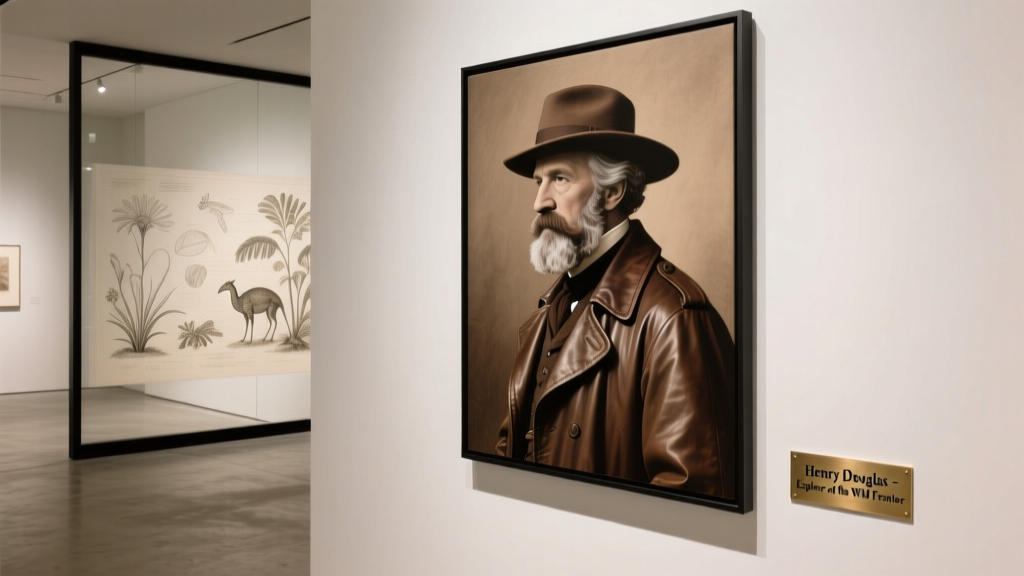
Henry Douglas: The Elusive Modernist Printmaker and the Authentication Challenges of His Lithographic Legacy
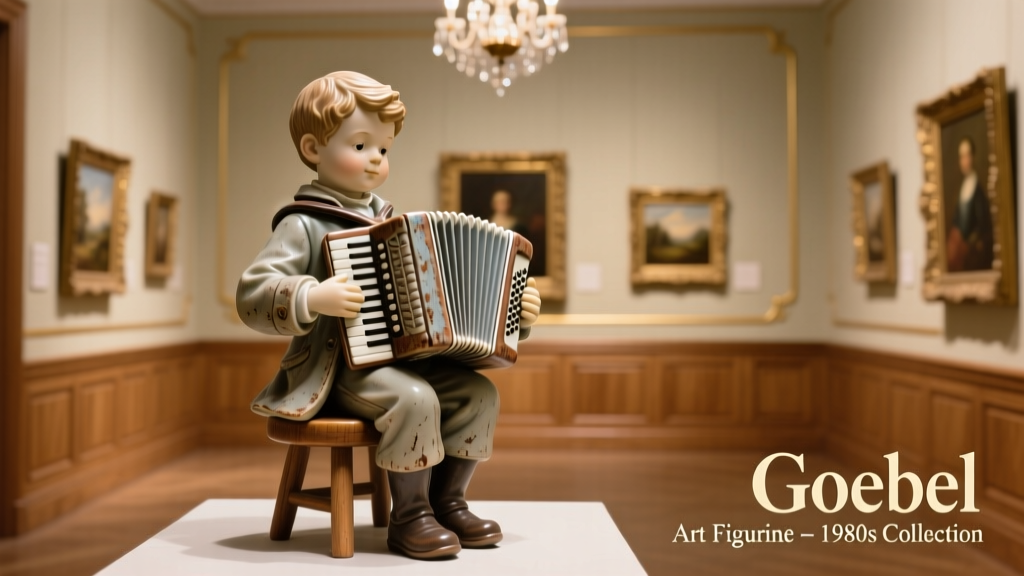
Goebel Figurine 'Boy Seated Playing Accordion': Authentication, Provenance, and Market Analysis
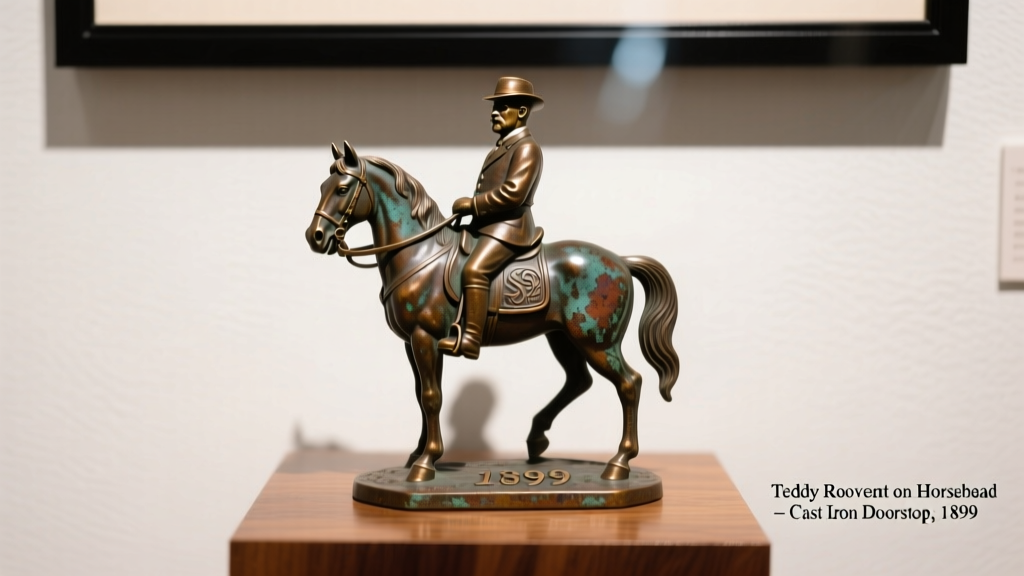
Teddy Roosevelt on Horseback Cast Iron Doorstops: Authenticating the 1899 J. L. Mott Iron Works Edition
Banks Campbell Kids Cast Iron: Authentication, Market Value, and Historical Context of Vintage Toy Stoves
Ivory Box-Work Mounted Sandalwood Octagonal Casket: Authentication, Provenance, and Technical Analysis of a Mid-19th Century Masterpiece (5¼ in)