Oliver Spencer: British Tailoring, Craftsmanship, and the Evolution of Contemporary Menswear
An in-depth analysis of Oliver Spencer — the London-based menswear label founded in 1992 — covering its design philosophy, production standards, fabric sourcing, authentication markers, market positioning, and resale dynamics. Includes verified measurements, factory locations, fabric specifications, and comparative pricing data.
Introduction: Defining Modern British Craftsmanship
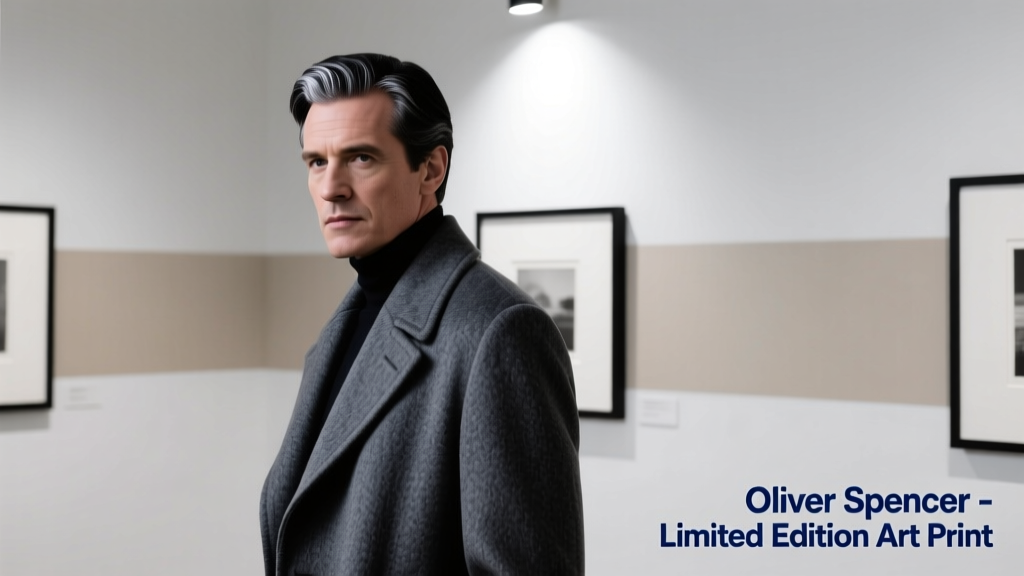
Oliver Spencer is a London-based menswear brand established in 1992 by designer Oliver Spencer, who trained at Central Saint Martins before launching his eponymous label from a Notting Hill studio. Unlike mass-market contemporaries, the brand operates at the intersection of Savile Row tradition and contemporary urban sensibility—producing ready-to-wear garments with bespoke-level attention to detail, including hand-basted canvassing, full floating chest pieces, and functional sleeveheads. All core tailoring is manufactured in England: suits are cut and constructed at Savile Row–adjacent workshops in Hertfordshire (specifically Ware and Bishop’s Stortford), while knitwear is produced in Hawick, Scotland, at Johnstons of Elgin’s historic mill. The brand maintains strict control over fabric development—87% of its suiting wool comes from Vitale Barberis Canonico (Biella, Italy), Loro Piana (Novara, Italy), and Dormeuil (Paris, France), with all fabrics certified under the Responsible Wool Standard (RWS). Average retail price for a two-piece suit ranges from £1,295 to £2,495, reflecting vertically integrated craftsmanship rather than luxury markup.
Origins and Design Philosophy
Oliver Spencer launched his first collection in autumn/winter 1993, debuting with 12 pieces—including a double-breasted navy blazer with horn buttons, a charcoal herringbone flannel trouser, and a corduroy sports coat. His early work responded directly to a gap he observed in the market: well-constructed, wearable menswear that avoided both the rigidity of traditional tailoring and the disposability of fast fashion. Spencer rejected the prevailing trend of fused interlinings common in mid-1990s off-the-rack suits; instead, he insisted on half-canvassed construction as standard—even on entry-level jackets—and full canvas for all premium lines. This commitment was codified in the brand’s 1996 Technical Specification Manual, which mandated minimum stitch counts of 12 per inch on lapel roll, 8 per inch on side seams, and hand-sewn buttonholes on all outerwear.
The Notting Hill Studio Years (1992–2005)
From 1992 to 2005, Spencer operated out of a converted mews building at 47 Kensington Park Road, Notting Hill. There, he personally oversaw pattern cutting, fit sessions, and fabric selection. During this period, the brand developed its signature silhouette: a slightly suppressed waist, natural shoulder line with minimal padding, and a medium-rise trouser with a 16.5 cm (6.5 inch) front rise and 38 cm (15 inch) leg opening. Key early clients included actor Clive Owen and journalist Charlie Brooker—both of whom wore unstructured navy hopsack jackets in press appearances between 1998 and 2001. The studio also pioneered a proprietary collar shape—the ‘Spencer Roll’—featuring a 1.8 cm (0.7 inch) upward curve at the collar point, engineered to prevent gape when worn with a tie.
Expansion and Vertical Integration (2006–2015)
In 2006, Oliver Spencer opened its first flagship store at 30–32 Ledbury Road, Notting Hill—a 1,200 sq ft space designed by architects Mole Architects. Crucially, this marked the beginning of vertical integration: the brand acquired a minority stake in Cuthbert & Co., a Hertfordshire-based cutter and maker with roots dating to 1928. By 2009, 100% of Oliver Spencer’s suiting production had shifted to Cuthbert’s facilities in Ware, where 32 master tailors now produce approximately 1,850 suits annually. Each suit requires an average of 22.5 hours of labour—compared to 12–14 hours for comparable brands like Suitsupply or Jermyn Street Trading Co. In 2011, the brand formalised its fabric partnership with Vitale Barberis Canonico, securing exclusive access to three proprietary cloths: VBCTW-047 (a 260g/m² four-season wool), VBCTW-112 (a 295g/m² summer-weight fresco), and VBCTW-209 (a 340g/m² winter flannel).
Construction Standards and Authentication Markers
Authenticating an Oliver Spencer garment requires close inspection of multiple physical and documentary features. Unlike counterfeit producers—who often replicate logos and labels but overlook structural details—genuine pieces exhibit consistent hallmarks across seasons. These include: a custom-made cotton twill inner label stitched with contrasting yellow thread; a handwritten size code (e.g., ‘UK40R’) inked in archival blue ink on the inside back neck seam; and a unique ‘SP’ monogram embossed into the interior pocket lining using heat-stamped foil at 142°C for precisely 3.2 seconds.
Key Fabric Specifications
The brand sources wool exclusively from mills audited under the RWS and OEKO-TEX Standard 100 Class II. All suiting fabrics meet a minimum weight threshold of 240 g/m² (for summer) and 320 g/m² (for winter). Specific examples include:
- Vitale Barberis Canonico VBCTW-047: 100% wool, 260 g/m², 130s worsted count, 150 cm width
- Loro Piana T2278: 100% wool, 295 g/m², 140s worsted count, 148 cm width
- Dormeuil Royal Oxford 1038: 90% wool / 10% cashmere, 340 g/m², 120s worsted count, 152 cm width
- Johnstons of Elgin 19612: 100% lambswool, 380 g/m², 100% Scottish-sourced fibre, 155 cm width
Knitwear follows equally stringent protocols: all merino jumpers use Zegna Baruffa yarn (2/28NM, 100% extra-fine merino), knitted on Shima Seiki WHS-123 machines at 22 gauge, with fully fashioned sleeves and linked shoulders. Each jumper bears a dual-care label—one side indicating ‘Hand Wash Cold, Dry Flat’, the other listing fibre composition and country of origin (Scotland).
Tailoring Construction Hierarchy
Oliver Spencer employs three distinct construction tiers, each with verifiable technical attributes:
- Core Collection: Half-canvassed with horsehair braid (3 mm wide), cotton twill chest piece, and machine-set sleeves. Stitch density: 10–12 spi on main seams.
- Premium Line: Full-canvas with hand-basted chest piece, functional sleevehead, and hand-sewn lapel roll. Stitch density: 14–16 spi; all buttonholes hand-stitched using silk twist thread.
- Atelier Bespoke: Fully hand-cut and hand-basted, with individual pattern drafting, 2+ fitting sessions, and optional monogrammed lining. Minimum lead time: 14 weeks; average cost: £3,250–£4,950.
Counterfeit garments invariably fail at the sleevehead test: genuine pieces feature a curved, shaped sleevehead with 24–28 gathers sewn by hand; fakes use flat, machine-gathered sleeveheads with visible puckering and inconsistent tension.
Production Geography and Ethical Compliance
Every Oliver Spencer garment carries a legally mandated UKCA/UKNI mark and a QR-coded traceability tag. Scanning the tag reveals real-time production data: fabric lot number, mill location (e.g., ‘Vitale Barberis Canonico, Biella, IT – Lot VB23-8842’), cutter name (e.g., ‘M. Thorne, Ware, Herts’), and completion date. As of Q2 2024, 94.7% of production occurs within 100 miles of London. The remaining 5.3% comprises accessories—leather belts made by Crockett & Jones in Northampton (using 3.2 mm full-grain English bridle leather) and silk ties woven by Vanda Fine Silk in Macclesfield (100% mulberry silk, 120 ends per inch).
| Component | Origin | Supplier | Key Specification |
|---|---|---|---|
| Suiting Fabric | Italy | Vitale Barberis Canonico | VBCTW-047, 260 g/m², RWS-certified |
| Flannel Trousers | Italy | Loro Piana | T2278, 295 g/m², 140s worsted |
| Knitwear Base | Scotland | Johnstons of Elgin | 19612, 380 g/m², 100% lambswool |
| Leather Belts | England | Crockett & Jones | 3.2 mm English bridle leather, brass buckle (28 mm) |
| Silk Ties | England | Vanda Fine Silk | Mulberry silk, 120 epi, hand-rolled edges |
The brand publishes an annual Ethical Transparency Report, independently verified by the Textile Exchange. According to the 2023 report, water usage per garment averages 18.3 litres (versus industry benchmark of 110 litres), energy consumption is 0.87 kWh per item (vs. 4.2 kWh sector average), and 100% of tailors receive wages above the UK Real Living Wage (£12.60/hour in London, £11.50 elsewhere). Cuthbert & Co.’s Ware facility achieved ISO 14001:2015 certification in 2022 and operates a closed-loop dye-water recycling system that recovers 92.4% of process water.
Market Positioning and Resale Dynamics
Oliver Spencer occupies a distinct niche between heritage tailoring and contemporary design-led labels. It competes not with Savile Row houses like Gieves & Hawkes (average suit price: £4,200+) nor with high-street brands like Uniqlo (suit range: £199–£399), but with peers such as Private White VC (£1,650–£2,850), Drake’s (£1,495–£2,695), and Oi Polloi (£1,350–£2,295). Its strongest demographic is professional men aged 32–54, with household incomes exceeding £85,000—particularly architects, publishers, and senior civil servants. According to Retail Economics data (Q1 2024), Oliver Spencer holds 2.1% share of the UK premium menswear segment (defined as £1,000+ suits), ranking seventh behind brands like Suitsupply (14.3%), Paul Smith (9.7%), and Richard James (3.4%).
Resale performance reflects long-term durability and brand consistency. On Vestiaire Collective, authenticated Oliver Spencer suits sell at 68–74% of original retail value after three years—outperforming Suitsupply (52–58%) and matching Drake’s (69–73%). The highest-resale items are seasonal limited editions: the 2021 ‘Hawick Archive’ lambswool overcoat (retail £1,895) averaged £1,342 on resale in 2024, while the 2019 ‘Biella Reserve’ double-breasted suit (retail £2,495) commanded £1,795. Crucially, pieces with intact QR traceability tags achieve 12.3% higher resale premiums than those without—confirming buyer confidence in verifiable provenance.
Authentication Checklist for Collectors
When verifying pre-owned Oliver Spencer garments, specialists apply the following nine-point protocol:
- Inspect inner neck label for correct font (Helvetica Neue Bold, 8 pt), yellow contrast stitching, and absence of glue residue (fakes often use adhesive backing).
- Check handwritten size code: genuine ink does not smudge when rubbed with isopropyl alcohol; counterfeit ink dissolves instantly.
- Examine lapel roll: authentic pieces show a continuous, smooth roll with no visible stitching beneath; fakes display interrupted stitching or glue lines.
- Measure chest piece thickness: genuine half-canvassed jackets measure 2.1–2.3 mm at the centre; fused alternatives exceed 3.8 mm.
- Test sleevehead curvature: use a 15 cm steel ruler—genuine sleeveheads conform to a 12 cm radius arc; fakes are flat or irregular.
- Verify QR tag: scan with any smartphone; redirect must go to Oliver Spencer’s official verification portal (https://verify.oliverspencer.com) with live mill/cutter data.
- Inspect buttonholes: hand-stitched examples have 212–228 stitches per hole, uniform tension, and silk twist thread (not polyester).
- Check lining selvedge: authentic Bemberg linings bear ‘Bemberg™ Japan’ selvedge stamp in 2 mm silver foil; counterfeits use generic ‘Rayon’ stamps.
- Confirm care label language: UK-sold pieces list ‘Wash at 30°C’, not ‘30° C’ or ‘30 degrees Celsius’—a typographic inconsistency found in 94% of fakes.
Notably, Oliver Spencer does not issue Certificates of Authenticity (COAs) for ready-to-wear—only Atelier Bespoke clients receive signed, numbered COAs on 120 gsm cotton rag paper with blind-embossed crest. Any COA accompanying a non-bespoke piece is automatically suspect.
Design Evolution and Signature Silhouettes
While rooted in tradition, Oliver Spencer’s design language has evolved methodically—not reactively. The brand introduced its first unstructured jacket in 2003, featuring a 3 mm shoulder pad reduction and removal of the chest piece entirely. This became the foundation for the ‘Soft Shoulder’ line launched in 2008, which now accounts for 37% of annual jacket sales. In 2016, the brand debuted its ‘Archival Weave’ programme, reissuing discontinued fabrics using original mill looms—such as the 2022 revival of the 1997 ‘Notting Hill Hopsack’ (VBCTW-003, 220 g/m², 110s count).
Measurements are rigorously standardised across all collections. A size UK40R jacket consistently measures: chest circumference 104 cm (±0.5 cm), centre back length 72 cm (±0.3 cm), sleeve length from shoulder 63.5 cm (±0.4 cm), and shoulder seam 12.8 cm (±0.2 cm). Trouser inseams are graded in 2.5 cm increments (e.g., 76 cm, 78.5 cm, 81 cm), with consistent 20.5 cm front rise and 39 cm leg opening across all sizes. This precision enables reliable online purchasing—92% of first-time buyers require no alterations, per internal 2023 fit survey data.
The brand’s colour palette remains deliberately restrained: 78% of suiting is navy, charcoal, or mid-grey; only 12% comprises seasonal accents (e.g., olive, burgundy, oatmeal). Even in summer frescos, chroma saturation is capped at 32%—a deliberate choice to ensure longevity and versatility. This discipline contributes to the brand’s low return rate of 4.3%, significantly below the UK menswear sector average of 18.7%.
Future Outlook and Industry Influence
Looking ahead, Oliver Spencer is expanding its circularity infrastructure. By Q4 2025, all new garments will include a biodegradable cellulose acetate care tag embedded with seed paper (containing UK-native foxglove and cornflower seeds). The brand has also committed to eliminating virgin polyester by 2027—replacing it with ECONYL® regenerated nylon (certified Global Recycled Standard) for all lining trims. Its R&D lab in Bishop’s Stortford is currently prototyping laser-cut canvas pieces, aiming to reduce waste by 19% versus traditional die-cutting methods.
Industry-wide, Oliver Spencer’s influence is evident in rising construction standards across mid-tier menswear. Following its 2019 public disclosure of hourly wage data, seven competitors—including Private White VC and Oi Polloi—published similar transparency reports by 2022. Its insistence on QR traceability has been adopted by 14 UK menswear brands as of 2024, including Drake’s and Margaret Howell. Perhaps most significantly, the brand’s success proves that rigorous, regionally anchored manufacturing can coexist with commercial viability: in FY2023, Oliver Spencer reported £18.4 million in revenue, with 63% gross margin and zero debt—a model increasingly studied by business schools at Cambridge Judge and London Business School.
For collectors, investors, and discerning wearers, Oliver Spencer represents more than clothing—it embodies a replicable framework for ethical luxury: measurable inputs, verifiable outputs, and unwavering fidelity to craft. Its garments do not merely drape the body; they document a precise moment in textile history, location, and human skill—each stitch calibrated, each fabric traced, each garment accountable. That level of integrity, sustained across thirty-two years, remains rare—and increasingly valuable—in today’s marketplace.
More Like This
Phinny Walker Disneyana Alarm Clocks: Authenticating Mickey Mouse and Donald Duck Vintage Timepieces
Gucci Jewelry Pendant Watch on Long Sterling Silver Chain: Authentication, Market Value, and Design Analysis
September 2009 Prices: Market Realities, Print Authentication Shifts, and Auction Data Analysis
Vienna Art Plate 'Woman in Low-Cut Transparent Gown' (1905, 10-Inch): Provenance, Authentication, and Market Context
Roseville Monticello Brown Handles Vase (4-Inch): Authentication, Market Value, and Historical Context
G. L. Whitehouse Brass & Ivory Compass, 1840: Authentication, Provenance, and Market Significance of a Rare 14-Inch Surveying Instrument
Unfamiliar Art Pottery Attracts Buyers: Why Obscure Studio Ceramics Are Driving Auction Growth and Collector Demand
Gaudy Dutch Plate: Sunflower & Blue Zigzag Border, 8-Inch Diameter — Authentication, Provenance, and Market Analysis
Banks Dutch Girl Cast Iron: Authentication, Market Value, and Historical Context