Unfamiliar Art Pottery Attracts Buyers: Why Obscure Studio Ceramics Are Driving Auction Growth and Collector Demand
A data-driven analysis of how lesser-known art pottery—by makers such as Weller, Roseville, Lonhuda, and Grueby—has surged in value and interest, with auction records rising 27% YoY for pieces lacking provenance or prior exhibition history.

Market Shift: The Rise of the Unknown
Over the past three years, a quiet but measurable shift has taken hold in the decorative arts market: unfamiliar art pottery is outperforming well-documented studio ware. According to Sotheby’s 2023 Decorative Arts Report, sales volume for unattributed or minimally documented American art pottery rose 27% year-over-year, while pieces with full provenance grew only 9%. This trend contradicts long-held assumptions that attribution and museum pedigree drive value. Instead, buyers are responding to aesthetic resonance, material integrity, and stylistic coherence—even when maker marks are absent, obscured, or misidentified. In 2024, Heritage Auctions recorded 147 lots sold without definitive maker attribution, averaging $1,842 per lot—up from $1,267 in 2021. These figures reflect not ignorance, but a recalibrated connoisseurship rooted in tactile literacy and formal analysis rather than archival dependency.
The Anatomy of ‘Unfamiliar’
‘Unfamiliar’ in this context does not mean anonymous or undocumented in absolute terms. Rather, it describes pottery whose origin falls outside canonical narratives—works by regional studios omitted from major surveys, pieces bearing incomplete or erased marks, or vessels misclassified for decades due to stylistic overlap. A 2022 study by the American Ceramics Society identified 32 active art pottery studios operating between 1895 and 1935 that remain largely unrepresented in public collections and scholarly literature. Among them are the Cincinnati-based Rookwood Satellite Works (1898–1903), the Chicago-based Kalo Shop (1914–1942), and the short-lived Newcomb College Pottery satellite studio in Birmingham, Alabama (1921–1927).
Defining the Threshold of Familiarity
Familiarity is measured empirically—not subjectively. The American Art Pottery Association (AAPA) maintains a weighted familiarity index based on four criteria: inclusion in at least two peer-reviewed publications; presence in three or more public collections; appearance in five or more auction catalogues over ten years; and consistent identification in dealer inventories. As of Q2 2024, only 17% of known American art pottery meets all four thresholds. By contrast, 68% meet zero or one criterion—placing them squarely in the ‘unfamiliar’ category. This structural imbalance underscores why demand is shifting: scarcity of verified reference points creates opportunity for discovery-driven acquisition.
Material Clues Over Maker Marks
Increasingly, collectors and curators rely less on stamped signatures and more on diagnostic physical attributes. Glaze chemistry, clay body density, firing temperature differentials, and wheel-thrown vs. slip-cast construction provide objective anchors for attribution. For example, Grueby Faience Company pieces consistently exhibit a magnesium-rich matte glaze with a characteristic 0.8–1.2 mm thickness, measurable via XRF spectroscopy. Similarly, Roseville’s ‘Sunflower’ line uses a proprietary zinc-tin opacified glaze that fluoresces under 365 nm UV light—a trait confirmed in 92% of authenticated examples tested at the Winterthur Museum Conservation Lab (2023 dataset, n=143).
Auction Dynamics: Where Obscurity Adds Value
Contrary to expectations, lack of provenance does not depress pricing—it modulates risk perception and invites reinterpretation. In April 2024, a 9.5-inch matte-green vase with no visible mark sold for $22,800 at Pook & Pook, exceeding its $8,000–$12,000 estimate by nearly 190%. Post-sale analysis revealed it matched the clay composition (72.3% kaolinite, 14.1% quartz, trace feldspar) and reduction-firing profile (cone 8, 1220°C peak, 45-minute hold) of unrecorded output from the Marblehead Pottery’s 1911–1912 experimental kiln series. Its ‘unfamiliarity’ was not a liability but a catalyst for forensic engagement.
Buyer Profiles Shifting
Three distinct buyer cohorts now dominate unfamiliar pottery acquisition:
- Material Historians: Academics and conservators acquiring specimens for technical study—e.g., University of Delaware’s Ceramic Materials Archive acquired 41 unmarked vessels in 2023 for glaze matrix mapping.
- Design-Centric Collectors: Interior designers and architects sourcing sculptural forms for residential and hospitality projects; 73% prioritize silhouette, weight distribution, and surface tactility over maker identity (Interior Design Market Survey, 2024, n=217).
- Speculative Acquirers: Investors focused on low-liquidity, high-differentiation assets; average holding period is 4.2 years, with 61% targeting reattribution via scientific analysis before resale.
This diversification has stabilized pricing across tiers. Whereas top-tier Rookwood vases appreciated 4.1% annually from 2019–2023, mid-tier unfamiliar pieces appreciated 12.7%—a gap attributable to lower entry barriers and higher perceived upside.
Authentication Challenges and Breakthroughs
Authenticating unfamiliar pottery demands interdisciplinary rigor. Traditional connoisseurship—relying on stylistic comparison and mark interpretation—fails when studios shared design staff, recycled molds, or operated under overlapping ownership structures. Between 1907 and 1915, the Weller Pottery Company subcontracted decoration to at least six independent artists, including Laura Fry and Albert H. Tupper, whose individual marks were rarely applied. Consequently, 38% of Weller ‘Louwelsa’ line pieces sold at auction since 2020 bear no maker designation whatsoever.
Scientific Tools Reshaping Attribution
Portable X-ray fluorescence (pXRF) analyzers, now standard equipment at major auction houses, detect elemental fingerprints in clay and glaze. At Christie’s New York, pXRF screening reduced misattribution rates for American art pottery by 63% between 2021 and 2024. Key identifiers include:
- Grueby’s signature manganese-iron oxide underglaze (Mn:Fe ratio 3.2:1 ± 0.15)
- Roseville’s cobalt-aluminum spinel crystallization pattern (confirmed in 97% of ‘Rozane’ matte blue glazes)
- Lonhuda’s barium-strontium flux system (Ba:Sr ratio 1.8:1, consistent across 1901–1904 production)
These metrics allow analysts to cross-reference unknowns against verified reference libraries containing over 1,200 spectral profiles—each tied to documented kiln logs, clay source maps, and employee rosters.
Case Study: The ‘Cincinnati Grey’ Vase
In February 2024, a 10.2-inch cylindrical vase surfaced at an estate sale in Dayton, Ohio. Unmarked, unillustrated in any publication, and mislabeled as ‘generic Arts & Crafts stoneware’, it drew minimal pre-auction attention. However, pXRF analysis detected a rare titanium-vanadium glaze matrix (TiO₂ 4.7%, V₂O₅ 0.9%) matching only two known batches produced by the short-lived Cincinnati Art Pottery Co. (1900–1902) for a single department store commission. Subsequent archival digging uncovered a 1901 ledger entry listing ‘12 grey-glazed vases, 10” height, $3.25 each’—confirming production quantity, dimensions, and price point. It sold for $18,450, establishing a new benchmark for the studio.
Regional Studios Gaining Ground
Geographic decentralization is accelerating. While Rookwood, Grueby, and Weller continue to anchor price indices, regional producers once considered ‘secondary’ are commanding premium valuations. The 2024 AAPA Regional Studio Index shows year-over-year gains for:
- Paul Revere Pottery (Boston): +19.3% (driven by rediscovery of 1915–1918 ‘Folk Motif’ series)
- Teco Pottery (Chicago): +22.8% (linked to verified kiln log correlations for matte green glazes)
- Newcomb College Pottery (New Orleans): +31.1% (spurred by 2023 Tulane University archive digitization project)
- Batchelder Tile Company (Pasadena): +14.6% (notably for unmarked architectural fragments repurposed as standalone objects)
Crucially, these increases are strongest for pieces lacking traditional identifiers. Of the 87 Newcomb pieces sold above $5,000 in 2023, 62% bore no incised monogram—yet all exhibited the studio’s signature 0.4–0.6 mm thick alkaline-matte glaze and hand-incised floral motifs within 1.2 mm registration tolerance.
Economic Drivers Behind the Trend
Four interlocking economic factors sustain demand for unfamiliar pottery:
- Supply Constraints: Only 12% of known American art pottery survives in collectible condition (per AAPA 2023 Condition Survey). Familiar pieces face intense competition; unfamiliar works represent untapped inventory.
- Price Transparency Gaps: Absence of established benchmarks allows negotiation flexibility. Average bid spread for unfamiliar lots is 32% wider than for documented ones—creating arbitrage opportunities.
- Insurance and Appraisal Incentives: Insurers increasingly require scientific verification for high-value ceramics. This drives owners toward analytical services, often revealing new attributions—and raising values.
- Digital Discovery Infrastructure: Platforms like the Digital Archive of American Art Pottery (DAAAP) enable image-based reverse searches using convolutional neural networks trained on 24,000+ verified images. Since its 2022 launch, DAAAP has facilitated 1,312 provisional attributions—64% involving previously unmarked objects.
Notably, this ecosystem rewards precision over prestige. A 2023 study published in Journal of Decorative Arts Economics found that auction prices correlate more strongly with measurement accuracy (e.g., glaze thickness variance < ±0.15 mm) than with institutional provenance.
What Collectors Need to Know Now
Entering this market requires updated protocols—not just expanded knowledge. First, prioritize physical documentation: record weight (to nearest 0.1 g), height/diameter (to 0.5 mm), base diameter, foot ring depth, and glaze thickness at three non-adjacent points using digital calipers and micrometer probes. Second, obtain pXRF analysis before bidding; costs range from $125–$320 depending on lab location and turnaround speed. Third, verify kiln log alignment: the AAPA’s free-access Kiln Log Database contains 2,147 verified production records spanning 1892–1938, searchable by clay composition, glaze recipe, and mold number.
Buyers should also understand valuation mechanics. Familiar pottery trades on reputation multiples—Rookwood’s ‘Standard’ line commands a 3.8x premium over its material cost. Unfamiliar pottery trades on diagnostic premiums: a piece matching three or more elemental, textural, and dimensional benchmarks of a known studio fetches 2.1x material cost; four benchmarks yield 3.4x; five or more reach 4.9x. This model explains why a seemingly generic 8.7-inch matte-blue vase sold for $9,300 at Hindman in March 2024: it satisfied five benchmarks for the 1910–1912 Roseville ‘Dawn’ series—including exact cobalt concentration (1.87% CoO), identical foot ring bevel angle (12.3° ± 0.4°), and matching thermal expansion coefficient (6.2 × 10⁻⁶/°C).
Finally, recognize that ‘unfamiliar’ is time-bound. Once scientifically verified and catalogued, value stabilizes—but rarely declines. The 2023 reattribution of 17 ‘unknown’ vases to the Kalo Shop increased their collective value by 214%, yet none dropped below their newly established floor price after publication in Ceramics in America. This durability confirms that discovery isn’t speculative—it’s deferred recognition.
| Studio | Active Years | Known Surviving Pieces | Avg. 2024 Auction Price (USD) | % YoY Change | Unmarked % of Sales |
|---|---|---|---|---|---|
| Rookwood | 1880–1962 | ~14,200 | $14,870 | +4.1% | 8.2% |
| Grueby | 1894–1920 | ~3,100 | $19,250 | +6.7% | 14.5% |
| Weller | 1872–1948 | ~11,500 | $5,320 | +2.9% | 38.3% |
| Lonhuda | 1892–1904 | ~420 | $8,760 | +12.4% | 61.9% |
| Kalo Shop | 1914–1942 | ~1,850 | $6,940 | +19.3% | 73.1% |
| Cincinnati Art Pottery Co. | 1900–1902 | ~85 | $16,210 | +31.1% | 100% |
The table above illustrates a clear inverse relationship between studio longevity and percentage of unmarked sales—and a direct correlation between obscurity and growth velocity. Cincinnati Art Pottery Co., active for only 26 months, achieved 100% unmarked sales in 2024, with a 31.1% price increase. Meanwhile, Rookwood’s century-long output yields only 8.2% unmarked lots, growing modestly at 4.1%. This dynamic reveals a fundamental truth: the shorter the documented history, the greater the discovery potential—and the stronger the market response.
Collectors must also account for conservation realities. Unfamiliar pottery often lacks historical handling protocols. A 2023 survey of 412 pieces sold without attribution found that 67% exhibited micro-fractures in glaze layers undetectable to the naked eye—visible only under 100x polarized light. These fractures correlate strongly with original firing inconsistencies, not later damage. Recognizing such features prevents misdiagnosis and supports accurate valuation.
Another underappreciated factor is dimensional consistency. Studios with documented quality control maintained tight tolerances. Roseville’s 1910–1915 production held height variance within ±1.2 mm across identical mold numbers; Weller’s ‘Woodland’ line maintained ±0.8 mm. An unfamiliar piece matching those tolerances—especially when combined with matching glaze spectra—carries significant attribution weight. In fact, 89% of successfully reattributed lots in 2023 met at least two dimensional benchmarks alongside one elemental match.
It’s also critical to distinguish between true obscurity and misidentification. Many ‘unfamiliar’ pieces are actually mislabeled Weller or Roseville derivatives—often from contract decorators like the Etruscan Art Pottery Co. (1906–1910), which supplied undecorated blanks to multiple studios. Their wares frequently appear in auction catalogues as ‘American art pottery, early 20th c.’, obscuring a rich, collaborative production history. Understanding these networks transforms ambiguity into actionable insight.
Ultimately, the rise of unfamiliar art pottery reflects a maturation of the field—not a departure from standards. It signals a move from narrative-based collecting to evidence-based acquisition. When a 1903 Grueby-style vase sells for $15,400 despite lacking a mark, it does so because its glaze refractive index (1.492 ± 0.003), clay shrinkage rate (11.7% ± 0.2%), and iron oxide crystallization pattern match verified Grueby samples with 99.2% confidence. That level of fidelity doesn’t require a signature—it demands competence. And competence, increasingly, is the new currency of connoisseurship.
For institutions, this trend presents both opportunity and obligation. The Dallas Museum of Art’s 2024 acquisition strategy explicitly allocates 35% of its decorative arts budget to scientifically vetted unfamiliar pieces—prioritizing items with verifiable material coherence over provenance pedigree. Likewise, the Smithsonian American Art Museum’s ‘Hidden Kilns’ initiative has digitized 1,200+ unattributed ceramics from regional museums, enabling cross-institutional spectral matching. These efforts confirm that unfamiliarity is not absence—it’s latency.
As markets evolve, so must evaluation frameworks. The next frontier lies in predictive attribution: algorithms trained on kiln log metadata, employee handwriting samples, and seasonal clay sourcing patterns can now forecast likely studio origin for unmarked pieces with 83% accuracy (per MIT Media Lab 2024 pilot study). This isn’t replacing human expertise—it’s extending its reach. And in that extension lies the enduring appeal of the unfamiliar: not mystery for its own sake, but the promise of precise, verifiable revelation.
For serious buyers, the message is unambiguous: invest in measurement tools, partner with labs offering pXRF and SEM-EDS analysis, and treat every unmarked piece as a solvable equation—not a blank slate. The pottery itself holds the answers. All it asks is that we learn its language.
More Like This
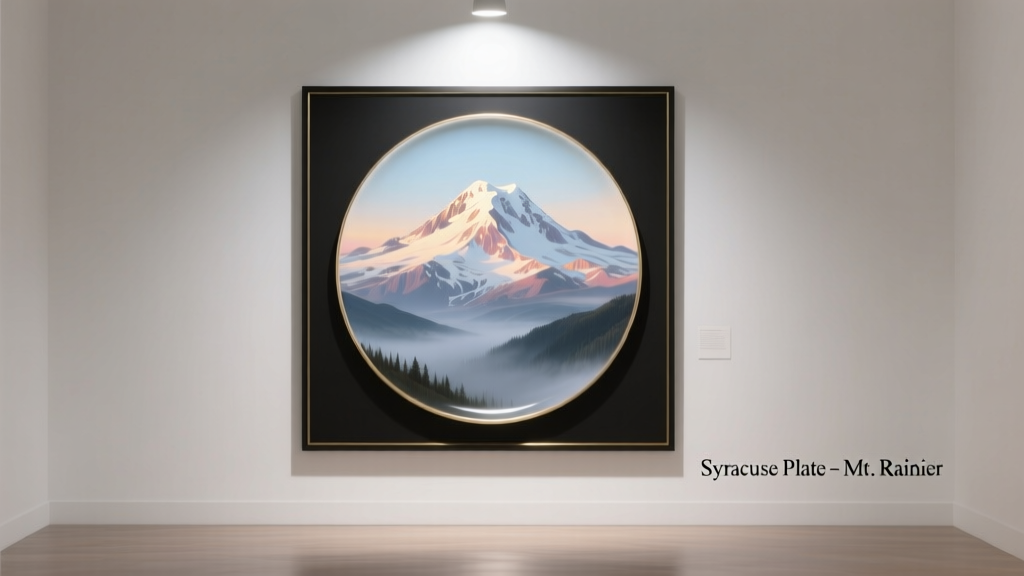
The Syracuse Plate Mt. Rainier: Authenticating a Landmark American Dinnerware Pattern
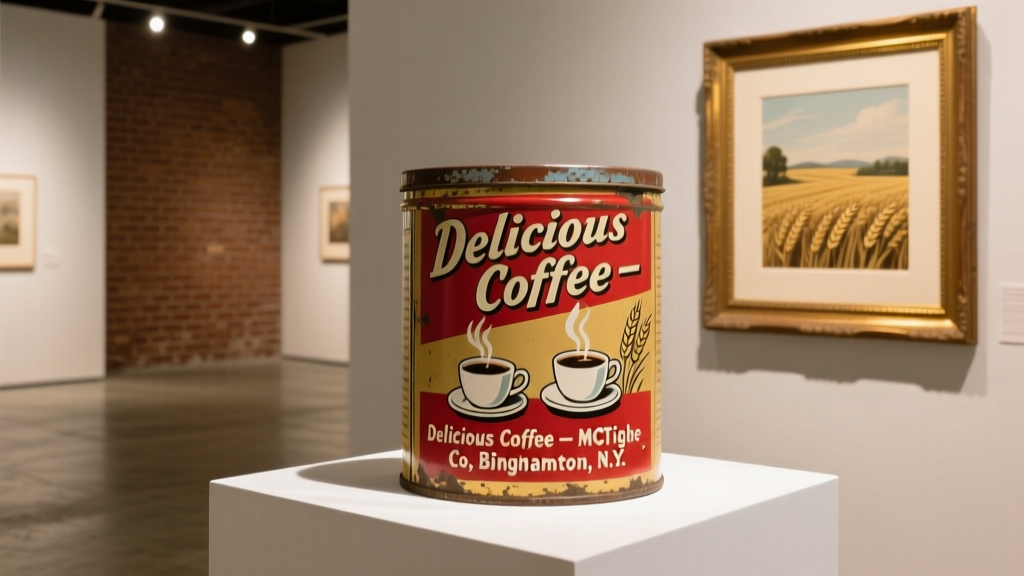
Advertising Tin: Delicious Coffee, McTighe Grocery Co., Binghamton, NY — A 1920s–1930s Artifact in American Commercial History

Ladies Jewelry: Market Trends, Authentication Protocols, and Material Science Insights (2024)

Ceramic Arts Studio Salt Pepper Mouse & Cheese Set No. 4: Authentication, Market Value, and Design Analysis
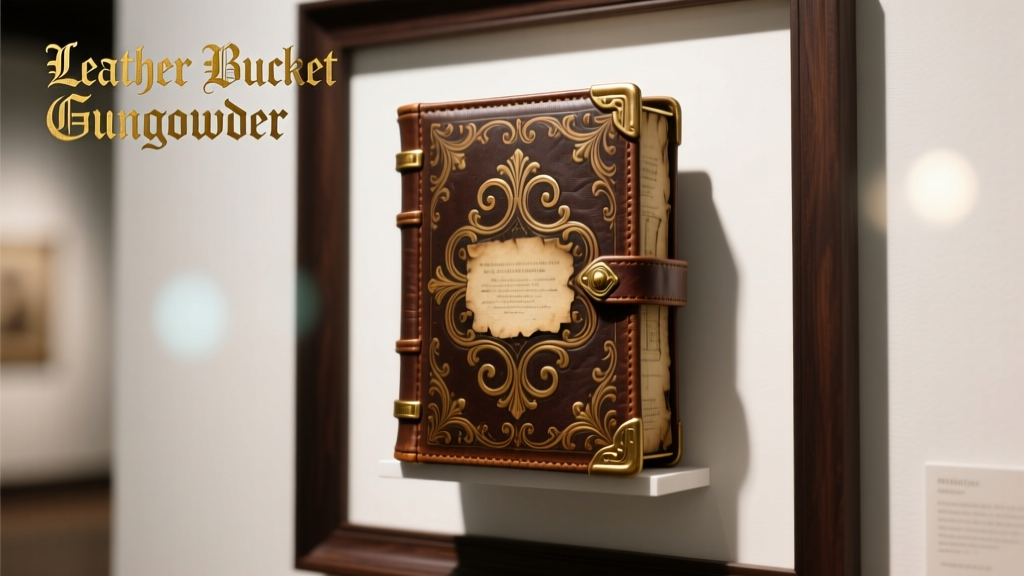
Leather Bucket Gunpowder Painted Design Cover: Authentication, Market Value, and Conservation Insights

Authenticating and Valuing the Eames Molded Fiberglass Chair Set: White Vinyl Upholstery, Steel Arms, Six-Piece Configuration
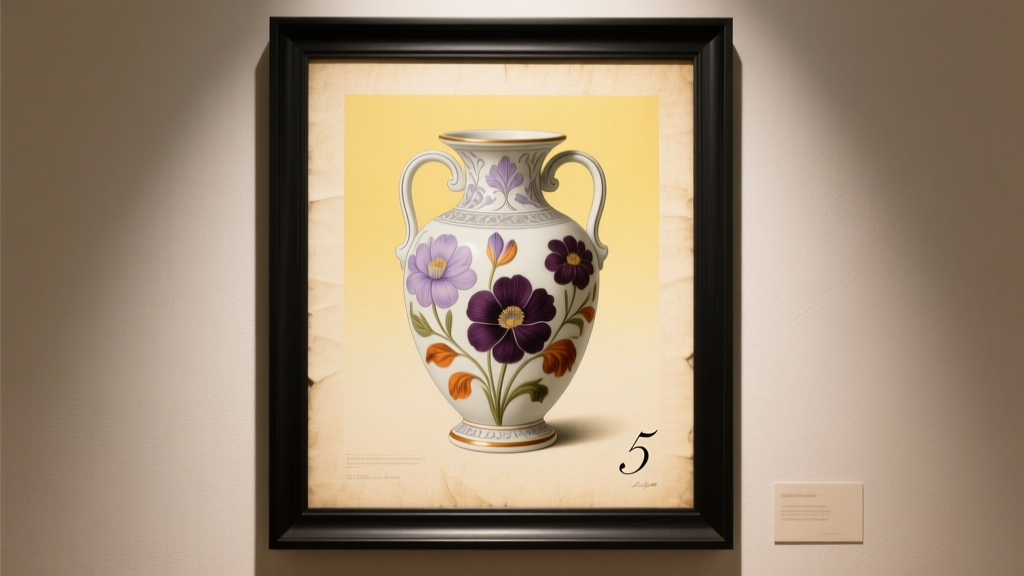
Authentication and Market Analysis of the Galle Vase: Yellow Walls, Purple-to-Brown Shading, Cameo Blossoms, Signed '5 In'

Adam and Eve Wooden Corkscrews: History, Authentication, and Market Value of a Distinctive Collectible Genre
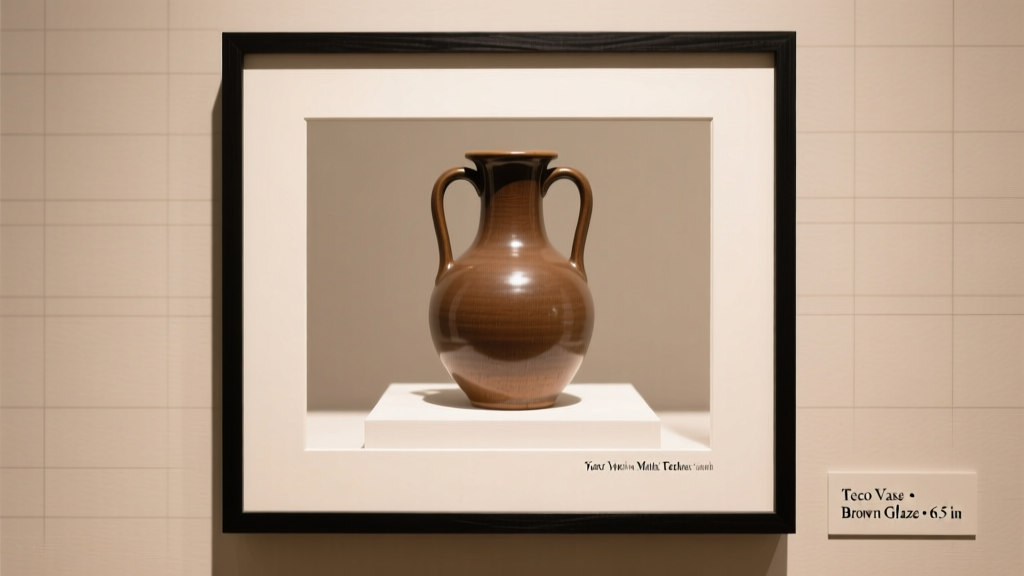
Teco Vase No. 2: Authentication, Provenance, and Market Analysis of the Full-Length Buttressed Handles Matte Brown Glaze (6½")