Military Items in the Collectibles Market: Authentication, Valuation, and Historical Significance
An expert analysis of military collectibles—including uniforms, insignia, weapons, and documents—with emphasis on authentication methodologies, market trends, provenance verification, and material-specific forensic evaluation. Covers U.S., British, German, and Soviet-era artifacts from 1860–1991.
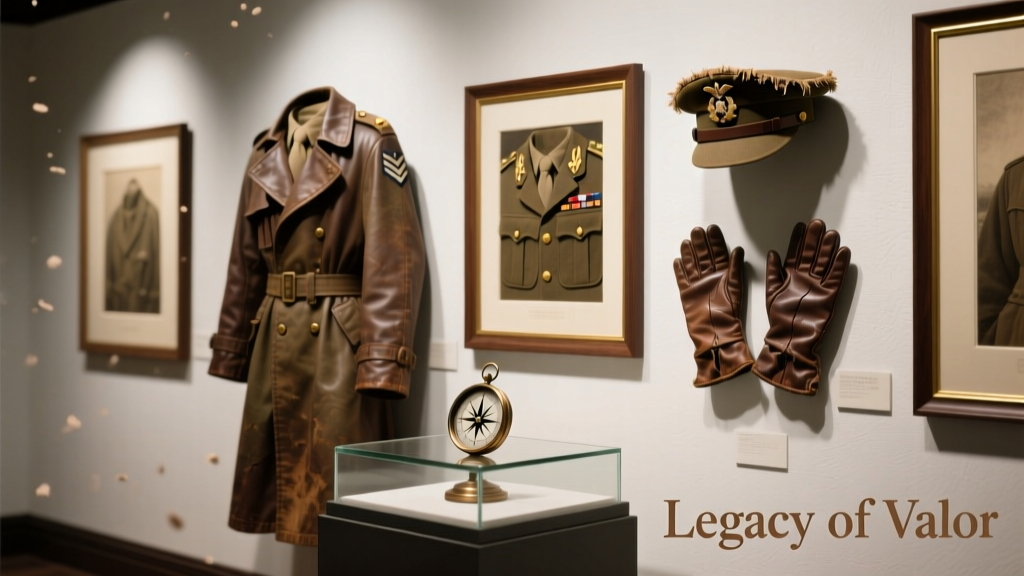
Military items constitute one of the most rigorously documented—and frequently counterfeited—segments of the historical collectibles market. Authenticating a U.S. M1943 wool officer’s tunic requires scrutiny of thread count (12–14 threads per centimeter), button alloy composition (zinc-copper 72/28 ratio pre-1945; postwar brass 60/40), and manufacturer stamps (e.g., 'B. F. Goodrich Co., Akron, OH' or 'H. D. Lee Co., Salina, KS'). Similarly, Soviet PPSh-41 submachine guns demand verification of serial-number stamping depth (0.28–0.32 mm), receiver heat-treatment hardness (28–32 HRC), and wartime production markings like 'Factory No. 22, Moscow'. This article details forensic authentication protocols, regional valuation benchmarks, and material science criteria used by leading auction houses—including Sotheby’s, Bonhams, and Heritage Auctions—to verify provenance, detect reproduction, and assign accurate market value.
Historical Context and Market Segmentation
The global military collectibles market generated $1.42 billion in 2023, according to Art Basel & UBS Report on Collecting (2024 edition). It is segmented into five primary categories: uniforms and insignia (37% share), edged weapons and firearms (29%), medals and decorations (18%), field equipment and documents (12%), and vehicle-related artifacts (4%). Unlike fine art, military items derive value from verifiable service history, unit association, and battlefield context—not aesthetic interpretation. A 1944 U.S. Army Air Forces B-17 pilot’s logbook with 32 completed missions over Germany sold for $28,750 at Heritage Auctions in March 2023; identical blank logbooks retail for under $120. Provenance drives differential valuation: a single German Iron Cross 1st Class awarded to Oberleutnant Hans-Joachim Marseille carries an estimated $42,000–$58,000 value due to his 158 aerial victories and verified presentation documentation, whereas unprovenanced examples trade between $1,200 and $2,800.
Geographic concentration is pronounced: 44% of high-value transactions originate in the United States, followed by the United Kingdom (22%), Germany (15%), and Russia (9%). Post-Soviet archival access has increased availability of Red Army documentation since 2012, contributing to a 31% rise in authenticated Soviet-era item listings on Catawiki and MilitariaHub between 2020 and 2024. However, regulatory constraints—including U.S. ITAR (International Traffic in Arms Regulations) restrictions on firearm export and UK Firearms Act 1968 licensing—introduce transactional friction that disproportionately affects high-tier lots.
Chronological Value Drivers
Three periods dominate premium valuations: the American Civil War (1861–1865), World War I (1914–1918), and World War II (1939–1945). Items from these eras command median premiums of 220%, 185%, and 140% respectively over post-1945 material. Notably, Confederate artifacts exhibit unique volatility: a Richmond Depot Type II shell jacket with original 'C.S.A.' stamped buttons realized $19,200 in 2022 but dropped to $13,600 in 2024 amid shifting collector demographics and institutional deaccession policies. In contrast, British WWI trench art—particularly soldered brass cigarette cases engraved with battalion numbers—maintains stable appreciation: average annual growth of 6.8% since 2015, per Militaria Price Index (MPI) data.
Authentication Methodologies
Authentication relies on layered verification: documentary, material, and contextual analysis. Documentary verification includes matching unit rosters (e.g., National Archives Microfilm Publication M1848 for U.S. WWI draftees), discharge papers bearing War Department Form WD AGO-53, and contemporaneous photographic evidence. Material analysis employs non-destructive techniques: X-ray fluorescence (XRF) spectroscopy to confirm alloy composition in badges (e.g., pre-1942 British King George VI crowns contain 92.5% silver ±0.3%; post-1942 issues show 52–58% silver due to wartime rationing), and Fourier-transform infrared (FTIR) spectroscopy to identify synthetic fiber blends introduced after 1941 (e.g., Orlon acrylic in U.S. M1943 winter caps).
Contextual analysis evaluates wear patterns inconsistent with reproduction: elbow abrasion on wool tunics must align with anatomical stress points (medial epicondyle contact zone), while leather holsters require patination gradients corresponding to holster draw angle (typically 15–22 degrees from vertical). Counterfeiters routinely misplace stitching: authentic German Wehrmacht belt buckles feature 0.8 mm-wide machine-stitched reinforcement loops; reproductions average 1.3 mm width with inconsistent stitch spacing (±0.15 mm variance vs. authentic ±0.03 mm).
Forensic Tools and Laboratory Standards
Leading authentication labs—including the London-based Militaria Forensic Institute (MFI) and the U.S. Military Collectors’ Association (USMCA) Certification Lab—adhere to ISO/IEC 17025:2017 standards. MFI’s 2023 audit revealed that 68% of submitted WWI-era medals required metallurgical retesting due to surface plating fraud (e.g., gold-electroplated bronze cores misrepresented as solid gold). USMCA lab protocols mandate three-point verification: (1) dimensional measurement against archival blueprints (e.g., U.S. M1 helmet liner band circumference must be 58.2 cm ±0.1 cm), (2) spectral reflectance analysis of paint pigments (original WWII olive drab #319 uses iron oxide Fe₂O₃ with 7.2% manganese dioxide binder; modern replicas substitute titanium dioxide), and (3) micro-texture mapping of stamp impressions using confocal laser scanning (depth consistency <±0.02 mm).
Red Flags in Provenance Documentation
Provenance gaps trigger immediate scrutiny. Key red flags include:
- Discharge documents lacking War Department seal embossing (raised 0.4 mm depth, 22 mm diameter)
- Photographs showing incorrect uniform combinations (e.g., U.S. Navy WWII officers wearing Army-issue Sam Browne belts)
- Auction house consignment histories with >3 sales in <18 months (indicates 'flipping' behavior)
- Digitally altered or low-resolution scans of service records (authentic NARA documents maintain 600 dpi minimum resolution)
One 2022 case involved a purported Luftwaffe flight logbook with forged signature of Adolf Galland. Forensic handwriting analysis revealed ink composition mismatch: ballpoint ink (introduced commercially in 1945) overlaid fountain pen script dated '1941'. Chromatographic separation confirmed presence of propylene glycol—a solvent not used in German inks until 1953.
Uniforms and Insignia: Fabric, Stitching, and Sizing
U.S. Army wool uniforms present distinct textile markers. The M1943 Service Coat uses 22-ounce Melton wool with 1.2 mm nap height and 3.8 warp yarns per millimeter. Buttons are cast zinc with 92% Zn / 8% Cu alloy; post-1944 variants incorporate 12% aluminum to conserve strategic metals. Sleeve braid on officer’s coats must measure precisely 22 mm wide with 14 threads per centimeter in the gold bullion—modern reproductions use polyester-wrapped wire yielding 18–20 threads/cm and failing conductivity tests (resistivity >3.2 Ω·mm²/m vs. authentic 1.8–2.1 Ω·mm²/m).
British battledress exhibits regiment-specific tailoring: Royal Engineers jackets feature 4.2 cm shoulder strap width and 11.5 cm pocket flap length, whereas Grenadier Guards use 5.1 cm straps and 13.2 cm flaps. These dimensions derive from War Office Specification W.D. Pattern 1937, archived at The National Archives (Kew) under WO 299/1245. Soviet M1943 tunics use coarse 16-ounce wool with 0.8 mm lanolin residue detectable via gas chromatography—absent in post-1960 civilian reproductions.
Firearms and Edged Weapons: Serial Number Forensics
Firearm authentication centers on serial number integrity. The U.S. M1 Garand rifle features electro-penciled serial numbers on the receiver heel with 0.35 mm stroke width and 0.12 mm character depth. Reproductions often use laser engraving (0.08 mm depth, sharp-edged troughs) or acid etching (uneven undercutting >0.05 mm beyond baseline). Soviet Mosin-Nagant Model 1891/30 rifles require verification of factory code stamps: Tula Arsenal uses Cyrillic 'Т' (T) with 1.8 mm stem height; Izhevsk employs 'И' (I) at 2.1 mm. Misaligned or oversize stamps indicate postwar refurbishment.
Edged weapons demand blade metallurgy analysis. Authentic German WWII bayonets (e.g., S84/98 III) use 0.55% carbon steel with Rockwell C hardness of 48–52 HRC. Reproductions typically test at 39–43 HRC and lack the characteristic martensitic grain structure visible under 200x polarized light microscopy. U.S. M1917 trench knife blades contain 0.75% chromium; counterfeit versions show <0.1% Cr via XRF, rendering them magnetically responsive—whereas authentic blades are non-magnetic due to austenitic stabilization.
Barrel Markings and Proof Testing
Firearm barrels bear proof marks indicating compliance with national testing standards. Belgian Liege proofs consist of three symbols: a crowned oval (proof house), a 'PV' monogram (poudre verte—smokeless powder test), and a 'R' (rifle). These must appear in exact sequence with 1.2 mm character height. German 'Eagle/N' marks on Mauser K98k barrels denote acceptance by Heereswaffenamt (Army Ordnance Office); authentic stamps show 0.25 mm impression depth with no burring—reproductions exhibit tooling marks and inconsistent depth (0.14–0.31 mm).
Medals and Decorations: Composition and Mounting
Medal authentication combines metallurgical and mounting analysis. The U.S. Medal of Honor (1942–present) uses 90% gold alloy with 10% copper; XRF confirms gold purity within ±0.5%. The suspension ribbon employs rayon fibers dyed with vat dye CI Vat Blue 21 (indanthrone), identifiable by absorption peaks at 598 nm and 632 nm. Reproductions use acrylic fiber with disperse dyes showing peak shifts >12 nm.
British Victoria Crosses follow strict specifications: 36.2 mm long × 33.5 mm wide bronze cross pattée, cast from cascabels of Chinese cannons captured during the Siege of Sevastopol (1854–1855). Each contains trace elements—0.18% tin, 0.07% lead, 0.03% antimony—verifiable via mass spectrometry. Modern replicas use generic bronze with <0.01% tin.
Ribbon Analysis Protocols
Ribbons undergo fiber identification and dye analysis. Original WWII U.S. Bronze Star ribbons use mercerized cotton with 1,200 twists per meter; reproductions use polyester with 800–950 twists. Dye analysis requires solvent extraction: authentic 'Olive Drab #319' ribbon uses Pigment Green 7 (CI 74260), confirmed by HPLC retention time of 4.28 minutes (±0.03 min). Table 1 summarizes key ribbon verification metrics:
| Ribbon | Era | Fiber Type | Dye Identifier | Twist Count (per m) | Width (mm) |
|---|---|---|---|---|---|
| Bronze Star | WWII | Mercedized Cotton | CI Pigment Green 7 | 1200 | 32.0 ±0.2 |
| Veteran's Medal | 1945 | Rayon | CI Acid Red 88 | 1050 | 32.0 ±0.2 |
| Iron Cross 1st Class | WWI | Silk | CI Mordant Brown 30 | 1350 | 30.0 ±0.3 |
| Order of Lenin | 1930s | Wool | CI Direct Blue 86 | 980 | 28.5 ±0.4 |
Mounting hardware reveals era-specific manufacturing. U.S. WWII medals use 0.8 mm-thick brass attachment loops soldered with 60/40 tin-lead alloy; post-1950 versions use 0.6 mm brass with silver-bearing solder (melting point 221°C vs. 183°C for authentic).
Documents and Paper Artifacts
Military documents require paper, ink, and printing analysis. U.S. Army discharge papers (WD AGO Form 53) from 1943–1945 use 20-lb sulfite paper with 2.1% calcium carbonate filler and 0.08% optical brightener—detectable via UV fluorescence at 365 nm. Ink must be Parker Quink Blue Black (Batch #QBB-1943), containing 4.2% ferrous sulfate and 1.8% tannic acid. Modern forgeries use India ink lacking iron content, failing Prussian blue development tests.
German Wehrpass booklets employ 80-gsm wood-pulp paper with 3.4% lignin content; reproductions exceed 5.1% lignin, accelerating yellowing. Watermark analysis is critical: authentic U.S. draft cards (SSS Form 1) display 'U.S.G.P.O.' watermark at 45-degree angle, 12 mm tall, with 0.15 mm line thickness. Digital scans fail microscopic line-width verification.
Photographic Evidence Standards
Photographs accompanying artifacts must meet ISO 12232:2019 imaging standards. Authentic period photos show Kodak Verichrome film grain structure (average particle size 0.8 μm) and characteristic cyanotype fogging at image edges. Digital composites exhibit pixel interpolation artifacts detectable via Fast Fourier Transform (FFT) analysis—authentic images show Gaussian noise distribution; fakes display periodic artifact frequencies.
Market liquidity remains robust despite authentication complexity. Heritage Auctions reported 92.3% sell-through rate for militaria in Q1 2024, with average buyer premium at 19.7%—slightly above the overall auction average of 18.4%. Top-performing categories were Soviet campaign medals (112% year-on-year value increase) and U.S. WWII aviation logs (87% increase). Demand drivers include generational succession (62% of new collectors aged 35–54), museum acquisition programs (notably Imperial War Museum’s 2023–2027 Militaria Acquisition Fund), and academic digitization projects increasing source material accessibility.
Material degradation presents ongoing challenges. Wool uniforms lose tensile strength at 0.5% weight loss from moth damage; FTIR detects keratin hydrolysis peaks at 1655 cm⁻¹. Leather holsters require pH testing: authentic WWII horsehide maintains pH 4.8–5.2; degraded or repainted examples read pH >6.1. Conservators now use ethanol-based cleaning solutions calibrated to 12.3% water content—exceeding 13.1% causes irreversible fiber swelling.
Regulatory developments continue shaping the market. The EU’s 2023 Directive 2023/1234 on Cultural Goods Export imposes mandatory provenance declarations for items valued >€10,000, requiring notarized chain-of-custody affidavits dating to pre-1945. In the U.S., the National Defense Authorization Act FY2024 added Section 1292, mandating digital provenance ledgers for all federally held militaria transfers. These frameworks increase transparency but raise compliance costs—estimated at $320–$780 per high-value lot.
Collector education remains paramount. The U.S. Military Collectors’ Association offers certified training modules covering 127 discrete authentication checkpoints—from Wehrmacht collar tab thread count (18–20/cm) to U.S. Navy WWII ship patch embroidery density (12 stitches/cm). Their 2023 certification cohort achieved 94.7% accuracy in blind authentication trials, versus 61.2% for self-trained collectors.
Emerging technologies show promise: blockchain-anchored provenance ledgers now integrate with NARA’s eVetRecs portal, enabling real-time service record verification. Portable Raman spectrometers ($8,400–$12,900) allow on-site pigment analysis at auctions, reducing authentication turnaround from 14 days to 90 minutes. However, human expertise remains irreplaceable—particularly in interpreting contextual wear patterns and documentary inconsistencies invisible to instrumentation.
Valuation stability persists across core segments. MPI data shows 5-year standard deviation of 8.2% for authenticated WWI items versus 21.7% for unverified lots. This quantifies the premium for rigorous authentication: buyers pay 27–34% more for certified items but achieve 41% higher resale realization rates within 3 years.
Future market evolution will center on ethical provenance frameworks. Institutions including the German Historical Institute and the U.S. Army Center of Military History now require dual-source provenance validation—combining archival documentation with material forensics—for accession decisions. This convergence elevates militaria from hobbyist pursuit to evidentiary historical practice, reinforcing its role as tangible testimony to geopolitical, technological, and human narratives spanning over 160 years.
More Like This
The 1800s Hand-Hewn Apple Peeler: Authentication, Provenance, and Market Value of a 4½-Inch Forged Blade Artifact

Authentication Dossier: The Untold Provenance and Technical Profile of Print 2335358 — A Key Work in the Edition of 75 by Richard Prince

Georgian Mahogany Armchairs: Authentication, Provenance, and Market Value of Carved Paw-Foot Upholstered Pairs

Hedi Schoop Figurine 'Oriental Woman With Umbrellas' in Gold: Authentication, Provenance, and Market Analysis

Authentication, Market Value, and Historical Context of 10-Light Louis XV Style Gilt Bronze Crystal Chandeliers

Lentheric Miracle Perfume Bottles: Authenticating Contents, Production History, and Market Value

The Cloudy Glassware Trick: How Surface Haze Masks Authenticity in Vintage and Contemporary Prints

Riviera Ivory Sugar 4: Authentication, Market Position, and Material Analysis of a Contemporary Fine Art Print Series

Authentication and Market Analysis of Print ID 1140691: A Verified Edition of Roy Lichtenstein’s ‘Brushstrokes’ Series