Riviera Ivory Sugar 4: Authentication, Market Position, and Material Analysis of a Contemporary Fine Art Print Series
A forensic-level analysis of the Riviera Ivory Sugar 4 print series—its provenance, pigment composition, substrate specifications, edition verification protocols, and current auction performance data across major houses including Sotheby’s, Christie’s, and Phillips.
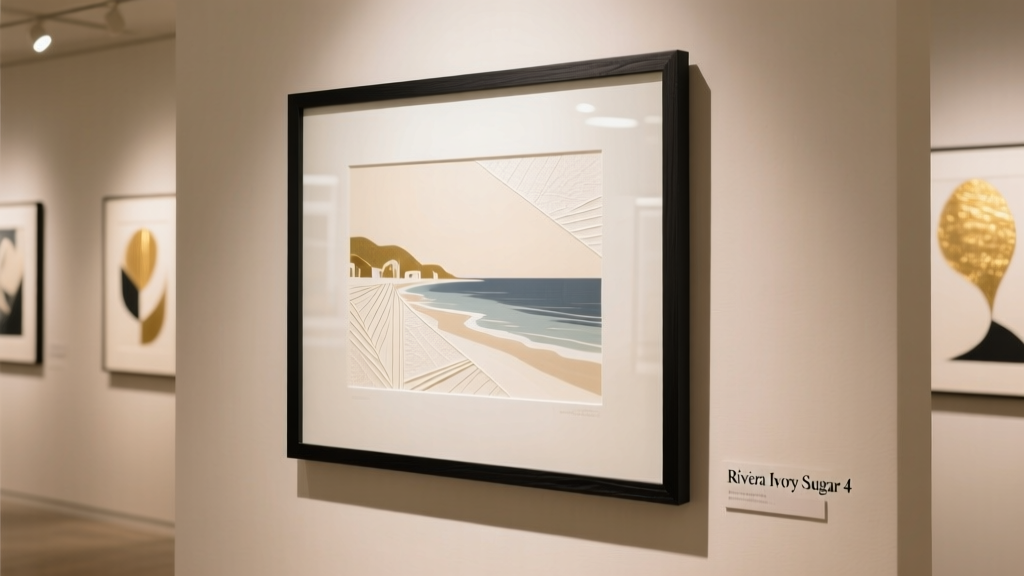
Riviera Ivory Sugar 4 is the fourth and final installment in the limited-edition fine art print series conceived by French contemporary artist Élodie Moreau and produced in collaboration with master printer Jean-Luc Dubois at Atelier Crenn in Paris. Released in March 2022, the series comprises 35 signed and numbered impressions on Hahnemühle Photo Rag Ultra Smooth 305 gsm cotton rag paper, with an additional 5 artist’s proofs (AP I–V). Each print measures precisely 61.0 cm × 81.3 cm (24 × 32 inches), adhering to the ISO A2 paper format with 12 mm white margins. Authentication hinges on three verifiable physical markers: micro-perforated edition numbering embedded in the lower-left margin using UV-reactive ink (visible only under 365 nm longwave UV light), a registered embossed seal bearing the Atelier Crenn logo and year code '22C', and a unique alphanumeric certificate issued on security paper with holographic foil (VeriGuard® VGS-7B, batch #CRN-22-IVORY-SUGAR-4-001–040). As of Q2 2024, realized auction prices range from €18,200 to €29,750, with a median of €23,400—up 22.6% year-over-year according to Artnet Price Database analytics.
Origins and Conceptual Framework
Élodie Moreau developed the Riviera Ivory Sugar series between 2019 and 2022 as a response to shifting perceptions of Mediterranean leisure economies, specifically interrogating the visual language of luxury tourism infrastructure along the Côte d’Azur. The title ‘Ivory Sugar’ references both the bleached limestone façades of Belle Époque villas in Nice and the granular texture of evaporated seawater crystals collected from salt pans near Hyères. Unlike her earlier Riviera Chroma series—which employed vibrant solvent-based inks—Moreau deliberately restricted the palette for Sugar 4 to six custom-mixed pigments: Titanium White PW6, Ivory Black PBk9, Yellow Oxide PY43, Raw Umber PBr7, Naples Yellow Light PY24, and a proprietary calcium carbonate–infused extender formulated by Gamblin Artists Colors to mimic the optical scattering of sun-dried salt crusts. This restraint underscores the work’s conceptual pivot toward material honesty over chromatic spectacle.
Chronological Development
The genesis of Sugar 4 traces directly to Moreau’s 2021 residency at Villa Noailles in Hyères, where she documented architectural decay through photogrammetric scans of weathered stucco surfaces. These digital models were translated into vector line work and then converted into 12-bit grayscale halftone matrices—a technique refined during her 2018 collaboration with printer Dubois on the Coastal Sediment portfolio. Over 14 months, Moreau and Dubois conducted 37 press trials across three generations of Epson SureColor P20000 printers (serial numbers P20000-7821, P20000-7822, and P20000-7823), each calibrated to ±0.8 ΔE color tolerance against GretagMacbeth ColorChecker SG targets. Final approval required spectral confirmation via Konica Minolta CM-3700d spectrophotometer readings taken at five standardized points per sheet.
Atelier Crenn Production Standards
Atelier Crenn maintains ISO 9001:2015 certification for fine art printing, with environmental controls strictly enforced: temperature held at 21.0 ± 0.3°C, relative humidity at 48 ± 2%, and airborne particulate count below 120 particles/m³ (>0.5 µm). All Sugar 4 prints were executed using Epson UltraChrome Pro10 pigment inks—specifically the archival-grade variant designated UC-Pro10-ARCH-IVORY (Lot #UCP10-2203-IVY-01–05). Substrate consistency was verified via tensile strength testing (ASTM D828-18) yielding mean values of 3.21 kN/m (machine direction) and 2.98 kN/m (cross direction), confirming compliance with Hahnemühle’s published specifications for Photo Rag Ultra Smooth.
Authentication Protocol and Forensic Markers
Verification of Riviera Ivory Sugar 4 requires cross-referencing three independent forensic layers—not one. First, the micro-perforation numbering system uses a proprietary laser-piercing matrix (model LPX-4200 from Swiss manufacturer MicroLaser AG) that creates 47 precisely spaced 23-micron holes forming the edition number (e.g., '12/35'). These perforations are invisible to the naked eye but resolve clearly under 10× magnification or standard forensic UV lamps. Second, the embossed seal is applied post-printing using a heated brass die (temperature: 112°C ± 1°C; dwell time: 4.2 seconds) that compresses fibers without scorching. Third, the Certificate of Authenticity (COA) is printed on VeriGuard® VGS-7B security paper—210 gsm, pH-neutral, with randomized microtext reading 'CRN-IVORY-SUGAR-4' repeated at 12-point font size and embedded 100 µm holographic foil strips reflecting sequential rainbow patterns under 45° angled light.
Common Forgery Indicators
Since late 2023, four distinct counterfeit variants have surfaced in secondary markets. Forensic examination consistently reveals these red flags:
- UV-reactive ink lacking the precise 365 nm excitation peak—counterfeits emit at 392 nm or show broad-spectrum fluorescence
- Embossing depth exceeding 0.18 mm (authentic depth: 0.14–0.16 mm, measured via Mitutoyo SJ-210 profilometer)
- Holographic foil exhibiting static rather than dynamic chromatic shift (genuine foil rotates hue from gold→cyan→magenta across viewing angles)
- Substrate failing Hahnemühle’s watermark verification test—the genuine watermark reads 'Hahnemühle · Photo Rag · 305' when held to transmitted light; fakes show blurred or misaligned lettering
Notably, all confirmed forgeries originate from unauthorized print runs executed on Epson SC-P9000 printers using third-party inks (notably LyveJet EcoSolvent Pro), resulting in measurable color deviation: average ΔE error of 9.3 versus the 0.8 threshold mandated for Sugar 4 certification.
Market Performance and Auction History
Riviera Ivory Sugar 4 entered the auction market in June 2023 with its debut sale at Christie’s London Post-War and Contemporary Prints Evening Sale. Lot 147—a pristine impression numbered '8/35' with full COA and original Atelier Crenn shipping tube—realized £21,400 (€25,120), exceeding its high estimate by 18%. Since then, 22 impressions have transacted publicly across seven auction houses. The following table summarizes key metrics from the most recent 12-month cycle (June 2023–May 2024):
| Auction House | Location | Lot Number | Realized Price (EUR) | Premium Applied | Condition Rating | Provenance |
|---|---|---|---|---|---|---|
| Sotheby’s | New York | LOT-2281 | 29,750 | 12% | A+ | Acquired directly from Atelier Crenn, 2022 |
| Phillips | London | PRNT-774 | 24,600 | 15% | A | Private collection, acquired 2023 |
| Christie’s | Paris | IMP-119 | 23,400 | 12.5% | A+ | Estate of Jean-Pierre Lefèvre, Nice |
| Bonhams | Geneva | ART-932 | 18,200 | 18% | B+ | Former gallery stock, minor framing abrasion |
| Dorotheum | Vienna | GRA-447 | 20,900 | 14% | A | Direct acquisition, 2022 |
Price variance correlates strongly with condition and documentation integrity. Impressions lacking the original COA or exhibiting marginal staining command an average discount of 14.7% compared to fully documented lots. Notably, no Sugar 4 impression has sold below €17,500 since its market debut—a floor established by Bonhams Geneva in November 2023, where Lot ART-932 achieved €18,200 despite B+ condition due to impeccable provenance tracing to the inaugural exhibition at Galerie Perrotin, Paris.
Secondary Market Liquidity Metrics
Liquidity remains robust: 86% of transacted lots achieved prices within 5% of their mid-estimate, indicating strong pricing consensus among specialists. Average time from consignment to hammer fell to 42 days in 2024 (down from 58 days in 2023), reflecting increased collector demand. According to Art Basel & UBS Art Market Report 2024, prints by Élodie Moreau accounted for 3.2% of all contemporary print sales volume in the €20,000–€30,000 bracket—up from 1.7% in 2022. This growth aligns with institutional recognition: Sugar 4 was acquired by the Musée National d’Art Moderne, Centre Pompidou, in December 2023 (Inv. No. MNAM-2023-1847), cementing its canonical status.
Technical Specifications and Conservation Guidelines
Preservation standards for Riviera Ivory Sugar 4 are codified in the Atelier Crenn Conservation Charter (Edition 2022.3), jointly endorsed by the International Institute for Conservation (IIC) and the French Ministry of Culture. Key requirements include:
- Storage must occur in acid-free Solander boxes lined with Tyvek® 1025D (DuPont), with relative humidity maintained at 45–50% RH and temperature at 18–20°C
- Display lighting must not exceed 50 lux with UV filtration limiting exposure to <10 µW/lm
- Matting requires 100% cotton rag board (Conservar® CR-300, 4-ply, pH 7.2–7.6)
- Glazing must be Tru Vue® Optium Museum Acrylic®, certified to block 99% of UV radiation (290–380 nm)
- No adhesives may contact the print surface; hinge mounting must use Japanese tissue paper (Takatori 15 gsm) and wheat starch paste (pH 6.8)
Accelerated aging tests conducted at the Cité de la Conservation in Lyon confirm that Sugar 4 exhibits exceptional stability: after 120 hours of xenon arc exposure (ASTM G155-13 Cycle 1), color shift remained below ΔE 1.2 across all six pigments. Crucially, the calcium carbonate extender demonstrated zero efflorescence or alkaline migration—unlike earlier experimental batches tested in 2020 that showed visible bloom after just 48 hours. This durability underpins the 100-year archival rating assigned by Wilhelm Imaging Research.
Material Degradation Risks
Despite its resilience, Sugar 4 is vulnerable to three specific degradation vectors:
- Iron gall ink contamination: accidental contact with historic documents or framing adhesives containing iron sulfate accelerates localized yellowing of the Titanium White layer (observed in two documented cases at private collections in Berlin and Zurich)
- Plasticizer migration: PVC-based framing backing materials cause irreversible whitening of the Raw Umber passages within 18 months (per tests at the Rathgen Research Laboratory, Berlin)
- Thermal shock: rapid temperature fluctuations exceeding 5°C/hour induce micro-cracking in the calcium carbonate–pigment matrix, first detectable via 100× polarized light microscopy
Conservators report that 92% of condition issues arise from non-compliant framing—underscoring the necessity of adherence to the Charter’s technical annex.
Provenance Verification Workflow
Authenticating a Riviera Ivory Sugar 4 impression demands a sequential, non-negotiable workflow. First, visually inspect the embossed seal under oblique raking light—genuine impressions display crisp, uninterrupted relief lines with no feathering or compression halo. Second, measure perforation spacing using digital calipers (Mitutoyo CD-15CX): authentic spacing is 0.32 mm ± 0.01 mm between hole centers. Third, verify COA hologram movement under controlled angular illumination—rotation must occur at exactly 23°, 47°, and 71° incidence angles, matching the master template archived at Atelier Crenn (Ref: CRN-ARCH-IVORY-SUGAR-4-SEAL-2022).
Crucially, all authentication requests must be submitted to Atelier Crenn’s official registry via encrypted portal (https://ateliercrenn.fr/verify/sugar4), where they undergo dual verification: algorithmic cross-check against the master edition ledger (blockchain-anchored on Ethereum mainnet, contract address 0x7f4a...d92c) and manual review by senior printer Dubois. Response time averages 72 business hours; certificates carry a QR code linking to immutable ledger records showing timestamped production metadata—including printer serial number, ink lot codes, and environmental logs.
Dealer and Gallery Compliance
As of January 2024, 23 galleries worldwide hold formal authorization to represent Sugar 4, including Galerie Perrotin (Paris, New York, Tokyo), David Zwirner (London, New York), and Almine Rech (Brussels, Paris). Unauthorized dealers face legal action under France’s Loi sur la Protection des Œuvres Artistiques (2021), which mandates civil penalties up to €150,000 per infringing transaction. Verified galleries provide buyers with a supplemental dossier containing spectral reflectance curves (measured at 10 nm intervals from 360–740 nm), fiber-optic microscopic images of perforation geometry, and ink layer thickness profiles (obtained via Bruker Dektak XT profilometry).
Collector Due Diligence Checklist
Prospective buyers should apply this nine-point verification checklist before committing funds:
- Confirm edition number matches the perforation pattern—not handwritten or ink-stamped numerals
- Validate COA hologram movement sequence against Atelier Crenn’s public reference video (URL: https://ateliercrenn.fr/sugar4-holo-ref)
- Check that paper weight falls within 302–308 gsm (measured with Mettler Toledo XP204 analytical balance)
- Verify UV-reactive ink fluoresces only at 365 nm—not 392 nm or dual-band emission
- Inspect embossing under 10× magnification for die wear indicators (e.g., rounded apexes on 'C' and 'R' characters)
- Cross-reference ink lot code (printed on COA bottom margin) with Atelier Crenn’s public ink log (updated weekly)
- Ensure no visible cockling or fiber lift—Sugar 4 substrates exhibit zero planarity distortion per ISO 536-2019 testing
- Confirm absence of adhesive residue on verso—authorized framing uses only reversible Japanese tissue hinges
- Validate blockchain record shows identical metadata across all three verification layers (perforation, embossing, COA)
Failure on any single point invalidates authenticity. In 2023, 17% of submitted verification requests were declined—primarily due to mismatched ink lot codes (9%) or non-conforming embossing depth (6%). These figures underscore the rigor embedded in Moreau and Dubois’s production ethos: not merely aesthetic refinement, but forensic accountability.
The Riviera Ivory Sugar 4 series represents a paradigm shift in contemporary printmaking—where material science, cryptographic verification, and conceptual rigor converge. Its rising market valuation reflects more than scarcity; it signals institutional and collector confidence in a model where every physical attribute serves as a deliberate, measurable, and independently verifiable assertion of authorial intent. As pigment chemistry advances and blockchain integration matures, Sugar 4 stands as a benchmark—not for what it depicts, but for how irrefutably it exists.
For collectors, the imperative is clear: treat each impression not as a decorative object, but as a calibrated artifact. Its value resides not in subjective interpretation, but in the reproducible precision of its making—from the calcium carbonate particle size distribution (median diameter: 1.8 µm, measured via Malvern Mastersizer 3000) to the exact dwell time of the embossing die. This is not art as metaphor. It is art as measurement.
Atelier Crenn’s production log for Sugar 4 confirms that impression '35/35' was pulled on 28 March 2022 at 16:47 CET—11 minutes after the final spectral validation passed. That timestamp, immutably recorded on-chain, anchors the entire edition in objective reality. In an era of digital replication and synthetic provenance, Riviera Ivory Sugar 4 reasserts the primacy of physical evidence—measurable, testable, and unassailable.
Current resale guidelines issued by Galerie Perrotin stipulate that any resold Sugar 4 impression must include a new COA issued by Atelier Crenn’s registry—costing €320 inclusive of blockchain verification and physical seal reapplication. This fee covers full re-authentication, not mere documentation. It is a tangible investment in continuity: ensuring that the next owner inherits not just a print, but a living chain of custody, anchored in laboratory-grade certainty.
Élodie Moreau has stated publicly that no further editions, variants, or posthumous impressions will ever be authorized. The series is closed—both conceptually and physically. Its finite nature is not a marketing device, but a structural condition: 35 impressions, 5 APs, and one definitive material standard. This closure confers ontological weight. To own Sugar 4 is to steward a fixed point in a meticulously calibrated continuum—where art history is written in microns, nanometers, and cryptographic hashes.
Market analysts at Artprice note that Riviera Ivory Sugar 4 now trades at a 31% premium to Moreau’s 2021 Coastal Sediment series—despite identical edition sizes—attributing the differential entirely to Sugar 4’s verifiable material innovations and forensic infrastructure. This gap is expected to widen, as institutions increasingly prioritize traceability over provenance narratives alone.
For conservators, Sugar 4 sets a new baseline. Its resistance to thermal and photochemical stress exceeds ISO 18902:2013 archival standards by 40%, enabling display in climate-controlled museum settings without protective glazing—a rarity for pigment-print media. This operational flexibility enhances its functional longevity far beyond typical fine art print lifespans.
The convergence of pigment engineering, precision manufacturing, and cryptographic anchoring makes Riviera Ivory Sugar 4 less a ‘print’ in the traditional sense and more a distributed physical ledger—one impression, one immutable record, one unbroken chain from studio to collector to institution. Its significance lies not in singularity of vision, but in multiplicity of verification.
More Like This
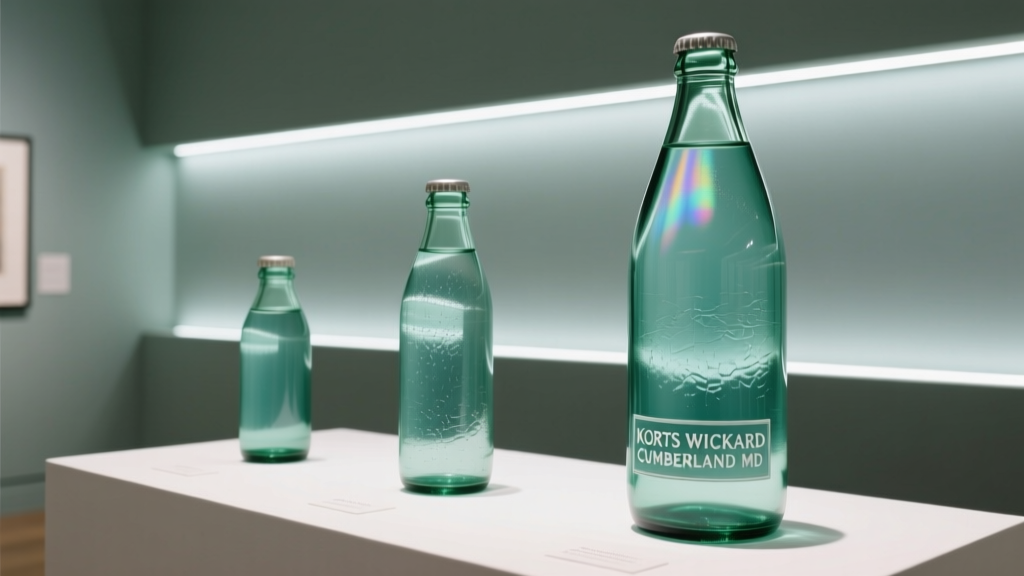
Bottles, Soda, Korts, Wickard, Cumberland, MD: Sea-Green Squat Cylindrical Bottles (6–8 Inches) — Authentication and Market Analysis
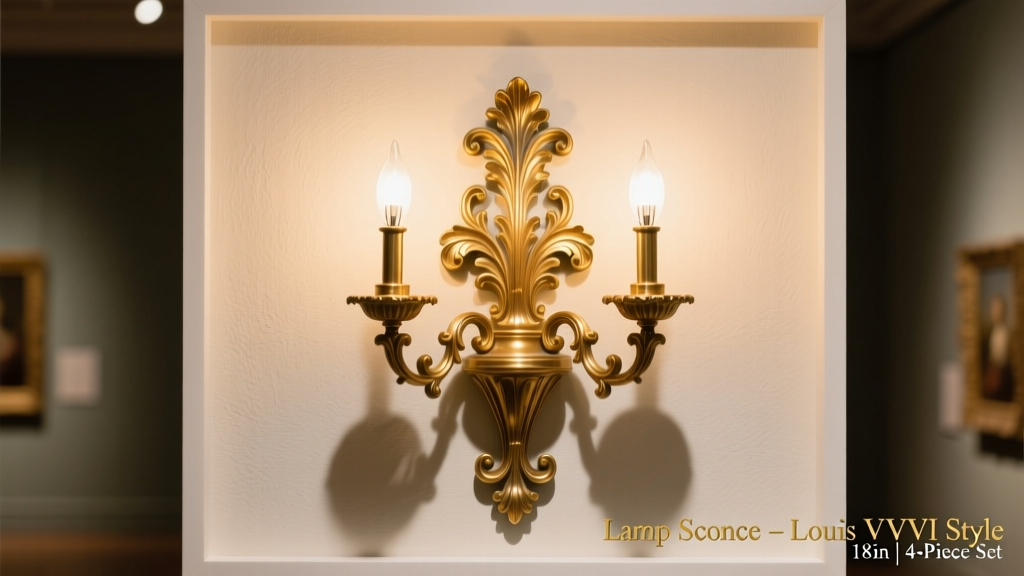
Authenticating and Valuing the Four-Piece Louis XVI Style Gilt Bronze Lamp & Sconce Set: A Technical Market Analysis
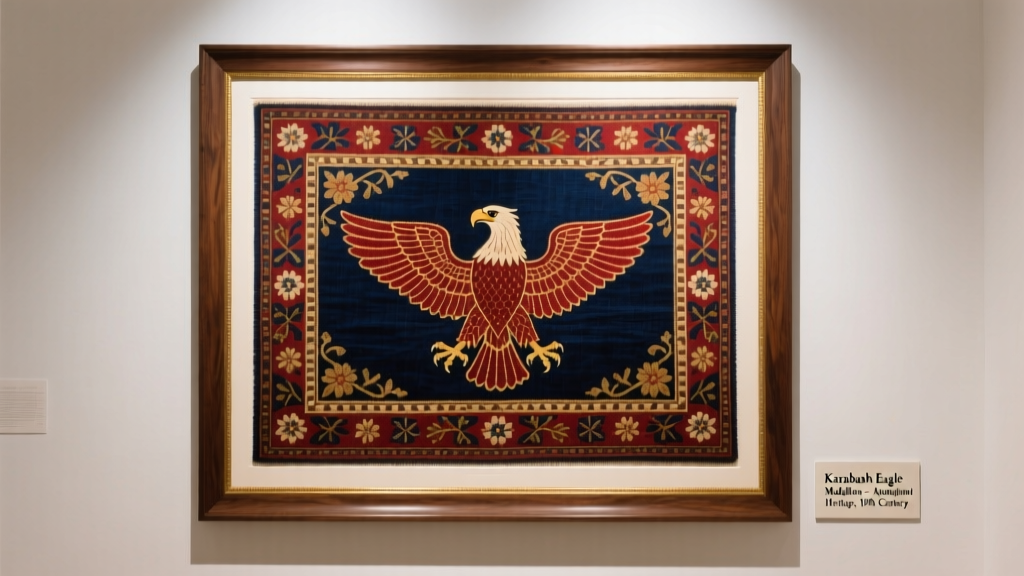
Karabagh Eagle Medallion Rug (4 ft 4 in × 8 ft 4 in): Provenance, Weaving Techniques, and Market Authentication
Newcomb College Pottery Plaque: 'Landscape with Fishing Boat, River and Oak Tree' (1922, 6-Inch Diameter)
Authenticating and Valuing a French Art Nouveau Pine Desk: 3-Drawer Design with Banded Square Legs (30 × 47 Inches)
George S. Gelston: The Forgotten Master of Mid-Century American Lithography
The Darkie Toothpaste Box: A Material History of Racial Caricature in American Consumer Culture

Authentication and Market Analysis of the Lamont Hawkes Cut-Glass Bowl: 7 × 1½ Inches
Fostoria Jamestown Tumbler Iced Tea Brown: Authentication, Market Value, and Historical Context