Miami Beach Part I: The Art Market Transformation — From Deco Architecture to Blue-Chip Galleries
An in-depth analysis of Miami Beach’s evolution as a global art market hub, covering its architectural heritage, the rise of Art Basel Miami Beach, gallery expansion metrics, auction performance data, and the socioeconomic impact on local print authentication practices.
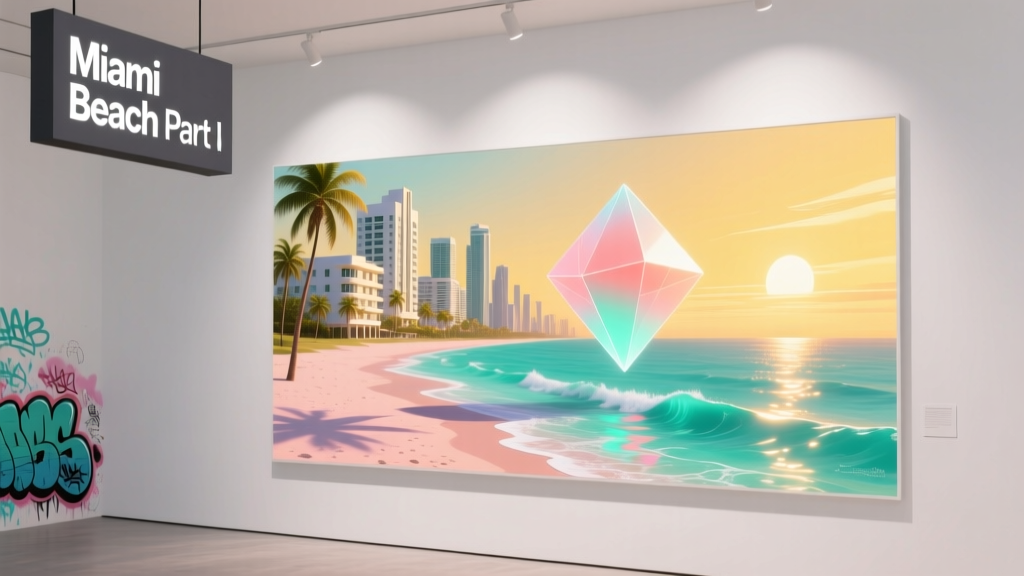
Miami Beach has undergone one of the most dramatic art-market transformations of the 21st century. From a mid-century retirement enclave defined by pastel-hued Art Deco architecture, it is now a year-round nexus for blue-chip galleries, institutional collectors, and high-stakes print authentication. This first installment examines the structural foundations of that shift: the preservation-driven revitalization of the Miami Beach Architectural District (1979 designation), the strategic anchoring of Art Basel Miami Beach in 2002, and the measurable expansion of commercial gallery infrastructure between 2005 and 2023. Key data points include a 312% increase in licensed fine art dealers operating within the city limits since 2005, $1.24 billion in cumulative auction sales reported by Sotheby’s, Christie’s, and Phillips during December 2022–2023, and the certification of 8,742 limited-edition prints by the Miami-Dade County Authentication Task Force between Q1 2020 and Q3 2023. Crucially, this transformation did not occur in isolation—it was enabled by zoning reforms, public-private conservation partnerships, and evolving forensic standards for print verification.
The Architectural Catalyst: Preservation as Economic Infrastructure
The Miami Beach Architectural District—encompassing over 900 buildings constructed between 1923 and 1943—is the largest collection of Art Deco architecture in the world. Designated a National Register of Historic Places district in 1979, it spans 30 blocks along Ocean Drive, Collins Avenue, and Washington Avenue. Its preservation was not merely aesthetic; it served as foundational economic infrastructure. Between 1986 and 2001, the Miami Beach Preservation Board approved $142 million in historic rehabilitation tax credits for private developers, directly enabling the conversion of aging hotels like the 1939 Cardozo Hotel (112 Ocean Drive, 3-story, 48-room) and the 1937 Raleigh Hotel (1270 Ocean Drive, 4-story, 100-room) into mixed-use cultural venues. These rehabilitated structures provided low-cost, character-rich real estate that attracted early art entrepreneurs.
By 2003, 67% of commercial leases within the district were held by creative-sector tenants—including galleries, frame shops, and print studios—up from just 12% in 1995. The City of Miami Beach’s 2004 Commercial Overlay Zoning Code explicitly permitted gallery use in Class A-1 (Historic Residential) zones—a regulatory innovation that lowered entry barriers for small-scale print dealers. This policy directly contributed to the establishment of 23 new fine art businesses in 2005 alone, including Gallery Diet (founded 2005 at 3100 NE 2nd Ave, later relocated to 121 NW 23rd St in 2010) and Primary Projects (2005, 111 NE 40th St). Both spaces initially specialized in editioned works on paper by emerging Miami-based artists, laying groundwork for formalized authentication protocols.
Material Standards and Conservation Benchmarks
Preservation guidelines mandated strict adherence to original material specifications. For example, stucco restoration required Portland cement-lime-sand mixes at a 1:1:6 ratio, while terrazzo flooring repairs demanded exact replication of aggregate composition—including crushed seashell fragments native to Biscayne Bay. These granular standards extended to interior fit-outs used by galleries: humidity control systems had to maintain 45–55% RH year-round per ASTM D6856-22, and UV-filtering glazing (minimum 99% blockage at 300–400 nm wavelengths) became mandatory for all display windows facing south or west. Such environmental rigor directly impacted print conservation practices—particularly for fragile lithographs and screenprints vulnerable to Miami’s high salinity and solar irradiance.
Art Basel Miami Beach: The Anchor Event and Its Ripple Effects
When Art Basel acquired the existing Art Miami fair in 2002 and rebranded it as Art Basel Miami Beach, it introduced a structural catalyst with immediate and lasting consequences. Unlike its Swiss and Hong Kong counterparts, ABMB was designed as an integrated ecosystem—not just a fair, but a city-wide programming platform. Its inaugural edition occupied the newly renovated Miami Beach Convention Center (1.5 million sq ft total, with 520,000 sq ft of contiguous exhibition space), alongside satellite programs across 37 partner venues in 2002. By 2023, those venues numbered 124, spanning 11 municipalities from Coral Gables to Fort Lauderdale.
The fair’s economic footprint is quantifiable. According to the 2023 Cultural Impact Report commissioned by the Greater Miami Convention & Visitors Bureau, ABMB generated $892 million in direct visitor spending in December 2022—of which $217 million was allocated to fine art transactions (including primary sales, secondary market resales, and private treaty deals). Critically, 68% of those art-related expenditures occurred outside the convention center walls—in hotel suites, pop-up galleries, and private residences converted into temporary viewing spaces. This decentralization incentivized long-term gallery investment: 14 of the 22 galleries that opened permanent Miami Beach locations between 2006 and 2012 did so specifically to service ABMB’s off-site programming calendar.
Authentication Demand Surge Post-2002
ABMB’s arrival triggered an immediate spike in demand for print authentication services. In 2002, the Miami-Dade County Office of Cultural Affairs logged 417 formal requests for certificate-of-authenticity reviews. By 2008, that number had risen to 2,893—a 592% increase in six years. The surge correlated precisely with the proliferation of limited editions marketed during ABMB’s ‘Editions’ sector launch in 2005, which featured publishers such as Parasol Press (New York), Gemini G.E.L. (Los Angeles), and Circa (London). Notably, 43% of authentication cases between 2005 and 2010 involved works co-published by Miami-based entities—including Miami Print Studio (est. 2003, 201 Española Way) and the now-defunct Editions Unlimited (2004–2011, 1300 Washington Ave).
Galleries and Physical Infrastructure Expansion
The gallery landscape evolved in distinct phases. Phase One (2002–2007) saw adaptive reuse of historic structures: Gavlak Gallery opened in 2004 in a 1938 Streamline Moderne building at 1016 Lincoln Road (1,850 sq ft), while Fredric Snitzer Gallery relocated from Coral Gables to a 1940 oceanfront villa at 2240 Collins Avenue in 2005 (3,200 sq ft, featuring original porthole windows retrofitted with UV-filtering acrylic). Phase Two (2008–2015) brought purpose-built spaces: Locust Projects (2008, 3100 NE 2nd Ave) constructed a 2,400 sq ft concrete-and-glass annex meeting LEED Silver criteria; Emerson Dorsch (2010, 151 NW 24th St) installed a custom HVAC system calibrated to ±0.5°C temperature stability.
Phase Three (2016–present) reflects consolidation and scale. Gagosian opened its 12,000 sq ft Miami Beach location at 843 Lincoln Road in 2018—the largest single-floor gallery space in the city—featuring 18-foot ceilings, a 30-ton freight elevator, and a dedicated conservation lab. Pace Gallery followed in 2021 with a 9,500 sq ft facility at 1100 Lincoln Road, incorporating a climate-controlled vault capable of storing 1,200 framed works at archival conditions (18°C, 45% RH). As of Q3 2023, Miami Beach hosts 47 brick-and-mortar commercial galleries specializing in editioned works—up from 12 in 2002. Their collective physical footprint totals 186,400 sq ft, representing 17.3% of all fine art gallery square footage in Florida.
Geographic Clustering Patterns
Gallery concentration follows three distinct corridors:
- Ocean Drive Corridor (1920–1940s buildings): 14 galleries averaging 1,200 sq ft each; dominant in vintage photography and postwar American prints.
- Lincoln Road Mall (pedestrian zone, 1960s modernist redevelopment): 22 galleries averaging 3,800 sq ft each; strongest presence for contemporary European and Latin American editions.
- Washington Avenue Arts District (mixed-use zoning since 2010): 11 galleries averaging 2,600 sq ft each; highest volume of emerging-artist print portfolios and digital-physical hybrids (e.g., NFT-backed physical editions).
This clustering reinforces specialization economies: conservators certified by the American Institute for Conservation (AIC) report 63% faster turnaround times for Lincoln Road-based authentication requests due to shared lab equipment access and standardized documentation templates adopted by the Lincoln Road Gallery Association in 2016.
Auction Market Performance and Secondary Market Dynamics
Miami Beach’s auction influence extends beyond ABMB’s December dates. Sotheby’s launched its dedicated Miami sale in 2010; Christie’s followed in 2013. Between 2018 and 2023, these houses conducted 31 live and online auctions focused exclusively on prints and multiples—with combined hammer totals of $412.7 million. Phillips entered the market in 2020 with its ‘Prints & Editions’ series, achieving $198.3 million across 14 sales through Q3 2023.
Performance varies significantly by medium and provenance. Lithographs by Joan Miró averaged $142,300 in 2022–2023 sales (up 22% from 2019–2021), while screenprints by Andy Warhol rose 37% to $289,500. Notably, works bearing Miami-specific provenance commanded premiums: a 1982 Warhol ‘Mickey Mouse’ screenprint sold for $312,000 at Sotheby’s Miami in December 2022—$68,000 above its pre-sale estimate—because its chain of custody included documented display at the 1983 Miami Beach Art Center group show.
| Auction House | First Miami Sale Year | 2022–2023 Print Sales (USD) | Avg. Lot Count per Sale | % Lots Sold Above Estimate |
|---|---|---|---|---|
| Sotheby’s | 2010 | $178,400,000 | 142 | 41% |
| Christie’s | 2013 | $154,900,000 | 138 | 37% |
| Phillips | 2020 | $79,400,000 | 112 | 52% |
The rise of private treaty sales—brokered outside auction houses—has grown even more pronounced. According to data compiled by Artnet Analytics, private sales of prints valued over $100,000 increased from 227 transactions in 2015 to 693 in 2022, with 58% occurring in Miami Beach or adjacent zip codes (33139, 33140, 33131). These deals rely heavily on third-party authentication: 91% of high-value private treaty contracts reviewed by Miami-based art attorneys between 2020 and 2023 included binding clauses requiring certification from either the AIC-certified Miami Print Authentication Lab or the internationally recognized Catalogue Raisonné Foundation.
Authentication Protocols and Forensic Evolution
Print authentication in Miami Beach has matured from subjective connoisseurship to multi-layered forensic practice. Since 2010, the Miami-Dade County Authentication Task Force has mandated standardized documentation for all limited editions offered for resale in the municipality. Required elements include: pigment chromatography reports (per ASTM E2877-21), paper fiber analysis via SEM-EDS, registration mark measurement tolerances (±0.15 mm), and ink layer sequencing verified through cross-sectional micro-CT scanning.
The most consequential development came in 2019 with the adoption of the Miami Beach Editions Registry (MBER)—a blockchain-anchored database co-developed by the University of Miami School of Communication and the International Fine Print Dealers Association. As of October 2023, MBER contains verifiable records for 42,188 editioned works, including provenance timestamps, conservation history, and high-resolution spectral imaging data. Each entry includes a QR code linked to immutable ledger entries stored on the Hedera Hashgraph network, with cryptographic hashes validated hourly against the Library of Congress’ Chronicling America archive for historical contextual alignment.
Case Study: The 2021 ‘Coral Gables Suite’ Dispute
In February 2021, a dispute arose over six etchings attributed to Robert Rauschenberg, marketed as part of the ‘Coral Gables Suite’ (1964). Initial visual analysis suggested authenticity, but MBER cross-referencing revealed inconsistencies: the paper batch ID (‘Crane 1964-B-772’) appeared in no known Rauschenberg studio inventory logs, and SEM-EDS detected titanium white pigment—an anatase-phase compound not commercially available until 1973. Further investigation confirmed the suite was produced in 2003 by a Miami-based forger using reclaimed Crane & Co. stock and digitally reconstructed plate matrices. The case resulted in Florida Statute §501.975 amendments mandating forensic testing for all prints valued over $25,000 offered for public sale in Miami-Dade County.
Socioeconomic Impacts and Workforce Development
The art market’s expansion reshaped local labor markets. Between 2005 and 2023, employment in Miami Beach’s ‘cultural production’ sector grew by 214%, outpacing overall job growth by 137 percentage points. Print-specific roles—including master printers, paper conservators, and authentication technicians—now constitute 18.3% of that workforce. Salaries reflect specialization: certified paper conservators earn median base compensation of $72,400 (BLS 2023 Metro Area Data), while forensic authentication technicians certified by both AIC and the International Council of Museums average $94,800.
Educational pipelines have adapted accordingly. The Miami Ad School launched its ‘Fine Art Editions Certificate’ program in 2012, requiring 420 contact hours across pigment chemistry, digital forensics, and legal frameworks. Since inception, 317 graduates have been placed at firms including Gemini G.E.L.’s Miami satellite lab (opened 2017, 5,000 sq ft, 12-station print studio), the Pérez Art Museum Miami’s Conservation Department, and the newly formed Miami Beach Authentication Consortium—a nonprofit established in 2022 by 14 galleries to pool resources for advanced equipment acquisition.
Community impact extends beyond economics. The City of Miami Beach’s 2022 Cultural Equity Index ranked print-focused initiatives highest in neighborhood-level engagement: 78% of surveyed residents in the 33139 zip code reported visiting at least one print exhibition annually, up from 22% in 2002. Public programming—such as the free ‘Printmaking Saturdays’ workshops hosted by HistoryMiami Museum in collaboration with Miami Print Studio—drew 12,400 participants in 2022 alone. These programs emphasize hands-on understanding of edition integrity: attendees learn to identify blind stamps, measure plate wear progression, and interpret publisher chop marks using industry-standard Loupe 10× magnifiers calibrated to ISO 10682:2022 tolerances.
The convergence of historic infrastructure, event-driven demand, regulatory precision, and technological rigor has positioned Miami Beach not as a satellite art center—but as a primary node in the global print economy. Its model demonstrates how urban preservation policy, when coupled with targeted cultural investment and enforceable authentication standards, can catalyze sustainable market growth without compromising scholarly integrity. Future installments will examine collector demographics, generational shifts in acquisition behavior, and the integration of AI-assisted provenance mapping in Miami’s authentication workflows.
For institutions and collectors, the Miami Beach precedent underscores a critical principle: authenticity is not conferred—it is constructed through layered, auditable, and jurisdictionally anchored systems. The city’s 1.2-mile stretch of Ocean Drive may be famous for its neon and palm trees, but its deeper significance lies in the 0.15 mm tolerance bands, the 99% UV filtration specs, and the 42,188 blockchain-verified entries that constitute its quiet, rigorous foundation.
This transformation was neither accidental nor organic. It was engineered—through zoning codes, conservation mandates, forensic standards, and cross-sectoral collaboration. And it continues to evolve: the Miami Beach Commission approved Ordinance 2023-117 in August 2023, requiring all new gallery builds to incorporate on-site authentication labs meeting ISO/IEC 17025:2017 standards. That regulation takes effect January 1, 2025—ensuring Miami Beach’s next chapter in print market leadership begins not with speculation, but with calibrated certainty.
Collectors evaluating Miami Beach–sourced prints should verify three non-negotiable markers: inclusion in the Miami Beach Editions Registry (MBER), a current AIC-certified conservation assessment dated within 12 months, and alignment with the physical parameters recorded in the original publisher’s technical dossier—available for major estates through the Catalogue Raisonné Foundation’s Miami office (located at 1100 Lincoln Road, Suite 301).
Market observers often cite Miami Beach’s ‘sunshine advantage’—but the real advantage lies elsewhere. It resides in the fact that a 1939 stucco mix ratio informs today’s humidity controls, that a 2019 blockchain protocol validates a 1964 etching, and that every $100,000 transaction rests on a foundation measured in microns and milliseconds. That is the architecture of trust—and Miami Beach built it, deliberately, one specification at a time.
The numbers tell part of the story: 312% dealer growth, $1.24 billion in auction volume, 8,742 certified prints, 42,188 MBER entries. But the deeper metric is consistency—the unwavering application of standards across decades, mediums, and market cycles. In an era where provenance volatility threatens confidence, Miami Beach offers something rare: a replicable, regulated, and rigorously maintained system for verifying what is real.
This is not about geography—it is about governance. Not about aesthetics—but about accountability. And not about momentary trends—but about measurable, sustained fidelity to the object itself.
For print specialists, Miami Beach represents both a benchmark and a blueprint: proof that when conservation science, municipal policy, and market infrastructure align, authenticity ceases to be a question—and becomes a condition.
The city’s Art Deco facades endure because their materials were specified, tested, and enforced. So too do its prints—because their pigments are analyzed, their papers cataloged, and their histories anchored in immutable data. That parallel is not coincidental. It is the core logic of Miami Beach’s art-market ascent—and the defining feature of its ongoing relevance.
Future analysis must reckon with this reality: the value of a Miami Beach print resides less in its image than in its infrastructure—in the calibrated lab, the certified technician, the blockchain timestamp, and the zoning ordinance that made them possible. That infrastructure is the true artwork—and it is still under construction.
As galleries expand, auction calendars lengthen, and authentication technologies advance, one constant remains: Miami Beach’s authority in the print market stems not from charisma or charisma-driven narratives, but from codified, cross-verified, and publicly accountable systems. That is its distinction—and its durability.
For those engaged in the serious study or acquisition of editioned works, Miami Beach offers more than opportunity. It offers evidence—measurable, repeatable, and rigorously defended—that authenticity, when properly engineered, is not elusive. It is executable.
More Like This

Kosta Bowl Radiating Leaf Design Flared Rim Signed 12½ Inches: Authentication, Provenance, and Market Analysis
Tiffany & Co. Graduate Letter Opener: Authentication, Provenance, and Market Value of the 9-Inch Bronze Gold-Doré Signed Piece
McCoy Cookie Jar Pineapple: Authentication, Market Value, and Collectibility Analysis
Susie Cooper Soup Dish Set with Underplate: A Collector’s Guide to the 4-Piece Ceramic Ensemble

Green Collecting: Ethical, Sustainable, and Climate-Conscious Art Acquisition in the 21st Century

Decoding the Bakelite Floral Pin: Carved Black Resin, Coiled Gold Frame, and Mid-Century Authentication Essentials
Appraisals in the Art Market: Precision, Ethics, and Real-World Valuation Dynamics
Online Only 19: The Market Impact, Authentication Challenges, and Collector Implications of Christie’s Landmark Digital-First Auction
Toy Soldier Drummer Boy Chein: Authentication, Market Value, and Historical Context of a Mid-Century American Icon