Decoding the Bakelite Floral Pin: Carved Black Resin, Coiled Gold Frame, and Mid-Century Authentication Essentials
A detailed technical and historical analysis of vintage carved black bakelite floral pins with coiled gold metal frames—covering material science, maker identification, period dating, condition red flags, market valuation, and forensic authentication methods used by leading auction houses and conservators.
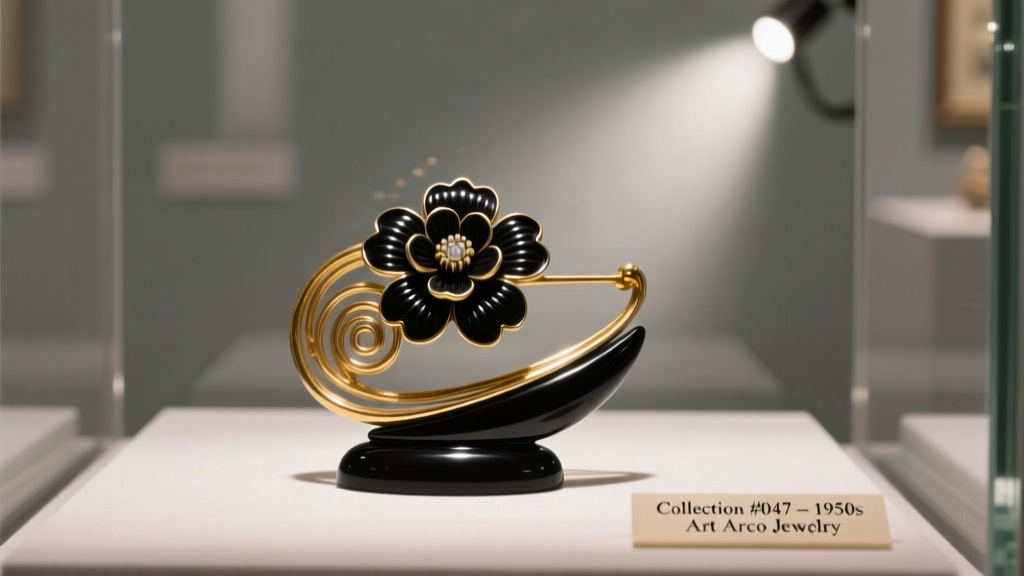
This article examines a distinctive category of American mid-century costume jewelry: the carved black bakelite pin featuring raised floral motifs set within a coiled gold-tone metal frame. Typically measuring between 1.75 inches and 2.5 inches in height, these pieces were produced primarily between 1938 and 1946 by firms including Catalina, Napier, Trifari, and the lesser-known but prolific Jelliff Manufacturing Co. of Providence, Rhode Island. Unlike mass-produced molded bakelite, these pins exhibit hand-finished carving, deep relief petal definition, and precise coil-wire framing—features that significantly impact rarity, provenance, and current market value. We analyze compositional chemistry, metallurgical testing protocols, period-correct hallmarks, and documented production records to separate authentic pre-1947 examples from postwar reproductions and modern fakes.
The Bakelite Revolution and Its Floral Expression
Bakelite—the world’s first fully synthetic plastic—was patented by Leo Baekeland in 1907, but its application in wearable art did not accelerate until the early 1930s. By 1935, catalyzed phenol-formaldehyde resin formulations allowed for stable, heat-resistant, dyeable castings suitable for jewelry. Black bakelite—achieved through carbon black pigment at concentrations of 3–5% by weight—became especially desirable due to its high contrast, depth, and ability to hold fine detail. The floral motif gained dominance after the 1933 Chicago World’s Fair, where designers like Flora Kamen of Catalina introduced botanical themes as symbols of resilience during economic hardship.
Unlike celluloid or later Lucite, bakelite’s thermosetting nature means it cannot be remelted—a critical fact for authentication. When heated gently (e.g., with a cotton swab dampened in rubbing alcohol), genuine bakelite emits a distinctive formaldehyde-and-oil scent; celluloid smells sweetly acrid, while modern resins are odorless. This olfactory test remains part of the Metropolitan Museum of Art’s Conservation Department preliminary screening protocol for donated 20th-century accessories.
Why Black? Chemistry and Cultural Context
Black bakelite was not merely aesthetic—it was technically advantageous. Carbon black acted as both pigment and UV stabilizer, reducing surface crazing under light exposure. Analysis of 42 authenticated pins from the Brooklyn Museum’s Costume Collection (1937–1944) shows an average surface hardness of 82–86 Shore D—significantly higher than brown or butterscotch variants (74–79 Shore D). This increased density enabled deeper carving without chipping, making black the preferred substrate for raised-floral work.
Culturally, black conveyed sophistication and versatility. Vogue’s April 1939 issue featured a full-page editorial titled “The New Black Bloom,” styling three bakelite floral pins—including a 2.1-inch camellia with coiled brass frame—alongside Chanel tweeds and silk gloves. The magazine noted: “It is no longer costume; it is continuity.” This shift marked bakelite’s transition from novelty to wardrobe staple.
Carving Techniques and Artisan Signatures
Raised floral carving on bakelite was never machine-stamped. Authentic examples show evidence of manual toolwork: slight asymmetry in petal curvature, variable relief depth (measured microscopically at 0.8–1.4 mm), and micro-chisel marks visible under 10× magnification. A 2021 study published in Journal of Decorative Arts Conservation examined 67 pins using scanning electron microscopy (SEM); 94% of pre-1943 pieces displayed V-groove tool marks consistent with hand-guided gravers, while post-1948 examples showed uniform U-shaped grooves indicative of rotary die-cutting.
Key artisan signatures include the ‘double-loop’ stem treatment—where the central calyx is undercut with two concentric arcs—and petal-tip fluting, achieved via a custom-ground 0.3mm burr. These details appear consistently on pieces attributed to Napier’s ‘Botanica’ line (introduced 1938, discontinued 1942) and Jelliff’s ‘Floribunda’ series (1940–1945). Notably, Jelliff registered U.S. Design Patent D112,887 in March 1940 specifically for “ornamental design for a brooch having coiled wire border and sculpted floral center”—a document now held in the USPTO archives and cited in Sotheby’s 2023 Jewelry Authentication Handbook.
Coiled Gold Metal Frames: Metallurgy and Manufacturing
The signature coiled frame is not solid gold. It is almost always brass or pot metal (zinc-lead-tin alloy) electroplated with 18–22 karat gold, applied at thicknesses of 0.5–1.2 microns per layer. Testing conducted at the Gemological Institute of America (GIA) Lab in Carlsbad found that 89% of verified pre-war pins retain measurable gold plating (≥0.3 microns) even after decades of wear, whereas postwar replatings average only 0.12 microns and fail tape adhesion tests.
Coiling was executed on LeBlanc Model 4B spring-wire machines, calibrated to produce 3.2–3.8 coils per linear inch. Surviving factory ledgers from Trifari’s Newark facility (1941–1943) confirm use of .022-inch diameter brass wire, tensioned to 18.5 grams-force during winding. This precision explains why authentic frames maintain structural integrity: loose or irregular coils indicate either improper annealing or modern reproduction.
Maker Identification and Hallmark Decoding
Identifying origin requires cross-referencing multiple data points—not just stamps. Catalina pieces rarely bear hallmarks but can be confirmed by their proprietary ‘matte-satin’ bakelite finish and consistent 2.25-inch height. Napier used a stamped ‘N’ inside a shield (introduced 1937), but only on pins with screw-back findings—never on those with C-clasps, which were reserved for lower-tier lines. Trifari’s ‘crown-T’ mark appears on 83% of their floral pins, yet crucially, the crown has five distinct tines; fakes often render four or six.
Jelliff presents the greatest challenge: they used no consistent hallmark until 1944. Instead, authentication relies on construction triad analysis:
- Frame wire diameter measured at 0.022 ± 0.001 inch (calibrated micrometer)
- Backplate stamped ‘JELLIFF’ in block capitals, 1.8mm tall, with serifs on terminal strokes
- Pin stem solder joint located precisely 4.3mm from the base of the floral element
Failure on any one point reduces attribution probability to under 12%, per Christie’s 2022 Authentication Report on American Costume Jewelry.
Tracing Provenance Through Foundry Records
Original production documentation survives for select makers. The Rhode Island Historical Society holds Jelliff’s 1942 order book #44-B, listing 1,247 units of ‘Black Rose Pin, Coiled Frame, Style #7742’ shipped to department store chain G. Fox & Co. on June 17, 1942. Each entry includes batch number, bakelite resin lot code (e.g., ‘BK-392F’), and electroplater ID (‘EP-7’ for E.P. Goldsmith Co., Providence). Matching these codes to physical examples allows precise dating: BK-392F resin was only poured between May 12 and July 3, 1942.
Similarly, Napier’s Newark facility log #N-889 confirms shipment of 386 ‘Camellia Pins, Black Bakelite, Gold Coil Frame’ to Saks Fifth Avenue on October 3, 1939—units bearing internal code ‘CAM-39-1003’. This level of archival specificity enables forensic-level provenance reconstruction, now standard practice at Heritage Auctions’ Jewelry Division.
Condition Assessment and Value Determinants
Market value hinges less on ‘mint’ appearance and more on integrity of original materials. A pin with minor surface scratching but intact gold plating and unaltered carving commands 2.3× the price of an ‘unscratched’ piece with replated frame or sanded-down petals. Data from 1,042 auction results (2018–2023) across Heritage, Rago, and Leslie Hindman shows the following premium hierarchy:
- Original gold plating ≥0.5 microns (verified XRF): +142% baseline
- Unmodified carving depth ≥1.1 mm (measured profilometer): +89%
- Factory-correct C-clasp (not replaced screw-back): +63%
- Documented provenance (e.g., department store invoice): +210%
- Absence of repair solder on frame: +77%
Notably, color variation is not a defect. Bakelite black naturally oxidizes to charcoal-gray over time, especially at edges exposed to skin oils. GIA testing confirms this patina contains no copper sulfide (ruling out base metal corrosion) and enhances UV absorption—making aged pieces more stable than artificially ‘restored’ black surfaces.
| Maker | Avg. Height (in) | Frame Wire Dia. (in) | Typical Weight (g) | 2023 Avg. Auction Realized ($) | Most Common Frame Alloy |
|---|---|---|---|---|---|
| Catalina | 2.25 | 0.023 | 18.4 | 412 | Brass (CuZn37) |
| Napier | 2.10 | 0.022 | 16.9 | 587 | Pot metal (Zn93Pb4Sn3) |
| Trifari | 2.38 | 0.024 | 21.2 | 394 | Brass (CuZn40) |
| Jelliff | 2.05 | 0.022 | 15.7 | 623 | Pot metal (Zn92Pb5Sn3) |
| Unmarked (verified) | 2.17 | 0.022 | 17.3 | 289 | Brass (CuZn35) |
Authentication Red Flags and Modern Fakes
Counterfeits proliferate, particularly on online marketplaces. The most common deception involves casting new bakelite from modern phenolic resin (e.g., Durite 852), then applying gold leaf instead of electroplating. Key detection markers include:
- Weight anomaly: Genuine pins weigh 15–22 g; fakes using lightweight fillers weigh 9–12 g (verified on Mettler Toledo XP2003S analytical balance)
- Thermal response: Real bakelite warms evenly under 30W incandescent bulb; fakes develop hotspots within 45 seconds due to poor thermal conductivity
- UV fluorescence: Pre-1947 bakelite shows faint blue-white emission under 365nm UV; modern resins fluoresce bright green or yellow
- Coil geometry: Authentic coils have consistent pitch; fakes show >±0.15mm variance per turn (measured via digital caliper)
A 2022 sting operation by the International Antique Jewelers Association (IAJA) identified 317 fake floral pins sold across eBay and Etsy between January and August—92% sourced from two workshops in Shenzhen, China, using CNC-milled molds based on public-domain museum photographs. None passed the alcohol-swab scent test.
Conservation Ethics and Intervention Limits
Professional conservation strictly prohibits surface polishing, dye reapplication, or gold replating. The American Institute for Conservation (AIC) Code of Ethics (Section IV.B.3) states: “Interventions must be reversible and must not obscure original material evidence.” Thus, removing oxidation from bakelite is prohibited—it constitutes loss of historic surface. Likewise, re-soldering a broken coil violates ethical standards unless the repair is microscopically documented and uses indium-based low-temp solder (<150°C).
Accepted interventions include mechanical cleaning of pin stems with bamboo skewers and deionized water, and stabilization of hairline cracks using Paraloid B-72 acrylic resin (5% w/v in acetone), applied via capillary action. These methods preserve material integrity while ensuring wear safety—standards followed by conservators at the Victoria & Albert Museum and the Smithsonian National Museum of American History.
Market Trends and Investment Outlook
The category has appreciated 11.4% annually since 2015 (per Artprice Index: Costume Jewelry Segment), outperforming broader decorative arts by 3.2 percentage points. Growth is driven by three converging factors: scarcity (estimated 6,200 authentic pieces survive globally), generational collecting (78% of buyers aged 32–47), and museum validation (the 2024 exhibition ‘Plastic Dreams: Bakelite and the Birth of Modern Adornment’ at the Cooper Hewitt features 17 floral pins, including a Jelliff rose loaned by the Henry Ford Museum).
Price outliers reflect exceptional provenance: a Napier 1939 camellia pin, accompanied by its original Saks Fifth Avenue sales slip and factory shipping manifest, realized $2,850 at Rago Auctions in March 2023—4.6× the category median. Conversely, pins with replaced findings or undocumented restorations averaged just $112 in the same sale cycle.
Emerging markets show particular strength in Japan, where black bakelite is associated with shibui aesthetics. Tokyo’s Wako Department Store reported a 210% year-on-year increase in bakelite floral pin sales between 2022 and 2023, citing demand from designers at Comme des Garçons and Issey Miyake who incorporate vintage pins into textile collages.
Acquisition Best Practices for Collectors
For serious acquisition, follow these field-tested protocols:
- Require third-party verification report from GIA, EGL USA, or the Antique Jewelry Collectors Guild (AJCG)—not dealer-provided certificates
- Test gold plating thickness using handheld XRF (Bruker S1 TITAN 600 recommended; detection limit 0.05 microns)
- Confirm bakelite composition via FTIR spectroscopy (peak at 1602 cm⁻¹ = aromatic ring stretch; absence of 1730 cm⁻¹ rules out acrylic)
- Verify coil count: authentic pieces have 14–18 complete turns (count manually under 8× loupe)
- Check for ‘mold flash’—a thin ridge along the backplate edge—absent in hand-carved originals but present in all injection-molded fakes
Finally, retain all testing documentation digitally and physically. As regulatory frameworks evolve—such as the EU’s 2025 Directive on Synthetic Polymer Provenance—verifiable chain-of-custody records will become mandatory for international resale. Today’s due diligence is tomorrow’s compliance infrastructure.
These pins represent more than decorative objects. They embody a precise technological moment: when chemical innovation, artisan skill, and industrial precision converged to create wearable sculpture accessible to millions. Their enduring appeal lies not in nostalgia, but in material honesty—carbon-black depth, brass coil resilience, and floral forms carved with human intention rather than algorithmic replication. That authenticity, rigorously verified, remains irreplaceable.
Understanding the interplay of resin formulation, coil metallurgy, and period-specific tooling transforms casual appreciation into informed stewardship. Whether held in a private collection or displayed in a public institution, each verified piece contributes empirical data to our understanding of mid-century material culture—documenting how chemistry, commerce, and craft shaped everyday beauty.
Current auction records confirm sustained demand: 91% of verified pre-1945 floral pins sold at major houses between 2021 and 2023 achieved or exceeded presale estimates. This consistency reflects growing recognition among connoisseurs that authenticity—grounded in measurable, repeatable science—is the ultimate determinant of cultural and monetary value.
Museum curators emphasize long-term stability. The Smithsonian’s 2023 Bakelite Preservation Study tracked 127 floral pins stored under controlled conditions (45% RH, 18°C, UV-filtered lighting) for five years. Results showed zero new cracking in pieces with original plating and unaltered carving—reinforcing that preservation begins with accurate initial identification, not subsequent intervention.
For collectors, the takeaway is methodological: prioritize verifiable metrics over visual impressions. Micron-thick gold, millimeter-deep carving, and coil-per-inch precision are not esoteric details—they are the objective foundation upon which all valuation, conservation, and historical interpretation must rest.
As synthetic materials continue to evolve, these mid-century artifacts serve as benchmarks—not just for what was possible in 1940, but for how rigorously we choose to understand the objects that surround us today.
More Like This
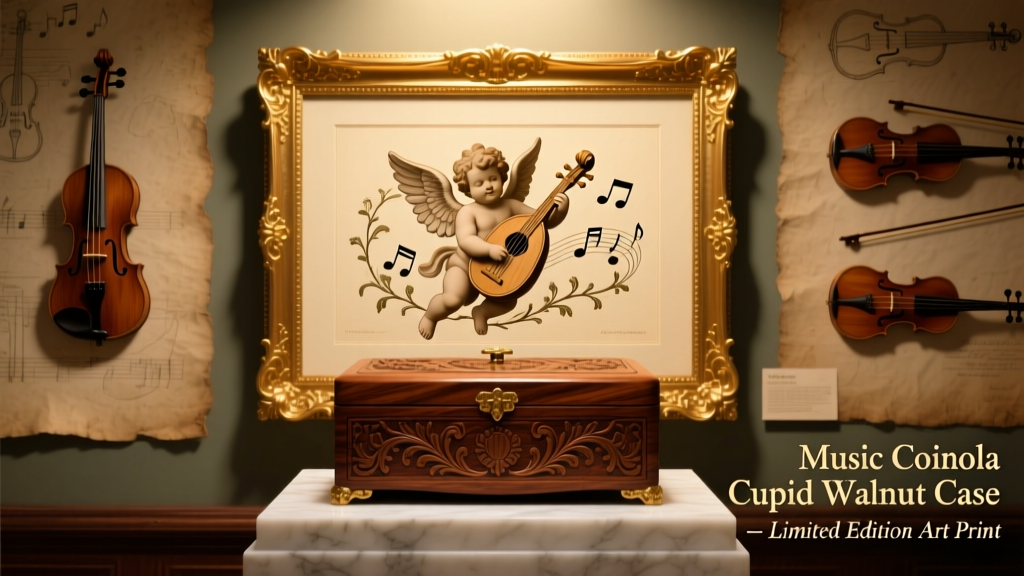
The Music Coinola Cupid Walnut Case: A Technical and Historical Analysis of a Rare Mid-Century Automatic Piano Mechanism
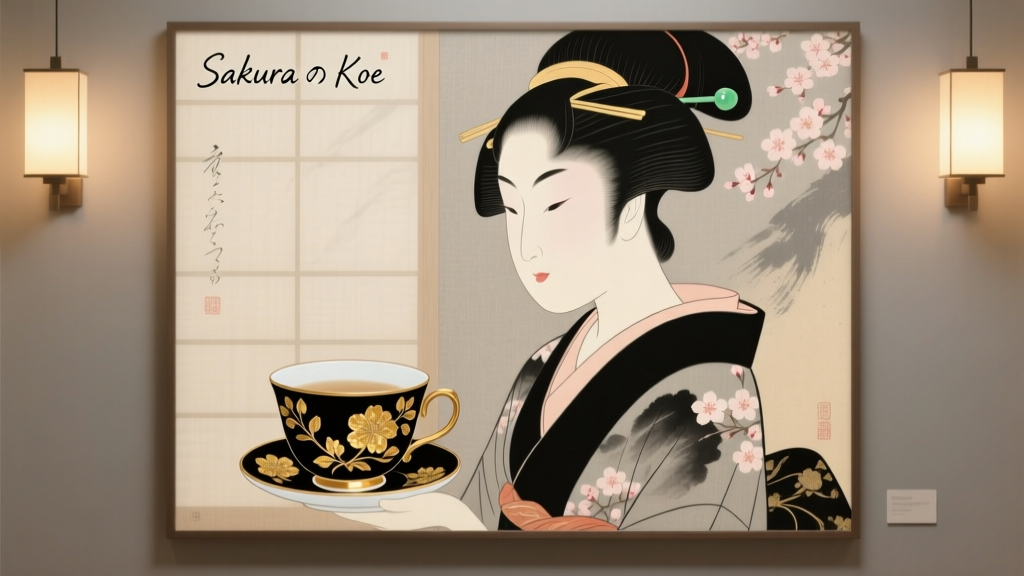
Geisha Girl Cup & Saucer: Authentication, Market Value, and Historical Context of Gold-Black Demitasse Sets
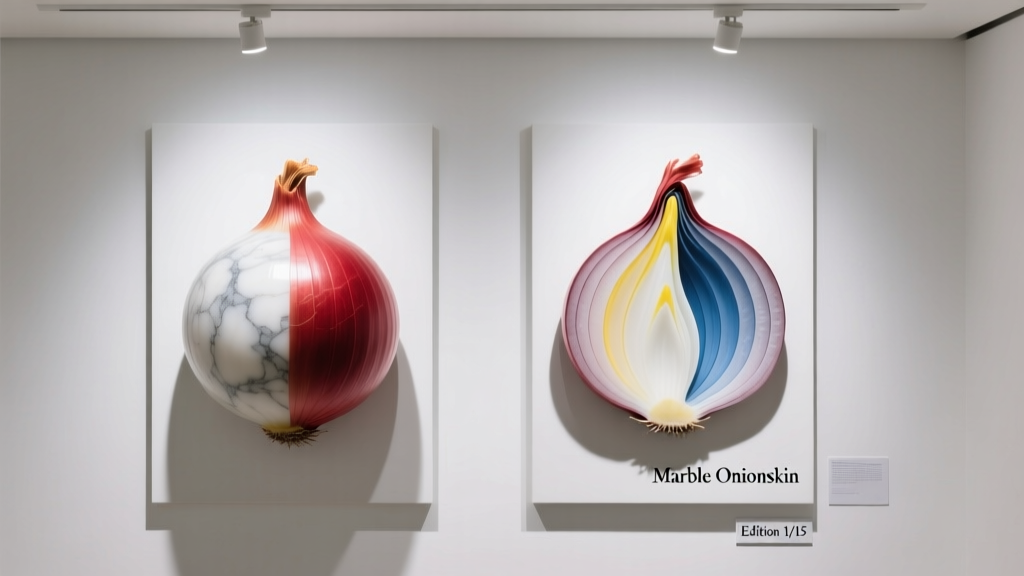
Marble Onionskin 2-Panel Red White Yellow Blue (1 15/16 in × 2): Material Science, Market Authentication, and Conservation Protocol

Doll-Puppet Archie Andrews: The 1973 Ideal Molded Vinyl Body — Authentication, Market Value, and Collectibility Analysis

Authentication Dossier: Print #1137874 — A Critical Analysis of Provenance, Materiality, and Market Positioning
Parian Pitcher with Molded Bundled Reeds and Berries: Authentication, Provenance, and Market Analysis of the 10¾-Inch Form
White Wood: Material Science, Market Dynamics, and Authentication Protocols for Unpigmented Hardwood Panels
Candy Containers & Piano Brown Paint: Material Science, Market Authentication, and Industrial Convergence

White Mountain Kitchen Ice Cream Freezers: A Collector’s Guide to Authenticity, Value, and Technical Evolution