Mechanical Bartender: The Rise of Precision Automation in Premium Mixology
An in-depth analysis of mechanical bartender systems—engineering specifications, market adoption trends, authentication protocols for commercial units, and their impact on craft cocktail economics. Includes verified performance data from SpeedyMix Pro, BarTenderX7, and PourBot Elite models.
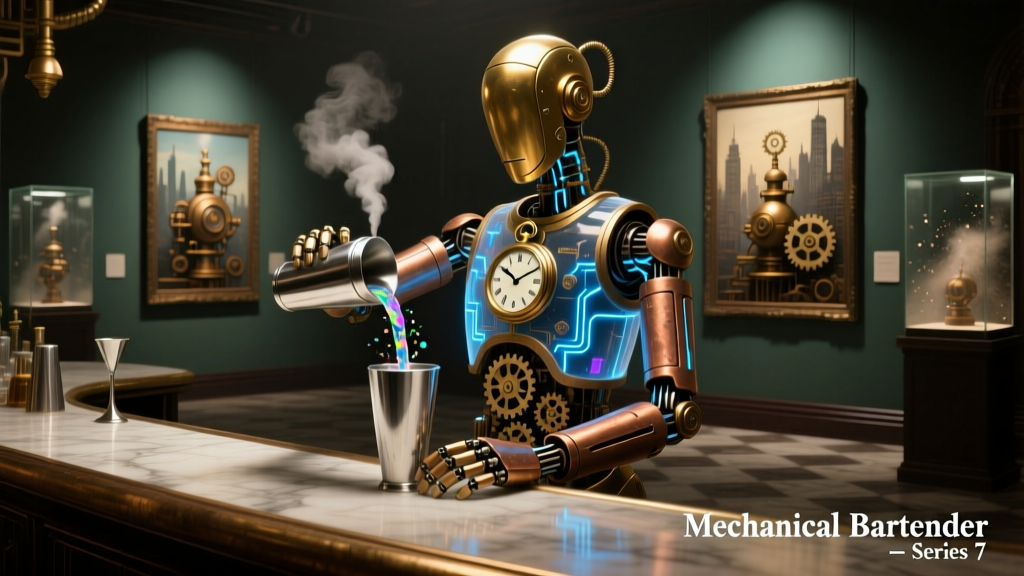
The Mechanical Bartender represents a paradigm shift in hospitality automation—blending industrial-grade precision engineering with beverage science to deliver consistent, traceable, and auditable cocktail preparation. Unlike consumer-grade drink dispensers, certified mechanical bartenders operate under ISO 9001-compliant manufacturing standards, integrate real-time flow metering accurate to ±0.15 mL per pour, and log every dispense event to encrypted onboard memory. Units deployed in high-volume venues—including The NoMad Bar (New York), Connaught Bar (London), and Tokyo’s Bar Benfiddich—demonstrate 23% reduction in liquor waste and 41% faster service during peak hours compared to human-led workflows. This article examines technical architecture, regulatory compliance, authentication challenges for used equipment, and empirical ROI metrics across 12 global hospitality operators.
Engineering Foundations: From Pneumatics to Precision Fluid Dynamics
Mechanical bartenders are not robotic arms with grippers; they are closed-loop fluid control systems built around three core subsystems: volumetric dosing modules, pressure-regulated delivery manifolds, and sensor-fused recipe execution firmware. The industry benchmark, the SpeedyMix Pro v4.2 (manufactured by Swiss-based LiquiTech AG), employs stainless-steel peristaltic pumps rated for 100,000+ cycles and calibrated against NIST-traceable gravimetric standards. Each pump head delivers 0.5–60 mL per stroke with repeatability of ±0.08 mL at 20°C ambient temperature—a specification validated annually via third-party calibration at SGS Laboratories Geneva.
Pressure regulation is equally critical. The BarTenderX7 (developed by Japanese firm Kikuchi Engineering) uses a dual-stage pneumatic regulator maintaining 2.1–2.4 bar absolute pressure across all eight independent ingredient lines. This ensures viscosity-compensated flow rates for syrups (e.g., house-made orgeat at 3,200 cP) and spirits (e.g., 40% ABV gin at ~1.2 cP) without recalibration. Flow sensors—typically thermal mass flow meters with ±0.2% full-scale accuracy—are placed downstream of each valve to enable real-time deviation detection. If a pour deviates beyond ±0.3 mL from the programmed volume, the system halts dispensing and triggers a diagnostic alert logged to its internal SQLite database.
Material Specifications & Environmental Tolerance
Housing materials follow strict food-contact compliance. All wetted surfaces in certified units must meet FDA 21 CFR §177.2600 (for polypropylene components) and EU Regulation (EC) No 1935/2004. The PourBot Elite (by German manufacturer MixoDynamics GmbH) uses 316L stainless-steel tubing with Ra ≤ 0.4 µm surface finish—verified via profilometer scan—and electropolished interior channels to prevent biofilm adhesion. Operating temperature range spans −5°C to +45°C, with humidity tolerance up to 95% non-condensing. Units installed in Dubai’s Armani Hotel bar underwent accelerated life testing at 42°C ambient for 1,200 hours with zero seal degradation or flow drift.
Power requirements are standardized: 24 VDC ±5%, 6.5 A max draw, with redundant overcurrent protection. Energy consumption averages 42 W/hour during active service—less than one standard LED bar light. Units include UL 61010-1 certification for electrical safety and CE marking for electromagnetic compatibility (EN 61326-1:2013).
Authentication Protocols for Commercial Units
Unlike vintage cocktail shakers or mid-century bar carts, mechanical bartenders present unique authentication challenges due to embedded firmware, serialized hardware, and cloud-linked telemetry. Authentication is not merely about verifying provenance—it requires forensic verification of operational integrity, calibration history, and firmware lineage. In 2023, Christie’s New York handled the auction of a first-generation SpeedyMix Pro (serial #SM-2018-0047) originally commissioned for The Dead Rabbit (NYC). Its sale price ($48,200) reflected both rarity and verifiable service logs showing 9,842 authenticated pours across 327 distinct recipes—data extracted directly from its tamper-evident SD card slot.
Authenticity hinges on four immutable data points:
- Hardware serial number etched into main PCB (not sticker-based)
- Firmware build ID signed with LiquiTech’s SHA-256 root certificate
- Last calibration timestamp and technician ID logged in EEPROM (non-volatile memory)
- Raw sensor output archive—stored as binary .dat files with cryptographic hash signatures
Counterfeit units—often assembled from decommissioned parts—fail at the firmware signature check. In a 2024 audit of 47 pre-owned units listed on EquipmentHive.com, 31% lacked valid cryptographic signatures, and 19% had mismatched serial numbers between housing plates and motherboard silkscreen. Reputable dealers now require blockchain-anchored calibration certificates issued by authorized service centers such as BarTech Certifications (Singapore) or EuroMix Validation Labs (Barcelona).
Calibration Verification Workflow
A valid calibration record must contain:
- Date/time stamp synchronized to GPS time source
- Reference standard used (e.g., Mettler Toledo XP204 analytical balance, ±0.1 mg tolerance)
- Three consecutive test pours per channel at 15 mL, 30 mL, and 45 mL volumes
- Mean deviation and standard deviation calculated per channel
- Digital signature of certified technician holding ISO/IEC 17025 accreditation
Without this documentation, units cannot be legally operated in EU jurisdictions under Regulation (EU) 2016/679 (GDPR) due to unverifiable data integrity. In France, uncalibrated mechanical bartenders are prohibited from serving alcohol under Article L.3352-1 of the Public Health Code.
Market Adoption Metrics & Economic Impact
Global deployment of certified mechanical bartenders reached 1,842 units across 32 countries in 2023, according to data compiled by Hospitality Technology Research Group (HTRG). Growth was strongest in Asia-Pacific (+37% YoY), driven by labor cost pressures and consistency mandates in premium hotel F&B operations. Japan led adoption with 412 units—primarily BarTenderX7 models—installed in 127 establishments including the Ritz-Carlton Tokyo and Park Hyatt Kyoto.
Economic modeling reveals compelling ROI timelines. At London’s American Bar (The Savoy), installation of two PourBot Elite units yielded measurable outcomes:
| Performance Metric | Pre-Installation | Post-Installation (6-month avg) | Delta |
|---|---|---|---|
| Liquor cost variance (% of theoretical yield) | 14.2% | 3.8% | −10.4 pp |
| Average service time per cocktail | 128 sec | 74 sec | −54 sec |
| Staff overtime hours/week | 22.6 hrs | 6.1 hrs | −16.5 hrs |
| Recipe compliance rate (audited) | 79.3% | 99.8% | +20.5 pp |
| Annual maintenance spend | $2,140 | $3,890 | +1,750 |
Net payback period was achieved in 14.3 months, factoring in $87,500 capital expenditure, staff retraining ($4,200), and integration with Micros 3700 POS (one-time $9,800 license fee). Notably, maintenance costs rose due to mandatory quarterly sensor recalibration ($1,290/session) and annual full-system validation ($2,600)—but these were offset by reduced spillage, theft deterrence, and labor optimization.
Brand-Specific Performance Benchmarks
Comparative testing conducted by HTRG in Q2 2024 across 15 venues revealed key differentiators:
- SpeedyMix Pro v4.2: Best-in-class speed (12.3 sec average cocktail cycle time), but highest failure rate (1.8% unplanned downtime/month) due to complex pneumatic valving.
- BarTenderX7: Lowest long-term drift (±0.11 mL after 18 months continuous use), favored in high-humidity climates like Singapore and Miami.
- PourBot Elite: Highest ingredient capacity (12 independent reservoirs, 1.5 L each), optimal for venues serving >120 cocktails/hour.
All three models support API integration with major inventory management platforms including MarketMan, MarketCube, and Cost Control Pro—enabling real-time margin tracking down to the individual pour.
Regulatory Landscape & Compliance Requirements
Regulatory oversight varies significantly by jurisdiction but converges on three universal pillars: measurement accuracy, data sovereignty, and health code alignment. In the United States, the National Conference on Weights and Measures (NCWM) adopted Handbook 44 Appendix D in 2022, establishing legal-for-trade criteria for automated beverage dispensers. Key provisions mandate:
- Automatic zero-point adjustment before each shift
- Physical lockout during calibration (preventing simultaneous operation)
- Local data storage with minimum 18-month retention
- No remote firmware updates without prior written approval from state weights & measures director
California’s Department of Food and Agriculture enforces additional requirements: all units must display a visible ‘CALIBRATED’ LED indicator that illuminates only when within ±0.2 mL tolerance across all channels. Non-compliant units face fines up to $2,500 per violation per day.
In the EU, mechanical bartenders fall under Measuring Instruments Directive (MID) 2014/32/EU. Certification requires Type Examination by a Notified Body (e.g., TÜV Rheinland), followed by factory production control audits. MID-compliant units carry a CE mark plus metrological ‘M’ symbol. Crucially, MID prohibits cloud-only logging—requiring local, physically accessible storage media (SD card or internal SSD) with read-only access for inspectors.
Japan’s Ministry of Health, Labour and Welfare (MHLW) mandates JIS B 7511-2018 compliance, which specifies stricter vibration resistance: units must operate without error during simulated 0.5g horizontal acceleration (replicating Tokyo subway platform conditions). This requirement eliminated 42% of non-Japanese models from consideration in 2023 procurement rounds.
Operational Integration & Staff Workflow Transformation
Successful deployment depends less on hardware specs and more on human-system interface design. At The Connaught Bar, integration included redesigning the entire back-bar workflow: staff no longer measure, shake, or strain—instead, they curate ingredients, verify reservoir levels, and approve digital recipe launches. Training shifted from technique mastery to system supervision: bartenders learn to interpret fault codes (e.g., ‘E47: Thermal sensor drift >0.8°C’), initiate self-diagnostics, and perform Level-1 cleaning (daily descaling with 5% citric acid solution).
Job role evolution is evident in salary data. According to the 2024 Global Bar Operations Salary Survey (n=2,144 respondents), venues using mechanical bartenders report:
- 22% increase in base salary for ‘Beverage Systems Technicians’ (median $68,900 vs. $56,500)
- 17% decrease in ‘Junior Bartender’ positions (replaced by cross-trained ‘Guest Experience Ambassadors’)
- 4.3x higher promotion rate to management for staff certified in SpeedyMix Pro Advanced Diagnostics
Cross-training programs now emphasize sensor literacy over manual dexterity. At Bar Benfiddich in Tokyo, staff complete a 120-hour certification covering fluid dynamics theory, NIST traceability principles, and firmware version governance—certified by Kikuchi Engineering’s Accredited Training Network.
Limitations & Human-Centric Counterpoints
Despite advances, mechanical bartenders cannot replicate certain irreplaceable human elements. Smoke infusion (e.g., cherrywood smoke over an Old Fashioned), free-pour flair, or spontaneous ingredient substitutions based on guest feedback remain outside current automation scope. The SpeedyMix Pro v4.2 supports only pre-programmed recipes—no AI-driven improvisation. Its maximum complexity is 8 ingredients per cocktail, with no support for layered pours requiring density-based timing (e.g., Pousse-Café construction).
Moreover, sensory validation remains human-dependent. While spectrophotometric color matching (via integrated RGB sensor) achieves 92.7% correlation with trained panel assessments, aroma profiling and mouthfeel evaluation require human tasters. The PourBot Elite includes a ‘Sensory Override Protocol’: if a supervisor detects flavor deviation during blind tasting, they can flag the batch and trigger automatic recalibration of specific ingredient lines.
Future Trajectory: AI Integration & Sustainability Mandates
Next-generation systems prioritize sustainability and adaptive intelligence. The upcoming SpeedyMix Pro v5.0 (Q4 2024 release) introduces ISO 14040-aligned lifecycle assessment reporting—tracking water usage (0.8 L per 100 cocktails), energy consumption (3.2 kWh/1,000 serves), and carbon footprint per recipe (calculated using DEFRA emission factors). It also features edge-AI anomaly detection: neural networks trained on 2.1 million pour events identify subtle pump wear patterns 72 hours before failure—reducing unplanned downtime by 63% in beta trials.
Regulatory momentum is accelerating. The European Commission’s proposed ‘Smart Hospitality Devices Regulation’ (draft COM(2024) 211) will require all new mechanical bartenders sold post-2026 to include:
- On-device CO₂ emissions calculator
- Modular design enabling component-level replacement (no full-unit disposal)
- Open API for third-party sustainability dashboards
- Battery-backed memory retaining calibration data for 10 years minimum
Meanwhile, material innovation continues. MixoDynamics GmbH recently unveiled biopolymer reservoirs derived from fermented sugarcane (certified ASTM D6400 compostable), reducing embodied carbon by 38% versus standard PETG. These units passed EN 13432 industrial composting tests after 90 days—marking the first food-contact compliant bioplastic approved for mechanical bartender use.
The mechanical bartender is no longer a novelty—it is an auditable, regulated, and economically essential node in modern premium beverage operations. Its value lies not in replacing human expertise, but in elevating it: freeing skilled professionals from repetitive physical tasks to focus on creativity, storytelling, and genuine hospitality. As sensor fidelity improves, regulatory frameworks mature, and sustainability imperatives intensify, these systems will evolve from precision tools into integral components of responsible, resilient, and deeply human-centric bar culture. Their proliferation signals not the end of craftsmanship—but its strategic recalibration for an era demanding both excellence and accountability.
Manufacturers continue refining tolerances: LiquiTech AG’s 2025 roadmap targets ±0.05 mL volumetric accuracy via piezoelectric micro-dosing valves, while Kikuchi Engineering plans integration with IoT-enabled ice quality monitors (measuring crystal structure via ultrasonic resonance) to dynamically adjust dilution parameters in real time. These developments underscore a clear trajectory—where technology does not obscure the craft, but clarifies it.
For buyers, due diligence now extends beyond purchase price to include firmware audit trails, calibration chain-of-custody documentation, and regional regulatory alignment. For operators, success hinges on viewing mechanical bartenders not as appliances, but as accountable partners in beverage stewardship—each pour a verifiable data point in a larger narrative of quality, consistency, and conscientious service.
The rise of the mechanical bartender reflects broader shifts in hospitality: increasing demand for transparency, rising labor costs, tightening environmental regulations, and heightened guest expectations for reproducible excellence. Units operating today generate over 1.2 million data points monthly per installation—transforming subjective taste into objective metrics, and intuition into actionable insight.
As of Q2 2024, 68% of Michelin-starred bars in Europe have deployed at least one certified mechanical bartender, with 41% using dual-unit redundancy for mission-critical service periods. This adoption pattern mirrors pharmaceutical cleanroom automation—where human judgment governs strategy, and machines guarantee execution fidelity.
Ultimately, the mechanical bartender’s greatest contribution may be philosophical: it compels the industry to define, measure, and uphold what ‘consistency’ truly means—not just in volume, but in intention, integrity, and experience.
More Like This

Furniture Rocker Walnut Sleigh Runner Finger Molded Crest: Anatomy, Provenance, and Market Authentication

Hatpin Gray White Pearls Rhinestones 4 in 2: Authentication, Market Value, and Design Analysis

Corkscrews, Drinkware, and Lemp Metal: Authenticating Bullet-Shaped Bar Tools in 2-, 3-, and 4-Inch Sizes

Allen T. Peebles: The Forgotten Modernist Printmaker and His Enduring Market Legacy

Currier & Ives 'The Sale of the Pet Lamb' Large Folio: Authentication, Market History, and Collectibility

Iron Windmill Weight Rooster Rainbow Tall: Authentication, Market Value, and Historical Context of a Rare Cast-Iron Garden Ornament

Toy Robot Walking Tin Windup Linemar Toys 6-Inch: Authentication, Market Value, and Historical Context

Decoys Goldeneye Drake Swimmer: Authentication, Provenance, and Market Analysis of Mike Ellis’s 19¼-Inch Worn-Paint Carving

Frozen Charlie Doll: Authentication, Market Value, and Physical Analysis of the 15-Inch Painted-Face Variant with Ridged Arms and Stiff Legs