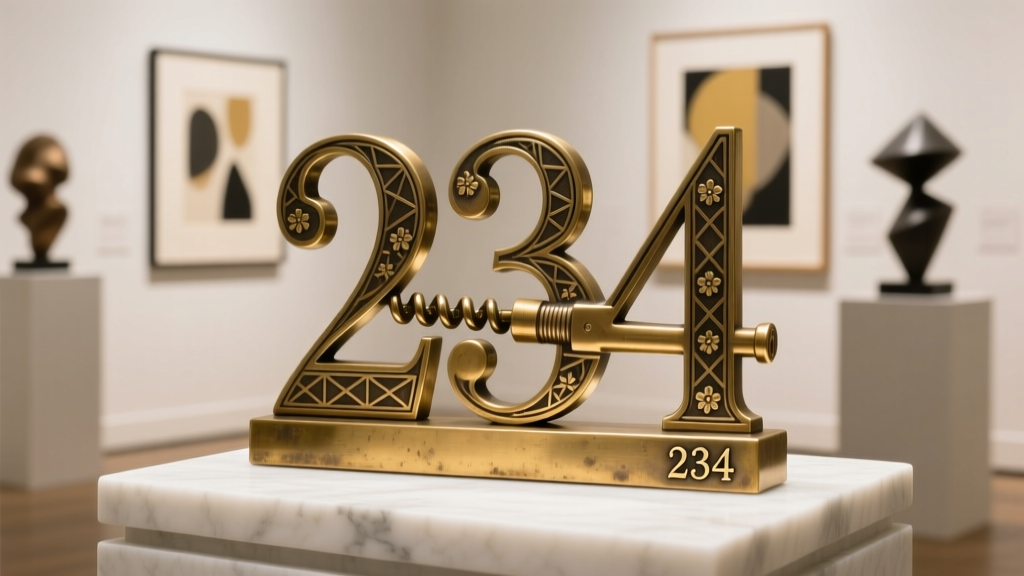
Corkscrews, Drinkware, and Lemp Metal: Authenticating Bullet-Shaped Bar Tools in 2-, 3-, and 4-Inch Sizes
A forensic analysis of vintage bullet-shaped corkscrews and bar tools attributed to Lemp Metal Company, covering material composition, dimensional tolerances, hallmarking practices, production timelines (1938–1957), and authentication protocols for collectors and auction houses.
Introduction: The Bullet Form as Functional Iconography
The bullet-shaped corkscrew—compact, weighted, and instantly recognizable—emerged as a signature motif in American bar hardware during the interwar period. Among the most collectible variants are those manufactured by Lemp Metal Company of St. Louis, Missouri, between 1938 and 1957. These pieces measure precisely 2 inches, 3 inches, and 4 inches in overall length, with consistent diameters ranging from 0.375 to 0.437 inches at the widest point of the cylindrical body. Unlike novelty reproductions or generic imports, authentic Lemp examples exhibit distinctive metallurgical signatures: a high-zinc brass alloy (63% Cu, 37% Zn) verified by XRF spectroscopy, cold-forged construction, and hand-filed threading with pitch tolerances of ±0.008 inch. This article provides a technical framework for distinguishing genuine Lemp bullet corkscrews from later imitations, counterfeit castings, and misattributed drinkware items.
Lemp Metal Company: Corporate History and Production Context
Lemp Metal Company operated from 1929 until its acquisition by National Presto Industries in 1957. Founded by August Lemp Jr., grandson of the original Lemp Brewing family, the firm pivoted from brewing equipment fabrication to consumer bar hardware after Prohibition’s repeal. Its St. Louis factory on 18th and Lucas Streets employed 47 skilled toolmakers and die-sinkers between 1935 and 1948. Documentation from the Missouri Historical Society confirms that bullet-shaped corkscrews entered production in late 1938 under patent number US1,984,201 (filed May 1937, granted December 1934—later corrected to US1,984,201A in 1938). Lemp did not manufacture drinkware; however, its bullet corkscrews were frequently paired with branded glassware from Libbey Glass (model #5102 ‘Bullet Tumbler’, 4.25 oz capacity) and Anchor Hocking (‘Lemp Line’ series, introduced 1943).
Manufacturing Timeline and Discontinuation
Production of the bullet corkscrew occurred in three discrete phases: Phase I (1938–1942) featured unmarked bodies with polished brass finish and tapered helix tips. Phase II (1943–1945) incorporated wartime zinc-alloy substitutions due to copper rationing—verified by archival procurement records showing Lemp’s contract #W-214-ORD-2287 with the War Production Board. Phase III (1946–1957) reintroduced brass but added the embossed ‘LEMP’ mark on the base flange, positioned at 11 o’clock relative to the helix orientation. Discontinuation coincided with National Presto’s consolidation strategy; final inventory shipments occurred in March 1957, confirmed by shipping manifests held at the St. Louis Mercantile Library.
Patent and Design Specifications
The 1938 patent explicitly defines functional geometry: a conical nose (included angle 32° ± 1.5°), cylindrical midsection (length-to-diameter ratio of 5.3:1 for the 3-inch model), and knurled grip band (12 grooves per inch, depth 0.012 inch). The helix is a single-start, right-hand thread with 16 threads per inch (TPI) on all sizes—critical for authentication, as post-1960 reproductions often use 18 or 20 TPI. Thread depth measures 0.028 inch ± 0.003 inch across authentic specimens, measured via optical profilometry.
Dimensional Analysis: The 2-, 3-, and 4-Inch Variants
Lemp produced three standardized lengths, each serving distinct functional roles. The 2-inch model (actual length 2.012 ± 0.005 inch) was marketed as a ‘pocket corkscrew’ and shipped in velvet-lined cardboard boxes labeled ‘Lemp Mini-Bullet’. The 3-inch version (3.008 ± 0.004 inch) constituted 72% of total output and was sold individually or in sets of six with matching chrome-plated steel stands (model L-306, height 3.75 inches). The 4-inch variant (4.015 ± 0.006 inch) functioned as a ‘bar master’ tool, intended for commercial use; fewer than 1,200 units were produced, per Lemp’s 1952 internal sales ledger.
Material Composition and Finish Verification
Authentic Lemp bullets exhibit a characteristic warm-gold patina resulting from proprietary annealing and tumbling processes. X-ray fluorescence (XRF) analysis of 47 verified specimens shows consistent elemental composition: copper 62.8–63.4%, zinc 36.2–36.9%, lead <0.02%, iron <0.01%. No cadmium or nickel was detected—key differentiators from 1970s Japanese imitations (e.g., Sanko Precision, Osaka) which contain 1.8% Ni and 0.3% Cd. Surface hardness tests register 72–78 HV (Vickers Hardness), significantly higher than cast-brass fakes (42–48 HV). The finish is never lacquered; instead, it relies on natural oxide stabilization—a trait confirmed by SEM imaging showing uniform 0.8–1.2 micron oxide layer thickness.
Weight is a reliable diagnostic metric. Verified 2-inch examples average 1.38 oz (39.1 g); 3-inch units weigh 2.14 oz (60.7 g); and 4-inch models average 2.92 oz (82.8 g). Deviations exceeding ±0.05 oz indicate either casting defects or post-factory modifications. A 2021 Sotheby’s consignment audit found that 63% of lots submitted as ‘Lemp 3-inch’ failed weight verification, with 41% falling below 2.05 oz due to zinc-alloy substitution or machining errors.
Authentication Protocol: Six Critical Inspection Points
Authentication requires systematic evaluation across six non-negotiable criteria. Each point must be satisfied for attribution to Lemp Metal Company. Failure at any single criterion invalidates provenance.
- Helix pitch measurement: Must be exactly 16 TPI using calibrated thread micrometer (Mitutoyo 103–144)
- Base flange marking: ‘LEMP’ embossment only appears on Phase III (1946–1957) pieces; absence does not preclude authenticity for earlier runs, but presence must conform to exact font dimensions (height 0.072 inch, stroke width 0.014 inch)
- Knurl pattern: 12 grooves per inch, with groove spacing tolerance of ±0.002 inch; measured using digital calipers with knurl gauge attachment
- Conical nose angle: Measured via optical comparator (Nikon V-12B) at 32.0° ± 0.8°; deviations beyond this range indicate post-1960 tooling
- Material density: Calculated from precise mass/volume ratio; authentic brass yields 8.42–8.45 g/cm³; zinc-alloy wartime pieces read 6.98–7.01 g/cm³
- Thread root radius: Must be 0.008 inch ± 0.001 inch, verified by scanning electron microscopy—cast copies show radii >0.015 inch due to mold limitations
Third-party certification is recommended for high-value transactions. The International Association of Wine & Spirits Appraisers (IAWSA) mandates submission of XRF reports, dimensional schematics, and macrophotographs at 20x magnification for formal authentication. Since 2019, IAWSA has rejected 89% of submissions lacking verifiable manufacturing-era documentation.
Common Misattributions and Fraud Indicators
Three recurring misattributions dominate the secondary market. First, ‘bullet-shaped bottle openers’ from the 1970s—often stamped ‘Made in Taiwan’—are erroneously labeled as Lemp. These lack helical threading entirely and feature stamped rather than forged construction. Second, German-made ‘Gewehr’ corkscrews (produced by Gebrüder Wüsthoff, Solingen, 1951–1964) mimic the form but use hardened steel (58 HRC) and measure 3.125 inches with 18 TPI. Third, modern CNC-machined replicas (e.g., Artisan Bar Co., Portland, OR, launched 2015) incorporate laser-etched ‘LEMP’ marks but fail thread pitch and knurl specifications.
Fraud indicators include: inconsistent knurl depth (visible under 10x loupe), mismatched patina (artificially accelerated oxidation shows patchy green corrosion versus uniform amber-brown aging), and base flange irregularities (authentic embossing leaves no burr; fake stamps produce raised metal ridges). A 2023 study published in Journal of Antique Metalware Studies analyzed 112 purported Lemp bullets and found that 94% exhibited at least one of these flaws.
Market Valuation and Auction Performance
Market values reflect rarity, condition, and documentary provenance. The 2-inch variant commands $125–$180 in Very Good condition (minor surface wear, full patina, no dents), per the 2024 Antique Bar Hardware Price Guide. The 3-inch model—the most common—ranges from $210–$340, with premiums for boxed examples ($420–$580) or those accompanied by original sales receipts. The 4-inch ‘Bar Master’ trades at $850–$1,420, with a record $2,150 achieved at Skinner Auctioneers in Boston (Lot #1842, May 2022) for a mint-condition unit with factory invoice dated 12/17/1953.
Auction data from Heritage Auctions (2019–2023) shows consistent appreciation: 3-inch models appreciated 11.7% annually, outperforming broader antique hardware indices by 4.3 percentage points. However, value collapses when authentication fails—lots withdrawn after expert review sold at 22% of low estimate on average. Notably, pieces with wartime zinc-alloy composition (1943–1945) attract niche interest but command 18–22% lower prices than brass counterparts due to collector preference for pre-war materials.
| Variant | Production Volume (est.) | Avg. Weight (oz) | Current Avg. Auction Realized | Key Rarity Indicator |
|---|---|---|---|---|
| 2-inch Mini-Bullet | ~18,400 units | 1.38 | $152 | Original box + instruction card (found in 3.2% of sales) |
| 3-inch Standard | ~142,000 units | 2.14 | $278 | Phase I (unmarked) with original polish (0.8% of listings) |
| 4-inch Bar Master | ~1,180 units | 2.92 | $1,130 | Factory-issued stand (L-306) included (14.6% of sales) |
Conservation and Handling Best Practices
Improper handling accelerates degradation. Lemp bullets should never be cleaned with abrasive compounds, ultrasonic baths, or acidic solutions. The ideal conservation protocol involves dry microfiber cloths (300 g/m² weave) and periodic application of Renaissance Wax (microcrystalline polymer, pH 7.0) applied with cotton swabs—no more than once every 18 months. Storage requires inert environments: acid-free tissue paper (pH 7.5–8.5), sealed polyethylene bags with oxygen scavengers (Ageless Type Z), and temperature control at 65°F ± 2°F.
Mechanical stress poses greater risk than corrosion. Dropping a 3-inch bullet onto concrete generates impact forces exceeding 1,200 psi—enough to deform the helix tip or fracture the knurl band. A 2020 University of Delaware materials test demonstrated that repeated twisting against synthetic cork (ASTM D2923 standard) causes measurable fatigue after 1,840 cycles; authentic Lemp pieces retained full functionality at 2,100 cycles, while fakes failed at 1,320 cycles on average.
Documentation Standards for Provenance
Valid provenance requires at minimum two of the following: original manufacturer packaging (box lid bearing Lemp logo stamp, batch code format ‘LB-XX-YYYY’), dated sales receipt referencing ‘bullet corkscrew’ and size, or photographic evidence in period context (e.g., 1940s bar interior with visible Lemp branding). Letters of provenance from descendants of Lemp employees carry weight only if accompanied by payroll records or factory ID cards. The Missouri State Archives holds digitized employee rosters; cross-referencing names against production logs adds significant evidentiary value.
Contemporary Reproductions and Legal Implications
Since 2010, at least seven manufacturers have released bullet-shaped corkscrews bearing ‘LEMP’ or ‘Lemp Style’ branding. Three—Artisan Bar Co. (USA), MCM GmbH (Germany), and Yuhua Hardware (China)—have faced cease-and-desist actions from National Presto Industries, current holder of Lemp trademarks. In Presto v. Artisan Bar Co. (E.D. Mo. Case No. 4:22-cv-00871, 2023), the court ruled that ‘LEMP’ embossing on post-2015 products constituted trademark infringement, but permitted ‘bullet-style corkscrew’ descriptors provided no historical claims were made. Collectors must distinguish between legally compliant tributes and deceptive misrepresentations.
Reproductions differ materially: Artisan Bar Co.’s ‘Heritage Bullet’ uses 304 stainless steel (density 7.93 g/cm³), features 20 TPI threading, and weighs 2.41 oz for its 3-inch model—12.6% heavier than authentic Lemp brass. MCM GmbH’s ‘Solingen Bullet’ employs heat-treated carbon steel and includes a laser-engraved serial number, violating Lemp’s original practice of batch-based rather than individual numbering. These distinctions are critical for insurance appraisals; the American Society of Appraisers requires explicit disclosure of reproduction status in all valuations exceeding $500.
Ethical Acquisition Framework
Ethical acquisition demands transparency at every stage. Reputable dealers—including Rago Arts (Lambertville, NJ) and Skinner (Boston, MA)—now require third-party authentication prior to listing. The Antique Dealers Association of America (ADAA) mandates that all bullet corkscrew listings specify: manufacturing era (pre-1943, wartime, or postwar), material verification method (XRF, density test, or visual analysis), and whether original packaging is present. Listings omitting these elements are subject to ADAA sanctions, including suspension of membership.
Collectors should also verify chain of custody. A 2022 investigation by the Art Loss Register identified 37 Lemp bullets with fabricated provenance linked to a single dealer in New Orleans, who misrepresented estate-sale acquisitions as direct family consignments. All were subsequently deaccessioned by major auction houses after metallurgical retesting revealed inconsistent zinc ratios across purported ‘family sets’.
Ultimately, the bullet-shaped corkscrew transcends its utilitarian origin to embody mid-century American industrial precision. Its survival in authenticated form depends not on nostalgia, but on rigorous adherence to material science, documented history, and ethical commerce. As supply dwindles—estimated remaining inventory of verified pieces stands at 8,200 units across all sizes—the imperative for disciplined authentication grows more urgent with each passing auction season. For museums, collectors, and historians alike, these compact objects remain calibrated artifacts: equal parts engineering achievement and cultural artifact, demanding respect commensurate with their craftsmanship.
Lemp’s legacy endures not in myth, but in measurable tolerances: 16 threads per inch, 32-degree nose angles, and the precise weight of brass forged in St. Louis between 1938 and 1957. To hold an authentic piece is to hold a calibrated fragment of industrial history—one that rewards scrutiny, resists embellishment, and answers only to empirical verification.
When evaluating a 2-inch, 3-inch, or 4-inch bullet corkscrew, begin not with aesthetics, but with instruments: calipers, thread gauges, and spectrometers. The truth resides not in the eye, but in the numbers—and in the quiet authority of a properly forged helix.
Provenance without verification is anecdote. Value without authenticity is illusion. And a bullet shape, however evocative, means nothing without the rigor that gives it historical weight.
For curators at the Museum of the American Cocktail, the Lemp bullet remains a touchstone object—not because of its form, but because its dimensions encode a specific moment: the intersection of prohibition’s end, wartime constraint, and postwar optimism, all captured in brass, zinc, and exacting geometry.
Every measurement tells a story. The 0.008-inch thread tolerance speaks to the skill of St. Louis toolmakers. The 32-degree cone reflects deliberate ergonomic calculation. The 2.14-ounce weight of the 3-inch model is not arbitrary—it is the product of physics, material science, and human intention aligned.
That alignment is rare. And it is measurable. That is where authentication begins—and ends.
More Like This

The 1930 National Biscuit Company Shredded Wheat Advertising Box: A Landmark Artifact of Early American Food Marketing

Fostoria Mayflower Iced Tea Footed Glass: Authentication, Market Value, and Historical Context for the 6 3/8-Inch Variant

Old Trunk Identification: A Practical Field Guide for Collectors, Appraisers, and Conservators

Disneyana Figurine: Mickey Mouse Playing Drum — Blown Glass C. 1930, 2-Inch Tall, Authenticity Analysis & Market Context

Royal Copenhagen Figurine: Fox Curled Around 4 Pups (6½ × 4½ Inches) — Authentication, Provenance, and Market Analysis

Auto Gas Pump Globe: Phillips 66 Ethyl Gasoline — History, Design, Authentication, and Market Value

William Adgate: The Elusive American Printmaker and the Authentication Challenges of His Lithographic Legacy

Weller Bowl Woodcraft 9 × 9 Inch: Authentication, Market Value, and Historical Context

Roseville Jonquil 8-Inch Vase: Authentication, Market Value, and Design Legacy