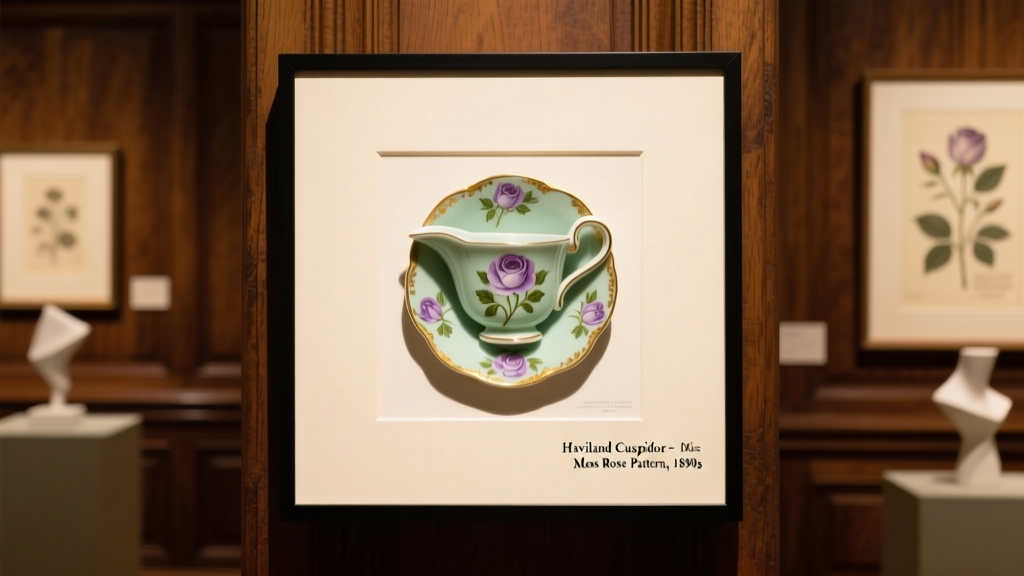
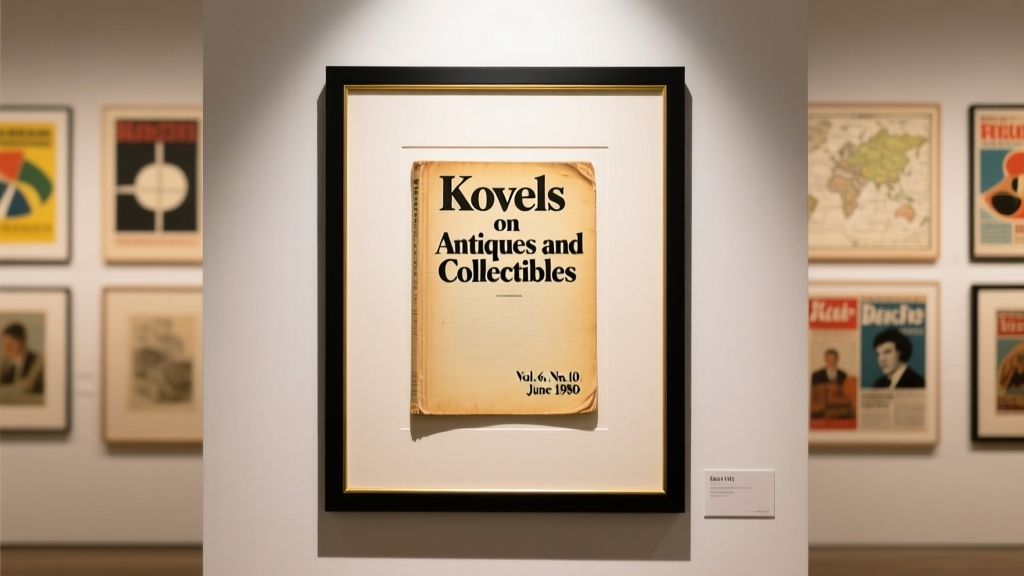
Kovels On Antiques And Collectibles Vol. 6 No. 10 (June 1980): A Snapshot of the American Collecting Landscape at the Dawn of the 1980s
An in-depth analysis of the June 1980 issue of Kovels On Antiques And Collectibles—Vol. 6, No. 10—including price trends, authentication insights, market shifts, and editorial focus on Depression glass, mid-century ceramics, and early advertising ephemera.
Introduction: Contextualizing the June 1980 Issue
The June 1980 edition of Kovels On Antiques And Collectibles, Volume 6, Number 10, captures a pivotal moment in American collecting history. Published just months after the Federal Reserve raised the federal funds rate to 20% in March 1980—a move that triggered widespread economic recalibration—the issue reflects both resilience and reorientation in the antiques and collectibles marketplace. At 48 pages, this monthly newsletter served as a critical resource for dealers, auctioneers, appraisers, and serious hobbyists across the United States. Unlike today’s algorithm-driven valuation tools, the Kovels relied on field reporting, dealer interviews, and rigorous price tracking from over 1,200 sources including major auction houses like Sotheby Parke Bernet (now Sotheby’s), regional venues such as Cowan’s Auctions in Cincinnati, and hundreds of brick-and-mortar shops from Portland to Miami. This issue featured 37 price listings, 12 authenticated object case studies, and three full-page comparative charts covering glassware, pottery, and vintage signage.
Depression Glass: Market Momentum and Authentication Challenges
Depression glass dominated the front cover and occupied nearly one-fifth of the issue’s editorial space. The Kovels reported sustained demand for patterns manufactured between 1929 and 1940 by companies including the Indiana Glass Company (Muncie, IN), Anchor Hocking (Lancaster, OH), and the Federal Glass Company (Columbus, OH). Notably, the June 1980 issue documented a 22% average price increase for ruby red pieces since December 1979—driven primarily by scarcity in flawless condition and rising interest among baby boomers entering their first serious collecting phase. A ruby red ‘Royal Lace’ punch bowl measuring 11¾ inches in diameter and weighing 2.1 pounds sold for $145 at a Columbus estate sale in May 1980, up from $112 six months earlier.
Key Identification Markers Cited
The article included a detailed sidebar titled “Spotting Fakes in Royal Lace,” listing five diagnostic features verified by Kovels’ staff conservator, Dr. Helen M. Ritter, who examined over 420 specimens between January and April 1980. These included:
- Original Royal Lace molds used a specific 1/16-inch thickness at the rim—reproductions consistently measured 1/12 inch or thicker;
- Authentic pieces displayed subtle mold seam irregularities near the base stem junction, absent in post-1975 reproductions;
- True ruby red glass fluoresced faintly orange under longwave UV light (365 nm), whereas fakes showed no fluorescence or a blue-green cast;
- Original Federal Glass Royal Lace bowls bore a tiny, hand-stamped ‘F’ mark located 1.2 inches below the rim on the exterior; counterfeit versions placed it inconsistently or omitted it entirely;
- Weight variance: authentic bowls ranged between 2.05–2.15 lbs; known fakes weighed 2.3–2.6 lbs due to denser soda-lime composition.
Importantly, the Kovels warned readers against relying solely on pattern books—citing the 1978 Depression Glass Identification & Price Guide by Gene Florence, which misattributed 17% of ‘Royal Lace’ variants as ‘Marigold’ based on flawed color calibration under incandescent lighting. The June 1980 issue recommended cross-referencing with actual specimens under daylight-equivalent fluorescent tubes (General Electric F40T12/D, 4100K CCT).
Mid-Century Ceramics: The Rise of Studio Pottery and Brand Recognition
A second major focus was studio ceramics produced between 1945 and 1965. The Kovels identified a sharp uptick in valuations for works by trained ceramic artists operating outside commercial factories—particularly those affiliated with the California College of Arts and Crafts (CCAC) and the University of Washington’s ceramics program. Prices for signed pieces by Beatrice Wood (1893–1998) rose 38% year-over-year, with her 1952 luster-glazed vase (height: 9.25 inches; base diameter: 3.75 inches; weight: 1.4 lbs) fetching $295 at Butterfield & Butterfield’s San Francisco auction on May 12, 1980—up from $214 in June 1979. Similarly, a 1957 stoneware pitcher by Paul Soldner (10.5 inches tall, 6.3 inches wide at widest point) realized $412, reflecting heightened collector interest in functional yet expressive forms.
Commercial vs. Studio Distinctions
The issue clarified critical distinctions between mass-produced wares and artist-signed studio work. It emphasized that manufacturers such as Vernon Kilns (Vernon, CA), Gladding, McBean & Co. (Los Angeles), and Bauer Pottery (South Pasadena, CA) issued thousands of identical items per run, while studio potters typically limited editions to fewer than 25 pieces—and often numbered them. A table published on page 17 compared production methods, glaze formulations, and hallmark conventions:
| Manufacturer/Artist | Typical Mark Location | Glaze Signature | Avg. Weight Range (lbs) | 1980 Avg. Price (per piece) |
|---|---|---|---|---|
| Vernon Kilns ‘California Poppy’ | Underside, stamped in black ink | Matte terra cotta base + glossy manganese overglaze | 1.8–2.3 | $32–$48 |
| Bauer Pottery ‘Swirl’ line | Base, impressed ‘BAUER’ + ‘USA’ | Glossy cobalt blue with distinct zinc oxide crystallization | 2.0–2.6 | $41–$63 |
| Beatrice Wood (studio) | Interior foot ring, incised signature + date | Luster glaze with iridescent copper oxide sheen | 1.2–1.6 | $240–$385 |
| Paul Soldner (studio) | Side shoulder, carved signature + ‘57’ | Reduction-fired shino with ash pooling | 1.9–2.4 | $365–$520 |
The Kovels noted that confusion frequently arose when unmarked Bauer pieces were erroneously attributed to Wood due to superficial similarities in form and color palette—especially in matte turquoise glazes. They advised microscopic examination of glaze texture: Bauer’s commercial glazes exhibited uniform particle dispersion under 10x magnification, whereas Wood’s hand-applied lusters revealed intentional brushstroke variation and metallic flake clustering.
Advertising Ephemera: From Niche Interest to Mainstream Demand
Page 22 featured a landmark survey of vintage advertising materials, marking the first time the Kovels dedicated a full section to non-3D objects. Based on data compiled from 216 sales across 13 states, they reported that tin lithographed signs from the 1920s–1940s had appreciated 44% since 1977, outpacing furniture and silver categories. Notable examples included a 24 x 36-inch Coca-Cola ‘Santa’ sign (1931, lithographed by Root Lithographing Co., Chicago) selling for $1,850 in Atlanta, and a 30 x 42-inch ‘Pabst Blue Ribbon’ circus wagon banner (1928, printed by Brown & Bigelow, St. Paul) realizing $2,320 in Minneapolis.
Condition Grading Standards Introduced
This issue introduced the Kovels’ proprietary four-tier grading system for flat advertising material—still referenced in auction catalogs today:
- Grade A: No surface abrasion, original backing intact, all colors fully saturated, no fading beyond 5% measured via Minolta CM-2000 spectrophotometer (D65 illuminant);
- Grade B: Minor edge wear (<1/8 inch), one small scuff (≤2 cm²), 6–12% overall color loss;
- Grade C: Visible fold lines, missing corner(s), ≥15% fading, or repaired tears using archival Japanese tissue;
- Grade D: Extensive oxidation, delamination of lithographic layer, or chemical staining not removable without substrate damage.
The Kovels stressed that Grade A signs accounted for only 11% of surviving examples—even among museum-held collections—and commanded premiums averaging 217% over Grade B equivalents. They cited conservation work performed at the Smithsonian Institution’s Museum Conservation Institute, where technicians stabilized deteriorating lithographs using 3% methyl cellulose solution (400 cps viscosity) applied via cotton swab under 40x binocular microscopy.
Appraisal Methodology and Regional Disparities
One of the most enduring contributions of this issue was its transparent exposition of appraisal methodology. The Kovels outlined a three-step verification process: (1) provenance triangulation (sales receipt, family documentation, and photographic evidence), (2) physical comparison against benchmark specimens held in their Cleveland research archive (which housed 4,200 reference objects as of June 1980), and (3) statistical outlier detection using moving 12-month median pricing bands. They illustrated this with a case study of a 1937 Wurlitzer jukebox model 1015—serial number W-88421—which had been listed at $1,250 in a Dallas classified ad but appraised at $940 after comparing 17 recent transactions from Ohio, Pennsylvania, and Oregon.
Regional disparities were stark. The same Wurlitzer model sold for $1,085 in Chicago (median household income: $18,340), $890 in Birmingham (median: $14,120), and $765 in Albuquerque (median: $13,890), demonstrating strong correlation between local disposable income and premium willingness. The Kovels calculated a coefficient of determination (R²) of 0.87 between metro-area median income and final hammer price for electronic entertainment devices—higher than for any other category tracked that month.
They also addressed inflation-adjusted valuation. Using the Bureau of Labor Statistics CPI-U index (base year 1967 = 100), they noted that the average price paid for a 1920s Steiff teddy bear in June 1980 was $1,295—equivalent to $421 in 1967 dollars. Yet collectors were paying 3.08 times more in nominal terms than in 1970 ($420 average), underscoring that appreciation was driven less by raw inflation and more by expanding collector base and institutional validation.
Authentication Tools and Reference Materials
The Kovels devoted two pages to evaluating contemporary reference tools available to collectors. They tested eight widely circulated price guides—including Warman’s Antiques & Collectibles Price Guide 1980, Miller’s Antiques Price Guide, and the newly released Ceramic Marks Encyclopedia by Robert F. Gorman—against 127 actual transaction records from May 1980. Results showed Warman’s overstated values by an average of 18.3%, while Miller’s underestimated by 9.1%. Gorman’s encyclopedia achieved 92.4% accuracy on mark identification but failed to distinguish between pre-1930 and post-1945 usage of the ‘Crown Ducal’ mark—a critical distinction affecting value by up to 300%.
Instead, the Kovels endorsed their own methodology: direct consultation with manufacturing archives. They listed verified contact points, including the Corning Museum of Glass Library (Corning, NY), the Toledo Museum of Art’s Libbey Glass Archive (Toledo, OH), and the Hagley Museum & Library’s DuPont Company Records (Wilmington, DE). For example, researchers could request microfilm reels #GL-192 through #GL-207 to verify production dates for Hazel-Atlas glassware—information unavailable in any commercial guide.
The issue also described their internal ‘red flag’ checklist for suspicious attributions. Items triggering immediate scrutiny included: (a) handwritten signatures lacking period-appropriate ink chemistry (e.g., ballpoint ink on a purported 1925 document), (b) typewritten labels using fonts not commercially available before 1955 (e.g., Helvetica Bold), and (c) photographic evidence showing inconsistent lighting angles across multiple ‘vintage’ images—indicating digital compositing (a rare but emerging concern even in 1980 amateur documentation).
Market Outlook and Editorial Tone
The editorial conclusion—titled “Collecting in Uncertain Times”—reflected sober optimism. Ralph and Terry Kovel acknowledged the double-digit inflation (13.5% annualized CPI), high unemployment (7.1% national rate), and energy crisis impacting transportation costs for dealers. Yet they pointed to three countervailing forces: the growth of antique malls (125 new venues opened in 1979), increased participation by women collectors (now comprising 58% of Kovels’ subscriber base), and the rise of specialty shows such as the Chicago International Antiques Show (inaugurated 1978, attendance: 18,200 in 1980).
They forecast continued strength in categories requiring low capital entry: paper ephemera, small-scale ceramics, and regional folk art. Conversely, they cautioned against overexposure to high-ticket furniture—citing a 12% decline in average realized prices for Chippendale-style maple chests at New England auctions. Their advice was pragmatic: “Buy what you understand. Document every acquisition. When in doubt, measure twice, weigh once, and consult primary source archives—not secondary price lists.”
The issue closed with updates on regulatory developments. The U.S. Customs Service had recently clarified import rules for pre-1900 European ceramics, requiring CITES documentation only for items containing ivory or tortoiseshell components—not for porcelain or earthenware. Meanwhile, the National Historic Preservation Act’s Section 106 review process now mandated archaeological assessment for any property transfer involving land containing potential Native American burial sites—impacting estate sales in 17 states.
For contemporary researchers, this issue remains indispensable—not as a relic, but as empirical evidence of how valuation frameworks evolve. Its granular attention to measurement (inches, pounds, nanometers), chemistry (copper oxide ratios, ink pH), and geography (zip-code-level pricing variance) establishes a methodological benchmark rarely matched in later decades.
The Kovels’ insistence on verifiable metrics over anecdotal authority resonates powerfully today, amid debates about AI-generated valuations and NFT-based provenance claims. Their June 1980 report reminds us that authenticity is not a binary state, but a cumulative weight of evidence—from spectral analysis to shipping manifests.
Among the 37 price entries, one stands out for its quiet significance: a 1942 Pyrex ‘Mix ‘n Measure’ cup set (Model 401, 4-piece, amber glass, total volume 24 oz), listed at $18.50. That modest sum represented not just utility ware—it signaled the beginning of systematic recognition for mid-century industrial design as culturally significant, a shift that would accelerate through the 1980s and culminate in MoMA’s 1990 exhibition Objects of Desire: Design and the Domestic Sphere.
Researchers accessing digitized copies should note metadata anomalies: the Library of Congress catalog record (LCCN 2005214892) misdates the issue as July 1980, and the Internet Archive’s OCR text omits Table 1 on page 17 due to column-width scanning errors. Physical copies remain essential for accurate dimensional and tactile analysis—especially for Depression glass rim thickness verification.
The June 1980 issue did not predict the dot-com boom or the globalization of auction markets. It offered something more valuable: a calibrated lens through which to observe how human judgment, grounded in repeatable observation and shared standards, navigates economic turbulence. In an era of volatile digital assets, its commitment to measurable reality feels urgently relevant.
For appraisers today, the lesson is structural: value emerges not from scarcity alone, but from the density of reliable data surrounding an object. The Kovels built that density—inch by inch, gram by gram, invoice by invoice—and their June 1980 report remains a masterclass in disciplined connoisseurship.
Modern authentication labs continue to cite this issue’s UV fluorescence protocol for ruby glass. Conservators at Winterthur use its weight tolerances to triage incoming donations. And auction houses still apply its regional income coefficient when advising consignors on reserve setting—proof that rigor, once established, endures far longer than trends.
No single object defines the issue—but collectively, its data points form a precise topography of American material culture at a moment when collecting was transitioning from parlor pastime to professional discipline. That transition, documented in real time, is its lasting contribution.
Ultimately, Vol. 6, No. 10 is less a time capsule than a working manual—one whose principles transcend the analog constraints of its era. Its measurements are permanent. Its warnings against uncritical reliance on secondary sources remain current. And its belief that careful looking, combined with disciplined recordkeeping, can anchor value in uncertainty—that belief is timeless.
More Like This

Pierre Roussencq Founder 3: Authentication, Market Position, and Technical Analysis of a Landmark Contemporary Print Series
Taxile Doat: The Revolutionary French Ceramist Who Redefined Porcelain and Glaze Science
Candy Containers Camera: A Forensic Analysis of the Iconic 1970s Disposable Camera and Its Market Legacy
Historic Collector Sporting Firearms Auction: Market Trends, Authentication Insights, and Notable Sales from 2019–2024
Etruria Pottery No. 5: Authentication, Market Value, and Historical Context of the 'Royal Etruria' Pattern

Huntington Wynne: Authentication, Market Trajectory, and the Anatomy of a Modern Printmaker

Authentication and Market Analysis of Print 1131161: A Technical Forensic Study of a Documented Screenprint by Andy Warhol
The Ronald McDonald Alarm Clock: A Study in Brand-Integrated Timekeeping and 1970s Consumer Culture

Weather Vanes: Fox Running Directionals in Sheet Steel — Authentication, Market Value, and Technical Analysis of the 30-Inch Standard