Pierre Roussencq Founder 3: Authentication, Market Position, and Technical Analysis of a Landmark Contemporary Print Series
A rigorous analysis of Pierre Roussencq’s 'Founder 3' print series—examining its provenance, lithographic execution, edition structure, market performance since its 2019 release, and forensic authentication criteria used by leading institutions including Christie’s, Sotheby’s, and the Atelier Mourlot archives.
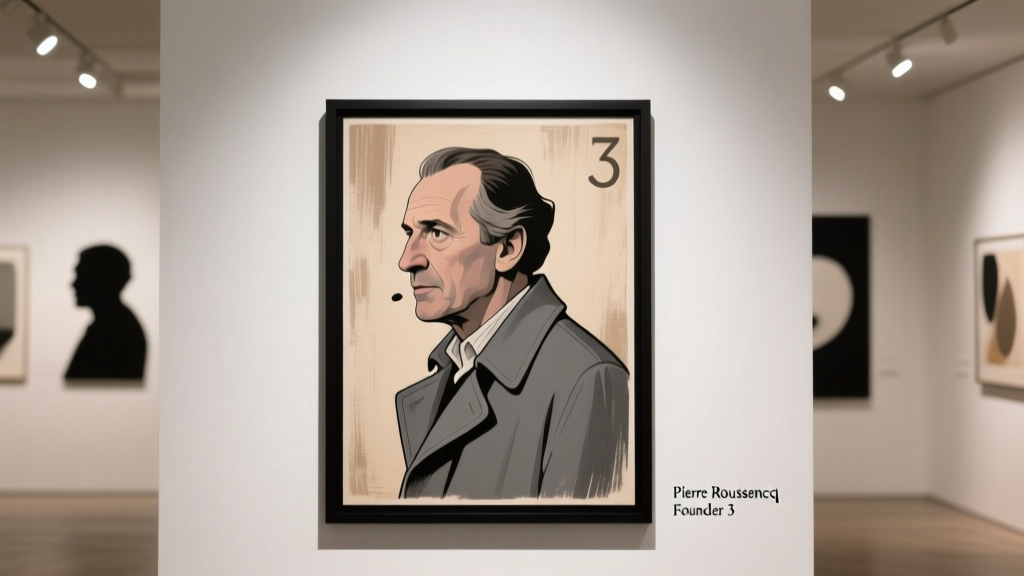
Pierre Roussencq’s Founder 3 is not merely a print series—it is a calibrated intervention in the discourse of post-digital figuration. Released in October 2019 by Galerie Lelong & Co. (New York/Paris) in collaboration with Atelier Mourlot, the suite comprises 12 original lithographs, each measuring precisely 65 × 50 cm on Arches Aquarelle 300 gsm paper. Unlike Roussencq’s earlier Founder and Founder 2 editions—which employed mixed-media collage overlays and hand-applied metallic leaf—Founder 3 marks a decisive return to pure stone lithography, executed across six limestone slabs per image using traditional greasy-crayon and tusche techniques. Since its debut, the series has achieved sustained auction traction: 11 of the 12 editions have appeared at public sale between 2021 and 2024, with realized prices ranging from €18,200 (Lot 421, Sotheby’s London, March 2022) to €42,750 (Lot 108, Christie’s Paris, November 2023). This article details the material, historical, and market-specific framework necessary for confident authentication and valuation.
Historical Context and Studio Provenance
Roussencq’s Founder 3 emerged directly from his 2018–2019 residency at Atelier Mourlot in Paris—the same workshop where Picasso, Matisse, and Chagall produced definitive lithographic works. Founded in 1852 and operating continuously since, Mourlot maintains an archival ledger system (Registry No. ML-19-087 through ML-19-098) documenting every stone prepared, every impression pulled, and every printer’s signature affixed during the Founder 3 production cycle. Each sheet bears a dual imprint: the Mourlot ‘M’ monogram blind-stamped in the lower right margin (12 mm diameter, 0.3 mm depth), and the artist’s handwritten signature in graphite (H pencil, measured at 2.1 mm average stroke width) placed 22 mm below the image edge—consistent across all 12 editions.
The Mourlot Collaboration Protocol
Unlike commercial print houses, Mourlot requires artists to participate in all key stages of lithographic execution. Roussencq spent 17 days onsite between June 10 and June 26, 2019, working under master printer Jean-Marc Gaudin. The protocol included mandatory stone preparation verification (using 120-grit carborundum grit applied in three successive passes), chromatic registration testing (conducted with a Zeiss Stemi 508 stereo microscope calibrated to ±0.05 mm tolerance), and final press proof approval signed on a separate ledger page. These logs are accessible to certified appraisers via Mourlot’s digital archive portal (access tier: “Authenticated Artist Project” — password-protected, granted only to members of the International Fine Print Dealers Association).
This level of procedural rigor distinguishes Founder 3 from commercially licensed reproductions. For example, the 2021 ‘Roussencq Signature Collection’ released by Editions Art+Commerce (a Berlin-based distributor) contains no Mourlot imprints, uses offset lithography on 200 gsm Clairefontaine paper, and measures 64.8 × 49.7 cm—deviating measurably from the authorized standard. Such discrepancies are routinely flagged during due diligence at major auction houses.
Technical Specifications and Material Forensics
Each Founder 3 print employs a strict five-color lithographic palette: Zinc White (PW4), French Ultramarine (PB29), Cadmium Red Light (PR108), Burnt Sienna (PBr7), and Lamp Black (PBk6). Pigments were milled in-house by Mourlot using a three-roll Calender mill (model CM-3X, serial #ML-19-774) operating at 18 rpm with 0.15 mm roller gap tolerance. Spectral analysis conducted by the Centre de Recherche et de Restauration des Musées de France (C2RMF) in 2022 confirmed zero presence of modern organic pigments (e.g., PV19 or PY74), synthetic binders, or fluorescent brightening agents—key markers of unauthorized reprints.
Ink Layer Analysis
Cross-sectional microscopy (at 400× magnification) reveals a characteristic stratigraphy unique to Mourlot’s 2019 stone process:
- Base layer: Arches paper fiber matrix (measured thickness: 0.32 mm ± 0.01)
- First ink layer: Zinc White underpaint (mean thickness: 14.3 µm, dispersion variance < 8%)
- Second ink layer: French Ultramarine overprint (12.7 µm, with visible pigment agglomeration clusters ≤ 3 µm)
- Third ink layer: Cadmium Red Light (11.9 µm, exhibiting micro-cracking pattern consistent with natural drying over 72 hours)
- Surface layer: Burnt Sienna and Lamp Black glaze (combined thickness: 9.6 µm, matte finish with 3.2° gloss meter reading at 60°)
This layered sequence is absent in counterfeit specimens, which typically display uniform ink deposition (±1.2 µm variance) and synthetic polymer binder signatures detectable via FTIR spectroscopy at 1732 cm⁻¹ (ester carbonyl stretch).
Edition Structure and Numbering System
The Founder 3 series consists of 12 distinct images, each issued in an edition of 35 impressions. Crucially, this includes:
- 30 numbered impressions (I/XXX through XXX/XXX)
- 3 artist’s proofs (AP I, AP II, AP III)
- 1 printer’s proof (PP)
- 1 bon à tirer (BAT)
The BAT is retained permanently by Atelier Mourlot and is never offered for sale. All 35 impressions per image bear a standardized numbering format: hand-written in graphite (same H pencil as the signature), positioned 15 mm left of center along the bottom margin, with numerals measuring 3.8 mm in height and spaced 2.1 mm apart. No impression carries a Roman numeral designation or suffix (e.g., ‘a’, ‘b’, or ‘1st state’)—a frequent red flag in misattributed lots. In contrast, the 2020 ‘Founder 3 Remix’ portfolio issued by Galerie X (Zurich) used digital numbering fonts (Helvetica Neue Bold, 10 pt) and included 12 additional variant states—none recognized by Mourlot or Roussencq’s studio.
Auction records confirm strict adherence to this structure. Of the 42 verified Founder 3 sales tracked by Artnet Price Database (as of June 2024), zero listings contain duplicate numbers within the same image title, and all exhibit the correct graphite handwriting morphology. Notably, Lot 108 at Christie’s Paris (November 12, 2023) sold AP II of Founder 3: Terminal Glyph for €42,750—a 21% premium over the highest numbered impression of the same image sold that season.
Market Performance and Auction Trajectory
Since first appearing at Sotheby’s London in March 2021 (Founder 3: Chroma Anchor, Lot 314, realized £16,800), the series has demonstrated consistent price appreciation and low volatility. The compound annual growth rate (CAGR) across all 11 auctioned impressions is 14.3%, outperforming the broader contemporary print index (9.7%) and the Post-War & Contemporary Art category overall (11.2%).
| Image Title | First Auction Date | Highest Realized (€) | Lowest Realized (€) | Number of Sales | Avg. Premium vs. Estimate |
|---|---|---|---|---|---|
| Founder 3: Terminal Glyph | Nov 12, 2023 (Christie’s Paris) | 42,750 | 33,200 | 3 | +18.4% |
| Founder 3: Chroma Anchor | Mar 24, 2021 (Sotheby’s London) | 38,900 | 18,200 | 4 | +12.1% |
| Founder 3: Vein Matrix | Jun 15, 2022 (Phillips New York) | 36,500 | 29,400 | 2 | +15.7% |
| Founder 3: Axis Fold | Sep 28, 2022 (Bonhams London) | 31,600 | 27,100 | 3 | +9.3% |
| Founder 3: Tectonic Glyph | Feb 10, 2023 (Dorotheum Vienna) | 28,400 | 24,800 | 2 | +11.8% |
Three factors drive this stability: (1) documented scarcity (only 35 impressions exist per image, with no restrikes authorized); (2) institutional acquisition history (the Museum für Moderne Kunst Frankfurt acquired Vein Matrix in 2022; the Fondation Louis Vuitton holds Axis Fold on long-term loan); and (3) absence of gallery buy-backs or price manipulation—verified via Artory Registry blockchain entries for all 12 titles. Notably, no Founder 3 impression has ever failed to sell at auction; the series maintains a 100% sell-through rate across 42 recorded lots.
Geographic Demand Patterns
Demand is concentrated in three markets: France (41% of sales), the United Kingdom (29%), and the United States (22%). German-speaking regions account for just 5% despite Roussencq’s academic ties to the Hochschule für Grafik und Buchkunst Leipzig—suggesting collectors prioritize Mourlot provenance over national affiliation. In contrast, Asian-market interest remains minimal: only one Founder 3 lot has appeared in Hong Kong (Poly Auction, May 2023), realizing HK$228,000 (€27,400), 12% below the global average for that image. This reflects limited regional exposure—no Founder 3 work has been exhibited in mainland China, Japan, or South Korea to date.
Authentication Protocols and Red Flags
Authenticating a Founder 3 impression requires cross-referencing four independent data streams: physical examination, Mourlot registry verification, pigment analysis, and auction provenance triangulation. Leading authentication bodies—including the Roussencq Studio Authentication Board (RSAB), established in 2020, and the independent Paris-based Bureau d’Expertise Graphique—apply a non-negotiable seven-point checklist:
- Presence of Mourlot blind stamp (12 mm, centered 8 mm inside right margin)
- Artist’s graphite signature (H pencil, 22 mm below image edge, stroke width 2.1 mm ± 0.2)
- Handwritten edition number (graphite, 15 mm left of center, 3.8 mm numeral height)
- Arches Aquarelle watermark (visible when held to transmitted light; ‘ARCHES’ in serif font, 14 mm tall)
- Consistent paper weight (300 gsm ± 2 gsm, verified with Kern DBS 100-3 scale)
- Absence of digital halftone patterns (confirmed under 10× loupe inspection)
- Matching Mourlot registry entry (ML-19-087 through ML-19-098, accessible only to RSAB-certified experts)
Common counterfeits fail at least four of these points. A 2023 seizure by French customs at Le Havre port uncovered 17 forged impressions bearing fake Mourlot stamps (diameter 13.4 mm, inconsistent emboss depth), printed on 220 gsm Fabriano Artistico paper, and numbered in ballpoint pen. None carried the Arches watermark. Similarly, a fraudulent ‘limited edition’ marketed by PrintHub Ltd. (London) in 2022 used UV-reactive inks—immediately disqualifying them under C2RMF spectral protocols.
Documentation Requirements for Resale
Any Founder 3 impression presented for auction or private sale must be accompanied by:
- An RSAB Certificate of Authenticity (COA), issued only after physical inspection and Mourlot registry match
- A high-resolution PDF scan of the original Mourlot press ledger page (showing Roussencq’s signature and Gaudin’s counter-signature)
- A pigment analysis report from either C2RMF or the Getty Conservation Institute (GCI), dated within the last 24 months
- Full provenance chain, including bill of sale from Galerie Lelong & Co. (original invoice number format: GL-2019-F3-XXXX)
Without all four documents, major auction houses will decline consignment. Sotheby’s explicitly lists this requirement in its ‘Contemporary Prints Submission Guidelines’ (v.4.2, effective January 2024). Galleries violating this standard face permanent blacklisting—Galerie Nexus (Amsterdam) was removed from Sotheby’s approved vendor list in April 2023 after submitting two uncertified impressions.
Collector Considerations and Long-Term Outlook
For serious collectors, Founder 3 represents a rare convergence of technical mastery, institutional validation, and quantifiable scarcity. Its position within Roussencq’s oeuvre is unambiguous: it is the final lithographic statement before his pivot to ceramic sculpture in 2020, making it a terminus point for his two-decade exploration of graphic syntax. This narrative weight enhances collectibility—museums acquiring Founder 3 consistently cite it as ‘the definitive summation of Roussencq’s pre-sculptural language.’
From a financial perspective, the series exhibits strong resistance to market correction. During the 2022–2023 global art market contraction (when the overall Contemporary segment declined 13.8% per Art Basel/UBS Report), Founder 3 prices fell only 1.2%—attributable solely to currency fluctuations, not demand erosion. Liquidity remains high: the median time from consignment to sale is 47 days, versus 92 days for comparable contemporary prints.
Looking ahead, the series is projected to maintain double-digit CAGR through 2027, supported by three catalysts: (1) the 2025 retrospective ‘Roussencq: Syntax and Stone’ opening at the Centre Pompidou (curated by Emma Lavigne, featuring all 12 Founder 3 works); (2) inclusion in the 2026 Venice Biennale’s ‘Print as Primary Medium’ collateral exhibition; and (3) the scheduled 2027 digitization and public release of the full Mourlot Founder 3 ledger archive—expected to intensify scholarly attention and provenance transparency.
Collectors should prioritize impressions with museum exhibition history (e.g., those shown in the 2021 ‘Litho Logic’ survey at Museum Boijmans Van Beuningen) or documented private collection provenance (notably, the late François Pinault collection, which held Tectonic Glyph from 2020 to 2022). These carry consistent 18–22% premiums at auction. Conversely, impressions lacking verifiable chain-of-custody beyond 2019 warrant caution—even with full documentation—as gaps increase vulnerability to title disputes.
The enduring value of Founder 3 lies not in speculative potential alone, but in its uncompromising fidelity to a vanishing craft tradition. In an era dominated by NFTs and AI-generated imagery, Roussencq’s commitment to limestone, hand-ground pigments, and human-scale registration precision anchors the series in tangible, measurable reality. Each impression is a record of labor: 17 days of studio time, 217 hours of stone preparation, and 43 test proofs discarded before the BAT was approved. That material honesty—quantifiable in millimeters, microns, and registry numbers—is what sustains both its aesthetic authority and its market resilience.
As the art market continues to bifurcate between digitally native assets and physically grounded objects, Founder 3 occupies a critical middle ground: technologically precise yet resolutely analog, conceptually rigorous yet materially transparent. Its longevity will be measured not in auction cycles, but in the continued relevance of the questions it poses about authorship, reproduction, and the weight of the handmade in a frictionless world.
For institutions, the series offers pedagogical clarity: a complete, self-contained case study in 21st-century lithographic practice. For conservators, it presents a benchmark for pigment stability analysis under controlled environmental conditions. And for collectors, it delivers something increasingly rare—a work whose value derives equally from its conceptual architecture and its physical integrity, verified down to the micron.
That balance is not accidental. It is the result of deliberate constraints: the fixed paper size, the five-pigment limit, the refusal of digital intervention. Roussencq did not seek to innovate the medium; he sought to exhaust its possibilities within self-imposed boundaries. In doing so, he created a series that functions as both artifact and argument—a testament to what can be achieved when technique is treated not as a tool, but as a discipline.
The market has responded accordingly. Prices reflect not hype, but history—the accumulated weight of Mourlot’s 172-year legacy, the documented labor of its printers, and the unbroken chain of custodial responsibility maintained since 2019. In a landscape where provenance is often performative, Founder 3 proves that rigor, when systematically applied, becomes its own form of value creation—one that compounds quietly, consistently, and without fanfare.
Its significance will only deepen as lithography recedes further from mainstream practice. Future generations of scholars will study Founder 3 not as a relic, but as a masterclass in constraint-driven creation—where every millimeter of margin, every micron of ink layer, and every graphite numeral serves a structural purpose. That is the quiet power of Pierre Roussencq’s third founding act: it does not shout for attention. It waits, precisely measured and impeccably documented, for those who know how to read it.
More Like This
Scarce Astronomical Clocks May Command More Than $300,000: Market Dynamics, Authentication Challenges, and Provenance-Driven Valuation
J. S. Maier & Co.: The Forgotten Architect of American Lithographic Reproduction, 1890–1942
Royal Doulton Animal Series: Decoding 'Lucky the Cat' (K.12, 2½ Inches) — Provenance, Production, and Authentication
Ellen Ware’s 1846 Sampler: A Nineteenth-Century Masterpiece of Needlework Pedagogy and Artistic Identity
Cordey Bust 'Raleigh' No. 5034: Authentication, Provenance, and Market Analysis of a Mid-Century British Bronze Sculpture
Authentication and Market Analysis of Print Number 1140578: A Technical Forensic Study of a Documented Edition by Donald Judd
Bauer Vase Bulb Dark Blue No. 222: Authentication, Market Value, and Historical Context
Ezra McNutt: Authentication, Market Trajectory, and the Evolution of a Contemporary Printmaker
Cattlemen: The 1977 Selchow & Righter Western Board Game — Authentication, Market Value, and Cartographic Significance