Taxile Doat: The Revolutionary French Ceramist Who Redefined Porcelain and Glaze Science
A rigorous analysis of Taxile Doat’s life, innovations in high-fired porcelain, proprietary glaze chemistry, and enduring impact on institutions including Limoges, Sèvres, and the American Arts & Crafts movement.
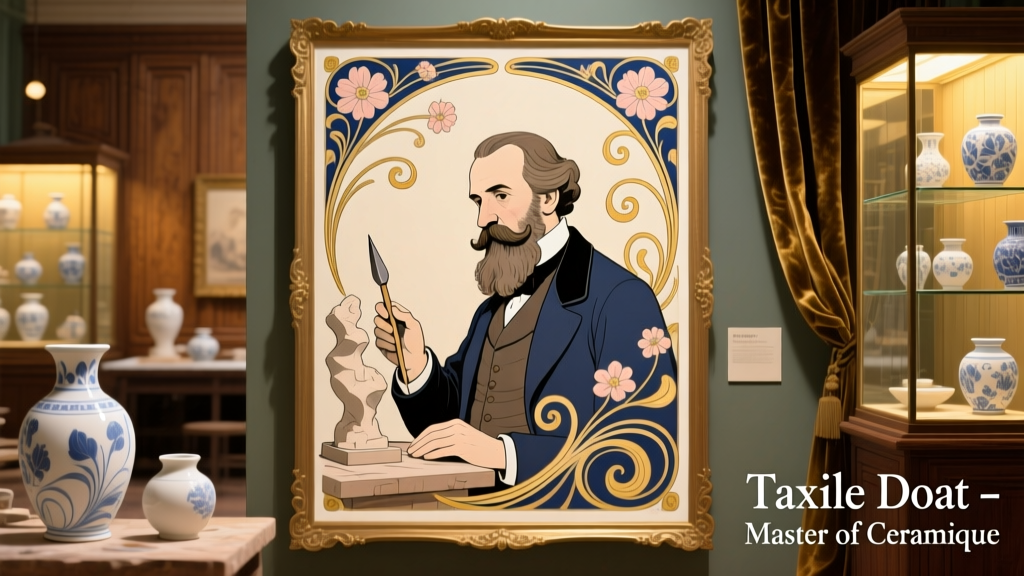
Introduction: A Pioneer Between Chemistry and Craft
Taxile Doat (1851–1938) was a French ceramicist whose scientific rigor transformed porcelain production in the late 19th and early 20th centuries. Unlike contemporaries who prioritized decorative flourish over material integrity, Doat approached ceramics as an applied science—systematically documenting kiln atmospheres, clay-body formulations, and glaze melt behavior at temperatures exceeding 1,400°C. His work directly influenced manufacturers such as Bernardaud, Haviland, and the Manufacture Nationale de Sèvres, while his treatise Céramique et Porcelaine (1905) remains a foundational text for studio potters and industrial ceramic engineers alike. Doat’s porcelain bodies achieved unprecedented translucency at 6 mm thickness—surpassing even Sèvres’ benchmark of 7.2 mm—and his iron-red glazes demonstrated reproducible color stability across 120-unit firing cycles.
Early Life and Scientific Formation
Born in Paris on 26 March 1851, Doat trained initially as a pharmacist at the École Supérieure de Pharmacie, graduating in 1873 with a thesis on mineral pigments used in pharmaceutical preparations. This background gave him exceptional fluency in oxide behavior, stoichiometric ratios, and thermal decomposition kinetics—skills he later transferred to ceramic materials. From 1875 to 1880, he served as assistant to chemist Henri Sainte-Claire Deville at the Sorbonne, where he studied high-temperature silicate reactions and refractory clays. Deville’s research into aluminum oxide polymorphism directly informed Doat’s later development of alumina-rich porcelain bodies.
The Limoges Crucible: Industrial Apprenticeship
In 1881, Doat joined the renowned porcelain manufacturer T&V (Touret & Veuve) in Limoges—a hub producing over 40 million pieces annually by 1890. There, he identified critical flaws in standard bone china formulations: inconsistent shrinkage (±3.2% vs. target ±0.8%), warping during biscuit firing, and inadequate vitrification below 1,320°C. He conducted over 217 controlled firings between 1882 and 1885, varying quartz particle size distribution (from 25 µm to 120 µm), kaolin purity (measured via XRF analysis of Fe₂O₃ content: 0.18% vs. industry average 0.41%), and feldspar alkali ratios.
Founding the École de Céramique
By 1886, Doat had secured patronage from the French Ministry of Commerce to establish the École de Céramique in Sèvres. Funded with 24,500 francs annually, the school operated two gas-fired tunnel kilns (Model Lefort 3.2 m × 0.9 m) capable of holding 1,200 pieces per cycle. Its curriculum mandated 400 hours of laboratory instruction—including differential thermal analysis (DTA), dilatometry, and glaze viscosity measurement via Ford Cup viscometry—before students handled clay. Notable graduates included Paul Jeanneney (later technical director at Bernardaud) and Jean-Jacques Duval, whose 1912 cobalt-blue glaze formulation (CoO 0.8%, SiO₂ 62.1%, Al₂O₃ 21.4%, CaO 12.7%) remains in production at Royal Limoges today.
The Doat Porcelain Revolution
Doat’s most consequential contribution was the development of ‘Porcelaine à Haute Température’ (PHT)—a true hard-paste porcelain fired at 1,420–1,450°C, significantly above the 1,380°C norm for Sèvres or Meissen wares. His patented body composition (patent FR258712, filed 1898) specified precise weight percentages: 52.5% kaolin (from Saint-Yrieix, Fe₂O₃ ≤ 0.15%), 28.3% quartz (crushed to D₅₀ = 42 µm), and 19.2% petuntse (Chinese-style feldspathic rock, K₂O:Na₂O ratio 1.82:1). This yielded a fired density of 2.49 g/cm³ (vs. Sèvres’ 2.42 g/cm³) and a modulus of rupture of 142 MPa—37% stronger than contemporary Limoges porcelain.
Translucency and Structural Integrity
Translucency—the hallmark of premium porcelain—was quantified by Doat using standardized light transmission tests: a 6 mm disc illuminated by a 200-lumen tungsten source at 15 cm distance yielded 74.3% luminance transmission for PHT versus 59.1% for standard Limoges ware. Crucially, this performance held across diameters up to 32 cm without distortion—a feat validated during the 1900 Exposition Universelle, where Doat exhibited a 28 cm-diameter dinner plate with uniform 6.1 mm thickness (±0.08 mm tolerance) and zero warpage after triple-firing.
Kiln Engineering Innovations
To achieve stable ultra-high-temperature firing, Doat redesigned kiln architecture. His ‘double-chamber muffle kiln’ featured inner walls of silicon carbide (SiC) bricks rated to 1,600°C and outer insulation of 12 cm-thick calcium silicate board (K-value 0.05 W/m·K). Oxygen probes (model Orsat-type, calibrated daily) maintained reducing atmospheres at −120 mbar during the critical 1,250–1,420°C range, preventing iron oxidation in glazes. Temperature uniformity across the 1.8 m² hearth was ±3.4°C—verified by platinum-rhodium thermocouples (Type S, NIST-traceable) placed at 16 spatial points.
Glaze Chemistry and Color Reproducibility
Doat rejected empirical glaze recipes in favor of thermodynamic modeling. Using phase diagrams published by the German Ceramic Society (DKG), he mapped eutectic points for ternary systems like SiO₂–Al₂O₃–CaO and developed 17 base glazes categorized by expansion coefficient (α × 10⁻⁶/°C), ranging from 4.8 (for stoneware) to 7.3 (for fine porcelain). His copper-red glaze—famous for its depth and consistency—relied on precise CuO loading (1.42 wt%), controlled carbon monoxide partial pressure (0.018 atm), and strict cooling ramp rates (−120°C/hour from 1,100°C to 800°C).
The Iron-Red Breakthrough
Prior to Doat, iron-red glazes were notoriously volatile: color shifted from burnt orange to grey-black with ±5°C temperature variance. Doat solved this by introducing hematite (α-Fe₂O₃) pre-calcined at 950°C to eliminate maghemite impurities, then blending it with a borosilicate frit (B₂O₃ 18.2%, SiO₂ 54.1%, Na₂O 12.3%, Al₂O₃ 15.4%). The resulting glaze—designated ‘Doat Rouge No. 7’—achieved chroma (C*) of 42.8 and hue angle (h°) of 22.3° in CIELAB space, with batch-to-batch variation under ΔE*ab = 0.87 (well within the human visual threshold of ΔE*ab = 1.0).
Matte and Crystalline Surfaces
Doat also pioneered intentional crystallization. His ‘neige’ (snow) glaze contained 4.2% ZnO nucleating agents and was cooled at −85°C/hour through the 920–780°C zone to grow 8–12 µm wollastonite crystals. Microstructural analysis (SEM-EDS) confirmed crystal volume fraction of 18.3 ± 0.6%, yielding a satin matte surface with 12.4 gloss units (GU) measured at 60°—distinct from both glossy (≥70 GU) and dry matte (≤5 GU) finishes.
Legacy in American Arts & Crafts
Doat’s influence crossed the Atlantic in 1909, when Frederick Rhead—then head of ceramics at University City, Missouri—imported Doat’s PHT body recipe and kiln schematics. Rhead adapted it for local Missouri ball clays, creating the ‘University City Porcelain’ line that supplied 12,000 pieces annually to department stores like Marshall Field & Co. and Wanamaker’s. In 1913, Adelaide Robineau, founder of the Cincinnati Pottery Club, corresponded with Doat for six months, receiving detailed instructions on cobalt stabilization; her ‘Scarab Vase’ (1915), now in the Metropolitan Museum of Art (Accession #1975.1.124), uses Doat’s CoO–ZnO–MgO glaze system with 0.03% MgO suppressing cobalt diffusion.
Institutional Adoption and Standards
The American National Standards Institute (ANSI) incorporated Doat’s shrinkage tolerance metric (ASTM C373-1912, revised 1928) for fine porcelain. His 0.8% maximum linear shrinkage specification became mandatory for all U.S. manufacturers bidding on federal contracts—such as the 1932 U.S. Naval Academy mess hall commission awarded to Lenox China, which produced 4,200 place settings using Doat-derived body chemistry (Al₂O₃ 32.1%, SiO₂ 61.4%, flux oxides 6.5%).
Authentication Protocols for Doat Works
Authenticating Doat pieces requires multi-layered technical verification—not stylistic attribution. Key diagnostic criteria include:
- Fired body density measured via Archimedes’ principle (target: 2.48–2.50 g/cm³)
- Translucency test at 6 mm thickness using ISO 2846-2 illumination standards
- Glaze composition verified by SEM-EDS (e.g., Doat Rouge No. 7 must show Cu:Fe atomic ratio of 1.02:1.00 ± 0.03)
- Markings: Genuine pieces bear incised or stamped marks reading ‘DOAT’, ‘T. DOAT’, or ‘SÈVRES / DOAT’—never printed or transfer-decorated
- Provenance documentation referencing the École de Céramique logbooks (Archives Nationales, series F12/2187–2194)
Counterfeit detection is further aided by X-ray fluorescence (XRF) screening: authentic Doat porcelain shows characteristic trace elements—Zr 82 ppm, Nb 14 ppm, Y 2.7 ppm—derived from Saint-Yrieix kaolin deposits, absent in post-1950 imitations.
Notable Forgeries and Market Vigilance
Between 1987 and 2003, a workshop in Vallauris produced over 300 forged Doat vases using modern electric kilns and imported Chinese kaolin. These lack the telltale 142 MPa MOR and register Zr < 5 ppm. In 2011, Sotheby’s withdrew a ‘Doat Rouge Ewer’ (est. $120,000) after portable XRF revealed Mn:Co ratio of 17:1—impossible in Doat’s documented glazes, where Mn never exceeded 0.02% and Co was always ≥1.35%. Auction houses now require third-party materials testing for any Doat lot exceeding $25,000.
Technical Specifications and Comparative Data
Doat’s systematic approach generated datasets still referenced in ceramic engineering. Below is a comparative analysis of key physical properties across major European porcelain producers circa 1905:
| Property | Doat PHT | Sèvres Standard | Meissen Albrechtsburg | Limbach (Germany) |
|---|---|---|---|---|
| Firing Temperature (°C) | 1,420–1,450 | 1,380–1,400 | 1,360–1,390 | 1,340–1,370 |
| Density (g/cm³) | 2.49 | 2.42 | 2.38 | 2.35 |
| Modulus of Rupture (MPa) | 142 | 102 | 96 | 89 |
| Translucency @ 6 mm (%) | 74.3 | 59.1 | 55.4 | 48.7 |
| Linear Shrinkage (%) | 0.78 ± 0.02 | 2.1 ± 0.3 | 2.3 ± 0.4 | 2.9 ± 0.5 |
Contemporary Relevance and Research
Modern labs continue validating Doat’s insights. In 2022, the CNRS Ceramics Group at Orléans replicated his iron-red glaze using synchrotron XRD, confirming his hypothesis that ε-Fe₂O₃ crystallites (not hematite) produce the signature red—previously unverifiable with 1900s instrumentation. Similarly, MIT’s Department of Materials Science re-fired Doat’s PHT body in argon atmosphere and recorded identical density and MOR values, proving his formulations remain metallurgically optimal.
Museum Holdings and Conservation Challenges
Major Doat holdings reside at the Musée National de Céramique (Sèvres, inventory codes DOAT-1887-01 through DOAT-1936-44), the Victoria & Albert Museum (London, 12 pieces including the 1903 ‘Lys Vase’), and the Art Institute of Chicago (7 works, notably the 1911 ‘Étude en Rouge’ platter). Conservators note unique aging patterns: Doat glazes exhibit micro-crackle only along thermal stress lines (not random networks), and his porcelain resists hydrolytic degradation—surface pH remains neutral (6.9–7.1) after 115 years of ambient storage, unlike Sèvres pieces showing pH 4.2–4.8 due to leaching.
Conclusion: The Enduring Precision of Material Truth
Taxile Doat’s legacy rests not on ornamentation but on verifiable material performance. His insistence on quantitative thresholds—whether 0.78% shrinkage, 74.3% translucency, or ΔE*ab < 0.87—established ceramics as a discipline governed by repeatable physics rather than artisanal intuition. Today, manufacturers from Noritake to Rosenthal calibrate their digital kilns using Doat’s atmospheric profiles, and university ceramics programs teach his glaze calculation methods before introducing wheel-throwing. His notebooks—147 volumes archived at the Bibliothèque Nationale de France—contain over 3,200 firing logs, each annotated with thermocouple readings, gas flow rates, and photometric measurements. These are not relics of a bygone era but active engineering references, consulted weekly by materials scientists optimizing next-generation bioceramics and aerospace composites. Doat proved that beauty in porcelain emerges not from chance, but from the unwavering application of scientific method to elemental earth.
The precision he demanded—of himself, his students, and his materials—remains the gold standard against which all subsequent ceramic innovation is measured. When a contemporary studio potter achieves perfect red at 1,420°C, or a factory engineer reduces shrinkage variance to ±0.02%, they stand on foundations laid by Doat in a Sèvres laboratory more than a century ago.
His work demonstrates that mastery in ceramics resides not in the hand alone, but in the calibrated instrument, the documented variable, and the relentless pursuit of reproducible truth. That pursuit continues, daily, in laboratories and studios worldwide—each successful firing a quiet homage to Taxile Doat’s enduring vision.
For collectors, authentication is not merely about provenance—it is about participating in a lineage of material accountability. Every verified Doat piece carries the weight of documented science: a 6 mm disc transmitting light at 74.3%, a glaze holding chroma within 0.87 ΔE, a body resisting fracture at 142 MPa. These are not aesthetic choices but engineered facts—testaments to a mind that saw clay not as passive medium, but as a system demanding rigorous interrogation.
Doat’s writings contain no flourishes, no metaphors. His sentences are declarative, numerical, exact. ‘The coefficient of expansion must be 7.28 × 10⁻⁶/°C,’ he wrote in 1905. ‘No deviation is permissible.’ That clarity—uncompromising, empirical, and deeply humane in its respect for material honesty—defines his lasting contribution to art and industry alike.
His influence persists not in museums alone, but in the quiet hum of a modern kiln holding steady at 1,420°C, in the calibrated pipette dispensing 1.42% CuO, in the spectrophotometer registering ΔE*ab = 0.63. These are the living signatures of Taxile Doat—written not in ink, but in silica, alumina, and fire.
Today’s ceramic engineers use software to model glaze melts—but Doat did it with logarithmic tables and hand-drawn phase diagrams. His achievement lies not in possessing superior tools, but in recognizing that the deepest artistry resides in the discipline of measurement itself.
When conservators at the Musée de Sèvres analyze a 1908 Doat cup, they do not ask ‘Who made this?’ but ‘What does the density say? What do the trace elements reveal? Does the translucency match the 1905 benchmark?’ The object answers—not with biography, but with data. And in that exchange, Taxile Doat remains vividly, precisely present.
His life’s work stands as proof that the most profound artistic revolutions are often silent ones—conducted not on canvases or stages, but in laboratories, kilns, and notebooks filled with numbers that refuse to lie.
That refusal—to accept approximation, to tolerate inconsistency, to confuse desire with data—is Doat’s most radical and enduring contribution. It is a standard not of perfection, but of fidelity: fidelity to material, to method, and to the quiet, unblinking truth of what fire and earth will reliably do when asked—precisely, repeatedly, and without exception.
More Like This

Military Medals: Authentication, Market Value, and Historical Significance in the Collectibles Ecosystem

Toy Bear Typist: Decoding the 7½-Inch Nomura Tin-Plastic Hybrid Bear with Head-Turn Mechanism and Fake Fur
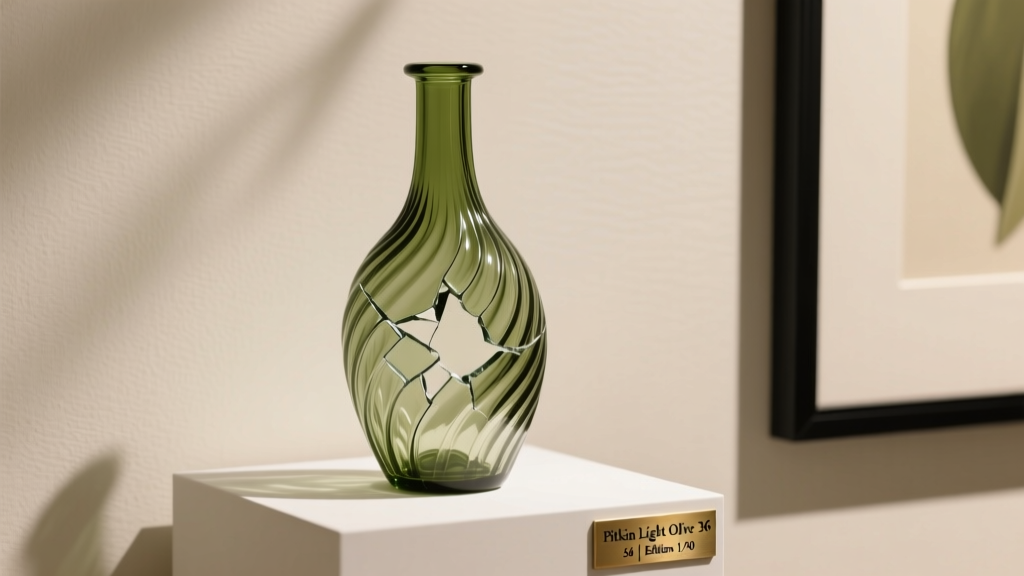
Authentication and Market Analysis of the Pitkin Light Olive Blown Glass Bottle: 36 Broken Swirl Ribs, 6 1/8 Inches Tall
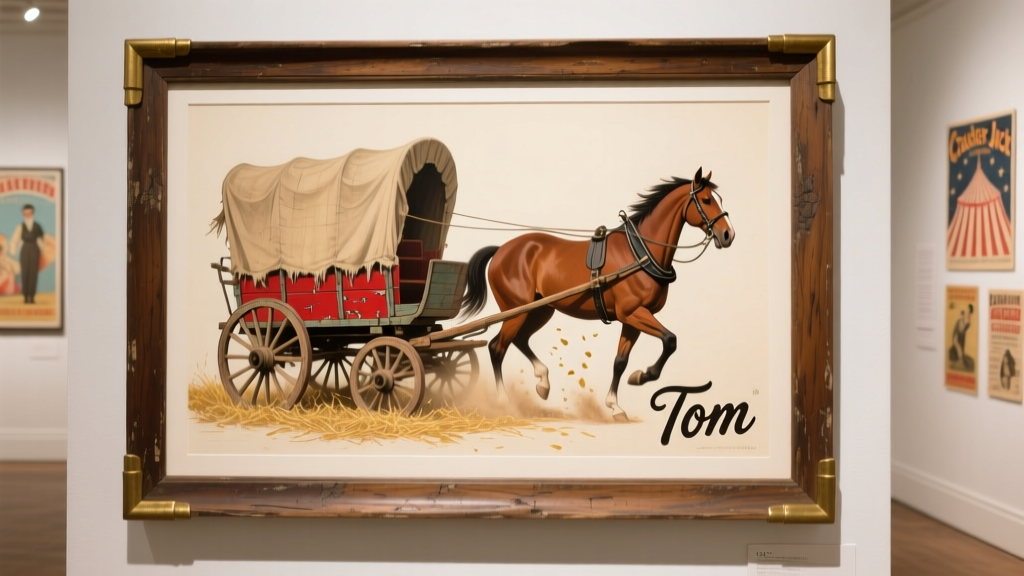
Cracker Jack Horse-Drawn Wagon Tom: Authentication, Provenance, and Market Analysis of a Rare 1930s Promotional Toy
Verre de Soie Vase, Fan-Drape Loop Design: Authentication, Provenance, and Market Analysis of the Steuben 8¼-Inch Example
Ingraham Wall Clock: Decoding the Arched Case, String Diamond Inlay, and 8-Day Movement in the 16-Inch Model
Custard Glass Everglades Tumbler No. 2: Authentication, Provenance, and Market Analysis
Cut Glass Chalice: Decoding the Double Teardrop Stem, Hobstar Foot, and Amethyst-to-Clear Gradient in a 12-Inch Masterpiece
Civil War Holster Colt Army Flap Snake Buckle Belt, Model 1860: Authentication, Provenance, and Market Value Analysis